Nature Centers

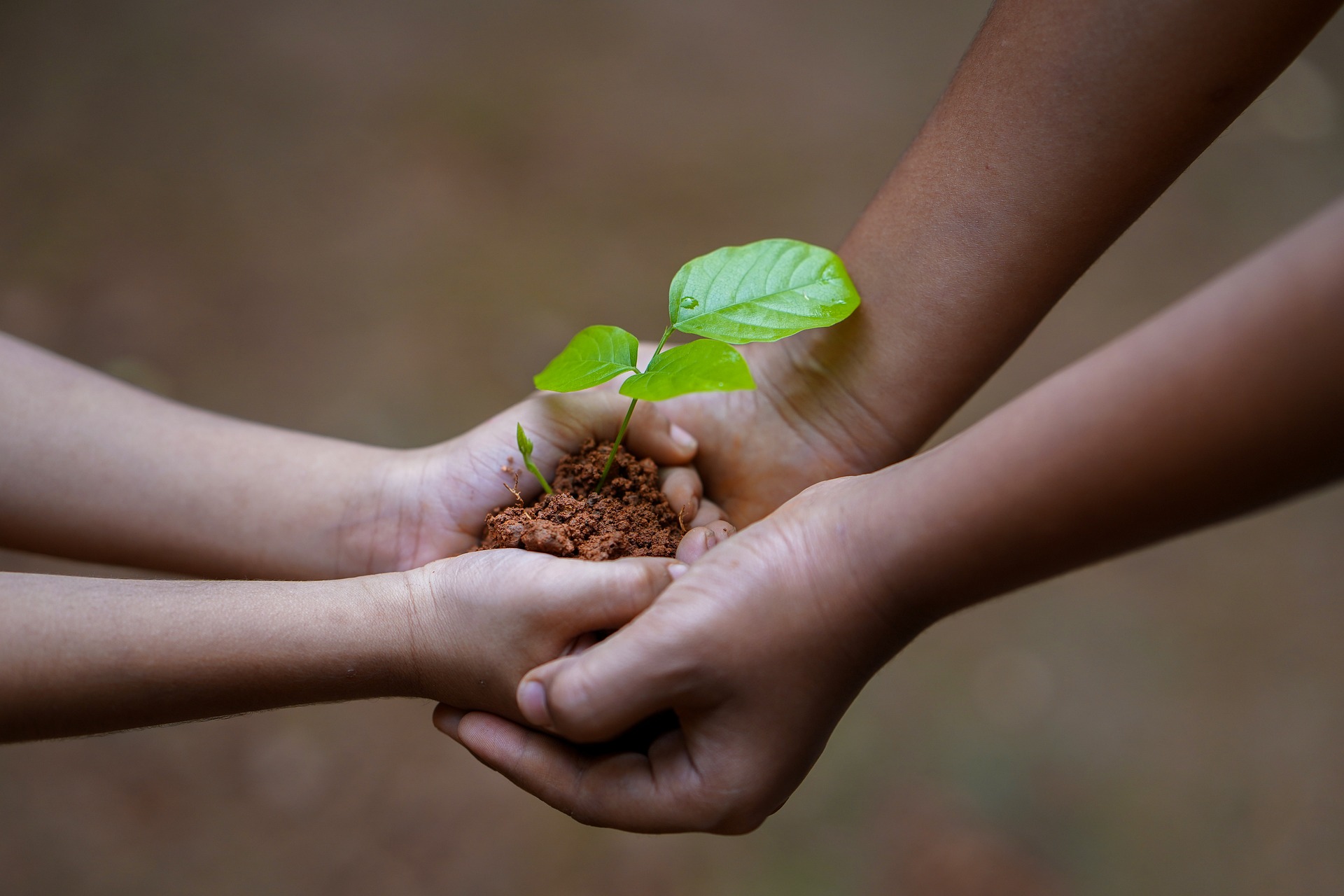
Nature Centers: Helping Hands, Courtesy Pixabay, Shameer PK, Contributor
Helping Hands
Courtesy Pixabay
Shameer PK, Contributor
With another Earth Day in the offing, my reflections travel to one of the Earthier parts of my long life, that of helping to launch several nature centers. I was first exposed to the nature center concept while residing in Michigan. My prior mindset was seeing nature through my gunsights and on the end of my fishing line. Awakening to the thoughts of nature having intrinsic value beyond sports and putting food on the table was a novelty.

A few years later, I moved to Utah with a new paradigm. Good fortune occurred when I was invited to attend a meeting to explore how a 136 acre parcel of former Defense Depot of Ogden land deeded to Ogden City might serve the greater Ogden community. I, along with other like-minded folks, posited the idea of a community nature center. Following four years of a dedicated, visionary, hard-working assemblage, we opened the gates to the Ogden Community Nature Center. two additional parcels of land have been added since then.

“Our mission is to unite people with nature and nurture appreciation and stewardship of the environment. Since it was founded in 1974 as Utah’s first nature center, the Ogden Nature Center has provided a place where people can go to enjoy and learn about the natural world.”

The 152-acre preserve is our foundation, but education is our focus. Each year the Ogden Nature Center brings more than 50,000 children, teachers, and adults together with nature through hands-on field classes.”

Many years later, I found myself in Cache Valley. Given my deep involvement with the Ogden Nature Center, I immediately began scanning the horizon for another nature center possibility. After a decade of fits and starts, a partnership was created, to resurrect an abandoned American Legion building in Logan Canyon on Forest Service land. The building was near collapsing from neglect. Used as a party place, the fireplace hearth was replaced with a lovely fire ring in the middle of the floor. The roof had been opened to the stars, which accommodated bonfire smoke.
This invited an extreme makeover. The Cache community came to the rescue with an incredible generosity of dollars, materials, and skilled labor to bring the languishing building back to life. This was followed by opening the doors in 1997 for public use and educational programs for the Cache Community. Since that time, many thousands of Cache citizens have benefited from its myriad programs and lovely setting. A satellite site is being developed in nearby Nibley.

“The Allen & Alice Stokes Nature Center is Cache Valley’s local nature center and outdoor exploration hub for people of all ages. Our mission is to provide nature education and promote outdoor exploration for the people of all ages. Our vision is for People of all ages to appreciate and become stewards of our natural world.” Get the latest nature center news at logannature.org.

Other nature centers are scattered around Utah, from the Tonaquint in St. George, to the newly emerging Tracy Aviary Jordan River Nature Center near Salt Lake City.

Jack Greene for Bridgerland Audubon Society, and I’m wild about Utah’s nature centers!

Credits:
Ponderosa Pine Pictures: Courtesy Pixabay, Shameer PK, Contributor https://www.pixabay.com/
Audio: Courtesy & © Kevin Colver, https://wildstore.wildsanctuary.com/collections/special-collections
Text: Jack Greene, Bridgerland Audubon, https://bridgerlandaudubon.org/
Additional Reading: Lyle W Bingham, Webmaster, Bridgerland Audubon, https://bridgerlandaudubon.org/

Additional Reading:

Jack Greene’s Postings on Wild About Utah, https://wildaboututah.org/author/jack/

Ogden Nature Center, https://www.ogdennaturecenter.org/
Ogden Nature Center Articles of Incorporation, May 19, 1975, https://ogdennaturecenter.org/images/pdfs-doc/Articles_of_Incorporation.pdf

Stokes Nature Center, https://logannature.org/
Legacy Wall: https://logannature.org/legacy/

Tonaquint Nature Center, https://www.sgcity.org/tonaquintnaturecenter/

Tracy Aviary Jordan River Nature Center, https://tracyaviary.org/jordan-river/

Shughart, Hilary. Nov 7, 2022. 25th Anniversary Nutshell History of the Founding of the Stokes Nature Center, Wild About Utah, https://wildaboututah.org/25th-anniversary-nutshell-history-founding-stokes-nature-center/

Stokes Nature Center History, Bridgerland Audubon Society, https://bridgerlandaudubon.org/our-projects/stokes-nature-center/stokes-nature-center-history/

EPA History: Earth Day, United States Environmental Protection Agency (EPA), https://www.epa.gov/history/epa-history-earth-day

The History of Earth Day, Earthday.org, https://www.earthday.org/history/

Antler Math and Memories

Courtesy & © Joseph Kozlowski, Photographer

Courtesy & © Joseph Kozlowski, Photographer

Courtesy & © Joseph Kozlowski, Photographer 7- and 8-year-olds with tape measures in their hands eagerly grasp at hard, smooth yet knobby, tined objects. These students are my 2nd-graders at USU’s Edith Bowen Laboratory School, and they are working on a measurement, addition, and estimation math lesson in small groups. This lesson isn’t a normal math lesson where students follow along in a textbook and complete standardized problem. Instead, this lesson centers around a natural artifact from the Utah wild. The students are measuring and exploring deer and elk antlers.
All three images:
Courtesy & © Joseph Kozlowski, Photographer

Growing up, I was surrounded by rural friends and family. Much of their livelihoods and lifestyles revolved around the outdoors, and it was commonplace to enter their homes or ranches to see spindly antlers laying on mantles, mounted above doors, or carefully placed in gardens to add a western feel. Over the years, I made my own personal connection to antlers such as when I found one when I was chucker partridge hunting up Blacksmith Fork Canyon with my trusty Springer Spaniel, Wyatt, who is no longer here to share such adventures. Each antler is a memory, each one makes me reminisce on an outdoor adventure that will only live on as a thought.

As a teacher, I am always pondering ways to make learning more relatable to students, and one day realized the method employed by professionals to score antlers would be a meaningful way for my students to practice measurement! So, I loaded up the truck with my collection of outdoor memories, and brought them to school.

I launched the activity and each and every eye lit up at the sight of an antler. We hadn’t even begun the activity yet and my students started sharing their own memories of times with their family that related to antlers; a rafting excursion on the Green River, an elk hunting trip with their dad and big brother, or even a family vacation to Yellowstone National Park where they saw lots of bull elk. These stories were powerful to the students, and powerful to me.

We continued with the measurement activity and each student group collaborated to measure the tines and three circumferences of each antler. Then, they would struggle, and succeed, to add all those sub-measurements together to get a total score for that antler, which we collected as data. Groups would rotate to a new, unique antler and repeat this process, collecting student-generated data which we compiled. By the end, our data consisted of multiple scores for each antler, as various groups had scored each one. We analyzed the data, looked at discrepancies in scores, posed and solved antler math problems, and even ended the activity by showing a new antler that hadn’t been scored, having all the students make a visual estimation of the total score for the antler, and then giving the antler to the student who made the closest estimation.

In the end, this activity brought together what I value in education. It connected to the place and culture in which my students live, was directly focused on academic content needed by my students, and elicited engagement and personal stories from my students. In a perfect world, all my lessons would be as powerful and relatable to students as this one was. In fact, right before leaving for Spring Break one of my students declared “We’re going to stay at an elk ranch in Southern Utah so I can try to see some antlers!”

On normal years, your family is welcome to collect antlers year-round, only needing a free gathering certificate between February 1st-April 15th (https://wildlife.utah.gov/antler-gathering.html). However this year due to the harsh winter, Division of Wildlife Resources put a ban on the activity until May 1st https://wildlife.utah.gov/news/utah-wildlife-news/1593-dwr-implements-emergency-statewide-shed-antler-hunting-restrictions-to-protect-big-game.html).

This is Dr. Joseph Kozlowski, and I am Wild about Utah!

Credits:

Images: Courtesy & Copyright Joseph Kozlowski, Photographer, Used by Permission
Audio: Courtesy & © Friend Weller, https://upr.org/
Text:     Joseph Kozlowski, Edith Bowen Laboratory School, Utah State University https://edithbowen.usu.edu/
Additional Reading Links: Joseph Kozlowski

Additional Reading:

Joseph (Joey) Kozlowski’s pieces on Wild About Utah: https://wildaboututah.org/author/joseph-kowlowski/

Gathering shed antlers or horns, Take the Antler Gathering Ethics Course between Feb. 1
and April 15., Division of Wildlife Resources, Department of Natural Resources, State of
Utah, https://wildlife.utah.gov/antler-gathering.html

DWR implements emergency statewide restrictions for shed antler hunting to help
protect wintering big game in Utah, Division of Wildlife Resources, Department of Natural
Resources, State of Utah, https://wildlife.utah.gov/news/utah-wildlife-news/1593-dwrimplements-emergency-statewide-shed-antler-hunting-restrictions-to-protect-biggame.html

An Ice Fishing Learning Journey

An Ice Fishing Learning Journey: Ice Fishing Basics Courtesy & Copyright Edith Bowen Laboratory School (EBLS)
Experiential Learning Eric Newell Director & Photographer
Ice Fishing Basics
Courtesy & Copyright Edith Bowen Laboratory School (EBLS)
Experiential Learning
Eric Newell Director & Photographer

Teaching Yellow Perch Survival Structures Courtesy & Copyright Edith Bowen Laboratory School (EBLS)
Experiential Learning Eric Newell Director & Photographer Teaching Yellow Perch Survival Structures
Courtesy & Copyright Edith Bowen Laboratory School (EBLS)
Experiential Learning
Eric Newell Director & Photographer

Fish Mathematics Courtesy & Copyright Edith Bowen Laboratory School (EBLS)
Experiential Learning Eric Newell Director & Photographer Fish Mathematics
Courtesy & Copyright Edith Bowen Laboratory School (EBLS)
Experiential Learning
Eric Newell Director & Photographer

In 2019 my friend Josh Boling shared his perspectives on place-based education beyond the walls of a classroom in a Wild About Utah piece titled “Why I Teach Outside.” I sit here today with another colleague teaching second grade at Edith Bowen Lab School in Logan, Dr. Joseph Kozlowski, who has unpacked the potential of teaching children outside.

Dr. Koz, tell us your story.
Well, first, thanks so much for having me on. I am excited to be here. I grew up in an outdoor family. My dad was a wildlife biologist with the Forest Service, so I appreciated being outdoors growing up. Then later, my uncles introduced me to hunting and fishing, and that became a big part of my life where I found problem-solving and a sense of connection to nature. When I got my first job in northern Wyoming, I became involved in a group called Adventure Club. On Fridays and weekends we would take students from the school on experiential learning trips to historically-relevant sites in the area such as Devils Tower, Jewel Cave, the Battle of the Little Bighorn area, and really help these students connect to the place that they live and the culture and the history. So, those kinds of experiences are really what help kids connect learning and connect who they are to where they are. A lot of my philosophy is behind John Dewey who talks about rich experiences being the foundation of thinking and for learning.

Can you give us an example of an experience that embodies this philosophy?
Definitely. Last year, our second grade class at EBLS set up a trip to Hyrum Dam to take the students out ice fishing. We partnered with DWR (Utah Division of Wildlife Resources) employees, expert parents, and Dr. Eric Newell, our director of experiential learning. We wanted to go out there to help students connect with that place but also learn about characteristics of animals, what they need to survive and traits of the habitat. The students were out there on their buckets, ice cold fingers, ice developing on the top of those little rods, so focused on watching one little bounce of the line, hoping to catch a fish. We ended up being able to have a rainbow trout and a yellow perch, getting to look at the different colorations on the body and these black vertical stripes on the perch and talking about how that blends into the dark reeds on the bottom of the reservoir. And the mouth structure, how one has these sharp, aggressive teeth and one has wider teeth and a wider mouth. Then, finally we looked inside their bellies where different food were in different types of fish, little minnows in the trout belly versus macroinvertebrates and little snail-like things in the perch belly, looking at how those matched the different parts of the water that those fish would live in. That type of a thing is an example of how students connect to this place in this very authentic and meaningful way.

How do you justify this type of teaching and learning in the current educational landscape?
Basically, from an ‘academic accountability’ perspective, there is not a shortage of research, specifically in early childhood where I work, which links rich at-home vocabulary, at-home math experiences, and in general rich experiences with later academic success.

Providing hands-on learning that fosters rich connection to place makes so much sense and is engaging as well. We are Shannon Rhodes and Dr. Kozlowski, and we are wild about Utah.

Credits:

Images: Courtesy & Copyright Edith Bowen Laboratory School (EBLS) Experiential Learning Eric Newell Director & Photographer https://edithbowen.usu.edu/
Audio: Courtesy & © J. Chase and K.W. Baldwin
Text: Shannon Rhodes and Dr. Joseph Kozlowski, Edith Bowen Laboratory School, Utah State University https://edithbowen.usu.edu/
Additional Reading Links: Shannon Rhodes

Additional Reading

Boling, Josh. Why I Teach Outside. 2019. https://wildaboututah.org/why-i-teach-outside/

Boling, Josh. You, Too, Can Teach Outside. 2020. https://wildaboututah.org/you-too-can-teach-outside/

Gibbon, Peter. John Dewey: Portrait of a Progressive Thinker. 2019. National Endowment for the Humanities. https://www.neh.gov/article/john-dewey-portrait-progressive-thinker

Utah Division of Wildlife Resources. Four Great Waters to Ice Fish in Northern Utah This Winter. 2022. https://wildlife.utah.gov/wildlife-news/42-utah-wildlife-news/834-find-a-baby-bird-heres-what-to-do.html

Hands on Stoneflies and Sculpin

Hands on Stoneflies and Sculpin: Exploring the Logan River Courtesy & Copyright Edith Bowen Laboratory School (EBLS) Experiential Learning Eric Newell Director & Photographer https://edithbowen.usu.edu/
Exploring the Logan River
Courtesy & Copyright Edith Bowen Laboratory School (EBLS)
Experiential Learning Eric Newell Director & Photographer

Benthic Macroinvertebrate Harvest Courtesy & Copyright Edith Bowen Laboratory School (EBLS) Experiential Learning Eric Newell Director & Photographer https://edithbowen.usu.edu/ Benthic Macroinvertebrate Harvest
Courtesy & Copyright Edith Bowen Laboratory School (EBLS)
Experiential Learning Eric Newell Director & Photographer

Merriam-Webster Benthic: of, relating to, or occurring at the bottom of a body of water

Student with a Stonefly Nymph Courtesy & Copyright Edith Bowen Laboratory School (EBLS) Experiential Learning Eric Newell Director & Photographer https://edithbowen.usu.edu/ Student with a Stonefly Nymph
Courtesy & Copyright Edith Bowen Laboratory School (EBLS)
Experiential Learning Eric Newell Director & Photographer

Stonefly Courtesy & Copyright Edith Bowen Laboratory School (EBLS) Experiential Learning Eric Newell Director & Photographer https://edithbowen.usu.edu/ Stonefly
Courtesy & Copyright Edith Bowen Laboratory School (EBLS)
Experiential Learning Eric Newell Director & Photographer

Sculpin Courtesy & Copyright Edith Bowen Laboratory School (EBLS) Experiential Learning Eric Newell Director & Photographer https://edithbowen.usu.edu/ Sculpin
Courtesy & Copyright Edith Bowen Laboratory School (EBLS)
Experiential Learning Eric Newell Director & Photographer

I remember my father on wintery Saturdays mounting his fly tying vice on the kitchen table, and then, from the cavern under the stairs, he’d emerge with his hooks, pheasant and peacock feathers, and other magical threads. I’d watch him spin intricate flies but never realized as a child that they were imitations of creatures I would meet and teach in the wild. When he took me to lakes and rivers to fish, we just used worms and pink marshmallows.

On an animal adaptation learning journey at Wood Camp along the Logan River this fall, our Edith Bowen Laboratory School first graders turned over river rocks, sweeping up all sorts of aquatic critters with nets and buckets to then probe playfully with tweezers and bare fingers. Trip Armstrong, Assistant Director of the National Aquatic Monitoring Center at Utah State University’s Department of Watershed Sciences, led our young investigators and several adult volunteers in identifying these benthic macroinvertebrates, especially the stonefly nymphs we found in every scoop.

These especially intrigued the children because they resemble something from outer space scurrying about on six legs. Stoneflies, both the nymphs and the adult insects, are large compared to mayfly and other critters you find in a river sample, so they stand out in a crowd. The adults have long wings, thus the Greek name Plecoptera meaning “braided wings,” but they are known to be poor fliers. The larvae have two tails or what biologists call cerci, while mayflies have three. Stoneflies have two hooks on their legs; mayflies have one. Stoneflies like oxygen-rich water flowing through their gills along their thorax and under their legs. We noticed some doing push-ups in the bin of river water, indicating it was time to return them to their habitat. Both mayfly and stonefly nymphs are pollution-sensitive, so finding them in such large numbers indicated that this part of the river was very healthy.

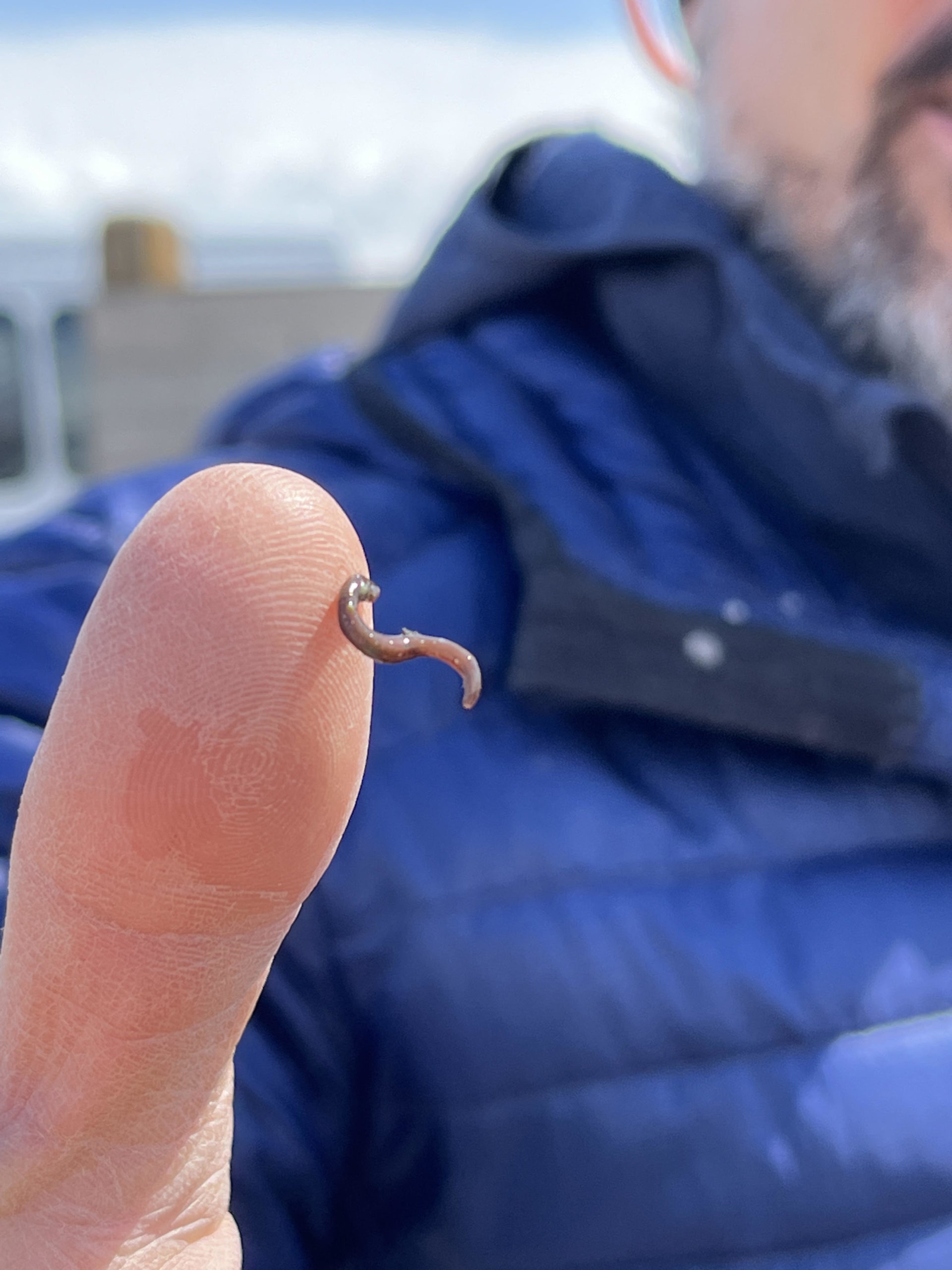
When a student approached from the river’s edge with a larger specimen cupped in her hands, I was stunned and a little spooked. “It’s a sculpin,” Armstrong said. These are bottom-dwelling fish that some say are basically big mouths with tails and have unflattering nicknames like “double uglies,” yet I learned later they are quite common. I’d just never met one. In fact, although biologists have determined that the Utah Lake sculpin has been extinct since the 1930s, the native Bear Lake sculpin and sculpin living in the Logan River are sources of food for the Bonneville Cutthroat and other trout.

I guess the lesson, as a wise first grader reminded me this week during our opinion writing session, is “Don’t yuck somebody’s yum.” Stoneflies and sculpin: flyfishers and bigger fish love them. I’m thankful for opportunities to teach in Utah’s wild places because every time I do, I learn something new.

I am Shannon Rhodes, and I’m wild about Utah.

Credits:

Images: Courtesy & Copyright Edith Bowen Laboratory School (EBLS)
Experiential Learning Eric Newell Director & Photographer https://edithbowen.usu.edu/
Audio: Courtesy & © J. Chase and K.W. Baldwin
Text: Shannon Rhodes, Edith Bowen Laboratory School, Utah State University https://edithbowen.usu.edu/https://edithbowen.usu.edu/
Additional Reading Links: Shannon Rhodes

Additional Reading

Beaudreau, Andrea. 2017. Why I Love Sculpins (and Why You Should Too). Coastal Fisheries Ecology Lab. https://annebeaudreau.com/2017/09/05/why-i-love-sculpins/

Bouchard, R.W. Jr. 2004. Guide to Aquatic Invertebrates of the Upper Midwest. 2004. https://dep.wv.gov/WWE/getinvolved/sos/Documents/Benthic/UMW/Plecoptera.pdf

Curtis, Jennifer Keats with Stroud Water Research Center. 2020. Arbordale Publishing. https://www.arbordalepublishing.com/bookpage.php?id=CreekCritters

Dickey, Amy. Water Quality and Macroinvertebrates. https://deq.utah.gov/communication/news/water-quality-macroinvertebrates

Larese-Casanova, Mark. 2013. Aquatic Insects, Harbingers of Health. Wild About Utah, https://wildaboututah.org/aquatic-insects-harbingers-of-health/

Leavitt, Shauna. 2017. Bear Lake Sculpin. Wild About Utah, https://wildaboututah.org/bear-lake-sculpin-cottus-extensus/

National Aquatic Monitoring Center. https://qcnr.usu.edu/research/namc/ (was https://namc-usu.org/)

Pennsylvania League of Angling Youth. 2006. PLAY. https://www.pa.gov/agencies/fishandboat/education/activities-education-portal/aquatic-macroinvertebrates.html (formerly: https://www.fishandboat.com/LearningCenter/PennsylvaniaLeagueofAnglingYouthPLAY/Documents/AquaticMacrosEnaElpaMayflyPondstream_Allpages.pdf)

Stroud Water Research Center. Macroinvertebrate Resources. https://stroudcenter.org/macros/

Utah Division of Wildlife Resources. Five Aquatic Species You May Not Know Live in Utah. Mottled Sculpin. https://wildlife.utah.gov/guidebooks/962-r657-29–government-records-access-management-act.html

Utah State University Extension. Bugs Don’t Bug Me. https://digitalcommons.usu.edu/extension_curall/1170/ (formerly: https://extension.usu.edu/waterquality/files-ou/Publications/AllBugs.pdf)

Zarbock, William. 1952. Life History of the Utah Sculpin. Transactions of the American Fisheries Society. https://www.tandfonline.com/doi/abs/10.1577/1548-8659%281951%2981%5B249%3ALHOTUS%5D2.0.CO%3B2