
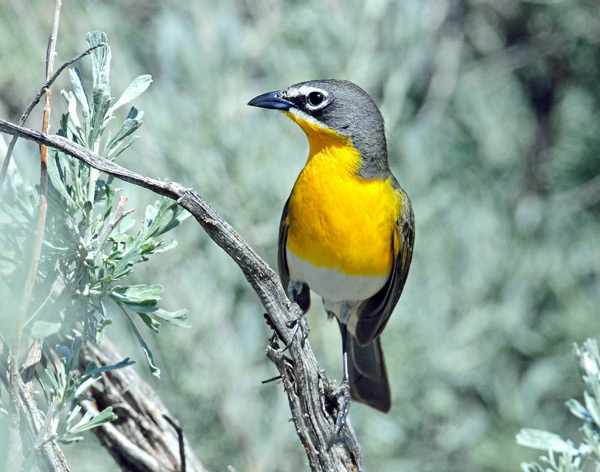
South Fork, Ogden River, Weber County, Utah, May 12, 2013
Courtesy & Copyright Paul Higgins, Photographer
This time of year, sunrise brings a raucous symphony of sound as a couple dozen species of birds raise their respective voices to attract mates and stake out territories. Nights are much quieter, of course, as most songbirds doze off in the darkness, conserving energy and avoiding nocturnal predators like snakes and raccoons. But in May, the midnight stillness on Indian Creek is broken by the loud calls of a unique songbird, the yellow-breasted chat.
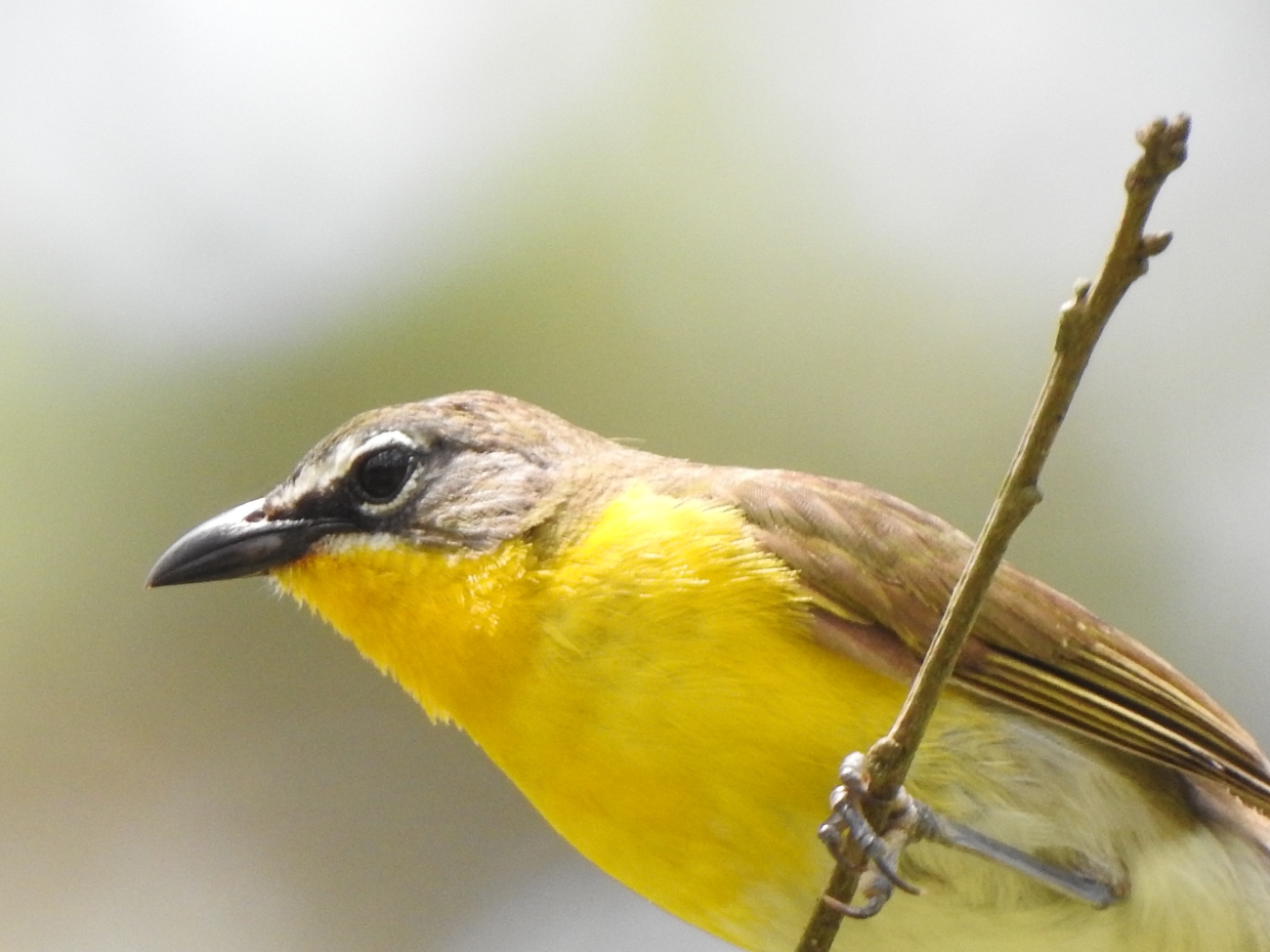
(Icteria virens)
Courtesy US FWS
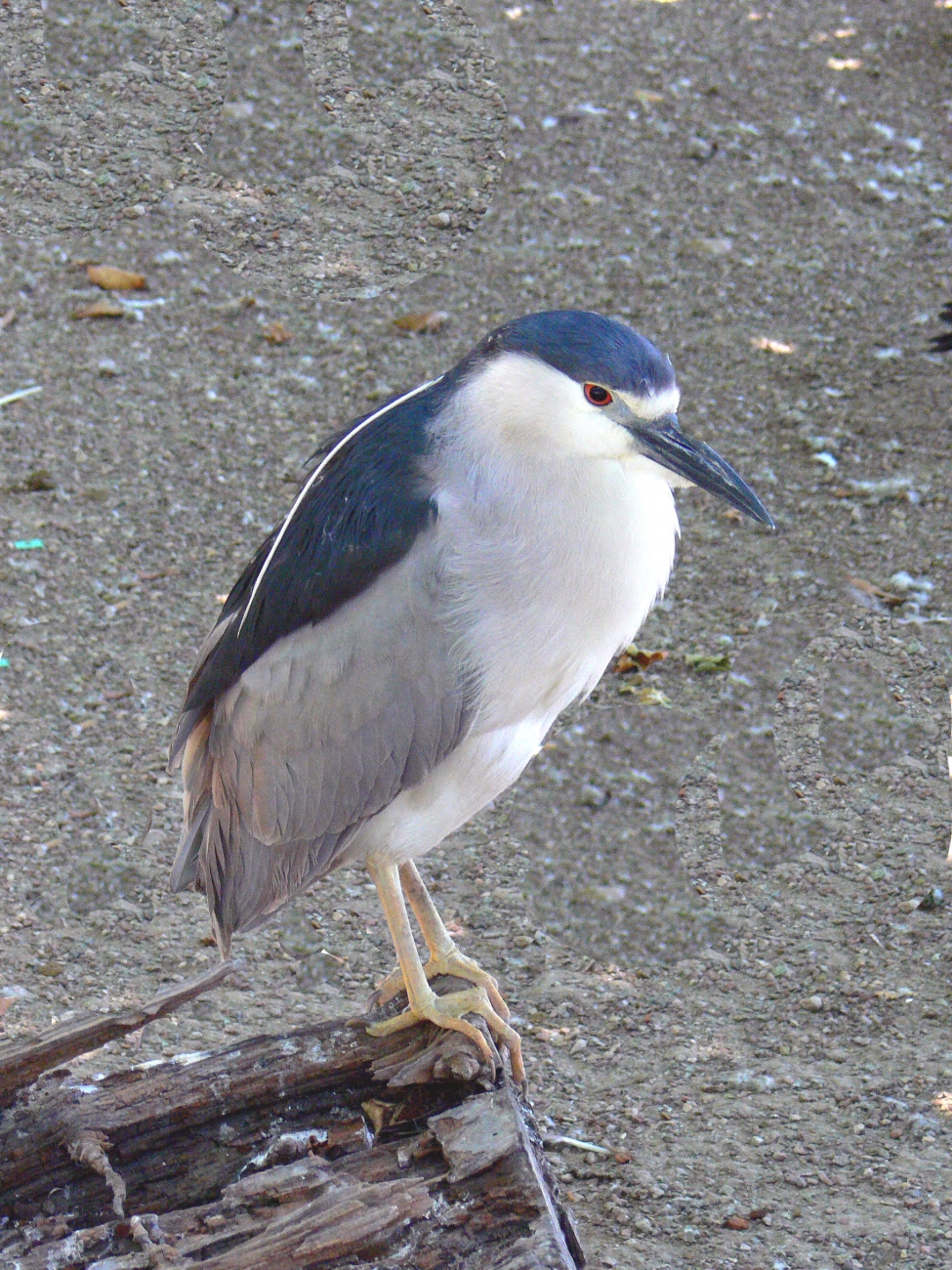 Black-crowned Night Heron
(Nycticorax nycticorax)
Courtesy US FWS, Lee Karney, Photographer
 Great Horned Owl and Chick
(Bubo virginianus)
Courtesy US FWS
George Gentry, Photographer
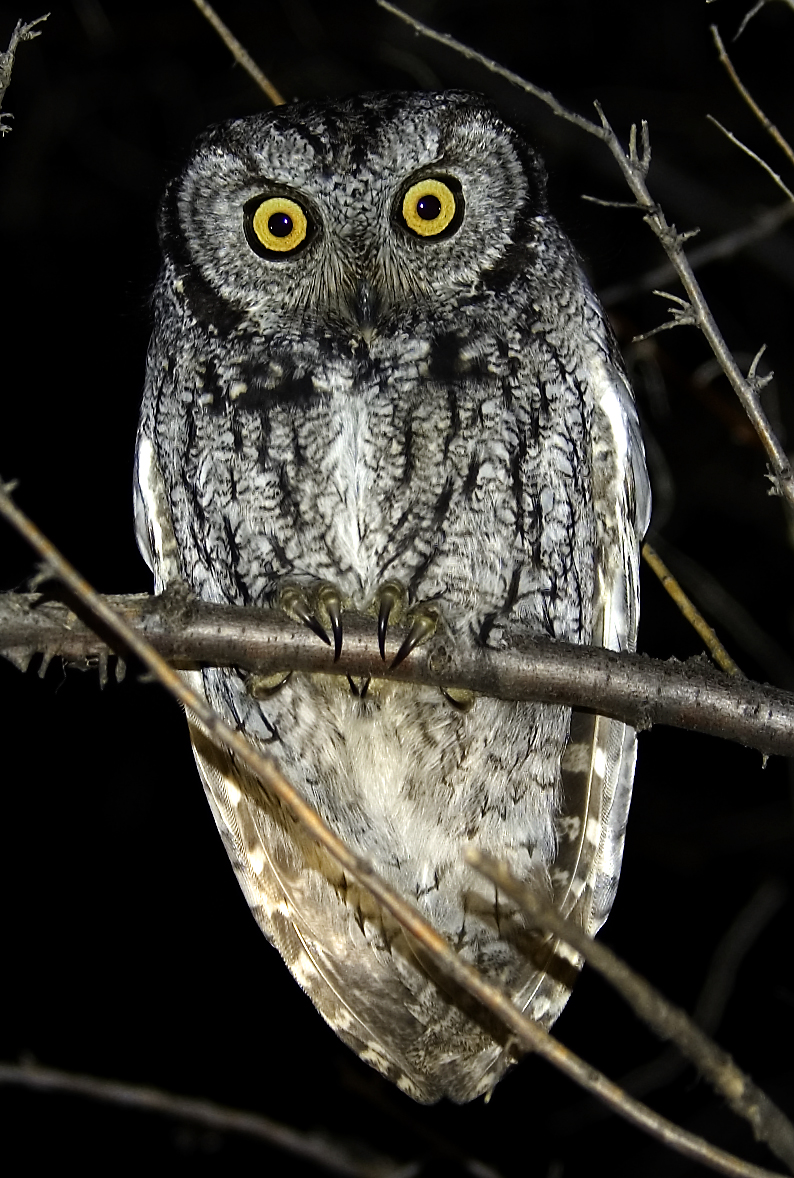 Western Screech Owl
(Megascops kennicottii)
Courtesy & Copyright Lu GiddingsNow, it’s not unheard of for birds to be active in the nighttime. But most nocturnal birds are not songbirds. The best-known, of course, are the owls. We have at least 12 species of owl in Utah, selecting different habitats from deserts to mountains to valleys and even towns. In the winter months, when I walk the streets of my small town before dawn, I occasionally hear great horned owls calling to each other. And a couple of summers ago, a pair of Western screech-owls raised two youngsters in the backyard.
Other Utah birds that are active at night include the aptly named black-crowned night heron. It may be seen in marshy areas at dawn or dusk, waiting by water’s edge to ambush prey animals such as fish, frogs, worms, mice and snakes. They can sometimes be seen during daylight hours – for example, at the Bear River Migratory Bird Refuge – but they tend to spend their days resting in dense bushes or trees.
Another nocturnal bird is the common poorwill, which breeds on dry, rocky slopes. You may never see one, as they blend in well with the ground they nest on, but you might hear the distinctive “poor-willip” call of the males, especially on a warm night at moonrise.
One songbird that sometimes sings at night is the Northern Mockingbird, famous for its mimicry and variety of songs. These striking gray birds are more common in southern Utah, but they’ve been found on Antelope Island, and my wife and I have seen a pair of mockingbirds at the very tip of Promontory Point, near where the railroad causeway heads west across the Great Salt Lake.
Then there’s the yellow-breasted chat. As the name suggests, chats boast a conspicuous deep-yellow breast, along with a long tail, and a greenish head with white spectacles, eyebrows and mustache. For many years, the chat was thought to be the largest warbler in North America – weighing twice as much as other common Utah warblers like the yellow warbler or the yellow-rumped warbler. But recent genetic analysis suggests that this species is actually quite unique – in fact, the only member of its own family.
Chats can be hard to see, as they tend to skulk in dense foliage. But they definitely can be heard. Their wide vocal repertoire includes whistling and cackling, meowing and cawing, chuckling and rattling, squawking, gurgling, and popping. Like the mockingbird, some chats may even mimic other songbirds.
So why sing at night? The advantage is that there’s less noise competition. Night-calling males in search of a mate can cut through the auditory chaos of springtime, with songs that carry far from their perch and increase the chance that they’ll be heard by a male-seeking female. The disadvantage, of course, is that predators can hear them, too.
It’s a tradeoff that the chat has evolved to make, and one that has enriched my nights, camping under the cottonwoods.
I’m Mark Brunson, and I’m wild about Utah both day and night.
Credits:
Images: Courtesy US FWS, https://www.fws.gov/media/yellow-breasted-chat-felsenthal-nwr
Courtesy US FWS, Lee Karney, Photographer, https://www.fws.gov/media/black-crowned-night-heron-13
Great Horned Owl and Chick, (Bubo virginianus), Courtesy US FWS, George Gentry, Photographer
Western Screech Owl, (Megascops kennicottii), Courtesy & Copyright Lu Giddings
Featured Audio: Courtesy & © Kevin Colver https://wildstore.wildsanctuary.com/, J. Chase and K.W. Baldwin as well as Friend Weller, https://upr.org/
Text: Mark Brunson, https://www.usu.edu/experts/profile/mark-brunson/
Additional Reading: Mark Brunson, https://www.usu.edu/experts/profile/mark-brunson/ & Lyle Bingham, Bridgerland Audubon Society
Additional Reading
Mark Brunson’s archive: https://wildaboututah.org/?s=brunson
Cook, Horace P. 1935. The song of the yellow-breasted chat. Wilson Bulletin 47(4):21. https://digitalcommons.usf.edu/cgi/viewcontent.cgi?article=4191&context=wilson_bulletin
Cornell Lab of Ornithology. Yellow-breasted chat. All About Birds. https://www.allaboutbirds.org/guide/Yellow-breasted_Chat/overview
Cornell Lab of Ornithology. 2011. Birding by Night. All About Birds. https://www.allaboutbirds.org/news/birding-by-night/
National Audubon Society. Black-crowned night heron. https://www.audubon.org/field-guide/bird/black-crowned-night-heron
Utah Birds. Northern Mockingbird. http://www.utahbirds.org/birdsofutah/ProfilesL-R/NorthernMockingbird.htm
Ward, M. P., Alessi, M., Benson, T. J., & Chiavacci, S. J. (2014). The active nightlife of diurnal birds: extraterritorial forays and nocturnal activity patterns. Animal Behaviour, 88: 175-184.
https://www.sciencedirect.com/science/article/abs/pii/S0003347213005320?via%3Dihub