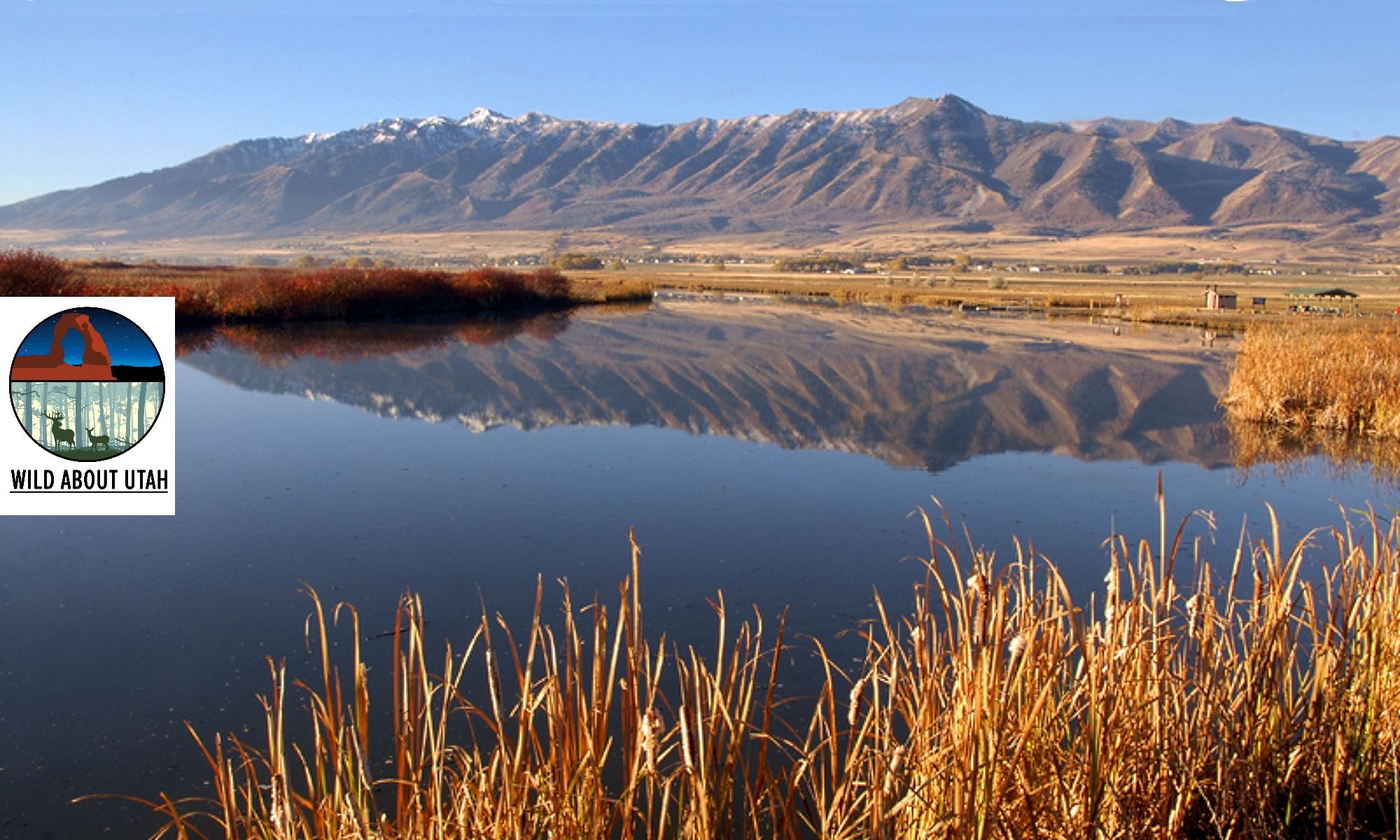
The Bear River Range and River

Bear River Courtesy USDA Forest Service usda-forest_service_bear_river-250x188
Bear River
Courtesy USDA Forest Service
usda-forest_service_bear_river-250×188
Cache Valley Utah and the Bear River range that border its eastern edge are anomalies. Especially considering the abundance of water coursing through its canyons and valley bottom. Following a prolonged drought in the Salt Lake Valley in the 1850’s, it was the abundant wetland plants in cache valley’s center that first enticed Mormon pioneers to settle here. Fed by numerous streams discharging from the Bear River range and the mighty Bear River, these waters were trapped by the fine sediments of Lake Bonneville. The result was lush green forage, even in dry years. The native tribes and mountain men knew it well, and followed the wildlife which flourished here long before the arrival of pioneers.

I’ve quenched my thirst from the countless springs found in our eastern canyons and basins, always a reminder of our good fortune. One might ask, what set of circumstances allow Cache Valley to be so well watered? What follows are my hypotheses. A combination of geology, and climate.

The Bear River range, a subset of the Wasatch, is close to 20 miles wide, and averages well over 8,000 feet in elevation, topping just shy of 10,000 feet at Naomi Peak. Its height and width allow it to capture an abundant snowpack in normal years. The regional climate may be partially responsible as well. Extreme cold temperatures compared to surrounding mountains, the second coldest measured in the 48 states, atop Logan Canyon, enhance precipitation.

Geologically this mountain range is composed primarily of limestone and dolostone, both are excellent formations for absorbing water, which reappears as springs forming the headwaters of its numerous streams. As snow melts, water seeps through the broken limestone, referred to as Karst topography, until it hits an impervious layer of shale or mudstone, where it collects and eventually punches through a fractured seam of rock, to surface as a spring.

All are tributaries of the Bear River, plummeting from the north slope of the Uintah’s, a unique river system with its headwaters and mouth close to the same latitude. It provides nearly 2/3rds of the service water flowing into the Great Salt Lake. This is the longest river in North America which doesn’t end up in an ocean. With a changing climate proposed, further impoundment and diversions of these waters, the future of our unique hydrology is under constant threat. I wish us great wisdom in how we chose to manage this vital resource.

This Is Jack Green, and Yes, I’m wild about Utah.

Credits:

Pictures: Bear River Courtesy USDA Forest Service
Sound: Courtesy Kevin Colver
Text: Jack Greene, Bridgerland Audubon Society

Additional Reading:

Lopez, Tom, Bear River Range, IDAHO: A Climbing Guide, https://www.idahoaclimbingguide.com/bookupdates/bear-river-range/

Sempler, Ryhan, Menuz, Diane, Emerson, Richard, Mapping Wetlands in the Upper Bear River Watershed, Glad You Asked, Utah Geological Survey, https://geology.utah.gov/map-pub/survey-notes/mapping-wetlands-upper-bear-river/

Hylland, Rebecca, What are Igneous, Sedimentary & Metamorphic Rocks?, Glad You Asked, Utah Geological Survey, https://geology.utah.gov/map-pub/survey-notes/glad-you-asked/igneous-sedimentary-metamorphic-rocks/
The Bear River’s History and Contributions

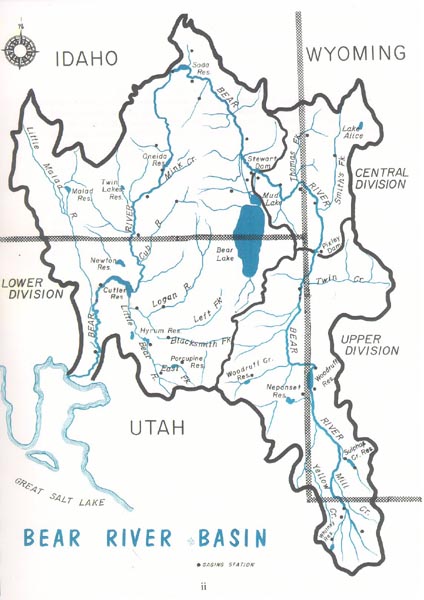
The Bear River's History and Contributions: Bear River Basin Courtesy Utah Division of Water Rights bear.river_.basis_.waterrights.utah_.gov_.250x354.jpg
Bear River Basin
Courtesy Utah Division of Water Rights
bear.river_.basis_.waterrights.utah_.gov_.250×354.jpg
The Bear River meanders almost 500 miles from its headwaters in Utah’s Uinta Mountains to its mouth at the Great Salt Lake, making it the longest river in North America which does not empty into an ocean. Instead, the Bear River serves as the main source of fresh water for the Great Salt Lake, a vast terminal lake in the Great Basin with no outlet except evaporation. This hasn’t always been the case, though. The Bear River once flowed north, serving as a tributary of the Snake River, and ultimately reached the Pacific Ocean via the Columbia River. That is until about 140,000 years ago when the earth erupted in present-day southeast Idaho and spilled lava across the Bear River’s path.

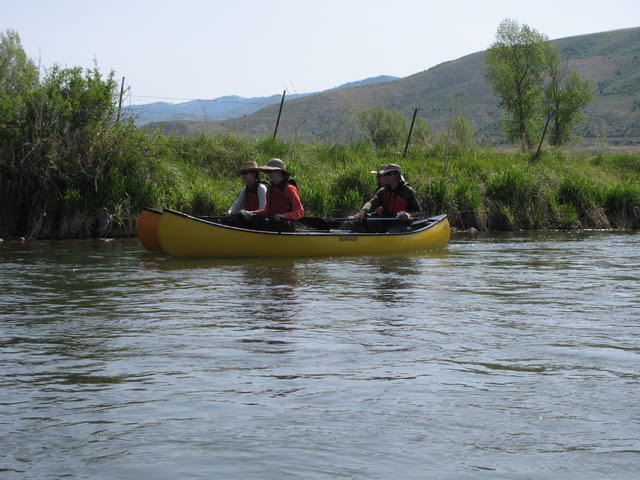
The Bear River's History and Contributions: Canoeing on the Bear River, Cutler Reservoir Courtesy & Copyright Bryan Dixon, Photographer
Canoeing on the Bear River, Cutler Reservoir
Courtesy & Copyright Bryan Dixon, Photographer
Now obstructed by expansive lava fields hardening into immense walls of basalt rock, the Bear dog-legged to the south and became—for the first time—a source of fresh water for the ancient inland sea that would eventually become the Great Salt Lake. The river was tenacious, though, and spent its time not only feeding fresh water to ancestors of the Great Salt Lake but also chiseling away at the basalt columns that obstructed its way toward the sea. The river was finally rewarded for its efforts millennia after having been cut off from the Snake and Columbia River Basins, and once again became a tributary of the Snake River. This fate would not last, however. Roughly 35,000 years ago, violent geology would have its way again. More lava flows around present-day Soda Springs, Idaho, bent the Bear River back toward the Great Basin where it still empties today.

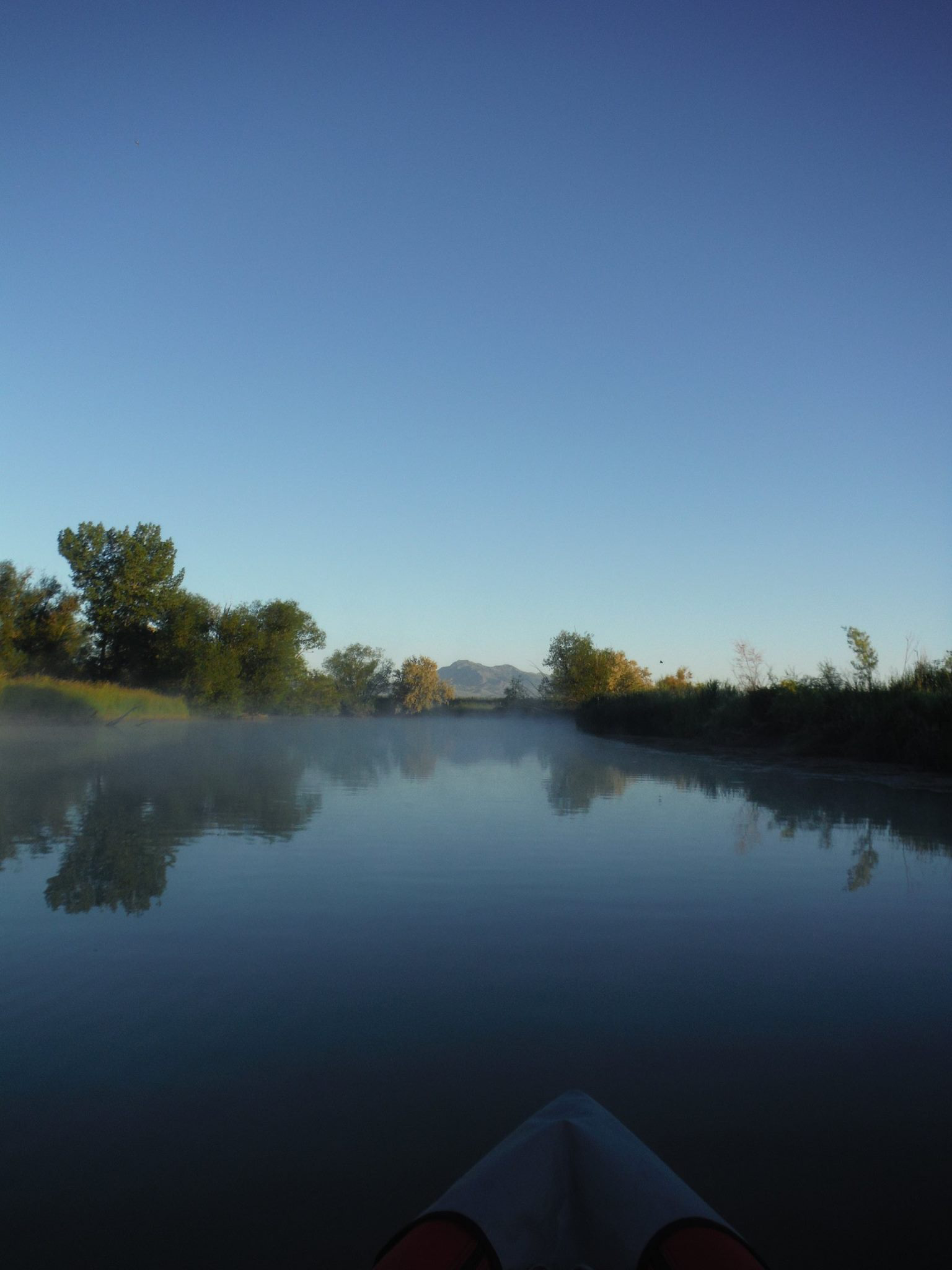
The Bear River's History and Contributions: the Bear River between Benson and Cutler reservoir in Cache Valley. Courtesy & Copyright Josh Boling, Photographer
the Bear River between Benson and Cutler reservoir in Cache Valley.
Courtesy & Copyright Josh Boling, Photographer
And this has been a boon for the millions of residents—Homo sapiens and otherwise—of the Wasatch Front here in Utah. Let’s consider for a moment what life in central and northern Utah would be like if not for the Bear River. For starters, the Great Salt Lake would lose 60% of its annual inflow, drastically reducing its volume. I wonder if Brigham Young and his Saints would have even considered settling in the Salt Lake Valley after enduring the many lake-bed-dust storms courtesy of the Great Salt Lake that are becoming a growing concern today. We would certainly be deprived of the world-class migratory bird and wetland habitat supported by the Bear River at the famous Bear River Migratory Bird Refuge. Last fall, Ogden’s Standard Examiner newspaper reported that, quote, “the river had disappeared into a vast mudflat that used to be Bear River Bay.” Experts cited irrigation, municipal, and habitat uses in addition to a host of environmental and climate factors as causes of the Bear River becoming “tapped out” before it reached the Great Salt Lake. A snowpack that has doubled last year’s total according to the Salt Lake Tribune has the Bear River Basin’s snowpack brimming at nearly 300% its average this time of year. This promises to turn things around for the Bear River and the many species which depend upon it.

A complex and interdependent collection of variables impact the Bear River and its hydrologic fate—not least of which are humans, ecology, climate, and the occasional volcanic eruption.

I’m Josh Boling, and I’m Wild About Utah!

Credits:
Images:
    Bear River Diagram Courtesy Utah Division of Water Rights
    Courtesy & Copyright Bryan Dixon
    Courtesy & Copyright Josh Boling
Sound:
Text: Josh Boling, 2019, Bridgerland Audubon Society

Sources & Additional Reading

Greene, Jack, The Bear River, Wild About Utah, May 24, 2018, https://wildaboututah.org/bear-river/

Beck, Russ, America’s Caveat River, Wild About Utah, Nov 16, 2016, https://wildaboututah.org/americas-caveat-river/

Hylland, Rebecca, What are Igneous, Sedimentary & Metamorphic Rocks?, Glad You Asked, Utah Geological Survey, https://geology.utah.gov/map-pub/survey-notes/glad-you-asked/igneous-sedimentary-metamorphic-rocks/
Lawn Reduction

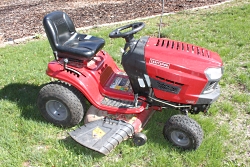
Lawn Reduction: Riding Lawnmower Courtesy & Copyright Ron Hellstern, Photographer
Riding Lawnmower
Courtesy & Copyright Ron Hellstern, Photographer
Traditional American landscaping focuses on maintaining a manicured green lawn. However, the National Wildlife Federation has some better environmental choices for people and wildlife by including native trees, shrubs, ground cover, prairie or meadow patches, flower beds and attractively mulched areas.
Did you know

  • Approximately 20 million U.S. acres are now planted as residential lawn.
  • 30-60% of urban freshwater is used for watering lawns.
  • 67 million pounds of synthetic pesticides are used on U.S. lawns annually.
  • Areas of lawn that include only one type of plant, such as grass, offer very little habitat value for wildlife.
  • Yard waste, mostly grass clippings, makes up 20% of municipal solid waste collected, and most of it ends up in landfills.
  • Reasons to reduce your lawn
  • Save time and money that you would normally spend on mowing and fertilizing grass.
  • Provide habitat and food for wildlife.
  • Conserve water.
  • Reduce lawn mower pollution and decrease run-off from fertilizers and pesticides.
  • Here are some ways to reduce your lawn and help wildlife
  • Use native plant species as ground cover instead of grass.
  • Install native trees and shrubs
  • Create a rock garden
  • Use mulched pathways
  • Provide meadow or prairie patches
  • Install a hedgerow
  • Plant an organic vegetable garden
  • Create a butterfly or hummingbird garden
  • Taking Action
    Make a plan of how you want your yard to look. Check with your local municipality, neighborhood, or homeowners’ association for regulations. Once you have decided on an area of your yard to convert, follow these simple suggestions:
  • Cover your turf grass with 6-10 layers of black & white newspaper or brown cardboard. There is no need to remove the grass first.
  • Make sure the sections overlap one another so that grass and weeds will not come up between the cracks.
  • Wet down the newspaper or cardboard.
  • Cover the newspaper or cardboard with a 4”- 6” layer of mulch or soil.
  • Allow turf grass and weeds to die back for 4-6 weeks.
  • Plant directly through the mulch and newspaper/cardboard. If you know you’re going to be planting trees or shrubs, dig the holes before putting down layers of paper.
  • Some other things to consider
  • Determine what native plants are already thriving in your site. Encourage the native plants already present and replace exotic invasive species with native ones. The Lady Bird Johnson Wildflower Center has lists of recommended native plants by region and state at www.wildflower.org/collections. There are 158 listed for Utah.
  • Organic mulch can reduce weeds, prevent erosion, improve soil nutrients and increase water holding capacity.
  • Borders of rock or weed can bring a sense of order to a “wild garden” in an urban or suburban neighborhood. This may make your natural landscape more acceptable to neighbors.
  • And don’t forget to make a place for people as well. A bench or path will accommodate this nicely and add to your enjoyment.
  • This is Ron Hellstern, and I am Wild About Utah.
     
    Credits:

    Images: Courtesy & Copyright
    Audio: Courtesy & Copyright Kevin Colver
    Text: Ron Hellstern, Cache Valley Wildlife Association

    Additional Reading

    Lawn Reduction, The National Wildlife Federation, https://www.nwf.org/-/media/PDFs/Garden-for-Wildlife/Gardening-Tips/Lawn-Reduction_web.ashx?la=en&hash=FAC102D0BDBBC0CCD97ECE01BB9A8E2F91E7C150

    Hadden, Evelyn J, Less Lawn, more life, LessLawn.com, https://www.lesslawn.com/

    Plant Lists & Collections, Recommended Species by State, Lady Bird Johnson Wildflower Center, www.wildflower.org/collections

    Habitat Heroes Explore Utah Biomes

    Utah is a wildly diverse place. Ecological and biological diversity are usually tied to an abundance of water; but here in Utah, despite our relative lack of the wet stuff, we boast of at least nine unique biomes spanning from the low-elevation Mojave Desert around St. George to the high Alpine Tundra of our many snowcapped mountain ranges. You can think of a biome as a large community of similar organisms and climates or a collection of similar habitats. Just recently, my third grade students wrapped up a semester-long investigation into seven of those biomes found in Utah including the high Alpine Tundra, Riparian/Montane Zone, Sagebrush Steppe, Wetlands, and the Great Basin, Colorado Plateau, and Mojave Deserts. We explored those biomes by way of researching a specific animal endemic in Utah to each of those biomes. We called our project “Habitat Heroes.” I’ll let a few of my students explain their findings.

    (Student readings)
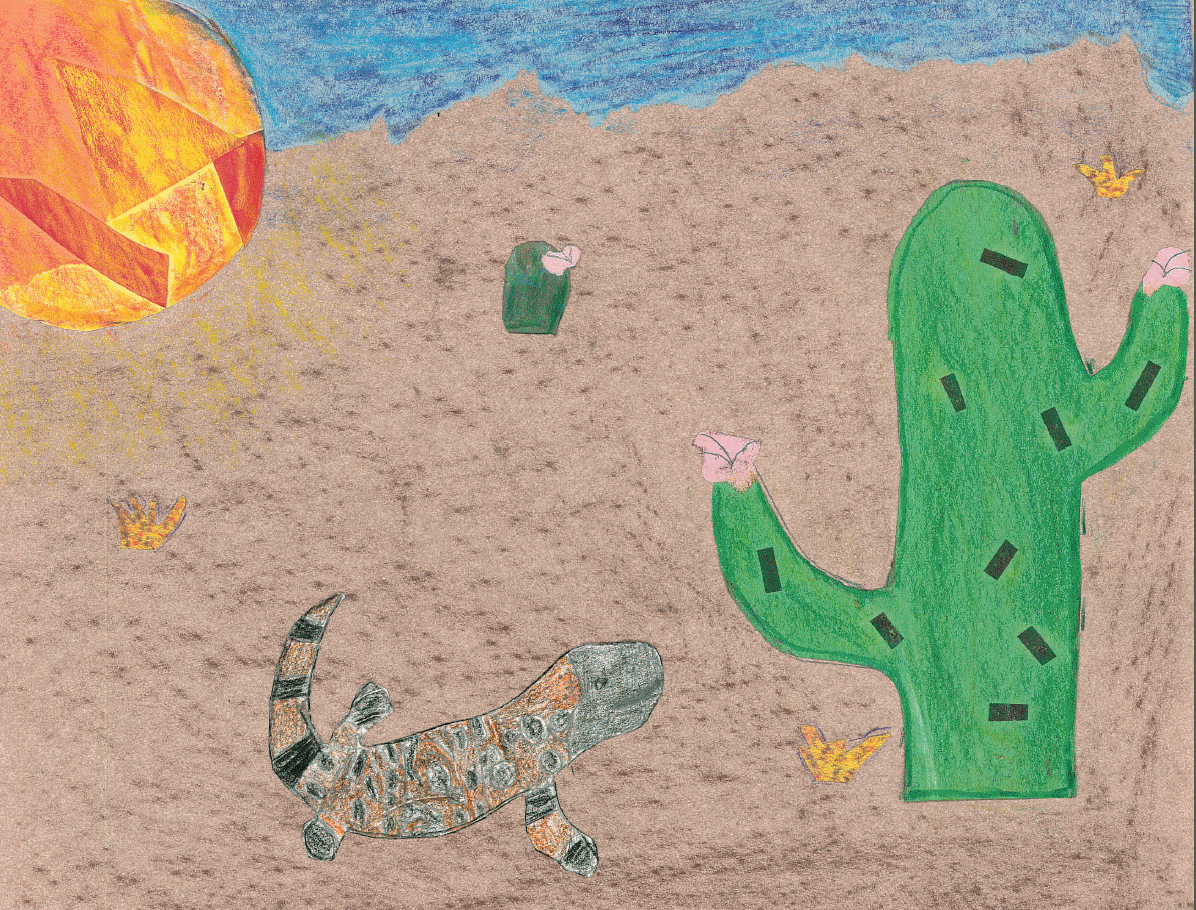
    Asher's Gila Monster Courtesy & Copyright EBLS (Full Student Name Redacted)
    Asher’s Gila Monster
    Courtesy & Copyright EBLS
    (Full Student Name Redacted)
    Asher’s Gila Monster:
    My name is Asher, and my animal is the Gila Monster. The Gila Monster lives in the Mojave desert biome in southwest Utah. Gila Monsters look like a lizard, just black and orange or pink and yellow with a black face and a short thick tail. Gila Monsters eat the eggs from ground birds, lizards, and snakes. Gila Monsters live in the Mojave desert in sandy areas and on rocky shelves and in burrows.
    Jane's Pygmy Rabbit Courtesy & Copyright EBLS (Full Student Name Redacted)
    Jane’s Pygmy Rabbit
    Courtesy & Copyright EBLS (Full Student Name Redacted)
    Jane’s Pygmy Rabbit:
    I am Jane, and I am going to tell you about the pygmy rabbit. The pygmy rabbit lives in the sagebrush steppe biome in Utah. Did you know that a pygmy rabbit can protect itself by hiding in the sagebrush? They eat sagebrush and they drink lake water and river water. They have to chew on food to keep their teeth short.
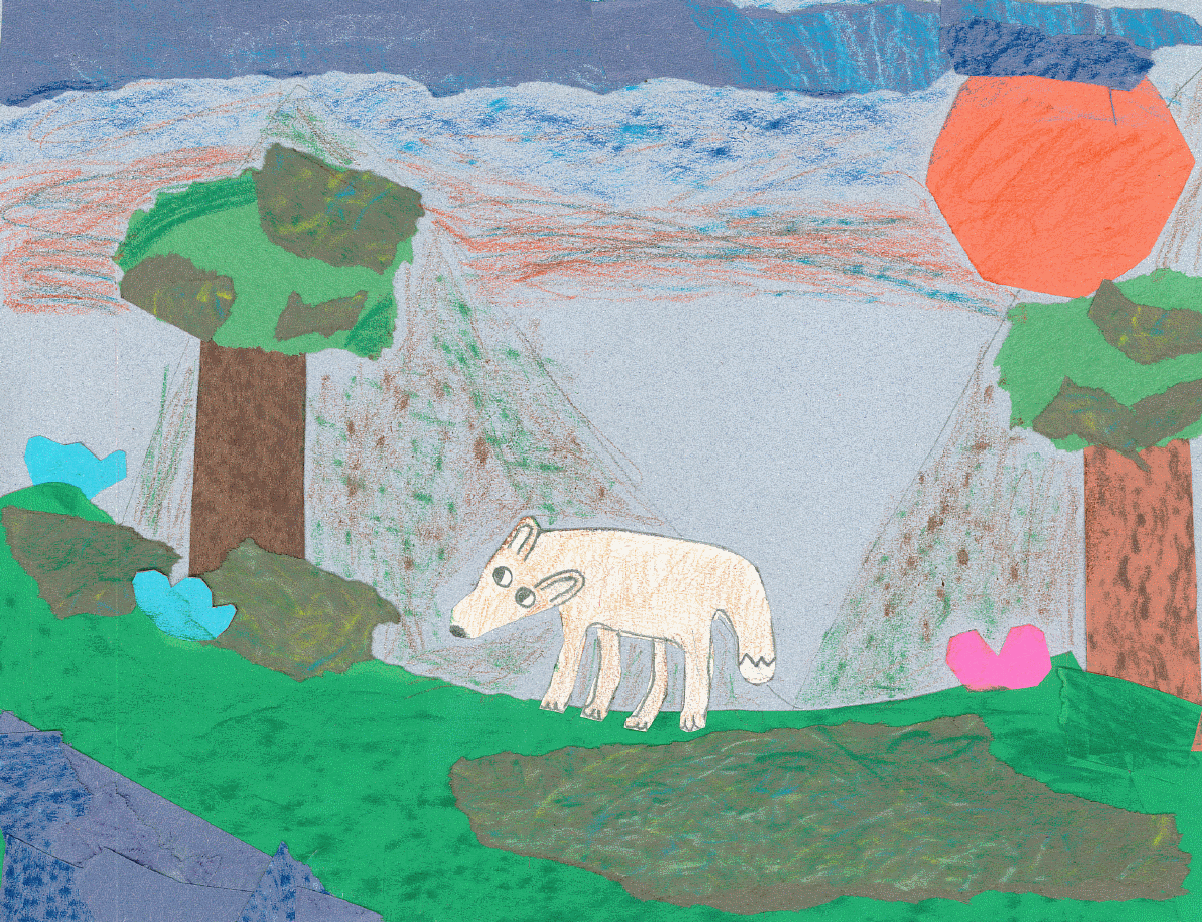
    Haven's Red Fox Courtesy & Copyright EBLS (Full Student Name Redacted)
    Haven’s Red Fox
    Courtesy & Copyright EBLS (Full Student Name Redacted)
    Haven’s Red Fox:
    My name is Haven, and my animal is the red fox. The red fox lives in the alpine tundra biome in Utah. Red foxes eat small mammals, berries, insects, and other food, too. They have huge ears so they can hear when other animals are coming. The red fox is a really tricky and aggressive animal because it can do a lot of really tricky and aggressive things!

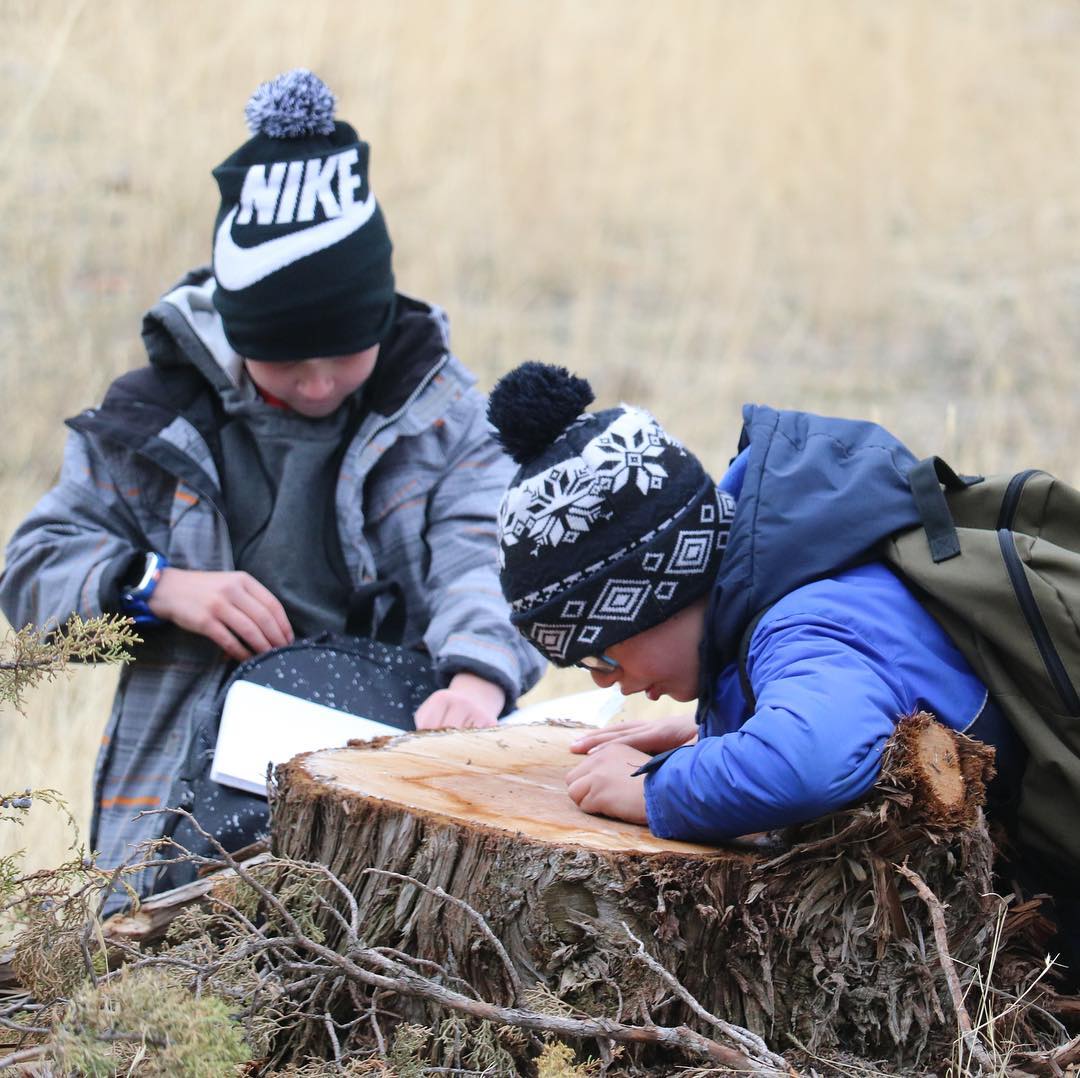
    In addition to researching the different biomes and learning about the adaptations animals must possess in order to survive there, these third graders have been visiting the several biomes local to Cache Valley and investigating their research animals’ habitats. These experiences have been powerful in helping students realize what it’s really like to exist in the wilds of Utah.

    I’m Josh Boling, and I’m Wild About Utah!

    Investigating Beaver Habitats Along Temple Fork Courtesy & Copyright Eric Newell, EBLS
    Investigating Beaver Habitats Along Temple Fork
    Courtesy & Copyright Eric Newell, EBLS
    Exploring an alpine-type biome along beaver creek Courtesy & Copyright Eric Newell, EBLS
    Exploring an alpine-type biome along beaver creek
    Courtesy & Copyright Eric Newell, EBLS
    Flying like the birds; Bear River Migratory Bird Refuge Courtesy & Copyright Eric Newell, EBLS
    Flying like the birds; Bear River Migratory Bird Refuge
    Courtesy & Copyright Eric Newell, EBLS
    Looking at tree migration in Green Canyon Courtesy & Copyright Eric Newell, EBLS
    Looking at tree migration in Green Canyon
    Courtesy & Copyright Eric Newell, EBLS
    Investigating Beaver Curtis Creek wanderings; Hardware Ranch; Blacksmith Fork Canyon Courtesy & Copyright Eric Newell, EBLS
    Investigating Beaver Curtis Creek wanderings; Hardware Ranch; Blacksmith Fork Canyon
    Courtesy & Copyright Eric Newell, EBLS

    Credits:
    Images:
        Artwork Courtesy & Copyright Josh Boling’s 3rd Grade students
        Special thanks to Lisa Saunderson, Edith Bowen Lab School Art Teacher, for her help in instructing the students toward the creation of their artwork
        Photos Courtesy & Copyright Eric Newell, Edith Bowen Laboratory School Field Experience Director
    Sound:
    Text: Josh Boling, 2017, Bridgerland Audubon Society

    Sources & Additional Reading

    Boling, Josh and students, Habitat Heroes Explore More Utah Biomes, Wild About Utah, Apr 8, 2019, https://wildaboututah.org/explore-utah-biomes/

    Edith Bowen Laboratory School, https://edithbowen.usu.edu/

    Biomes, Kimball’s Biology Pages, https://www.biology-pages.info/B/Biomes.html

    Mission Biomes, NASA Earth Observatory, https://earthobservatory.nasa.gov/experiments/biome

    The World’s Biomes, University of California Museum of Paleontology, UC Berkeley, https://ucmp.berkeley.edu/glossary/gloss5/biome/