Dashboard Shows
Peak Need for Dark Skies
and the Mantra to
Dim the Lights for Birds at Night

Milky Way above Chesler Park Canyonlands National Park Courtesy US National Park Service, Emily Ogden, Photographer

Milky Way above Chesler Park
Canyonlands National Park
Courtesy US National Park Service,
Emily Ogden, Photographer
Canyonlands is one of many parks in southern Utah with the International Dark Sky Park designation

 
BirdCast Migration Dashboard https://dashboard.birdcast.info/ Courtesy BirdCast, The Cornell Lab of Ornithology Cornell University

BirdCast Migration Dashboard
https://dashboard.birdcast.info/
Courtesy BirdCast, The Cornell Lab of Ornithology
Cornell University

Songbirds migrate at night to avoid predators, air turbulence, and daytime heat. Down here on the ground we are unaware of the miraculous and essential voyagers flying up to 10,000 feet above us, but thanks to dedicated scientists collaborating for years on end we have free access to the data and graphs of these massive population shifts. The BirdCast Dashboard uses weather radar to track bird migrations, providing real time data showing peak migrations at the website dashboard.birdcast.info.

Did you know that World Migratory Bird Day is celebrated in May and October? Those are the peak months for spring and fall migrations, and the magnitudes of those flocks are considerable. Two thirds of songbirds migrate at night.

It’s important to know when migrations are occurring because skyglow from artificial lighting causes bird disorientation and millions of bird fatalities each and every year. The declining bird population is problematic for many reasons, not least of which because some of the most intrepid travelers like the three-inch-long Rufous Hummingbird, which travels 3,900 miles each way from Alaska to Mexico, are keystone species with ecosystem services such as pollination and consumption of pests such as aphids and mosquitoes.

The Bobolink travels 12,500 miles to and from southern South America every year – those imperiled birds breeding at the west end of Logan may travel the equivalent of 4 or 5 times around the circumference of the earth throughout their lifetime. They come to Cache Valley for the habitat, stay to raise their young, and then head back to their distant winter feeding grounds.

A few top-notch steps toward bird-friendly living include the prevention of light trespass and skyglow, especially from 11 p.m. to 6 a.m., March – May, and August – October. Close curtains to prevent the indoor light from escaping, and avoid blue light outdoors – choose warm white or amber lights, and shield light bulbs to direct light downward. Motion-activated light bulbs are a great way to safely light the way while cutting down on unnecessary outdoor lighting, especially since there’s no clear scientific evidence that outdoor lighting reduces crime. Excess light, on the other hand, is a crime, and light trespass is an enforceable infraction. Light pollution is harmful to humans and deadly for birds.

Logan Mayor Holly Daines signed a Proclamation to Dim the Lights for Birds at Night because reducing skyglow and light trespass saves energy and birds by reducing the often fatal disorientation caused by artificial light.

Dark Skies are filled with bright stars, so by jingles, what say we all “Dim the lights for birds at night!

I’m Hilary Shughart with the Bridgerland Audubon Society, and I am Wild About Utah!

Credits:
Images: Milky Way above Chesler Park, Canyonlands National Park, Courtesy US National Park Service, Emily Ogden, Photographer, https://www.nps.gov/media/photo/gallery-item.htm?id=286169fc-2bab-40e0-bf8b-a13b5170aeb3&gid=2ADECB87-1DD8-B71B-0B09BD0B18C96667
Screenshot: BirdCast Migration Dashboard, Courtesy BirdCast, The Cornell Lab of Ornithology, Cornell University, https://dashboard.birdcast.info/
Featured Audio: Courtesy & Copyright © Kevin Colver, https://wildstore.wildsanctuary.com/collections/special-collections/kevin-colver
Text: Hilary Shughart, President, https://bridgerlandaudubon.org/
Additional Reading: Hilary Shughart and Lyle Bingham, https://bridgerlandaudubon.org/

Additional Reading

WildAboutUtah pieces by Hilary Shughart, https://wildaboututah.org/author/hilary-shughart/

Miller, Zach, Dark Sky Parks, Wild About Utah, Nov 2, 2020, https://wildaboututah.org/dark-sky-parks/

Leavitt, Shauna, Natural Quiet and Darkness in our National Parks, Wild About Utah, May 6, 2019 & August 3, 2020, https://wildaboututah.org/natural-quiet-and-darkness-in-our-national-parks/

Rask, Kajler, Dark Skies, Wild About Utah, Jan 1, 2018, https://wildaboututah.org/dark-skies/

Dark Skies, Bird-Friendly Living, Advocacy, Bridgerland Audubon Society, May 2022, https://bridgerlandaudubon.org/our-projects/advocacy/bird-friendly-living/dark-skies/

Dim the Lights for Birds at Night, Bridgerland Audubon Society, May 3, 2022, https://bridgerlandaudubon.org/our-projects/advocacy/bird-friendly-living/dark-skies/

International Dark Skies Association, Utah Chapter, https://utah.darksky.ngo/

Welzbacker, Hannah, Tracking a Night-Time River of Birds, Cool Green Science, The Nature Conservancy, April 13, 2021, https://blog.nature.org/science/2021/04/13/tracking-a-night-time-river-of-birds/?fbclid=IwAR18LKCQUmSlb-hHM1u4FXfVe-GqyWTwiPx91obUQbq2uB9kcPU2djlCnlk

BirdCast Dashboard, The Cornell Lab of Ornithology, Cornell University, https://dashboard.birdcast.info/

Global Bird Collision Mapper, Fatal Light Awareness Program (FLAP) Canada, https://flap.org/
See also https://birdmapper.org/

Lowe, Joe, Do Hummingbirds Migrate?, American Bird Conservancy, September 12, 2019, https://abcbirds.org/blog/do-hummingbirds-migrate/

Bobolink (Dolichonyx oryzivorus), Species, Utah Division of Wildlife Resources, https://fieldguide.wildlife.utah.gov/?species=dolichonyx%20oryzivorus

Bobolink (Dolichonyx oryzivorus), All About Birds, Cornell Lab of Ornithology, Cornell University, https://www.allaboutbirds.org/guide/Bobolink

Lighting, Crime and Safety, International Dark-Sky Association, https://www.darksky.org/light-pollution/lighting-crime-and-safety/#:~:text=There%20is%20no%20clear%20scientific,cost%20a%20lot%20of%20money

2022 Proclamation “Dim the Lights for Birds at Night”, https://bridgerlandaudubon.org/dim-the-lights-for-birds-at-night/

The use of the “by jingles” exclamation is in homage to Warren Dahlin’s moving Moth Radio Hour story “Open My Eyes”, in which he “makes a friend who stays with him in life and in death.” Heard on Utah Public Radio (5/28/22), The Moth, https://themoth.org/stories/open-my-eyes

Owens, Avalon & Cochard, Précillia & Durrant, Joanna & Farnworth, Bridgette & Perkin, Elizabeth & Seymoure, Brett. (2019). Light pollution is a driver of insect declines. Biological Conservation. 241. 108259. 10.1016/j.biocon.2019.108259. https://doi.org/10.1016/j.biocon.2019.108259

Great-tailed Grackles

Great-Tailed Grackle Male
Courtesy US FWS, John & Karen Hollingsworth, Photographers
Great-Tailed Grackle Male
Courtesy US FWS, John & Karen Hollingsworth, Photographers
My formal introduction to great-tailed grackles was on a birding trip to Box Elder County. We stopped at the Walmart parking lot in Brigham City where Dick Hurren took a cup of cat food and tossed it out in front of our parked car. Then we watched the grackles fly in. We joked, at the time, that grackles seemed to spontaneously show up at new stores. It’s almost as if they hitchhike on semis.

The Brigham City grackles had long, V-shaped tails. Dick explained that three grackle species are native in the US. Florida’s boat-tailed grackles are found along the east and gulf coasts and common grackles are found mostly east of the Rockies. Mexican or great-tailed grackles have become the most common in developed areas of the West; although, according to eBird and UtahBirds.org, both common and great-tailed varieties frequent Utah.

Grackle species are also distinguished by their size and color: between a robin and a crow in size, they are about the same length as American crows, but not as heavy. Common grackles have more varied colors and long tails. Boat-tailed grackles have dark eyes; whereas great-tailed males are iridescent black with piercing yellow eyes. Female great-tails are dark brown above and paler below, with a buff-colored throat and a stripe above the eye. Juveniles have coloring similar to females with a dark eye.

Omnivorous, grackles forage in fields, feedlots, golf courses, cemeteries, parks, neighborhoods, and parking lots. Trees and reeds near water provide roosting and breeding sites where larger males claim their flock’s territory with song.

Great-tails have an unusually large repertoire of vocalizations that are used year-round. Flamboyant males perform a wider variety, while females engage mostly in chattering sounds. “Chut” from females and “Clack” from males warn of humans or other predators. Even though most female calls are low-key, there are reports of females singing their own territorial song.
Because they are loud, and large numbers of birds can leave great deposits of droppings, grackles are often considered pests. This designation is especially true in Texas and other southern states where flocks of 100,000 or more roam parking lots.

And they are smart! Icterids, the New World blackbirds, including bobolinks, meadowlarks, ravens, crows, and grackles are set apart from many birds by their intelligence. Grackles adapt their behavior with experience and habitat. The Audubon website notes: “They are clever foragers: Great-tailed Grackles can solve Aesop’s Fable tests, dropping stones into a container of water in order to sufficiently raise the level to pluck out a prize ….”

Sometimes I enjoy stepping back and observing parking lot ecology. I look for grackles. Then I marvel at how our world would look and smell without birds to clean up after us. Above all, I enjoy hearing male and female great-tailed grackles singing in the trees or watching them forage between cars. Take five and give it a try!

I’m Lyle Bingham and I’m Wild About Utah

Credits:
Photos: Courtesy US FWS, John & Karen Hollingsworth, Photographers
Featured Audio: Courtesy & Copyright © Friend Weller, Utah Public Radio upr.org
Text: Lyle Bingham, https://bridgerlandaudubon.org/
Additional Reading: Lyle Bingham, https://bridgerlandaudubon.org/

Additional Reading

Lyle Bingham’s Wild About Utah Postings

Great Tailed Grackle, AllAboutBirds, Cornell Lab of Ornithology, Cornell University, https://www.allaboutbirds.org/guide/Great-tailed_Grackle

Great-tailed Grackle – Quiscalus mexicanus, Utah Birds, Utah County Birders, http://www.utahbirds.org/birdsofutah/ProfilesD-K/GreatTailedGrackle.htm
Other Photos: http://www.utahbirds.org/birdsofutah/BirdsD-K/GreatTailGrackle.htm

Great-tailed Grackle, Field Guide, National Audubon, https://www.audubon.org/field-guide/bird/great-tailed-grackle

Everything is bigger in Texas: Grackle Flock at a Grocery Store in Houston-Courtesy YouTube and KHOU Houston Channel 11

Solar Eclipse Behaviors

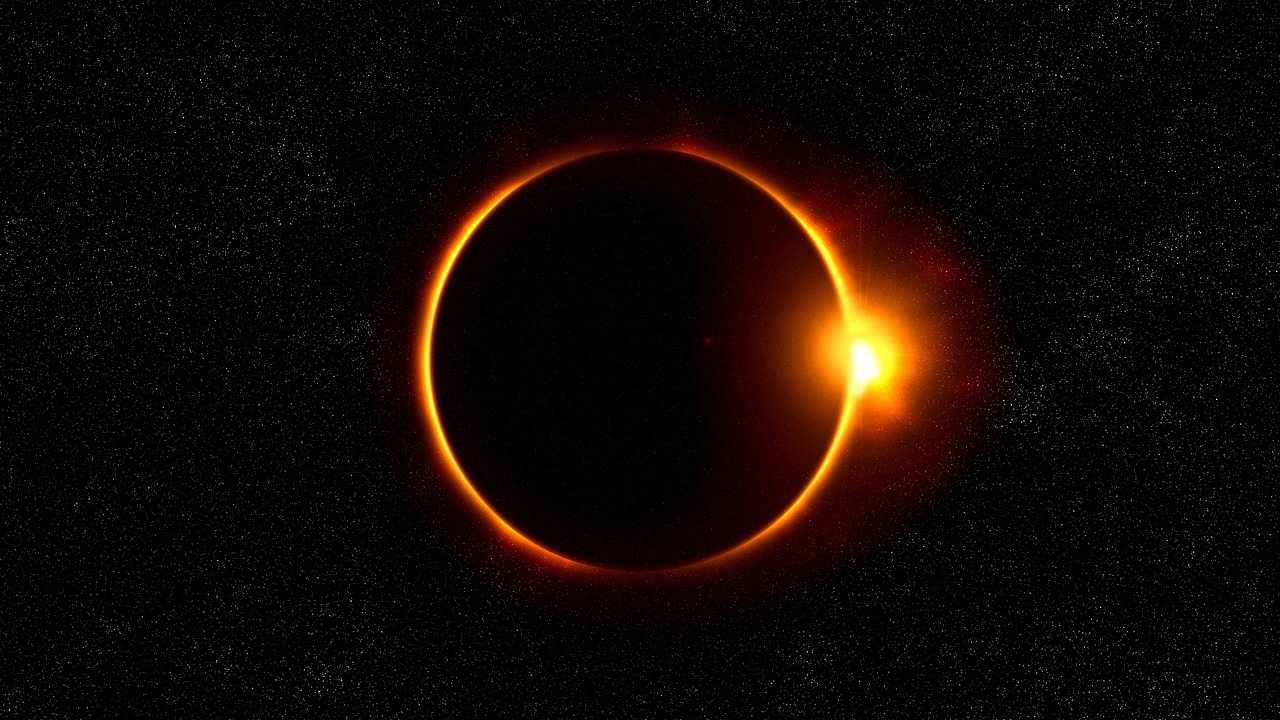
Solar Eclipse-The Diamond Ring, Courtesy Pixabay, Buddy Nath, Contributor

Solar Eclipse-The Diamond Ring
Courtesy Pixabay
Buddy Nath, Contributor

I believe we’re all aware that the amount of light has major influence on wildlife activity, as it does our own, triggering everything from breeding and feeding activity and various behaviors in general. Thus the very short period of light variation during a solar eclipse has piqued my interest.

When a total eclipse crossed over New England in 1932, researchers put out a call for people to share their wildlife observations probably the first study to intentionally track animals during an eclipse—people reported owls hooting, pigeons returning to roost, and a general pattern of bird behavior that suggested “fear, bewilderment, Purple Martins pausing their foraging and nighthawks flying in the afternoon. Whooping cranes dance shortly after the eclipse, and flamingos congregate. For many birds, it’s probably a once-in-a-lifetime experience.

A citizen scientist watched a yellow okra flower close during totality, just as it would at night—a favorite observation of Alison Young, co-director of the Center for Biodiversity and Community Science at the California Academy of Sciences and lead author of a paper describing the findings. The flower’s response was unexpected, she says in an email, since totality wasn’t very long.

During the 2017 eclipse, more than 600 observers submitted their findings to iNaturalist” a community science effort where observations described an absence of wildlife during the eclipse’s peak: busy bird feeders clearing out, insects going quiet, flowers closing up. Other community scientists noted bees quieting their buzzing in flower patches, zoo animals going through their nighttime routines, and Chimney Swifts swooping and twittering like it was dusk

The Eclipse Soundscapes project is also looking for observers to record and share “field notes” of the changes they see, hear, and feel during the eclipse, whether they’re in the total path or not. By going beyond the visuals, the Soundscapes team hopes to make the big day more accessible for blind or low-vision people who are often left out of astronomy, and to help everyone have a deeper experience of the rare event. “What we’re trying to do is have people be very mindful during the eclipse, and actually use all of their senses to determine what changes. Their resulting study found that as the moon started to cover up the sun, there was a drop in biological activity in the air—suggesting that day-flying birds and insects were coming down to rest.

Countrywide, people noticed swallows and swifts flocking as darkness fell. Frogs and crickets, common elements of an evening soundscape, started to call, while diurnal cicadas stopped making noise. Ants appeared to slow down or stop moving, and even domestic chickens responded—hens gathered together and got quiet, while roosters crowed.

Even in the partial zone, you can still pay attention to how nature responds—and contribute to science. Sending in your observations through a platform like iNaturalist or eBird can help provide valuable data for future research,

Jack Greene for Bridgerland Audubon, and I’m wild about Utah!

Credits:

Images: Eclipse Pixabay, AlpineDon, Contributor, https://pixabay.com/photos/snow-canyon-state-park-utah-1066145/
Featured Audio: Courtesy & © Anderson, Howe and Wakeman,
Courtesy & Copyright © Kevin Colver, https://wildstore.wildsanctuary.com/collections/special-collections/kevin-colver
Also includes audio Courtesy & © J. Chase & K.W. Baldwin
Text: Jack Greene, Bridgerland Audubon, https://bridgerlandaudubon.org/
Additional Reading: Lyle Bingham and Jack Greene, Author, Bridgerland Audubon, https://bridgerlandaudubon.org/

Additional Reading:

Jack Greene’s Postings on Wild About Utah, https://wildaboututah.org/author/jack/

iNaturalist
Ohio Wildlife Observations: Solar Eclipse 2024 https://www.inaturalist.org/projects/ohio-wildlife-observations-solar-eclipse-2024

eBird

The Eclipse Soundscapes project

2024 Total Solar Eclipse: Through the Eyes of NASA

EarthSky: How Will Animals React During the Eclipse?

Watch Videos from EarthSky Countdown to Eclipse 2024: https://www.youtube.com/playlist?list=PLcwd1eS7Gpr6QrjJU7aH5K7qBCIb39ECP
Day

Whitt, Kelly Kizer, When is the next total solar eclipse? April 9, 2024, https://earthsky.org/astronomy-essentials/when-is-the-next-total-solar-eclipse-dates-location/

Mallard Musings

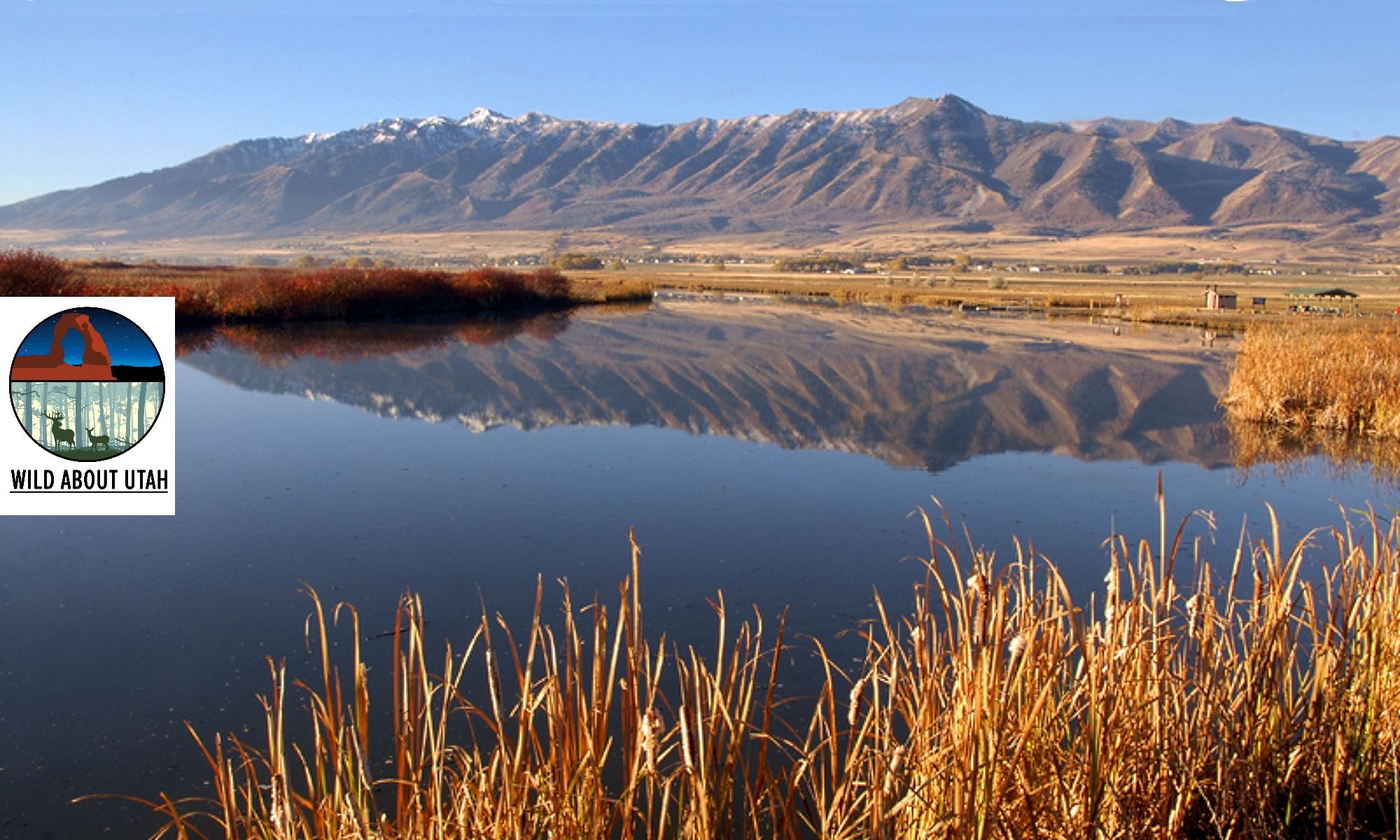
Mallard Musings: Fall Migration at the Bear River Migratory Bird Refuge, Courtesy & Copyright Brian W. Ferguson, Photographer
Fall Migration at the Bear River Migratory Bird Refuge
Courtesy & Copyright Brian W. Ferguson, Photographer
The Bear River Mountains near the Utah/Idaho border are the headwaters of the Logan River, which flows southwest through Logan Canyon, works its way westward through Logan, and converges with the Little Bear and Bear River about 5 miles west of town. All three rivers are halted by Cutler Dam to form Cutler Reservoir. The Bear River exits the dam which continues southwest and drains into the Great Salt Lake. The portion of the Great Salt Lake where the Bear River drains is managed by the federal Bear River Migratory Bird Refuge which holds spectacular opportunities to view some of nature’s most stunning birds. With a lovely visitor’s center and an auto tour route, even an inexperienced outdoorsman is likely to have a magnificent adventure observing birds interacting in an unmolested manner, unpressured by many elements of human development. If you haven’t ventured there, I recommend doing so and I suggest starting your journey at the visitor’s center near Brigham City. However, this segment is not about the fantastical birds at the Bear River Migratory Bird Refuge. Instead, it’s about a bird that many people see daily, and like me, have drifted through years of life without appreciating their beauty or their behavior.

Labs Alert by Passing Mallards, Courtesy & Copyright Joseph Kozlowski, Photographer
Labs Alert by Passing Mallards
Courtesy & Copyright Joseph Kozlowski, Photographer

Perfectly Camouflaged Pair, Courtesy & Copyright Joseph Kozlowski, Photographer Perfectly Camouflaged Pair
Courtesy & Copyright Joseph Kozlowski, Photographer

Ready for Takeoff, Courtesy & Copyright Joseph Kozlowski, Photographer Ready for Takeoff
Courtesy & Copyright Joseph Kozlowski, Photographer

Game of Tag, Courtesy & Copyright Joseph Kozlowski, Photographer Game of Tag
Courtesy & Copyright Joseph Kozlowski, Photographer

My back yard abuts the Logan River as it gently meanders through Logan, UT and my two Labrador Retrievers and I spend many sunny hours sitting in a lawn chair by its banks, enjoying the sound of water and wildlife that call this riverway home. Along with the typical presence of the Black-Capped Chickadees, Belted Kingfishers, American Robins, and Mourning Doves, the stunning green-headed Mallard Duck is a daily companion; one I have grown quite fond of. Often moving in pairs, these boisterous ducks go up and down the river. Sometimes they are flying, one way or the other, wings gliding but six inches off the top of the water. My wet tongued friends are always first to alert me of the flying passers when their heads pop up and ears prick alert. It seems like a dance for the ducks, as one launches from the water for no apparent reason, luring the others to follow. They fly but 50 yards up or down and raucously splash back into the water. No doubt, it seems that a hen is always leading the charge with one, or multiple, green heads following her around. Other times these ducks are bobbling along on the water this way or that. On their way downstream, they seem to stay in the middle and just bounce in the current like a bobber bobs on windy ripples. But on their way upstream, the perfectly camouflaged birds blend into the twigs and boulders on the bank as they pick their way along the side eddies and dabble as they go, heads down and butts erect, foraging for any aquatic insect or vegetation they may find nestled in the stones and debris along the riverbed.

These ducks don’t just stay in the waterway, and often frequent the yards along the river. When on land, these Mallards engage in a game of tag that seems both exhausting and exciting. The drakes seem to chase anything that comes their way, whether it is another drake or a hen. With obvious intentions, the game seems to escalate in the late winter/early spring months as the greenheads become vehemently passionate. These courtship rituals are quite a fascinating site to behold.

So thank you Mallards, for my time by the river just wouldn’t be the same without you to keep me company, and to stir observation and reflection.

This is Dr. Joseph Kozlowski, and I am Wild about Utah!

Credits:

Images: Fall Migration at the Bear River Migratory Bird Refuge-Courtesy & Copyright Brian W. Ferguson, Photographer, Used by Permission
All other images, as marked, Courtesy & Copyright Joseph Kozlowski, Photographer
Audio: Courtesy & © Friend Weller, https://upr.org/, Kevin Colver https://wildstore.wildsanctuary.com/collections/special-collections and J. Chase and K.W. Baldwin. https://upr.org/
Text:     Joseph Kozlowski, Edith Bowen Laboratory School, Utah State University https://edithbowen.usu.edu/
Additional Reading Links: Joseph Kozlowski & Lyle Bingham

Additional Reading:

Joseph (Joey) Kozlowski’s pieces on Wild About Utah: https://wildaboututah.org/author/joseph-kowlowski/

Mallard, Ducks Unlimited, https://www.ducks.org/hunting/waterfowl-id/mallard

Mallard Overview, All About Birds, Cornell Lab of Ornithology, https://www.allaboutbirds.org/guide/Mallard/overview

Bear River Migratory Bird Refuge, US Fish & Wildlife Service, US Department of the Interior, https://www.fws.gov/refuge/bear-river-migratory-bird

About Logan, Logan City, UT, https://www.loganutah.org/visitors/about_logan/index.php

Leavitt, Shauna, The Ecology in and around the Logan River, Wild About Utah, December 2, 2018, https://wildaboututah.org/the-ecology-in-and-around-the-logan-river/