Delta’s Snow Goose Festival

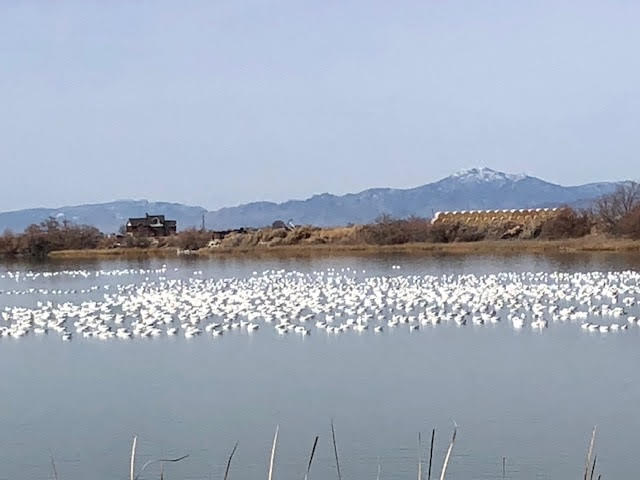
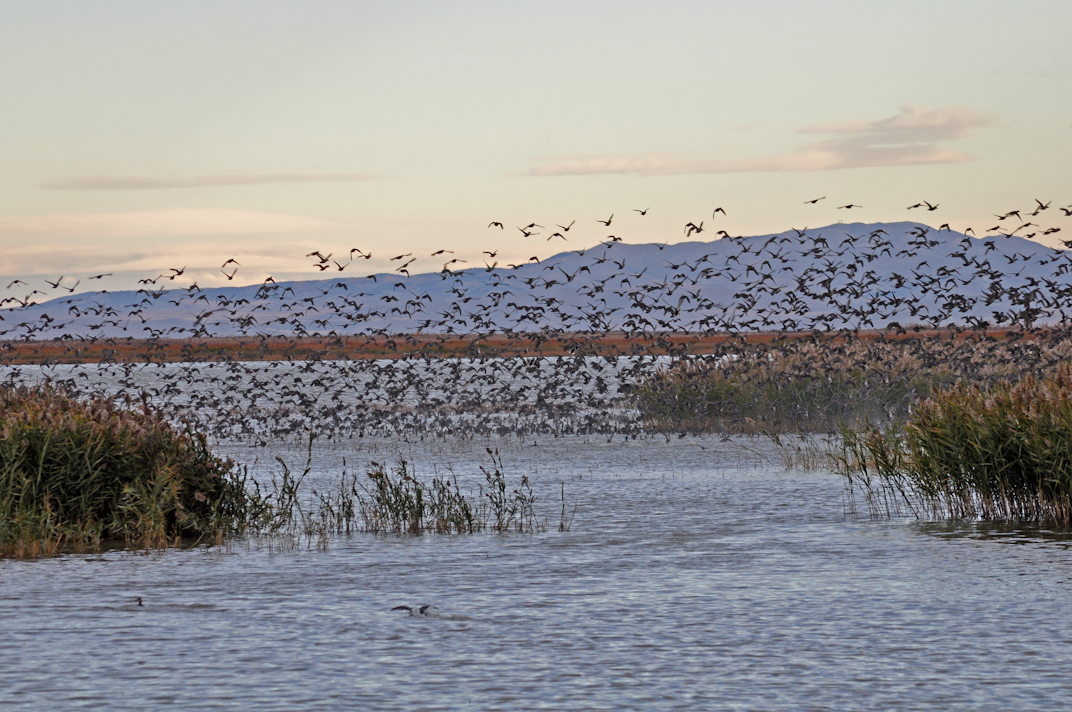
Delta's Snow Goose Festival: Snow Geese at Gunnison Bend Reservoir, Delta Utah Courtesy & Copyright Mary Heers, Photographer
Snow Geese at
Gunnison Bend Reservoir
Delta Utah
Courtesy & Copyright Mary Heers, Photographer
Every Spring the city of Delta, Utah puts out a call to come on down to the annual Snow Goose Festival.

Right on schedule thousands of snow geese fly in from as far south as Mexico to fatten up on the spilled grain in the local farmer’s fields, and rest a bit before continuing their migration to the far north.

I arrived at about noon and sure enough found a few hundred of the white geese bobbling peacefully in the reservoir just outside of town. Then came a great crescendo of geese calls and I looked up. A couple hundred more geese were flying in like a precision jet team. They lowered their feet and waterskied to a soft landing, somehow managing not to bump into each other. And then the scene quieted down. It was time for a long afternoon nap.

Perhaps these geese wondered why so many spectators had come to the reservoir to watch them nap on their day off. But we had come to marvel at their ability to catch the slow rising tide of lengthening days and ride it to the north, timing their arrival to the melting of snow and greening of the arctic tundra. In the far north, the snow geese will split off into pairs, build their nests, and raise their young.

But in the fall, they will form up in large flocks once again for the return trip because they know flying together is far more efficient than flying alone. People that study the physics of flying tell us that birds can get an energy savings of 65% from the free lift of upward airflow around another bird’s wing tips.

A few years ago, I had read a book about a man in Ontario, Canada, Bill Lishman, who had carried out a migration experiment with geese. I dug out my copy of his book, Father Goose, and reread it.

Bill had hatched some Canada goose eggs in an incubator at his home. The geese followed him everywhere, toddling across his lawn, swimming in his pond, and going airborne while chasing him on his motorcycle. One goose liked to fly inches above his head, looking a lot like the bill of an amazing baseball cap. Eventually Bill coaxed the geese into the air behind his ultralight plane.

Could these young geese, raised without adult geese role models, be able to migrate? Bill launched his trial – a 400-mile fall journey from Ontario to a nature reserve in Virginia. The geese flew with Bill’s plane for 7 days, overnighting along the way, and settled down for the winter.

The next big question lay ahead: would the geese be able to find their way home unaided in the spring?

Unexpectedly, on April 1, the geese took off under cover of night. For two weeks, Bill and his team searched for them to no avail. Then Bill got a phone call from his wife. The geese had returned and were waiting for him on the lawn in front of his house in Ontario.

Did they remember landmarks in the terrain they had crossed on the way south? Did they navigate by the sun and stars?

Bill had shown that young geese could find their way home. But just exactly how they did it is still a very well-kept secret.

This is Mary Heers and I’m Wild About Utah

Credits:
Photos: Courtesy & Copyright Mary Heers, Photographer
Featured Audio: Courtesy & Copyright Mary Heers
Text: Mary Heers, https://cca.usu.edu/files/awards/art-and-mary-heers-citation.pdf
Additional Reading: Lyle Bingham, https://bridgerlandaudubon.org/

Additional Reading

Wild About Utah, Mary Heers’ Postings

See thousands of geese migrating through Utah during the 2024 Delta Snow Goose Festival, Feb 1, 2024, https://wildlife.utah.gov/news/utah-wildlife-news/1842-see-thousands-of-geese-migrating-during-the-2024-delta-snow-goose-festival.html

Snow Goose Festival, Delta Area Chamber of Commerce, https://www.deltautahchamber.com/snowgoosefestival

Snow Goose Festival, Millard County Tourism, https://visitmillardcounty.com/events/snowgoosefestival/

Snow Goose Festival Video, Utah Division of Wildlife Resources, https://fb.watch/r0SBEaTY5i/

Snow Goose | Canada Goose Comparison, All About Birds, Cornell Lab of Ornithology, Cornell University, https://www.allaboutbirds.org/guide/Canada_Goose/species-compare/59939631

Watching Bird TV

watching bird tv: Flicker, Courtesy Pixabay
Flicker, Courtesy Pixabay

Two American Robins and a Northern Flicker Drinking from a Bird Bath Copyright © 2012 Linda Kervin Two American Robins and a
Northern Flicker Drinking from a Bird Bath
Copyright © 2012 Linda Kervin

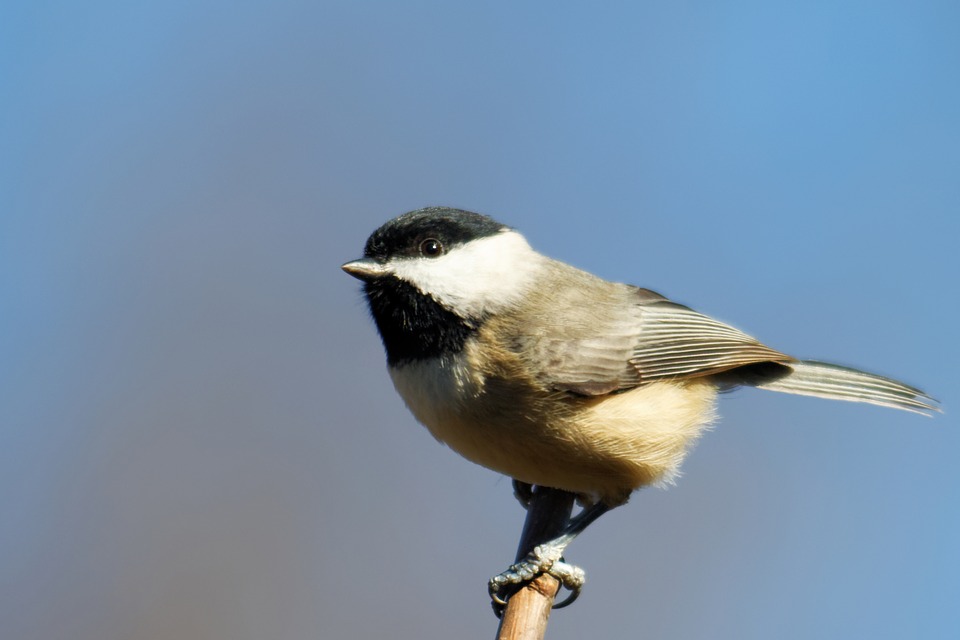
bird tv: Chickadee Courtesy edbo23, photographer and Pixabay Chickadee
Courtesy edbo23, photographer and Pixabay

There are some days that I just don’t have it in me to get outside. Maybe it’s the winter blues; maybe it’s exhaustion from a full day’s work. Either way, there are days where all I want to do is sit in the shelter of my home next to the heat ducts, or under the shade of a porch, and just exhale for hours. Sometimes, getting into the thick or exploring one of the many unmapped nooks of Utah’s majesty just isn’t happening.

I used to feel bad about this. I have but one life, one short blip of time upon this earth, I should be making use of every second. Whether it’s laboring on an overdue chore, or out testing my grit in harmony with Utah’s character, I need to be doing or I am dying; wasting the one life I am given.

It took me some good time to not overcome this mentality, but see my struggle with new eyes: to wash them and see the world fresh. My ablution began by asking a simple question: how can I love the still wild land that has provided for my family, my nation, my species for millennia, even when I don’t have it in me to go out and commune with it as I know I should daily?

The answer for me was to find a way to appreciate and give in such a way that allows me great joy and relaxation, yet fulfills that higher narrative which only the world beyond human influence can provide. My answer was watching birds at my small backyard bird feeder.

While it may not sound as exciting as fording a river while carrying my dog, or submitting a mountain that still holds on to deep winter snows (again with my dog), it gives me a chance to still learn about the cut of my jib, to see what character I’m made of, and to see my place in the world, in creation, and in life.

I test my grit upon the stillness of my mind when cheerful chickadees begin to see me as a part of the scenery and perch ever closer and closer to the branches above me, or my honest acceptance when rackets of starlings come to steal the suet left out in hope of a Stellar’s jay or lost mountain bluebird, or my reflection on where my body will one day go as scraps from my last hunt are eaten by the local neighborhood magpie clan.

This is an activity I have dubbed Bird TV for those who will often find my attention turn suddenly from conversation with them to quickly confirming the flicker drumming on the feeder’s home tree marking its stake. Through the lessons of my wild neighbors and in my observation of them, I can still hold true to myself in seeking to commune with the real world daily. By watching Bird TV, I can learn the calls of different species, notice when they change with the food supply or weather, and reflect upon my place within this world and within this life, no narration but the sounds of the real world, alive and vibrant in front of me.

So when you don’t have the energy or time to be upon the land from which has given life to your family, our nation, and all species, consider setting out sunflower seeds, nuts, raw meat, or even jams for the birds. Set them someplace you can catch yourself noticing who’s visiting out of the corner of your eye through a window at any moment, and if another human asks as to why you’re being distracted by a what’s outside and not by the usual glowing rectangle, just let them know that it’s Bird TV. Invite them to watch too, and catch them up on what’s been going on in the world. Hopefully then they’ll learn to tune in too.

I’m Patrick Kelly and I’m Wild About Utah.
 
Credits:

Images: Image Courtesy & Copyright Patrick Kelly, Photographer, all rights reserved
Audio: Contains audio Courtesy & Copyright Kevin Colver
Text:    Patrick Kelly, Director of Education, Stokes Nature Center, https://logannature.org
Included Links: Lyle Bingham, Webmaster, WildAboutUtah.org

Additional Reading

Project Feederwatch, Cornell Lab of Ornithology, Cornell University, https://feederwatch.org/

Axelson, Gustave, 30 Years of Project FeederWatch Yield New Insights About Backyard Birds, All About Birds, Cornell Lab of Ornithology, Cornell University, January 11, 2017, https://www.allaboutbirds.org/news/30-years-of-project-feederwatch-yield-new-insights-about-backyard-birds/

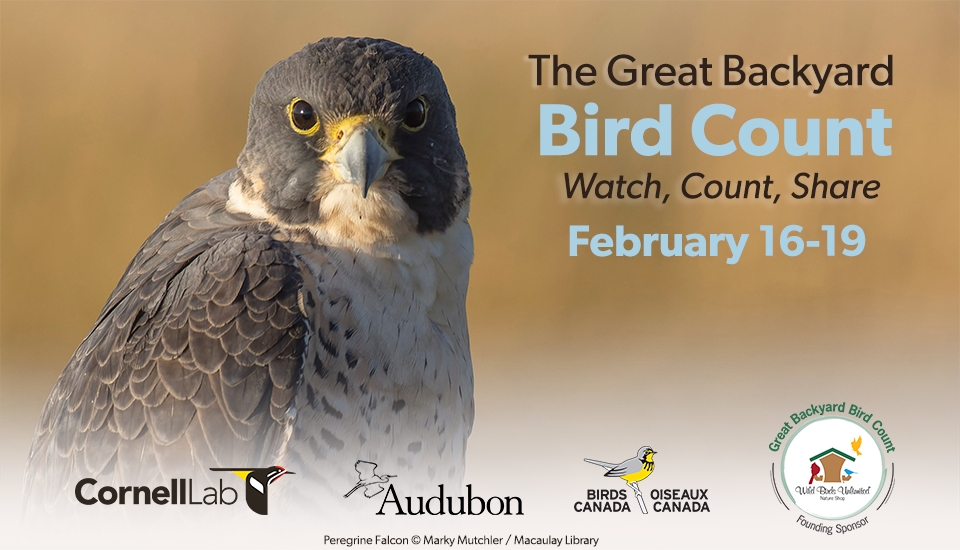
Everyone Can Be a Part of the February Global Bird Count!

Everyone Can Be a Part of the February Global Bird Count! Courtesy Cornell Lab of Ornithology on behalf of Great Backyard Bird Count, GBBC.org
Courtesy Cornell Lab of Ornithology on behalf of Great Backyard Bird Count, GBBC.org

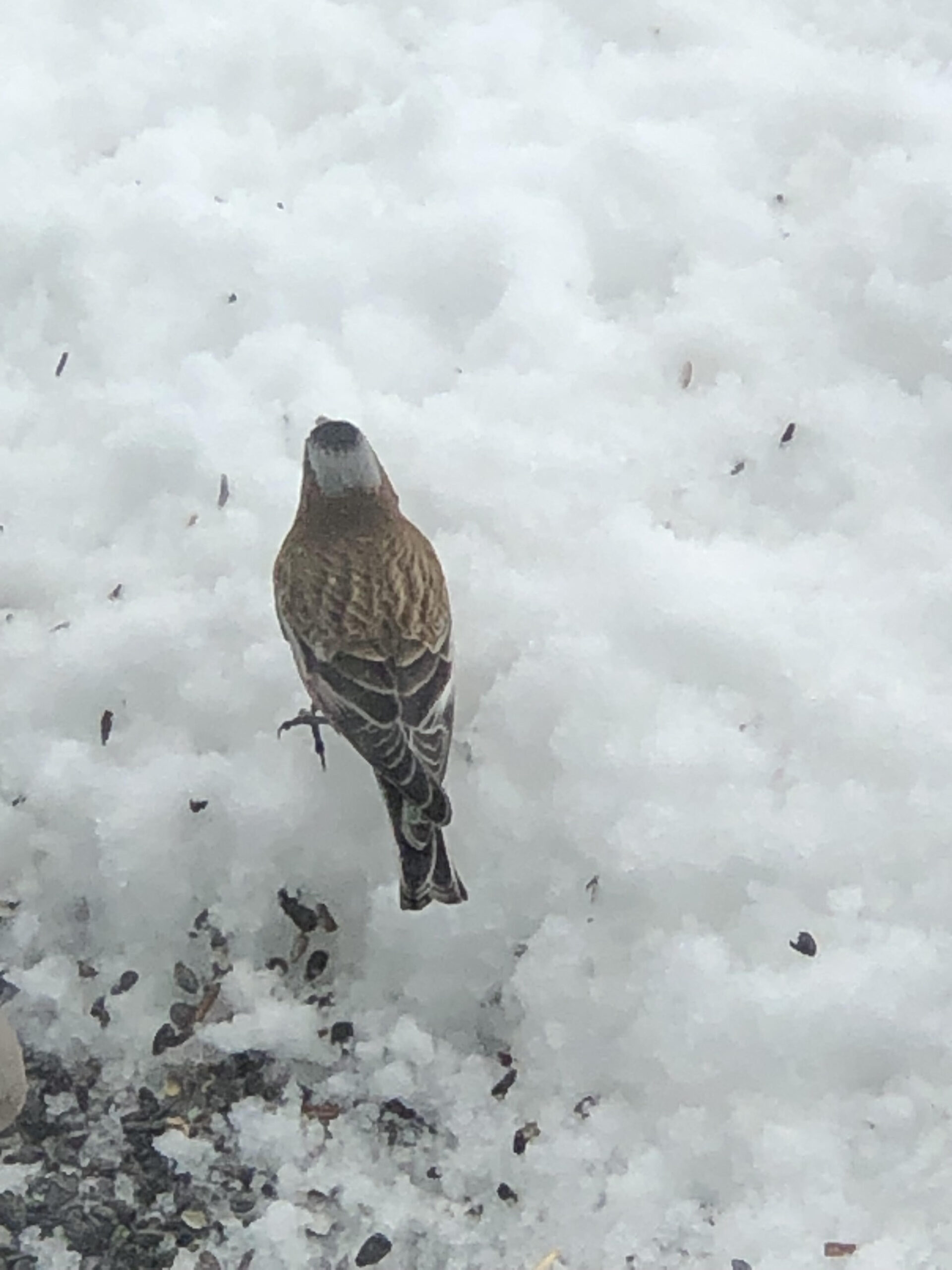
Gray-crowned Rosy Finch Courtesy & Copyright Hilary Shughart, Photographer Gray-crowned Rosy Finch
Courtesy & Copyright Hilary Shughart, Photographer

There are deeply concerning drops in bird populations, and shifting migration ranges and patterns are changing before our eyes, but on the bright side, the crisis presents a strong reason and opportunities for even the most novice birders to be a part of the solution, to contribute to environmental conservation through community science. The Cornell Lab of Ornithology, the National Audubon Society, and Birds Canada urge us to walk into nature and count birds for the mid-February Global Bird Count known as the Great Backyard Bird Count. February is the month to help scientists better understand global bird populations before one of their annual migrations, and the data collected will help bend the curve for bird survival.

“Spend time in your favorite places watching birds–then tell us about them! In as little as 15 minutes notice the birds around you. Identify them, count them, and submit them to help scientists better understand and protect birds around the world. If you already use eBird or Merlin, your submissions over the 4 days count towards GBBC.”

Everything you need to know will be shared in a free online webinar, so “Get ready to flock together for the Great Backyard Bird Count (GBBC)! Panelists will explain how to participate in this exciting global event and how participation might extend past your back door. Discover how to join a group taking part in the GBBC and explore fun ways to involve kids. From bird ID tips to counting birds with ease, this webinar is your ticket to an engaging and confident GBBC experience.”

We’ve posted links for local parks and trails with eBird printable checklists, and it’s encouraging to see the number and variety of species accessible right in town, and in our nearby National Forests and Wilderness Areas. Will you see American Robins, Black-billed Magpies, and Northern Flickers? Can you tell the difference between the American and the Lesser Goldfinch, or the Mountain and Black-capped Chickadee? Will you get lucky and spot a Gray-crowned Rosy finch feasting on black oil sunflower seeds in your own backyard?

There’s no time like the present to establish new traditions for connecting with nature and being part of the solution to the climate challenge. There are ample online resources for new and experienced birders, and in addition to the four local Utah Audubon Chapters, the Birding in Utah Facebook group provides a birding community with expert help with learning how to identify birds even in blurry photos. Team up to be a part of the constellation of community scientists documenting history, and weaving a safety net to ensure that birds have the places they need to thrive today and tomorrow.

I’m Hilary Shughart with the Bridgerland Audubon Society, and I am wild about the National Audubon initiative to promote community science for Bird-Friendly communities, and I am Wild About Utah!

Credits:
Images: Courtesy Great Backyard Bird Count, Cornell Lab of Ornithology et. al.
Gray-crowned Rosy-Finch: Courtesy & Copyright Hilary Shughart
Featured Audio: Courtesy & Copyright © Kevin Colver, https://wildstore.wildsanctuary.com/collections/special-collections/kevin-colver
Text: Hilary Shughart, President, https://bridgerlandaudubon.org/
Additional Reading: Hilary Shughart and Lyle Bingham, https://bridgerlandaudubon.org/

Additional Reading

Other Wild About Utah pieces authored by Hilary Shughart

Global Bird Count in February, Great Backyard Bird Count, https://www.birdcount.org/

About the Great Backyard Bird Count, Every February, count for as little as 15 minutes in your own backyard to help expand our understanding of birds. National Audubon, https://www.audubon.org/conservation/about-great-backyard-bird-count

Global Bird Count in February; Great Backyard Bird Count, Birds Canada, https://www.birdscanada.org/bird-science/great-backyard-bird-count

eBird Field Checklist Sue’s Pond–Logan River Wetlands and Shorebird Playa (178 species), Cache, Utah, https://ebird.org/printableList?regionCode=L586105&yr=all&m=

Who Likes What: The Favorite Birdseed of Feeder Regulars and Rarities, Here are the top three seed choices for a variety of species, per a scientific observational study of 1.2 million bird feeder visits. National Audubon, https://www.audubon.org/news/who-likes-what-favorite-birdseed-feeder-regulars-and-rarities

Birding: The Basics & Beyond (1 hr 12 mn video), Natural Habitat Adventures & WWF(World Wildlife Fund), https://www.nathab.com/traveler-resources/webinars/your-daily-dose-of-nature/birding-the-basics-beyond/

Bridgerland Audubon Great Backyard Bird Count Page, https://bridgerlandaudubon.org/birding-tools/birding-events/great-backyard-bird-count/

Howe, Frank, Rosy Finches, Local Bird Spotlight, The Stilt, Bridgerland Audubon Society, December 2009, https://bridgerlandaudubon.org/documents/BAS-Stilts/Stilt-2009/Vol%2038%20Image%2010.pdf

Gray-crowned Rosy-Finch, All About Birds, Cornell Lab of Ornithology, https://www.allaboutbirds.org/guide/Gray-crowned_Rosy-Finch/overview#

“Get ready to flock together for the 2024 Great Backyard Bird Count (GBBC)! Panelists will explain how to participate in this exciting global event and how participation might extend past your back door.”
Beyond the Backyard: All About the Great Backyard Bird Count Webinar, Tuesday, February 13, 1:00-2:00 p.m. Eastern, https://dl.allaboutbirds.org/2024gbbcwebinar

Senior Bird Talk

Senior Bird Talk:Belted Kingfisher, Courtesy US FWS, C Schlawe, Photographer
Belted Kingfisher
Courtesy US FWS
C Schlawe, Photographer
What about birds? Why are they so alluring, so beloved by so many? Perhaps it’s their extraordinary beauty, their fascinating behaviors, their presence in our deep history and art, their ability to mimic us, their high intelligence and remarkable ability for flight, sight, agility, navigation.
Whatever the reasons, the bird is the word!

It was never more apparent than when I visited an assisted living facility for elders in Logan, Utah where I was invited to deliver a 45 minute presentation. As I entered the room, a young lady had them riveted with a bird trivia quiz. Then came my turn. Many were in wheel chairs, others with walkers, some seated with staff assistance.

I opened by asking them if they had a favorite bird, or bird story to share. A diminutive lady of Indian heritage and telling accent told of her mother’s favorite- a parrot which lived on her shoulder and would chat away as she went about cooking and housework. Later in the session she had another story. As a young girl she was eating a sandwich when an raptor swooped down and snatched it from her hands, leaving a slice that left a scar which she attempted to show me.

When a lull occurred, I asked if anyone had ever been called “bird brain”. Several raised their hands with a sheepish giggle, as did I. I lavished them with trivia on the remarkable neurological design that allows a tiny bit of high quality, tightly packaged neurons to perform the amazing feats birds are capable of. Beyond this, how bird brains can change form for breeding season activities and when half brain sleeps and half awake during migration.

Another filler. I paraded bird skins and nests from our locals for bird ID and notes of interest. The hummingbird and nest was an immediate hit, as was the stunning Bullock’s oriole with its nest made from horsetail hair and fishing line. The common snipe was of special interest. “How many have been on a snipe hunt in the night?” Many hands raised. Then I showed the bird, a far cry from what they imagined this mystery animal to be.

A woman near the back shared another story of a family parrot which had some unseemly language to share with guests, could miraculously escape from most any cage, and dismantle whatever it pleased- a brilliant, very mischievous bird.

Another bird of special interest was the kingfisher. Holding it in my hand, I shared an intimate experience when a kingfisher slammed into our window (since successfully installed bird deterrents). Thinking the bird dead, it later awakened in a cardboard box I had placed it in, and was released in fine flying form. A day later, it reappeared on my deck rail, looked me in the eye with a gratuitous head tilt as if to say “thanks Jack!” and flew off. Most unusual behavior for the kingfisher!

I learned much from my audience that morning, bird love, great story telling, and new friends- I hope to return!

Jack Greene for Bridgerland Audubon Society, and I’m wild about Utah!

Credits:

Images: Jack Greene, Bridgerland Audubon, https://bridgerlandaudubon.org/
Audio: Courtesy & © Kevin Colver, https://wildstore.wildsanctuary.com/collections/special-collections
Text: Jack Greene, Bridgerland Audubon, https://bridgerlandaudubon.org/
Additional Reading: Lyle Bingham and Jack Greene, Author, Bridgerland Audubon, https://bridgerlandaudubon.org/

Additional Reading:

Jack Greene’s Postings on Wild About Utah, https://wildaboututah.org/author/jack/

“Legacy House” in Logan