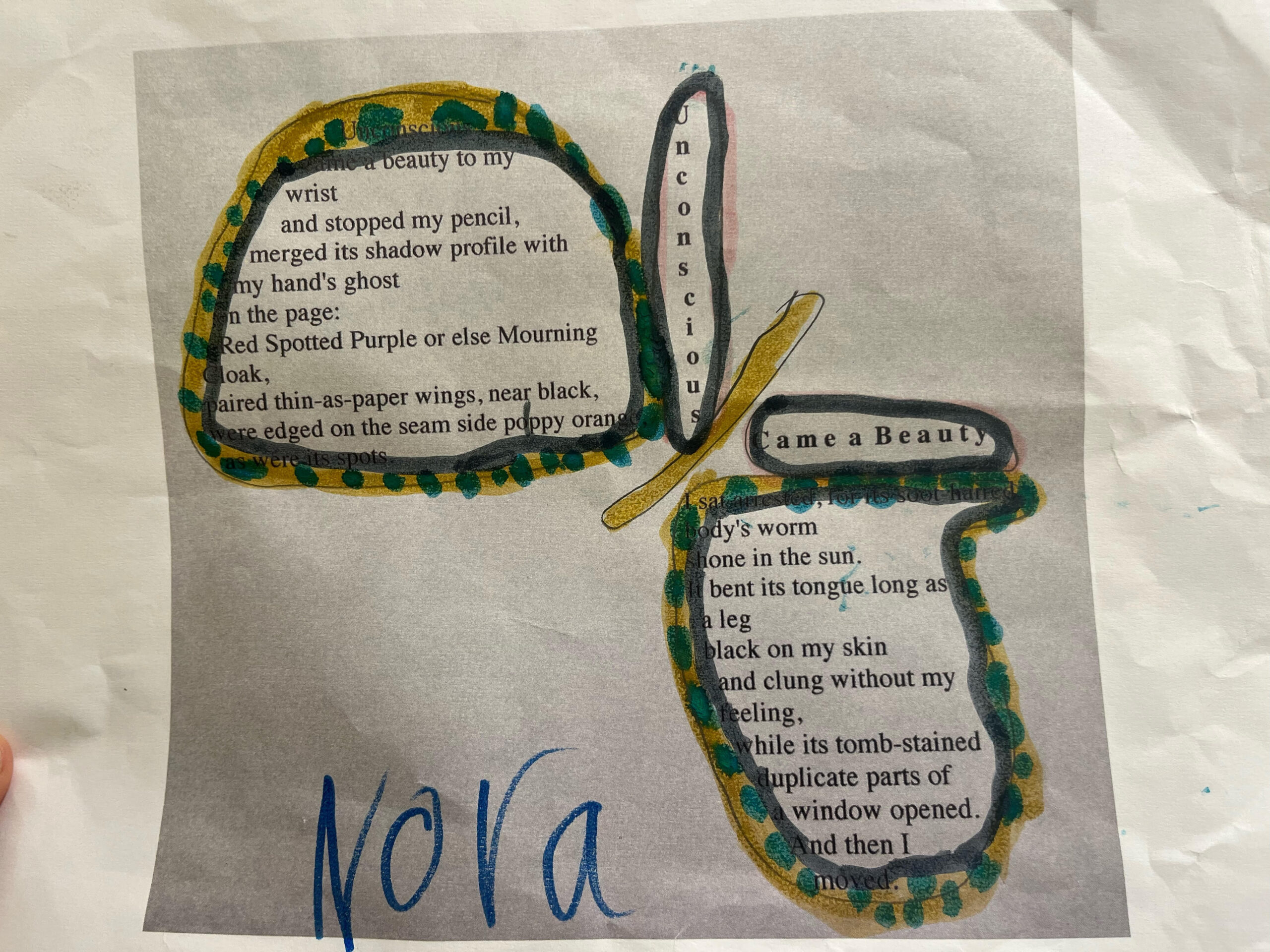
Birds Foster Community Connections

Academic Focus in the Outdoors Courtesy & Copyright Joseph Kozlowski, Photographer
Academic Focus in the Outdoors
Courtesy & Copyright Joseph Kozlowski, Photographer
I don’t know why, but birds possess a special power to connect diverse communities. You see, birds don’t discriminate; they don’t care who you are, what you look like, where you live, or what you believe; they are always there to offer you their wonder, beauty, and interesting behaviors, so long as you are willing to be aware and curious of their presence; and that awareness seems to bring people and places together.

Three years ago when I first became interested in using Utah birds as a core theme for teaching my 2nd-graders at Utah State University’s Edith Bowen Laboratory School, I had no idea how it would revolutionize my teaching career and connect me and my students with so many different natural and human communities. Personally, I’ve formed connections with people and places I would have never expected, such as: the Bear River Migratory Bird Refuge, the Cornell Lab of Ornithology, Bridgerland Audubon Society, this Utah Public Radio community, various natural resource professors at USU, untold numbers of new beautiful outdoor locations around the state, and even various important state educational stakeholders. But beyond me, I’m most excited to see how an increased awareness of Utah birds has led to my students making connections in their own lives.

My students are starting to experience Utah’s nature community in a new and more powerful way. The main way? By becoming aware. I can’t emphasize enough the power I’ve seen in my students just becoming aware of the natural world around them. Their simple everyday routines become opportunities to notice something going on around them in nature. Something as routine as school recess can turn into an opportunity to notice interesting natural phenomena, for example when a student noticed a European Starling had borne through the school’s siding, created a nest, and had been returning over and over to feed her impatient chirping chicks; or when a hen Mallard had mistakenly laid her eggs in a nest next to the school’s air conditioning unit; or when students found a dead Black-Capped Chickadee who must have unfortunately collided with a school window.

Furthermore, my students leave class and become ambassadors for learning outside of the school walls. They make connections to learning at home and get involved in their local communities in new ways! I’ve had countless students convince their families to get outside and explore a new local nature area in search of birds; I’ve had students who ‘took their siblings on a birding outing right from their house to a nearby nature area to explore new birds’; and I’ve had students who convinced their family they just ‘had to go to Salt Lake City’s Tracy Aviary over spring break,’ to discover new birds. These examples epitomize how birds bridge connections between students’ home and school knowledge; bridge connections between my students and other people in their lives, and bridge connections between my students’ own lives and the natural environment around them.

This is Dr. Joseph Kozlowski, and I am wild about outdoor education in Utah!

Credits:

Images: Courtesy & Copyright Joseph Kozlowski, Photographer, Used by Permission
Featured Audio: Courtesy & Copyright © Kevin Colver, https://wildstore.wildsanctuary.com/collections/special-collections/kevin-colver and including contributions from Anderson, Howe, and Wakeman.
Text:     Joseph Kozlowski, Edith Bowen Laboratory School, Utah State University https://edithbowen.usu.edu/
Additional Reading Links: Joseph Kozlowski & Lyle Bingham

Additional Reading:

Joseph (Joey) Kozlowski’s pieces on Wild About Utah:

The Bear River Migratory Bird Refuge, https://www.fws.gov/refuge/bear-river-migratory-bird

The Cornell Lab of Ornithology, https://www.birds.cornell.edu/home/

Tracy Aviary, https://tracyaviary.org/

Bridgerland Audubon Society, https://bridgerlandaudubon.org/

Utah Public Radio, https://upr.org/

Apricots Feeding Families

Collecting the harvest Courtesy & Copyright Giselle Bandley
Collecting the harvest
Courtesy & Copyright Giselle Bandley

Picking the last apricots Courtesy & Copyright Mary Heers
Picking the last apricots
Courtesy & Copyright Mary Heers

Sparky Van Courtesy & Copyright Mary Heers Sparky the Harvest Master Van
Courtesy & Copyright Mary Heers

Sparky Van Courtesy & Copyright Giselle Bandley Sparky the Harvest Master Van
Courtesy & Copyright Giselle Bandley

We got there too late Courtesy & Copyright Mary Heers We got there too late
Courtesy & Copyright Mary Heers

One of several sharing locations, 'Take what you need. Leave what you can.' Courtesy & Copyright Mary Heers One of several sharing locations
“Take what you need.
Leave what you can.”
Courtesy & Copyright Mary Heers

The tree looked like it could also be 100 years old, with some missing limbs and some broken, brittle branches. But the apricots kept coming. Courtesy & Copyright Mary Heers The tree looked like it could also be 100 years old, with some missing limbs and some broken, brittle branches.
But the apricots kept coming.
Courtesy & Copyright Mary Heers

When I started writing for Wild About Utah, I made myself a promise that each piece would be a journey of learning. This meant I had to actually get in my car and go learn something. This month my journey led me to a venerable old apricot tree in a quiet neighborhood in SW Logan. I was tagging along with volunteers from Utah State University’s club Harvest Rescue.

Harvest Rescue is a community engagement club dedicated to harvesting fruits and vegetables that would otherwise go to waste, and then distributing to people in need.
So last week’s journey began with a phone call from owners of a house in Logan who had moved. The new owners had not yet moved in. The apricot tree next to the house was bursting with apricots ready to pick.

Harvest Rescue posted the address on its volunteer page and a note to be there at 7:30 am on July 24. Five pickers showed up. The tree hadn’t waited for us. Lots of the ripe apricots had fallen to the ground. “Not a problem,” said the lead volunteer. “We’ll pick them up and take them to USU’s compost bin.”

The owner of the house had told us the house was built in 1925. The tree looked like it could also be 100 years old, with some missing limbs and some broken, brittle branches. But the apricots kept coming. She had loved to look out her kitchen window at the bright orange fruit nestled up to the green leaves. “I took so many pictures!”

Just as we were finishing gathering the fallen apricots, the Harvest Master van showed up. This van is a real showstopper –bright green with bicycles and dancing vegetables painted on its sides. The van even had a name, “Sparky,” which was emblazoned on the front with the proud words, “I’m 100 % Electric.”

We unloaded ladders and buckets and got to work. In less than an hour we had that tree picked clean. We now had 113 pounds of apricots that we packaged into small paper lunch bags, about twenty to a bag.

It was now time for the second leg of the journey. We drove to a quiet residential street in North Logan and pulled up in front of what looked like an ordinary house. But a closer look revealed a sign saying, “Families Feeding Families.” It was explained to me that food insecurity in Utah is often hidden. Even people working more than one job can hit a rough patch and need a temporary helping hand. Families Feeding Families reaches out to these people by operating four porch pantries in Cache Valley. Their sign says “Take what you need. Leave what you can.” No questions asked.

This house had devoted the entire left side of its wrap around porch to shelves of donated canned goods and other items. Around the corner was a working refrigerator/freezer. We put the apricots in the refrigerator because they were ready to eat.

The next day I couldn’t resist going by the house and peeking into the fridge. Most of the apricots were gone. The Circle of Giving was complete. I felt a little overwhelmed to have been able to witness such kindness and concern for others on the part of the USU volunteers and the community residents.

Then I heard that someone had shared a recipe for apricot sauce on the Families Feeding Families website. This recipe had worked well for her. For me, it was one more reason to smile.

This is Mary Heers and I’m Wild About Living in Utah

Credits:
Photos: Courtesy and Copyright Mary Heers as well as Giselle Bandley
Featured Audio: Courtesy & © Anderson, Howe and Wakeman.
Text: Mary Heers, https://cca.usu.edu/files/awards/art-and-mary-heers-citation.pdf
Additional Reading: Lyle Bingham, https://bridgerlandaudubon.org/

Additional Reading

Wild About Utah, Mary Heers’ Wild About Utah Postings

Porch Pantry Locations
Courtesy & Copyright Utah Families Feeding Families
Porch Pantry Locations
Courtesy & Copyright Utah Families Feeding Families
Utah Families Feeding Families, https://www.utahfamiliesfeedingfamilies.com/

How to Grow Apricots in Your Home Garden, Extension, Utah State University, https://extension.usu.edu/yardandgarden/research/apricots-in-the-home-garden

Harvest Rescue, Christensen Office of Service & Sustainability, https://www.usu.edu/service-sustainability/

John Muir Didn’t Wear Tevas

Three Teens Returning from the Wilderness Courtesy & Copyright Emma Mecham
Three Teens Returning from the Wilderness
Courtesy & Copyright Emma Mecham

Wasatch Rambling July 7, 1989 Dromedary Peak Summit Whitney Leary & Eric Newell Courtesy & Copyright Eric Newell Wasatch Rambling July 7, 1989
Dromedary Peak Summit
Whitney Leary & Eric Newell
Courtesy & Copyright Eric Newell

Morning Light Big Cottonwood Canyon July 7, 1989 Courtesy & Copyright Eric Newell Morning Light Big Cottonwood Canyon
July 7, 1989
Courtesy & Copyright Eric Newell

My Journal, July 6, 1989 Courtesy & Copyright Eric Newell My Journal, July 6, 1989
Courtesy & Copyright Eric Newell

My Journal, July 7, 1989 Courtesy & Copyright Eric Newell My Journal, July 7, 1989
Courtesy & Copyright Eric Newell

Our 15 year-old and two of her friends just returned from their first backpacking trip without adults. When she hatched the idea, my wife and I were supportive of this big voyage, knowing all the growth that happens when you venture out on our own into the wilds for the first time. We asked questions and provided all the support she and her friends asked for—but we didn’t overdo it. This was their adventure.

They were giddy as they shouldered their packs at the Logan Canyon trailhead and set foot towards a popular lake for two nights. When my wife picked them up three days later, they had stories to tell.

When they are old, like me, they won’t remember the TikTok videos or Instagram reels they might have watched during that span. But they will remember trying to stay warm in their hammocks, sleeping by a mountain lake under a trillion stars, the crispness of the air, and that feeling of being out there on their own and all the uncertainly and joy that goes with it.

When I was sixteen—after finishing another of John Muir’s many books, Wilderness Essays—I decided that if John Muir only took a loaf of bread, an overcoat, and a wool blanket with him into the Sierras, that I could do the same. Certainly John Muir wasn’t—to use a John Muir word—”hardier” than I was. This wasn’t my first backpacking trip without adults, but I learn my lessons the hard way. After all, good judgement comes from experience and experience comes from bad judgement.

So I took a wool blanket from the closet in the basement and left a perfectly good sleeping pad and twenty-degree sleeping bag at home. My friends and I only wore Teva sandals when we hiked or backpacked at the time and I didn’t pack any socks. It was July after all.

Now, I am certain John Muir did not wear Teva’s. He wore socks and boots—even in July. He also built big fires and cut pine-boughs for sleeping on that would insulate him from the cold ground. Wanting to leave no trace, I did neither of those things.

That was a rough night next to a lake in Big Cottonwood Canyon. Aside from shivering on cold, hard bedrock in the darkness, I was constantly under attack from swarms of mosquitos because I couldn’t fit both my head and my bare feet under the small blanket at the same time. I also learned that if you only eat a loaf of French Bread from the Albertsons bakery for dinner, you get a lot of gas.

It turns out John Muir was much “hardier” than I.

I got “out” of my wool blanket well before dawn that morning to move my body and warm up. I watched the light show on the 11,000 foot peaks above and the reflection in the dead-calm lake below.

After breakfast, I spotted a couple of mountain goats on a pass above the lake and we scrambled up to have a closer look. When we arrived at the saddle we decided that since we had come this far, we might as well continue on and figure out the tricky and exposed route to the summit of Dromedary Peak—in our Teva’s.
I’m glad my parents weren’t there to save me from my own naiveté.

It is often hard for parents to let go and give their teens the chance to venture out into Edward Abby’s “back of beyond” to be responsible for themselves and to learn from their own mistakes. But I’m glad my parents were willing, and I have found satisfaction supporting my children, and other people’s children, on their own adventures.
Edward Abbey said it well, “It is not enough to fight for the land; it is even more important to enjoy it. While you can. While it’s still here. So get out there and…mess around with your friends, ramble out yonder and explore the forests, encounter the grizz, climb the mountains, bag the peaks, run the rivers, breathe deep of that yet sweet and lucid air, sit quietly for a while and contemplate the precious stillness, that lovely, mysterious and awesome space.”

The average 18 year-old high school graduate today has spent approximately four-years of their lives on screens. Four years. Four years of childhood that they will never get back. Our children need wildness now, more than ever.

Maybe our public lands will save us from ourselves—if we don’t sell them off to the highest bidder.

I am Eric Newell, and I am wild about Utah and our wild public lands.

Credits:
Images: Courtesy & Copyright Eric Newell, Photographer
Featured Audio: Courtesy & © Shalayne Smith Needham & Courtesy & Copyright © Anderson, Howe, Wakeman
Text: Eric Newell, Edith Bowen Laboratory School, Utah State University
Additional Reading: Eric Newell & Lyle Bingham

Additional Reading

Wild About Utah Pieces by Eric Newell

Tenacious Beaver

Beaver at Dam, Courtesy Pixabay
Beaver at Dam
Courtesy Pixabay
The most important lessons I can give my daughter are not through me, but instead those found best in the wild. Though she can’t talk, I know she still listens. Though her childhood amnesia is inevitable, I know that neural circuits are still being formed. Those circuits will do her good one day.

Our favorite lesson is in the tenacity of beavers.

This winter, we took one of our favorite hikes through knee-deep postholing snow to one of our favorite beaver dams. The dogs trot ahead, sniff snuffing at the path, darting to the stream that runs alongside our trail and back, and lead us as they have many times before up the trail. When we come to the great beaver dam, one that assuredly took not just years but generations of beavers to build, we stop for a snack and water, and let our daughter sit quizzically in the springtime slush. I explain to her the parts of the beaver’s home: the dam, the lodge, how they store their food. She listens while she smushes snow in her mittens, neural circuits are formed, and we pack up to start the slushy walk back to the car. A good day’s hike and lesson. A Greek proverb is dusted off in my mind, that a society grows great when old men plant trees under whose shade they know they shall never sit. Those beavers are good Greeks, but likely poor hoplites.

Later that spring, we return to the dam, our trail shortened by melted snow. Snow is gone from the trail, but still holding fast in the mountains above. The travel is easier, muddier, but the beaver Platonic Republic justly endures. I explain the parts of the Castorian city-state yet again, and explain what the beavers are doing now as we see fresh aspen fells. They’re collecting good sugars and preparing for their kits. Kallipolis endures, as it has, another year out of dozens of millennia, and even without a cud of pulp in sight. I wonder if beavers have oral traditions?

Time then passes as we all pass through space, and summer buds, blooms, and begins to fade. The cattle have come, grazed, trammeled, and been driven off yet again. We return to Xanadu in the early morning before the sun beats hard. We can get even closer to the dam now that the Forest gates are open, and we prepare for our adventure. My daughter looks around excitedly and drinks water from her cup. The dogs look around excitedly at all the leftover cow pies to investigate. Luckily they’ve dried.

We exit the car and make our short way to the beavers only to discover that tragedy has struck between spring and now. The dam has burst. Like the River Isen, a great work of nature has blown a hole in the waterkeep, and drained the promised pond. The shoreline has receded like a tonsure, the lodge’s secret doors exposed as if by moonlit ithildin, and the water flowing with Newtonian determination towards Great Salt Lake.

It’s shocking at first, seeing this anchor of time heaved asunder, the work of generations of beavers up and smote by spring runoff. All that labor. All those lives well-lived. Perhaps not wasted, but at least now remembered with a sigh. I sigh out as well, and explain this all to my daughter. She listens, pulls on cow-mown grasses, synapses fire, and circuits connect. We complete our hike and eventually go home.

Finally, early this fall we set off for the utopia-that-was once more. Colors have begun to change to golds and crimson. The air is more crisp; the heat more bearable. We saddle up in the toddler backpack, and see what there is to see of the beavers. We arrive to the wonders of hope and joy, and the tenacity of beavers.

The dam it appears is not abandoned. The labor of generations is honored with the restoration of the work. Not in its entirety mind you, for that will again take years and perhaps generations, but the work is underway regardless. Greek thinking again prevails. Whether by purpose or itch it matters not, but slowly the pond is regrowing. The shoreline has risen to swallow back and douse bare earth, and the water is a bit more wine-dark. I excitedly show my daughter, who excitedly is playing with my hat, the work that has happened, and the work yet to do. The beavers will not quit when allowed to do so. They are tenacious little buggers whose teeth grow forever. We take it all in and continue our hike, and eventually go back home. A new proverb pops into my head. A society grows great when we get to work and, figuratively, give a dam.

I’m Patrick Kelly and I’m Wild About Utah.
 
Credits:

Images: Beaver & Dam Image Courtesy Pixabay, Public Domain
Featured Audio: Courtesy & Copyright Friend Weller, Utah Public Radio with and Anderson, Howe, & Wakeman.
Text:    Patrick Kelly, Stokes Nature Center, https://logannature.org
Included Links: Lyle Bingham, Webmaster, WildAboutUtah.org

Additional Reading

Greene, Jack, I’m a Beaver Believer, Wild About Utah, December 19, 2022, https://wildaboututah.org/im-a-beaver-believer/

Bingham, Lyle, Welcoming Rodent Engineers, Wild About Utah, February 7, 2022, https://wildaboututah.org/welcoming-rodent-engineers/

Hellstern, Ron, Leave it to Beaver, Wild About Utah, July 30, 2018, https://wildaboututah.org/leave-it-to-beaver/

Leavitt, Shauna, Beaver–Helping Keep Water on Drying Lands, Wild About Utah, April 17, 2017, https://wildaboututah.org/the-beaver-helping-keep-water-on-drying-lands/

Strand, Holly, Beavers: The Original Army Corps of Engineers, Wild About Utah, April 29, 2010, https://wildaboututah.org/beavers-the-original-army-corps-of-engineers/

Goldfarb, Ben, Eager: The Surprising, Secret Life of Beavers and Why They Matter, Chelsea Green Publishing, March 8, 2019, https://www.amazon.com/Eager-Surprising-Secret-Beavers-Matter/dp/1603589082/ref=asc_df_1603589082/