Chasing a Legend: Eric Jones

Eric Jones (left) and the author, High on Borah Peak, Idaho Courtesy & Copyright Eric Newell, Photographer
Eric Jones (left) and the author, High on Borah Peak, Idaho
Courtesy & Copyright Eric Newell, Photographer
The Author's Journal Entry From Borah Peak 2003. Courtesy and Copyright Eric Newell, Photographer
The Author’s Journal Entry From Borah Peak 2003
Courtesy & Copyright Eric Newell, Photographer

Eric-Jones-closing-in-on-the-summit-of-Borah-Peak. Courtesy and Copyright Eric Newell, Photographer Eric Jones closing in on the summit of Borah Peak
Courtesy & Copyright Eric Newell, Photographer

Eric Jones leading the way to Dromendary Peak in Little Cottonwood Canyon 1995. Courtesy and Copyright Eric Newell, Photographer Eric Jones leading the way to Dromendary Peak in Little Cottonwood Canyon 1995
Courtesy & Copyright Eric Newell, Photographer

Little Cottonwood Canyon 1991, The Thumb, S-Direct. Courtesy and Copyright Eric Newell, Photographer Little Cottonwood Canyon 1991, The Thumb, S-Direct
Courtesy & Copyright Eric Newell, Photographer

Eric Jones on a ledge, near the Gate Buttress, Little Cottonwood Canyon 1991. Courtesy and Copyright Eric Newell, Photographer Eric Jones on a ledge
near the Gate Buttress
Little Cottonwood Canyon 1991.
Courtesy & Copyright Eric Newell, Photographer

White Pine with Gary and Eric Jones circa 1988. Courtesy and Copyright Eric Newell, Photographer White Pine with Gary and Eric Jones circa 1988
Courtesy & Copyright Eric Newell, Photographer

I lost a beloved friend and mentor two weeks ago in a fluke canyoneering accident in Zion National Park.

I first met Eric Jones when I was four years old. My family had just moved to Sugarhouse, in the Salt Lake Valley. I rode my red, yellow, and blue Big Wheel Speedster down the sidewalk and skidded to a stop three houses away to talk to two bothers standing in their front yard. The much taller one asked if I was the new kid who just moved in. I said I was. He asked my name. I said, “Eric.” He smiled and said, “Hey, that’s my name too!” His younger brother—my age—said, “And I am Gary Jacob Jones!”

Gary and I became fast friends and Eric, five years older, was someone I perpetually looked up to. He was always taller than I, charismatic, funny, and true to himself to the core. One Saturday, while playing under an apple tree in the big sandbox in the Jones’ backyard, Eric came out to coerce Gary and I into hiking with him. We declined his initial offer but agreed when he promised 7-Eleven Slurpees on our way back. And so, we went. This scene played out many times.

Eric took us to fantastical places in the Wasatch. While we hiked, he would tell stories about wild animals, old miners’ tales, ghost stories, places he had been, and places he wanted to go. Each story, each place name, added to the intrigue and the places he talked about became the places I dreamed about: Grizzly Gulch, Sundial Peak, the West Slabs of Mount Olympus, Maybird Gulch, Cardiac Pass, Thunder Mountain, and on and on. When he described the largest Wilderness Area in the lower 48 states, the River of No Return Wilderness in central Idaho, I knew I had to get there someday. It’s a place where I have spent much of my adult life, including a long backpacking trip with Eric.

One time, he told us about an invention called a mountain bike that was a cross between a BMX bike and a ten-speed, and then, on cue, a mountain biker appeared heading down the trail. Eric drew a map of the Wasatch from memory on a blank piece of paper once, naming all the
side canyons within Mill Creek, Big Cottonwood, and Little Cottonwood Canyons. He labeled each summit, with its precise elevation. As a kid, I was amazed that all this information was just in his head, literally at his fingertips.

One June, after luring Gary and I from the sandbox once again, we attempted to climb the 11,045 foot Mount Superior. Eventually we reached a place on the knife-edge ridge where there was too much snow to safely proceed—at least for Gary and I. Eric probably could have crossed it safely and headed on to the summit, but we were his companions, and he wasn’t going to put us in danger or abandon us. So, we turned around and headed for the 7-Eleven at the mouth of Big Cottonwood Canyon.

Eric always wanted to see what there was to see around the next bend or over the next ridgeline. He planted seeds of mystery and awe in my core.

Before we were old enough to participate, Gary and I heard stories of Eric’ s feats in the mountains with the older scouts. The troop had planned a week-long 50-mile backing trip in the Uinta Mountains that included, at Eric’s instance, a layover day and extra mileage to climb Kings Peak, the tallest mountain in Utah.

When they arrived at the lake for the layover, the leaders—trail-weary from backpacking with a bunch of teenagers—announced that they wouldn’t be going to King’s Peak the next day. They would have a rest day instead. The other boys seemed happy enough to loaf around. Not Eric.

He got up before dawn, packed his day pack, and headed off to the summit on his own. I don’t recall if he woke up his tent-mate to tell him where he was going before he left or not. Either way, the leaders were not happy with him when they figured it out hours later. Gary thinks Eric was 14 years old at the time.

Eric told a funny tale from that trip. One of the other boys, Nathan Cornwall, had pre-made all his lunches for the week, which consisted of eight sardine and mayonnaise sandwiches on Wonder Bread, which he had carefully packed back in the bread sack. You shouldn’t need a food handler’s permit to know this is a horrible idea. Eric couldn’t stop laughing when he described Nathan pulling the smashed mass of soggy, stinky sardine sandwiches out of his pack the first day of the trip.

During his life Eric hiked, climbed, camped, canyoneered, skied, and rowed thousands of miles throughout west, from the Cascades to the Tetons to the red rock deserts of the southwest, and beyond. He was a keen writer and a profound thinker. He worked hard, loved deeply, and he stood for the things he believed in. He was fine friend to many.

When we were finally old enough backpack with Eric and his friends, Gary and I literally ran with our full packs on, to keep up with Eric’s long, easy strides. That’s the image I have of Eric Jones in my mind. I was just trying to keep up, chasing a legend into the wilds.

I am Eric Newell, and I am wild about people who inspire others to get outside and see what there is to see.

Eric Jones (left) with my friend Issac in the Lost River Range in Idaho Courtesy and Copyright Eric Newell, Photographer
Eric Jones (left) with my friend Issac in the Lost River Range in Idaho
Courtesy & Copyright Eric Newell, Photographer

Credits:
Images: Courtesy & Copyright Eric Newell, Photographer
Featured Audio: Courtesy & © Shalayne Smith Needham & Courtesy & Copyright © Anderson, Howe, Wakeman
Text: Eric Newell, Edith Bowen Laboratory School, Utah State University
Additional Reading: Eric Newell & Lyle Bingham

Additional Reading

Wild About Utah Pieces by Eric Newell

Obituary, Eric Lynn Jones, 1967-2025, https://www.memorialutah.com/obituaries/eric-lynn-jones

The Standard Thumb, Little Cottonwood Canyon, The Mountain Project-OnX&amp, https://www.mountainproject.com/route/105741170/the-standard-thumb
S-Direct Variant: https://www.mountainproject.com/route/105740579/s-direct-variation

Mount Borah: Peak Information and Climbing Guide, IDAHO: A Climbing Guide (Tom Lopez),
https://www.idahoaclimbingguide.com/bookupdates/mount-borah-12655/

Author’s note: “Eric also edited my Salmon River Guidebook before I sent it off to the publisher years ago. He went through it with a fine-toothed comb and picked up on so many details others missed, including myself. He influenced me to be a better writer.”
https://blackcanyonguides.com/

When Pumpkins Become Boats

Pumpkin on Center Street - Daybreak UT Courtesy & Copyright Mary Heers, Photographer
Pumpkin on Center Street – Daybreak UT
Courtesy & Copyright Mary Heers, Photographer
The Ginormous Pumpkin Regatta began in Daybreak, Utah on Oct 18 with eight 600 lb pumpkins lined up on the edge of the community’s lake. The action began at 8:30 am when a forklift driver picked up Pumpkin #1 and eased it into the water. The pumpkin slid off its pallet and floated away from the shore.

Lying in wait was a small motorboat. The woman in the front of the boat leaned way out over the bow and put her hands on the pumpkin.

“Got it!” she called. This was the cue for the man in the back of the boat to fire up the outboard motor. Together they pushed the giant pumpkin around the nearby pier and into a shallow holding area.

Here, three people in hip waders were waiting in the water. Two steadied the pumpkin while the third cut a big square hole out of the top of the pumpkin. The cut-out square was tossed aside and all three reached down into the pumpkin to pull out handfuls of seeds and stringy pulp.

This is how they turned the giant pumpkin into a boat.

By now Pumpkin #2 had been delivered, and the work continued.

It wasn’t long before the announcer called the youth racers to come forward. Three brave competitors under the age of seventeen stepped up. They each chose a pumpkin and climbed in. Someone handed each of them a kayak paddle and pointed to the start line. Just how unwieldy these boats were was immediately obvious as two veered off in opposite directions while the third turned round in circles. But with a little practice, the teens were able to get the “boats” going in a straight line –more or less.

By then some serious new competitors were beginning to gather on the pier in elaborate costumes – a long haired mermaid, an Indian with a feathered headdress, King Neptune with his trident.

The day’s Grand Finale would include all eight giant pumpkins in a hundred yard all out sprint for the golden pumpkin trophy and the title of Gourd’s Man of the Year. I didn’t get to see this race. I had to get back to Logan.

But I had gotten to see Logan’s Giant Pumpkin festival a few weeks earlier. Here, giant pumpkins lined both sides of Center Street. One by one they were brought to the stage and weighed on a giant scale. The last six all weighed over 1,000 pounds. The big winner that day weighed in at 1,917 pounds.

I went home that day with a packet of giant pumpkin seeds in my pocket. I was warned that they were hard to grow.

But why not give it a try?

This is Mary Heers and I’m Wild about all things bright and beautiful in Utah.

Pumpkin Regatta - Daybreak UT Courtesy & Copyright Mary Heers, Photographer
Pumpkin Regatta – Daybreak UT
Courtesy & Copyright Mary Heers, Photographer

Credits:

Images Courtesy & Copyright Mary Heers, Photographer
Featured Audio: Vince Guaraldi’s Great Pumpkin Waltz, Courtesy & Copyright Concord/Craft Recordings https://craftrecordings.com/
Text: Mary Heers, https://cca.usu.edu/files/awards/art-and-mary-heers-citation.pdf
Additional Reading: Lyle Bingham, https://bridgerlandaudubon.org/

Additional Reading

Wild About Utah, Mary Heers’ Postings

Ginormous Pumpkin Regatta, LiveDAYBREAK, Daybreak Master Planned Community, https://www.mydaybreak.com/live_news_detail_T16_R550

Upcoming Events, Utah Giant Pumpkin Growers, https://www.utahpumpkingrowers.com/events.html

How Giant Pumpkins Grow so Big, The Associated Press, https://youtu.be/gRUNB3YA2FI Duration: 2:19 minutes

A Friend to Guide the Way

Red-tailed Hawk, Courtesy & Copyright Joseph Kozlowski, Photographer
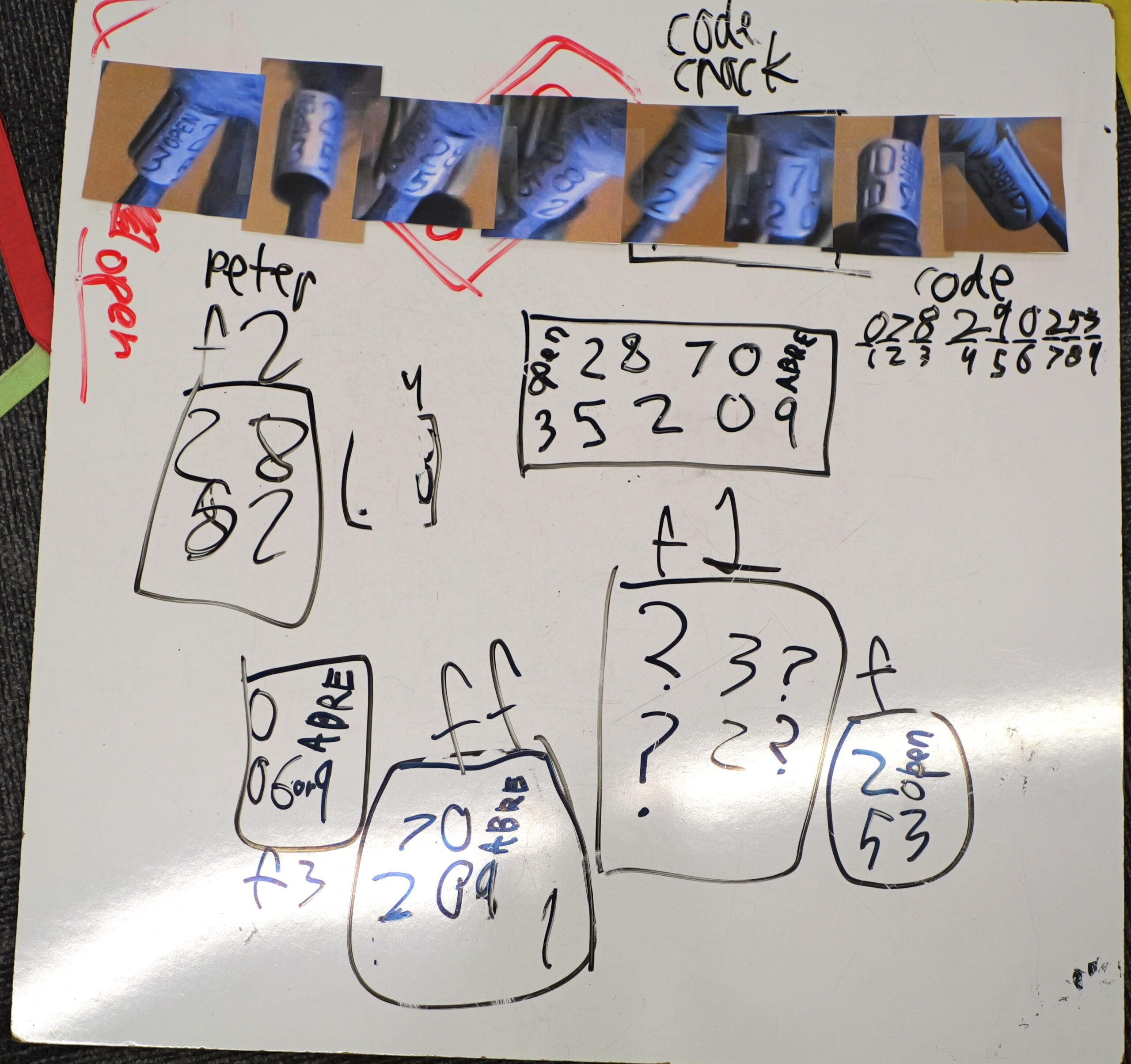
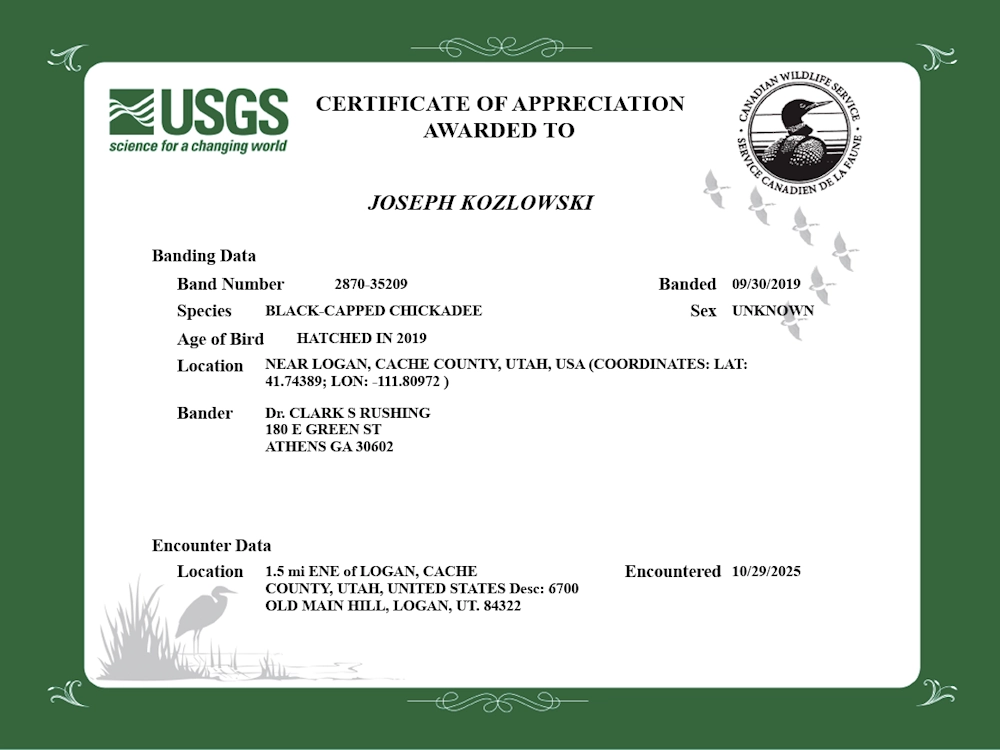
“Look, up on that pole! There’s a huge bird! I think it’s a hawk!”

A storm of students put their half-eaten PB & Js down, grabbed binoculars, and raced to get a better view. One of my 2nd-grade students, while eating lunch under the King’s Nature Park gazebo, had spotted the special visitor.

Students bustled around with their binoculars trying to get a better look at the far-away hawk. Excited fragments of observations eventually started ringing out.

“Look at that sharp beak!”

“I can see a red tail!”

“It’s mostly brown with some lighter feathers on the chest!”

“It looks like it’s watching us!”

Jack Greene guided our students, Courtesy & Copyright Joseph Kozlowski, Photographer
Jack Greene guided our students
Courtesy & Copyright Joseph Kozlowski, Photographer
Eventually students returned binoculars, wolfed down their remaining bits of food, and found their instructor for the afternoon learning centers. About 25 kids made their way to me and Jack Greene, an expert naturalist. My group strapped on their binocular harnesses, left the gazebo, and started off on the Bonneville Shoreline Trail. We had one objective; to observe and wonder about nature.

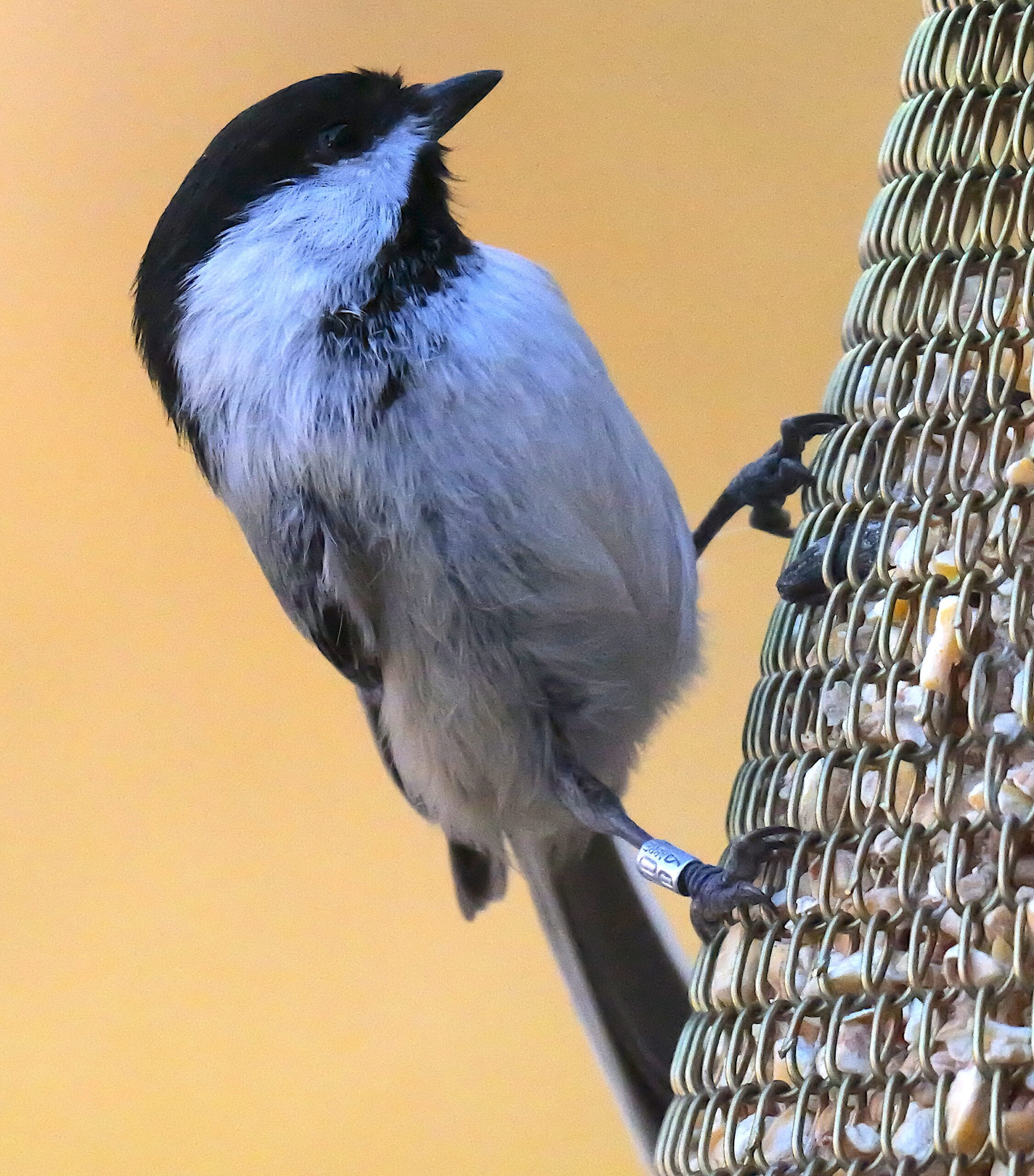
We forged a 6-inch trickle of water – the endeavor being met with laughs, screams and giggles, proceeded higher onto the bench where the remnants of a recent fire still blackened the hillside, and made our way along the trail to a choke cherry bush which was to be the turning point. The students happily watched and listened to Black-Capped Chickadees and House Sparrows playing fall games in the crackly bramble. We all turned and started our journey back to the gazebo.

“Everyone, look up there! Soaring high above us! That looks like the huge hawk we saw at lunch! I think it’s following us!” came the shriek of an excited young girl.

Intrigued students looked up to see the large, soaring hawk far above, lazily drifting circles toward the gazebo. Naturally, the kids couldn’t let it get away. The unrestrainable naturalists raced down the gravel trail in the direction of the hawk.

The hawk did get too far away. We all rejoined and continued our walk back. No more than 5 minutes later, a shout echoed out: “It landed! That hawk that has been following us all day landed! I kept a close eye on it and it landed up there on a post!”

The hunt was afoot. We picked up our pace to get close to the big hawk that had landed on an electrical post a few hundred yards ahead of us. We crept up and it posed for the eager kid eyes and hasty teacher cameras. But little voices aren’t quiet, and the hawk launched from the post and took flight before many could get a good look.

We had to get back. After Jack gave a mini-lesson about the length of a Black-Billed Magpie tail indicating approximate age, we hustled to return to the gazebo.

Our group of hot, sweaty, and energized naturalists arrived back at the gazebo and gathered for a final closing discussion. We huddled close, and amidst my parting words, a boy loudly interrupted and pointed to a nearby telephone pole. “Everyone, look! The hawk came to say goodbye!”

We all turned, and perched on the pole was the same hawk that had followed us that day; our guide, our companion, our friend. It took off and slowly, methodically, made low circles above our head, as if to say “Now you can see me, I am your friend. Goodbye, little ones. We had a special journey together.”

I am Dr. Joseph Kozlowski, and I am wild about outdoor education in Utah!

Credits:

Images: Courtesy & Copyright Joseph Kozlowski, Photographer, Used by Permission
Featured Audio: Courtesy & Copyright © Kevin Colver, https://wildstore.wildsanctuary.com/collections/special-collections/kevin-colver and including contributions from Anderson, Howe, and Wakeman.
Text:     Joseph Kozlowski, Edith Bowen Laboratory School, Utah State University https://edithbowen.usu.edu/
Additional Reading Links: Joseph Kozlowski & Lyle Bingham

Additional Reading:

Joseph (Joey) Kozlowski’s pieces on Wild About Utah:

Red-tailed Hawk, All About Birds, The Cornell Lab of Ornithology, https://www.allaboutbirds.org/guide/Red-tailed_Hawk/overview

Black-capped Chickadee, All About Birds, The Cornell Lab of Ornithology, https://www.allaboutbirds.org/guide/Black-capped_Chickadee

House Sparrow, All About Birds, The Cornell Lab of Ornithology, https://www.allaboutbirds.org/guide/House_Sparrow

Black-beak Magpie, All About Birds, The Cornell Lab of Ornithology, https://www.allaboutbirds.org/guide/Black-billed_Magpie

Solar Calendars

 This [observatory in Chacho Canyon, NM], is constructed of three large stone slabs [.https://wildaboututah.org/wp-content/uploads/sdagger_s1.jpg] wedged upright with smaller stones. On the day of the summer solstice, a dagger of light cast by the rising sun bisects a spiral carved into the rock behind the stones. On the winter solstice, two daggers of light frame the spiral. https://solarscience.msfc.nasa.gov/suntime/images/sdagger2_s.jpg
This [observatory in Chacho Canyon, NM], is constructed of three large stone slabs wedged upright with smaller stones. On the day of the summer solstice, a dagger of light cast by the rising sun bisects a spiral carved into the rock behind the stones. On the winter solstice, two daggers of light frame the spiral.
Courtesy NASA Solar Science
https://solarscience.msfc.nasa.gov/suntime/talk1.stm
High on a remote butte on the Colorado Plateau, two spirals were etched into the rock centuries ago by Ancestral Puebloans. The petroglyphs are tucked discreetly behind three sandstone slabs that lean against the bedrock wall. The play of light that reaches through the gaps in the slabs bisect the large spiral on summer solstice near noon. On winter solstice, two ‘daggers’ of light bracket the large spiral perfectly. The smaller spiral is bisected with another shaft of light on the vernal and autumnal equinoxes. This is not accidental.

Indigenous people in the far reaches of the planet, constructed monuments with intention that mark the position of the sun on the solstices and equinoxes—the pyramids of Egypt, the moai on Rapa Nui (the most isolated island on earth), the temples of Chichén Itzá, Stonehenge, and numerous others.

These solar calendars where created thousands of years ago, before airplanes, satellites, space shuttles, and smartphones. They were likely constructed without any knowledge that other people in other parts of the world were doing the same. Each of these monuments are distinctive in their approach, a testament to both human curiosity and creativity.

Solar Calendar and Sundial Courtesy & Copyright Eric Newell
Solar Calendar and Sundial
Courtesy & Copyright Eric Newell

Mount Logan Discovery Solar Calendar

Solar Calendar - How it Works Courtesy & Copyright Eric Newell Solar Calendar – How it Works
Courtesy & Copyright Eric Newell

Solar Calendar Design Courtesy & Copyright Eric Newell Solar Calendar Design
Courtesy & Copyright Eric Newell

Observing From the Solar Calendar
Courtesy & Copyright Eric Newell Observing From the Solar Calendar
Courtesy & Copyright Eric Newell

Completed Solar Calendar Courtesy & Copyright Eric Newell Completed Solar Calendar
Courtesy & Copyright Eric Newell

Solar Calendar Near Solstice Courtesy & Copyright Eric Newell Solar Calendar Near Solstice
Courtesy & Copyright Eric Newell

Solar Calendar Layout in the Snow Courtesy & Copyright Eric Newell Solar Calendar Layout in the Snow
Courtesy & Copyright Eric Newell

Observations: The Shadow Grew Courtesy & Copyright Eric Newell Observations: The Shadow Grew
Courtesy & Copyright Eric Newell

Mount Logan Discovery Human [Analemmatic] Sundial

Human Sundial, Pre-Installation, Month Stone Layout Courtesy & Copyright Eric Newell Human Sundial
Pre-Installation
Month Stone Layout
Courtesy & Copyright Eric Newell

Students Install the Solar Sundial Month Blocks Courtesy & Copyright Eric Newell Students Install the Solar Sundial Month Blocks
Courtesy & Copyright Eric Newell

When I started teaching 6th grade science at Mount Logan Middle School (in Logan, Utah), in 2003, state curriculum standards required me to teach why we have seasons, why we have night and day, and the basics of the solar system. The science textbook would put insomniacs to sleep. I struggled to figure out how to teach these concepts in ways that would captivate my students’ attention and allow them the chance to construct knowledge through project-based learning.

I was explaining my fascination with ancient solar calendars to my sixth graders in class one day and in the moment I said, “Hey, we should build a solar calendar at our school.” My students cheered a loud “Yeah!” and a new project was born.

I did some research, wrote and received a $500 grant from the Logan Schools Foundation for materials, ruffled a few feathers, and set to work with a simple plan that involved my 6th graders at every step. We cemented a metal pole in the ground on the edge of the soccer field, decorated with student art representing the four seasons. We surrounded the pole with a circular pattern of paver stones, enlisted the sand blasting services of a local headstone company, and then we started marking the shadow of the tip of the pole throughout the year. We had no idea how it would turn out.

What I thought would be a year-long project became a five year project. The shadows cast by the pole were not always easy to observe with storms and cloud cover. Cache Valley inversions—that trap fog and smog in the valley—made marking winter solstice shadow lines especially illusive.

We would mark the tip of the shadow throughout the day and then connect the dots to trace and identify the patterns. On the spring equinox a curious thing happened—we discovered the shadow line makes a perfectly straight line that runs exactly west to east. The same is true for the autumnal equinox. We did some research and confirmed our findings. This is something you can try anywhere. This year the autumnal equinox occurs September 22nd. Mark the tip of the shadow of any pole or post throughout the day on fairly level ground in your yard—an hour or two apart if you want, but the intervals don’t really matter. Then connect the dots and see what happens.

The solar calendar at Mount Logan Middle School marks the time of year and is our evidence that the earth’s axis is tilted.

We added an interactive sundial, with a human gnomon. When you stand on the correct month stone, your shadow falls on the time of day. The human sundial is our evidence that the earth spins on its’ axis.

Outside of school hours, you can find and interact with the human sundial and solar calendar on the soccer field at Mount Logan Middle School, located north of the sand volleyball court. Even though I no longer work there, I visit a couple of times each year. I take my weed eater, a shovel, and a blower and clean up the paver stones that mark the shadow lines of the solstices and equinoxes. I am frequently there alone in the evenings when I do this. While I work, I wonder about the hands that carved those spirals in the Cliff House Sandstone behind the slabs of rock in the New Mexican desert. I always set down my tools for a few minutes and watch with amazement as the shadow tracks along the pathways my sixth graders marked two decades ago.

I am Eric Newell, and I am wild about Utah and equinoxes and solstices.

Credits:
Images: Courtesy NASA Solar Science and Courtesy & Copyright Eric Newell, Photographer and author
Featured Audio: Courtesy & Copyright © Anderson, Howe, Wakeman
Text: Eric Newell, Edith Bowen Laboratory School, Utah State University
Additional Reading: Eric Newell & Lyle Bingham

Additional Reading

Wild About Utah Pieces by Eric Newell

http://MountLoganDiscovery.org/ (Hint: Select Projects on the left to find links to the Solar Calendar and Human Sundial pages)
Mount Logan Middle School Solar Calendar and Human Sundial Webpages (Hint: Select Sundial or Solar Calendar below the image.)
Mount Logan Discovery Solar Calendar
Mount Logan Discovery Human Sundial

Archeoastronomy in Stone, National Park Service,
https://www.nps.gov/articles/000/archeoastronomy-in-stone.htm

Ancestral Puebloan Sun Calendars
https://www.nps.gov/media/video/view.htm%3Fid%3D4A2A3F5E-7710-4A87-BC20-A8E833CBCE17

Schaefer, Bradley E., Stamm, James, A Case Study of the Picture Rocks Sun Dagger, Pluss a Review of the Intentionality of Sun Daggers, https://apod.nasa.gov/apod/image/2008/PictureRocks_Sundagger_JAHH.pdf

Friday Finishers: Logan landmark, The Herald Journal (HJNews), Jun 28, 2013,
https://www.hjnews.com/allaccess/friday-finishers-logan-landmark/article_7c9554ee-df82-11e2-b142-001a4bcf887a.html

Sundial Registry, Logan, UT Number 804, North American Sundial Society, https://sundials.org/index.php/component/sundials/onedial/804

Making an Analemmatic Sundial, North American Sundial Society, September 22, 2019, https://sundials.org/teachers-corner/sundial-construction/299-making-an-analemmatic-sundial.html