Dandelion, Friend or Foe?

Dandelions, Taraxacum officinale Weber.
Dandelions
Taraxacum officinale Weber
Copyright © 2002 Roger Banner, Intermountain Herbarium, USU
Popping up here and there seemingly as soon as you turn away, dandelion persists and as it grows bigger, it’s large taproot becomes many a gardener’s foe. With a slight change in perspective, however, gardeners could expand their yield and embrace the ever persistent pioneer plant: dandelion.

First, why does dandelion pop up so quickly in the garden? There are two key reasons you may find yourself battling dandelion in your garden: 1. It is trying to stabilize and cover the disturbed and exposed soil in an attempt to restore and rebuild fertility, 2. It’s deep taproot serves as a nutrient accumulator, where it pulls nutrients from deeper in the soil and brings them to the surface for other plants and microbial life to use. Why does this happen? Conventional lawns and gardens mimic immature ecosystems and as a result, are usually dominated by early succession plants.

In the words of permaculture designer Toby Hemenway, “The bare earth and disturbed soil in a vegetable garden or under clean-cultivated shrubs sing a siren song to weeds, which eagerly cover naked ground, pull nutrients out of underlying mineral and rock, and prepare the locale for more mature ecosystem such as shrubland and forest. A pure expanse of well-watered grass is aching, in natures scheme, for a blitzkrieg from seedlings and shrubs or, at the very least, a spike in diversity via fast-growing annual weeds.” So, the next time you find dandelion or other weeds in your lawn and/or garden, remember, they are working to diversify the space and help mend the soil that has been disturbed.

But for the gardener, it gets better than just understanding dandelion’s role in the succession of soil because many parts of dandelion are not just edible, but delicious! The common weed has been used for centuries in traditional medicine practices worldwide, as a restorative tonic, edible food, and in herbal wines and beers. Dandelion is extremely versatile in the kitchen and can add zip to any meal. Buds and leaves are best when picked young. The leaves are edible both raw and cooked; try them tossed in your favorite stir-fry, salad, or soup. Flowers are great frittered or used in dandelion wine, while the roots are often steeped for tea or pickled. Dandelion root tea is a common health supplement used mainly for its mild diuretic properties. When roasted, dandelion root makes for a cleansing, caffeine-free beverage that can serve as a coffee substitute given a mild relation to coffee in taste.

And the icing on the cake? Dandelions are chock full of health benefits. They are rich in vitamin-A, C, iron, calcium, detoxifiers and can aid with bone health, liver disorders, diabetes, urinary disorders, skin care, acne, weight loss, cancer, jaundice, gall bladder disorders, anemia, and high blood pressure.

So the next time you see dandelion pop up in your garden, don’t just weed it, eat it!

For Utah State University Extension Sustainability, this is Roslynn Brain.

Credits:

Photos: Courtesy and Copyright 2002 Roger Banner, Intermountain Herbarium, USU
Text: Roslynn Brain, Utah State University Extension Sustainability

Sources & Additional Reading:

Holly Strand, Dandelions, WildAboutUtah.org, April 21, 2011, https://wildaboututah.org/dandelions/

Jack Greene, Pioneer Day Edible Native Plants, WildAboutUtah.org, July 13, 2015, https://wildaboututah.org/pioneer-day-edible-native-plants/

Hinkamp, Dennis, “Take the Bite Out of Lion’s Teeth (Dandelions)” (2001). All Archived Publications. Paper 885. https://digitalcommons.usu.edu/extension_histall/885
https://extension.usu.edu/files/publications/factsheet/pub__5928742.htm

Dandelion, Range Plants of Utah, USU Extension, https://extension.usu.edu/rangeplants/htm/dandelion

Lesica, Peter, Consider the Dandelion Before You Dig, Page 8, Contained in SegoLily, Newsletter of the Utah Native Plant Society, March 2011 (volume 34 number 2) https://www.unps.org/segolily/Sego2011MarApr.pdf
Shrubby-Reed Mustard: The Best Little Plant You’ve Never Heard of

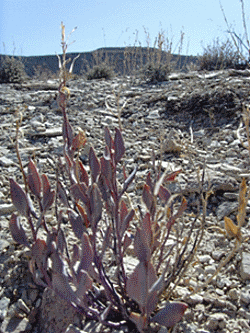
Shrubby-Reed Mustard Bush, Hesperidanthus suffrutescens
Shrubby-Reed Mustard Bush
Hesperidanthus suffrutescens
Courtesy & Copyright Matt Lewis

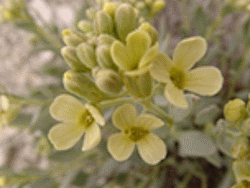
Shrubby-Reed Mustard Blossoms, Hesperidanthus suffrutescens Shrubby-Reed Mustard Blossoms
Hesperidanthus suffrutescens
Courtesy & Copyright Matt Lewis

Shrubby-Reed Mustard Blossoms Closeup, Hesperidanthus suffrutescens Shrubby-Reed Mustard Blossoms
Hesperidanthus suffrutescens
Courtesy & Copyright Matt Lewis

Tucked into isolated pockets of the Uintah Basin’s arid wildlands is the best little plant you’ve never heard of. Known to exist only in Duchesne and Uintah Counties, Shrubby-reed Mustard seems to occupy only the semi-barren “islands” of white shale in areas of the Green River Formation’s Evacuation Creek region. The endangered plant features thick, almost succulent, blue-green leaves and small yellow flowers.

“The habitat of Shrubby-reed Mustard is visually striking,” says USU alum Matt Lewis, a botanist with the Bureau of Land Management in Vernal, Utah. “It grows in very shallow, fine-textured soils and shale fragments that form narrow bands in the desert shrub community.”

Among the first plants to flower in spring, the perennial herb is visited by large number of insects, including many native bee species that forage for pollen. Scientists believe these bees may be critical in the plant’s reproduction and survival.

Lewis says the plant, also known as Toad-Flax Cress and Uintah Basin Waxfruit, offers an understated beauty to the stark landscape. With a shrub-like form and multiple stems, Shrubby-reed Mustard grows to about 20 centimeters in height. Its leaves, which feel almost like leather, change to a bright purple in the fall.

The plant is also enticingly fragrant, Lewis says. “Its scent reminds me of roses mixed with apples and pears.”

Despite its fragile status, Shrubby-reed Mustard is a long-lived plant. USU ecologist Geno Schupp says some individual plants may be one hundred years old.

The elusive species has outlived scientists’ attempts to classify it and has undergone several taxonomic changes. It currently boasts the scientific name Hesperidanthus suffrutescens, placing it solidly in the mustard family.

Lewis knows of no history of Shrubby-reed Mustard as a culinary or medicinal herb, though documented reports of such uses for mustard plants date back to ancient times. The plant appears to provide welcome forage for some four-legged creatures, he says, as he recently witnessed plants that had been grazed completely and ripped from the ground.

“Whether that was due to livestock or native ungulates, I’m not sure.”

Credits:
Images: Courtesy & Copyright Matt Lewis
Text:     Mary-Ann Muffoletto, Utah State University College of Natural Resources
Credits:
Matt Lewis, botanist, Bureau of Land Management, Vernal, Utah.
Eugene “Geno” Schupp, professor, USU Department of Wildland Resources.

Additional Reading:

https://www.fws.gov/mountain-prairie/factsheets/ShrubbyReed-mustardFactSheet.pdf

https://www.fws.gov/mountain-prairie/species/plants/shrubbyreedmustard/5YearReview2010.pdf

Three-leaf Sumac

Three-Leaf-Sumac Rhus-trilobata, Photo courtesy Hansen's Northwest Native Plant Database, nwplants.com, Licensed Creative Commons Attribution-ShareAlike 3.0 Unported License
Three-Leaf-Sumac Rhus-trilobata
Photo courtesy Hansen’s Northwest Native Plant Database, nwplants.com Licensed under Creative Commons Attribution-ShareAlike 3.0 Unported License
Many think of the desert as a hot, dry, barren, and unforgiving place. However, Utah’s deserts are chock full of interesting and diverse plants and animals! One such plant, which grows throughout much of Utah, is rhus trilobata or three-leaf sumac.

Three-leaf sumac is a widespread deciduous shrub in the Rhus genus, meaning “with three leaflets,” or “trifoliate leaves.” Others in this genus include Rhus aromoatica and the infamous western poison oak. The leaves of this shrubby-type plant are toothed, feel stiff and they give off quite a strong scent when crushed. The strong smell of crushed three-leaf sumac leaves has earned it the nickname “skunkbush” as well as “ill-scented sumac.”

Three-leaf sumac is a low spreading, many-branched deciduous shrub, usually no more than 3 feet high but spreading as much as 8 feet wide. The small, trifoliate leaves and the branches are fuzzy. Given its many branches, three-leaf sumac provides both nesting material and structure for native bees. Flowers are yellowish and found in clustered spikes. They are followed by bright crimson to reddish, sticky berries. The fall foliage adds an extra pop of color to the landscape.

Three-Leaf-Sumac Rhus-trilobata, Photo courtesy Hansen's Northwest Native Plant Database, nwplants.com, Licensed Creative Commons Attribution-ShareAlike 3.0 Unported License
Three-Leaf-Sumac Rhus-trilobata
Photo courtesy Hansen’s Northwest Native Plant Database, nwplants.com Licensed under Creative Commons Attribution-ShareAlike 3.0 Unported License
Historically, three-leaf sumac has been used for medicinal and other purposes. The bark can be chewed or brewed into a drink for cold symptoms. Flexible branches were traditionally used for twisting into basketry and rugs. In fact, three-leaf sumac was a close contender to willow in desirability for basket-making. This common use of the plant earned it another nickname of “basketbush.”

My favorite part of three-leaf sumac, however, are the slightly hairy and sticky berries. Although historically eaten for gastrointestinal pain and toothache, the berries have a delicious sour flavor and can be eaten plain or used in oatmeal, ice cream, steeped in tea, or soaked in cold water to make a beverage similar to lemonade. These berries are high in vitamin C and have earned three-leaf sumac the additional nicknames of “sourberry” “lemonade bush” and “lemonade berry.” Other nicknames for this multi-purpose plant include squawbush, desert sumac, or scented sumac.

Regardless of which nickname you choose for three-leaf sumac, give the berries a try and see for yourself what you think! Be sure, however, that you properly identify the plant to avoid potential illness that can be caused by misidentification! One great resource that can help is the field guide “Rocky Mountain States: Wild Berries & Fruits.”

Three-Leaf-Sumac Rhus-trilobata, Photo courtesy Hansen's Northwest Native Plant Database, nwplants.com, Licensed Creative Commons Attribution-ShareAlike 3.0 Unported License
Three-Leaf-Sumac Rhus-trilobata
Photo courtesy Hansen’s Northwest Native Plant Database, nwplants.com Licensed under Creative Commons Attribution-ShareAlike 3.0 Unported License
For Utah State University Extension Sustainability, this is Roslynn Brain.

Credits:
Images: Courtesy Hansen’s Northwest Native Plant Database, nwplants.com, https://www.nwplants.com/business/catalog/rhu_tri.html,
Creative Commons Attribution-ShareAlike 3.0 Unported License
Text:     Roslynn Brain, Utah State University Extension Sustainability

Additional Reading:

Rhus trilobata, Three-leaf Summac, Plants of the Southwest, https://plantsofthesouthwest.com/products/rhus-trilobata?variant=11501394117

Rhus trilobata, Three-leaf Summac, Plant Database, Natural Resources Conservation Service, USDA, https://plants.sc.egov.usda.gov/plant-profile/rhtr

Rhus trilobata, Three-leaf Summac, Lady Bird Johnson WildflowerCenter, University of Texas at Austin, https://www.wildflower.org/plants/result.php?id_plant=RHTR

Ancient Native Plant Relationships

Ancient Native Plant Relationships: Ephedra, Ephedra viridis Coville
Ephedra
Ephedra viridis Coville
Courtesy USDA, NRCS. 2016. The PLANTS Database (https://plants.usda.gov, 6 February 2016). National Plant Data Team, Greensboro, NC 27401-4901 USA., BLM Photographer

Hi I’m T.J. Knudson and I’m Gilbert Young.

Stretching from the snowy peaks of the Wellsville Mountains, south to the sandstone shadows of Beaver Dam Wash, an ancient, native relationship provided unity to the diverse landscape. It is admired in the haunting tune of a wind pipe, it comports like a wool blanket; and its tapestry goes beyond the cliff art at Potash, and preceded John Wesley Powell and Brigham Young.

The Ute, Shoshone, Piute, Goshute, and Navajo cultures each echo today an enduring sustaining relationship bonded to the reliable plant life in a diverse land. this relationship sustained our state’s ancient culture, but little is understood about these gifted craftsmen in utilizing the materials and fibers.

In southeast Utah, the shepherd Navajo nation found a companion in the Prickly-Pear Cactus. Despite his short stature and sharp countenance, this ally was able to provide a fleshy, refreshing fruit. After rolling repeatedly through the direct to lose his spines, and soaking in water; there sparks a reaction of the most spectacular die; which was often orchestrated into many shades of red. Despite his stature on the lonely desert floor, the prickly pear creates a color that epitomizes the Navajo beauty and lives on to future generations.

As our ancient travelers would ascend upward into the hills, they would spend time in the Pinyon/Juniper woodland to collect pine nuts. Natives would also search for three other valuable resources: pine pitch, firewood and shelter materials. Underneath the pines and junipers plentiful sumac, can be found; the sumac branches provide the means to develop a midnight-black die and was also an essential basketry material. The third element needed to create this black color was ocher (okerr), a yellow mineral abundant in Navajo territory. The Pinyon-Juniper woodland met the needs of native people, much like modern superstores. Like these plants working together as a team, we all have an opportunity to join others in creating a unified community.

Prickly Pear Cactus, Opuntia ficus-indica
Prickly Pear Cactus
Opuntia ficus-indica
Courtesy US FWS

Across the canyons, a lone plant is found that nursed and comforted tribes long before the hospitals and prescriptions. Ephedra was a medicinal hero, when sharp cold winds swept the valleys. It could be boiled into a delicious tea that combated the common cold, allowing airways freedom of congestion. Also known as Brigham Tea, Natives shared this knowledge to the early Utah Pioneers in their time of need. The evergreen stems of Ephedra offer healing and a comfort that aided the native people and settlers. We also have the ability to heal our souls by intimately connecting ourselves to nature’s bounteous gifts. We can also provide healing to those who are in need of comfort and guidance.

If the past could speak to us today, it would remind us of connections and relationships that have been forgotten. Our hope today is that you may connect with these ancient relationships for yourselves. For more information, check out the Wild About Utah website.

For Wild About Utah this is T.J. Knutson and Gilbert Young.

Credits:
Images: Courtesy , Photographer
Text:     T.J. Knutson and Gilbert Young.


Additional Reading: