Ute Ladies’ Tresses-Orchids in Utah

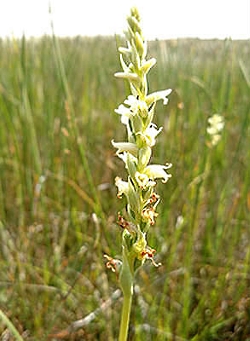
Orchids in Utah: Ute Ladies' Slippers (Spiranthes diluvialis) Courtesy of the U.S. Fish and Wildlife Service, Lindstrom, Photographer
Ute Ladies’ Slippers (Spiranthes diluvialis)
Courtesy U.S. Fish and Wildlife Service
Lindstrom, Photographer
What is it about orchids in our desert state that excites me so? Perhaps its finding them so far removed from their usual tropical biome, or their uncommon beauty. I was surprised to discover that Utah has at least 16 native species of orchids. Most occur in moist, higher elevations, but a few are found in our valley bottoms.

I rejoice at spotting the first white bog orchid or striped coral root as I hike mountain trails. In the Uintah’s you may find the gorgeous Calypso orchid- also called lady slipper, perhaps my favorite. Now, the late season rattlesnake plantain is in full bloom.

Further, I was amazed to find orchids species diversity second only to the composites with orchids hosting 28 thousand species!

Last evening, I joined 8 others with the Bear River Land Conservancy near Mendon to survey a wet meadow for the late blooming Ute Ladies Tresses, a fragile beauty placed on the EPA Threatened Species list in 1992. Shrinking habitat, limited reproduction, over collection, competition from exotic weeds, and herbicides are the main threats. Other threats include impacts from recreation; mowing for hay production, grazing by cattle or horses; hydrology alteration, herbivory by native wildlife (especially meadow voles); reduction in the number and diversity of insect pollinators; drought; and conflicting management with other rare species.

Regarding reproduction, their minute seeds contain little stored food to sustain embryos and are probably short-lived in the soil. Recent attempts to germinate them took up to 1.5 years. It is hypothesized that germinated seedlings must quickly establish a symbiotic relationship with mycorrhizal soil fungi in order to survive. The absence or rarity of appropriate fungal symbionts in the soil may be a major factor limiting the establishment of new Ute ladies’- tresses populations. On a more positive note, under favorable conditions, they have extreme longevity living beyond 50 years.

Bees are their primary pollinators, particularly solitary bees in the genus Anthophora, bumblebees, and occasionally non-native honeybees. Long-term monitoring studies indicate that the relative abundance and composition of the available bee fauna varies from year to year, which may impact overall fruit production rates for the Ladies Tresses.

Orchids have vast cultural connections in art a literature. They are revered as the national flower for several countries and cities. Reading “The Orchid Thief” by Susan Orlean gave me insights into the very lucrative business world surrounding this coveted flower.

For more, visit The Utah Orchid Society and Utah Native Plant Society websites for further information and plan to join them for their frequent outings.

This is Jack Greene reading and writing for Wild About Utah.

Credits:
Images: Courtesy and Copyright
Text: Jack Greene, Bridgerland Audubon Society
Additional Reading:

MOUNTAIN PLANTS OF NORTHEASTERN UTAH, Original booklet and drawings by Berniece A. Andersen and Arthur H. Holmgren, https://forestry.usu.edu/files/uploads/hg506.pdf

https://rockymountainorchids.org/

US Wildflower’s Database of Wildflowers for Utah, https://uswildflowers.com/wfquery.php?State=UT

Spiranthes diluvialis Sheviak (Ute lady’s tresses), USDA Plants Database,
https://plants.sc.egov.usda.gov/plant-profile/EPGI

Spiranthes diluvialis (Ute ladies’-tresses), Lady Bird Johnson Wildflower Center,
https://www.wildflower.org/plants/result.php?id_plant=EPGI

Spiranthes diluvialis, Missouri Botanical Garden, (Temporarily unavailable) https://www.facebook.com/missouribotanicalgarden/posts/pfbid02LUT74wA4PBr45myWNMkbSyaXmb1hUe2bnydmrCMhsKA31sobcZGUAQHrWfPJXq7tl
https://www.efloras.org/florataxon.aspx?flora_id=1&taxon_id=10638

Spiranthes diluvialis, Intermountain Regional Herbarium Network, SEINet,
https://intermountainbiota.org/portal/taxa/index.php?taxon=102217

Ute ladies’-tresses (Spiranthes diluvialis), ECOS Environmental Conservation Online System, USFWS, https://ecos.fws.gov/ecp0/profile/speciesProfile?spcode=Q2WA

Conserving Rare Plants and Private Wetlands in Cache Valley, Thursday, Jun. 02, 2016, https://www.usu.edu/today/?id=55893

Spiranthes diluvialis Sheviak, Streambank Lady’s Tresses, Ute Lady’s Tresses, North American Orchid Conservation Center, https://goorchids.northamericanorchidcenter.org/species/spiranthes/diluvialis/
Shrubby-Reed Mustard: The Best Little Plant You’ve Never Heard of (Aug 2016)

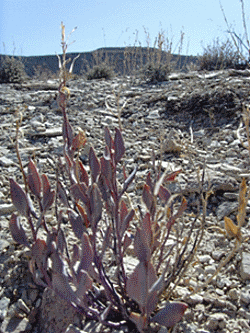
Shrubby-Reed Mustard Bush, Hesperidanthus suffrutescens
Shrubby-Reed Mustard Bush
Hesperidanthus suffrutescens
Courtesy & Copyright Matt Lewis

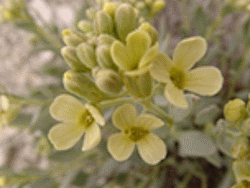
Shrubby-Reed Mustard Blossoms, Hesperidanthus suffrutescens Shrubby-Reed Mustard Blossoms
Hesperidanthus suffrutescens
Courtesy & Copyright Matt Lewis

Shrubby-Reed Mustard Blossoms Closeup, Hesperidanthus suffrutescens Shrubby-Reed Mustard Blossoms
Hesperidanthus suffrutescens
Courtesy & Copyright Matt Lewis

Tucked into isolated pockets of the Uintah Basin’s arid wildlands is the best little plant you’ve never heard of. Known to exist only in Duchesne and Uintah Counties, Shrubby-reed Mustard seems to occupy only the semi-barren “islands” of white shale in areas of the Green River Formation’s Evacuation Creek region. The endangered plant features thick, almost succulent, blue-green leaves and small yellow flowers.

“The habitat of Shrubby-reed Mustard is visually striking,” says USU alum Matt Lewis, a botanist with the Bureau of Land Management in Vernal, Utah. “It grows in very shallow, fine-textured soils and shale fragments that form narrow bands in the desert shrub community.”

Among the first plants to flower in spring, the perennial herb is visited by large number of insects, including many native bee species that forage for pollen. Scientists believe these bees may be critical in the plant’s reproduction and survival.

Lewis says the plant, also known as Toad-Flax Cress and Uintah Basin Waxfruit, offers an understated beauty to the stark landscape. With a shrub-like form and multiple stems, Shrubby-reed Mustard grows to about 20 centimeters in height. Its leaves, which feel almost like leather, change to a bright purple in the fall.

The plant is also enticingly fragrant, Lewis says. “Its scent reminds me of roses mixed with apples and pears.”

Despite its fragile status, Shrubby-reed Mustard is a long-lived plant. USU ecologist Geno Schupp says some individual plants may be one hundred years old.

The elusive species has outlived scientists’ attempts to classify it and has undergone several taxonomic changes. It currently boasts the scientific name Hesperidanthus suffrutescens, placing it solidly in the mustard family.

Lewis knows of no history of Shrubby-reed Mustard as a culinary or medicinal herb, though documented reports of such uses for mustard plants date back to ancient times. The plant appears to provide welcome forage for some four-legged creatures, he says, as he recently witnessed plants that had been grazed completely and ripped from the ground.

“Whether that was due to livestock or native ungulates, I’m not sure.”

Credits:
Images: Courtesy & Copyright Matt Lewis
Text:     Mary-Ann Muffoletto, Utah State University College of Natural Resources
Credits:
Matt Lewis, botanist, Bureau of Land Management, Vernal, Utah.
Eugene “Geno” Schupp, professor, USU Department of Wildland Resources.

Additional Reading:

https://www.fws.gov/mountain-prairie/factsheets/ShrubbyReed-mustardFactSheet.pdf

https://www.fws.gov/mountain-prairie/species/plants/shrubbyreedmustard/5YearReview2010.pdf

Pioneer Day Edible Native Plants 2016

Mountain big sagebrush (Artemisia tridentata subsp. Vaseyana) in flower - Photo Courtesy and Copyright Dr. Leila Shultz
Mountain big sagebrush (Artemisia tridentata subsp. Vaseyana) in flower – Photo Courtesy and Copyright Dr. Leila Shultz


With Pioneer Days looming, let’s explore a bit of our local heritage.

Following several days of cold and snowy weather in early May, my friend and USU graduate student Ian Keller and I approached the Mormon Handcart outpost near Evanston Wyoming on Deseret Land & Livestock Company land. We braved the elements to deliver a seminar to 8 missionary couples on Mormon pioneer use of wild plants as they struggled toward the Promised Land of Salt Lake Valley.

Ian’s graduate work encompasses this topic. Some of what follows is from his good work combined with others later mentioned. And we must not overlook the origins of this knowledge which came from the native peoples, acquired through thousands of years of trial and error.

(I must add that following our seminar we feasted on a variety of sumptuous foods the missionaries had prepared from pioneer recipes!)

I’ll begin with a remarkable plant big sage brush or Artemisia tridentate, which was their constant companion for much of the journey.

Medicinal uses included treatment for headache, diarrhea, sore throat, vomiting and even bullet wounds. Tea made from leaves was used for hair tonic and a poultice for bee stings.

“Brighan Young advised gathering and drying it for winter medicinal purposes. From a pioneer journal- “We washed our hair in sage tea, sage tea is good to cure night sweats”. And from Phil Robinson, 1883- “Someday perhaps a fortune will be made of it, but at present its chief value seems to be as a moral discipline to the settler and as cover for the sage hen.”

Dandelions, Photo Copyright 2002 Roger Banner, Intermountain Herbarium, USU
Dandelions
Copyright © 2002 Roger Banner, Intermountain Herbarium, USU


Another plant that rarely gets its due, the common dandelion.
For Dandelion Salad- “Gather the tender young plants of the dandelion. Wash and cut up into a salad. Serve with dressing oil, or just with salt and pepper.”— Ilene Kingsbury.

And from Larry A. Sagers, USU Extension Horticulture Specialist in the Thanksgiving Point Office-
Thistles that we now curse were once highly prized by the pioneers. One early pioneer wrote, “I used to eat thistle stalks until my stomach would be as full as a cow’s.”
The young leaves of stinging nettles were also used as greens. The cooking destroyed the irritating parts that affect the skin.
Camas bulbs for which Kamas, Utah, was named, were also used for food. The bulbs were eaten or a crude molasses was made from boiling the bulbs. Unfortunately, if too many of the bulbs were consumed they could cause severe illness. The bulbs also grow in proximity with death camas, so this particular plant involves certain risks to the user.

Tall Thistle (Cirsium altissimum), Photo Courtesy NPS, Kelly Manktelow, Photographer
Tall Thistle
(Cirsium altissimum)
Aster family (Asteraceae) in flower
Photo Courtesy NPS,
Kelly Manktelow, Photographer
The pioneers also used grease wood sprouts and other plants to supplement their meager diet.
Gooseberries, strawberries, raspberries and currants grew in the mountains and were highly prized. Chokecherries were a favorite for preserves and jellies.
A recent book by Brock Cheney “Plain but Wholesome: Foodways of the Mormon Pioneers.” is a delightful book with many pioneer plant stories and recipes, as is Dr. Wesley P. Larsen’s “Field Folio of Indian and Pioneer Medicinal Plants”.

Perhaps your Pioneer Day’s activities will include preparing a recipe from one of these sources to garnish your picnic! And let us include the plants which garnished our pioneers with flavor if not survival during their epic trek!

Jack Greene, Smithfield Utah

Credits:

Pictures: Courtesy and Copyright Dr. Leila Shultz
Copyright © 2002 Roger Banner, Intermountain Herbarium, USU
Courtesy NPS,
Kelly Manktelow, Photographer
Text: Jack Greene, Bridgerland Audubon Society

Additional Reading:

Brock Cheney, Plain but Wholesome: Foodways of the Mormon Pioneers, https://www.amazon.com/Plain-but-Wholesome-Foodways-Pioneers/dp/1607812088

Wesley P. Larsen, Field Folio of Indian and Pioneer Medicinal Plants,
https://www.amazon.com/Field-Indian-Pioneer-Medicinal-Plants/dp/B007HFR7A2

Ancient Native Plant Relationships 18 Apr 2016

Ephedra, Ephedra viridis Coville
Ephedra
Ephedra viridis Coville
Courtesy USDA, NRCS. 2016. The PLANTS Database (https://plants.usda.gov, 6 February 2016). National Plant Data Team, Greensboro, NC 27401-4901 USA., BLM Photographer

Hi I’m T.J. Knudson and I’m Gilbert Young.

Stretching from the snowy peaks of the Wellsville Mountains, south to the sandstone shadows of Beaver Dam Wash, an ancient, native relationship provided unity to the diverse landscape. It is admired in the haunting tune of a wind pipe, it comports like a wool blanket; and its tapestry goes beyond the cliff art at Potash, and preceded John Wesley Powell and Brigham Young.

The Ute, Shoshone, Piute, Goshute, and Navajo cultures each echo today an enduring sustaining relationship bonded to the reliable plant life in a diverse land. this relationship sustained our state’s ancient culture, but little is understood about these gifted craftsmen in utilizing the materials and fibers.

In southeast Utah, the shepherd Navajo nation found a companion in the Prickly-Pear Cactus. Despite his short stature and sharp countenance, this ally was able to provide a fleshy, refreshing fruit. After rolling repeatedly through the direct to lose his spines, and soaking in water; there sparks a reaction of the most spectacular die; which was often orchestrated into many shades of red. Despite his stature on the lonely desert floor, the prickly pear creates a color that epitomizes the Navajo beauty and lives on to future generations.

As our ancient travelers would ascend upward into the hills, they would spend time in the Pinyon/Juniper woodland to collect pine nuts. Natives would also search for three other valuable resources: pine pitch, firewood and shelter materials. Underneath the pines and junipers plentiful sumac, can be found; the sumac branches provide the means to develop a midnight-black die and was also an essential basketry material. The third element needed to create this black color was ocher (okerr), a yellow mineral abundant in Navajo territory. The Pinyon-Juniper woodland met the needs of native people, much like modern superstores. Like these plants working together as a team, we all have an opportunity to join others in creating a unified community.

Prickly Pear Cactus, Opuntia ficus-indica
Prickly Pear Cactus
Opuntia ficus-indica
Courtesy US FWS

Across the canyons, a lone plant is found that nursed and comforted tribes long before the hospitals and prescriptions. Ephedra was a medicinal hero, when sharp cold winds swept the valleys. It could be boiled into a delicious tea that combated the common cold, allowing airways freedom of congestion. Also known as Brigham Tea, Natives shared this knowledge to the early Utah Pioneers in their time of need. The evergreen stems of Ephedra offer healing and a comfort that aided the native people and settlers. We also have the ability to heal our souls by intimately connecting ourselves to nature’s bounteous gifts. We can also provide healing to those who are in need of comfort and guidance.

If the past could speak to us today, it would remind us of connections and relationships that have been forgotten. Our hope today is that you may connect with these ancient relationships for yourselves. For more information, check out the Wild About Utah website.

For Wild About Utah this is T.J. Knutson and Gilbert Young.

Credits:
Images: Courtesy , Photographer
Text:     T.J. Knutson and Gilbert Young.


Additional Reading: