I’m a Beaver Believer

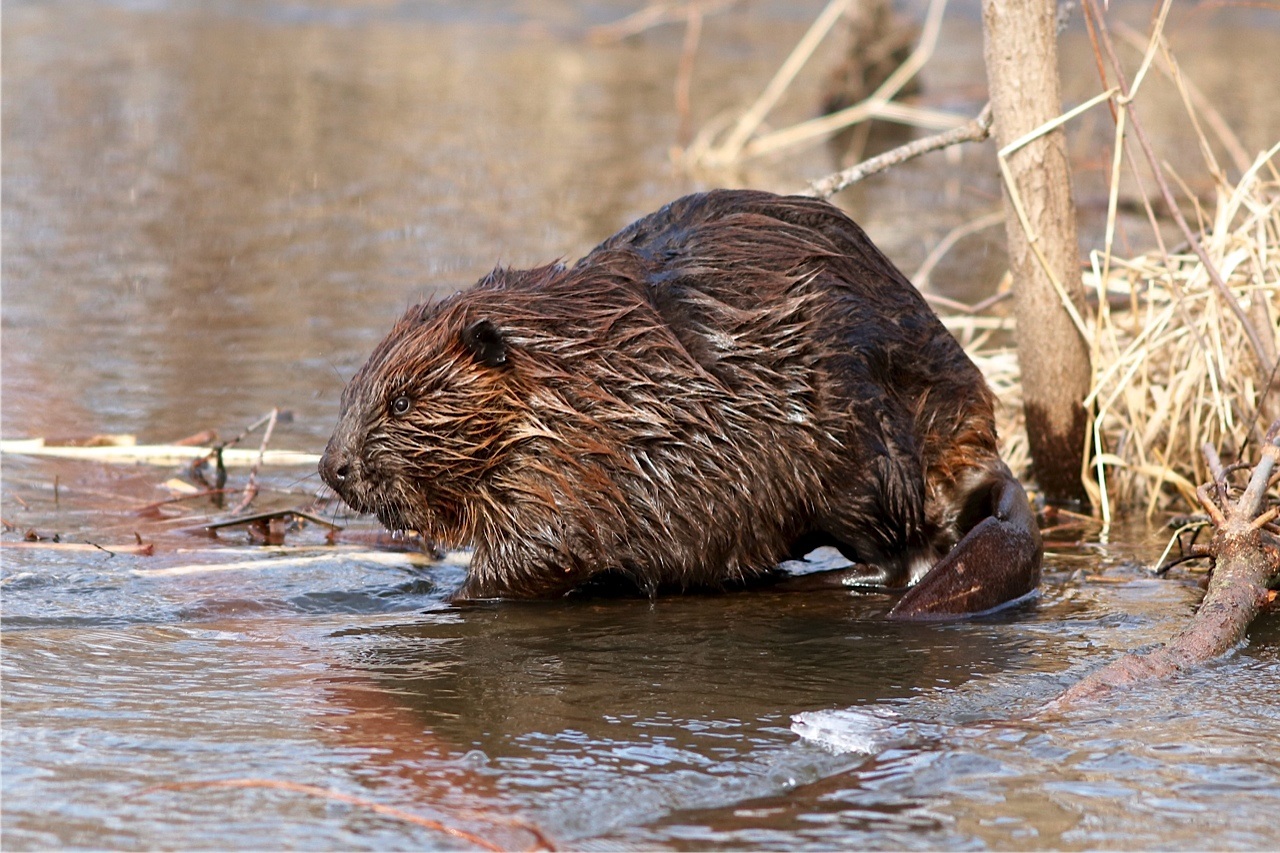
I'm a Beaver Believer: North American Beaver (Castor canadensis) Courtesy US FWS, Larry Palmer, Photographer
North American Beaver (Castor canadensis)
Courtesy US FWS, Larry Palmer, Photographer

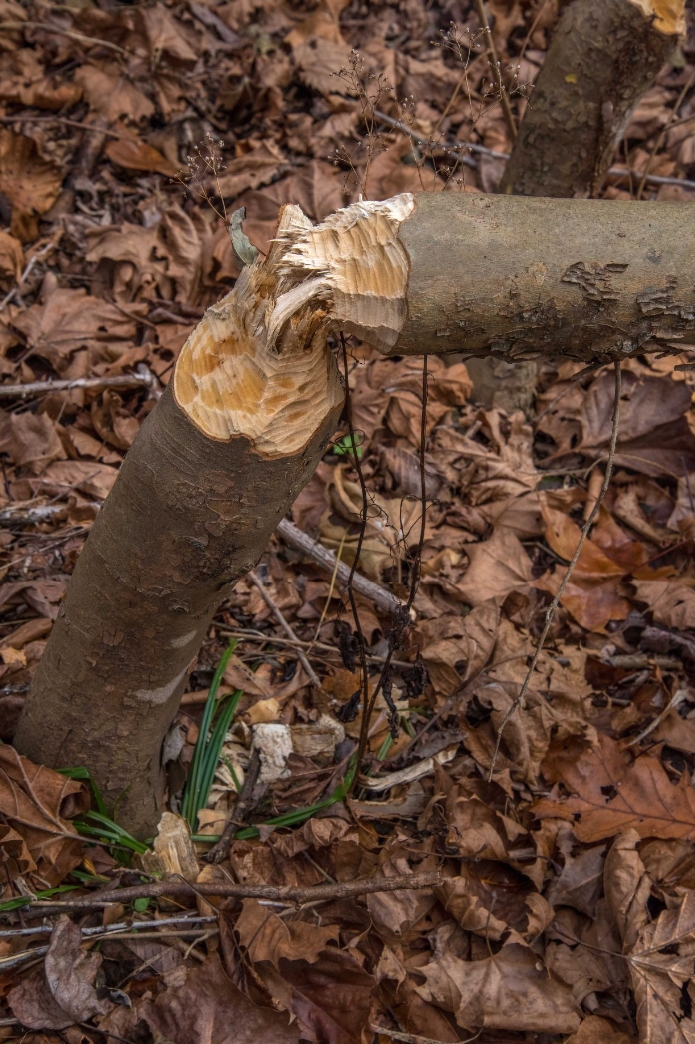
Beaver-Chewed Tree Courtesy US FWS, Brett Billings, Photographer Beaver-Chewed Tree
Courtesy US FWS, Brett Billings, Photographer

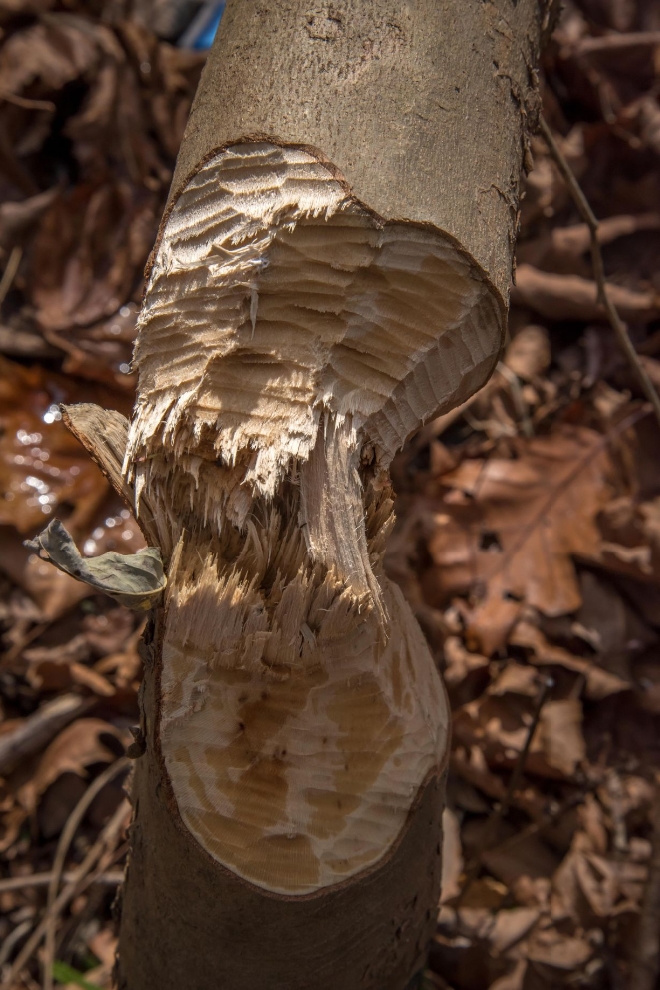
Beaver-Chewed Tree Courtesy US FWS, Brett Billings, Photographer Beaver-Chewed Tree
Courtesy US FWS, Brett Billings, Photographer

I’m a beaver believer. These remarkable rodents are a critical part of the ecosystem, a keystone species. The beaver’s role in creating wildlife and fisheries habitat, filtering and cooling water, and adding new water storage capacity, is essential for our prolonged drought in a warming climate.
When I had a neighbor call a few weeks ago to report he thought a beaver might be cutting down his aspen trees. I was in disbelief. Right here in our little city of Smithfield no less! John invited me over to confirm his suspicions.

After inspecting the tree stumps, teeth marks were undoubtedly those of beaver. We discussed on how to address the situation. John had lost several thousand dollars-worth of trees, and was quite desperate to remediate the situation. I suggested reporting the rogue beaver to animal control or UDWR. Perhaps they could live trap and transport the animal to a more favorable location, while dreading the possibility of having to destroy my iconic, heroic mammal friend. In the interim, I suggested he use chicken wire to save what remained. Another personal conflict arose from my position as Smithfield Tree Committee chair. I was fully aware of the many values urban forests offer to our local environment and quality of life. It was my mission to protect our trees.

I inquired as to where the beaver was setting up shop. There must be a tangle of aspen leavings nearby. John hadn’t noticed any. I began searching the stream to find the missing trees, never expecting to see a beaver. Not more than 20 yards upstream from his property boundary, there it was. I quickly took a picture before it slid into the water disappearing beneath the ice.

I returned to my neighbor who was busy installing chicken wire around his remaining aspen. He too was not wishing to exterminate the animal, but there were homes with aspen, willow, and cottonwood both up and downstream from our location, a veritable feast for this wanderer. I mentioned that I had some acquaintances at USU who worked with beaver reintroduction, and may offer some solutions as well.

Given its small size and unexpected location, this was most likely a two-year-old juvenile who had been forced from its family, similar to how we gently nudge our young adults out the door. I was well acquainted with our mountain landscape and quite certain this beaver had traveled a distance of many miles to end up in Smithfield.

After consulting my USU friends, it did not bode well for poor beaver. To catch and release this animal during the winter offered little hope for its survival. Further, it would not fare well in several months of captivity, being alone in a high stress environment.

I’m now waiting to hear from my neighbor for the rest of the story. May it be favorable for this remarkable aquatic mammal, so essential for creating healthy watersheds, which equals abundant, high quality water!

Jack Greene for Bridgerland Audubon, and I’m wild about Utah’s wild beaver!

Credits:
Picture: Courtesy US FWS, Larry Palmer & Brett Billings, Photographers https://images.fws.gov/
Audio: Courtesy & © Friend Weller, https://npr.org/
Text: Jack Greene, Bridgerland Audubon, https://bridgerlandaudubon.org/
Additional Reading: Lyle W Bingham, Webmaster, and Jack Greene, Author, Bridgerland Audubon, https://bridgerlandaudubon.org/

Additional Reading:

Jack Greene’s Postings on Wild About Utah, https://wildaboututah.org/author/jack/

Bingham, Lyle, Welcoming Rodent Engineers, Wild About Utah, February 7, 2022, https://wildaboututah.org/welcoming-rodent-engineers/

Heers, Mary, Beaver Tail Slap, Wild About Utah, October 12, 2020, https://wildaboututah.org/beaver-tail-slap/

Heers, Mary, Birch Creek Beaver Restoration, Wild About Utah, June 20, 2022, https://wildaboututah.org/birch-creek-beaver-restoration/

Hellstern, Ron, Leave it to Beaver, Wild About Utah, July 30, 2018, https://wildaboututah.org/leave-it-to-beaver/

Leavitt, Shauna, Beaver–Helping Keep Water on Drying Lands, Wild About Utah, April 17, 2017, https://wildaboututah.org/the-beaver-helping-keep-water-on-drying-lands/

Leavitt, Shauna, Beaver in Utah’s Desert Rivers, Wild About Utah, July 6, 2020, https://wildaboututah.org/beaver-in-utahs-desert-rivers/

Leavitt, Shauna, Proposed Beaver Holding Facility in Millville, Utah, Wild About Utah, September 3, 2018, https://wildaboututah.org/proposed-beaver-holding-facility-in-millville-utah/

Leavitt, Shauna, Sixty In-stream Habitat Structures in Four Days: Demonstrating Creek Restoration Techniques, Wild About Utah, December 18, 2017, https://wildaboututah.org/sixty-instream-habitat-structures-in-four-days-demonstrating-creek-restoration-techniques/

Strand, Holly, Beavers: The Original Army Corps of Engineers, Wild About Utah, April 29, 2010, https://wildaboututah.org/beavers-the-original-army-corps-of-engineers/

Goldfarb, Ben, Eager: The Surprising, Secret Life of Beavers and Why They Matter, Chelsea Green Publishing, March 8, 2019, https://www.amazon.com/Eager-Surprising-Secret-Beavers-Matter/dp/1603589082/ref=asc_df_1603589082/

Lee, David, Practiced in the art of deception, Wildlife Blog, Utah Division of Wildlife Resources, November 10, 2016, https://wildlife.utah.gov/news/wildlife-blog/683-practiced-in-the-art-of-deception.html

Birch Creek Beaver Restoration

Lush Green Meadows created by beaver activity on Birch Creek above the Wilde ranch near Preston, ID Courtesy & © Mary Heers, Photographer
Lush Green Meadows created by beaver activity on Birch Creek above the Wilde ranch near Preston, ID
Courtesy & © Mary Heers, Photographer

Cascading Reservoirs created by beaver activity on Birch Creek above the Wilde ranch near Preston, ID Courtesy & © Mary Heers, Photographer Cascading Reservoirs created by beaver activity on Birch Creek above the Wilde ranch near Preston, ID
Courtesy & © Mary Heers, Photographer

When Jay Wilde graduated from Preston High School in 1963, he took off to see the world. Thirty years later he came back, bought out his siblings, and moved into the family homestead in the hills above Preston, Idaho. He had acres of pasture and two hundred mother cows. But one thing was missing. Water. Birch Creek, which had run year round when he was growing up, now dried up in June. Hiking up to the headwaters, past his deeded property and into the National Forest, Jay found something else was missing. There was no sign of the beavers he remembered seeing there in his childhood. Now there were no beaver dams to slow down the flow of melting snow, and rainfall, spread it out into tiny reservoirs, and most importantly, no way to allow the surface runoff to filter down into the ground water.

On his own dime, Jay got some beavers and released them in the mountain headwaters of Birch Creek. Nothing happened. A year passed. The beavers were gone.

But help was on the way.

Enter Joe Wheaton, a beaver specialist at Utah State University. Joe bought a truckload of poles and recruited some student volunteers. Up the canyon they went, pounding poles into the streambed and weaving a few branches between the poles. Hopefully these structures would become “kick starter dams” for the next try at releasing beavers.

In 2015 five beavers were released. The beavers took one look at the kick starter dams and decided these dams suited them fine. They moved in and went to work.

After a few years, Jay and Joe checked the beaver’s progress. They found a thriving beaver community, and counted over 12 dams. The beavers seemed to be marching to Joe’s mantra for controlling spring runoff: “Slow it. Spread it. Stow it.”

And now, for the latest update to this story.

Earlier this month I was allowed to tag along with Jay and Joe and two others as they tramped up to the headwaters of Birch Creek. We found a watery paradise. Melting snow was trickling over and around the dams, cascading down into deep pools, and spreading out into lush green meadows. There were too many dams to count, but Joe said over 200. Jay smiled and said down below Birch Creek was running 40 more days.

And I – I just burst into song!

This is Mary Heers, and I’m Wild About Utah.

Credits:
Photos: Courtesy & Copyright © Mary Heers
Featured Audio: Courtesy Friend Weller, Utah Public Radio
Text & Voice: Mary Heers
Additional Reading: Lyle Bingham, Webmaster

Additional Reading

Wild About Utah, Mary Heers’ Postings

Leavitt, Shauna, Beaver–Helping Keep Water on Drying Lands, Wild About Utah, April 17, 2017, https://wildaboututah.org/the-beaver-helping-keep-water-on-drying-lands/

Hellstern, Ron, Leave it to Beaver, Wild About Utah, July 30, 2018, https://wildaboututah.org/leave-it-to-beaver/

Heers, Mary, Beaver Tail Strike, Wild About Utah, December 27, 2021, https://wildaboututah.org/beaver-tail-strike/

Heers, Mary, Beaver Tail Slap, Wild About Utah, October 12, 2020, https://wildaboututah.org/beaver-tail-slap/
Leavitt, Shauna, Proposed Beaver Holding Facility in Millville, Utah, Wild About Utah, September 3, 2018, https://wildaboututah.org/proposed-beaver-holding-facility-in-millville-utah/

Leavitt, Shauna, Beaver in Utah’s Desert Rivers, Wild About Utah, July 6, 2020, https://wildaboututah.org/beaver-in-utahs-desert-rivers/

Strand, Holly, Beavers: The Original Army Corps of Engineers, Wild About Utah, August 16, 2012, https://wildaboututah.org/beavers-the-original-army-corps-of-engineers/

Bingham, Lyle, Welcoming Rodent Engineers, Wild About Utah, February 7, 2022, https://wildaboututah.org/welcoming-rodent-engineers/

Randall, Brianna, How Beavers Boost Stream Flows, National Wildlife Federation, January 8, 2020, https://blog.nwf.org/2020/01/how-beavers-boost-stream-flows/

Goldfarb, Ben, Eager: The Surprising, Secret Life of Beavers and Why They Matter, Chelsea Green Publishing, March 8, 2019, https://www.amazon.com/Eager-Surprising-Secret-Beavers-Matter/dp/1603589082/ref=asc_df_1603589082/

Welcoming Rodent Engineers

Welcoming Rodent Engineers: Spawn Creek Beaver Dam and Pond Courtesy and Copyright Bethany Neilson, Photographer
Spawn Creek Beaver Dam and Pond
Courtesy and Copyright Bethany Neilson, Photographer
Finding a beaver dam gives me a sense of discovery and connects me to the past. I fondly remember my parents pointing out dams when we drove up Logan canyon. Instinctively, we’d scan, hoping to see the animals that built and maintained those structures. When we talked about beaver dams, the conversation often turned to trappers who would rendezvous and re-supply in the Bear Lake and Cache valleys. We lived where history had happened, and I was eager to know more.

Years later, inspired by a history class, I read Dale Morgan’s Jedediah Smith and the Opening of the West. Morgan followed the travels of Smith and his fellow trappers who answered William Ashley’s 1822 ad in the Missouri Gazette requesting “ONE HUNDRED MEN, to ascend the river Missouri to its source, there to be employed for one, two, or three years….”

North American beaver (Castor canadensis) Courtesy US FWS, Larry Palmer, Photographer
North American beaver
(Castor canadensis)
Courtesy US FWS, Larry Palmer, Photographer
Ashley’s troop competed with the Hudson’s Bay Company, the American Fur Company and several native indigenous tribes, all trapping beaver. The story sounds familiar: beaver pelts, and later bird feathers, were used to create hats, and the movement to harvest them led to a significant decline in numbers. For the birds, this decline led to building refuges and other conservation efforts. But the plight of the beaver continued downhill as exploration and discovery encouraged an influx of settlers. For the next century, the remaining beaver were regarded by those settlers as invasive land-grabbers, in competition with efforts to direct water, mine and irrigate.

However, today beavers are gaining more respect as we better understand the benefits of their skills in supporting wildlife and wetland conservation. Researchers at Utah State University, including Joe Wheaton and Nick Bouwes of the Department of Watershed Sciences, are studying habitat improvement after beaver introduction as a cost-effective way to combat drought and fire.

Spawn Creek Beaver Dams Courtesy & Copyright Joe Wheaton
Spawn Creek Beaver Dams
Courtesy & Copyright Joe Wheaton, Photographer
They have repeatedly demonstrated, over the past few years, that beaver families can be introduced and thrive behind fabricated beaver dam analogues(BDAs). After release into the resulting ponds, the beavers take over maintenance and produce their own dams. Over time, these dams and their rodent engineers improve stream flows, raise water tables, and cool water temperatures.

In essence, active beaver dams create Mesic habitats where the land maintains a well-balanced supply of moisture throughout the growing season. These dams slow spring run-off as they retain water in ponds and the surrounding soil, thereby, securing water for fish, trees, birds and wildlife. The best part is that the beavers do the maintenance.

Installing Beaver Dam Analogues, Rio Cabolla, Santa Fe National Forest, Courtesy USDA Forest Service
Installing Beaver Dam Analogues
Post Fire Rehabilitation
Rio Cabolla, Santa Fe National Forest,
Courtesy USDA Forest Service

Completed Beaver Dam  Analogues, Rio Cabolla, Santa Fe National Forest, Courtesy USDA Forest Service Completed Beaver Dam Analogues, Rio Cabolla, Santa Fe National Forest,
Courtesy USDA Forest Service

When wildfires occur, beaver oases preserve wildlife and habitat. However, if beaver and their habitats don’t exist in an area before a fire, they can still play a role. By retaining water with beaver dam analogs, we can create wetlands conducive to beaver habitat. In Joe Wheaton’s words, “We can’t dump beaver into a watershed that has burnt to the ground and expect them to do the restoration of degraded streams on their own…. What we can do post-fire is accelerate recovery with low-tech structures that make it easier to more quickly get beaver into an area and accelerate recovery. We’d like to help them do that.” (Utah State Magazine, Winter 2019, p.12)

To learn more about how birds, beaver and water are key to the understanding and improvement of our environment, and to find ways to get involved, check out this story on this wildaboututah.org.

I’m Lyle Bingham for Bridgerland Audubon, and I’m Wild About Utah

Credits:
Photos: Beaver Dam, Courtesy & Copyright © Bethany Neilson, Photographer https://uwrl.usu.edu/people/faculty/neilson-bethany
Spawn Creek Beaver Dams Courtesy & Copyright Joe Wheaton
Installing & Completed Beaver Dam Analogues, Rio Cabolla, Santa Fe National Forest, Courtesy USDA Forest Service
Featured Audio: Courtesy & Copyright © Friend Weller, Utah Public Radio upr.org
Text: Lyle Bingham, https://bridgerlandaudubon.org/
Additional Reading: Lyle Bingham, https://bridgerlandaudubon.org/

Additional Reading

Wild About Utah, Lyle Bingham’ Wild About Utah Postings

Strand, Holly, Beavers: The Original Army Corps of Engineers, April 29, 2010, https://wildaboututah.org/beavers-the-original-army-corps-of-engineers/

Leavitt, Shauna, Beaver–Helping Keep Water on Drying Lands, April 17, 2017, https://wildaboututah.org/the-beaver-helping-keep-water-on-drying-lands/

Leavitt, Shauna, Sixty In-stream Habitat Structures in Four Days: Demonstrating Creek Restoration Techniques, December 18, 2017, https://wildaboututah.org/sixty-instream-habitat-structures-in-four-days-demonstrating-creek-restoration-techniques/

Hellstern, Ron, Leave it to Beaver, July 30, 2018, https://wildaboututah.org/leave-it-to-beaver/

Leavitt, Shauna, Proposed Beaver Holding Facility in Millville, Utah, September 3, 2018, https://wildaboututah.org/proposed-beaver-holding-facility-in-millville-utah/

Leavitt, Shauna, Beaver in Utah’s Desert Rivers, July 6, 2020, https://wildaboututah.org/beaver-in-utahs-desert-rivers/

Heers, Mary, Beaver Tail Slap, October 12, 2020, https://wildaboututah.org/beaver-tail-slap/
(re-aired in late December 2021)

Other Favorites:

Randall, Brianna, Nature’s Engineers: How Beavers Boost Streamflows and Restore Habitat, https://www.sagegrouseinitiative.com/natures-engineers-how-beavers-boost-streamflows-and-restore-habitat/
Randall, Brianna, How Beavers Boost Stream Flows, National Wildlife Federation, January 8, 2020, https://blog.nwf.org/2020/01/how-beavers-boost-stream-flows/

Low-Tech Process Based Restoration of Riverscapes Design Manual, https://lowtechpbr.restoration.usu.edu/manual/

New Manual for Low-Tech Riparian Restoration, https://www.sagegrouseinitiative.com/new-manual-for-low-tech-riparian-restoration/

Randall, Brianna, Beavers, Water, and Fire—A New Formula for Success, Low-tech stream restoration works wonders for people and wildlife, National Wildlife Federation, October 30, 2018, https://blog.nwf.org/2018/10/beavers-water-and-fire-a-new-formula-for-success/

Nicholas Weber ,Nicolaas Bouwes,Michael M. Pollock,Carol Volk,Joseph M. Wheaton,Gus Wathen,Jacob Wirtz,Chris E. Jordan, Alteration of stream temperature by natural and artificial beaver dams, May 17, 2017, https://doi.org/10.1371/journal.pone.0176313 OR https://journals.plos.org/plosone/article?id=10.1371/journal.pone.0176313

Prettyman, Brett, Dolling (SLTRIB), Justin(UT DWR), Beavers in Utah, Creators of Habitat, The Salt Lake Tribune & Utah DWR, Oct 15, 2009 •

Utah’s population of beaver has recovered since the days when they were trapped by mountain men, but some people wonder if moving beaver to traditional habitats may help deal with drought.

Utah Beaver Management Plan, Utah Division of Wildlife Resources, https://wildlife.utah.gov/pdf/furbearer/beaver_plan_2010-2020.pdf

Birds, Beaver and Water in a Changing Climate, Bridgerland Audubon, https://bridgerlandaudubon.org/birds-beaver-and-water-in-a-changing-climate/

Goldfarb, Ben, Eager: The Surprising, Secret Life of Beavers and Why They Matter, Chelsea Green Publishing, March 8, 2019, https://www.amazon.com/Eager-Surprising-Secret-Beavers-Matter/dp/1603589082/ref=asc_df_1603589082/


Beaver in Utah’s Desert Rivers

Beaver in Utah’s Desert Rivers: A beaver dam built by resident beavers on the Price River. The dam helps hold the water on the desert landscape which benefits the native and endangered fish populations. Courtesy & © Emma Doden, Photographer
Dam on the Price River_Emma Doden: A beaver dam built by resident beavers on the Price River. The dam helps hold the water on the desert landscape which benefits the native and endangered fish populations
Courtesy & © Emma Doden, Photogrphr.

The beaver’s powerful hands and tail which are used to build dams in Utah’s desert rivers. Courtesy & © Emma Doden, Photographer The beaver’s powerful hands and tail which are used to build dams in Utah’s desert rivers.
Courtesy & © Emma Doden, Photogrphr.

Emma Doden, graduate student in the Department of Wildland Resources in the Quinney College of Natural Resources at USU  conducting radio telemetry to find the location of both resident and translocated beavers. Courtesy & © Emma Doden, Photographer Emma Doden, graduate student in the Department of Wildland Resources in the Quinney College of Natural Resources at USU conducting radio telemetry to find the location of both resident and translocated beavers.
Courtesy & © Emma Doden, Photogrphr.

Quarantine Pen – Once a beaver is caught it is placed  in quarantine for three days before translocated so it will not spread disease.  The beaver is kept cool, well fed, and close to water. Courtesy & © Emma Doden, Photographer Quarantine Pen – Once a beaver is caught it is placed in quarantine for three days before translocated so it will not spread disease. The beaver is kept cool, well fed, and close to water.
Courtesy & © Emma Doden, Photogrphr.

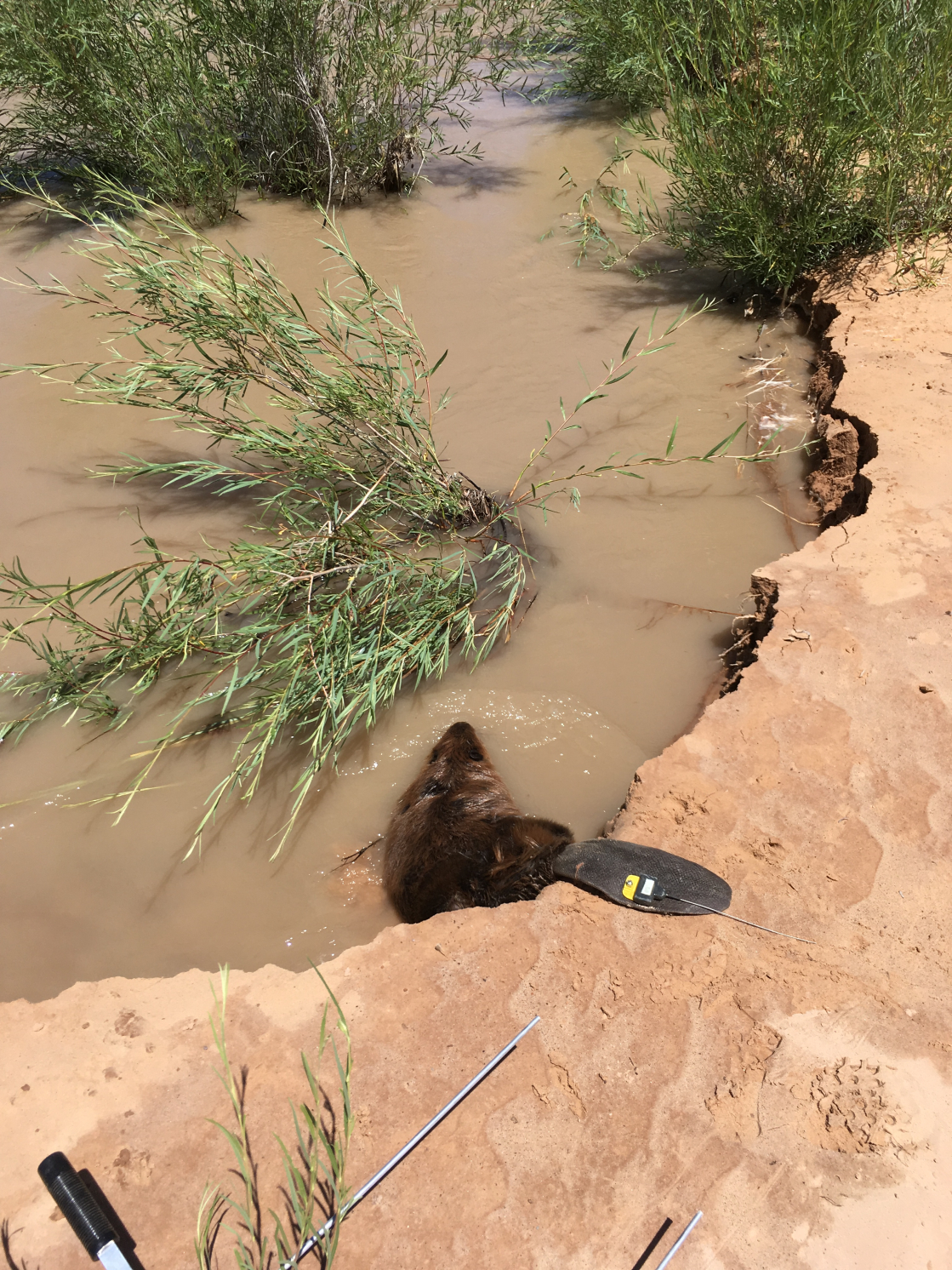
Adult beaver being released into Utah desert rivers after they have been equipped with radio-transmitter and PIT-tags in their tails. Researchers can then use radio telemetry to track the movement of the beavers. Courtesy & © Emma Doden, Photographer Adult beaver being released into Utah desert rivers after they have been equipped with radio-transmitter and PIT-tags in their tails. Researchers can then use radio telemetry to track the movement of the beavers.
Courtesy & © Emma Doden, Photogrphr.

Adult beaver being released into Utah desert rivers after they have been equipped with radio-transmitter and PIT-tags in their tails. Researchers can then use radio telemetry to track the movement of the beavers. Courtesy & © Emma Doden, Photographer Adult beaver being released into Utah desert rivers after they have been equipped with radio-transmitter and PIT-tags in their tails. Researchers can then use radio telemetry to track the movement of the beavers.
Courtesy & © Emma Doden, Photogrphr.

San Rafael River: a tributary of the Green River which runs through some of the driest parts of Utah. Courtesy & © Emma Doden, Photographer San Rafael River: a tributary of the Green River which runs through some of the driest parts of Utah.
Courtesy & © Emma Doden, Photogrphr.

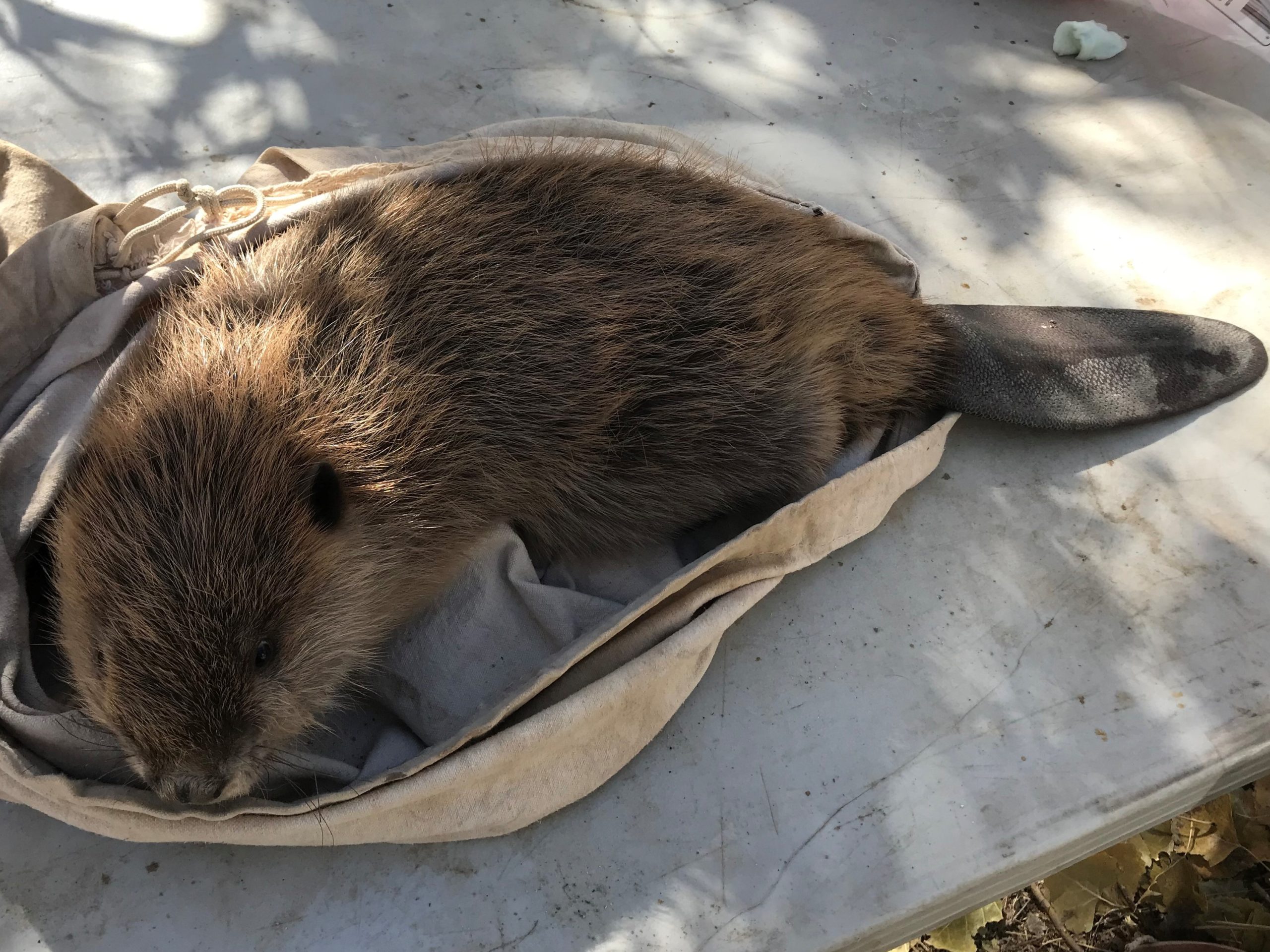
Processing a beaver kit, Courtesy & © Emma Doden, Photographer Processing a beaver kit,
Courtesy & © Emma Doden, Photogrphr.

Radio transmitters: The types of radio transmitters which are attached to the beaver’s tails so researchers can monitor its movement. Courtesy & © Emma Doden, Photographer Radio transmitters: The types of radio transmitters which are attached to the beaver’s tails so researchers can monitor its movement.
Courtesy & © Emma Doden, Photogrphr.

The Price and San Rafael rivers flow through some of Utah’s driest areas. Both are tributaries of the Green River. These rivers are essential to sustain the wildlife, riparian vegetation, native and endangered fish populations, and livestock that live in Utah’s eastern desert.

Beavers, native to both rivers, have far-reaching impacts on these waterways because of their ability to build dams which hold the water on the arid landscape – they are nature’s aquatic engineers.

One beaver dam can improve the living conditions for a host of fish, insects, plants, birds and mammals who live in and around the river.

Emma Doden, a graduate student in the Department of Wildland Resources in the Quinney College of Natural Resources at USU is working to understand the dynamics of beavers who are translocated to desert rivers for restoration purposes and how they compare to the naturally-occurring resident beavers who are already established.

Doden explains, “I help relocate nuisance beavers to desert river systems to give them a second chance, and help restore the river for the imperiled and endangered fish species…in this arid climate.”

Currently, Doden’s work is “passive desert river restoration” because there is no machinery manipulating the landscape or man-made structures impacting the research results. She is relying solely on beavers and their resources which have been part of the rivers’ ecosystems for millions of years. The beavers’ engineering teeth, tails, and paws build dams and lodges from riparian vegetation, gravel and mud.

Many of the translocated beavers come from the USU Beaver Rehabilitation and Relocation Center which captures nuisance beavers, quarantines them for three days to ensure they cannot spread disease, then passes them to Doden to be released in the desert system.

Nate Norman, a field biologist in the USU Ecology Center who helps operate the Beaver Rehabilitation and Relocation Center said, “Working with Paul Chase from the US Forest Service we have trapped and relocated approximately 8 to 10 beavers from around Cache Valley [in northern Utah, to the desert rivers in Doden’s research.“

Both the resident and translocated beavers in the study receive a radio-transmitter and PIT-tag in their tail.

Doden explains, “The PIT-tag is similar to the microchip [a] dog or cat gets at the vet for identification if it ever gets lost. We use radio-transmitters and PIT-tags to track the movements of our beavers so they do not become lost after release.”

To this point, 90% of the translocated beavers have moved outside Doden’s research area as they explored their new habitat. They were probably searching for a companion and a suitable place to build a home.

This travelling increases the beaver’s vulnerability to predators since they have no underground burrow or lodge for protection. During the 2019 field season, of the eight beavers released, three of the translocated beavers were taken by predators.

Many of the tributaries of the Green and Colorado rivers are wood-deprived because of changes in the river flow due to human extraction. To increase a translocated beaver’s chances of surviving and its likelihood of remaining where it’s placed, the research team has proposed building simple dam-like structures out of wood fence posts, which would encourage the beavers to stay where they’re released. Once they receive NEPA approval the structures will be built.

Doden adds, “Our project goals are already being met, as we are learning so much about the fate of translocated beavers in desert ecosystems. Restoration goals will also be met if even a few beavers stay in the study area and build dams, supplementing the resident beaver population and creating more complex habitat for imperiled desert fish to live.”

This is Shauna Leavitt and I’m Wild About Utah.

Beaver in Utah’s Desert Rivers-Credits:
Photos: Courtesy & © Emma Doden
Lead Audio: Courtesy and © Friend Weller
Text: Shauna Leavitt, Utah Cooperative Fish and Wildlife Research Unit, Quinney College of Natural Resources, Utah State University

Beaver in Utah’s Desert Rivers-Additional Reading

Greene, Jack, Rosy Finches, Wild About Utah, March 11, 2019, https://wildaboututah.org/rosy-finches/

Leavitt, Shauna, Proposed Beaver Holding Facility in Millville, Utah, Wild About Utah, September 3, 2018, https://wildaboututah.org/proposed-beaver-holding-facility-in-millville-utah/

Hellstern, Ron, Leave it to Beaver, Wild About Utah, July 30, 2018, https://wildaboututah.org/leave-it-to-beaver/

Goodwin, Jim, Riparian Zones and a Critter Quiz, Wild About Utah, June 15, 2015, https://wildaboututah.org/riparian-zones-and-a-critter-quiz/

Kervin, Linda, Huddling for Warmth, Wild About Utah, February 3, 2011, https://wildaboututah.org/huddling-for-warmth/

Strand, Holly, Beavers: The Original Army Corps of Engineers, Wild About Utah, April 29, 2010, https://wildaboututah.org/beavers-the-original-army-corps-of-engineers/

Ramsey, R. Douglas, Banner, Roger E., McGinty, Ellie I. Leydsman, Watershed Basins in Utah, USU Extension, https://extension.usu.edu/rangelands/ou-files/RRU_Section_Four.pdf

Restoring Degraded Waters, One Pest at a Time, Utah State Magazine, Utah State University, December 7, 2021, https://utahstatemagazine.usu.edu/environment/restoring-degraded-waters-one-nuisance-at-a-time/

Goldfarb, Ben, Eager: The Surprising, Secret Life of Beavers and Why They Matter, Chelsea Green Publishing, March 8, 2019, https://www.amazon.com/Eager-Surprising-Secret-Beavers-Matter/dp/1603589082/ref=asc_df_1603589082/