Pinyon-juniper forest mixed with shrubs, cacti, and sage blanketing the mesa top Courtesy US National Parks Service, Austin Tumas, PhotographerAs I write this, I’m babysitting grandkids in Cedar City. I find relief from the little rascals by
handing them off to grandma while I retreat to surrounding pinyon-juniper forests, affectionally titled PJ forests.
Bird calls instantly transform my thoughts to these pygmy forest’s abundant offerings- muffled laughing calls of pinyon jays, twittering of juniper titmice, raucous scrub jays. Drawn by
swooping ravens, I approach a juniper overlooking the canyon below. Thirty feet away, an immature golden eagle sits on a Juniper branch expressing its displeasure by twisting a gold-
mantled head to face the marauders with fierce eyes.
Further up the trail, five mule deer dart though the shadows. A black tailed jackrabbit bolting from its sage hideout startles me. Wishing for binoculars, a flock of sparrow-sized birds fly
across. I attempt to imagine them as juncos, without success. Tomorrow I will return with optics in hand to solve the mystery.
Pinyon Juniper are the dominant forest type in Utah. Much like the sage Steppe biotic community, at first glance one is deluded by the apparent lifeless monotony of this landscape.
To the contrary, both have a high biodiversity. These forests have around 450 species of vascular plants living alongside pinyon pines and junipers. Additionally, over 150 vertebrate
species of animals including elk, mule deer, and bear call pinyon-juniper forests home either seasonally or throughout the year.
Junipers are a birders paradise. The trees offer sites for perching, singing, nesting, and drumming. They also yield plentiful berries (actually spherical cones) and house a high insect
diversity for birds to consume. Mammals also eat the berries while seeking shelter in hollow juniper trunks, taking advantage of the trees’ shade in hot temperatures and the trees’ thermal
cover in the cold. Pinyon pines offer similar benefits to forest-dwellers. Pinyon mice, Abert’s squirrels, cliff chipmunks, Uinta chipmunks, wood rats, desert bighorn sheep, and black bears
all eat pinyon pine nuts.
For millennia, our own species have been dependent on the pinyon pine for their variable bounty of highly nourishing pine nuts. A staple of the Paiute, Goshute, Ute, and Shoshone, their
lives revolved around the fall harvest with elaborate ceremonies to pay homage for their life sustaining food value. It continues to the present, and we Euromericans have joined them in fall
harvest here in the Intermountain west, including my children and grandchildren.
Like the sage steppe, the pinyon juniper forest has been misunderstood, and under-appreciated for its critical role in the lives of so many species that would not exist without it, nor would
atmospheric carbon be stored in their fiber and their soils. Chaining and other “treatments” are highly controversial given the aesthetic impact of once vibrant forest replaced with piles of
uprooted trees and torn soils. Compounding this, recent decades have witnessed more severe drought and heat events making them vulnerable to insect and disease attacks, and catastrophic fire. We must practice utmost care in how we manage this priceless resource.
Jack Greene for Bridgerland Audubon Society, loving wild Utah and its PJ forests
This is Jack Greene for Bridgerland Audubon Society, loving wild Utah and its PJ forests!
Tausch, R.J., Miller, R.F., Roundy, B.A., and Chambers, J.C., 2009, Piñon and juniper field guide: Asking the right questions to select appropriate management actions: U.S. Geological Survey Circular 1335, 96 p., https://pubs.usgs.gov/circ/1335/circ1335.pdf
Later that evening when they were back at camp, they listened to a podcast from Mesa Verde Voices. “We learned what it means to break pots and why the Ancestral Puebloans did that,” he continued. “One of the reasons was as a farewell ceremony when they were saying goodbye to an area.” Reflecting on their finds on that knoll, they used Lisa Kearsley’s San Juan River field guide to identify what the pottery sherds were. “It was a transformative experience to be able to notice that there were hundreds of years between different pottery sherds, and this could have been a place for many different people to break their pottery and say goodbye and move on. We realized we were walking in the same place as people did a long time ago.”
Saying goodbye and moving on. Many speculate about the why, when, and how these people left as well as the significance of the breaking pot ritual I had never read in my Utah history textbooks. Perhaps, as Tree-Ear decides, “there are some things that could not be molded into words.” How many sherds and shards and clues have I missed? Reading the world is a miraculous skill for learners of all ages who encounter not only words but the wonder of putting together the pieces we find all around if we just look.Putting the Pieces Together
Spawn Creek Beaver Dam and Pond Courtesy and Copyright Bethany Neilson, PhotographerFinding a beaver dam gives me a sense of discovery and connects me to the past. I fondly remember my parents pointing out dams when we drove up Logan canyon. Instinctively, we’d scan, hoping to see the animals that built and maintained those structures. When we talked about beaver dams, the conversation often turned to trappers who would rendezvous and re-supply in the Bear Lake and Cache valleys. We lived where history had happened, and I was eager to know more.
Years later, inspired by a history class, I read Dale Morgan’s Jedediah Smith and the Opening of the West. Morgan followed the travels of Smith and his fellow trappers who answered William Ashley’s 1822 ad in the Missouri Gazette requesting “ONE HUNDRED MEN, to ascend the river Missouri to its source, there to be employed for one, two, or three years….”
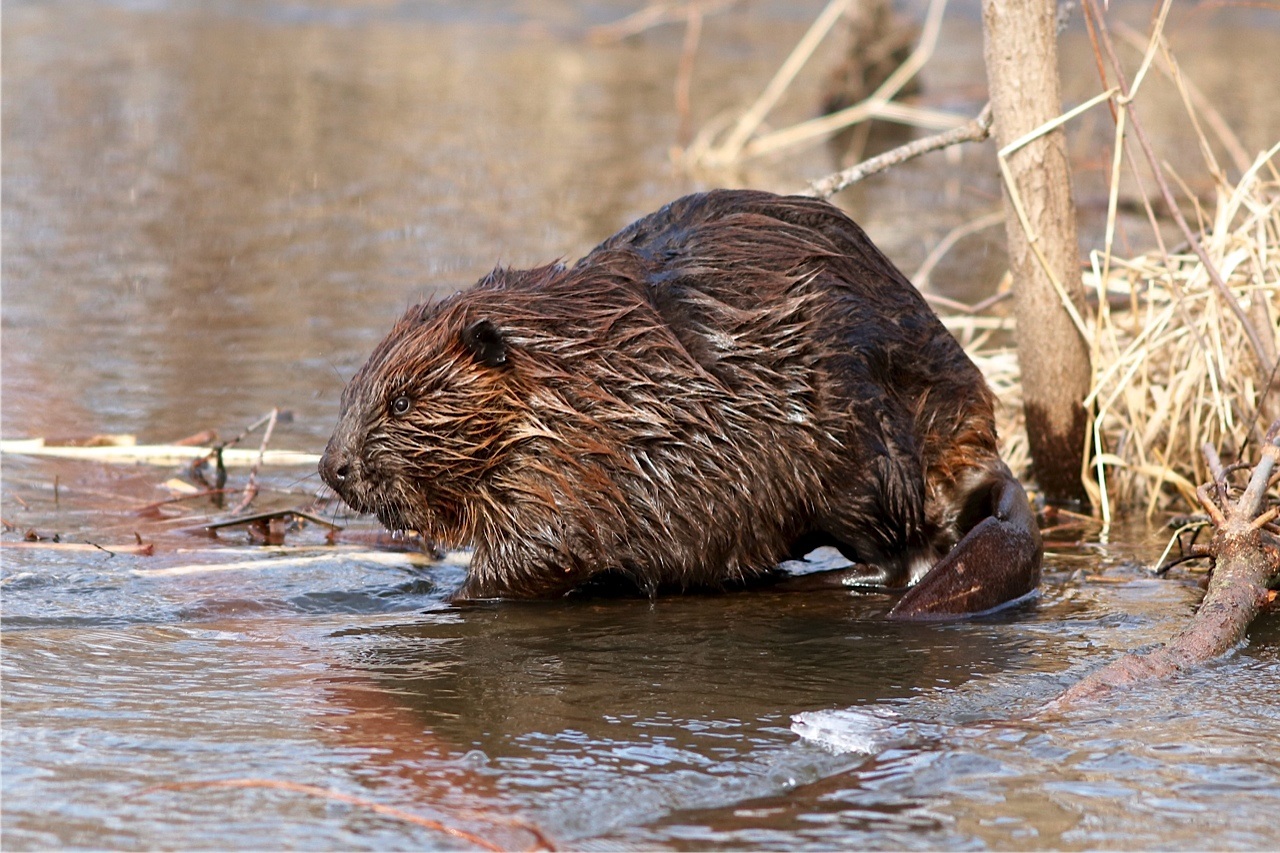
North American beaver (Castor canadensis) Courtesy US FWS, Larry Palmer, PhotographerAshley’s troop competed with the Hudson’s Bay Company, the American Fur Company and several native indigenous tribes, all trapping beaver. The story sounds familiar: beaver pelts, and later bird feathers, were used to create hats, and the movement to harvest them led to a significant decline in numbers. For the birds, this decline led to building refuges and other conservation efforts. But the plight of the beaver continued downhill as exploration and discovery encouraged an influx of settlers. For the next century, the remaining beaver were regarded by those settlers as invasive land-grabbers, in competition with efforts to direct water, mine and irrigate.
However, today beavers are gaining more respect as we better understand the benefits of their skills in supporting wildlife and wetland conservation. Researchers at Utah State University, including Joe Wheaton and Nick Bouwes of the Department of Watershed Sciences, are studying habitat improvement after beaver introduction as a cost-effective way to combat drought and fire.
Spawn Creek Beaver Dams Courtesy & Copyright Joe Wheaton, PhotographerThey have repeatedly demonstrated, over the past few years, that beaver families can be introduced and thrive behind fabricated beaver dam analogues(BDAs). After release into the resulting ponds, the beavers take over maintenance and produce their own dams. Over time, these dams and their rodent engineers improve stream flows, raise water tables, and cool water temperatures.
In essence, active beaver dams create Mesic habitats where the land maintains a well-balanced supply of moisture throughout the growing season. These dams slow spring run-off as they retain water in ponds and the surrounding soil, thereby, securing water for fish, trees, birds and wildlife. The best part is that the beavers do the maintenance.
Installing Beaver Dam Analogues Post Fire Rehabilitation Rio Cabolla, Santa Fe National Forest, Courtesy USDA Forest Service
Completed Beaver Dam Analogues, Rio Cabolla, Santa Fe National Forest, Courtesy USDA Forest ServiceWhen wildfires occur, beaver oases preserve wildlife and habitat. However, if beaver and their habitats don’t exist in an area before a fire, they can still play a role. By retaining water with beaver dam analogs, we can create wetlands conducive to beaver habitat. In Joe Wheaton’s words, “We can’t dump beaver into a watershed that has burnt to the ground and expect them to do the restoration of degraded streams on their own…. What we can do post-fire is accelerate recovery with low-tech structures that make it easier to more quickly get beaver into an area and accelerate recovery. We’d like to help them do that.” (Utah State Magazine, Winter 2019, p.12)
To learn more about how birds, beaver and water are key to the understanding and improvement of our environment, and to find ways to get involved, check out this story on this wildaboututah.org.
I’m Lyle Bingham for Bridgerland Audubon, and I’m Wild About Utah
Prettyman, Brett, Dolling (SLTRIB), Justin(UT DWR), Beavers in Utah, Creators of Habitat, The Salt Lake Tribune & Utah DWR, Oct 15, 2009 •
Utah’s population of beaver has recovered since the days when they were trapped by mountain men, but some people wonder if moving beaver to traditional habitats may help deal with drought.
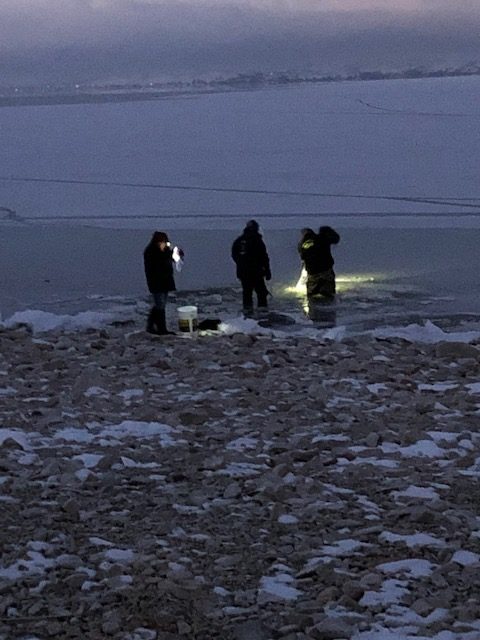
 Ice Fishing at Bear Lake, Cisco Beach
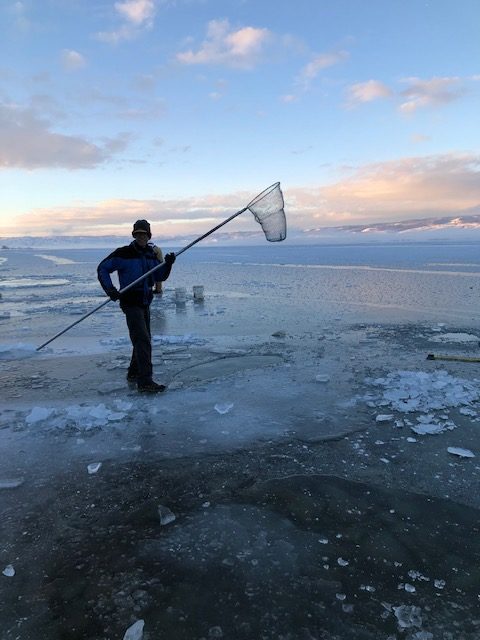 Ice Fishing at Bear Lake, Cisco Beach
 Bonneville Cisco: Male and Female