To Be a Dog in the Sun

To be a Dog in the Sun Courtesy and Copyright Katarzyna Bilicka, Photographer
To be a Dog in the Sun
Courtesy and Copyright Katarzyna Bilicka, Photographer
Every winter comes with its ups and downs, and the downs are not always on the slopes. Sometimes we catch a bug or a nip. Sometimes we get those winter blues. Sometimes it’s even not safe for us to be outside and take a deep breath. Those are my most down days I feel: when you look out your window in the morning and see… thickness. Those are the days where we must hunker down indoors, though we long for the out of.

What I tend to do on these days in order to build that down into an up is lean in. I’ll do chores, bake something, stew something up, and make the most of it. If I must be indoors, then by god I shall be indoors. I keep myself busy so that I am still doing something. But what does one do when it’s been days or over a week of staring out that window at the thickness? What does one do when the house is clean, more bread is imprudent, and the stews all begin to form a beige film on your palette? What do you do when making the most of it becomes completed?

Now, I’m sure for every person there are different strategies for these issues. Maybe some folks don’t ever run out of steam. For them, that must be lovely. For the rest of us, though, Plan B is truly where creativity can shine, can it not? For where does imagination come from when our habits can no longer be relied upon and we must remember a bit of play?

I have found that my Plan Bs on those lingering thick sky days are a countermeasure to my Plan A, naturally. What I have discovered, from peering about my home, is that when the air is so bad outdoors and there is no more work to be done, the next best thing you can do is be a dog in the sun.

Me and my partner have three dogs, and from them we get so much. Endless fur on our clothes, large vet bills when they chase porcupines, barrels of love, and life lessons aplenty. When the air is too poor out, even for our dogs who typically love running and wrestling about in the yard and on hikes, they all do one thing which for its naturalness makes incredible sense. What they do is they find any ray of sunshine which peers into our home, even if dim and gray, lie squarely within its frame, and sleep like they’re storing fat for spring. What this means to Plan B can be straightforward. Have I ever plopped myself on the carpet alongside the pack and also napped in the light which happens to peer through the smog? Absolutely. It’s delightful. I highly recommend it. It’s warm, and soft, and the gentle snores from all make it an especially delightful respite. But what this also means to me is to be cozy in the light. Natural when possible, lamplit when not.

In the day I’ll put on the kettle, make some tea, and do any work I must in the sun with the aroma of spring leaves seeping into my nostrils and pores. When the sun is poor and my work is through, perhaps I’ll sit under a good lamp, maybe even stoke a fire, I’ll have a wee dram of uisce beatha fresh from aged shores and pull up a good book. I’ll read about a land where the air is clean but the company kept not even fiction can muster better, for that is another perk of having dogs: the good ones are good company, and those that aren’t are not themselves truly to blame, and therefore are good still the same.

So, when you find yourself noticing that the air once more is beginning to yellow, which makes your blues turn to gray, do what you can to keep your mind at ease while giving your lungs not their daily dose of PM2.5 and 10. And, if you find yourself like I often do after these long winter stretches, of having a cost benefit analysis of mind or lungs, remember that there can be a Plan B. Remember, that you can also be a dog in the sun. Find a book, have a slow down, drink something hot, warm, or neat, and gather yourself to the sun. Find your square of white light on the carpet, and give it a lie. Soak it up, feel the warmth, and remember that even on those days where to be in the wilds of Utah would do more harm than good, good still always may visit you from the wilds themselves.

I’m Patrick Kelly, and I’m Wild About Utah.
 
Credits:
Images: Courtesy and Copyright Katarzyna Bilicka, Photographer
Audio: Courtesy & © Shalayne Smith-Needham AND J. Chase and K.W. Baldwin. https://www.upr.org/
Text:    Patrick Kelly, Director of Education, Stokes Nature Center, https://www.logannature.org
Included Links: Patrick Kelly & Lyle Bingham, Webmaster, WildAboutUtah.org

Additional Reading

Wild About Utah, Posts by Patrick Kelly

Stokes Nature Center in Logan Canyon, https://www.logannature.org/


Flying Mule Deer

Flying Mule Deer: Helicopter Crew Courtesy & © Mary Heers, Photographer
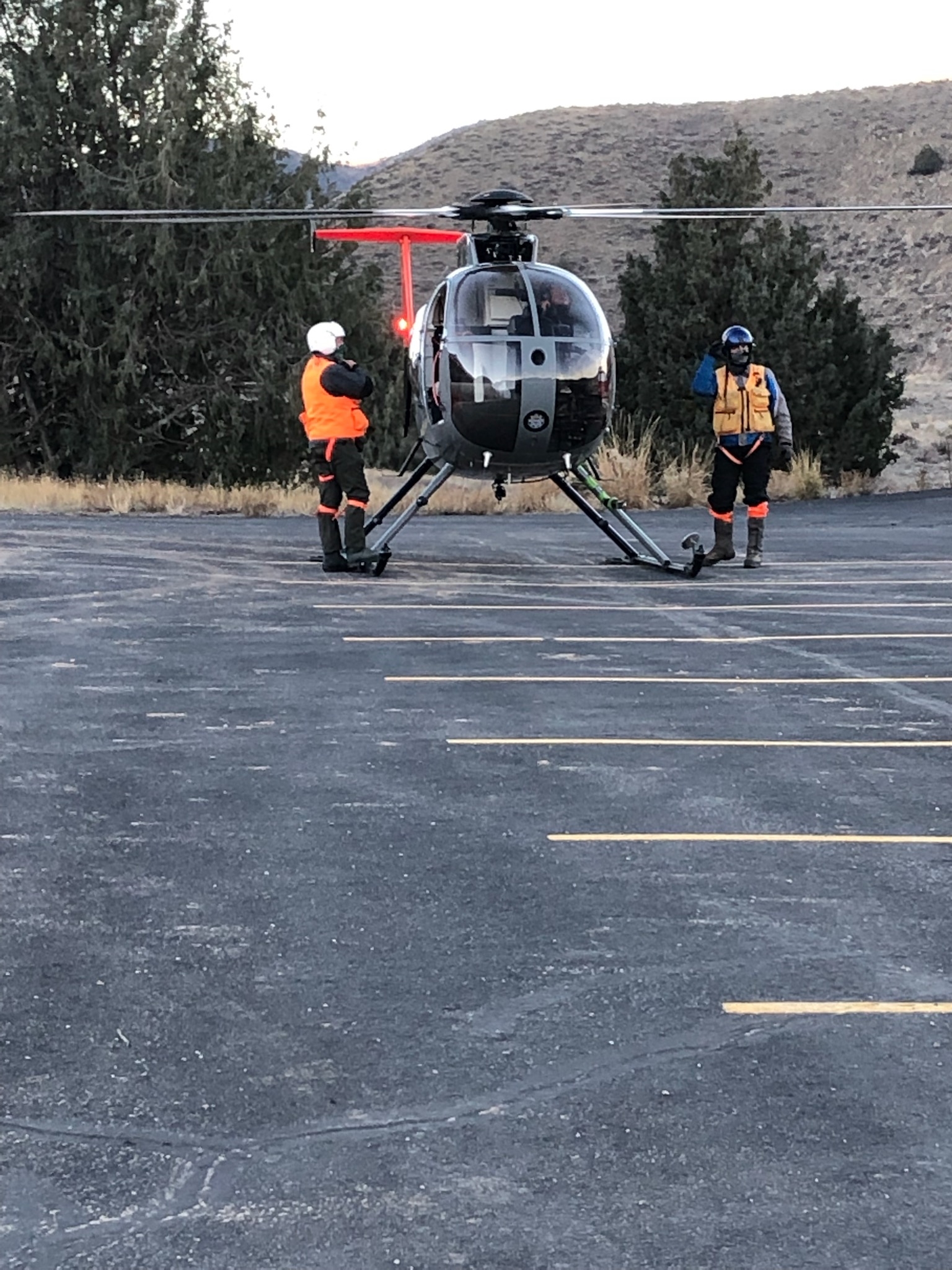
Helicopter Crew
Courtesy & © Mary Heers, Photographer

Mule Deer Incoming Courtesy & © Mary Heers, Photographer Mule Deer Incoming
Courtesy & © Mary Heers, Photographer

Mule Deer Incoming Courtesy & © Mary Heers, Photographer Mule Deer Incoming
Courtesy & © Mary Heers, Photographer

Helicopter Carrying Mule Deer Courtesy & © Mary Heers, Photographer Helicopter Carrying Mule Deer
Courtesy & © Mary Heers, Photographer

Mule Deer Health Check Courtesy & © Mary Heers, Photographer Mule Deer Health Check
Courtesy & © Mary Heers, Photographer

For the mule deer at Hardware Ranch, last Nov 30 was anything but ho-hum.

In the early morning light, the Division of Wildlife Resources was gathering in the parking lot at the Ranch. The plan for the day was to capture eight mule deer for a quick medical checkup on the overall health of the herd.

For this, they needed the help of come helicopter cowboys.

Right on cue, we heard the thunk, thunk, thunk of an incoming helicopter. A team of three men hopped out. After a quick parley, they were off

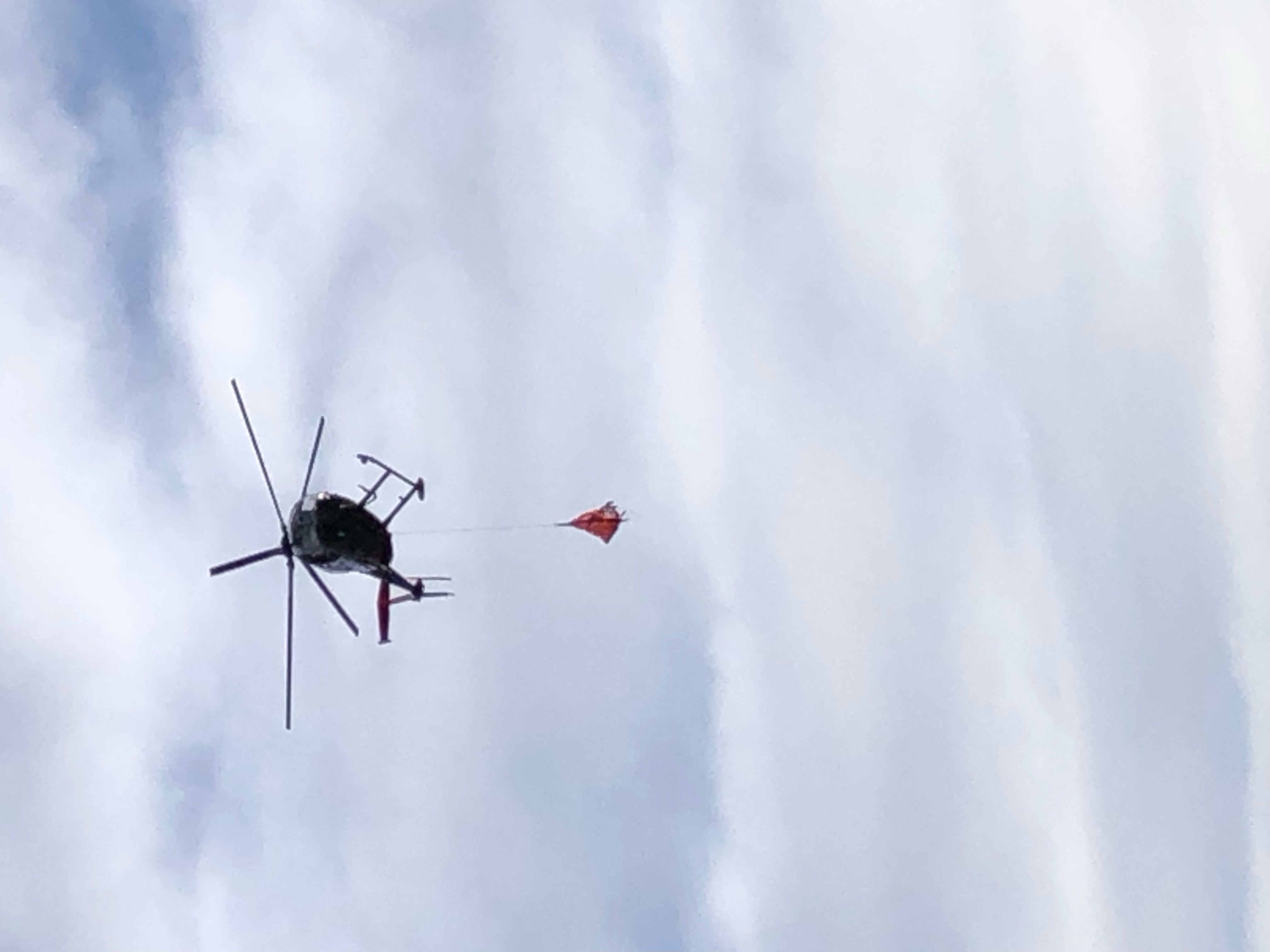
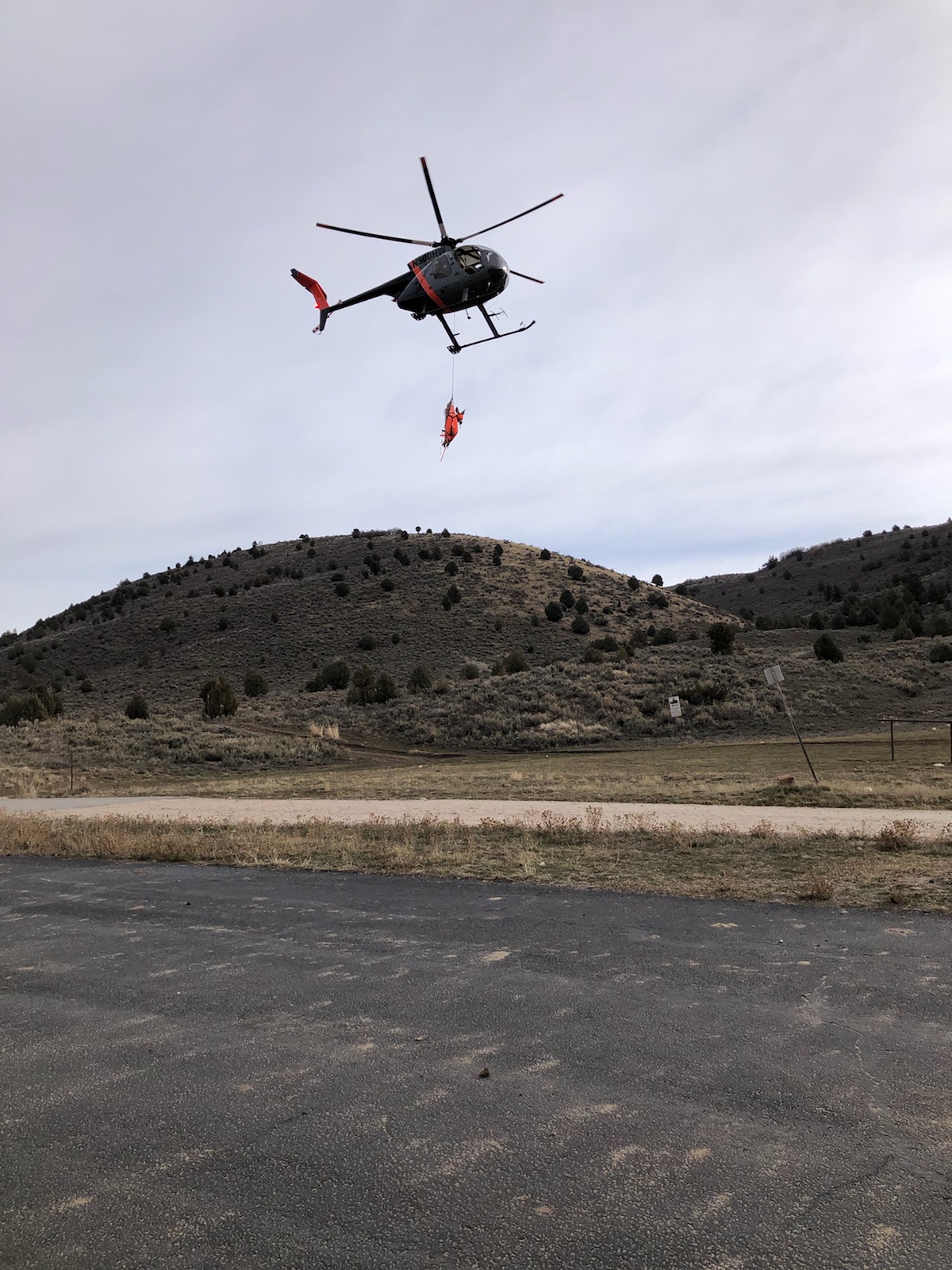
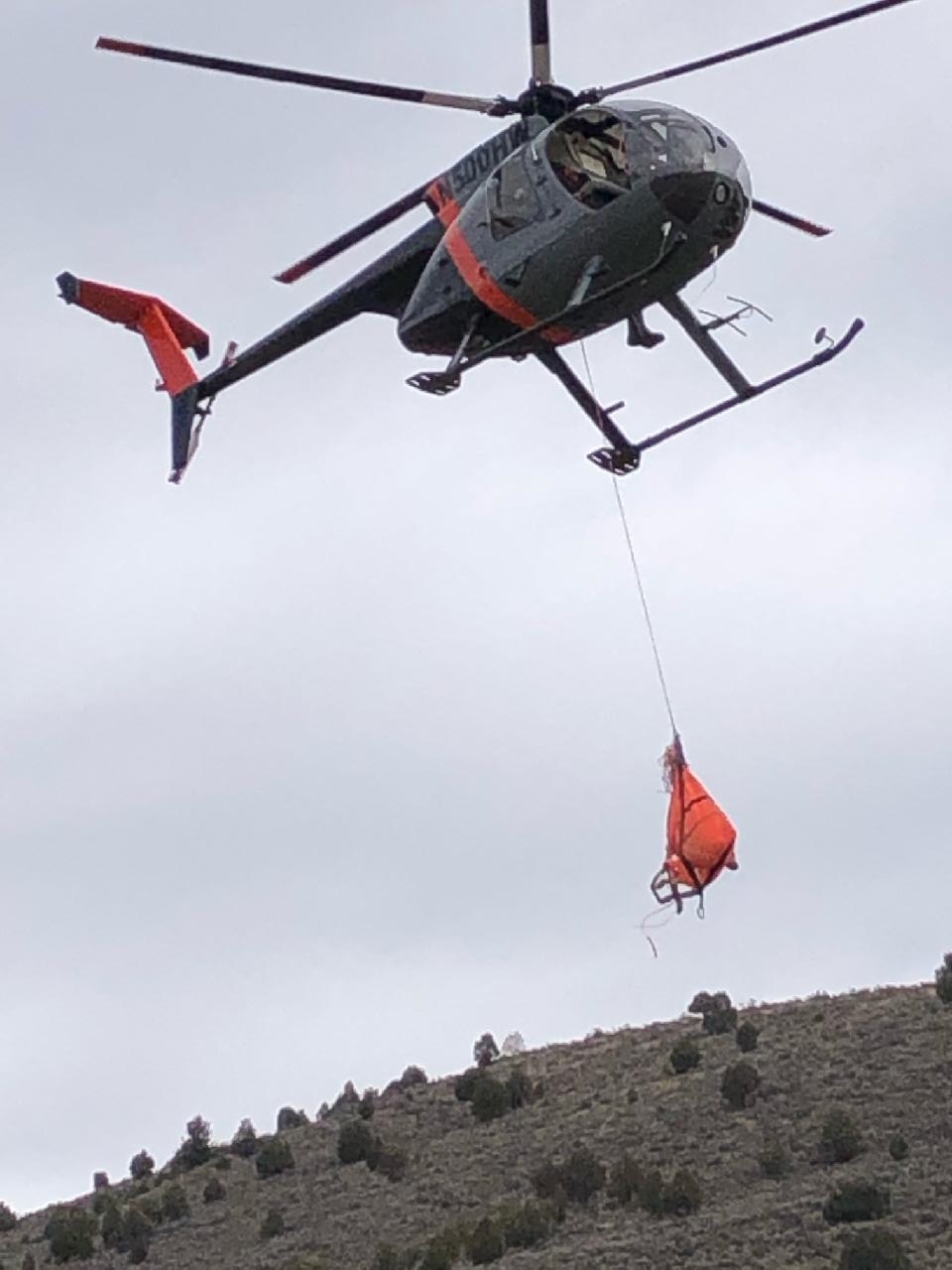
A bit like calf ropers at a rodeo, the helicopter cowboys would stop a running deer in its tracks by shooting a tangle net over it. Hopping off the helicopter, one cowboy (also known as “the mugger”) would wrestle the deer onto its side and tie its feet together. The mugger then slid the deer onto a sling, and to keep it calm, kindly secured a cover over its eyes.

The helicopter then lifted the sling, flew the deer through the air, and set it down gently in front of the waiting crew at the ranch.

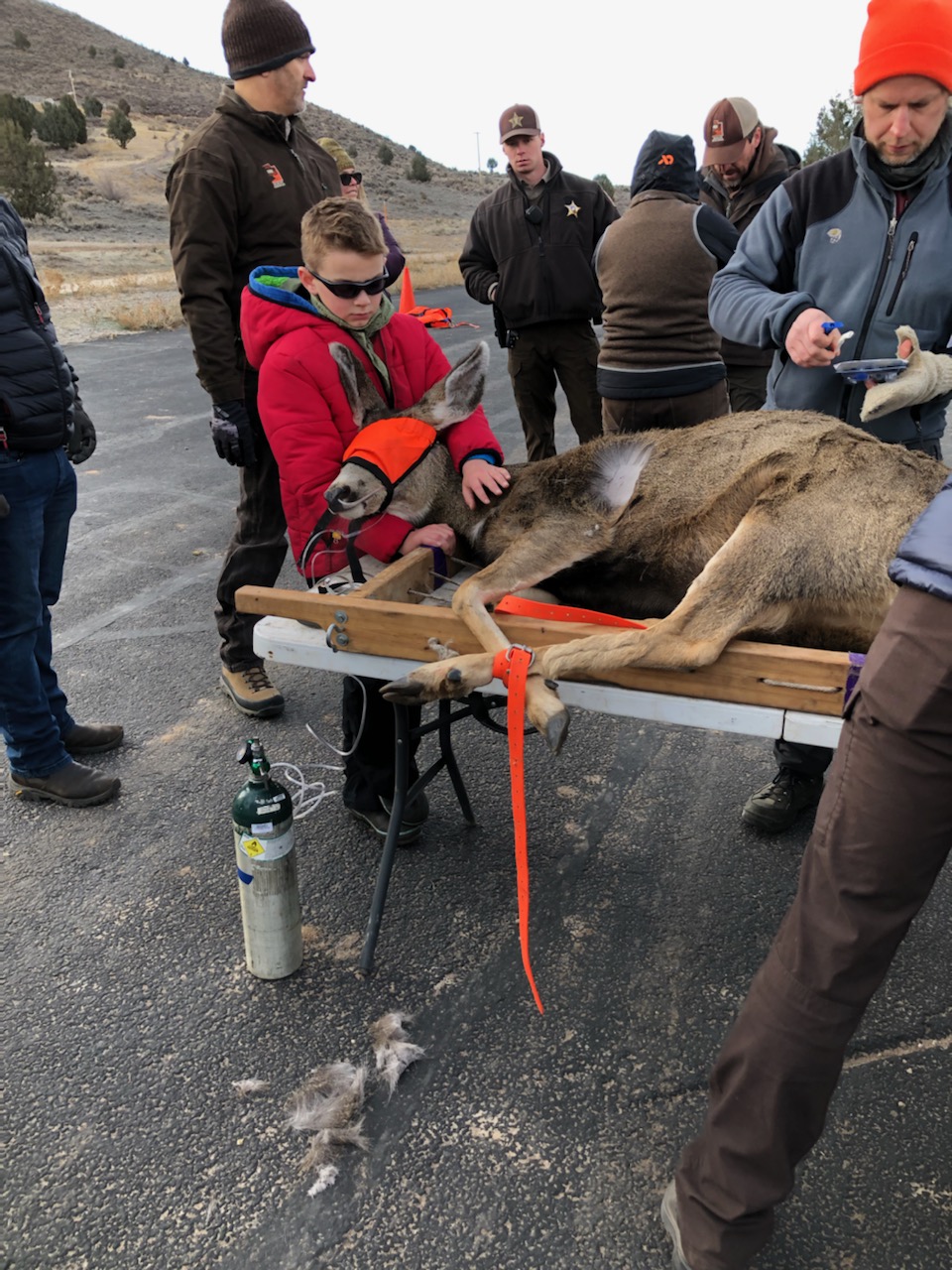
The crew sprang into action. Four men raced over to the deer, slid it onto a rope stretcher, and carried it to a hanging scale.

“76 pounds’” the researcher called out. A graduate student with a clipboard wrote it down.

Next stop: a white folding table. The crew surrounded the deer, brandishing some familiar tools. They took the deer’s temperature, a blood sample, a hair sample. One man whipped out a yellow measuring tape that looked exactly like the one in my grandmother’s sewing basket.

Then they looked into the deer’s mouth.

“Three years,” the researcher said with absolute certainty.

“How did you know that?” I couldn’t help asking.

“Easy,” he said. But he admitted that after five years, you can only be sure of a deer’s age if you look at the tooth under a microscope and count the rings, just like counting rings on a tree.

Then I spotted something I’d never seen before- a black box that measured the depth of fat on the deer’s rump A very well fed deer will head into winter with 1 inch (25 mm) of fat reserves. A deer with less that 9mm will probably not make it through a hard winter. This herd was coming off a very dry summer, a genuine cause for worry. But today it was all good news. The fall rains had greened up the hillsides in time for the deer to plump up.

And then it was done. The deer was carried to the perimeter of the parking lot and released. As it bounced up the hillside to rejoin the herd, I was reminded of the time when I was coming down the slopes off the Wellsville ridgeline, and had sat down to rest. Suddenly three does poked their heads through the dense undergrowth. We took a long curious look at each other.

I remember thinking how beautiful they were, with their long, elegant ears. But they also looked vulnerable. Coyotes, cougars and cars will continue to take a heavy toll on mule deer. New challenges will crop up. But this day last November, it was all good news for the health of the herd at Hardware Ranch. And all cheers for the Division of Wildlife Resources for a job well done.

This is Mary Heers and I’m Wild About Utah.

Credits:
Photos: Courtesy & Copyright © Mary Heers
Featured Audio: Courtesy & Copyright © Friend Weller, Utah Public Radio upr.org
Text: Mary Heers, https://cca.usu.edu/files/awards/art-and-mary-heers-citation.pdf
Additional Reading: Lyle Bingham, https://bridgerlandaudubon.org/

Additional Reading

Wild About Utah, Mary Heers’ Wild About Utah Postings

Why the DWR captures deer, other big game animals with helicopters each winter, Utah Division of Wildlife Resources, State of Utah, February 21, 2020, https://wildlife.utah.gov/news/utah-wildlife-news/864-why-dwr-captures-deer-big-game-animals-helicopters.html

Episode 8: Flying deer, Wild Podcast, Utah Division of Wildlife Resources, State of Utah, May 19, 2020, https://wildlife.utah.gov/wild-podcast/927-flying-deer.html

Mule Deer, Utah Species, Utah Division of Wildlife Resources, Department of Natural Resources, State of Utah, https://fieldguide.wildlife.utah.gov/?species=odocoileus%20hemionus

Boal, Jed, DWR Uses Helicopter To Catch Deer For Tracking Program, KSL TV, November 18, 2019, https://www.ksl.com/article/46676706/dwr-uses-helicopter-to-catch-deer-for-tracking-program

DWR transports mule deer by helicopter [To Antelope Island], KSTU Fox 13 Utah, Nov 22, 2019, https://youtu.be/D8rhMCuexz8


Reinhard Jockel, Naturalist

Reinhard Jockel at the Wellsville HawkWatch Site Overlooking Box Elder County Sept 25, 1999. Image from Reinhard Jockel
Reinhard Jockel at the Wellsville HawkWatch Site Overlooking Box Elder County Sept 25, 1999.
Image from Reinhard Jockel
Naturalists are fading. They have been replaced by specialists-botanists, ornithologists, entomologists, geologists, or one of many other natural resource specialists. I consider myself a naturalist, or generalist. I have high interest in all of these disciplines, but do not consider myself an expert on any of them.

I’ve met a handful of other naturalists in Utah, but they are an endangered species. A few weeks ago we lost one here in Cache Valley. Reinhard Jockel was our version of John Muir. He came from Germany in the 1950s as a teenager for better educational opportunities.

I first met Reinhard in the late 1980s. Living in a tiny second story apartment, he chose a bike and boots as his only mode of transportation. With a long beard, thick German accent, and antiquated outdoor equipment including a wooden hiking staff, Reinhard became a local legend. Many birders and botanists befriended him for his local knowledge, which he was very willing to share and was awarded the Bridgerland Audubon educator award in 2012. Another contribution came from the detailed, meticulous records he kept on blooming dates for many wildflowers and migratory birds, a treasure trove of data on life’s response to our a changing climate.

Reinhard’s passion for nature’s offerings knew no boundaries. Although he only lacked a few credits to attain a PhD in botany, Reinhard abandoned his studies at UC Berkley and headed back to Cache Valley Utah to resume his independent field studies in our valley and mountains. I was one of the benefactors.

As a backcountry Ranger in the Naomi and Wellsville Wilderness, Reinhard often joined me for a free ride to his beloved mountains. I welcomed him knowing he would add to my knowledge base on all wildlife and plants we encountered- birds, butterflies, wildflowers, tiger salamanders, leopard frogs- whatever might cross our paths. In our years together, we kept track of the dwindling populations of pica and amphibians, goshawks, and a few other species of special concern.

Occasionally we would happen onto a rarity that made Reinhard dance with delight. Following a long, rigorous hike into the high country of Naomi wilderness, we found ourselves at the base of Mt. Elmer cliffs. “An Alp lily”! His excitement couldn’t be contained. This beauty is circumpolar found in high latitudes and altitudes around the globe. It reminded him of his homeland alpine heights.

Another discovery came on our hike into Whitepine Lake above Tony Grove. Reinhard was ecstatic to discovered a Whipple’s penstemon growing along the trail, a delicious surprise! Others came- orchids, gentians, new butterfly and bird species expanded my list.

Two weeks ago, Reinhard became part of his beloved earth in the Logan cemetery. He has good company with 58 species of birds recorded within its confines. The Bridgerland Audubon has planned a Reinhard memorial bird outing 9 am on February 5th beginning at his grave. See more detail on our bridgerlandaudubon.org website.

This is Jack Greene for Bridgerland Audubon Society, and I am totally Wild about Utah!

Credits:
Pictures: From Reinhard Jockel
Audio: Courtesy & Copyright Kevin Colver, https://wildstore.wildsanctuary.com/collections/special-collections
Text: Jack Greene, Bridgerland Audubon, https://bridgerlandaudubon.org/
Additional Reading: Lyle W Bingham, Webmaster, and Jack Greene, Author, Bridgerland Audubon, https://bridgerlandaudubon.org/

Additional Reading:

Jack Greene’s Postings on Wild About Utah, https://wildaboututah.org/author/jack/

Reihard Jockel was the recipient of the 2014 Carl Johnson Education Award from Bridgerland Audubon Society, https://bridgerlandaudubon.org/about-us/bridgerland-audubon-annual-meeting/education-awards/

Reihard Jockel was a member of the 200 club maintained by the Bridgerland Audubon Society, https://bridgerlandaudubon.org/about-us/bridgerland-audubon-annual-meeting/200-club/ The 200 club recognizes those who have recorded seeing 200 bird species in one calendar year within the county borders.

Click to view pdf of Reinhard’s Obituary as found on Legacy.com

McCollum, Charles, Legendary local naturalist Reinhard Jockel dies at 80, HJNews, December 22, 2021, https://www.hjnews.com/news/local/legendary-local-naturalist-reinhard-jockel-dies-at-80/article_a2ad8afe-cf8c-5371-b5fa-a037fc771bb4.html

Reinhard Memorial Birding Field Trip, Feb 5, 2022, Meet Saturday, Feb 5, 9 am at the “Weeping Woman” statue near the center of the Logan Cemetery, https://bridgerlandaudubon.org/reinhard-memorial-birding-logan-cemetery-9-am-february-5th/

Fireweed

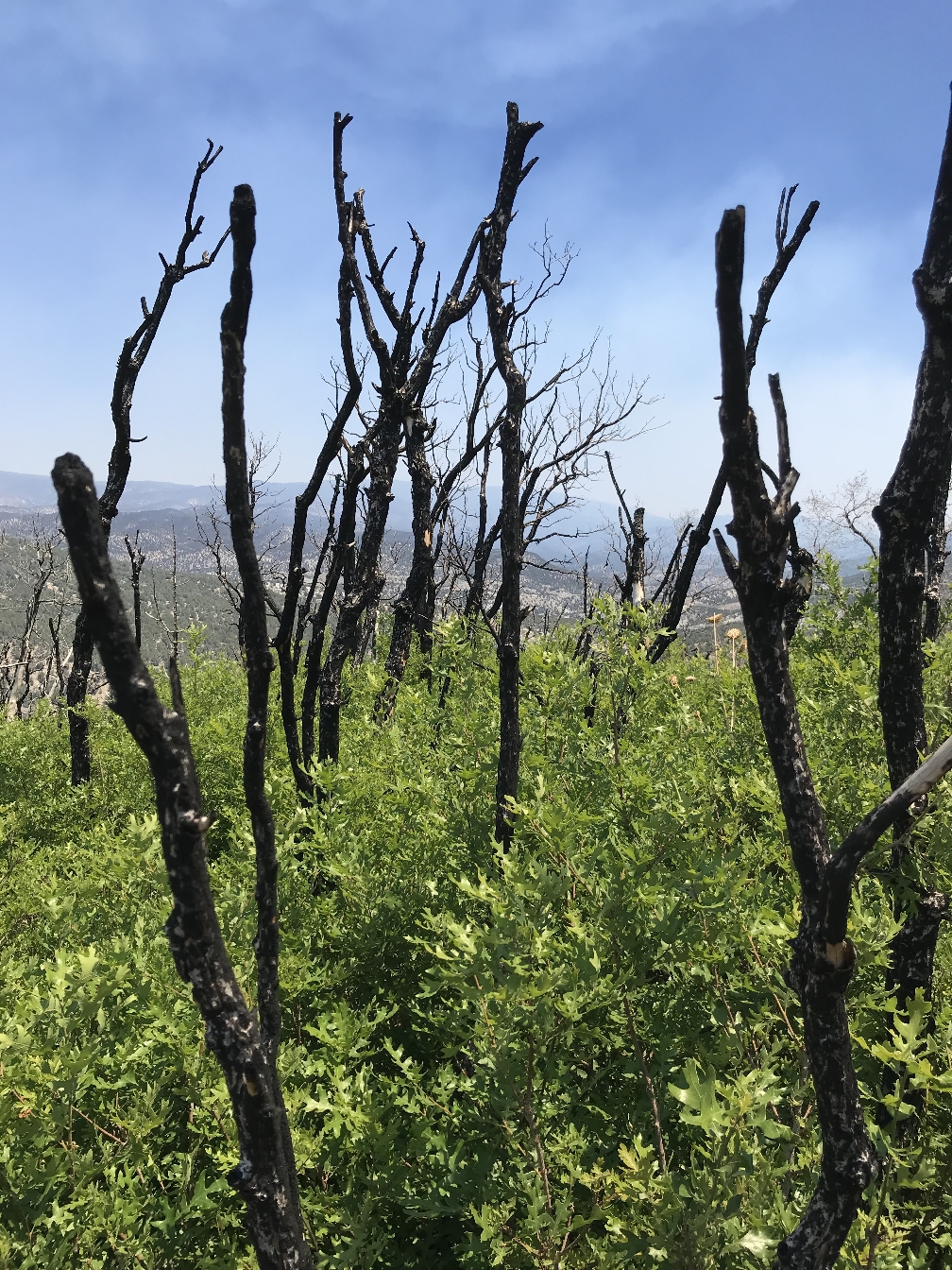
Fireweed: Gambel Oak Recovering from Wildfire (Quercus gambelii) Courtesy & © Shannon Rhodes, Photographer
Gambel Oak Recovering from Wildfire
Quercus gambelii
Courtesy & © Shannon Rhodes, Photographer

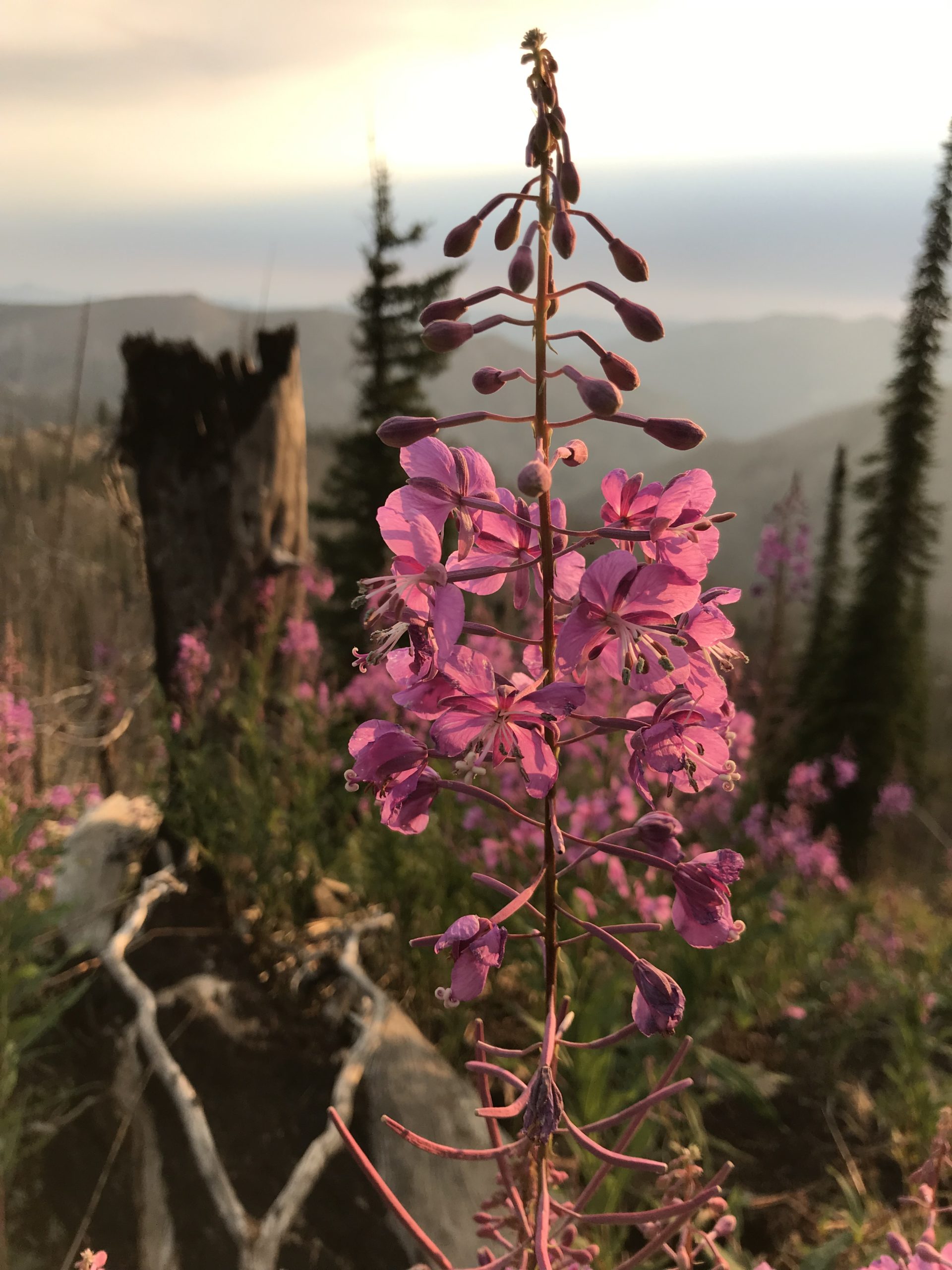
Fireweed Epilobium angustifolium Courtesy & © Shannon Rhodes, Photographer Fireweed
Epilobium angustifolium
Courtesy & © Shannon Rhodes, Photographer

Today snow blankets Utah’s forest floors, yet just a few months ago wildfire management teams were battling blazes across the state. With over 1,000 wildfires burning an estimated 63,000 acres in Utah in 2021, it was not difficult to find one. As I observed plumes of the Bennion Creek fire from a safe, comfortably cool spot atop Manti-LaSal’s Skyline Drive last June, Disney’s Bambi wildfire came to mind. Wildlife no doubt scurried while humans raced against windy conditions, hoping to contain as others evacuated, all bracing for inevitable short-term as well as long-term impacts. Smokey the Bear campaigns have called for prevention and suppression since the 1940s, and reports showed that human-caused wildfires were fewer in 2021 than previous years, yet nature itself is still sometimes to blame.

Yesterday as I visited with a close friend grieving her daughter’s recent and abrupt passing, we reflected on a summertime adventure we shared through an alpine burn scar, blackened, silent, and desolate. We wandered again through our memory of acres and acres of torched forest. Regally standing amid the charred stumps and nothing else, though, were thousands of beautifully bright pink-purple flower colonies. William Shakespeare’s poetic
“Here enclos’d, in cinders lie.
Death is now the Phoenix’ nest,”
describes this hardy plant named fireweed, not for any fiery red-orange blossoms but for being a colonizer of recently-scorched landscapes. Long before grasses, Gambel oak, and Lodgepole cone sprouts start to emerge out of the ashes, flashy fireweed will grow to sometimes nine feet tall. The flowers bloom from bottom up, and when the top flower bud blooms, winter might be just six weeks away. Also called willowherb, fireweed seed heads are long pods filled with silky feather tufts that unfold to carry tens of thousands of seeds on the wind, signaling the end of the season. As time passes, other plants will take over as successive vegetation cycles do, but once you’ve seen majestic fireweed thrive in an annihilated forest, you never forget it. Wildlife loves fireweed just as much as I do. Deer, elk, moose, and even grizzly bear along with all sorts of pollinators are attracted to her deliciously vibrant color.

January is a quiet reprieve from summer blazes, a time when renewal and rebirth is our focus. Right now forest phoenix fireweed seeds are just awaiting the thaw, eager to bring solitary but stately vitality to otherwise dismal gloom. Out of something devastating comes a little bit of lovely. After World War II bombings, fireweed bloomed in the heart of London for the first time in decades. I imagine my friend’s Crystal and fireweed would agree: Why be a princess among others when you can be the queen?

I’m Shannon Rhodes, and I am Wild About Utah.

Credits:

Images: Courtesy & Copyright © Shannon Rhodes, Photographer
Audio: Courtesy & © Friend Weller, https://upr.org/
Text:     Shannon Rhodes, Edith Bowen Laboratory School, Utah State University https://edithbowen.usu.edu/
Additional Reading Links: Courtesy Shannon Rhodes

Additional Reading:

Ballard, Heidi L., Emily Evans, Victoria E. Sturtevant, and Pamela Jakes (2012). The Evolution of Smokey Bear: Environmental Education About Wildfire for Youth, The Journal of Environmental Education, 43:4, 227-240, DOI: 10.1080/00958964.2011.644352, https://www.tandfonline.com/doi/full/10.1080/00958964.2011.644352?casa_token=4uSEKZ1Po3QAAAAA%3Al5k-XuM1LI80cCIZD3Ywg4E_3shIs8S-h-iVQ7uumEhvN-mGmaogdve04Y9tEeUqlxA2Li0Y3PVv
https://sci-hub.se/https://doi.org/10.1080/00958964.2011.644352

Boling, Josh. Fire. Wild About Utah, August 13, 2018, https://wildaboututah.org/fire/

Capdeville, Sarah. Fireweed: A Colorful Reminder of Change. (2015). https://www.mtpr.org/arts-culture/2015-06-05/fireweed-a-colorful-reminder-of-change

Collard, Sneed B. Fire Birds: Valuing Natural Wildfires and Burned Forests. (2015). Bucking Horse Books. https://www.amazon.com/Fire-Birds-Valuing-Natural-Wildfires/dp/0984446079

Green, Jack. Holy Smokes! (2021). https://wildaboututah.org/holy-smokes/

Mullen, Luba. How Trees Survive and Thrive After a Fire. (2017). https://www.nationalforests.org/our-forests/your-national-forests-magazine/how-trees-survive-and-thrive-after-a-fire

Olsen, Shawn and Debbie Amundsen. Gambel Oak in the Landscape. (2021). USU Extension. https://digitalcommons.usu.edu/cgi/viewcontent.cgi?article=1905&context=extension_curall

Peery, Lexi. Utah Saw a Decrease in Human-caused Wildfires. November 2, 2021. https://www.kuer.org/health-science-environment/2021-11-02/utah-saw-a-decrease-in-human-caused-wildfires-this-year-but-officials-say-fire-season-isnt-going-away

Shakespeare, William. The Phoenix and the Turtle. (1601). https://www.poetryfoundation.org/poems/45085/the-phoenix-and-the-turtle-56d2246f86c06

U.S. Department of Agriculture. Fireweed. (2016). https://www.nrcs.usda.gov/Internet/FSE_PLANTMATERIALS/publications/wapmspg12854.pdf

Vizgirdas, Edna. U.S. Forest Service Plant of the Week: Fireweed. https://www.fs.fed.us/wildflowers/plant-of-the-week/chamerion_angustifolium.shtml

Wells, Kathryn and Timothy J. Haney. D is for Disaster. (2017). https://journals.sagepub.com/doi/full/10.1177/1536504217714262 Volume: 16 issue: 2, page(s): 62-64. (2017).

Wild About Utah Posts by Shannon Rhodes https://wildaboututah.org/author/shannon-rhodes/