Swan Life

Swan Life: Tundra Swans in Flight Courtesy & © Mary Heers
Tundra Swans in Flight
Courtesy & © Mary Heers

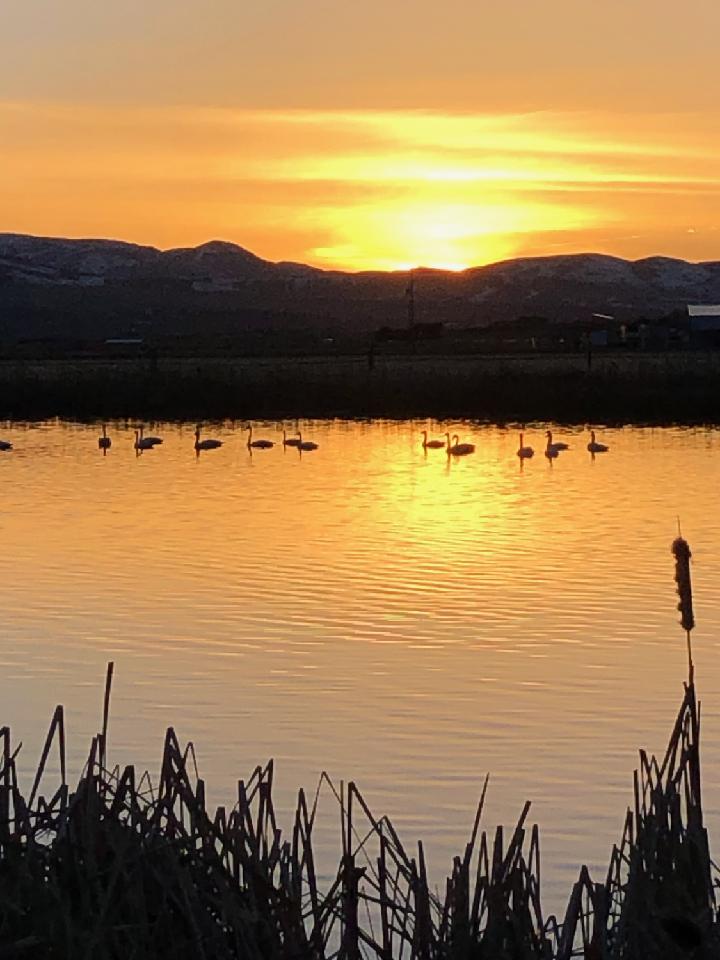
Tundra Swans at Dusk Courtesy & © Mary HeersTundra Swans at Dusk
Courtesy & © Mary Heers
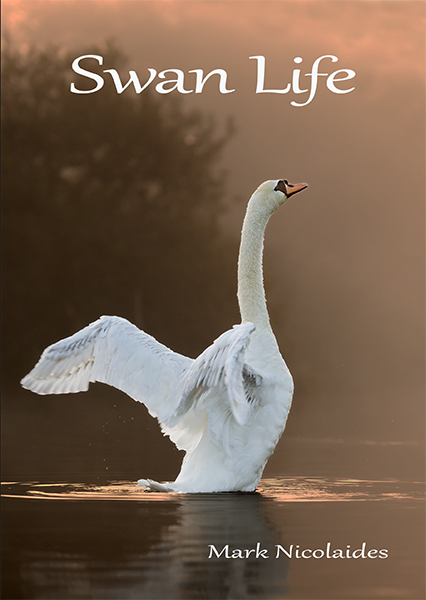
Swan Life Book Cover, Courtesy & © Copyright Mark Nicolaides, All Rights Reserved https://www.swanlife.com/about Swan Life Book Cover,
Courtesy & © Copyright Mark Nicolaides, All Rights Reserved
https://www.swanlife.com/about
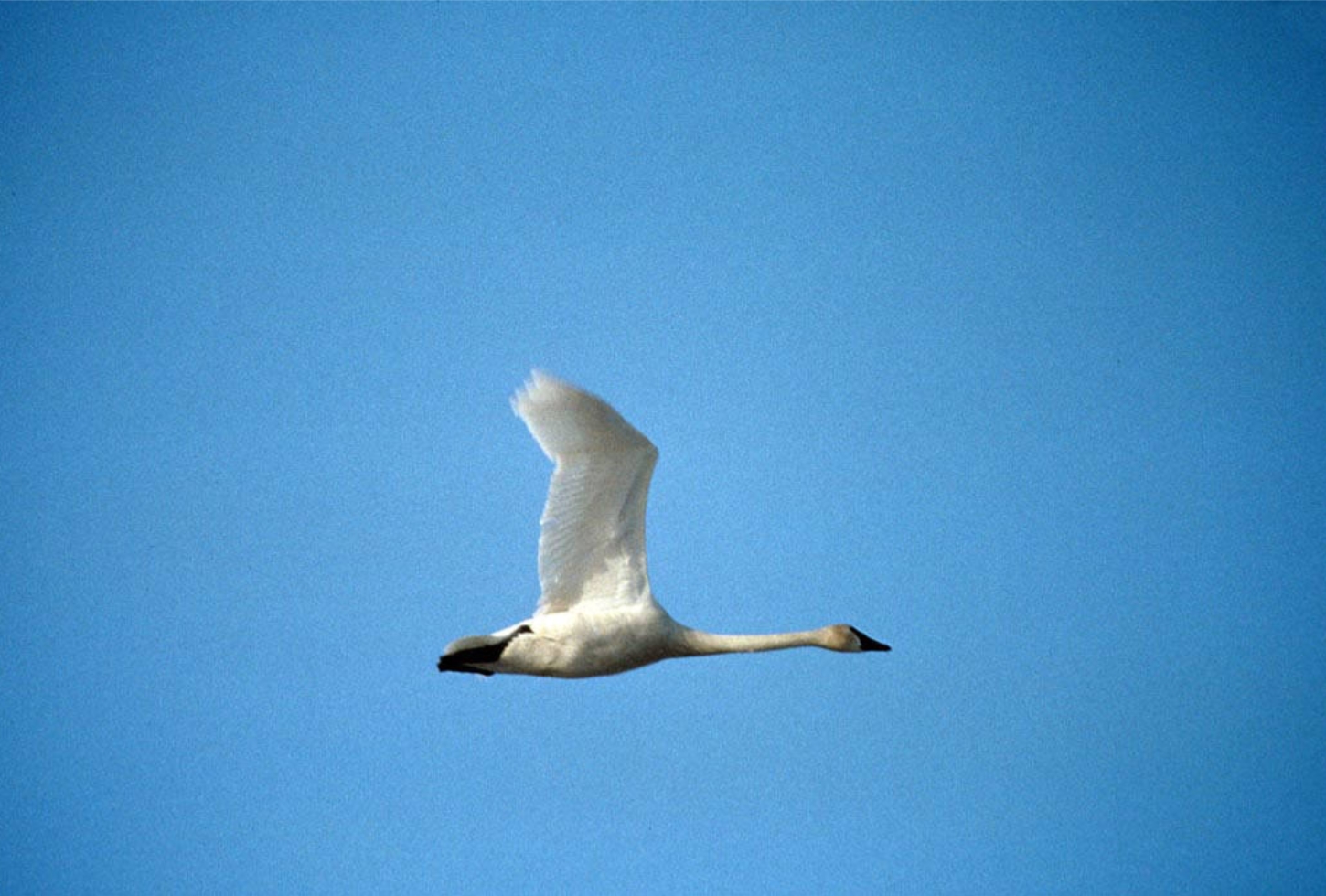
Tundra Swan in Flight Cygnus columbianus Courtesy US FWS Donna A Dewhurst, Photographer Tundra Swan in Flight
Cygnus columbianus
Courtesy US FWS
Donna A Dewhurst, Photographer

Swan Life: Tundra Swan Pair Cygnus columbianus Courtesy US FWS Tim Bowman, PhotographerTundra Swan Pair
Cygnus columbianus
Courtesy US FWS
Tim Bowman, Photographer

Mounted Swan at the Bear River Migratory Bird Refuge Courtesy & © Mary Heers, Photographer Mounted Swan at the Bear River Migratory Bird Refuge
Courtesy & © Mary Heers, Photographer

Two weeks ago I got an excited phone call from a friend of mine in Fairview, Idaho.

“The swans are back,” she said. I hopped in my car and raced over to watch as hundreds of swans plodded over the bumpy cornfields, devouring the bits and pieces of corn left behind by the harvester.

My next stop was the Bear River Migratory Bird Refuge, and sure enough, hundreds of swans were there too, dipping their heads into the shallow water and pulling up one of their other favorite foods, pondweed.

These magnificent migrating birds had already flown hundreds of miles from southern parts of the hemisphere, and had hundreds of miles still to go. They were here to briefly rest and recharge.

What happens to these swans in the next few months is a somewhat private affair. The swans pair up for life, and fly north to build their nests in remote areas close to the arctic Circle. I was curious. So I sent away for a book, Swan Life by Mark Nicolaides, who won the trust of a pair of mute swans on a nature reserve in England, and was able to observe them raise their young in the wild.

Mark’s story begins with Kay, the female, sitting on her nest. Kob, the male, was standing guard. Kay sat on the nest, rain or shine, for 6 weeks. But very soon after the chicks hatched, Kay hopped out of the nest into the shallow surrounding moat. The bewildered chicks had no choice but to plunge headlong out of the nest and plop into the water. It was their day one, and time for their first swim. Also time to learn to forage for their own food. Unlike bird mothers who bring food to their chicks, Kay got her chicks out of the nest and led them to food.

Over the summer, the young swans stopped looking like gray balls of fluff. They put on weight, stretched out their necks and wings and grew thousands of feathers. They learned to flap their wings and walk at the same time. At five months, it was time to learn to fly. Kay waited for a windy day, and took them to an open stretch of water. Pointing into the wind, she galloped over the water, pounding her wings, and lifted off. The young swans raced after her, the breeze giving them that little bit of extra lift. Their tails were still draping along in the water, but it still counted as flight.

Mark writes how the young swans went wild – like players who score a goal in the World Cup. They beat the water into a foam, dove underwater and came up like sea monsters with their mouths wide open, and finished with a flip upside down.

Meanwhile the weather was changing and it was time to migrate south. Almost to a day, five months after they hatched, the young swans flew off one by one, to join other migrating swans and begin their own adult lives.

So if you missed seeing the Tundra swans passing through Cache Valley this month, you’ll have another chance when they pass through in the fall. These beautiful birds, weighing about 15 pounds and averaging a wingspan over 6 feet, are a sight not to be missed.

But what I like best is the thunder of their wings as they run across water and lift off.

This is Mary Heers and I’m Wild About Utah.

Credits:
Photos: Courtesy & Copyright © Mary Heers
Book cover: Courtesy & © Copyright Mark Nicolaides, All Rights Reserved https://www.swanlife.com/about
Photos: Courtesy US FWS, Donna A Dewhurst and Tim Bowman, Photographers
Featured Audio: Courtesy & Copyright © Kevin Colver, https://wildstore.wildsanctuary.com/collections/special-collections/kevin-colver
Text: Mary Heers, https://cca.usu.edu/files/awards/art-and-mary-heers-citation.pdf
Additional Reading: Lyle Bingham, https://bridgerlandaudubon.org/

Additional Reading

Wild About Utah, Mary Heers’ Postings

Nicolaides, Mark, Swan Life, Lulu Press, June 3, 2015, https://www.amazon.com/Swan-Life-Mark-Nicolaides/dp/1326281208
Mark Nicolaides’ website: https://www.swanlife.com/about

Tundra Swans, All About Birds, The Cornell Lab of Ornithology, Cornell University, https://www.allaboutbirds.org/guide/Tundra_Swan/overview

Strand, Holly, Til Death Do Us Part, Wild About Utah, February 21, 2013, https://wildaboututah.org/til-death-do-us-part/

Tundra Swan, Utah Bird Profile, UtahBirds.org, https://utahbirds.org/birdsofutah/ProfilesS-Z/TundraSwan.htm
Other Photos: https://utahbirds.org/birdsofutah/BirdsS-Z/TundraSwan.htm

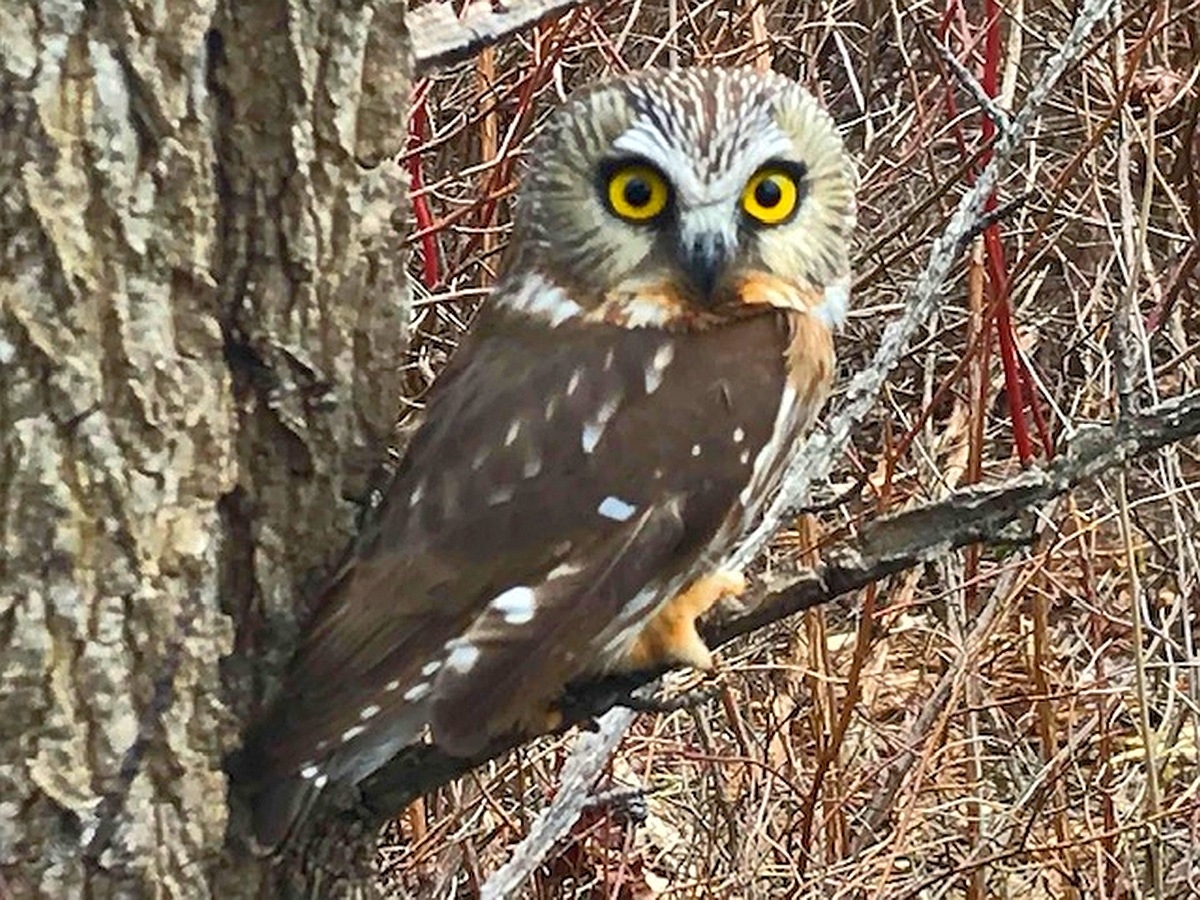
Tiny Owls

Tiny Owls: Northern Pygmy Owl Courtesy US FWS,  Bob Miles, Photographer
Northern Pygmy Owl
Courtesy US FWS,
Bob Miles, Photographer

Northern Saw Whet Owl Courtesy US FWS Dave Miller, Photographer Northern Saw Whet Owl
Courtesy US FWS
Dave Miller, Photographer

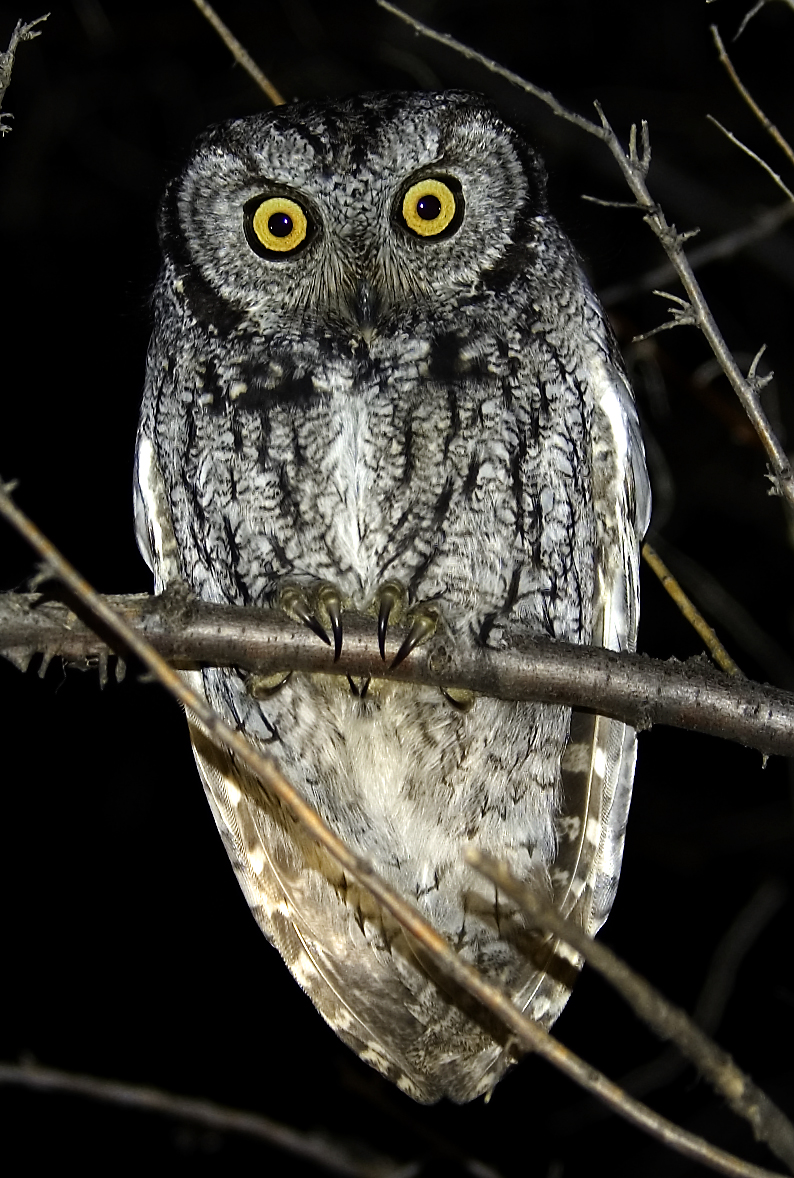
Western Screech Owl Courtesy & Copyright Lu Giddings Western Screech Owl
Courtesy & Copyright Lu Giddings

They just kept coming. Students, Auduboner’s, friends. They filled the parking lot at the mouth of Birch Canyon, an offshoot of Smithfield Canyon in N. Utah. About two dozen of us begin a march up the canyon as a full moon threatens to pop over the ridge high above us.

Tiny owls that don’t give a hoot were on the menu. Utah Division of Wildlife Resources bird survey coordinator Frank Howe leads the crew with his highly energetic dog bouncing around snow patches we crunch through. After a half-mile or so, Frank pauses by a stand of large cottonwood trees. He opens a Sibley bird app on his phone, explaining we will begin with a repertoire of songs and calls of small owls- northern saw whet, norther pygmies, and western screech owls, hoping not to awaken great horned owls, which might eat their lesser brethren.

We stand silent, awaiting an answer as he begins with the soft bouncing ping-pong ball song of the western screech owl. A few minutes pass and there it is! We are transfixed by its somewhat distant soothing call, then another deeper sound emitted by its male partner. The female slowly works her way in our direction. A few more minutes pass and she’s caught in Frank’s bright flashlight beam. Soft oohs and aahs are emitted by the viewers, most of whom have never heard, nor seen, this tiny owl being before. “This is a mated pair, beginning their courtship rituals and soon to be nesting activities.” Frank explains.

After a half hour of enjoying this fine little owl, we saunter on, hoping for a Northern saw whet or Northern pygmy. After another mile, and several toots without an answer, we begin marching back down bathed in moonlight and friendly chatter. Within a few hundred yards of the screech owl, Frank hails a halt and once again plays the saw whet recording. An immediate, barely audible answer follows. We catch a glimpse of bright owl eyes as they briefly land on a branch 30 yards away.

Frank explains both the saw whets and Northern pygmy’s will migrate to higher elevations for nesting in coniferous forests as the snow recedes. All three of these smallish owls are cavity nesters, preying mostly on small mammals, birds, and large insects. When they feel threatened, they will elongate their bodies to resemble a tree branch. The saw whet will even cover its front with a wing for added camouflage.

In a good prey year, the saw whet will kill several mice in quick succession and store them for later feeding. N. pygmy’s eat only the brains of birds they capture and the soft abdomen of large insects. They can carry prey twice their own weight. Bizarre behaviors for these little demons!

Thank you Frank for an unforgettable moonlight stroll!

Jack Greene for Bridgerland Audubon and I’m wild about the Utah Wilds and its tiny demonic owls!

Credits:
Pictures: Northern Pygmy Owl, Courtesy US FWS, Bob Miles, Photographer
Northern Saw Whet Owl: Courtesy US FWS, Dave Miller, Photographer
Western Screech Owl: Courtesy & © Copyright Lu Giddings, Photographer
Audio: Courtesy & Copyright Kevin Colver, https://wildstore.wildsanctuary.com/collections/special-collections as well as J. Chase and K.W. Baldwin, https://upr.org/
Text: Jack Greene, Bridgerland Audubon, https://bridgerlandaudubon.org/
Additional Reading: Lyle W Bingham, Webmaster, and Jack Greene, Author, Bridgerland Audubon, https://bridgerlandaudubon.org/

Additional Reading:

Jack Greene’s Postings on Wild About Utah, https://wildaboututah.org/author/jack/

Northern Pygmy Owl, Overview, All About Birds, The Cornell Lab of Ornithology, https://www.allaboutbirds.org/guide/Northern_Pygmy-Owl/overview

Northern Saw Whet Owl, Overview, All About Birds, The Cornell Lab of Ornithology, https://www.allaboutbirds.org/guide/Northern_Saw-whet_Owl/overview

Western Screech Owl, Overview, All About Birds, The Cornell Lab of Ornithology, https://www.allaboutbirds.org/guide/Western_Screech-Owl/overview

Northern Pygmy Owl, Utah Birds, https://www.utahbirds.org/birdsofutah/ProfilesL-R/NorthernPygmyOwl.htm
Featured Article by Paul Higgins: https://www.utahbirds.org/featarts/2006/NorthernPygmyOwl.htm
Gallery Pictures: https://www.utahbirds.org/birdsofutah/BirdsL-R/NorthernPygmyOwl.htm

Northern Saw Whet Owl, Utah Birds, https://www.utahbirds.org/birdsofutah/ProfilesL-R/NorthernSawWhetOwl.htm
Gallery Pictures: https://www.utahbirds.org/birdsofutah/BirdsL-R/NorthernSawWhetOwl.htm

Western Screech Owl, Utah Birds, https://www.utahbirds.org/birdsofutah/ProfilesS-Z/WesternScreechOwl.htm
Featured Article by Eric Huish: https://www.utahbirds.org/featarts/2004/OwlBox/OwlBox1.htm
Gallery Pictures: https://www.utahbirds.org/birdsofutah/BirdsS-Z/WesternScreechOwl.htm

Grandaddy Basin

Grandaddy Basin: Oft Have We by Alfred Ralph Robbins Courtesy & © Shannon Rhodes, Photographer
Oft Have We
by Alfred Ralph Robbins
Courtesy & © Shannon Rhodes, Photographer

Oft have we, my friends and I,
Left cares of home, and work day woes
To find a haven, there cast a fly;
And where we’ll camp–God only knows.

Oft have we hiked the trail uphill
To see it pass, and again return–
Walked mile on mile, to get the thrill
Of a meadow lake and a creel filled.

Oft round the lake we’ve cast and fussed
And wished it something we might shun;
But something deep inside of us
Just holds us fast till day is done.

Breathtaking Beauty by Alfred Ralph Robbins Courtesy & © Shannon Rhodes, Photographer
Breathtaking Beauty by Alfred Ralph Robbins
Courtesy & © Shannon Rhodes, Photographer
Utahn Alfred Ralph Robbins loved exploring the Grandaddy Basin in northeastern Utah’s High Uintas with a group he called The High Country Boys. He compiled his labeled-and-dated sketches of camp and lake adventures among a sprinkling of black-and-white photographs in a scrapbook spanning the 1920s through the 1960s. They were casting at Governor Lake in 1927 and resting at Pine Island Lake in 1952 with 125 trout strung between the trees. I know they fished Pinto Lake, Trial Lake, Betsy Lake, and just about every lake in the area for 40 years. I know they, outfitted by Defa’s Dude Ranch, even stopped “on top of the world” on their way to Hatchery Lake with Alvis Newton Simpson, Robbins’s son-in-law and my grandfather, because he captured and preserved it.

Alfred Ralph Robbins and Grandson Jerry Newton Simpson 1947 Utah Courtesy & © Shannon Rhodes, Photographer
Alfred Ralph Robbins and Grandson Jerry Newton Simpson 1947 Utah
Courtesy & © Shannon Rhodes, Photographer
As my father handed down copies of this family fishing scrapbook to his grandchildren, my sons and daughters, after what they called a Fishing-with-Grandpa Simpson Saturday, he included a cover photograph of his Grandaddy Robbins, in his fishing waders, holding five-year-old grandson’s hand. My father added, “I only made one horse pack trip to Grandaddy Basin with Grandpa Robbins, but it was a very eventful week. It stormed one day and we could hear the rocks tumbling down the mountain when the lightning would strike and dislodge them. Another day there was a mayfly hatch as we were fishing one of the lakes. When that happened, the fish would bite on anything that hit the water. The mosquitoes just about ate us alive, and repellant didn’t help much. We saw some fish about three feet long near the rocks on shore, but we couldn’t get them to bite. We caught plenty of other fish and ate fish for supper most days that week.”

Do you have similar memories in the wild with your grandparents recorded somehow? Turning to one of my favorite books, “Refuge: An Unnatural History of Family and Place,” I read again how Terry Tempest Williams described the memories with her grandmother among avocets, ibises, and western grebes during their outings in Utah’s Great Salt Lake wetlands. Grandmother Mimi shared her birding fascination with her granddaughter Terry along the burrowing owl mounds of the Bear River Migratory Bird Refuge. Williams wrote, “It was in 1960, the same year she gave me my Peterson’s Field Guide to Western Birds. I know this because I dated their picture. We have come back every year since to pay our respects.”

I’m not a grandmother yet, but I will one day make a trek over Hades Pass again, gaze at the Grandaddy Basin below, and capture nature’s poetry with pen, camera lens, and little hiker hands in mine. Bloggers have technologies today to share instantly with me and the rest of the world their adventures in this Grandaddy Wilderness region. Documenting autobiographical history has evolved from dusty diaries and scrapbooks with black-and-white photographs to today’s digital image- and video-filled blogs in exciting ways that can include the places in Utah you love with the generations you love. Consider it your contribution to history.

Grandaddy Ohs and Ahs by Alfred Ralph Robbins Courtesy & © Shannon Rhodes, Photographer
Grandaddy Ohs and Ahs
by Alfred Ralph Robbins
Courtesy & © Shannon Rhodes, Photographer

I would not miss the Oh’s! and Ah’s!
I’ve seen in Doug’s and Noel’s eyes,
When first they saw Grandaddy Lake
From the summit, in the skies.

They are thrilled I know, and so am I.
They show it in their face;
While I just swallow hard and try
To thank God for this place.

I am Grandaddy Basin poet Alfred Ralph Robbins’s great granddaughter Shannon Rhodes, and I’m wild about Utah.

Credits:

Images: Courtesy & Copyright Shannon Rhodes, Photographer
Audio: Courtesy & © Kevin Colver https://wildstore.wildsanctuary.com/
Text:     Shannon Rhodes, Edith Bowen Laboratory School, Utah State University https://edithbowen.usu.edu/
Additional Reading Links: Shannon Rhodes

Additional Reading:

Williams, Terry Tempest. 1992. Refuge: an unnatural history of family and place. New York: Vintage Books. https://www.amazon.com/Refuge-Unnatural-History-Family-Place/dp/0679740244

Andersen, Cordell M. The Grandaddies. 2015. https://cordellmandersen.blogspot.com/2015/06/photoessay-backpack-1-2015-grandaddy.html

Wasatch Will. Fern Lake: Chasing Friends in Grandaddy Basin. 2018. https://www.wasatchwill.com/2018/06/fern-lake.html

Delay, Megan and Ali Spackman. Hanging with Sean’s Elk Party in the Uinta’s Grandaddy Basin. 2015. https://whereintheworldaremeganandali.wordpress.com/2015/09/05/hanging-with-seans-elk-party-in-the-uintas-grandaddy-basin/

Rhodes, Shannon, Wild About Nature Journaling, Wild About Utah June 22, 2020, https://wildaboututah.org/wild-about-nature-journaling/

Gratitude is Work

Gratitude is Work: American Robin Courtesy Pixabay, Chakraaphotography, contributor
American Robin
Courtesy Pixabay,
Chakraaphotography, contributor
All y’all, I think winter may be over. Here it is, mid too-early yet again, and it’s thawed even the once. Or is it twice now? Do I have a thrice? Either way: woof. I can’t say I didn’t expect this, given the past 30 years, but I was at least hoping to be in error one of these times. Don’t get me wrong, the interludes are nice, but seasonal consistency would be at least in line with what I remember.

Now, I’m only a ripe old 31 and the last good winter, true winter, winter like winter should be, I remember is still lodged in that ever-expanding haze of childhood I once thought only existed with fogies. Once you get that haze behind you though, it seems you’re always nostalgic, at least now where winter is concerned, if you are concerned about winter.

But that last ‘normal’ winter I recall, I can’t even give you a year, or my age to be fair. I just feel like it was back there, way back. The kind of winter that used to make glaciers seed and grow, that was more than just some storms. If I remember correctly, I remember remembering. Now that I think of it, it may have actually been a story my parents or grandparents told me about how winters used to be. Cold and snow from stem to stern, pillowy white nivian firmament blanketing every ski hill, and quieting every night, all the way until the very edge of spring when a great melt would rise up and make the world descend into mud. To be honest, I would even expect that my last memory of a good winter was a tale I was told to placate me when we had even poor winters back then that made my folks nostalgic. But even those off winters which rubbed my folks into remembrance it appears take me, too. Even my poor childhood winters are perhaps truer than those I see today. That certainly lifts the spirits. Woof. It makes me miss even more that which I’ve never even had.

But then the better of me gets in, and I look out my window and see that it’s not gone yet, as rickety as it may be. I recall that it is disingenuous to pray for something imagined as gone and not to thank it when it’s actually here. That’s how I was raised at least. Gratitude is not rocket science. But it is work.

By that I mean that work is the greatest gratitude we can show. Work towards winter and water and snow means more than utterances and nostalgia and certainly desperation. And I’m not afraid of the work. I wasn’t raised to be. Work isn’t hard, it’s just difficult. I was taught that just because we do not inherit the blame does not mean that we do not inherit the responsibility. But if we do not take up this effort, then the blame shall be more ours than even those before. Do we want to be the people who could have done something, or those who did?

Now, I know at this point the next generation will likely too only know a world with whatever-we-call-this being considered a “good childhood winter” in their grand arc of life, but I refuse to let them see what could’ve been get in the way of what can be once more. All it will take is many years of nonstop intergenerational gracious work by all of us. I don’t think that’s too much to ask.

I’m tired of praying for snow because I remember remembering what it once was. Even though I’d rather see than believe, I’ll be thankful for what is here. From grief there is a pathway to thankfulness, and from thankfulness there is a pathway to action. It may be that you cannot see the way, but that does not negate that it is there. So, even in the waning days of another rickety winter, let’s mold our dourness to be thankful for what we do have, and turn our gratitude into the work necessary to make our prayers increasingly more often in thanks rather than in desperation.

I’m Patrick Kelly, and I’m Wild About Utah.
 
Credits:
Images: Courtesy Pixabay, , Photographer
Audio: Courtesy & © Kevin Colver, https://wildstore.wildsanctuary.com/collections/special-collections
Text:    Patrick Kelly, Director of Education, Stokes Nature Center, https://www.logannature.org
Included Links: Patrick Kelly & Lyle Bingham, Webmaster, WildAboutUtah.org

Additional Reading

Wild About Utah, Posts by Patrick Kelly

Stokes Nature Center in Logan Canyon, https://www.logannature.org/