Arches Wildlife

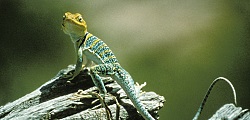
Western Collared Lizard
Arches National Park
Photo Courtesy US NPS
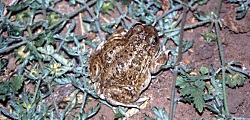
Spadefoot Toad
Arches National Park
Photo Courtesy US NPS
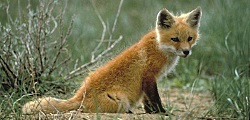
Red Fox
Arches National Park
Photo Courtesy US NPS
Lee Kaiser, Photographer
Western Scrub Jay
Arches National Park
Photo Courtesy US NPS
Neal Herbert, Photographer

Petroglyphs
Arches National Park
Photo Courtesy and Copyright Kurt Repanshek, Photographer
NationalParksTraveler.com
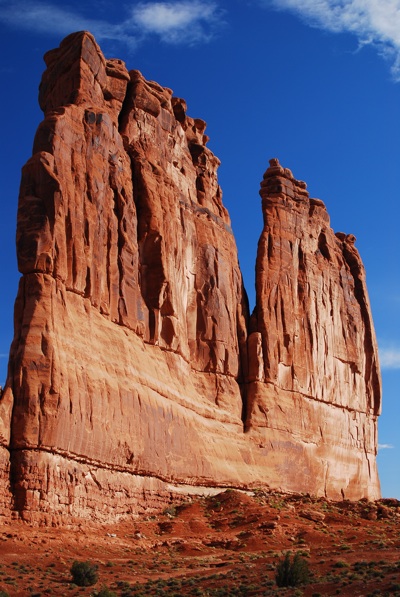
The Organ
Arches National Park
Photo Courtesy and Copyright Kurt Repanshek, Photographer
NationalParksTraveler.com

Stairs to Window Arch
Arches National Park
Photo Courtesy and Copyright Kurt Repanshek, Photographer
NationalParksTraveler.com


As with its neighbor, Canyonlands National Park, Arches National Park conceals most of its wildlife from visitors. That said, lizards are easy to spot, as are mule deer in the cool times of the day. And if you spend a little time before breakfast, or after dinner, you just might see coyotes, porcupines, desert cottontails, black-tailed jackrabbits, and many songbirds.

Because of the high heat during the summer months, most of these animals will be most visible when humans are not typically out and about. Desert animals have a variety of adaptations to deal with the hot weather and aridity. A key adaptation is that most animals are nocturnal, being most active at night. Nocturnal animals in Arches include kangaroo rats, woodrats (also called packrats), and other small desert rodents, skunks, ringtails, foxes, bobcats, mountain lions, bats and owls.

Some desert animals are “diurnal”, or primarily active during the day. These include rock squirrels, antelope squirrels, chipmunks, lizards, snakes, hawks, and eagles.

Many animals have are only active in certain temperature ranges, and they alter their active times of day depending upon the season. During winter months, snakes and lizards are in an inactive state of “torpor,” or sluggishness or even dormancy. But they become active during the day during the late spring and early fall, and then become “crepuscular,” or active mainly during the nighttime hours, to avoid the daytime heat of summer.

Insects, too, alter their times of activity. Mosquitoes, as you no doubt know, may be out from dawn through dusk, depending on the temperatures. But they are not active after the sun goes down.

In spite of Arches’ rather inhospitable appearance, almost 50 species of mammals live in the park’s landscape. But the hot climate and lack of water favors small mammals. Because of their size, these animals are less able to migrate, but have an easier time finding shelter, and require less food and water to live. Rodents are numerous: there are eleven species of mice and rats.

Desert bighorn sheep are one of the larger mammal species to be seen. They are frequently spotted along Highway 191 south of the park visitor center, and call Arches home all year long. They roam the talus slopes and side canyons near the Colorado River, forage for plants, and negotiate the steep, rocky terrain with the greatest of ease.

While Arches may not be considered a prime bird watching hot spot, 273 species have been seen in the park, which includes seasonal, year-round residents, and migrants.

Much of this diversity is due to the riparian corridors like Courthouse Wash and the Colorado River (which forms the park’s southern boundary). Mornings along these corridors often are filled with birdsongs during spring and summer. You might spot blue grosbeaks, yellow-breasted chats, and spotted towhees. Listen carefully and you’ll hear the trill of the canyon wren echoing from the sandstone walls. Great blue herons hunt the shallows for fish, while Cooper’s hawks deftly maneuver through the tangle of trees beyond the riverbanks.

There is life in the desert, if you know where, and more importantly, when, to look for it.

For Wild About Utah and National Parks Traveler, I’m Kurt Repanshek.

Credits:
Images: Courtesy US NPS
Images: Courtesy and Copyright Kurt Repanshek, www.nationalparkstraveler.com
Text:     Kurt Repanshek/Patrick Cone, NationalParksTraveler.com.


Additional Reading:

https://www.nationalparkstraveler.com/browse/Arches%20National%20Park

https://www.nps.gov/arch/index.htm

Ruffed Grouse and the Christmas Bird Count

Ruffed Grouse and the Christmas Bird Count
Ruffed Grouse
Bonasa umbellus
Courtesy Utah Division of Wildlife Resources

I set out this week to investigate why so many gifts in ‘The 12 Days of Christmas’ are birds. You know the song: there are swans a swimming, geese a laying, calling birds, French hens, turtle doves, and that partridge in the pear tree. Well, I never did find the answer. But what I did find was some interesting information about a native bird often incorrectly referred to as a partridge –a bird that is supremely well adapted to life in winter.

Ruffed grouse resemble partridges in that they are ground-dwelling game birds of similar size and stature. Their name comes from a collar of long feathers surrounding the necks of males who fluff them out when seeking mates in spring. The birds come in two color phases, differentiated mainly by their tail feathers, which can be either gray or chestnut brown. While not well understood, a grouse’s color phase seems to be linked to climate. Grouse with gray tails are more prevalent in areas defined by cold winters, while brown grouse are more common in warmer climates.

Now that snow is blanketing the landscape across much of their territory, the ruffed grouse is in its element. Harsh winters that adversely affect populations of other ground-dwelling game birds such as quail, pheasant, and turkeys, don’t seem to faze ruffed grouse. Their ability to survive is dictated by a number of special adaptations. The first is on their feet, where each winter nubby feathers called pectinations grow on the sides of the birds’ toes. Looking like strange combs, the bristles act as snowshoes, allowing the grouse to walk on top of even the softest snow. More special feathers grow on grouse legs like personal leg-warmers, and also near the bird’s beak, covering its nostrils. Scientists believe the feathered mustache enables grouse to breathe in warmer air than they otherwise would, thus keeping their internal temperature more stable.

Changes in weather bring about some changes in behavior as well. Warmer months find the birds resting in evergreens or thick brush. But in winter, when a foot or more snow covers the ground, grouse roost in the snow. The birds create small burrows which hide them from predators, offer protection from frigid winter winds, and keep them surprisingly snug and warm. Many a backcountry skier or snowshoer has been startled by a hidden grouse bursting noisily from its snowy lair.

The birds’ diet also changes seasonally from a summer sampling of green foliage, seeds, berries and insects, to the protein-rich dormant flower buds of trees such as aspen and birch. Grouse also won’t hesitate to eat the sweet flower buds of domestic trees like apples, and were at one time considered a pest in New England orchards. And so it’s actually not out of the question that within ruffed grouse territory, you might wake up one Christmas morning to find a ‘partridge’ in your pear tree.

Speaking of birds and the holiday season, it’s nearly time for the Audubon Society’s annual Christmas Bird Count. Over the next few weeks, tens of thousands of volunteers around the country will join in this 113-year-old tradition, collecting data on the types and numbers of birds living in their area. This data allows scientists to monitor and track populations over time and space. Participants can be seasoned birders, first timers, or anything in-between. In Logan, Ogden, Salt Lake, and Zion National Park, the count takes place Saturday, December 20th. Other locations around the state will host their events between now and January 5th. To find a count near you, visit birds.audubon.org and click on Christmas Bird Count. For the Stokes Nature Center and Wild About Utah, this is Andrea Liberatore.

For the Stokes Nature Center and Wild About Utah, this is Andrea Liberatore.

Credits:

Theme: Courtesy & Copyright Don Anderson Leaping Lulu
Images: Courtesy Utah Division of Natural Resources
Text & Voice: Andrea Liberatore, Stokes Nature Center

Additional Reading:

Furtman, Michael. (1999) Ruffed Grouse: Woodland Drummer. Stackpole Books, Mechanicsburg, PA.
https://www.amazon.com/Ruffed-Grouse-Woodland-Michael-Furtman/dp/0811731227

Rawley, E. V., W. J. Bailey, D. L. Mitchell, J. Roberson, and J. Leatham. 1996. Utah upland game. Publication number 63-12. Utah Division of Wildlife Resources, Modified text available online at: https://fieldguide.wildlife.utah.gov/?species=bonasa%20umbellus

New York State Department of Environmental Conservation (2012) Ruffed Grouse. Available online at: https://www.dec.ny.gov/animals/45436.html

National Audubon Society’s Christmas Bird Count:
https://birds.audubon.org/get-involved-christmas-bird-count-find-count-near-you

Utah Christmas Bird Counts:
https://utahbirds.org/cbc/cbc.html

Logan Christmas Bird Count:
Bridgerland Audubon Society Logan Christmas Bird Count 15 Dec 2012

A Safari through Utah’s Ice Age

Wave-cut platforms from
Lake Bonneville preserved on
Antelope Island, Great Salt Lake, Utah.
Photo Courtesy Wikimedia, Mark A. Wilson (Department of Geology, The College of Wooster), Photographer

Ground sloth of the Pleistocene
Paramylodon harlani
Texas Memorial Museum
University of Texas at Austin.
Photo Courtesy Wikimedia
Licensed CCA Share Alike 3.0 Unported

Lake Bonneville compared to the
State of Utah.
Photo Courtesy https://wildlife.utah.gov/gsl/history/


Hi, I’m Ru Mahoney with Stokes Nature Center in Logan Canyon. As winter approaches I find myself anticipating the first really good snow, when our valley floors and mountain passes will be transformed overnight, relinquishing autumn’s riot of color for a glacial monochrome. As little as 12,000 years ago winter white was Utah’s perennial favorite, donned at the launch of the Pleistocene Epoch, a roughly 2 million year long period (give or take 10,000 years) marked by widely recurring glaciations.

The west has a reputation for being vast, but Ice Age Utah was even bigger. The mountains where higher and sharper. And the Great Salt Lake was submerged beneath the glacial waters of Lake Bonneville. At its largest, this massive body of water covered 20,000 square miles and was more than 980 feet deep. To put that into perspective, that measures about 9.5 million football fields wide by 4.5 Salt Lake Temples deep. And the Ice Age wildlife? Well it was much more akin to an African safari than anything you’re likely to find on your favorite shoreline trail these days.

The megafauna of Pleistocene Utah included a menagerie of beasts that are the stuff of legend. Familiar species like bison and big-horn sheep grazed among herds of mammoths and mastodons. Camels and horses – destined for extinction in North America – were the prehistoric prey of dire wolves and saber-toothed cats. Giant ground sloths the size of modern day elephants stood on two powerful hind legs to browse on shoreline foliage. And herds of muskoxen kept a wary eye on Arctodus, the Short-faced bear, a formidable predator more than 50% larger than any bear species living today.

The last 30,000 years of Utah’s Ice Age were characterized by increasingly volatile shifts in climate. The changing norms in temperature and abundance of liquid water created cyclical periods of transitioning habitat. Forests and forest dwellers gave way to deserts and their specialist species, before shifting back to forests again, all in mere millennia. While nomadic and highly adaptable species like muskoxen eventually moved north to more stable climates, the less adaptable fauna of the Ice Age were increasingly relegated to sharing shoreline habitat diminished by the swollen banks of Lake Bonneville.

As fluctuating glaciers pushed southward and then retreated, canyons like Big and Little Cottonwood were gouged into existence. Spring and summer glacier melt carried an abundance of freshwater into the lake, sometimes sweeping along with it the remains of prehistoric animals that had not lasted through the winter, laying them to rest in shoreline deltas where their fossilized remains are now uncovered and studied in alluvial sediment. For many of Utah’s Ice Age animals, the end of the Pleistocene brought extinction.

Today the ancient shoreline of Lake Bonneville is one of the most distinguishable geological features along the Wasatch front. This “bench”, as it’s now commonly known, is easily identifiable in cities all along the Wasatch and frequently boasts fine homes and even finer views. Which might go to show that lakeside property retains its value whether the lake is still there or not. So as you enjoy a winter hike or cross country ski along a shoreline trail this season, think about Utah’s last Ice Age and how our rich fossil record, with some of earth’s largest land mammals, paints a picture of an even wilder west.

For Wild About Utah and Stokes Nature Center, I’m Ru Mahoney.

Credits:
Image1: Courtesy Wikimedia, Mark A. Wilson (Department of Geology, The College of Wooster), Photographer
Image2: Courtesy Wikimedia,as licensed through Creative Commons Attribution-Share Alike 3.0 Unported
Image3: Courtesy https://wildlife.utah.gov/gsl/history/
Text:     Ru Mahoney, Stokes Nature Center in Logan Canyon.

Additional Reading:
https://geology.utah.gov/popular/general-geology/ice-age/ice-age-animals-of-utah/

https://serc.carleton.edu/vignettes/collection/37942.html

https://hugefloods.com/Bonneville.html

https://geology.utah.gov/surveynotes/archives/snt42-3.pdf

https://geology.utah.gov/surveynotes/articles/pdf/pleistocene_fossils_42-3.pdf

Men’s Hair and the Male House Finch

Male House Finch, Courtesy US FWS, Gary Kramer, Photographer
Male House Finch
Courtesy US FWS, Gary Kramer, Photographer
This is Linda Kervin for Bridgerland Audubon Society.

A man’s vanity is nowhere more apparent than for the hair atop his head. As men age, their hair may whiten, thin or disappear. As a remedy, some men use dyes or hair growth potions.

But imagine this: What if the right food alone could restore the virile dark hair of youth?

There is a common songbird at your birdfeeder this winter that can do just this. It is the male house finch.

[House Finch Call – #3 Songbirds of the Southwest Canyon Country]

As with many songbirds, the female house finch is drab compared to the brightly colored male. He sports a showy brow and bib in colors that range from tomato red to orange to straw yellow. Like the tomato and carrot, these colors come from pigments called carotenoids. All birds with red feathers get these carotenoid pigments from their diet, ultimately from the plants that can produce them.

What does the red feather color mean for the house finch?

The ornathologist Geof Hill of Auburn University experimentally altered head feather colors of male house finches. To make red-headed males into carrot tops, Jeff used peroxide. Red hair die achieved the opposite transformation. He then let the guys compete for the attentions of females.

Jeff’s experiments demonstrated that plumage does make the male. The redder the male’s head, the higher his place in the pecking order. And the more females that he could attract. Conversely, redheads lost rank after bleaching. Among male house finches, blondes really don’t have more fun.

So now you can predict the likely winners and losers in the mating game from just a glance at the male house finches at your seed feeder. As is common in science, this discovery leads to new questions: What food makes the male’s head feathers red? Is it some red fruit or berry? Why do some males manage to get more carotenoid pigments than others? Do they instinctively know the right seed or fruit to eat? We humans must get our carotenoids from plant sources too, such as the carotine that we transform into Vitamin A for night vision. The produce aisle at the grocery store might be a much different place though if the right fruit or vegetable could transform our hair color too.

This is Linda Kervin for Bridgerland Audubon Society.

Credits:

Photo: Courtesy US FWS, Gary Kramer, Photographer
Bird Sounds: Courtesy and Copyright 2008 Dr. Kevin Colver, Songbirds of the Southwest Canyon Country https://wildstore.wildsanctuary.com/collections/special-collections
Text: Jim Cane and Linda Kervin, Bridgerland Audubon Society https://www.bridgerlandaudubon.org
Voice: Linda Kervin

Additional Reading:

House Finch, Carpodacus mexicanus, Utah Division of Wildlife Resources, Department of Natural Resources, State of Utah, https://fieldguide.wildlife.utah.gov/?species=haemorhous%20mexicanus

House Finch, Utah Bird Profile, UtahBirds.org, https://www.utahbirds.org/birdsofutah/ProfilesD-K/HouseFinch.htm

A Red Bird in a Brown Bag: The Function and Evolution of Colorful Plumage in the House Finch , Dr. Geoffrey, E. Hill, Oxford University Press, September 2002
ISBN-13: 9780195148480, https://www.amazon.com/Red-Bird-Brown-Bag-Ornithology/dp/0195148487

New Addition: How birds turn red, Phys.org, May 19, 2016, http://phys.org/news/2016-05-genes-enable-birds-red.html

Pharr, Lauren D., Seeing Red: What the Color of House Finches Can Tell Us, Cool Green Science, The Nature Conservancy, November 2, 2021, https://blog.nature.org/2021/11/02/seeing-red-what-the-color-of-house-finches-can-tell-us/

Lowe, Joe, Invasive Birds of the U.S.: Seven of the Most Common Species, Bird Calls Blog, American Bird Conservancy, February 24, 2020, https://abcbirds.org/blog20/invasive-birds/

Leffer, Lauren, 10 Fun Facts about the House Finch, News, National Audubon Society, December 21, 2021, https://www.audubon.org/news/10-fun-facts-about-house-finch