Wilderness 16 Feb 2015

Wilderness. The word conjures up romantic images of wide open landscapes teeming with birds, beasts, and plants. I imagine places untouched by human influence – truly wild and free. Places that are exotic and far away.
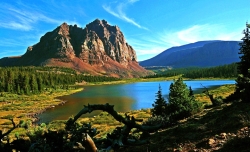
High Unitas Wilderness, Utah, Courtesy Wilderness.net, Copyright 2009 Cordell Andersen, Photographer www.cordellmandersen.com
High Unitas Wilderness, Utah
Courtesy Wilderness.net
Copyright © 2009 Cordell Andersen, Photographer

Red Butte Wilderness, Utah, Courtesy Wilderness.net, Copyright 2011 Paul Gooch, PhotographerRed Butte Wilderness, Utah
Courtesy
Wilderness.net
Copyright © 2011 Paul Gooch, Photographer
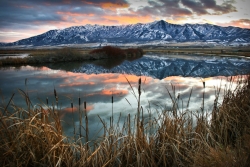
Wellsville Mountain Wilderness, Utah, Courtesy Wilderness.net, Copyright 2011, Dusty Vaughn, PhotographerWellsville Mountain Wilderness, Utah
Courtesy Wilderness.net
Copyright © 2011 Dusty Vaughn, Photographer

Paria Canyon, Vermilion Cliffs Wilderness, Courtesy Wilderness.net, Copyright © 2011 Mike Salamacha, Paria Ranger, BLM, PhotographerParia Canyon
Vermilion Cliffs Wilderness
Courtesy Wilderness.net
Copyright © 2011 Mike Salamacha, Paria Ranger, BLM, Photographer


But wilderness exists much closer than you may think.

The United States Congress adopted the Wilderness Act with a nearly unanimous vote in 1964. Ours was the first country in the world to define and designate wilderness areas – lands valued enough to be set aside for the purpose of protection.

Currently, the Wilderness Act protects 757 individual wilderness areas across the United States – totaling more than 109 million acres. Thirty-three wilderness areas are found in Utah, and they protect a variety of unique landscapes from the red rock desert found in Red Butte Wilderness to the alpine forests of the High Uintas Wilderness. While the landscapes may look incredibly different from one wilderness area to the next, these lands share a number of qualities which can be described by adjectives such as peaceful, quiet, untouched, and pristine.

These areas protect some of the most unique and incredible landscapes that Utah has to offer, but that doesn’t mean they’re off limits. Our wilderness areas are just that – ours. They are public lands, accessible to anyone who wants to visit – so long as you tread lightly.

Areas that fall under its protection are described in the Wilderness Act as “lands designated for preservation and protection in their natural condition…” which “…shall be devoted to the public purposes of recreation, scenic, scientific, educational, conservation and historic use.” These amazing lands were set aside in 1964 with an eye to the future and because of it, should still be around for your grandchildren’s grandchildren to enjoy.

There is an ongoing effort to educate Americans about the immense value of preserving wilderness areas. For without education, they may one day be selfishly reclaimed and lost. One of these educational opportunities is coming to Logan on April 13th and 14th. The Arthur Carhart National Wilderness Training Center will be hosting a teacher training workshop in conjunction with the Stokes Nature Center and the Utah Society for Environmental Education. The workshop is aimed at teachers in grades 5-8, though anyone is welcome to attend. For more information, please contact the Stokes Nature Center at www.logannature.org

Not a teacher? The best way to learn about wilderness areas is to go visit one! Information, and photos of Utah Wilderness Areas, can be found at www.wildaboututah.org

For the Stokes Nature Center and Wild About Utah, this is Andrea Liberatore.

Credits:

Photos: Courtesy Wilderness.net, Steve Archibald, (Individual Copyrights noted)
Text:    Andrea Liberatore, Stokes Nature Center, logannature.org

Additional Reading:
The Arthur Carhart National Wilderness Training Center:
wilderness.net

Wilderness Investigations teacher training workshop:
logannature.org/wi_workshop

Robins in Winter

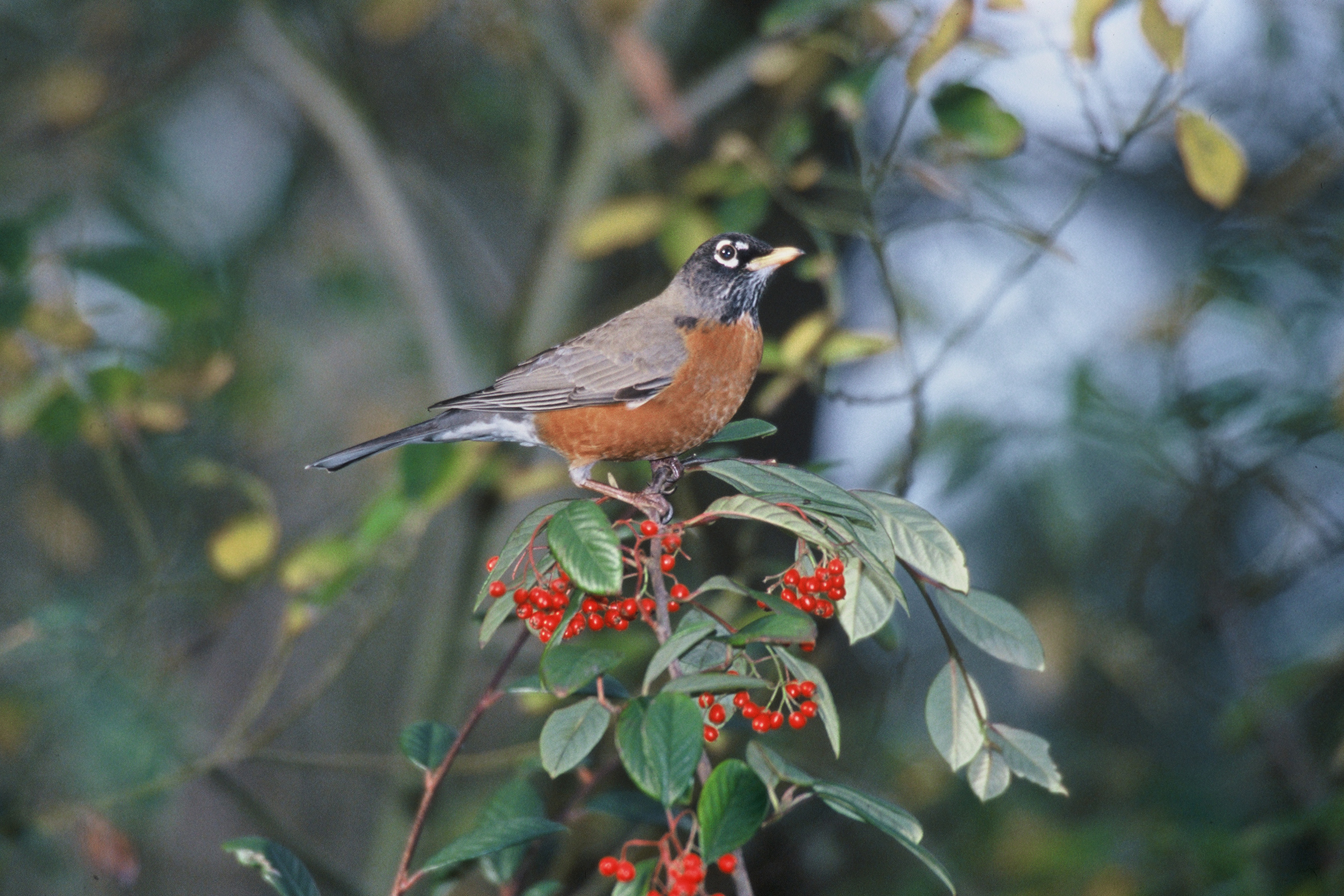
American Robin
American Robin
Turdus migratorius
Courtesy US FWS, images.fws.gov
Dr. Thomas G. Barnes, Photographer
 

Robin with Chicks in NestAmerican Robin
Turdus migratorius
Courtesy US FWS, images.fws.gov
Lee Karney, Photographer
 

Robin with Chicks in NestRobin with Chicks in Nest
Courtesy US FWS, images.fws.gov
James C. Leopold, Photographer

The American robin with its abundance, red breast, and loud song is one of the most recognizable backyard birds in North America. For many of us the robin – or Turdus migratorius – is also thought of as a herald of spring. So why is it that we still occasionally see them in our wintry Utah backyards?

Seasonal bird migration can be triggered by a number of things, but the two main drivers are food supply and nesting habitat. In spring and summer the birds move northward to take advantage of insect hatches, budding plants, and the plethora of nesting sites. Then, as food sources dwindle in fall, the birds move southward to areas where the necessary resources are still plentiful.

The distances birds migrate in order to access these resources can range widely. Therefore, birds are generally categorized as being short-, medium-, or long-distance migrants. Robins are considered short-distance migrants. While their range spans all of Canada and the United States extending down into Mexico, most robins do not travel far from their breeding grounds in winter and may not leave at all. Only the populations that breed and reside on the edges of this range will migrate seasonally.

The robin’s varied diet and behavioral adaptability are the primary reasons these short-migratory or non-migratory patterns are possible. Robins are preferably ground foragers, feasting on insects and earthworms in the spring and summer months. Yet, during the fall and winter, robins eat a fruit-based diet. They track this seasonal food source in flocks, abandoning their summer individualistic and territorial behavior. These flocks – or roosting aggregates – also help them survive the cold winter temperatures. As a result, robins are able to cope with the ground freezing, the disappearance of their preferred food source, and the harsh winter weather.

Returning to our original question: is the American robin truly a sign of spring here in Utah? Is it strange to see this bird in our backyards during the winter months? The simple answer is no. Robins can be found year round almost anywhere south of Canada. While they may migrate nomadically, staying or leaving areas as weather and snow cover affect their food supply, there could be some keeping us company in Utah all winter.

For Wild About Utah, I’m Anna Bengtson.

Credits:

Featured Music: Courtesy & Copyright Don Anderson as performed by Leaping Lulu
Image: Courtesy US FWS, Lee Karney, James C. Leopold, Photographers
Text & Voice: Anna Bengston
Additional Reading: Anna Bengston and Lyle Bingham

Sources & Additional Reading:

American Robin Profile, Utah Birds, Utah County Birders, http://utahbirds.org/birdsofutah/BirdIndex.htm

American Robin, All About Birds, The Cornell Lab of Ornithology, https://www.allaboutbirds.org/guide/American_Robin

American Robin, The Birds of the World Online https://birdsoftheworld.org/bow/species/amerob/cur/introduction

The Basics of Bird Migration: How, Why, and Where, Cornell Lab of Ornithology, August 1, 2021, https://www.allaboutbirds.org/news/the-basics-how-why-and-where-of-bird-migration/ [Updated January 31, 2026]

Where Have all the Robins Gone?, Migration, Cornell Lab of Ornithology https://www.birds.cornell.edu/AllAboutBirds/faq/master_folder/migration/document_view

Snow Depth Survey, The Great Backyard Bird Count [Formerly at https://www.birdsource.org/gbbc/science-stories/past-stories/snow-depth-survey – A mention of the Snow Depth Survey is found in an article in The Lahontan News, National bird count starts today, February 15, 2002]

Winter Robins, The Great Backyard Bird Count [Formerly at https://www.birdsource.org/gbbc/science-stories/past-stories/is-that-winter-flock-of-robins-in-your-yard-unusual Updated January 31, 2026]

Kelly, Patrick, A Moral Dilemma, Wild About Utah, June 29, 2020, https://wildaboututah.org/a-moral-dilemma/

Bengston, Anna, Robins in Winter, Wild About Utah, February 2, 2015, https://wildaboututah.org/robins-in-winter/

Bengston, Anna, American Robin, Wild About Utah, January 18, 2016, https://wildaboututah.org/american-robin-160118/

Bingham, Lyle, Richard Hurren(voice), The Occupants on Robin Street, Wild About Utah, July 8, 2008, https://wildaboututah.org/the-occupants-on-robin-street/

Dark-eyed Juncos

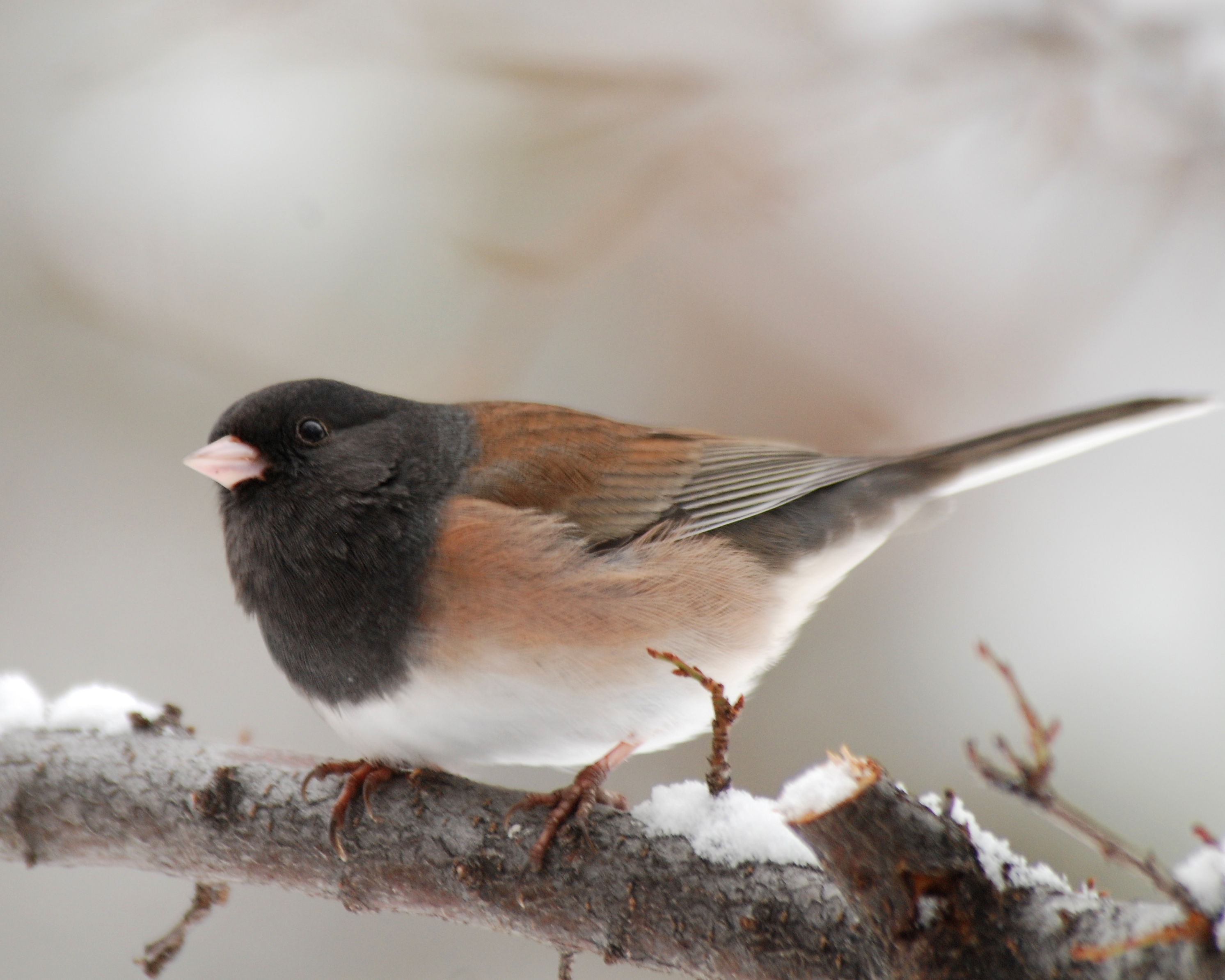
Click for a larger view of a Dark-eyed 'Oregon' Junco Male, Junco hyemalis montanus, Courtesy and copyright 2008 Ryan P. O'Donnell
Dark-eyed Junco “Oregon” Male
Junco hyemalis montanus
Courtesy & © 2008 Ryan P. O’Donnell 

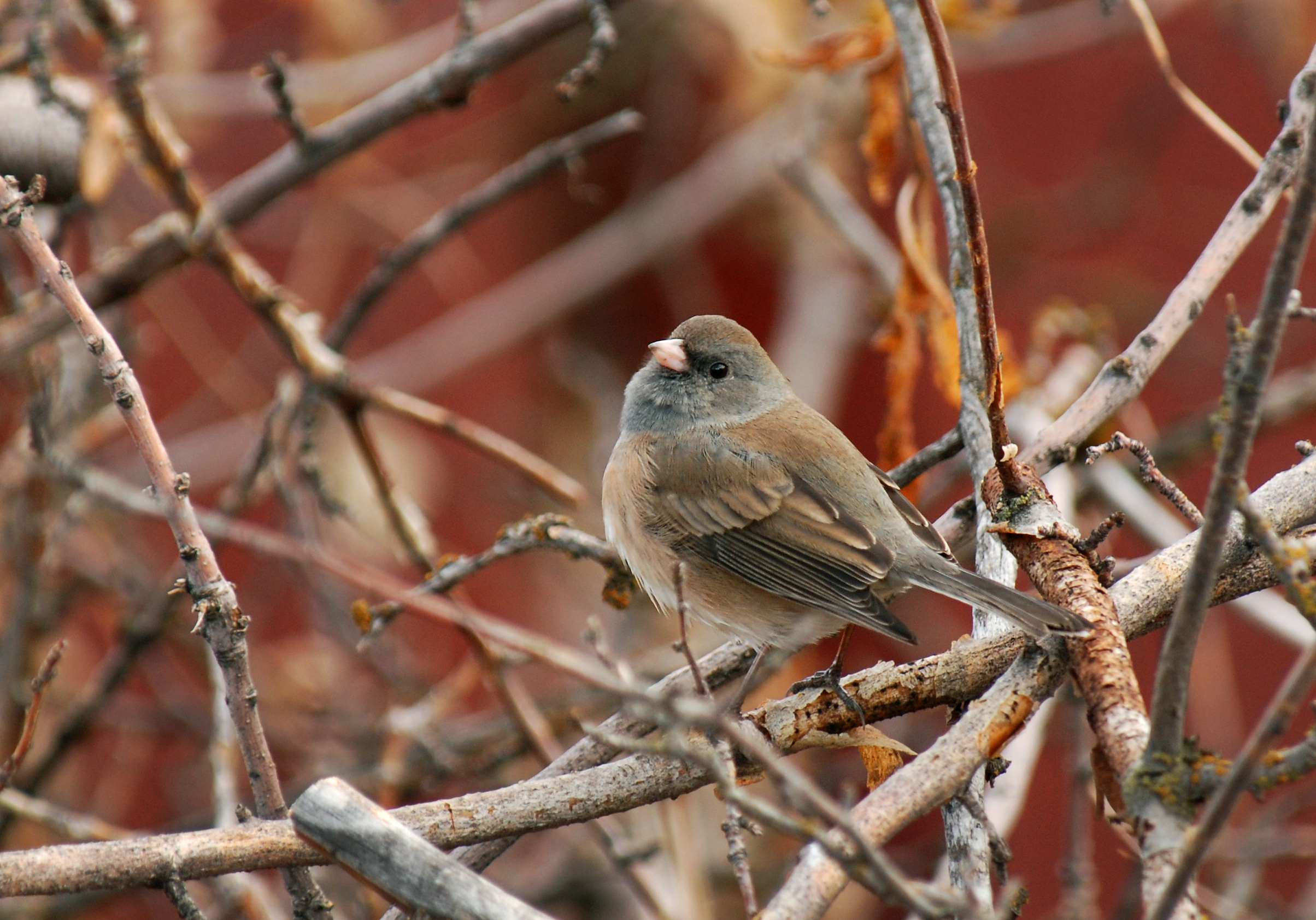
Click for a larger view of a Dark-eyed 'Oregon' Junco Female, Junco hyemalis montanus, Courtesy and copyright 2011 Ryan P. O'DonnellDark-eyed Junco “Oregon” Female
Junco hyemalis montanus
Courtesy & © 2011 Ryan P. O’Donnell 

Click for a larger view of a Dark-eyed 'Pink Sided' Junco, Junco hyemalis mearnsi, Courtesy and copyright 2011 Ryan P. O'DonnellDark-eyed Junco “Pink Sided”
Junco hyemalis mearnsi
Courtesy & © 2011 Ryan P. O’Donnell 

Click for a larger view of a Dark-eyed 'Cassiar' Junco, Junco hyemalis cismontanus, Courtesy and copyright 2011 Ryan P. O'DonnellDark-eyed Junco “Cassiar”
Junco hyemalis cismontanus
Courtesy & © 2011 Ryan P. O’Donnell 

Click for a larger view of a Dark-eyed 'Gray-headed' Junco, Junco hyemalis caniceps, Courtesy and copyright 2011 Ryan P. O'DonnellDark-eyed Junco “Gray-headed”
Junco hyemalis caniceps
Courtesy & © 2011 Ryan P. O’Donnell 

My backyard bird feeders are a busy place this time of year. I enjoy keeping track of who visits – especially as a relative newcomer to the Utah bird scene. Last winter, however, I was baffled by the identity of what turned out to be a fairly ordinary bird.

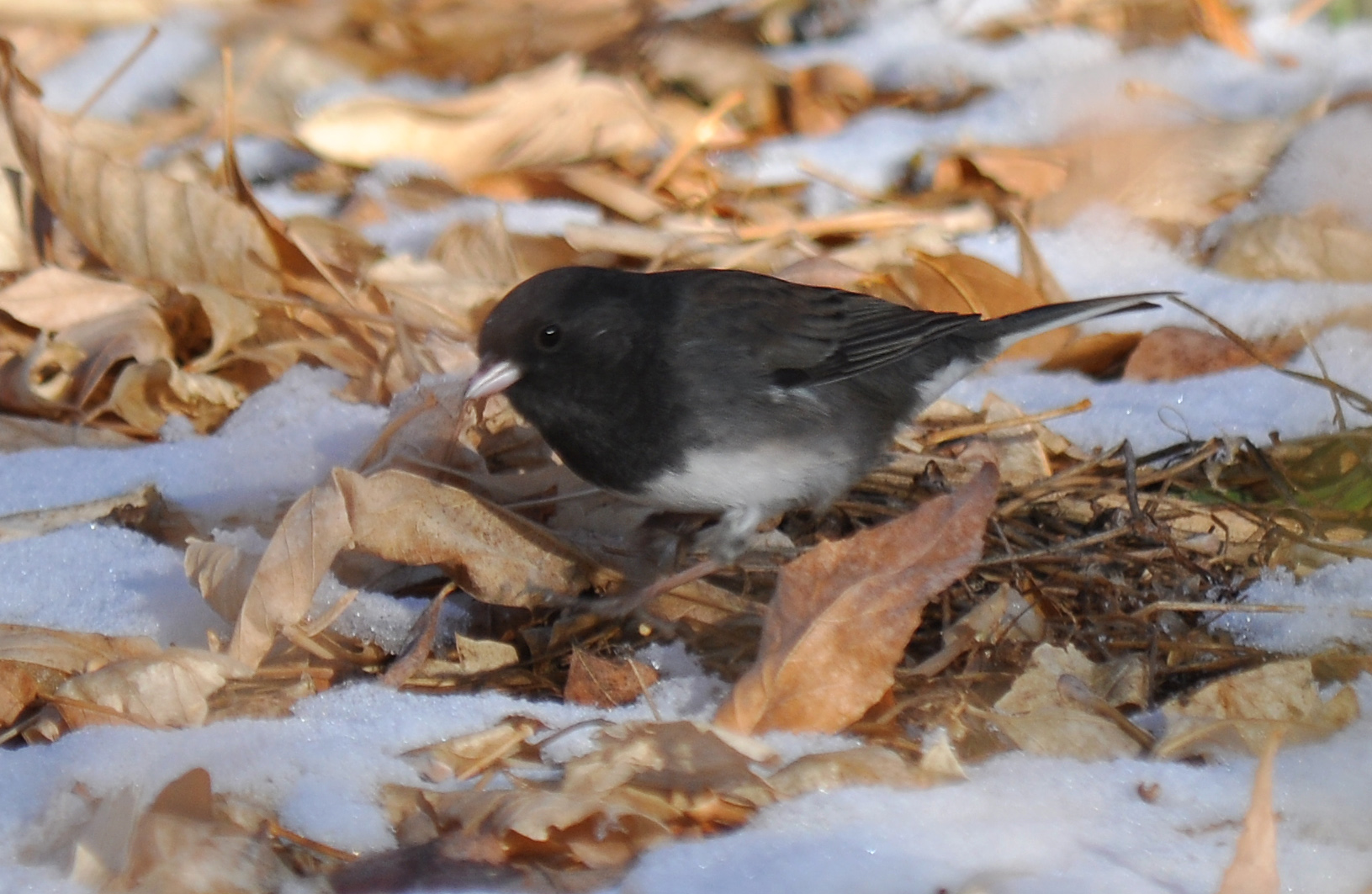
Dark-eyed juncos are a common sight throughout the United States, but as it turns out, they exhibit an incredible geographic variation in plumage colors. There is a ‘slate-colored race’ which I was used to seeing in the Midwest – uniformly gray above with a white underbody. During Utah winters, the ‘Oregon race’ is common, with its black hood, brown back and peachy sides. Another ‘gray-headed race’ sports varying shades of gray with a distinct reddish brown patch on its back.

Depending on who you ask, there are up to fifteen different races, also called sub-species, of dark-eyed junco – all quite visually distinct, but all considered to be the same species. It wasn’t always this way, however. In the late 1950’s what we now call dark-eyed juncos were recognized as four different species, and in the 1890’s there were six.

These changes beg the question, at what point does speciation occur? And the answer lies in the ability of these birds to interbreed. One scientific definition of a species is those organisms or populations of organisms that are “potentially capable of interbreeding.”

Unique plumage patterns have evolved in a number of geographic locations across the junco’s range, however all of the dark-eyed junco variants could potentially interbreed if they happened to meet. Indeed in places where these geographic territories overlap inter-breeding does take place resulting in blends of the usually-distinct color patterns.

Juncos aren’t the only bird species with recognized color variants. Any raptor enthusiast will be familiar with variations in plumage colors that many birds of prey exhibit, such as merlins and red-tailed hawks. What makes dark-eyed juncos unique is that they are being studied as a possible case of speciation in progress. It turns out that there is more than just a difference in color among dark-eyed juncos. Some sub-species also exhibit variation in song patterns, social behavior, body size, and migration patterns, any of which may eventually cause these groups to stop interbreeding and allow a new species to emerge.

To see pictures of dark-eyed junco subspecies, visit our website at www.wildaboututah.org. Thank you to Rocky Mountain Power Foundation for supporting the research and development of this Wild About Utah topic.

For the Stokes Nature Center and Wild About Utah, this is Andrea Liberatore.

Credits:

Photos: Courtesy & © Ryan P. O’Donnell
Text:    Andrea Liberatore, Stokes Nature Center, logannature.org

Additional Reading:

Atwell, J.W., O’Neal, D.M, and Ketterson, E.D. (2011) Animal Migration as a Moving Target for Conservation: Intra-species Variation and Responses to Environmental Change, as Illustrated in a Sometimes Migratory Songbird. Environmental Law. Vol. 41:289 p. 289-319, https://www.amazon.com/Animal-migration-moving-target-conservation/dp/B005C29H7I

Alderfer, Jonathan (editor) (2005) National Geographic Complete Book of Birds. National Geographic Press. Dark-eyed junco information available online at: https://animals.nationalgeographic.com/animals/birding/dark-eyed-junco/

Cornell Lab of Ornithology, All About Birds: Dark-eyed Junco. https://www.allaboutbirds.org/guide/Dark-eyed_Junco/id/ac

History of Name Changes for Juncos. Cornell Lab of Ornithology. https://www.birds.cornell.edu/pfw/News/junco_taxonomy.pdf

Capitol Reef

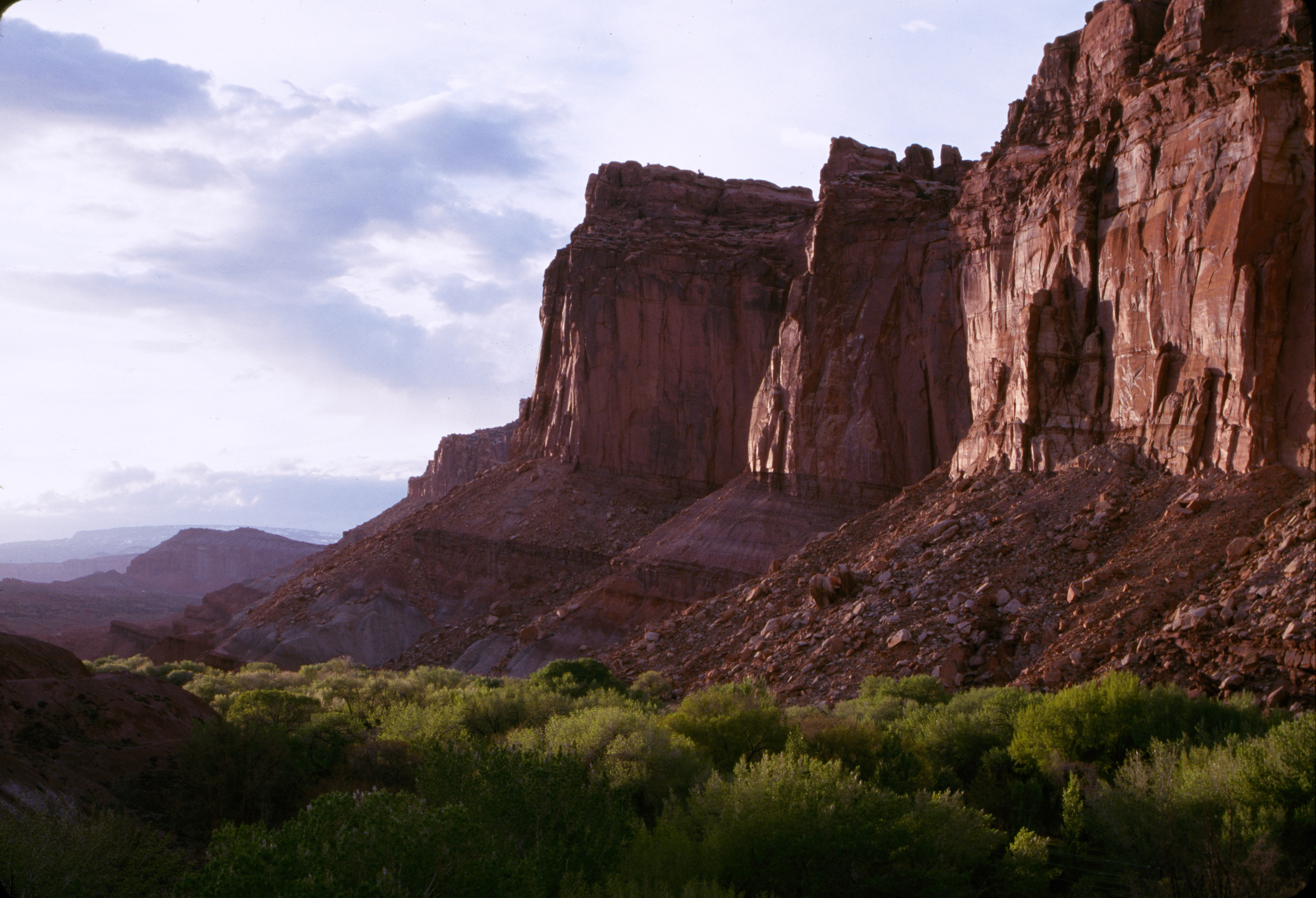
Fruita and the Wingate Cliffs
Capitol Reef National Park
Photo Courtesy US NPS

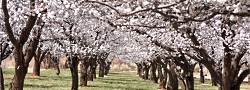
Orchard
Capitol Reef National Park
Photo Courtesy US NPS

Early settlers to the landscape we know as Capitol Reef National Park in south-central Utah planted cherry, apricot, peach, pear, apple, and walnut trees as a cash crop for survival along the Fremont River bottoms. Visitors today are often surprised by the fruit trees in light of the surrounding desert climate, and campers can pick apples and peaches from their campsites in the orchards. But the green fields and fruit trees also attract deer, marmots, and other small critters, which are easy to spot and are comfortable with humans in their environment.

Though the deer roam free in the tall grass between apple trees, there are other species that are a bit more dangerous lurking nearby. Mountain lions and black bears skillfully stalk around this historic district of Fruita without being seen. Mountain lions have been spotted within a half-mile of the popular campground, yet little is known about the species within the confines of Capitol Reef. With so many questions unanswered about the predator and prey relationship in the unique landscape, the park has received a Disney Nature Impact Grant to enlighten us.

Lori Rome, the park’s chief of interpretation, says, “We are setting up 10-20 infrared motion detected camera traps in surrounding areas. This is a non-invasive way to learn basic information about the species.”

The cameras will provide useful evidence and reveal the patterns of the quiet predators in the park. The public will be engaged through a citizen science project using social media and public interpretive programming, for example helping to survey deer populations.

If you’ve seen Disney Nature’s movie Bears, you, too, helped contribute to the Disney Nature Impact Grants program. Fourteen national parks are receiving funding via proceeds from the movie. Disney Nature has pledged a contribution to the National park Foundation, the official charity of America’s national parks, through the Disney Worldwide Conservation Fund, for each person who saw the film during its first week in theaters.

This type of support helps preserve and protect Capitol Reef and the rest of the National Park System. The Disney Nature Impact Grant enables parks to conduct much-needed conservation projects, such as studying mountain lions at Capitol Reef.

Each park selected to receive a grant through this program had to demonstrate a clear need for the money, and how it would make a profound difference in habitat restoration, wildlife protection or conservation research. With this assistance, we should be able understand predator’s actions in Capitol Reef National Park.

For Wild About Utah and National Parks Traveler, I’m Kurt Repanshek.

Credits:
Image: Courtesy and Copyright Kurt Repanshek, www.nationalparkstraveler.com
Text:     Kurt Repanshek, NationalParksTraveler.com.


Additional Reading:

Capitol Reef And 13 Other National Parks Receive Impact Grants From Disney Nature’s Movie “Bears”, Submitted by Carli Jones, June 26, 2014, NationalParksTraveler.comhttps://www.nationalparkstraveler.com/2014/06/capitol-reef-and-13-other-national-parks-receive-impact-grants-disney-natures-movie-bears25263

Capital Reef National Park, https://www.nationalparkstraveler.com/park/capitol-reef-national-park

Capital Reef National Park, https://www.nps.gov/care/index.htm

Mammals in Capital Reef National Park, https://www.nps.gov/care/naturescience/mammalchecklist.htm
Amphibians in Capital Reef National Park, https://www.nps.gov/care/naturescience/amphibians.htm
Fish in Capital Reef National Park, https://www.nps.gov/care/naturescience/fish.htm
Birds in Capital Reef National Park, https://www.nps.gov/care/naturescience/birds.htm
Reptiles in Capital Reef National Park, https://www.nps.gov/care/naturescience/reptiles.htm