Cattail and Teasel

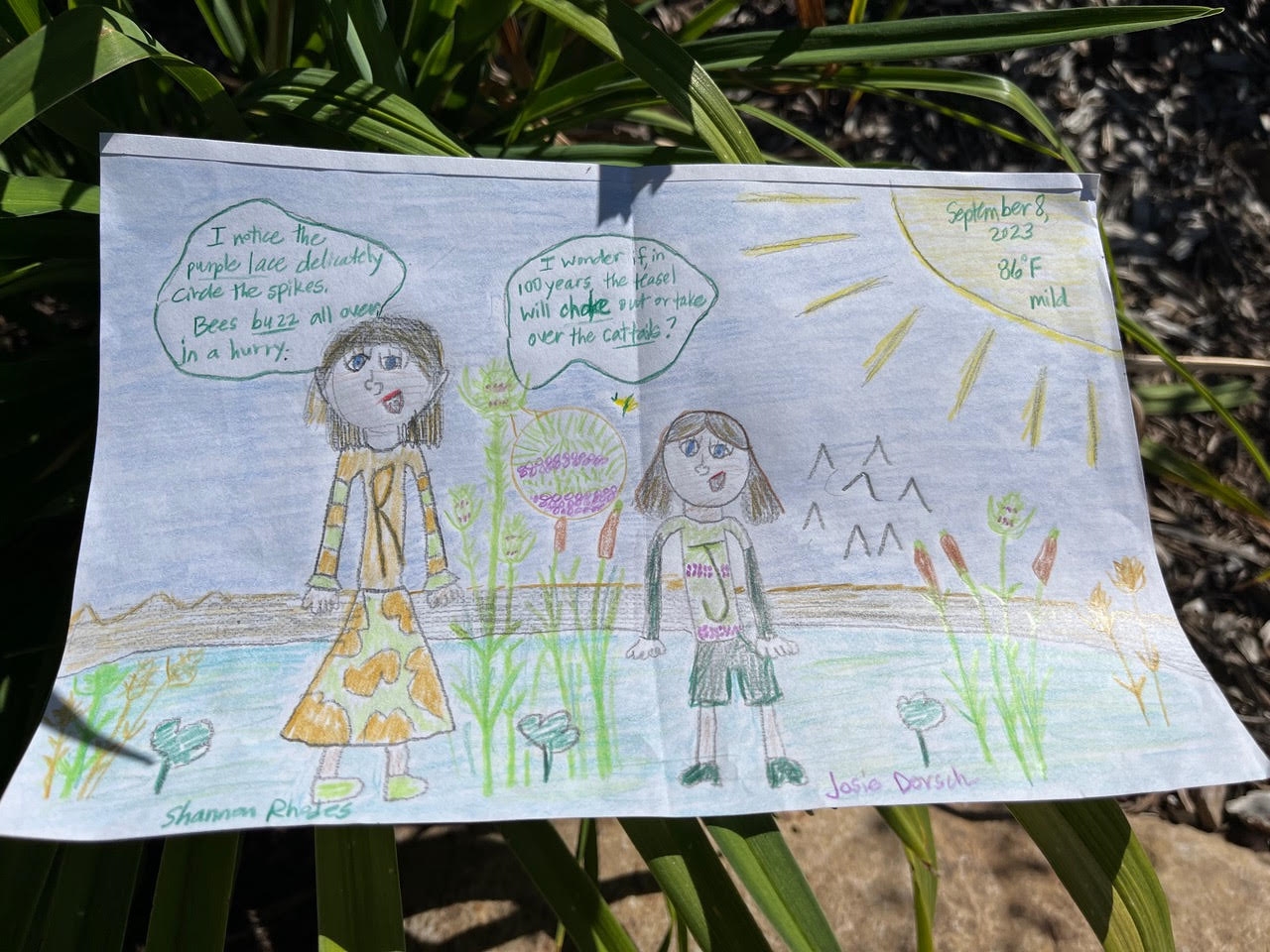
Cattail and Teasel: Josie's Nature Log Page. Used by Permission. Photo Copyright Shannon Rhodes, Photographer
Josie’s Nature Log Page
Used by Permission
Photo Copyright Shannon Rhodes, Photographer
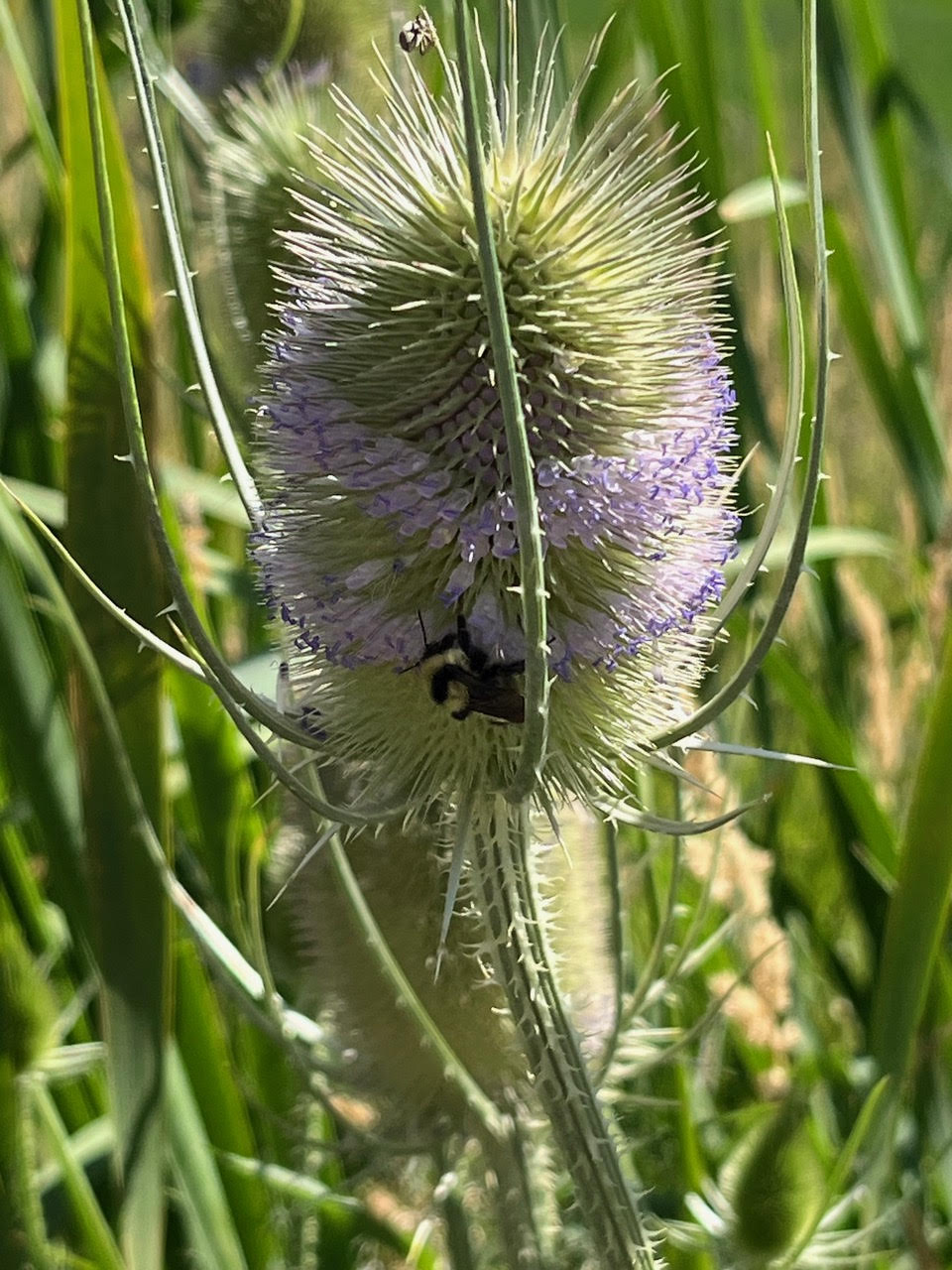
Teasel in Bloom with Bumble Bee Photo Courtesy & Copyright Shannon Rhodes, Photographer Teasel in Bloom with Bumble Bee
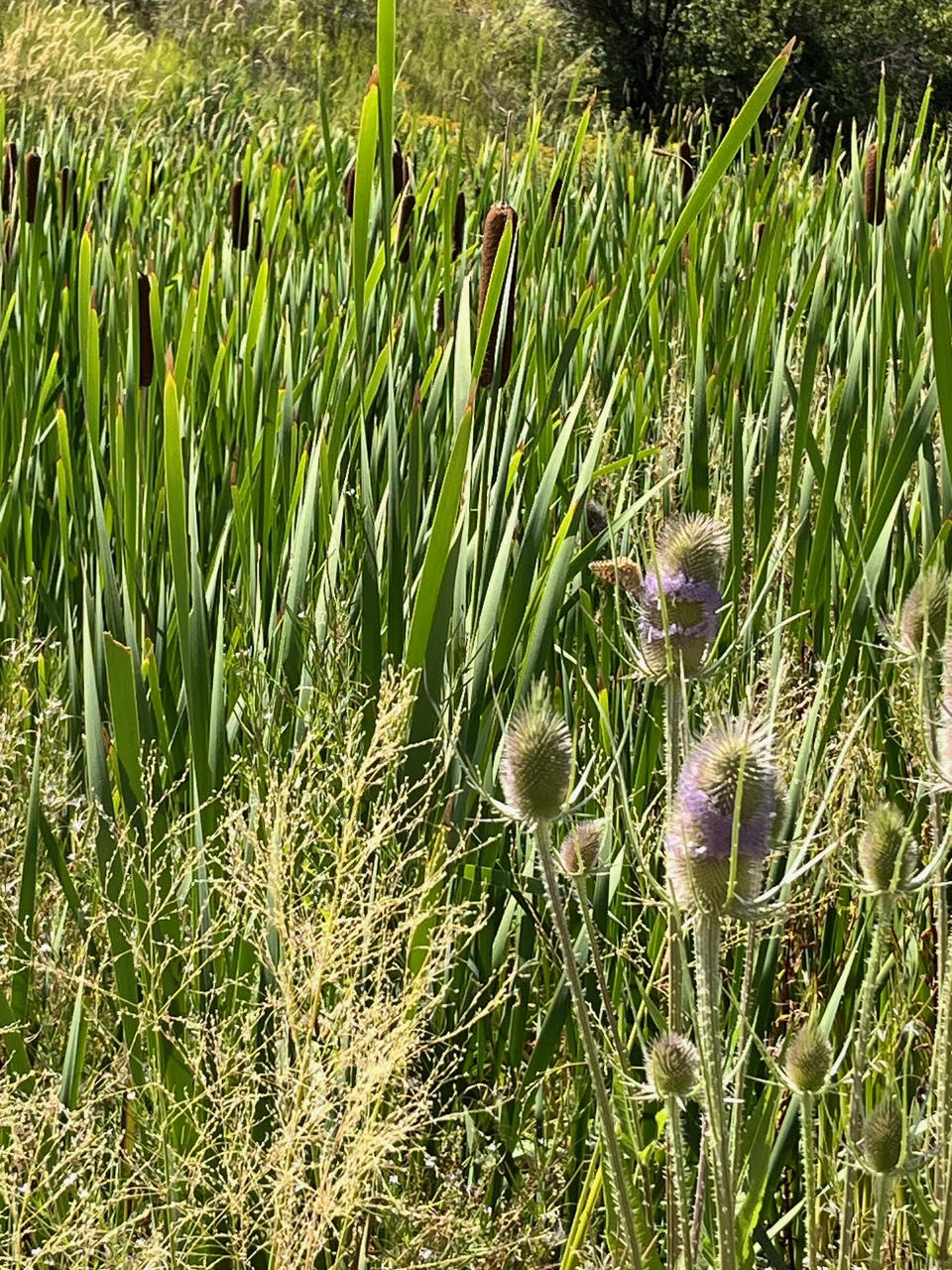
Photo Courtesy & Copyright Shannon Rhodes, Photographer

Cattail and Teasel in Bloom Photo Courtesy & Copyright Shannon Rhodes, Photographer Cattail and Teasel in Bloom
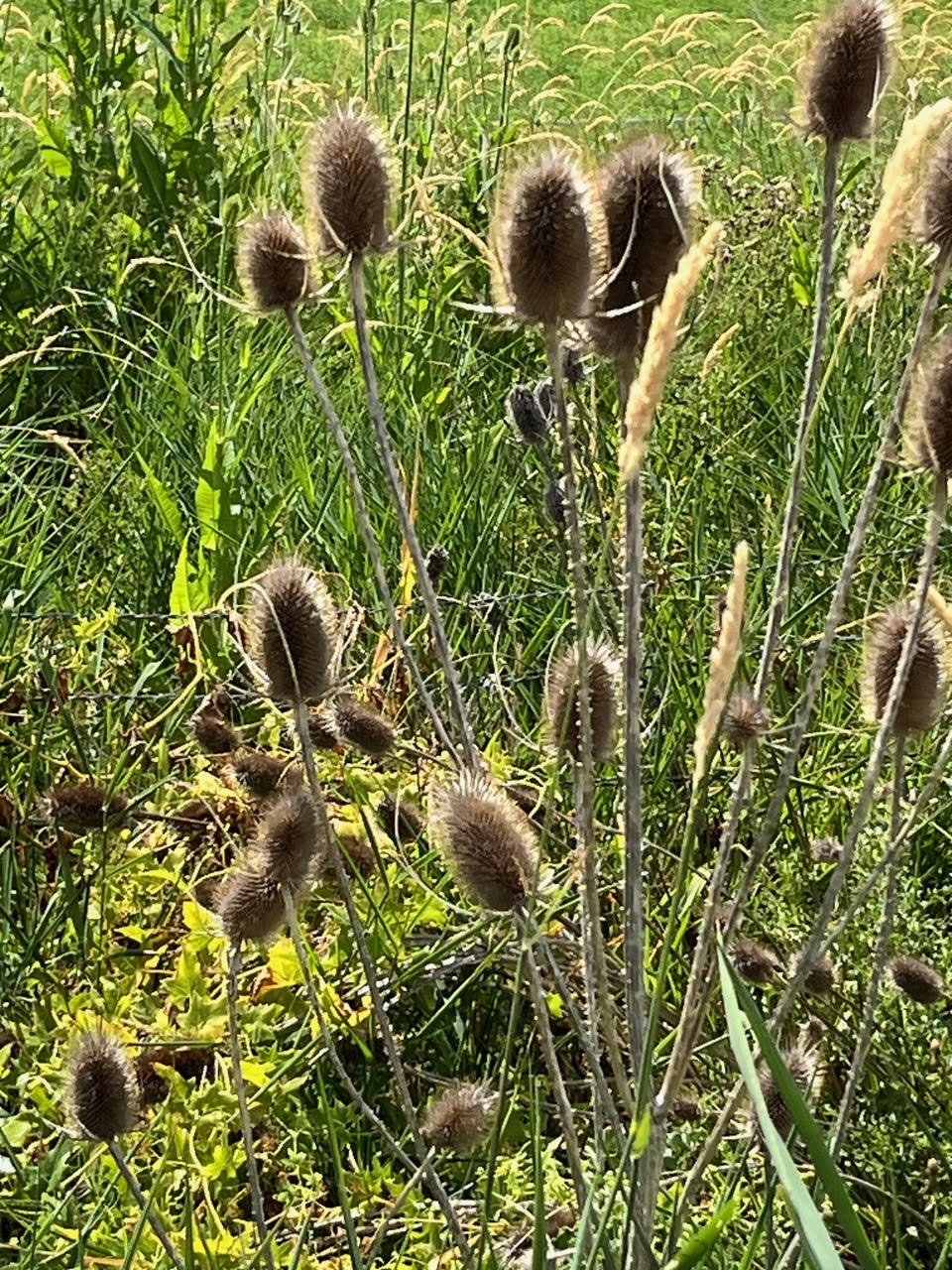
Photo Courtesy & Copyright Shannon Rhodes, Photographer

Dried Teasel Photo Courtesy & Copyright Shannon Rhodes, Photographer Dried Teasel
Photo Courtesy & Copyright Shannon Rhodes, Photographer

For many, this is the season transition between summer and back to school. This month, along with the generous gifts of caramel apples, whiteboard markers, and number 2 pencils, a child handed me a green notebook and a request. One of the greatest compliments a teacher could possibly receive, in my opinion, from a student having never been on any of my class lists, is an invitation to make a writing dialogue journal, a pen pal exchange with no grades or due dates attached. Today her entry concludes with, “Also I drew a picture of you and me in pencil.” I withdraw from the notebook’s back flap a flattering illustration of flowers, smiles, and sun rays, grab my colored pencils, and head outside to write.

Terry Tempest Williams honors a similar marshy invitation, begging us to enter the wonders of the wetlands, in her book “Between Cattails” with exquisite Peter Parnall illustrations. Amid snails and scuds, damselflies and waterlilies, red-winged blackbirds and mosquito tumblers, I am drawn to the familiar cattails. Having just spent some lazy summer days reading Robin Wall Kimmerer’s “Braiding Sweetgrass: Indigenous Wisdom, Scientific Knowledge, and the Teachings of Plants,” I now know that one can appreciate a cattail for its cucumber-tasting pith and protein-packed pollen, its gel that can soothe sunburns, and its fluff that can be used as tinder to light a fire or as soft yet absorbent layers in bedding. She taught me that “one of the words for cattail in the Potawatomi language …. means ‘we wrap the baby in it.’” When she takes students outside, she lets the plants teach them.

Many children I teach can identify cattails, but as I take my Josie journal out to the marsh to compose my writing response, I find another familiar plant that I cannot name. Quickly I realize that it has pale purple flowers; I don’t think I’ve ever seen it in any color other than brown. Once again I find how unaware I have been, and a simple plant guide check reveals the name Dipsacus fullonum, or common teasel. It is an invasive tall plant with a spiky thistle-like flower head and more spiky spears growing up around it. Small dense flowers, from 250 to over a thousand of them, each blossom for only one day. I had only ever noticed it after its biennial life cycle: flowering, dying, then persisting as a dried stem and flower head the next season. Dipsacus comes from a Greek word meaning “thirst,” referring to the leaf cups at the stalk that collect rainwater and catch insects. Sometimes listed as noxious species, this non-native plant was brought from Europe and valued for teasing wool. Today I see bees are drawn to them, and next year finches and other seed-loving birds will visit.

Turning her drawing into my nature journal for this day’s outing, I add my plant perspective. I add some silver to the brown in my teasel-y hair and purple flowers to her shirt. She wrote that “writing makes me feel in my element” and when I take writing outside and really take time to notice the details, I couldn’t agree more.

I’m Shannon Rhodes, and I am wild about Utah.

Credits:

Images: Courtesy & Copyright Shannon Rhodes, Photographer
Nature journal entry used with permission from Josie Dorsch and her parent Breanna Studenka, All Rights Reserved
Audio: Crickets Courtesy & © Friend Weller, https://upr.org/
    Birds: Courtesy & © Kevin Colver https://wildstore.wildsanctuary.com/collections/special-collections
Text: Shannon Rhodes, Edith Bowen Laboratory School, Utah State University https://edithbowen.usu.edu/
Additional Reading Links: Shannon Rhodes

Additional Reading:

Wild About Utah Pieces by Shannon Rhodes, https://wildaboututah.org/author/shannon-rhodes/

iNaturalist. Wild Teasel. https://www.inaturalist.org/taxa/56002-Dipsacus-fullonum

Kimmerer, Robin Wall. Braiding Sweetgrass: Indigenous Wisdom, Scientific Knowledge, and the Teachings of Plants. 2013. https://www.robinwallkimmerer.com/

National Park Service. Exotic Species: Common Teasel. https://www.nps.gov/articles/common-teasel.htm

Tilley, Derek. Commonly Occurring Wetland Plant Species for Idaho and Utah NRCS Wetlands Delineators. March 2019. https://www.nrcs.usda.gov/plantmaterials/idpmctn13441.pdf

U.S. Department of Agriculture. Common Teasel. https://www.invasivespeciesinfo.gov/terrestrial/plants/common-teasel

Williams, Terry Tempest. Between Cattails. New York: Charles Scribner’s Sons. 1985. https://www.terrytempestwilliams.com/

Shorebirds

Shorebirds: Western Sandpiper (Calidris mauri), Shorebirds at Utah Lake, June 2, 2023, Courtesy & Copyright Utah Division of Wildlife Resources, Utah Department of Natural Resources, State of Utah
Western Sandpiper Calidris mauri
Shorebirds at Utah Lake, June 2, 2023
Courtesy & Copyright Utah Division of Wildlife Resources, Utah Department of Natural Resources, State of Utah
Shorebirds in August? I’d been told there was a robust migration during that time, but hadn’t tested the validity of such until a week ago. Three other young ladies joined me to do a count at the Salt Creek Wildlife Management Area near Tremonton Utah. And boy did I need their younger eyes and energy as we were inundated with shorebirds- avocets, stilts, curlews, greater and lesser yellowlegs, dowitchers, marbled godwit, western sandpipers, killdeer, and a flock of small peepes (short for small sandpipers).

Myriad other magnificent migrants joined the mixed flock- numerous duck species, juvenile black crown night herons by the dozens, herons, egrets, ibis, terns, etc., but they don’t qualify as shorebirds, so we enjoyed their presence, but they didn’t make the list.

A few other non-migrants were noteworthy- a burrowing owl that posed beautifully on a fence post emitting constant chatters, and a very fat, mature western rattler with many buttons on its tail./ The Salt Creek WMA is a jewel that gets few visitors given its “out there” location competing with the 80 thousand acre Bear River Migratory Bird Refuge next door, which boasts an outstanding visitor center, offering many resources and educational programs.

This was the first official fall shorebird survey conducted in 30 years at roughly 200 sites across 11 western states. These surveys fill a critical three-decade data gap in our understanding of migratory shorebird populations and their distribution. The results will inform management and policy efforts to ensure there are resources to support birds and the places they need during their migratory journeys.

The survey was organized by the Sageland [Collaborative] organization, Utah Division of Wildlife Resources, and several others, conducted by volunteers and biologists via airplane, vehicles, ATVs, boats and on our feet. This survey will occur for the next three years, during the same week each spring and fall, to coincide with the peak shorebird migration across the region.

We’re part of the Great Salt Lake ecosystem, whose wetlands support nearly one-third of the global population of Wilson's phalaropes, more than half of American avocets, 37 percent of black-necked stilts, and 21 percent of the North American population of snowy plovers.

Shorebirds are a diverse group of birds including sandpipers, plovers, avocets, oystercatchers, and phalaropes. There are approximately 217 recognized species globally, 81 of which occur in the Americas for all or part of their lifecycle with 52 species breeding in North America, many of whom visit Utah.

Shorebird are the endurance marathoner winners, some migrating 20,000 miles a year. Their remarkable hemispheric travels coincide with peak abundant food. In their global pursuit of food and breeding grounds, home is nowhere, yet everywhere. As a result, shorebirds are difficult to track, monitor, and protect. /Shorebirds are among a few groups of birds showing the most dramatic declines. Their decline began in the 1800s, in part due to market hunting. As humans have continued to alter the landscape, shorebird populations have further decreased, with declines increasing rapidly in recent decades.

Jack Greene for Bridgerland Audubon Society, and I’m Wild About Utah’s wild Shorebirds!

Credits:
Image: Courtesy & Copyright Utah Division of Wildlife Resources, Used by permission, https://www.wildlife.utah.gov/news_photos/2023-06-02-shorebirds-at-utah-lake.jpg
Audio: Courtesy & © Patrick Kelly, https://logannature.org/
Text: Jack Greene, Bridgerland Audubon, https://bridgerlandaudubon.org/
Additional Reading: Lyle W Bingham, Webmaster, Bridgerland Audubon, https://bridgerlandaudubon.org/

Additional Reading:

Jack Greene’s Postings on Wild About Utah, https://wildaboututah.org/author/jack/

Van Tatenhove, Aimee, The Quiet Importance of Brine Flies, Wild About Utah, Nov 15, 2021, https://wildaboututah.org/the-quiet-importance-of-brine-flies/

The Sageland Collaborative, https://sagelandcollaborative.org/

Migratory Shorebird Survey, The Sageland Collaborative, https://sagelandcollaborative.org/shorebirds?rq=shorebird

Statewide shorebird surveys restarted after 30-year hiatus; over 84,000 shorebirds counted during spring survey, Utah Division of Wildlife Resources, June 2, 2023, https://wildlife.utah.gov/news/utah-wildlife-news/1679-statewide-shorebird-surveys-restarted-after-30-year-hiatus.html

Salt Creek Wildlife Management Area:
Salt Creek Waterfowl Management Area, Utah Outdoor Activities, https://utahoutdooractivities.com/saltcreek.html
Salt Creek WMA, UtahBirds, Utah County Birders, https://www.utahbirds.org/counties/boxelder/BirdingSites.htm#SaltCreekWMA
1999-2001 Great Salt Lake Waterbird Survey: (Salt Creek is #33 under Survey Areas) https://wildlife.utah.gov/waterbirdsurvey/
Salt Creek Habitat, GeoData Archive, Utah Geological Survey, Utah Division of Natural Resources, State of Utah, https://geodata.geology.utah.gov/pages/view.php?ref=7975&search=%21collection104&offset=0&order_by=date&sort=DESC&archive=0

Slow Down, Paddle Backwards! An Educators Reflection on Instructional Style

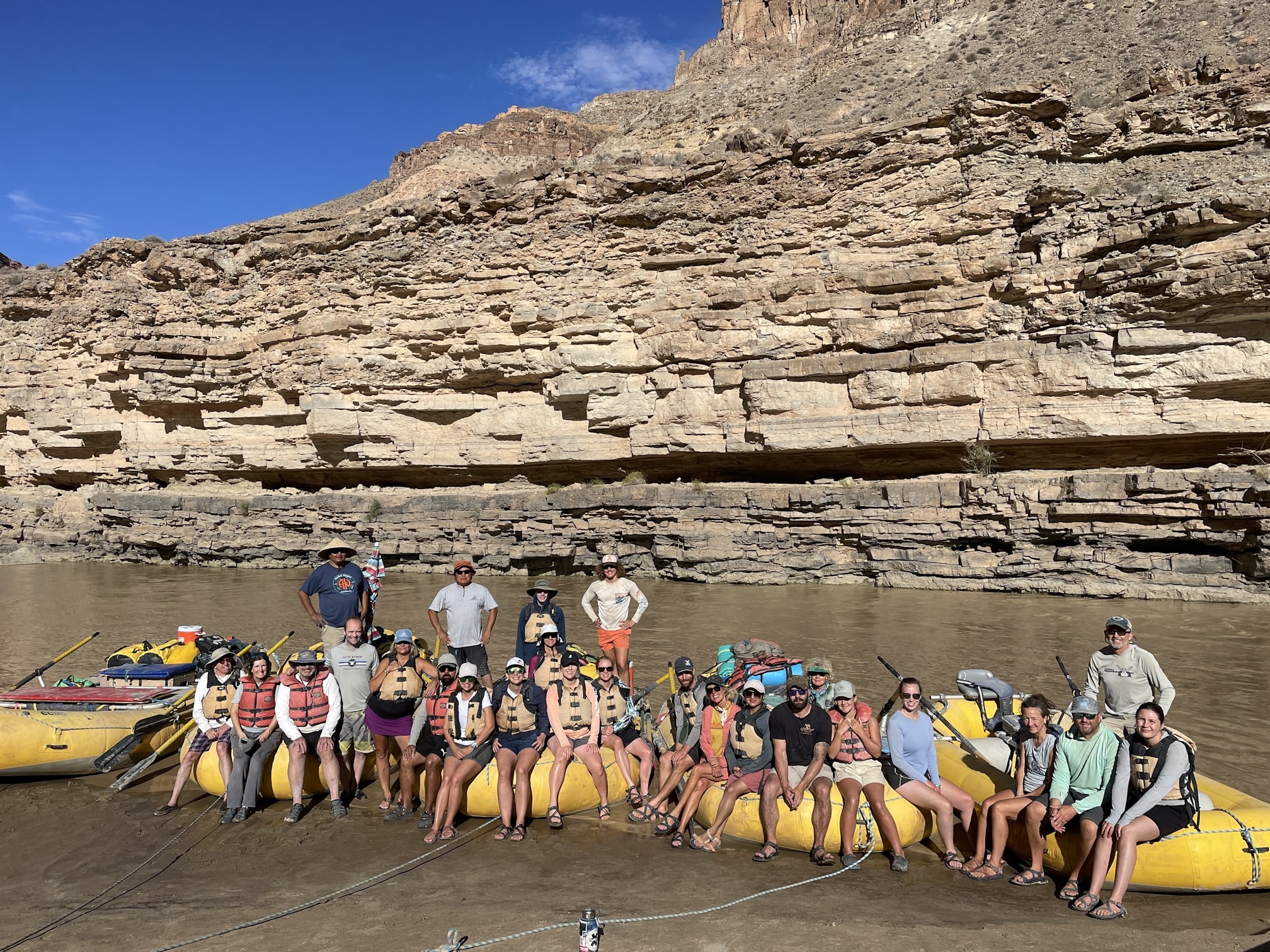
EBLS faculty during a learning retreat to the San Juan River. The rapids called “The Ledge” were located just upstream of this photo. Courtesy & © Joseph Kozlowski, Photographer
EBLS faculty during a learning retreat to the San Juan River. The rapids called “The Ledge” were located just upstream of this photo.
Courtesy & © Joseph Kozlowski, Photographer
On an Edith Bowen Laboratory School teacher professional development retreat last summer rafting the San Juan River, a specific experience made me question my instructional style. I was sitting in the front of what they call a Ducky – a tandem inflatable raft with the passenger in the front and the experienced rower in the rear – with a vibrant and tough 6th grader named Kylie captaining from the rear. Although Kylie was in the captain’s seat, she was not an experienced rower. In fact, she was just learning, and I, from the front, was trying to teach her a thing or two from my very limited knowledge of rowing.

As I sat in the Ducky giving instructions, I reflected on my own instructional style and wondered how I would teach something that I had never taught before? I found myself giving her little challenges like “Try to get the nose of the boat to run straight over that gurgling water boil!” I also found myself showering her with positive, and specific reinforcement such as “I loved the way you corrected the steering by giving a tiny left forward paddle!” However, it wasn’t until we prepared to head down a set of rock smashing rapids called The Ledge that I found the golden nugget of self-knowledge I had been looking for.

Dr. Eric Newell, our guide and true rowing expert on the trip, was leading a separate 16ft. inflatable raft ahead of us. He called us over and was preparing Kylie and I for the upcoming rapid. “Stay pretty close behind me and let me run the rapid first so you can see the line.” All was agreed upon and Dr. Newell expertly launched toward the rapid with Kylie close on his heels. When the rapid was nearly upon us, Dr. Newell shouted backwards from his boat, “Give us a little more space!” In response, I shouted two important phrases back to my own young captain “Slow down,” then without allowing her time to think or react, I yelled “Paddle backwards!”

And this is where I stop the story, for those two phrases ended up being the key to my learning. The first phrase “slow down” was an objective, a goal. It was a problem to be solved and a self-driven adventure to be had by Kylie. You see, Kylie could have made any number of right or wrong decisions in response to the phrase “Slow down!” She could have spun the boat and went upstream, she could have dragged her paddles, or she could have even jumped out of the boat and anchored. There is no knowing, and no absolute safety or certainty in what Kylie could have done in response to the phrase “Slow down!” The only certainty is that she would have had to think, trust herself, and make a decision. In contrast, the second phrase “Paddle backwards!” was a directive, an order. It was a command to be followed and a prescription to be obeyed. There was nothing for Kylie to critically think about in response to this order. She had but one option which was to take the paddle, thrust it into the water, and heave in a reverse direction.

Ultimately, it was the distinction between these two phrases “Slow down!” and “Paddle backwards!” that forced me to reflect on my own instructional style. Am I the type of teacher to challenge my students to think critically by offering open-ended environments that yes, can be risky, but ultimately unmeasurably powerful? Or, do I merely pose teacher-centered directives that precipitate little more critical thinking and decision making than a person on a raft, being told to ‘paddle backwards.’

This is Dr. Joseph Kozlowski, and I am Wild About Utah!
Credits:

Images: Courtesy & Copyright Joseph Kozlowski, Photographer, Used by Permission
Audio: Courtesy & © Friend Weller, https://upr.org/
Text:     Joseph Kozlowski, Edith Bowen Laboratory School, Utah State University https://edithbowen.usu.edu/
Additional Reading Links: Joseph Kozlowski & Lyle Bingham

Additional Reading:

Joseph (Joey) Kozlowski’s pieces on Wild About Utah: https://wildaboututah.org/author/joseph-kowlowski/

San Juan River, Utah Office of Tourism, https://www.visitutah.com/things-to-do/River-Rafting/San-Juan-River

Vignettes of a Utah Summer

Vignettes of a Utah SummerSun Backlit White Dandelion Courtesy Pixabay, Adina Voicu, Contributor https://pixabay.com/photos/dandelion-sun-backlighting-1557110/
Courtesy Pixabay, Adina Voicu, Contributor
Disclaimer
What you’re about to hear
Is the opinion of someone who really does care
I oscillate between an optimist
And a pessimist who doesn’t want his dreams to come true
Maybe you’re like me
But hopefully you’re like you

Now I may and often do complain, critique, and crack
But it’s because I want us all to do better
Leaders, followers, neighbors, you, and me
Better nice
Better good

However, with these benevolent intentions
I do freely admit to have a hidden top-secret cryptic agenda:
My hope that we don’t stop at better
But instead be our best
Best nicer
Best gooder

Impossible? No.
Improbable? We’ll see.

I have hope.

Adaptive Palate
The tomatoes ripen quicker
The peach leaves scorch deeper
The neighbor’s grass drinks more
And seeing all this it’s hard not to as well

Hot
Hot
Hot hot
Too hot
To hot

Ambition
Change isn’t a four-letter word
It’s at least five
Six even depending on how you spell it
Three if you know geometry
Unless you’re thinking about cash

July
I can’t hear through the firecrackers
The crickets,
the owls,
My thoughts,
the baby’s breathing

The dogs hide from the booms
The screaming town children joust with screaming Roman candles
Squires ready to blindly defend their k/nights

Baby
My wife and I, but mostly my wife
Honestly exclusively my wife
Had our first child in June
A daughter
Born this spring
Living through this summer
Her first

She’s seen the hottest days since records began
And not just her records
All of them
The hottest weeks
The hottest June
The hottest July
But she doesn’t complain about it necessarily

I do though
My wife does
The dogs do
Our friends do
Not all of our neighbors do
But a lot of them
OK maybe not a lot of them
But at least the ones we talk to
Some of those ones do
The rest are ready for the end
And engorge their lawns in the sun accordingly

While baby sleeps
While baby dreams
While baby has tummy time
While baby gets strong
While baby eats and eats and poops and eats
While baby grows
While baby slowly learns about the world she lives in

Cache Valley Desert
Personally, I can’t wait
Until Cache Valley is a desert
I want those early mornings just outside my door
Those cool desert mornings
When the snakes are in their dens
And the birds are working their plains
I’m ready for crepuscular adventures
Siestas
For the end of the era of turf
And for the beginning of the age of roadrunners
Meep meep!

Humble
Evaporation
Five whole feet
But where are all the pelicans

Four whole feet
But why is there still dust

Three whole feet
But shouldn’t it be more

Two whole feet
But where did it all go

One whole feet
But ten more are needed

But ten whole feet
Isn’t that impossible

It is with that attitude
So let’s change it
Change us
And work

I’m Patrick Kelly and I’m Wild About Utah

 
Credits:

Images: Courtesy Pixabay, Adina Voicu, Contributor https://pixabay.com/photos/dandelion-sun-backlighting-1557110/
Audio: Courtesy & © J. Chase, K.W. Baldwin and Anderson, Howe, Wakeman
Text:    Patrick Kelly, Stokes Nature Center, https://www.logannature.org

Additional Reading

Wild About Utah, Posts by Patrick Kelly

Stokes Nature Center, https://www.logannature.org/