Simple Suggestions for Kids in the Field

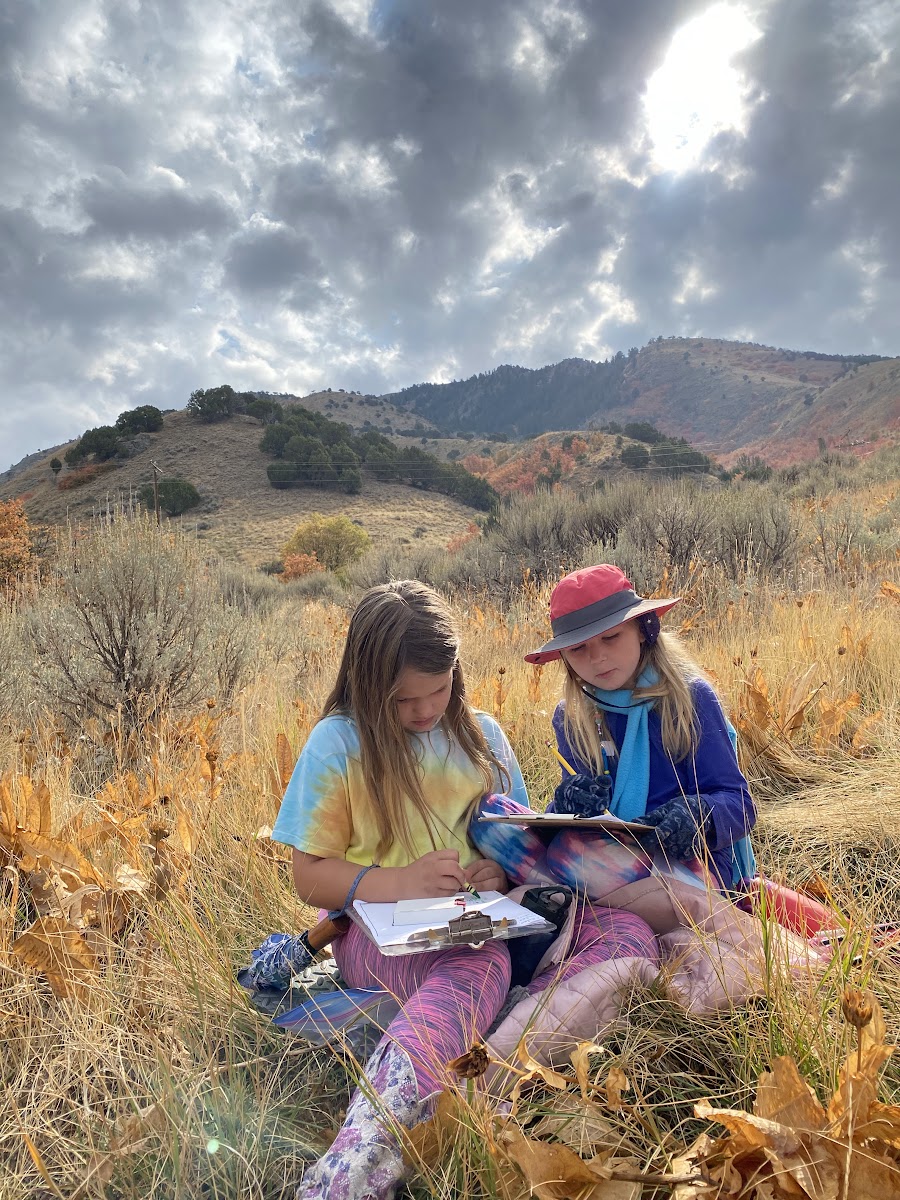
Stopping along a hillside to journal the foliage. Courtesy & Copyright Joseph Kozlowski Used with permission
Stopping along a hillside to journal the foliage.
Courtesy & Copyright Joseph Kozlowski
Used with permission

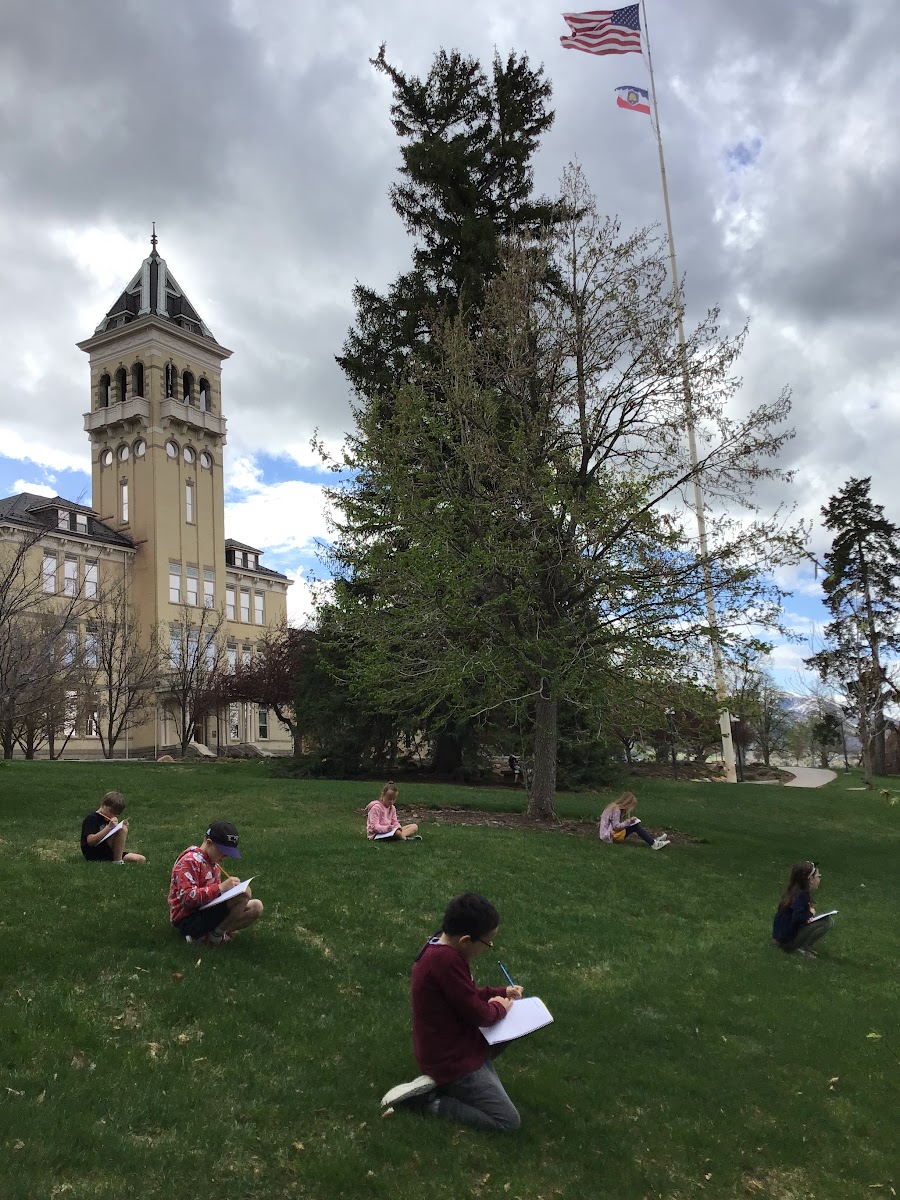
Journaling in Silence on Old Main Hill Courtesy & Copyright Joseph Kozlowski Used with permission Journaling in Silence on Old Main Hill
Courtesy & Copyright Joseph Kozlowski
Used with permission

Even a leaf can be full of wonder for a kid Courtesy & Copyright Joseph Kozlowski Used with permission Even a leaf can be full of wonder for a kid
Courtesy & Copyright Joseph Kozlowski
Used with permission

At USU’s Edith Bowen Laboratory School, we call outdoor experiences with intentionality on observing and learning from the world around us, field experiences. With your family, a field experience could be anything from a simple walk around the block to a multi-night camping trip to the vast, High Uintah Wilderness area. Whether you’re a teacher trying to implement an impactful field experience with your class, or a family, looking for something meaningful to do with your kids, I’d like to share three simple techniques I’ve found help kids make meaning from the world around them when they are in the field.

One technique I’ve found useful is to dedicate time to embrace quietness. In a world where it seems like everything is moving at supersonic speed, and distractions include any number of electronic gadgets, the field can be a rare opportunity to connect with quietness and stillness once again. Although I often use field experiences to buttress relationships with my students by casually talking to them as we navigate nature, I always make it a point to devote sacrosanct time to quietness, and just allow kids to observe and think. It is amazing to see what kids notice and wonder when encouraged to enter nature’s classroom of silence. On a brisk sunny morning last spring, while sitting in stillness on USU’s Old Main Hill, a 7-year-old student of mine wrote “The leaves on the trees rustle, the birds sing to me spring songs. The leaves are good, the birds are kind. All of nature is right.’

Another technique I’ve found useful is to focus on the journey, not the end goal. I’ve found that kids, unlike myself, care little about reaching any certain destination. Instead, they seem fascinated by parts of the journey that I easily overlook such as a creek bridge formed by a fallen tree, a rubbled pile of climbable boulders, or a mucky beaver pond with hopping ribbity critters. It can be easy to feel like 45 minutes of kids scrambling around on boulders and creeping through crevices formed by the rocks is a waste of time because you’re not making progress toward your goal, but don’t be dismayed! Even if you don’t get that perfect family photo at the scenic overlook you so hoped for, the kids won’t care, they’ll just remember being professional rock climbers and scraping their palms.

Lastly, I’ve found it important to appreciate childlike wonder. You may have seen enough deer scat in your life to fill your planting boxes 10 times, but your children may be fascinated by the little brown/black nuggets. They may wonder what they are from, which may lead to discussions about moose, elk, and deer! You may find kids start to pose questions that challenge your own adult knowledge, such as how to distinguish between deer and elk poop! One recommendation here is to demonstrate adult inquiry and unknowing. Instead of whipping out your smartphone and getting an answer from the ChatGPT genius, model what it looks like to make informed hypotheses yourself, and leave the question open until later that day, when you and your child can do some follow up investigation on the questions. Oh, and by the way, I learned from a Teton Science School instructor that if you think the questionable dark brown nugget shaped scat could easily fit in your nose, go with deer poop. If it looks like it’d be a tight squeeze, you’re probably dealing with elk. And, if you’re thinking to yourself “there is no way in the world I’m getting that thing up my nostril!” you’ve likely discovered some moose droppings!

So next time you are out in the field with kids, give these few little techniques a try and see if it brings a bit more intentionality and purposefulness to your time in the majestic Utah outdoors!

This is Dr. Joseph Kozlowski, and I am wild about outdoor education in Utah!
Credits:

Images: Courtesy & Copyright Joseph Kozlowski, Photographer, Used by Permission
Featured Audio: Courtesy & Copyright © Kevin Colver, https://wildstore.wildsanctuary.com/collections/special-collections/kevin-colver
Text:     Joseph Kozlowski, Edith Bowen Laboratory School, Utah State University https://edithbowen.usu.edu/
Additional Reading Links: Joseph Kozlowski & Lyle Bingham

Additional Reading:

Joseph (Joey) Kozlowski’s pieces on Wild About Utah:

Teton Science Schools, https://www.tetonscience.org/

Edith Bowen Laboratory School, https://cehs.usu.edu/edithbowen/

Rhodes, Shannon, I Notice, I Wonder, Wild About Utah, August 31, 2020, https://wildaboututah.org/i-notice-i-wonder/

Rhodes, Shannon, Wild About Nature Journaling, Wild About Utah, June 22, 2020, https://wildaboututah.org/wild-about-nature-journaling/

Mundane to Magical

Mundane to Magical: Whole Class at First Dam, Courtesy & Copyright Joseph Kozlowski, Photographer
Whole Class at First Dam
Courtesy & Copyright Joseph Kozlowski, Photographer

Using Binoculars to Look for Ducks, Courtesy & Copyright  Joseph Kozlowski, Photographer Using Binoculars to Look for Ducks
Courtesy & Copyright Joseph Kozlowski, Photographer

Spotting Scope with Image Transmitter, Courtesy & Copyright  Joseph Kozlowski, Photographer Spotting Scope with Image Transmitter
Courtesy & Copyright Joseph Kozlowski, Photographer

One aspect of experiential learning I love most is how it turns mundane encounters into magical experiences. How many times have your children walked by a pond full of ducks and geese without batting an eye, or shuffled their feet through fallen, Autumn leaves on their way to this or to that? I continue to be astonished by how much there is to appreciate and to learn from our surroundings, but we lend it a bit of our attention and wonder. It’s amazing to see how just a little preparatory investigation can turn fleeting everyday moments into lifelong learning memories.

My 2nd-grade class focuses on learning about birds. I don’t just mean we read a few books and discuss the basics of birds. I mean my students can replicate the sounds of at least 15 local birds, provide detailed descriptions of their body characteristics, and even provide information about their diet, habits, and behaviors. We’ve studied birds all year long, partnered with local bird organizations – Bridgerland Audubon Society, Bear River Migratory Bird Refuge –, been on numerous birding outings, and let’s just say are ALL IN on birding.

With the recent weather systems and cold fronts in Northern Utah, we’ve seen waterfowl migrations come alive; a perfect time to study that classification of birds with my students! Little did I, or my students, realize there was so much to learn about common waterfowl! Did you know some waterfowl dive for food and others dabble? Did you know about preening to keep waterproof, or special down feathers to keep warm? How about your knowledge on a Redhead Duck’s nest parasitism techniques? Well, my students learned about these things, and many more over the span of a few weeks. As a culminating event, we planned a field experience to Logan’s 1st Dam, a local and vibrantly busy park, which surrounds a small reservoir, and is about a 45-minute walk from our school’s front door. Many of my students have been to this park numerous times throughout their lives with their families. Needless to say, there is nothing novel about this location.

Armed with binoculars leant by the Bear River Migratory Bird Refuge, and a spotting scope with an image transmitter granted us by Bridgerland Audubon Society, students began to observe, count, and be astonished by what they saw. It was as if the students had never seen a Canada Goose or Mallard duck in their lives. Their background knowledge on these birds brought to life the mundane place they were experiencing, as kids shouted “Look, it’s dabbling!” or “I saw 15 drakes and 19 hens, that’s 34 total!” or “I bet that Redhead is trying to find someone else’s nest to lay her eggs!” The point here is that, with proper prior investigation and attention to details of place, a mundane park can become a treasured location for observing, questioning, and astonishment. What are some mundane experiences around you that could become inspiring and magical learning opportunities?

This is Dr. Joseph Kozlowski, and I am Wild about Outdoor Education in Utah!
Credits:

Images: Courtesy & Copyright Joseph Kozlowski, Photographer, Used by Permission
Featured Audio: Courtesy & Copyright © Kevin Colver, https://wildstore.wildsanctuary.com/collections/special-collections/kevin-colver
Text:     Joseph Kozlowski, Edith Bowen Laboratory School, Utah State University https://edithbowen.usu.edu/
Additional Reading Links: Joseph Kozlowski & Lyle Bingham

Additional Reading:

Joseph (Joey) Kozlowski’s pieces on Wild About Utah:

Rosenberg, Ken, Choosing a Spotting Scope, All About Birds, Cornell Lab of Ornithology, 2008, https://www.allaboutbirds.org/news/scope-quest-2008-our-review-of-spotting-scopes/?pid=1039

How To Choose Binoculars: Our Testing Tips, All About Birds, Cornell Lab of Ornithology, Updated December 4, 2022, https://www.allaboutbirds.org/news/six-steps-to-choosing-a-pair-of-binoculars-youll-love/

Free K-12 Lessons Open Doors for Kids to Explore Nature and Science, Cornell Lab Annual Report 2023, Cornell Lab of Ornithology, Updated December 4, 2022, https://www.birds.cornell.edu/home/free-k-12-lessons-open-doors-for-kids-to-explore-nature-and-science/

Learning Through Birding

Students with Binoculars Courtesy & Copyright Joseph Kozlowski, Photographer
Students with Binoculars
Courtesy & Copyright Joseph Kozlowski, Photographer

Student Journal Pages Courtesy & Copyright Joseph Kozlowski, Photographer Student Journal Pages
Courtesy & Copyright Joseph Kozlowski, Photographer

I’m a fledgling birder, with a less-than-soaring Life List. However, after being inspired this summer by the amazing new Merlin App my dad and brother introduced me to, I wanted to learn more. When preparing to start another year teaching 2nd-grade at USU’s Edith Bowen Laboratory School, I decided to integrate birding into my curriculum. I knew that studying birds could be as simple or as complex as I desired, which seemed perfect to help all my students make learning gains and make special discoveries throughout the year.

I reached out to Hilary and Jack, who are local experts and members of the Bridgerland Audubon Society. They were happy to meet with me, give me resources, and help me brainstorm ways to make the world of birding come to life for my students. However, the fun really started when I kicked off everything in my classroom. There was immediate buy in from my students, and as soon as 25 bright eyed 2nd-graders were screeching the “CONK-LA-REEEE” of a Red-Winged Blackbird, I knew I was hooked as well.

My sequence of instruction, which usually lasts about a week per bird, starts by utilizing AI technologies and The Cornell Lab’s comprehensive birding website to develop an informational and narrative passage about a specific bird, which is used to address language arts standards. After this, students create a writing piece about the bird, which sometimes is informational, but sometimes is a creative piece that incorporates characteristics or habits of the bird. We incorporate mathematics in meaningful, context-based ways that has some relationship to the bird. For example, our class learned that Black-Capped Chickadees can remember over 1,000 seed hiding places! Therefore, students created and solved a fun math problem: “If a Black-Capped Chickadee had 1,000 seeds hidden, and during the winter ate 20 seeds a day, how many days can she eat until her seeds have run out?” Finally, each student makes a single page on that specific bird that goes in their journal. Each page requires the student to draw a picture of the bird, label three distinguishing parts, create an onomatope for the sound, and write two interesting facts about the birds.

To bring the birding knowledge to life, we developed multiple field experiences aimed at observing birds and identifying them. So far, kids have found the Black-Capped Chickadee, Red-Winged Blackbird, Townsend’s Solitaire, and Red-Breasted Nuthatch. These birding experiences give students a new sense of purpose and intentionality in the field. We recently went to King’s Nature Park in North Logan’s Green Canyon where they made discoveries with their eyes, ears, and even binoculars! As we trudged up a slope, one kid glanced to the side of the trail and noticed bundles of small, blueish/purplish Juniper Berries clung to their host, and, recalling a fact they had read in class, announced “Look, Juniper berries! I bet this will be a great place to see a Townsend’s Solitaire because I know they love to eat these!” These kinds of connections are what every teacher hopes for, and I am grateful to be flying on this learning journey right alongside my students.

This is Dr. Joseph Kozlowski, and I am Wild about Outdoor Education in Utah!

Credits:

Images: Courtesy & Copyright Joseph Kozlowski, Photographer, Used by Permission
Featured Audio: Courtesy & Copyright © Kevin Colver, https://wildstore.wildsanctuary.com/collections/special-collections/kevin-colver
Text:     Joseph Kozlowski, Edith Bowen Laboratory School, Utah State University https://edithbowen.usu.edu/
Additional Reading Links: Joseph Kozlowski & Lyle Bingham

Additional Reading:

Joseph (Joey) Kozlowski’s pieces on Wild About Utah: https://wildaboututah.org/author/joseph-kowlowski/

Rhodes, Shannon, Wild About Nature Journaling, Wild About Utah, June 22, 2020, https://wildaboututah.org/wild-about-nature-journaling/

Identify the birds you see or hear with Merlin Bird ID, Merlin App Download, Cornell Lab of Ornithology, https://merlin.allaboutbirds.org/

Cattail and Teasel

Cattail and Teasel: Josie's Nature Log Page. Used by Permission. Photo Copyright Shannon Rhodes, Photographer
Josie’s Nature Log Page
Used by Permission
Photo Copyright Shannon Rhodes, Photographer

Teasel in Bloom with Bumble Bee Photo Courtesy & Copyright Shannon Rhodes, Photographer Teasel in Bloom with Bumble Bee
Photo Courtesy & Copyright Shannon Rhodes, Photographer

Cattail and Teasel in Bloom Photo Courtesy & Copyright Shannon Rhodes, Photographer Cattail and Teasel in Bloom
Photo Courtesy & Copyright Shannon Rhodes, Photographer

Dried Teasel Photo Courtesy & Copyright Shannon Rhodes, Photographer Dried Teasel
Photo Courtesy & Copyright Shannon Rhodes, Photographer

For many, this is the season transition between summer and back to school. This month, along with the generous gifts of caramel apples, whiteboard markers, and number 2 pencils, a child handed me a green notebook and a request. One of the greatest compliments a teacher could possibly receive, in my opinion, from a student having never been on any of my class lists, is an invitation to make a writing dialogue journal, a pen pal exchange with no grades or due dates attached. Today her entry concludes with, “Also I drew a picture of you and me in pencil.” I withdraw from the notebook’s back flap a flattering illustration of flowers, smiles, and sun rays, grab my colored pencils, and head outside to write.

Terry Tempest Williams honors a similar marshy invitation, begging us to enter the wonders of the wetlands, in her book “Between Cattails” with exquisite Peter Parnall illustrations. Amid snails and scuds, damselflies and waterlilies, red-winged blackbirds and mosquito tumblers, I am drawn to the familiar cattails. Having just spent some lazy summer days reading Robin Wall Kimmerer’s “Braiding Sweetgrass: Indigenous Wisdom, Scientific Knowledge, and the Teachings of Plants,” I now know that one can appreciate a cattail for its cucumber-tasting pith and protein-packed pollen, its gel that can soothe sunburns, and its fluff that can be used as tinder to light a fire or as soft yet absorbent layers in bedding. She taught me that “one of the words for cattail in the Potawatomi language …. means ‘we wrap the baby in it.’” When she takes students outside, she lets the plants teach them.

Many children I teach can identify cattails, but as I take my Josie journal out to the marsh to compose my writing response, I find another familiar plant that I cannot name. Quickly I realize that it has pale purple flowers; I don’t think I’ve ever seen it in any color other than brown. Once again I find how unaware I have been, and a simple plant guide check reveals the name Dipsacus fullonum, or common teasel. It is an invasive tall plant with a spiky thistle-like flower head and more spiky spears growing up around it. Small dense flowers, from 250 to over a thousand of them, each blossom for only one day. I had only ever noticed it after its biennial life cycle: flowering, dying, then persisting as a dried stem and flower head the next season. Dipsacus comes from a Greek word meaning “thirst,” referring to the leaf cups at the stalk that collect rainwater and catch insects. Sometimes listed as noxious species, this non-native plant was brought from Europe and valued for teasing wool. Today I see bees are drawn to them, and next year finches and other seed-loving birds will visit.

Turning her drawing into my nature journal for this day’s outing, I add my plant perspective. I add some silver to the brown in my teasel-y hair and purple flowers to her shirt. She wrote that “writing makes me feel in my element” and when I take writing outside and really take time to notice the details, I couldn’t agree more.

I’m Shannon Rhodes, and I am wild about Utah.

Credits:

Images: Courtesy & Copyright Shannon Rhodes, Photographer
Nature journal entry used with permission from Josie Dorsch and her parent Breanna Studenka, All Rights Reserved
Audio: Crickets Courtesy & © Friend Weller, https://upr.org/
    Birds: Courtesy & © Kevin Colver https://wildstore.wildsanctuary.com/collections/special-collections
Text: Shannon Rhodes, Edith Bowen Laboratory School, Utah State University https://edithbowen.usu.edu/
Additional Reading Links: Shannon Rhodes

Additional Reading:

Wild About Utah Pieces by Shannon Rhodes, https://wildaboututah.org/author/shannon-rhodes/

iNaturalist. Wild Teasel. https://www.inaturalist.org/taxa/56002-Dipsacus-fullonum

Kimmerer, Robin Wall. Braiding Sweetgrass: Indigenous Wisdom, Scientific Knowledge, and the Teachings of Plants. 2013. https://www.robinwallkimmerer.com/

National Park Service. Exotic Species: Common Teasel. https://www.nps.gov/articles/common-teasel.htm

Tilley, Derek. Commonly Occurring Wetland Plant Species for Idaho and Utah NRCS Wetlands Delineators. March 2019. https://www.nrcs.usda.gov/plantmaterials/idpmctn13441.pdf

U.S. Department of Agriculture. Common Teasel. https://www.invasivespeciesinfo.gov/terrestrial/plants/common-teasel

Williams, Terry Tempest. Between Cattails. New York: Charles Scribner’s Sons. 1985. https://www.terrytempestwilliams.com/