Gardening for Hummingbirds

Gardening for Hummingbirds

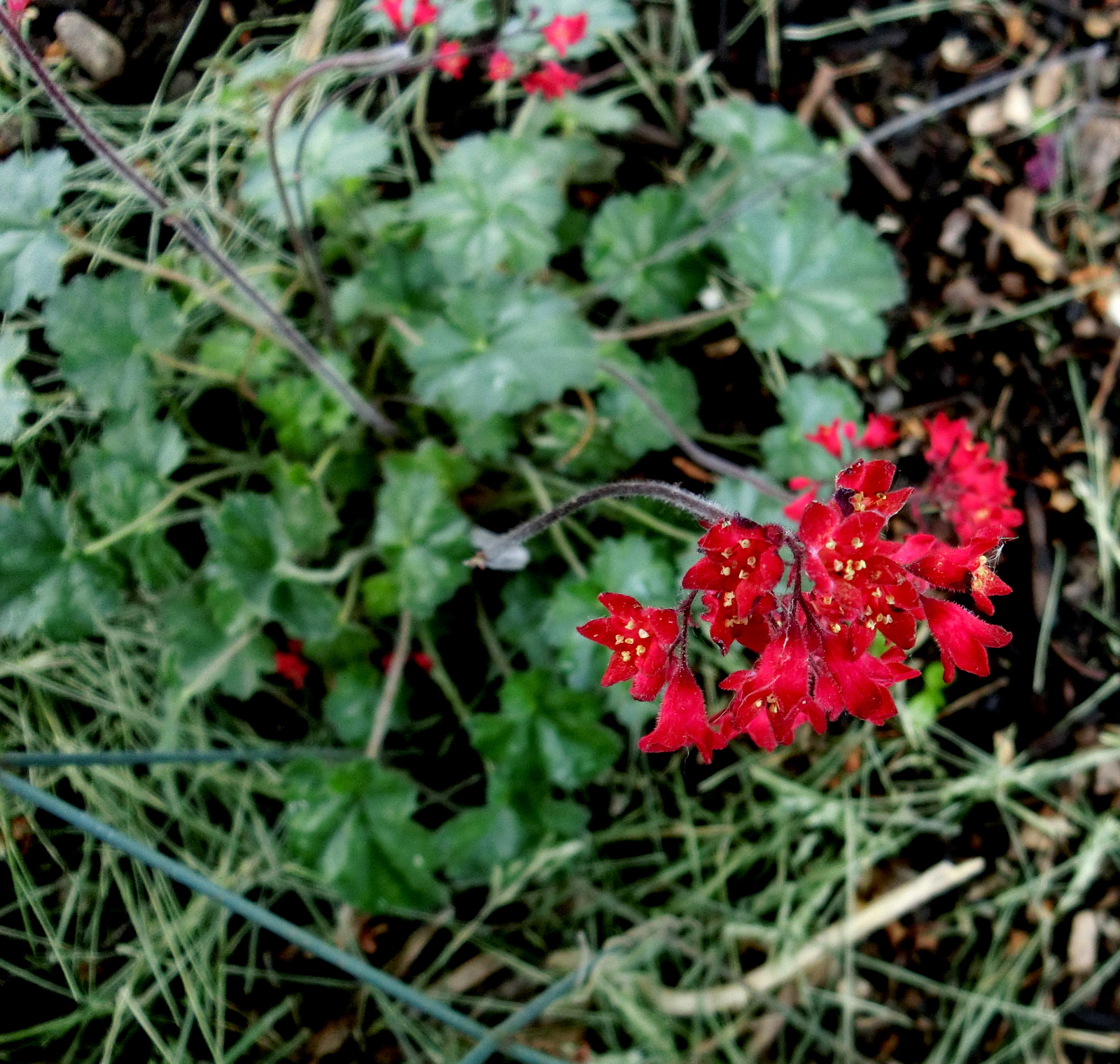
Gardening for Hummingbirds: Heuchera, hummingbird host. Courtesy and copyright Jim Cane, Photographer
Huechera
Courtesy & © Jim Cane, Photographer

 
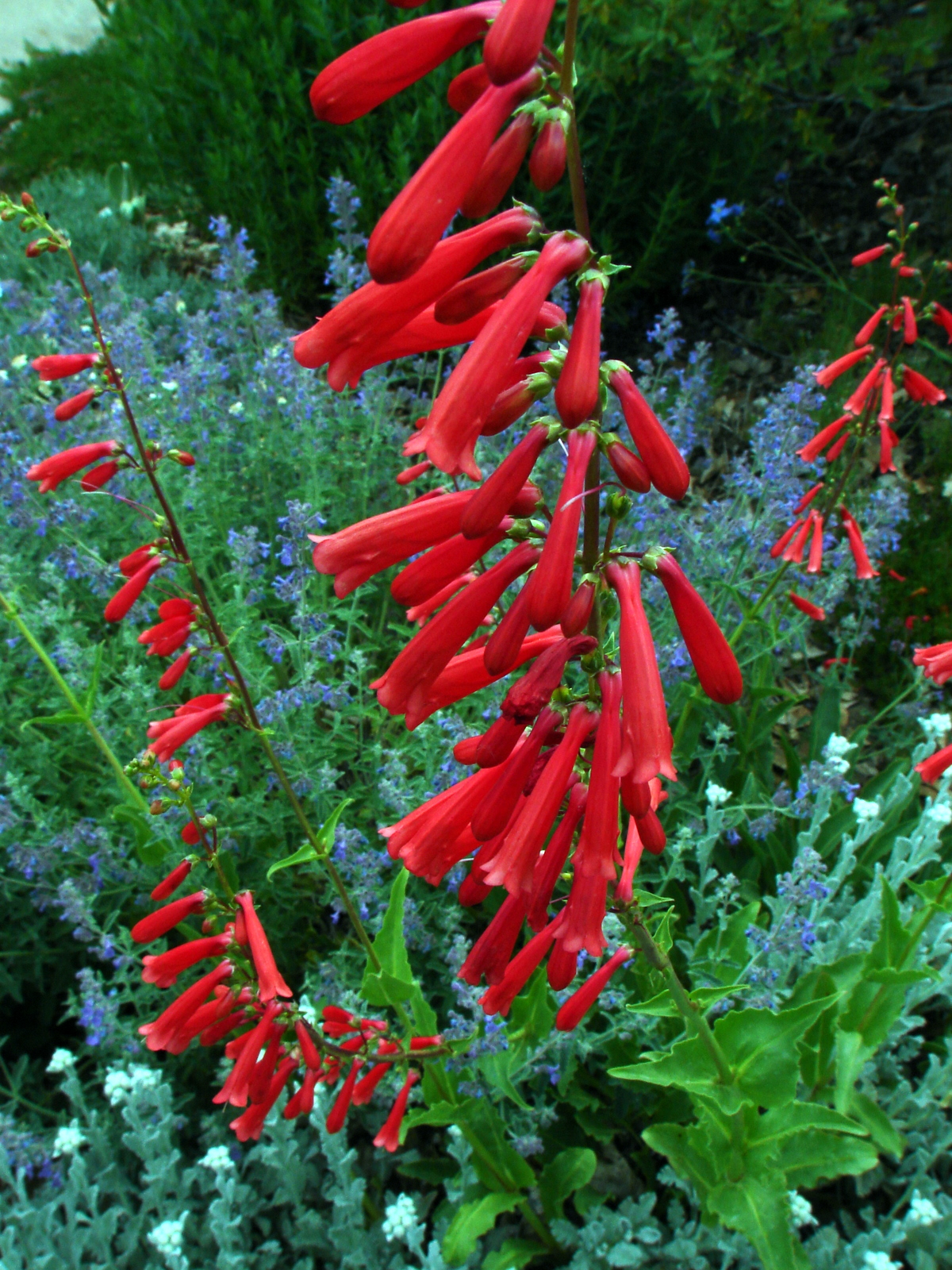
Gardening for Hummingbirds: Penstemon hummingbird host Courtesy & © Jim Cane, PhotographerPenstemon eatonii
Courtesy & © Jim Cane, Photographer

 
At long last, summer has returned as have the hummingbirds who zip around my garden, visiting flowers and chasing off intruders. (Kevin Colver: Songbirds of Rocky Mountain Foothills. Broad-tailed Hummingbird) Hummingbirds are a delight in the yard and so we plant flowers specifically to attract and feed them. In general, hummingbirds prefer long tubular flowers especially those that are red, orange or violet. But not all these flowers are created equally.Gardening for Hummingbirds

Hummingbirds visit flowers for their nectar which fuels their flight. Their long tongue reaches well beyond the tip of their needle like bill when they lap up nectar; capillary action then draws the sweet liquid up tiny grooves along the length of the tongue.

Floral nectar evolved to attract potential pollinators. The floral nectary is generally found inside the flower, at the base. When probing for nectar, floral visitors brush by the reproductive structures. Pollen adheres to parts of their body and then at the next flower of the same species, some pollen sticks to the female stigma. This transfer is pollination.

Many nectar-rich flowers grow well in Utah gardens. In the xeric garden, Penstemons are a good choice, as are Red Hot Pokers and Zauschneria, sometimes called Hummingbird Trumpet. In more moist sites, red flowered Heuchera is popular. Some red flowered cacti and Trumpet Creeper are good choices, as are Agastache and many Salvias.

Watch which flowers hummers visit. They will check out many blooms, but the ones they routinely return to are the ones yielding generous nectar. Many flowers produce little or no nectar, including some that look to us like good hummingbird flowers. Also, many horticultural hybrids and doubled flowers produce paltry amounts of nectar.

To encourage hummingbirds to remain in your garden, you can grow trees and shrubs for cover. Nectar is only part of their diet. For protein, they regularly eat insects and spiders small enough for their tiny bill so a garden free of insects is not desirable. They also appreciate a place to perch where they can digest, wait for a tasty insect to fly by and keep an eye out for potential rivals. So grab your trowel and lets feed those hummers.(Kevin Cover: Songbirds of Rocky Mountain Foothills. Broad-tailed Hummingbird)

This is Linda Kervin for Bridgerland Audubon Society.

Credits:

Images: Courtesy and Copyright Jim Cane, Photographer
Theme: Courtesy & Copyright Don Anderson as performed by Leaping Lulu
Text & Voice: Linda Kervin, Bridgerland Audubon Society

Additional Reading:

Linda Kervin’s pieces on Wild About Utah

Hummingbirds and How to Attract Them, Washington Department of Fish & Wildlife, https://wdfw.wa.gov/living/hummingbirds/

Hummingbirds 101, The Hummingbird Society, https://www.hummingbirdsociety.org/hummingbirds-101/

Coro Arizmendi Arriaga, Maria del, Hummingbirds of
Mexico and North America, In Spanish and English, CONABIO, 2014, https://www.biodiversidad.gob.mx/Difusion/pdf/colibries_mexico_y_norteamerica.pdf

Gardening for Hummingbirds

Grow Native!

Fire Chalice, Courtesy & Copyright 2010 Annalisa Paul, Stokes Nature Center https://www.logannature.org/
Fire ChaliceCopyright 2010 Annalisa Paul
Stokes Nature Center

With the beginning of summer at our doorstep, many of us look out over our green grass yards and dread the coming heat that will endeavor to turn it brown and stale. One might begin to ponder if there is an alternative to these plants that fill our yards and demand so much of our water. In fact, there is.

Utah may be a desert, but not one naturally devoid of vegetation. Many plants have evolved to live within the bounds of the climate, insect pests, microbes and soil types specific to our region. Once established, many native plants need minimal irrigation beyond normal rainfall. And because they have coexisted for eons, natives have developed their own defenses against many pests and diseases, resulting in minimal pesticide use.

Backyards, gardens, parks, and roadsides planted with native plants also provide wildlife with a “bridge” to the natural areas that remain, interspersed among our heavily developed communities. As the cornerstone of biological diversity, native plants also do the best job of providing food and shelter for our local animals. Ready to get planting? Here are two natives that would be easy, attractive, and low-maintenance additions to many Utah yards or gardens.

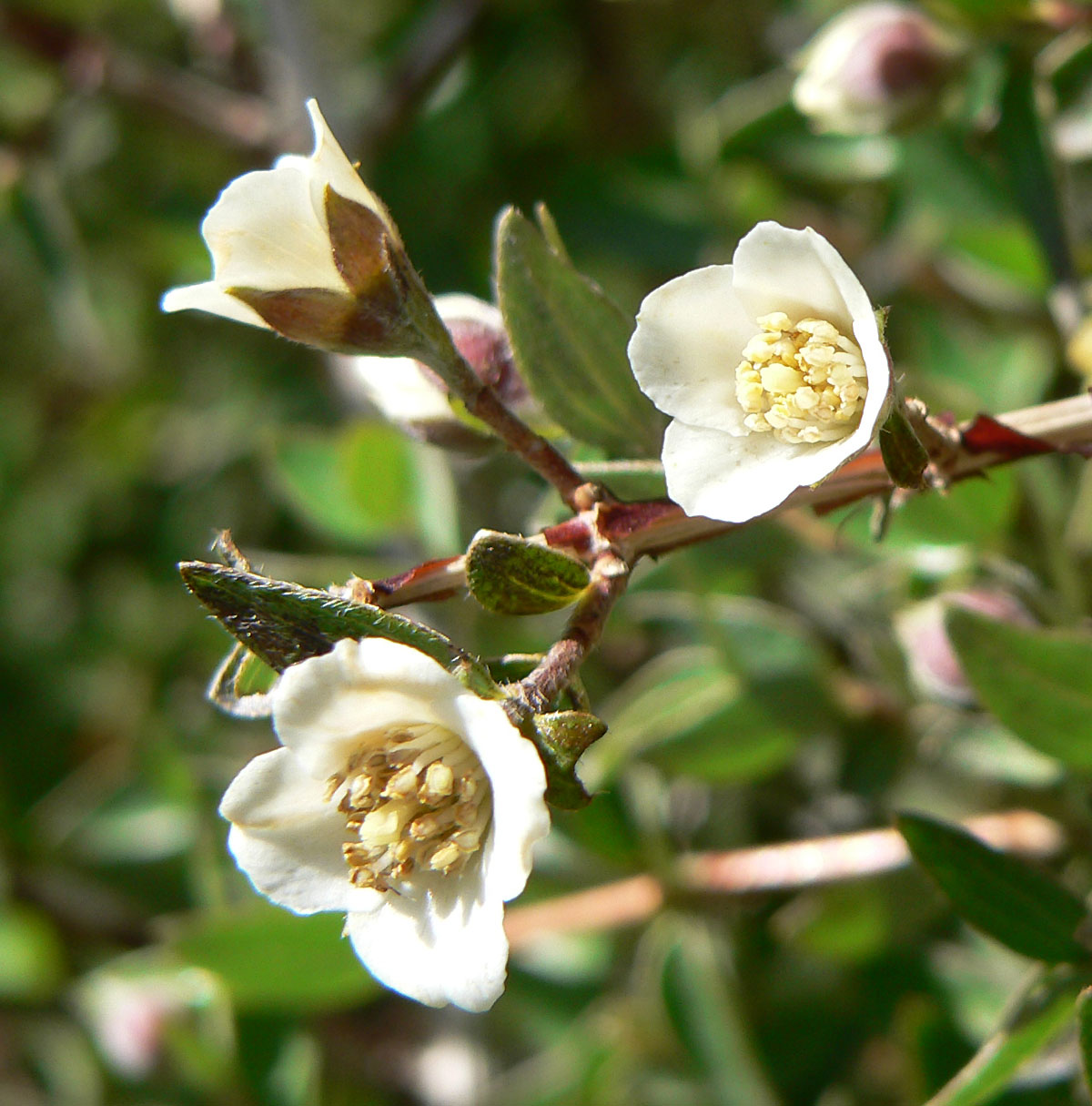
Littleleaf Mock Orange is a compact shrub which produces clusters of wonderfully fragrant white blossoms. In the wilds of Utah, it is often found growing in rock crevices and dry, gravelly areas, so it will likely do well in those bare, difficult parts of your yard. It is browsed by mule deer and also provides shelter for native birds.

Little leaf Mock Orange, Philadelphus microphyllus, licensed under the Creative Commons Attribution-Share Alike 3.0 Unported license. Photographer: Stan Shebs
Little leaf Mock Orange
Philadelphus microphyllus
Image licensed under the Creative Commons Attribution-Share Alike 3.0 Unported license.
Photographer: Stan Shebs

Fire Chalice, alternately known as hummingbird flower, is a low-profile plant with bright red tube-shaped flowers. The plant’s nectar is irresistible to hummingbirds and can help attract a number of native pollinators to your yard.

As with all plants, the right native must be matched with the right spot. Thankfully, there are native plants that thrive in every habitat imaginable. And the best thing is, natives include all different types of plants from mosses and ferns to wildflowers, shrubs and trees. A little bit of research should help you find the best species for your hot, dry slope, that wet swale in the back, or the dry shade under your trees.

For the Stokes Nature Center and Wild About Utah, this is Andrea Liberatore.

Credits:

Photos: Courtesy & Copyright Annalisa Paul, Stokes Nature Center, logannature.org
Courtesy & Copyright: Intermountain Native Plant Growers Association, inpga.org
Little leaf Mock Orange image licensed under the
Creative Commons Attribution-Share Alike 3.0 Unported license. Photographer: Stan Shebs
Text:    Andrea Liberatore, Stokes Nature Center, logannature.org
For more information about the upcoming Alternascapes Garden Tour:
Cache Master Gardeners, Alternascapes Garden Tour, Saturday, Jun 25 – 11:00AM to 4:00PM, https://extension.usu.edu/cache/files/uploads/Alterniscapes%20Handout%20Bi-fold%20for%20Web.pdf

For more information about Utah’s native plants:

Utah Native Plant Society: https://www.unps.org

Utah Master Gardeners: https://extension.usu.edu/mastergardener/
Additional Reading:

United States Department of Agriculture, Plants Profile: Littleleaf Mock Orange. Found online at: https://plants.usda.gov/java/profile?symbol=PHMI4

United States Department of Agriculture, Plants Profile: Garrett’s Fire Chalice. Found online at: https://plants.usda.gov/java/profile?symbol=EPCAG


Trouble with Tumbleweeds

Tumbleweed in Marsh, Courtesy and Copyright Anna Bengston
Tumbleweed in Marsh
Courtesy & Copyright Anna Bengston

Immortalized on the sets of old western movies, the tumbleweed has long been a classic symbol of the rugged, wide-open landscapes of the American West.  As a result, we can all easily recognize the spherical skeletons when we come across them caught on underbrush or piled up on fence lines here in Utah.  But this archetype is not an accurate representation of typical western United States or Utah flora, because tumbleweed– or Russian thistle –is an invasive weed.

The story begins in the late 19th century, when South Dakotan farmers reported seeing an unknown plant growing in their croplands.  Years later, it was identified as Russian thistle, scientific name Salsola tragus, a native plant of Russia and the Eurasian steppes east of the Ural Mountains.  It had been accidentally brought to the United States in a shipment of flaxseed.  By the time the U.S. Department of Agriculture published its inquiry into the plant in 1894, about 20 years after the plant’s introduction, 35,000 square miles of land had become “more or less covered” in Russian thistle.  Since that time the plant has spread into every state except Florida and Alaska.

So what is the problem?  Russian thistle, despite the nostalgic connotations of the old west it inspires, is a pest.  It easily takes root in disturbed or bare ground, moving in before native species are able to establish.  Drought conditions like those we have had in recent years only promote the plant’s proliferation.  The dryness hinders the growth of crops and native species, while the Salsola seed requires very little moisture in order to germinate and grows in where the crops and native species otherwise would have.  This can have deleterious effects on cropland and natural ecological functioning. Not to mention the wildfire risk the dry plant debris poses.

Salsola’s sheer numbers have also turned into more than just a nuisance.  Each plant may bear some 250,000 seeds that can be spread across miles as they drop off the rolling tumbleweed.  Consequently, we see images like those from Colorado earlier this year depicting piles of tumbleweeds filling streets, covering cars, and climbing the walls of houses.  In one instance, a windstorm clogged a town in New Mexico with 435 tons of the weed.

Utahns have yet to experience the full effects of this plant’s troublesome nature, but this does not mean we are immune; Russian thistle has been reported in every county of the state.  Luckily, for those fighting this plant’s advance, technology and research are on our side.  Several biological control options– from insects to fungal pathogens –are being tested as methods of natural Salsola population suppression with encouraging results.  But, all in all the management principles have not changed much since 1894: prevent the production and dispersal of seed across all infested areas.

For Wild About Utah, I’m Anna Bengtson.

Credits:
Image: Courtesy and Copyright Anna Bengston
Text: Anna Bengston

Sources & Additional Reading:

Banda, S. (2014, April 9). Tumbleweed troubles: Colorado drought creates perfect storm for road-clogging weeds. . US News. Retrieved May 2, 2014, from https://www.usnews.com/news/us/articles/2014/04/09/colorado-tumbleweeds-overrun-drought-areas

Coffman, K. (2014, March 27). Tumbleweeds plague drought-stricken American West.Reuters. Retrieved May 2, 2014, from https://www.reuters.com/article/2014/03/27/us-usa-tumbleweeds-idUSBREA2Q14E20140327

Dewey, L. (1894). The Russian thistle : its history as a weed in the United States, with an account of the means available for its eradication. U.S. Department of Agriculture, Division of Botany, Washington: Government Printing Office. Retrieved May 2, 2014, from https://archive.org/stream/russianthistleit15dewe#page/n5/mode/2up

EDDMapS. 2014. Early Detection & Distribution Mapping System. The University of Georgia – Center for Invasive Species and Ecosystem Health. Available online at https://www.eddmaps.org/; last accessed May 1, 2014.

Gilman, S. (2014, February 11). Troubleweeds: Russian thistle buries roads and homes in southeastern Colorado. . — High Country News. Retrieved May 2, 2014, from https://www.hcn.org/blogs/goat/troubleweeds-russian-thistle-buries-roads-and-homes-in-southeastern-colorado

Gilman, S. (2014, March 17). A plague of tumbleweeds: A handy pamphlet on how to dig out from a tumbleweed takeover of sci-fi proportions. . — High Country News. Retrieved May 2, 2014, from https://www.hcn.org/issues/46.5/a-plague-of-tumbleweeds

Main, D. (2011, March 2). Consider the tumbleweed. » Scienceline. Retrieved May 2, 2014, from https://scienceline.org/2011/03/virtues-of-a-weed/

Mazza, E. (2014, April 9). Tumbleweeds Reclaim West Amid Drought, Blocking Roads And Canals. The Huffington Post. Retrieved May 2, 2014, from https://www.huffingtonpost.com/2014/04/09/tumbleweeds_n_5115734.html

Ostlind, E. (2011, March 9). Tumbling along. — High Country News. Retrieved May 2, 2014, from https://www.hcn.org/blogs/goat/tumbling-along

Ostlind, E. (2001, May 20). It may be High Noon for tumbleweed. — High Country News. Retrieved May 2, 2014, from https://www.hcn.org/wotr/it-may-be-high-noon-for-tumbleweed

Russian Thistle (Salsola tragus). (n.d.). Russian Thistle (Salsola tragus). Retrieved May 2, 2014, from https://www.blm.gov/ca/st/en/fo/hollister/noxious_weeds/nox_weeds_list/russianthistle.html

USDA, NRCS. 2014. The PLANTS Database (https://plants.usda.gov, 8 May 2014). National Plant Data Team, Greensboro, NC 27401-4901 USA.

Medusahead Rye

Medusahead Rye Infestation
Courtesy and
Copyright © Steve Dewey

Flower
Courtesy and
Copyright © Steve Dewey

Plant
Courtesy and
Copyright © Steve Dewey

Weedy plants of old world origin threaten natural areas throughout the United States. An invading plant colonizing a completely new area often lacks the insects, diseases and herbivores that kept it in check back in its native homeland. If the introduced plant grows and spreads vigorously, it can spell disaster for the native inhabitants of its new home. With no natural controls in place, it may outcompete native plants and greatly diminish biodiversity. Disturbed or degraded habitats are most susceptible to invasion by Eurasian weeds.

Utah hosts many invasive weeds causing problems throughout the state. One Eurasian grass threatening sagebrush habitat and rangeland is medusahead rye. Medusahead rye probably came to the United States as a seed contaminant in the 1880’s. The seed head is heavy, so on its own, cannot spread far. But the seeds do have a ticket for dispersal: tufted hairs which cling and readily attach to livestock and vehicles. Once on site, medusahead grows vigorously, crowding out other plants.

Medusahead tissue contains abundant silica which slows its decomposition. The accumulation of dead material forms a dense thatch that smothers other plants. This dry thatch layer can also fuel wildfires. In addition, the gritty silica makes medusahead unpalatable, so both domestic and wild grazing animals avoid eating it. Infested ranches can lose 3/4 of their grazing capacity.

Sage grouse are already in trouble due to habitat loss, and medusahead has invaded more than 10 million acres of the sage brush that sage grouse call home. Once invaded by medusahead, sagebrush habitat is very difficult to restore. The best hope is to prevent or at least hinder its spread through management using controlled burns, herbicides and careful grazing. Non-native, invasive plants are among the most serious threats to our natural world and the habitats and species we know and love.

This is Linda Kervin for Bridgerland Audubon Society.

Credits:

Images: Courtesy Steve Dewey & www.invasive.org
Center for Invasive Species and Ecosystem Health, University of Georgia
Theme: Courtesy & Copyright Don Anderson as performed by Leaping Lulu
Text & Voice: Linda Kervin, Bridgerland Audubon Society

Additional Reading:

Linda Kervin’s pieces on Wild About Utah

The United States National Arboretum. formerly https://www.usna.usda.gov/Gardens/invasives.html

National Invasive Species Information Center. https://www.invasivespeciesinfo.gov/plants/medusahead.shtml

Forest Service Employees for Environmental Ethics. https://www.fseee.org/component/content/article/1002329

Utah State University Cooperative Extension. https://extension.usu.edu/cache/files/uploads/Medusahead%202-10.pdf