Algae and Moss

Filamentous algae growing in the Colorado River near Lee’s Ferry. Copyright 2011 Wayne Wurtsbaugh, Photographer
Filamentous algae growing in the Colorado River near Lee’s Ferry
Copyright 2011
Wayne Wurtsbaugh, Photographer

Tortula ruralis is one of the few mosses that are common in the desert. Licensed through Wikimedia, Kristian Peters, PhotographerTortula ruralis
one of the few mosses
that are common in the desert
Courtesy Wikimedia
Licensed under CCA 3.0
Kristian Peters, Photographer

Hi, I’m Holly Strand from Utah State University’s Quinney College of Natural Resources.

Algae and moss are plentiful in and around Utah streams and lakes. But lots of people confuse these two kinds of plants. So let’s sort out what each one is.

First, both moss and algae are ancient plant forms that are commonly found in wet or moist places. As primary producers both algae and moss use sunlight to fix energy, giving off oxygen as a byproduct.

Neither algae nor moss has a vascular system to transport water so vertical growth is not their strong suit. Rarely more than an inch tall, a cushion of moss is really a tight cluster of individual moss plants. Bunching helps support the individual moss structures and helps conserve water. Meanwhile, algae comes in many forms, from microscopic one-celled diatoms to huge colonies of giant floating mats, or long flowing filaments. Algae also comes in many colors, such as green, gold, brown and red.

So where are they found? Moss loves shade. Look for it in the deep shadowy gorges and box canyons of the Colorado and Green Rivers. It also thrives in drainages off cliffs and around springs. Damp meadows, tree bases, bogs, and pond edges make great moss habitat. You will seldom find moss in saline environments. Some moss species live submerged in water but most live on land. With the sun-loving algae, the opposite is true—most live in water but some species will grow on damp soil and on the shaded sides of damp walls and trees.

Moss grows very slowly and lives a long time. So it needs a stable environment in which to grow. In contrast, algae is extremely fast-growing. A generation might last from one to several days. Algae is also extremely sensitivity to chemical, temperature and light conditions. Therefore, the presence, absence or quantity of algal species can be a useful indicator of ecosystem health. For instance, your aquatic system is probably in pretty good shape if a number of different species are flourishing. However, if the water is dominated by one or just a few fast growing species and the water starts to turn color—usually green—the system is seriously out of whack. Called algal blooms, these dramatic explosions of growth are usually the result of excess phosphorus or nitrogen runoff in the water.

During blooms the algal mass produces lots of oxygen during the day, but it consumes more than it makes at night. Further, more dead organic material is produced which eats up more oxygen. The result is a severe oxygen deficit. Resident fish, insects, and plants are deprived of oxygen and end up suffocating.

Go to www.wildaboututah.org for links to information on how to prevent algal blooms.

Thanks to 4th grade classes of Fallon Farokhi and Andrea Bostwick for their interest in moss, algae and water quality. Funded by an environmental education grant from the EPA Region 8, the 4th graders investigated and reported on water quality issues in the Bear River watershed. Also, thanks to Wayne Wurtsbaugh and Chuck Hawkins of Utah State University’s College of Natural Resources for their expertise in writing this piece.

For Wild About Utah, I’m Holly Strand.

Credits:
Image: Algae, Courtesy & Copyright Wayne Wurtsbaugh, Utah State University, Department of Watershed Sciences
Image: Moss, Licensed through the Attribution-ShareAlike 3.0 Unported (CC BY-SA 3.0) Courtesy Wikimedia, Kristian Peters, Photographer
Text: Holly Strand, Utah State University, Quinney College of Natural Resources

Sources & Additional Reading

US EPA. Harmful Algal Blooms https://www2.epa.gov/nutrientpollution/harmful-algal-blooms

US EPA. The Effects of Nutrient Pollution and Harmful Algal Blooms] https://www2.epa.gov/nutrientpollution/effects

US EPA. What You Can Do to Reduce Nutrient Pollution https://www2.epa.gov/nutrientpollution/what-you-can-do

Barbour, M.T., J. Gerritsen, B.D. Snyder, and J.B. Stribling. 1999. Rapid Bioassessment Protocols for Use in Streams and Wadeable Rivers: Periphyton, Benthic Macroinvertebrates and Fish, Second Edition. EPA 841-B-99-002. U.S. Environmental Protection Agency; Office of Water; Washington, D.C. https://water.epa.gov/scitech/monitoring/rsl/bioassessment/

Fisher, S. G. 1995. Stream ecosystems of the Western United States. In River and Stream Ecosystems of the World. C. E. Cushing, K. W. Cummins, and G. W. Minshall eds. University of California Press, Berkley. 817 pp. [Updated October 31, 2024] https://www.researchgate.net/publication/261545076_River_and_stream_ecosystems_of_the_world_edited_by_C_E_Cushing_K_W_Cummins_and_G_W_Minshall_University_of_California_Press_Berkeley_2006_No_of_pages_817_ISBN_0-520-24567-9

Flowers, Seville, Mosses: Utah and the West. Edited by Arthur Holmgren, First Published by Brigham Young University Press, 1973 [Updated October 31, 2024] Blackburn Press, July 1, 2001, https://www.amazon.com/Mosses-Utah-West-Seville-Flowers/dp/1930665253

Moss, Brian. 2010. Ecology of Freshwaters. A View for the Twenty-First Century. Wiley-Blackwell. https://www.amazon.com/Ecology-Fresh-Waters-Twenty-First-Century/dp/1444334743

Utah Division of Water Quality. Nutrients in Utah’s Waters https://www.nutrients.utah.gov/ [Updated Oct 31, 2024] https://deq.utah.gov/water-quality/headwater-criteria-nutrients-in-utahs-waters

Utah Water Research Laboratory. 2002. Understanding Nitrate Pollution in Small and Native American Communities. Water Treatment Technology Program Report No. 53. Washington DC, U.S. Department of the Interior.

Kimmerer, Robin Wall, Gathering Moss: A Natural and Cultural History of Mosses, Oregon State University Press, March 1, 2003, https://www.amazon.com/Gathering-Moss-Natural-Cultural-History/dp/0870714996 [Accessed Oct 31, 2024]

Utah’s Conifer Trees

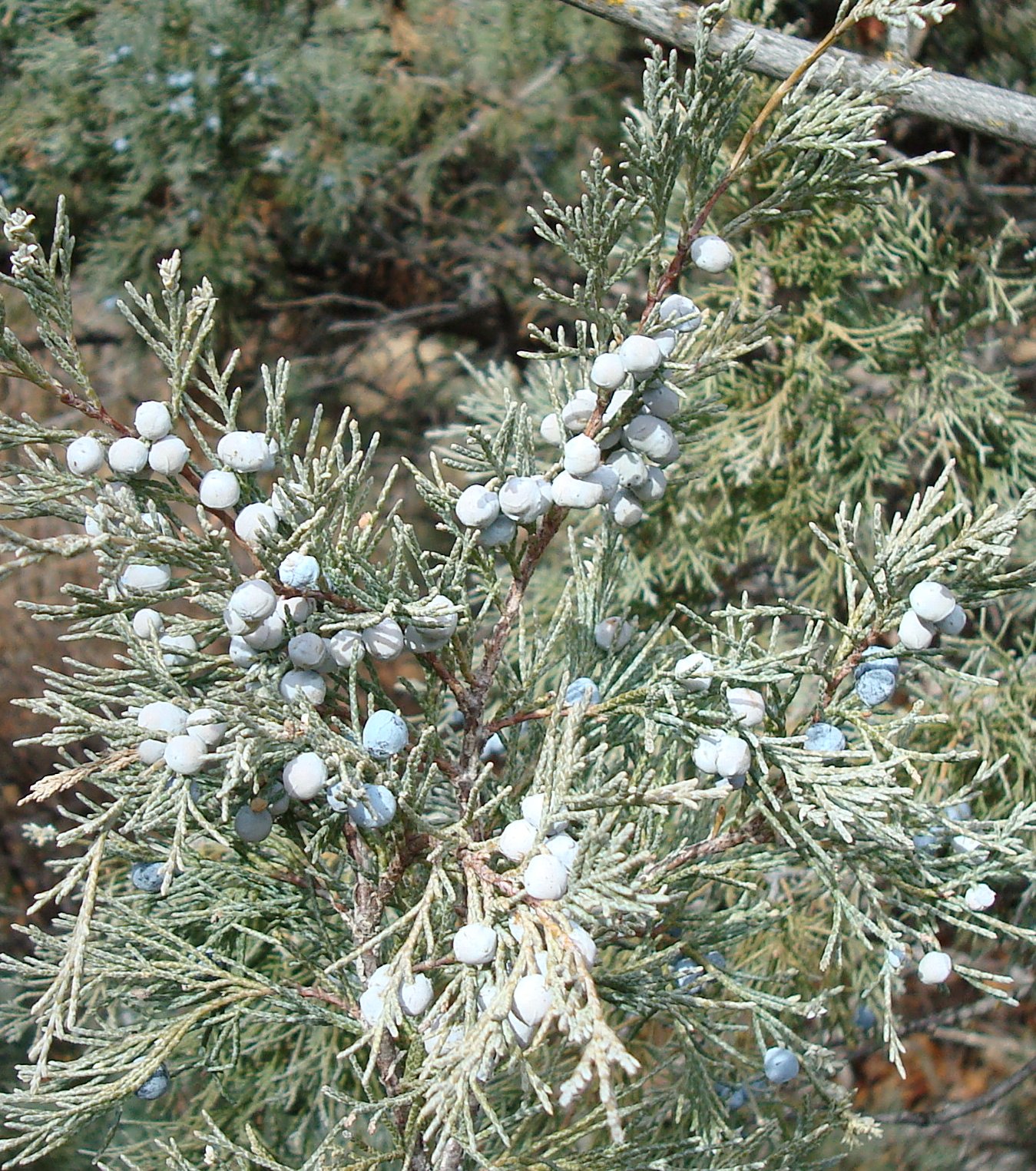
Juniper Leaves & Cones
Copyright © 2009 Linda Kervin

Two-needle Pinion Pine
Copyright © 2009 Linda Kervin

Norway Spruce Cones
Copyright © 2009 Linda Kervin

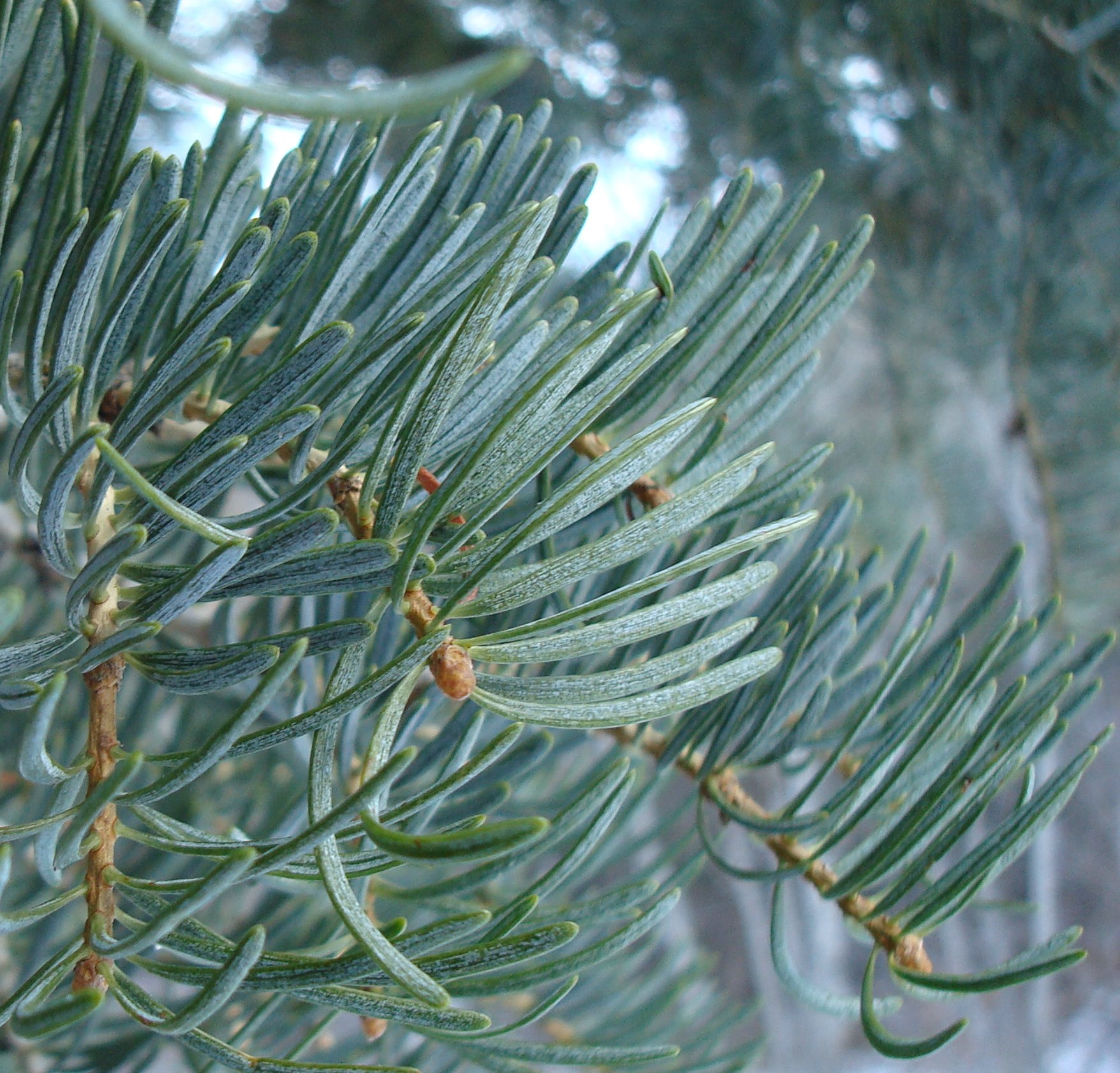
True Fir Needles
Copyright © 2009 Linda Kervin

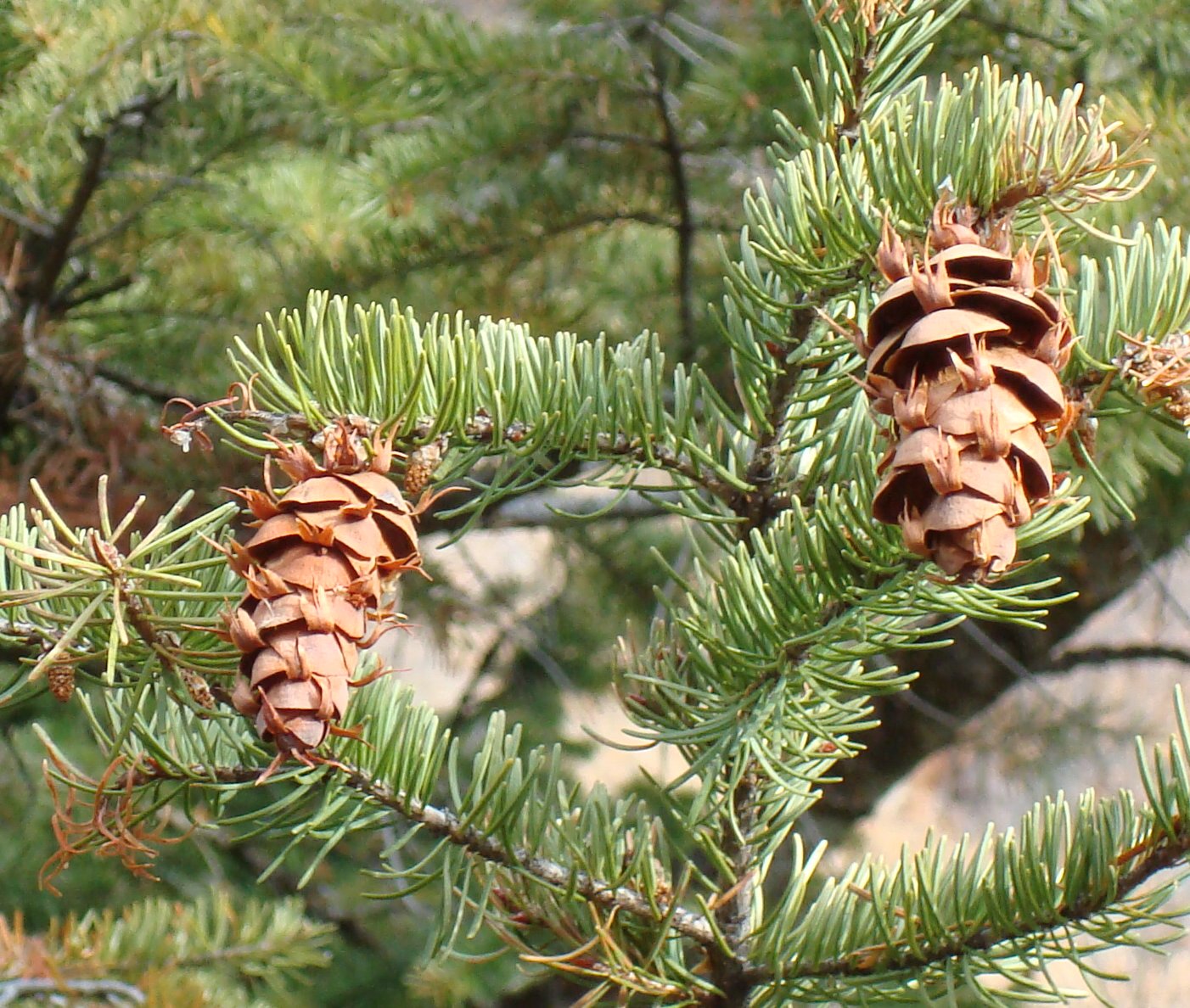
Douglas Fir Cones
Copyright © 2009 Linda Kervin

Now that the leaves have fallen from the deciduous trees, we can fully appreciate Utah’s evergreen trees. Conifers are trees that bear their seeds in cones instead of producing flowers and fruits. Utah has five kinds of conifers; all with stiff, needle-like leaves that remain green throughout the winter. Traits of their needles and cones allow you to distinguish between our different types of conifers. Cones can be found still attached or scattered on the ground.

I will start with the junipers. These conifers have scaly, slightly fleshly leaves. Juniper seeds are embedded in a cone that resembles a green berry. The cones are round and densely fleshy. Junipers are widely adaptable here, from arid foothills to rocky alpine slopes.

Our pines collectively span this same elevation range. They are the only conifers that have cylindrical needles bundled in clusters of 2 to 5. The one exception to this is Single Leaf Pinon, which as you might guess has single, round needles. The count of pine needles is often diagnostic of their species. Pinons mix with junipers at low elevations; their oily, wingless seeds are the edible pinon nut. Bristlecone pines, found in southern Utah, can live for over 1000 years.

Spruces are conifers that many recognize from their own yards. The spruce needle leaves a peg on the stem when it drops, which gives their twigs a rough, nubbly surface. Spruces grow in a classic pyramidal shape.

Another montane group is the true firs. Their flat needle attaches smoothly to the twig. True firs have uniquely upright cones that gradually disintegrate without dropping to the ground. Crushed fir needles are wonderfully fragrant, redolent of tangerines or grapefruit. Perhaps that is why true firs are a favorite Christmas tree.

Douglas fir, despite its common name, is in a different genus than the true firs. Its cones are distinctive; having long, three-pointed, papery bracts that project out from amid the cone’s scales. Douglas fir is one of the west’s most valuable timber tress. Like the spruces and firs, it is a montane species.

Conifer trees are a great resource for Utah wildlife, providing food and shelter, especially in the icy cold of winter.

This is Linda Kervin for Bridgerland Audubon Society.

Credits:
Pictures: Copyright © 2009 Linda Kervin
Text: Linda Kervin and Jim Cane

Additional Reading:

Sibley, David Allen. 2009. The Sibley Guide to Trees. New York: Alfred A. Knopf.

Johnson, Carl M. 1991. Common Native Trees of Utah. Utah State University Extension Service. Logan, UT. 109 p

Kuhns, Michael R., Utah Forest Facts, Conifers for Utah, https://extension.usu.edu/forestry/Reading/Assets/PDFDocs/NR_FF/NRFF015.pdf, USU Extension

Defining the Great Basin

Willow Creek North of Wells, NV. Sagebrush at mid-distance. Route of the California Trail used by pioneers.
Willow Creek north of Wells, NV.
Sagebrush at mid-distance.
Route of the California Trail
used by pioneers.

Courtesy & Copyright
Jim Cane, Photographer

Lupines amid sagebrush north of Wells, NV. Ruby Mountains in backgroundLupines amid sagebrush
north of Wells, NV.
Ruby Mountains in background
Courtesy & Copyright
Jim Cane, Photographer

Map delineating the Great basinMap delineating the Great basin
Courtesy Wikimedia, KMusser, Artist
Ref: wikipedia.org/wiki/Great_Basin


The Great Basin is aptly named.  Twice the size of Kansas, it stretches from the watersheds of the Columbia and Snake rivers south to that of the Colorado, and from the crests of the Sierra Nevada and southern Cascades eastward to the Wasatch front.  The Western explorer John Fremont coined its name in 1845.  The rivers and streams of the region that Fremont had seen all ended in sinks, marshes or lakes. None flowed to the Pacific Ocean.  He confirmed this on meeting Joseph Walker at Mountain Meadows in Utah.  Walker had traveled more of the basin’s western margins, dispelling  rumors of a river traversing the Sierra Nevada.  Precipitation that falls in the Great Basin stays in the Great Basin; water leaves only as vapor.  This is the hydrographic Great Basin.

How else to view the vast region between the Rockies and the Sierra Nevada? Geologists speak of the “Basin and Range Province”, so named for its valleys and the towering ranks of north-south mountain ranges that march across the landscapes of Nevada and edges of adjacent states. Unlike the upthrust Rockies and Sierra Nevada, Earth’s crust in the Great Basin appears to be spreading, to be pulling apart. The tilted escarpments of the Wasatch front are the easternmost evidence of this crustal deformation that has built the Basin and Range Province.

Botanists delimit the Great Basin by the hardy flora that clothes this rugged landscape. Great Basin plants tolerate freezing winters and parched summers, and in the valleys, soils of varying salinity.  The so-called Sagebrush Ocean fills many of the basins, as do other shrubs, such as shadscale and greasewood.  Upslope, these give way to juniper woodlands, often mixed with piñon pine.  This floristic Great Basin reaches eastward to central Utah and the Wasatch front, beyond which trees and other plants of the Rockies make their appearance.

The boundaries of all three concepts for the Great Basin — hydrographic, geologic and floristic — largely coincide.  Each recognizes the distinctive attributes of the Great Basin that set it apart from neighboring regions.  The Great Basin is readily recognizable to the trained eye, whether looking at satellite images, river courses, or the native plant communities encountered on a simple walk.

Credits:
Images: Jim Cane
Map: Courtesy Wikimedia, KMusser, Artist, licensed under Creative Commons Attribution-Share Alike 3.0 Unported
Text: Jim Cane

Additional Reading

Frémont, John Charles. 1845. Report of the exploring expedition to the Rocky Mountains in the year 1842 and to Oregon and North California in the years 1843 – 44. Printed by order of the Senate of the United States , Gales & Seaton, 693 pages. –available as a Google eBook scanned from the original published book Grayson, Donald K. 1999. The desert’s past : a natural prehistory of the Great Basin. Smithsonian Institution Press, Washington D.C., 356 pages. –an exceptionally readable, thorough and authoritative overview of the Great Basin, with many maps, photographs and illustrations.https://books.google.com/books?id=W8ICAAAAMAAJ

Intermountain Regional Herbarium Network. searchable plant database representing multiple holdings of herbaria at universities in Utah and Nevada, with maps, images and more https://swbiodiversity.org/seinet/projects/index.php?proj=10

McPhee, John. 1981. Basin and Range. Farrar, Straus, Giroux, New York. 215 pages. –the first of the author’s many engaging books about geology. https://www.amazon.com/Basin-Range-John-McPhee/dp/0374516901

Nature’s Recyclers

Courtesy and copyright Andrea Liberatore, Stokes Nature Center, https://logannature.org/
Fungi Decomposing Fall
Leaves Outside the
Stokes Nature Center
Courtesy & © 2011 Andrea Liberatore
Stokes Nature Center
 

Courtesy and copyright Andrea Liberatore, Stokes Nature Center, https://logannature.org/Redworms Eisenia fetida
from Stokes Nature Center’s
vermicomposting system
Courtesy & © 2011 Andrea Liberatore
Stokes Nature Center

On November 15th, our nation celebrates America Recycles Day. While the day itself tends to focus on human recycling activity, I thought we should also give a nod to nature’s recyclers. Worms, maggots, fungi, beetles, and bacteria – it sounds like a list of leftover Halloween horrors. But in reality, we should be more afraid of what our world would look like without these creepy-crawlies, for these are nature’s recyclers. Scientists call these organisms saprophytes, and as important as their role in life is, they are more likely to evoke a shudder than any feeling of gratitude.

What decomposers actually do is break dead things down into smaller and smaller pieces, until all that is left are the basic molecular components that make up all living things such as nitrogen, phosphorous, carbon, and potassium. Once broken down, this material is then free to be taken up again by plants and animals that use them to live and grow. This cycle of nutrients is vital to life on Earth, and our saprophytic friends make it all possible.

While decomposition would occur even without the help of the decomposers, it would take much, much longer. In some landfills, newspapers have been unearthed that are more than 20 years old, and still quite readable. This is because landfills often create anaerobic environments, where oxygen-loving insects, fungi, and bacteria cannot live and therefore cannot aid decomposition. If without decomposers, a newspaper can last 20 years, what would happen to much larger and hardier items such as tree trunks and roadkill? I shudder to think about it.

Did you know that the U.S. throws more than 33 million tons of food waste into landfills each year? This organic material goes to waste there – taking up valuable space and taking longer than normal break down. So this year, celebrate America Recycles Day by employing some of nature’s recyclers in your yard. Consider starting a compost pile where your fall leaves and food scraps can get broken down into nutrient-rich all-natural fertilizer for next year’s garden.

For composting tips and more information about nature’s recyclers, visit Wild About Utah online at www.wildaboututah.org. Thank you to the Rocky Mountain Power Foundation for the research and development of this Wild About Utah topic. For the Stokes Nature Center and Wild About Utah, this is Andrea Liberatore.

For the Stokes Nature Center and Wild About Utah, this is Andrea Liberatore.

Credits:

Photos: Courtesy & © 2011 Andrea Liberatore, https://logannature.org/
Text:    Andrea Liberatore, Stokes Nature Center, logannature.org

Composting Tips & Information:

Farrell-Poe, K. and Koenig, R. (2010) Backyard Composting in Utah. Utah State University Cooperative Extension. https://extension.usu.edu/files/publications/factsheet/HG-Compost-01.pdf

U.S. Environmental Protection Agency: Composting. https://www.epa.gov/epawaste/conserve/rrr/composting/index.htm

Additional Reading:

Fogel, R. (2002) Waste Not, Want Not: Fungi as Decomposers. Utah State University Herbarium. https://utahpests.usu.edu/ipm/ornamental-pest-guide/diseases/wood-decay-fungi

Hoff, M. (2009) Young Naturalists: Nature’s Recyclers. Minnesota Conservation Volunteer Newsletter. July-August 2009. https://files.dnr.state.mn.us/publications/volunteer/young_naturalists/natures_recyclers/natures_recyclers.pdf

U.S. Environmental Protection Agency (2011) Basic Information About Food Waste. https://www.epa.gov/osw/conserve/materials/organics/food/fd-basic.htm