Algae and Moss

Filamentous algae growing in the Colorado River near Lee’s Ferry. Copyright 2011 Wayne Wurtsbaugh, Photographer
Filamentous algae growing in the Colorado River near Lee’s Ferry
Copyright 2011
Wayne Wurtsbaugh, Photographer

Tortula ruralis is one of the few mosses that are common in the desert. Licensed through Wikimedia, Kristian Peters, PhotographerTortula ruralis
one of the few mosses
that are common in the desert
Courtesy Wikimedia
Licensed under CCA 3.0
Kristian Peters, Photographer

Hi, I’m Holly Strand from Utah State University’s Quinney College of Natural Resources.

Algae and moss are plentiful in and around Utah streams and lakes. But lots of people confuse these two kinds of plants. So let’s sort out what each one is.

First, both moss and algae are ancient plant forms that are commonly found in wet or moist places. As primary producers both algae and moss use sunlight to fix energy, giving off oxygen as a byproduct.

Neither algae nor moss has a vascular system to transport water so vertical growth is not their strong suit. Rarely more than an inch tall, a cushion of moss is really a tight cluster of individual moss plants. Bunching helps support the individual moss structures and helps conserve water. Meanwhile, algae comes in many forms, from microscopic one-celled diatoms to huge colonies of giant floating mats, or long flowing filaments. Algae also comes in many colors, such as green, gold, brown and red.

So where are they found? Moss loves shade. Look for it in the deep shadowy gorges and box canyons of the Colorado and Green Rivers. It also thrives in drainages off cliffs and around springs. Damp meadows, tree bases, bogs, and pond edges make great moss habitat. You will seldom find moss in saline environments. Some moss species live submerged in water but most live on land. With the sun-loving algae, the opposite is true—most live in water but some species will grow on damp soil and on the shaded sides of damp walls and trees.

Moss grows very slowly and lives a long time. So it needs a stable environment in which to grow. In contrast, algae is extremely fast-growing. A generation might last from one to several days. Algae is also extremely sensitivity to chemical, temperature and light conditions. Therefore, the presence, absence or quantity of algal species can be a useful indicator of ecosystem health. For instance, your aquatic system is probably in pretty good shape if a number of different species are flourishing. However, if the water is dominated by one or just a few fast growing species and the water starts to turn color—usually green—the system is seriously out of whack. Called algal blooms, these dramatic explosions of growth are usually the result of excess phosphorus or nitrogen runoff in the water.

During blooms the algal mass produces lots of oxygen during the day, but it consumes more than it makes at night. Further, more dead organic material is produced which eats up more oxygen. The result is a severe oxygen deficit. Resident fish, insects, and plants are deprived of oxygen and end up suffocating.

Go to www.wildaboututah.org for links to information on how to prevent algal blooms.

Thanks to 4th grade classes of Fallon Farokhi and Andrea Bostwick for their interest in moss, algae and water quality. Funded by an environmental education grant from the EPA Region 8, the 4th graders investigated and reported on water quality issues in the Bear River watershed. Also, thanks to Wayne Wurtsbaugh and Chuck Hawkins of Utah State University’s College of Natural Resources for their expertise in writing this piece.

For Wild About Utah, I’m Holly Strand.

Credits:
Image: Algae, Courtesy & Copyright Wayne Wurtsbaugh, Utah State University, Department of Watershed Sciences
Image: Moss, Licensed through the Attribution-ShareAlike 3.0 Unported (CC BY-SA 3.0) Courtesy Wikimedia, Kristian Peters, Photographer
Text: Holly Strand, Utah State University, Quinney College of Natural Resources

Sources & Additional Reading

US EPA. Harmful Algal Blooms https://www2.epa.gov/nutrientpollution/harmful-algal-blooms

US EPA. The Effects of Nutrient Pollution and Harmful Algal Blooms] https://www2.epa.gov/nutrientpollution/effects

US EPA. What You Can Do to Reduce Nutrient Pollution https://www2.epa.gov/nutrientpollution/what-you-can-do

Barbour, M.T., J. Gerritsen, B.D. Snyder, and J.B. Stribling. 1999. Rapid Bioassessment Protocols for Use in Streams and Wadeable Rivers: Periphyton, Benthic Macroinvertebrates and Fish, Second Edition. EPA 841-B-99-002. U.S. Environmental Protection Agency; Office of Water; Washington, D.C. https://water.epa.gov/scitech/monitoring/rsl/bioassessment/

Fisher, S. G. 1995. Stream ecosystems of the Western United States. In River and Stream Ecosystems of the World. C. E. Cushing, K. W. Cummins, and G. W. Minshall eds. University of California Press, Berkley. 817 pp. [Updated October 31, 2024] https://www.researchgate.net/publication/261545076_River_and_stream_ecosystems_of_the_world_edited_by_C_E_Cushing_K_W_Cummins_and_G_W_Minshall_University_of_California_Press_Berkeley_2006_No_of_pages_817_ISBN_0-520-24567-9

Flowers, Seville, Mosses: Utah and the West. Edited by Arthur Holmgren, First Published by Brigham Young University Press, 1973 [Updated October 31, 2024] Blackburn Press, July 1, 2001, https://www.amazon.com/Mosses-Utah-West-Seville-Flowers/dp/1930665253

Moss, Brian. 2010. Ecology of Freshwaters. A View for the Twenty-First Century. Wiley-Blackwell. https://www.amazon.com/Ecology-Fresh-Waters-Twenty-First-Century/dp/1444334743

Utah Division of Water Quality. Nutrients in Utah’s Waters https://www.nutrients.utah.gov/ [Updated Oct 31, 2024] https://deq.utah.gov/water-quality/headwater-criteria-nutrients-in-utahs-waters

Utah Water Research Laboratory. 2002. Understanding Nitrate Pollution in Small and Native American Communities. Water Treatment Technology Program Report No. 53. Washington DC, U.S. Department of the Interior.

Kimmerer, Robin Wall, Gathering Moss: A Natural and Cultural History of Mosses, Oregon State University Press, March 1, 2003, https://www.amazon.com/Gathering-Moss-Natural-Cultural-History/dp/0870714996 [Accessed Oct 31, 2024]

Defining the Great Basin

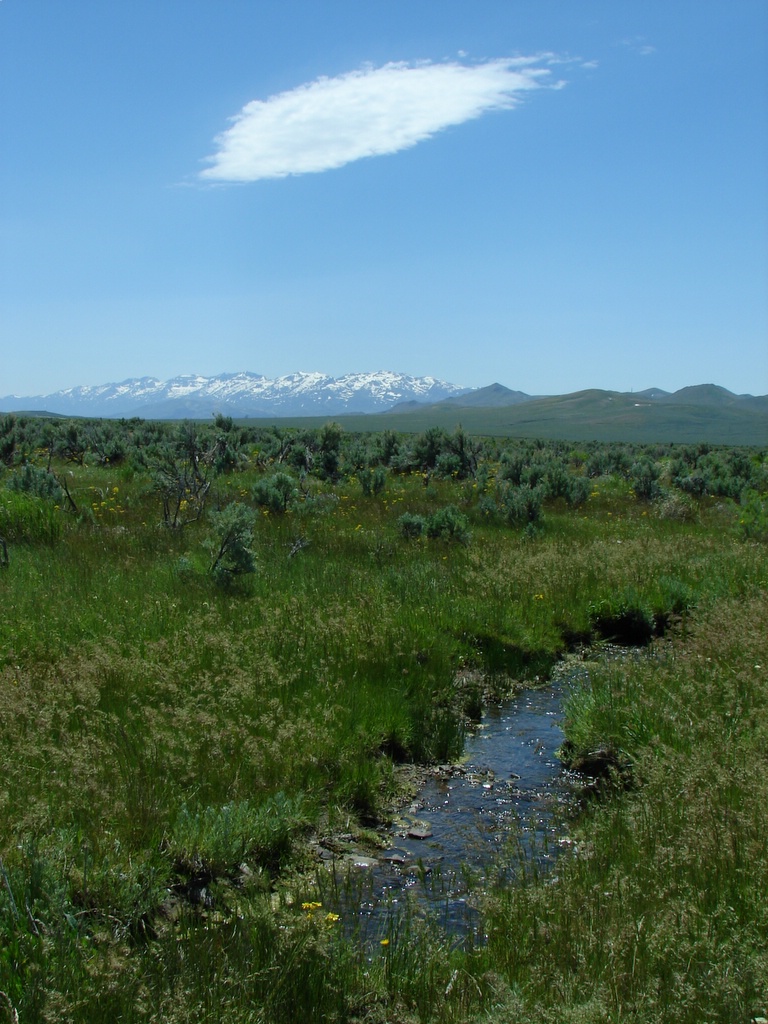
Willow Creek North of Wells, NV. Sagebrush at mid-distance. Route of the California Trail used by pioneers.
Willow Creek north of Wells, NV.
Sagebrush at mid-distance.
Route of the California Trail
used by pioneers.

Courtesy & Copyright
Jim Cane, Photographer

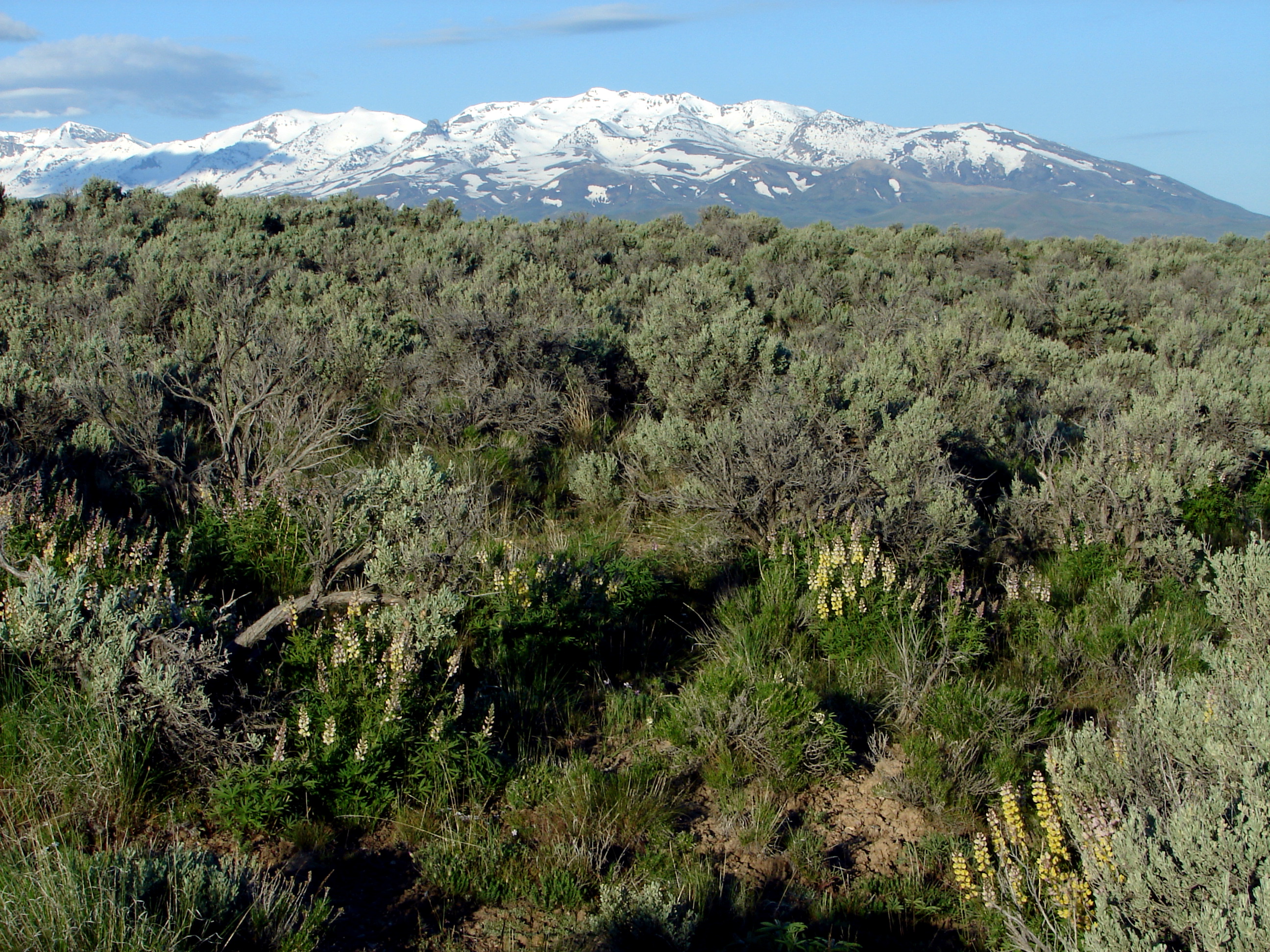
Lupines amid sagebrush north of Wells, NV. Ruby Mountains in backgroundLupines amid sagebrush
north of Wells, NV.
Ruby Mountains in background
Courtesy & Copyright
Jim Cane, Photographer

Map delineating the Great basinMap delineating the Great basin
Courtesy Wikimedia, KMusser, Artist
Ref: wikipedia.org/wiki/Great_Basin


The Great Basin is aptly named.  Twice the size of Kansas, it stretches from the watersheds of the Columbia and Snake rivers south to that of the Colorado, and from the crests of the Sierra Nevada and southern Cascades eastward to the Wasatch front.  The Western explorer John Fremont coined its name in 1845.  The rivers and streams of the region that Fremont had seen all ended in sinks, marshes or lakes. None flowed to the Pacific Ocean.  He confirmed this on meeting Joseph Walker at Mountain Meadows in Utah.  Walker had traveled more of the basin’s western margins, dispelling  rumors of a river traversing the Sierra Nevada.  Precipitation that falls in the Great Basin stays in the Great Basin; water leaves only as vapor.  This is the hydrographic Great Basin.

How else to view the vast region between the Rockies and the Sierra Nevada? Geologists speak of the “Basin and Range Province”, so named for its valleys and the towering ranks of north-south mountain ranges that march across the landscapes of Nevada and edges of adjacent states. Unlike the upthrust Rockies and Sierra Nevada, Earth’s crust in the Great Basin appears to be spreading, to be pulling apart. The tilted escarpments of the Wasatch front are the easternmost evidence of this crustal deformation that has built the Basin and Range Province.

Botanists delimit the Great Basin by the hardy flora that clothes this rugged landscape. Great Basin plants tolerate freezing winters and parched summers, and in the valleys, soils of varying salinity.  The so-called Sagebrush Ocean fills many of the basins, as do other shrubs, such as shadscale and greasewood.  Upslope, these give way to juniper woodlands, often mixed with piñon pine.  This floristic Great Basin reaches eastward to central Utah and the Wasatch front, beyond which trees and other plants of the Rockies make their appearance.

The boundaries of all three concepts for the Great Basin — hydrographic, geologic and floristic — largely coincide.  Each recognizes the distinctive attributes of the Great Basin that set it apart from neighboring regions.  The Great Basin is readily recognizable to the trained eye, whether looking at satellite images, river courses, or the native plant communities encountered on a simple walk.

Credits:
Images: Jim Cane
Map: Courtesy Wikimedia, KMusser, Artist, licensed under Creative Commons Attribution-Share Alike 3.0 Unported
Text: Jim Cane

Additional Reading

Frémont, John Charles. 1845. Report of the exploring expedition to the Rocky Mountains in the year 1842 and to Oregon and North California in the years 1843 – 44. Printed by order of the Senate of the United States , Gales & Seaton, 693 pages. –available as a Google eBook scanned from the original published book Grayson, Donald K. 1999. The desert’s past : a natural prehistory of the Great Basin. Smithsonian Institution Press, Washington D.C., 356 pages. –an exceptionally readable, thorough and authoritative overview of the Great Basin, with many maps, photographs and illustrations.https://books.google.com/books?id=W8ICAAAAMAAJ

Intermountain Regional Herbarium Network. searchable plant database representing multiple holdings of herbaria at universities in Utah and Nevada, with maps, images and more https://swbiodiversity.org/seinet/projects/index.php?proj=10

McPhee, John. 1981. Basin and Range. Farrar, Straus, Giroux, New York. 215 pages. –the first of the author’s many engaging books about geology. https://www.amazon.com/Basin-Range-John-McPhee/dp/0374516901

Utah is Worth its Salt

Bonneville Salt Flats as seen from Interstate 80 in Utah, USA
Bonneville Salt Flats
as seen from Interstate 80
East of Wendover, UT
Courtesy Wikimedia
Hermann Luyken, Photographer
Image licensed through
Creative Commons
CC0 1.0 Universal Public Domain Dedication

Salt Production, Solar Evaporation, Courtesy Morton Salt, Inc.Salt Production
Solar Evaporation
Courtesy Morton Salt, Inc.

Sevier Lake, a Saline Lake in Central UtahSevier Lake
Courtesy & Copyright 2013
Holly Strand, Photographer

Salt Crystal, Photo Courtesy Minerals and Materials Photo Gallery, U.S House Subcommittee on Energy and Natural ResourcesSalt Crystal
Minerals and Materials Photo Gallery
U.S House Subcommittee
on Energy and Natural Resources

Hi, I’m Holly Strand from the Quinney College of Natural Resources at Utah State University.

Throughout history, salt has held enormous significance for human society. And not just because it makes food taste better. Salt is a biological necessity. The human body needs a small but regular supply of sodium to maintain a balance of body fluids, keep muscles and nerves running smoothly and help certain organs work properly.

Thousands of years ago, salt was discovered to have another vital function– as a food preservative. This discovery quickly transformed the human lifestyle. For if people could preserve their food, they no longer had to depend upon the seasonal availability of food. Further, preservation allowed people to travel over long distances with a portable food supply.

Because of its central importance to health and human welfare, salt acquired some interesting forms of cultural significance as well. For instance, spilling salt is a bad omen. But you can mitigate by throwing the spilled salt over your left shoulder into the eyes of the Devil that lurks there. In many places salt was used as money. The English word “salary” comes from the Latin phrase salarium argentum, or “salt money,” which was paid to Roman soldiers.

Before the evolution of modern geology and extraction techniques, salt was difficult to find and to remove. The limited supply led to increased demand. In Salt: A World History author Mark Kurlansky described how salt demand spawned extensive trade routes, alliances, and even empires. Salt taxes were a common source of government income as well as a cause for revolt.

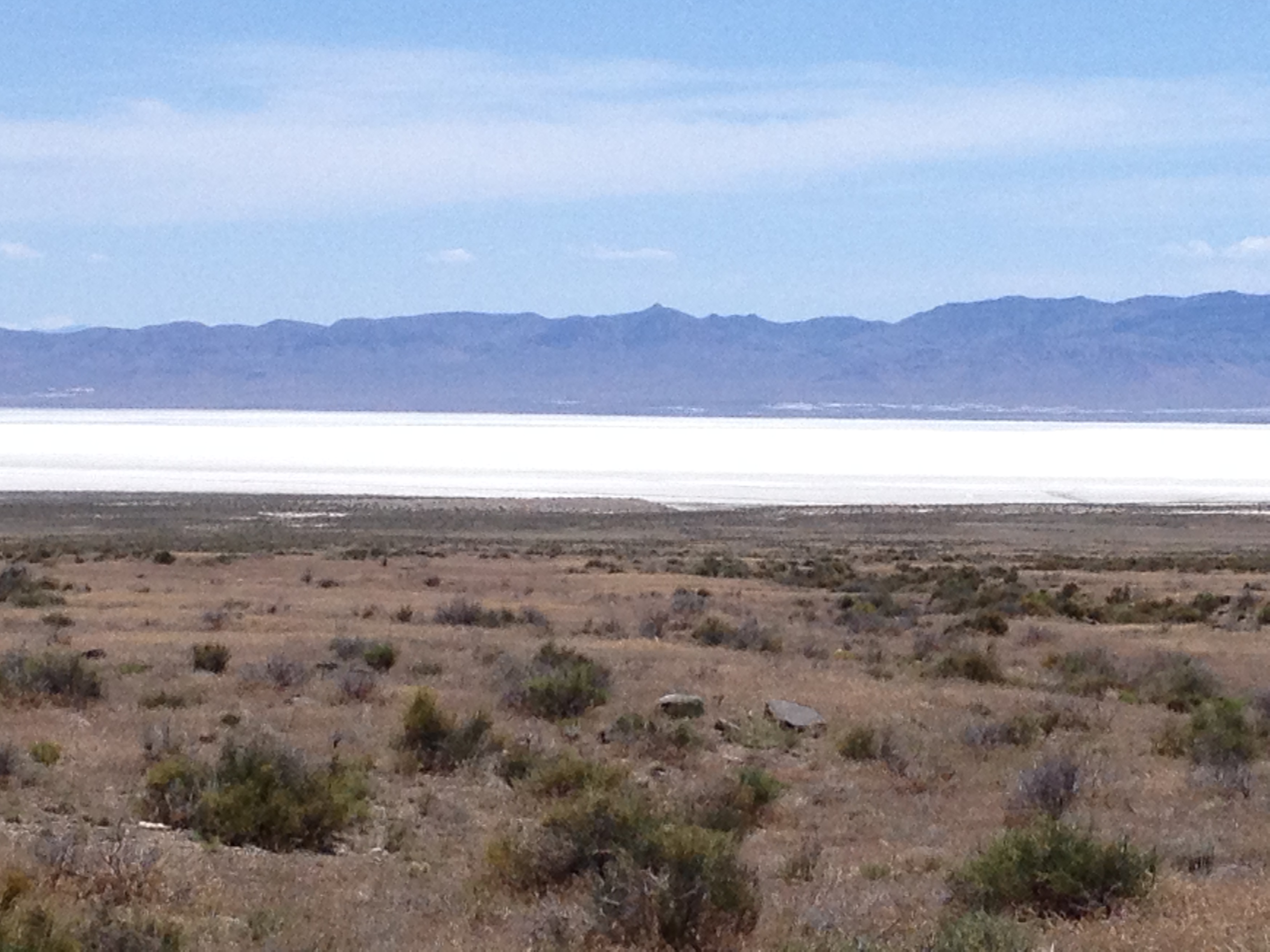
Here in Utah, it’s hard to imagine getting worked up about salt supply. There’s just so much of it lying around. That’s because as the 20,000 square miles of water that was Lake Bonneville evaporated, salt was precipitated all over the dried up lake bed.

The Great Salt Lake itself contains about 4.5 billion tons of salt. Currently 3 corporations extract salt using over 80000 acres of solar evaporation ponds near the lake. They produce over 2 millions tons of salt per year. This roughly equals the amount of salt flowing into the lake. For the Bear, Weber and Jordan Rivers add about 2.2 million tons of salt annually.

Utah and nearby states use the Great Salt Lake salt for de-icing roadways. Some of the salt is pressed into pellets for water softeners. Ranchers get salt-lick blocks for their livestock. And huge quantities of bulk salt are used in metal, chemical, paper and other industries.

Food grade or table salt is not produced from the Great Salt Lake area. However Redmond Minerals Inc. produces table salt in Sevier County.

For Wild About Utah, I’m Holly Strand.

Credits:
Image: Courtesy Wikimedia, Hermann Luyken, Photographer, Image licensed through Creative Commons CC0 1.0 Universal Public Domain Dedication
Image: Courtesy & Copyright Morton Salt, Inc.
Image: Sevier Lake, Courtesy & Copyright 2013 Holly Strand
Image: Courtesy U.S House Subcommittee on Energy and Natural Resources, Public Domain
Text: Holly Strand

Sources & Additional Reading

Wild About Utah pieces authored by Holly Strand

Freeman, Shanna. 2007. “How Salt Works” HowStuffWorks.com. https://science.howstuffworks.com/innovation/edible-innovations/salt.htm

Gwynn, Mark, Ken Krahulec, and Michael Vanden Berg. Utah Mining 2010, Utah Geological Survey of Utah Department of Natural Resources, https://ugspub.nr.utah.gov/publications/circular/c-114.pdf Circular 114

Gwynn, J. Wallace, ed. Great Salt Lake: an overview of change. 2002. DNR Special Publication. Utah Geological Survey of Utah Department of Natural Resources. formerly at: https://wildlife.utah.gov/gsl/gsl_cmp_resource_doc/10minerals.pdf

Kurlansky, Mark. 2003. Salt: A World History. London: Penguin Books. https://www.amazon.com/Salt-World-History-Mark-Kurlansky/dp/0142001619

Salt Institute. A non-profit trade association dedicated to advocating the many benefits of salt. https://www.saltinstitute.org/ [Dissolved March 2019]

Stephens, Doyle W. and Joe Gardner USGS. Great Salt Lake, Utah https://pubs.usgs.gov/wri/wri994189/PDF/WRI99-4189.pdf

USDA. Sodium in Your Diet: Using the Nutrition Facts Label to Reduce Your Intake. https://www.fda.gov/Food/ResourcesForYou/Consumers/ucm315393.htm.

Utah’s Water Future

70% of our planet is covered in water, but you certainly wouldn’t know it by looking around Utah in August! It’s been hot and dry for about 3 months now and my yard and garden are really starting to feel the pinch.

Water can be a touchy subject in the West, and will become increasingly so as we look to the future.

Already our water resources are overextended, and all projected forecasts show an increasing need for water in the years ahead. Continued population growth combined with higher summer temperatures and drought conditions mean that this all important resource is only going to get more precious. Utah’s municipal water comes from either underground sources such as wells and springs or surface water including our many man-made reservoirs. Utah relies heavily on mountain snowpack to fill reservoirs and recharge springs, which leaves us wanting after weak winters. Many state reservoirs are predicted to drop to as low as 30% of their storage capacity this fall.

So how much water do we actually use? The average Utah household passes 650 gallons through its pipes each day, the vast majority of which goes towards bathing, toilets, and laundry. Household water use is of course only a fraction – about 13% – of our overall state consumption. Nearly 83% of the water used in Utah goes towards crop irrigation. Agricultural use plus household and industrial water add up to an astonishing 5 billion gallons of water used in the state of Utah each and every day. Per capita, Utah ranks 2

Utah is also the second driest state in the nation, again behind Nevada, though the amount of precipitation varies widely among our deserts and mountain ranges. On average, we receive around 13 inches of water each year across the state with some areas receiving less than 10 and others upwards of 50. All of that water has to be shared among the plants, animals, and humans living in each watershed. There are, of course, lots of ways to conserve water in the home: take shorter showers, run the washing machine or dishwasher only when full, and turn off the faucet while brushing teeth. Outside, water your lawn and garden only in the late evening, overnight, or early morning hours, but check the forecast first. In order to address our widespread and long-term water issues, however, bigger solutions are needed in addition to standard household water conservation. Last year, for example, the Bill & Melinda Gates Foundation sponsored a contest to reinvent the toilet in an attempt to save water and increase sanitation for people worldwide.

Governor Gary Herbert is also asking questions about Utah’s water this summer. He has convened a handful of meetings around the state to contemplate Utah’s Water Future, and is asking for public comments and suggestions on how to address the complicated issues that will face our state with regards to water use in the coming years. The last of these public meetings are being held in Salt Lake on August 13 and in Logan on August 15 can still add your comments and ideas to the record by visiting utahswaterfuture.org. Humans are an incredibly creative and adaptable species, and it will take our best efforts to overcome this daunting challenge. The future of this great state, and all the species who call it home, depend upon it.

Find links to the Governor’s water forum as well as more information on Utah’s water resources at our website: www.wildaboututah.org.

For the Stokes Nature Center and Wild About Utah, this is Andrea Liberatore.

Credits:

Photos: Courtesy & © Andrea Liberatore
Text:    Andrea Liberatore, Stokes Nature Center, logannature.org

Additional Reading:

Utah Division of Water Resources. https://www.water.utah.gov/

Utah Division of Water Resources (2010) Municipal and Industrial Water Use in Utah: Why do we
use so much water when we live in a desert? Available online at https://water.utah.gov/M&I/PDF/State/2010%20M_I%20Statewide%20SummaryCH.pdf

Governor Herbert’s forum: Utah’s Water Future: www.utahswaterfuture.org
Utah State University Water Quality Extension: https://extension.usu.edu/waterquality/

O’Donoghue, Amy Joi. (2013) Record Breaking Heat and Drought Sear Utah and the West. Desert
News, June 30, 2013. Available online at: https://www.deseretnews.com/article/865582439/Recordbreaking-heat-drought-sear-Utah-the-West.html?pg=all