Oolites

Click to view larger image of the Utah's Oolitic Sand, Photo Courtesy and Copyright Mark Larese-Casanova
Utah’s Oolitic Sand, Photo Courtesy and Copyright Mark Larese-Casanova

Hi, this is Mark Larese-Casanova from the Utah Master Naturalist Program at Utah State University Extension.

Imagine if prehistoric brine shrimp were responsible for one of the finest examples of architecture in Salt Lake City today.

Okay, so it may be a bit of a stretch, but let me explain. In a previous episode of Wild About Utah, I discussed the life cycle of brine shrimp and the important role that they play in the Great Salt Lake Ecosystem. Well, as the billions of brine shrimp feed on bacteria in Great Salt Lake, they excrete waste in the form of tiny fecal pellets. These pellets, along with sand grains and other bits of debris, eventually settle to the bottom of Great Salt Lake.

In shallow areas of the lake, where wind and waves routinely mix the water, these small particles gradually accumulate layers of calcium carbonate, forming an oolite (spelled o-o-l-i-t-e). This is very similar to how a pearl, also layers of calcium carbonate around a small particle, is formed within the shell of an oyster or mussel. The main difference, aside from a pearl being much larger, is that oolites are typically oblong, rather than round. The beaches on the west side of Antelope Island are a great place to find oolitic sand, which will look and feel as though you have a handful of tiny pearls.

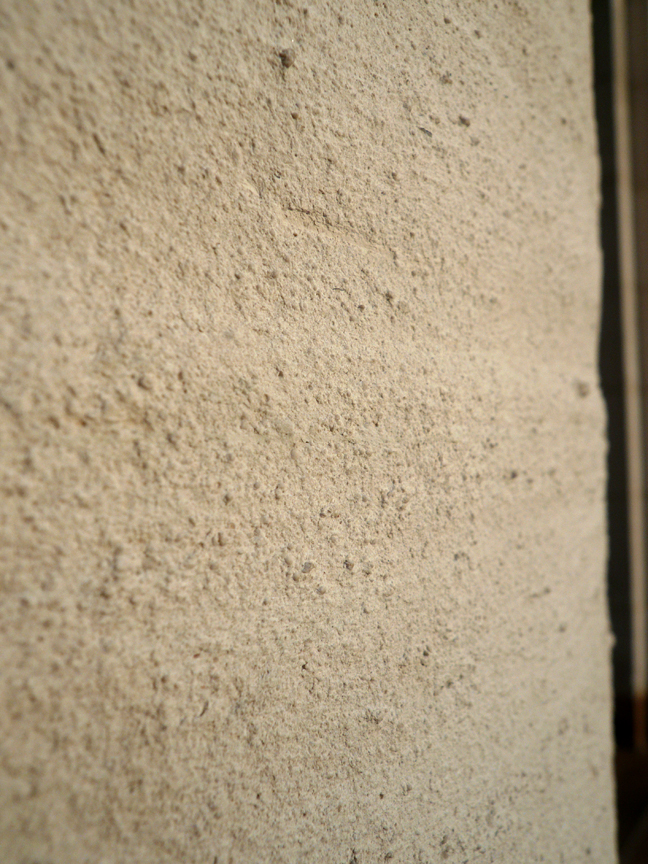
Click to view larger image of the Utah's Oolitic Sandstone, Photo Courtesy and Copyright Mark Larese-Casanova
Utah’s Oolitic Sandstone
Photo Courtesy & Copyright
Mark Larese-Casanova

Around 50 million years ago, large fresh- and salt-water lakes covered parts of Utah, and in these areas, vast amounts of sediments, including oolites, were deposited. Over time, these oolites were compressed and cemented together into limestone.

A quarry near Ephraim in Sanpete County supplied oolitic limestone for the construction of the Governor’s Mansion in 1902 and the original Salt Lake City Public Library in 1905. The Library building, located at 15 South State Street, eventually housed the Hansen Planetarium and is now home to the O.C. Tanner flagship store. The building underwent an extensive restoration just a couple of years ago, and now serves as a shining example of neoclassical architecture in our capitol city.

The truth is, there are tens of millions of years separating oolitic limestone from our modern-day brine shrimp. So, we can’t exactly say that prehistoric brine shrimp were responsible for the existence of the O.C. Tanner building. But, it’s fun to imagine precious gems from around the world housed in a beautiful building constructed from the ‘pearls’ of Great Salt Lake.

Click to view larger image of the historic OC Tanner building made from oolitic sandstone (This building formerly housed the Salt Lake Library and Hansen Planetarium), Photo Courtesy and Copyright Mark Larese-Casanova
Historic OC Tanner Building
(formerly the Salt Lake Library
and later the Hansen Planetarium)
Photo Courtesy & Copyright
Mark Larese-Casanova

For Wild About Utah, I’m Mark Larese-Casanova.
Credits:

Images: Courtesy and copyright Mark Larese-Casanova

Text:     Mark Larese-Casanova, Utah Master Naturalist Program at Utah State University Extension.
Additional Reading:

Utah Geological Survey https://geology.utah.gov/utahgeo/rockmineral/collecting/oolitic.htm

Utah Division of Wildlife Resources, Great Salt Lake Ecosystem Program
https://wildlife.utah.gov/gsl/facts/oolitic_sand.php

Salt Lake Brine Shrimp, https://saltlakebrineshrimp.com/harvest/

Aquatic Insects, Harbingers of Health

Aquatic Insects, Harbingers of Health
Skwala (Large Springflies)
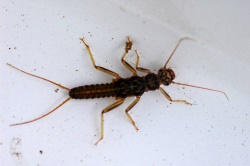
Stonefly Nymph
Courtesy & Copyright
Robert Newell
As found on
TroutNut.com

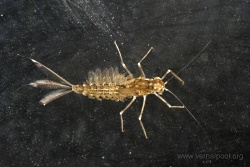
Aquatic Insects, Harbingers of HealthMayfly nymph
Courtesy & Copyright
Leo Kenney, Vernal Pool Association

Aquatic Insects, Harbingers of HealthNorthern caddisfly Larvae

Limnephilidae
Photo Credit:
Howard Ensign Evans,
Colorado State University,
Bugwood.org
Used under
Creative Commons Attribution 3.0
License.

Hi, this is Mark Larese-Casanova from the Utah Master Naturalist Program at Utah State University Extension.

As we officially enter summer, it’s easy to notice nature at its peak. Wildflowers are in bloom, birds are feeding their young, and insects fill the air. Life is especially robust near our wetlands, lakes, and streams.

Our aquatic, or wet, ecosystems provide habitat to abundant plants and animals. Only 1% of Utah is wet, but over 80% of all wildlife in Utah depend on aquatic ecosystems for at least part of their life cycle. However, the quality of Utah’s aquatic habitats is often affected by chemical pollution or excessive nutrients and sediment.

Some organisms, including many aquatic insects, only live in the healthiest of aquatic habitats. Many of the insects we see in summer live in the water when young, during the larval or nymph stage, before becoming adults. Three insects in particular- mayflies, stoneflies, and caddisflies- require especially clean, cold streams low in nutrients and high in dissolved oxygen to survive.

Mayflies are aquatic as nymphs and emerge from the water to live as adults for just a day. The external feather-like gills of the nymphs can be seen fluttering along the sides of their abdomen. They feed by scraping algae from rocks.

Stonefly nymphs are well adapted to living among the rocks of swift-moving streams. Their hooked legs grasp the slick rocks as they shred apart plant litter that falls into the stream.

Caddisfly larvae spin a sort of spider silk to glue rocks or sticks together to form a case in which they live. They will also build webs underwater to collect small particles of food that drift by.

The quality of a stream habitat can be assessed by counting the number of different species, or types, of mayflies, stoneflies, and caddisflies. A greater number of species generally means that habitat and water quality are higher. Dramatic decreases in insect diversity from season to season or year to year can signal a decline in stream health. Monitoring aquatic insects over time gives us an accurate picture of the long-term health of our stream ecosystems.

For more information about monitoring water quality and aquatic insects, visit Utah State University Water Quality Extension’s website. Once there, you’ll find a wealth of information about monitoring Utah’s aquatic ecosystems, including Utah Water Watch, a statewide volunteer citizen science program.

For Wild About Utah, I’m Mark Larese-Casanova.

Credits:
Images: Northern caddisfly larvae, Howard Ensign Evans,
            Colorado State University
            Creative Commons Attribution 3.0 License.
            Stonefly Nymph, © Robert Newell, displayed on Troutnut.com
            Mayfly nymph, © Leo Kenney Vernal Pool Association
Text:     Mark Larese-Casanova, Utah Master Naturalist Program
            at Utah State University Extension.


Additional Reading:

Larese-Casanova, M. Utah Master Naturalist Watersheds Wildlife Field Guide. Utah State University Extension. 2012. https://extension.cart.usu.edu/Details.cfm?ProdID=41&category=0

USU Water Quality Extension. Utah Stream Team Manual. https://extension.usu.edu/waterquality/htm/citizen_monitoring/ust

Voshell, J. R. A Guide to Common Freshwater Invertebrates of North America. The McDonald and Woddward Publishing Company. 2002. https://www.amazon.com/Guide-Common-Freshwater-Invertebrates-America/dp/0939923874

Oolites

Click to view larger image of the Utah's Oolitic Sand, Photo Courtesy and Copyright Mark Larese-Casanova
Utah’s Oolitic Sand, Photo Courtesy and Copyright Mark Larese-Casanova

Hi, this is Mark Larese-Casanova from the Utah Master Naturalist Program at Utah State University Extension.

Imagine if prehistoric brine shrimp were responsible for one of the finest examples of architecture in Salt Lake City today.

Okay, so it may be a bit of a stretch, but let me explain. In a previous episode of Wild About Utah, I discussed the life cycle of brine shrimp and the important role that they play in the Great Salt Lake Ecosystem. Well, as the billions of brine shrimp feed on bacteria in Great Salt Lake, they excrete waste in the form of tiny fecal pellets. These pellets, along with sand grains and other bits of debris, eventually settle to the bottom of Great Salt Lake.

In shallow areas of the lake, where wind and waves routinely mix the water, these small particles gradually accumulate layers of calcium carbonate, forming an oolite (spelled o-o-l-i-t-e). This is very similar to how a pearl, also layers of calcium carbonate around a small particle, is formed within the shell of an oyster or mussel. The main difference, aside from a pearl being much larger, is that oolites are typically oblong, rather than round. The beaches on the west side of Antelope Island are a great place to find oolitic sand, which will look and feel as though you have a handful of tiny pearls.

Click to view larger image of the Utah's Oolitic Sandstone, Photo Courtesy and Copyright Mark Larese-Casanova
Utah’s Oolitic Sandstone
Photo Courtesy & Copyright
Mark Larese-Casanova

Around 50 million years ago, large fresh- and salt-water lakes covered parts of Utah, and in these areas, vast amounts of sediments, including oolites, were deposited. Over time, these oolites were compressed and cemented together into limestone.

A quarry near Ephraim in Sanpete County supplied oolitic limestone for the construction of the Governor’s Mansion in 1902 and the original Salt Lake City Public Library in 1905. The Library building, located at 15 South State Street, eventually housed the Hansen Planetarium and is now home to the O.C. Tanner flagship store. The building underwent an extensive restoration just a couple of years ago, and now serves as a shining example of neoclassical architecture in our capitol city.

The truth is, there are tens of millions of years separating oolitic limestone from our modern-day brine shrimp. So, we can’t exactly say that prehistoric brine shrimp were responsible for the existence of the O.C. Tanner building. But, it’s fun to imagine precious gems from around the world housed in a beautiful building constructed from the ‘pearls’ of Great Salt Lake.

Click to view larger image of the historic OC Tanner building made from oolitic sandstone (This building formerly housed the Salt Lake Library and Hansen Planetarium), Photo Courtesy and Copyright Mark Larese-Casanova
Historic OC Tanner Building
(formerly the Salt Lake Library
and later the Hansen Planetarium)
Photo Courtesy & Copyright
Mark Larese-Casanova

For Wild About Utah, I’m Mark Larese-Casanova.
Credits:

Images: Courtesy and copyright Mark Larese-Casanova

Text:     Mark Larese-Casanova, Utah Master Naturalist Program at Utah State University Extension.
Additional Reading:

Utah Geological Survey https://geology.utah.gov/utahgeo/rockmineral/collecting/oolitic.htm

Utah Division of Wildlife Resources, Great Salt Lake Ecosystem Program
https://wildlife.utah.gov/gsl/facts/oolitic_sand.php

Salt Lake Brine Shrimp, https://saltlakebrineshrimp.com/harvest/

SNOTEL Snowpack Recording Stations

Manual Snow Measurement
Cover image from
Snow surveying by James C. Marr
USDA 1940 Publication 380
Public Domain
Courtesy UVA, Google & HathiTrust

For a modern view visit
https://www.meted.ucar.edu/afwa
/avalanche/print.htm

Removing snow surveying apparatus
from canvas carrying case
preparatory to use
From
Snow surveying by James C. Marr
USDA 1940 Publication 380
Public Domain
Courtesy UVA, Google & HathiTrust

Water is a precious resource throughout the world. Most of Utah consists of arid habitats and many users clamor for their share of the scarce moisture. Ever-growing demand challenges water managers to insure that agriculture, cities and nature all get their portion. Predicting and monitoring stream flow is imperative in order to know how much to hold in reservoirs or send downstream, and when to anticipate floods, enact water conservation measures, and in general provide for all users.

Much of Utah’s water originates in the mountain snowpack. Early in the twentieth century, the Department of Agriculture constructed a series of Snow Courses in mountainous areas of the West. Hardy personnel periodically trekked in to measure snow depth with a long ruled stick. Water content was found by taking a core sample, weighing it and subtracting out the weight of the metal tube. Stream gauging stations installed by the US Geological Survey allowed correlation of stream flows with snowpack measures.

In the 1970’s, monitoring snow courses became more automated. The reporting stations were named “SNOTEL” for snowpack telemetry. Now there are over 600 SNOTEL sites in 13 western states. The measurement functions of SNOTEL stations are elegantly simple and reliable. Air and soil temperatures are monitored with standard thermocouples. Water content of the snowpack is measured by its weight atop a broad thin bladder called a snow pillow that is filled with antifreeze. The snow pillow is carefully spread on the ground. Accumulating snow presses down on the pillow, pushing some antifreeze out a connecting tube to a pressure sensor.

Some SNOTEL sites also measure snow depth, using the autofocus technology of the digital camera. Subject distance is gauged by the time delay of an ultrasonic pulse, like sonar or hearing your voice echo back in a canyon. At a SNOTEL station, a similar sensor is placed high above the expected snow line. As snow accumulates, the downward facing sensor reports the shortening distance between it and the snow surface.

SNOTEL stations have batteries and a solar panel to power their hourly data transmissions. Ogden has one of the two master receiving stations. Want to size up mountain snowfall from the last storm or know how warmly to dress for an outing? Just go to Utah’s SNOTEL information site on the web.

Credits:

Image: Public Domain, Courtesy University of Virginia, Google and HathiTrust, Cover image from Snow surveying by James C. Marr, USDA 1940 Publication 380
Theme Music: Written by Don Anderson and performed by Leaping Lulu from their CD “High Road, Low Road”
Text: Jim Cane & Linda Kervin, Bridgerland Audubon Society https://www.bridgerlandaudubon.org
Voice: Linda Kervin, Bridgerland Audubon Society https://www.bridgerlandaudubon.org
Additional Reading:

Water Conservation Begins with Snow Surveys, USDA NRCS, https://www.wcc.nrcs.usda.gov/factpub/wc_ss.html

Snow Hydrology: SNOTEL, Randall Julander, Civil & Environmental Engineering, University of Utah, (formerly at https://www.civil.utah.edu/~cv5450/snotel/snotel.htm)

Utah Snow Survey Program, USDA NRCS, https://www.ut.nrcs.usda.gov/snow/

NRCS Snow Surveyor Collects Vital Water Data, Lives Dream Job, Spencer Miller, NRCS, Jan 10, 2013, https://www.nrcs.usda.gov/wps/portal/nrcs/detail/national/home/?cid=STELPRDB1076993

Snow Surveys and Water Supply Forecasting, National Atlas of the United States, US Department of the Interior, formerly at https://www.wcc.nrcs.usda.gov/factpub/sect_4a.html

Utah Snow Survey Program, Natural Resources Conservation Service, US Department of the Interior, https://www.nrcs.usda.gov/utah/snow-survey

Map, Utah USGS SNOTEL Stations https://www.wcc.nrcs.usda.gov/snotel/Utah/utah.html