National Park or National Monument?

National Park or National Monument: Sipapu Natural Bridge, Natural Bridges National Monument, Courtesy and Copyright Anna Bengston
Sipapu Natural Bridge
Natural Bridges National Monument
Courtesy & Copyright Anna Bengston

National Park or National Monument: Delicate Arch, Arches National Park, Courtesy and Copyright Anna BengstonDelicate Arch
Arches National Park
Courtesy & Copyright Anna Bengston

Established in 1916 the National Park Service manages all properties included in the National Park System. This system includes over 400 areas that encompass more than 84 million acres of land. These areas can go by one of 31 different titles. Within this system, Utah boasts 1 national historic site, 2 national recreation areas, 7 national monuments, and 5 national parks. While the reason for some of these titles is self-explanatory, the reason for others is less clear. National Park or National Monument?

For example, what makes one area a “national park” and another a “national monument?” Most people – including myself – would probably guess that the difference is in size. And while this is sometimes true, the primary difference is the reason for which each is established, because these two designations grew from historically separate concepts. The notion of the national park, which was simply the idea of large-scale natural preservation for public enjoyment, grew in popularity throughout the 1800s. As a result you can typically think of a national park as a spectacular scenic feature or natural phenomena preserved for inspirational, educational, and recreational value.

On the other hand, the idea of the national monument arose as a result of the need and desire to also protect prehistoric cliff dwellings, pueblo remains, and other historic ruins found by explorers of the American West and Southwest. Efforts to protect these sites resulted in the passing of the Antiquities Act of 1906. Therefore a national monument is usually designated to preserve objects of prehistoric, historic, cultural, and/or scientific interest. However, the Antiquities Act has been used more widely to preserve natural features as well, meaning the content of national monuments can be quite varied from wilderness areas to military sites to buildings and ruins.

There are also a couple of legal differences between these two designations. National parks are established through acts of Congress, whereas national monuments are established by Presidential proclamation. Administratively, the National Park Service manages all national parks. While national monuments, depending on their location and content, can fall under not only under the jurisdiction of the National Park Service, but also that of the U.S. Forest Service, the U.S. Fish and Wildlife Service, the National Oceanic and Atmospheric Administration, the Department of Defense, or the Bureau of Land Management.

So, it’s not just size that makes the difference, its intent, content, process of establishment, and administration. The next time you visit one of Utah’s national parks or monuments, will you be able to tell the difference?

For Wild About Utah, I’m Anna Bengtson of Park City.

Arches National Park
Bryce Canyon National Park
Capitol Reef National Park
Canyonlands National Park
Zion National Park

Golden Spike National Historic Site
Cedar Breaks National Monument
Dinosaur National Monument
Grand Staircase National Monument
Hovenweep National Monument
Natural Bridges National Monument
Pipe Spring National Monument(Border Utah/Arizona)
Rainbow Bridge National Monument
Timpanogos Cave National Monument

Flaming Gorge National Recreation Area
Glen Canyon National Recreation Area

Credits:
Image: Courtesy and Copyright Anna Bengston
Text: Anna Bengston

Additional Reading:

Biggers, Ashley. “National Parks Versus National Monuments.” Outside Online. 22 Apr. 2014. Web. 8 June 2014. https://www.outsideonline.com/adventure-travel/escapes/travel-agent/The-Difference-between-National-Parks-and-National-Monuments.html.

McDonnell, Janet. The national parks: shaping the system. 3rd ed. Washington, D.C.: U.S. Dept. of the Interior, 2005. Web, 8 June 2014. https://www.nps.gov/parkhistory/online_books/shaping/index.htm.

O’Connor, Mary. “Killing A Bill that Could Save National Parks.” Outside Online. N.p., 14 Apr. 2014. Web. 8 June 2014. https://www.outsideonline.com/outdoor-adventure/the-current/footprint/Five-Treasures-We-Owe-to-the-Imperiled-Antiquities-Act.html.

“Parks and Monuments.” Utah. N.p., n.d. Web. 8 June 2014. https://www.visitutah.com/parks-monuments/.

Righter, Robert. “National Monuments to National Parks:
The Use of the Antiquities Act of 1906”, National Park Service History: National Monuments to National Parks. N.p., Aug. 1989. Web. 8 June 2014. https://www.nps.gov/parkhistory/hisnps/npshistory/righter.htm.

United States. National Park Service. “National Park Service History: National Park System Nomenclature.” National Parks Service. U.S. Department of the Interior, n.d. Web. 8 June 2014. https://www.nps.gov/history/history/hisnps/NPSHistory/nomenclature.html.

United States. National Park Service. “Frequently Asked Questions.” National Parks Service. U.S. Department of the Interior, 28 May 2014. Web. 8 June 2014. https://www.nps.gov/faqs.htm.

Yard, Robert Sterling, and Isabelle F. Story. “Parks vs. Monuments.” The national parks portfolio. 6th ed. Washington: U.S. Government Printing Office, 1931. Web, 8 June 2014. https://www.nps.gov/history/history/online_books/portfolio/portfolio0b.htm.

-Wetlands-What’s in a name?

-Wetlands-What’s in a name?

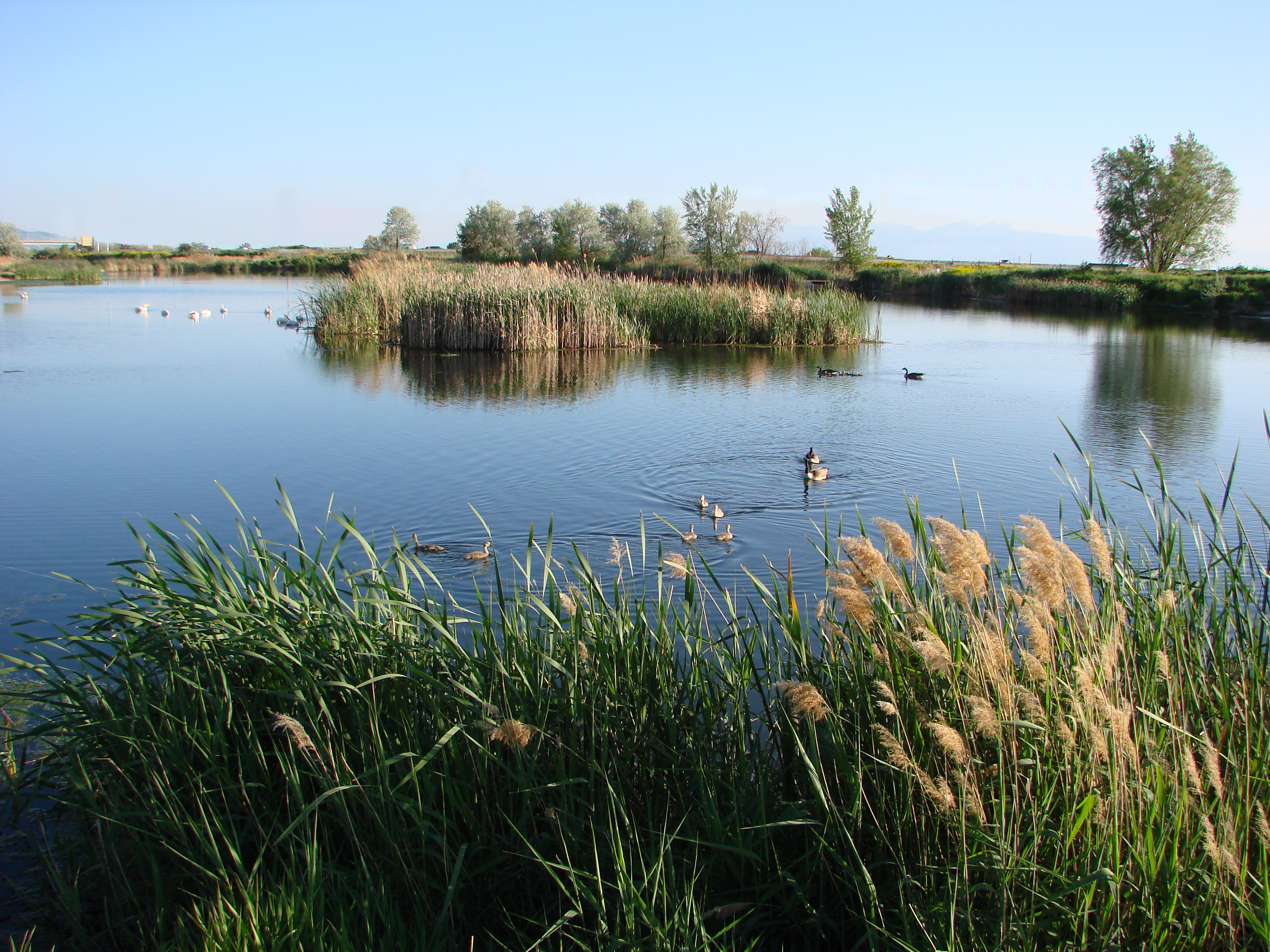
-Wetlands-What's in a name? Click to view larger view of a Pond and marsh showing wetland plants with Canada geese goslings and pelicans. Photo Courtesy and Copyright Mark Larese-Casanova
Pond and marsh showing
wetland plants with
Canada geese goslings and pelicans.
Courtesy & Copyright ©
Mark Larese-Casanova

-Wetlands-What's in a name? Click to view larger view of Pickleweed growing in a salt playa is adapted to growing in saline soils. Photo Courtesy and Copyright Mark Larese-Casanova
Pickleweed growing in a salt playa
is adapted to growing in saline soils.
Courtesy & Copyright ©
Mark Larese-Casanova
Hi, this is Mark Larese-Casanova from the Utah Master Naturalist Program at Utah State University Extension.-Wetlands-What’s in a name?

A wetland really is more than just ‘land that is wet’. There are certain key ingredients that need to go into a wetland for it to truly be a wetland. Of course, water needs to be present for at least part of the growing season. It can simply be in the form of temporarily saturated soils or even standing water a few feet deep.

As soil becomes saturated with water, oxygen levels are greatly reduced. Quite often, bacteria in saturated soils will create hydrogen sulfide, giving wetland soils that stinky odor of rotten eggs. As plants grow in a wetland over several years, their decaying matter helps to create a thick, dark layer of organic soil.

The presence of water in a wetland encourages the growth of hydrophytes, or ‘water-loving’ plants, that are specially adapted to living in wet environments. Many wetland plants have open spaces within the leaves and stems- often referred to as aerenchyma. This allows oxygen to diffuse down to the roots, sometimes creating an oxygen-rich environment in the soil around a plant. Also, many wetland plants reproduce both by floating or wind-dispersed seeds and by rhizomes, which are underground roots that can travel great distances. Some plants that grow in salty wetlands around Great Salt Lake are able to control the salt in their tissues by depositing it on the outside of the leaf or containing it in chambers within their cells.

Like plants, specially adapted animals also call wetlands their home. Mammals and birds have oily fur or feathers that allow them to swim in cold water without losing much body heat. They also often have webbed feet to aid in swimming. Other animals, such as fish, amphibians, and insects, have gills to breathe in water.

Despite being the second driest state in the country, Utah has a high diversity of wetlands. Vast marshes surround the Great Salt Lake, providing habitat to enormous populations of migratory birds. Less obvious wet meadows provide unique habitat to butterflies and other insects. Salty playas which are shallow basins with no outlet, are found throughout the West Desert, creating unique ecosystems of highly adapted plants. Riparian wetlands can grow along the edges of rivers, providing a unique transition between the swift water and upland habitats. Southern Utah is home to some peculiar wetlands such as potholes and hanging gardens, both associated with sandstone bedrock. A hanging garden clings to the side of a moist cliff, creating a microhabitat for rare plants, such as orchids and monkeyflower. Potholes can simply be eroded basins in the sandstone where water collects in spring. A pothole is an oasis that provides water for desert wildlife and a home for fairy shrimp and spadefoot toads.

Spring is the perfect time of year to visit a wetland. The constant chorus of birds, insects, and amphibians are a testament to the importance of wetlands, teeming with life in the middle of a desert.

For Wild About Utah, I’m Mark Larese-Casanova.

Credits:

Images: Courtesy & Copyright © Mark Larese-Casanova

Text:     Mark Larese-Casanova, Utah Master Naturalist Program at Utah State University Extension.
Additional Reading:

Mitsch, W.J., and J.W. Gosselink. (1993). Wetlands. Van Nostrand Rheinhold.

Tiner, R. W. (1999). Wetland Indicators: A Guide to Wetland Identification, Delineation, Classification, and Mapping. CRC Press

Utah Division of Wildlife Resources. (1995). Playas to Marshes…Where Water Meets Land. Growing WILD Newsletter. https://www.wildlife.utah.gov/education/newsletters/95spring-gw.pdf

Utah Division of Wildlife Resources. (2003). Utah’s Wonderful Wetlands Activity Guide. https://wildlife.utah.gov/education/pdf/wetlands_activity_guide.pdf

-Wetlands-What’s in a name?

The Colorado River Compact, Saving Water for Utah

Colorado Compact Coverage, Courtesy AZwater.gov, https://www.azwater.gov/AzDWR/StatewidePlanning/CRM/images/map_main_large.jpg
Colorado Compact Coverage
https://www.azwater.gov/AzDWR/StatewidePlanning/CRM/images/map_main_large.jpg [Feb 27, 2014]
Courtesy AZwater.gov

The Colorado River Compact, Saving Water for Utah: Hoover Dam Courtesy USBR Hoover Dam
Courtesy USBR

Hi, this is Mark Larese-Casanova from the Utah Master Naturalist Program at Utah State University Extension.

The Colorado River Compact, written into law almost a century ago, helped ensure our survival in Utah today. We all know that Utah is a dry state. In fact, Utah is the second driest state in the country, with only Nevada being drier. Our average annual precipitation varies widely, from as low as a few inches a year near St. George, to as high as 60 inches in the mountains. Since most of our water comes from mountain snow, we rely on rivers and streams to deliver it to us.

The Colorado and Green Rivers, the largest in Utah, carry water from the Rocky, Wasatch, and Uinta Mountain ranges throughout Utah and the Intermountain West. The Colorado River Basin, the area of land from which the Colorado River and its tributaries drain water, covers the eastern half of Utah, along with the western half of Colorado, almost all of Arizona, and small parts of Wyoming, New Mexico, Nevada, and California. Each of these states has a dry climate, and water from the Colorado has always been in high demand.

In the heavily populated eastern United States, the right to use water often adheres to Riparian Doctrine in which water is shared by all those who live along the body of water. However, the western US was settled at different times, and populations are more sparse. So, water rights generally follow the doctrine of Prior Appropriation. That is, the water is set aside for whoever is able to use it first. The only problem is that California was developed earlier than the other states in the basin, and therefore, as the US Supreme Court ruled in 1922, was legally entitled to more than their fair share of the water! In this case, western water law simply didn’t work. So, all 7 states in the Colorado River Basin sat down together with the US Government and negotiated the Colorado River Compact to ensure that Utah and the other Upper Basin states were entitled to as much water each year as California and the other Lower Basin states that were growing at a faster rate.

So there you have it- one key piece of legislation helping to save civilization in Utah. Except, well, the amounts of water each state is entitled to was based on an abnormally high year of water flow… and, so, there often isn’t enough water to go around… and Mexico doesn’t seem to get much water at all. OK, so the Colorado River Compact isn’t perfect, but it’s important. To ensure that we all truly have enough water, it will take compromise, conservation, and a whole lot of common sense.

For Wild About Utah, I’m Mark Larese-Casanova.

Credits:

Images: Courtesy AZwater.gov
Text:     Mark Larese-Casanova

Additional Reading:

Gelt, J. Sharing Colorado River Water: History, Public Policy and the Colorado River Compact. Water Resources Research Center. https://wrrc.arizona.edu/publications/arroyo-newsletter/sharing-colorado-river-water-history-public-policy-and-colorado-river

US Bureau of Reclamation. The Colorado River Compact. https://www.usbr.gov/lc/region/pao/pdfiles/crcompct.pdf

US Bureau of Reclamation. The Law of the River. https://www.usbr.gov/lc/region/pao/lawofrvr.html

Law of the River, Colorado River Management, State of Arizona, https://new.azwater.gov/crm/law-river

Water Education Foundation. 1922-2007: 85 Years of the Colorado River Compact. https://www.watereducation.org/western-water-excerpt/1922-2007-85-years-colorado-river-compact

James, Ian, Scientists have long warned of a Colorado River crisis, The Los Angeles Times, July 15, 2022, https://www.latimes.com/california/story/2022-07-15/scientists-have-long-warned-of-a-colorado-river-crisis

Echoes of Lake Bonneville

Echoes of Lake Bonneville: North Spring, Fish Springs National Wildlife Refuge, Utah. Courtesy Utah Geological Survey
North Spring, Fish Springs National Wildlife Refuge, Utah. Courtesy Utah Geological Survey

Leland Harris wetlands, Snake Valley, Utah, Courtesy Utah Geological SurveyLeland Harris wetlands
Snake Valley, Utah
Courtesy Utah Geological Survey

Least Chub, Courtesy and Copyright Mark C. Belk, PhotographerLeast Chub
Courtesy & © Mark C. Belk, Photographer
Echoes of Lake Bonneville

Hi, I’m Holly Strand of the Quinney College of Natural Resources at Utah State University.

Deserts are dry by definition receiving an average of less than 10 inches of precipitation a year. In Utah’s cold West Desert, this skimpy amount of moisture slakes the thirst of sagebrush, saltbush or greasewood, but not much else. However, just like the Sahara, the West Desert has its oases. In certain lowland valleys you’ll find complexes of pools and marshes. There isn’t enough rain to form these freshwater sanctuaries. The water comes from giant underground aquifers.

Underneath the West Desert, the aquifer system acts as a storehouse for runoff from the surrounding mountains. As rainwater or snow melt enters or “recharges” the aquifer system, water pressure can build up in some areas. This pressure moves water through cracks and tunnels within the aquifer, and sometimes this water flows out naturally in the form of springs.

These desert springs–and the resulting pools and marshes–permit concentrations of animals and plants not possible under normal desert conditions. You’ll find sedges, rushes cattails and many other wetland plants. Both migratory and year round birds congregate here. There are even a couple of frog species—the Colombian spotted frog and the northern leopard frog.

But most remarkable are the desert spring residents that have survived from the days when the West Desert formed the floor of giant Lake Bonneville. Surveys have revealed a number of relict snails and other mollusks that still persist from that time. Some, like the Black Canyon Pyrg exist at a single spring complex only; they are found nowhere else on earth.

Certain native fish were also left high and dry by Lake Bonneville’s recession. The least chub is a good example. Now the sole member of its genus, this 3-inch long survivor is an unassuming but attractive little minnow. It is olive-colored on top and sports a gold strip on its steel-blue sides. It swims in dense but orderly schools in either flowing or still water. It can withstand both temperature variations and high salinity. The ability to tolerate different physical conditions has undoubtedly helped the least chub survive the post-Lake Bonneville millennium. Even so, the least chub was hanging on in only six different locations until Utah’s Division of Wildlife Resources reintroduced it to several more sites within its historic range. The Division and its conservation partners are still working to reduce threats to the least chub, to other spring residents and to the spring habitats themselves.

For more information and pictures go to www.wildaboututah.org

Thanks to Chris Keleher of Utah’s Department of Natural Resources for his help in developing this Wild About Utah story.

For Wild About Utah, I’m Holly Strand.

Credits:

Theme: Courtesy & Copyright Don Anderson Leaping Lulu
Image: Least Chub, Mark C. Belk, Professor of Biology, Brigham Young University
Image: Wetlands, Courtesy Utah Geological Survey https://geology.utah.gov/
Text: Holly Strand, Quinney College of Natural Resources at Utah State University

Sources & Additional Reading

Bailey, Carmen L., Kristine W. Wilson Matthew E. Andersen. 2005. CONSERVATION AGREEMENT AND STRATEGY FOR LEAST CHUB (IOTICHTHYS PHLEGETHONTIS) IN THE STATE OF UTAH Publication Number 05-24 Utah Division of Wildlife Resources a division of Utah Department of Natural Resources https://wildlife.utah.gov/pdf/fish/least_chubs.pdf

Jones, Jennifer, Rich Emerson, and Toby Hooker. 2013. Characterizing Condition in At-risk
Wetlands of Western Utah: Phase I UTAH GEOLOGICAL SURVEY a division of Utah Department of Natural Resources,https://geodata.geology.utah.gov/pages/view.php?ref=8364

Nature Serve entry for Least Chub: https://explorer.natureserve.org/servlet/NatureServe?searchName=Iotichthys+phlegethontis

Hanks, Joseph H. and Mark C. Belk. 2004. Threatened fishes of the world: Iotichthys phlegethontis Cope, 1874 (Cyprinidae) in Environmental Biology of Fishes, Vol. 71. N. 4., Kluwer Academic Publishers. https://dx.doi.org/10.1007/s10641-004-1030-x

Sigler W. F. & J. W. Sigler. 1996. Fishes of Utah, A Natural History. University of Utah Press, Salt Lake City. 375 pp. https://www.amazon.com/Fishes-Utah-A-Natural-History/dp/0874804698

Wasatch Front Canyons Geologic Tour, Virtual Tour created from Published Booklet (pdf) Geologic Guide to the Central Wasatch Front Canyons, Utah Geological Survey, State of Utah, https://utahdnr.maps.arcgis.com/apps/MapTour/index.html?appid=5cf1570b998346d98478a5abd50bf096

Geologic guides to the central Wasatch Front Canyons, Utah Geological Survey, 2005, https://geology.utah.gov/popular/utah-landforms/virtual-tour-central-wasatch-front-canyons/ [updated January 2024]