Hope

Hope: Crocus Courtesy Pixabay
Crocus
Courtesy Pixabay
It feels odd to be denning in the spring. Our usual season to escape back into the out of doors has shifted radically for society at-large. It is odd because all the world around us is still warming, flying a little further each day, and here we are, humanity, digging in. It is for the best, for our own survival, but it is still not easy to go against the natural grain.

Hunkering down has affected us all, myself included. At first I was angry with frustration, as I’m sure you were too. I wanted something or someone to blame, to witness and call wrong. I struggled to find meaning in any of it; I struggled to hear anything but fear. It took me a while to come to remind myself that this frustration, this search for orientation, is the human way; it is natural to feel as we do in the omnipresence of the unknown.

What I discovered though is that this perspective, natural as it may be, is harmful if lived too long. My search was a dangerous one: for some externality of blame in an effort to begin to wrest back seeming control. When this is the path you choose to take, you find, as I did, that your anger is not quenched, but instead stoked. My focus was consumed by a blackness; it burned into my eye like a mariner’s missing star.

How then does one change course towards hope, and if not acceptance, then duty, empathy, and discipline for our fellow man? How do we get through such times?

The Greek philosopher Heraclitus said that “For God all things are good and right and just, but for man some things are right and others are not.” When I do not understand the world, the world I love so dearly, I think of these ancient words. I am reminded of this wisdom as I find myself unconsciously passing judgement upon the things I cannot control, and it stops me. In this wisdom I am reminded that, while there may be something to fear, there is no righteousness to my anger. True righteousness instead stems from the lessons of spring; the lessons of hope: of living on with tenacity, industry, and love, even in the face, however distant, of winter.

The righteousness of hope is found, too, in our choice to harness our actions with humble intention in light of what is happening in the world and the toll that is being taken. And just as fear is begotten in the meandering anger of blame, hope lives in our individual conscious actions. Only together can our actions create constellations for others to follow: cosmos among the chaos, shining brighter than the void’s pull. That we will all choose to do what is right, though it will not be easy, even in the face of doubt and fear, gives me hope.

So from the crocuses, the robins, and the fresh mud of our beautiful Utah spring, don’t forget that the world is still good and continues to be every day, even if sometimes it does not feel like it. Remind yourself of the lessons of spring by opening your window, listening to the birds, smelling deep the thawing air, and choosing to den in these times, fulfilling the spring lessons of tenacity, industry, and love. Choose to fix yourself as another orienting light of hope for those who still only see the night, or those who do not look up at all, for the world is good, it is everywhere, and we will always be of it. Here is to the persistence of life and hope found in us all this spring.

I’m Patrick Kelly, and I’m Wild About Utah.
 
Hope-Credits:

Images: Image Courtesy Pixabay
Audio: Contains audio Courtesy & Copyright Kevin Colver
Text:    Patrick Kelly, Director of Education, Stokes Nature Center, https://logannature.org
Included Links: Lyle Bingham, Webmaster, WildAboutUtah.org

Hope-Additional Reading

Campbell, Joseph, Moyers, Bill, The Power of Myth, Bantum Books, Knopf Doubleday Publishing, Excerpt Courtesy Google Books, Heraclitus said: For God all things are good and right and just, but for man some things are right and others are not.

Imaginary Wanderings

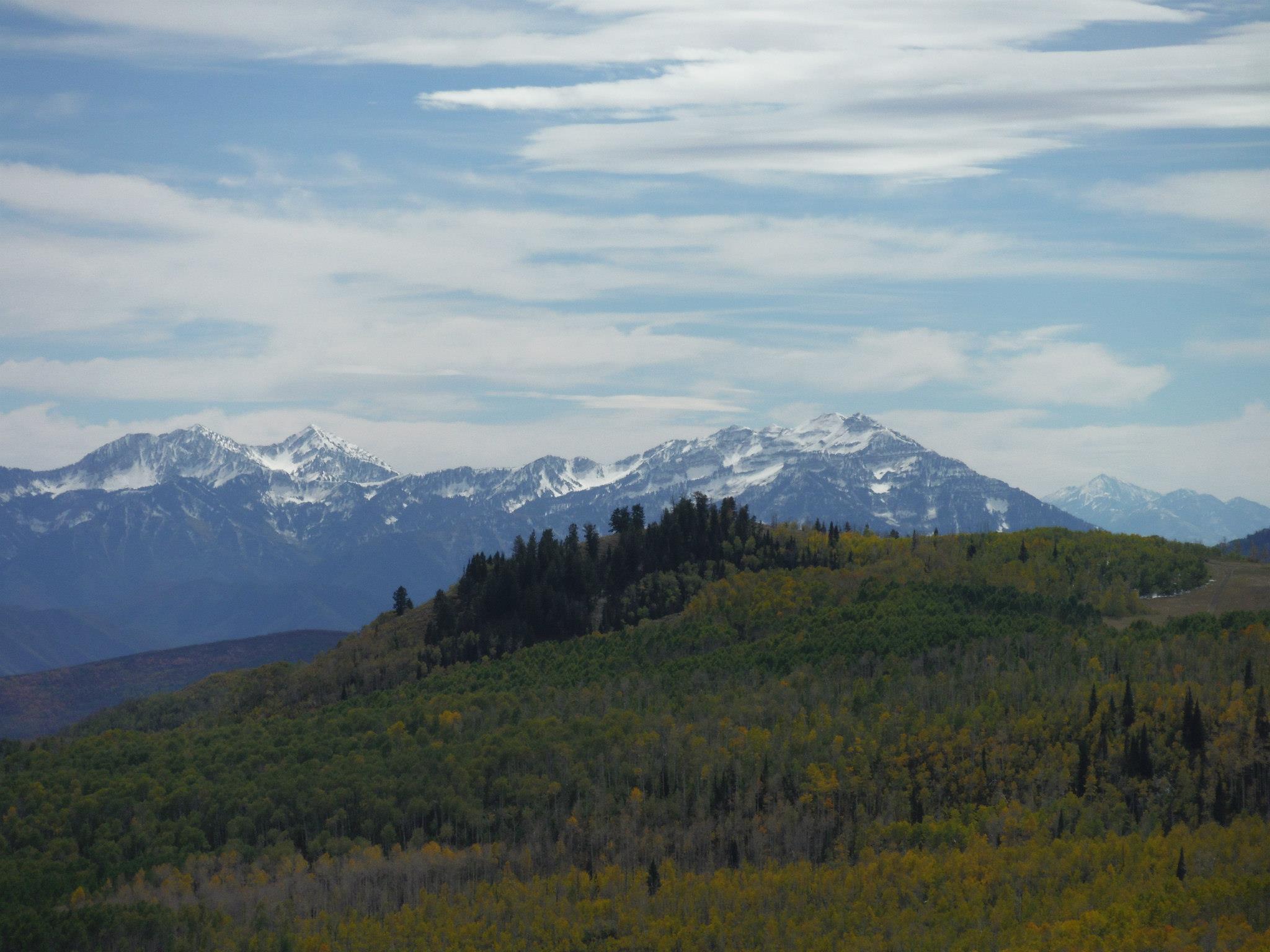
Imaginary Wanderings: The edge of the Great Basin, top of the Bear River Range Courtesy & Copyright Josh Boling, Photographer
The edge of the Great Basin, top of the Bear River Range
Courtesy & Copyright Josh Boling, Photographer
I’ve fancied a certain type of wandering lately—to grab my pack and boots and walk the lines of Utah’s political border—a trail made not of dirt and stone, but of imaginary lines of latitude and longitude. But, as of yet, I haven’t found the time or resources to do so beyond my own imagination and the 3 or 4 minutes I have with you now. Come join me in a stroll around Utah, at least the way I’ve imagined it.

Walking north out of Logan, I’ll wander through the grid-patterned neighborhoods that pepper the flanks of the Bear River Range, the still-snowy peaks that serve as sentinels over my daily commute and the adventure on which I embark now. They serve another, greater purpose, too, though. Without the Bear Rivers, the Rocky Mountains would be otherwise dissected. The snowy peaks I adore and which now pass in slow motion over my right shoulder form the only range of mountains that connect the northern and southern Rockies. Though they only measure about 70 miles in length, they provide a critical ecological thoroughfare from the south end of Cache Valley, Utah, north to Soda Springs, Idaho.

I won’t follow them that far, though. I’ll turn left (west) at the Idaho border toward the Great Basin.

I’m technically already there. We all are if we live along the Wasatch Front. And there are just a few minor ranges—the Clarkston Range, Blue Spring Hills, and the northern fingerling ridges of the Promontory Mountains—to wander across before reaching the Great Basin proper.

My favorite hidden gem of this often-overlooked portion of Utah are the Raft River Mountains. Like the mighty Uintas to the east, the Raft Rivers run East-to-West. So, despite being a stone’s throw from the Great Salt Lake, the tributaries running off their northern flanks drain not into the Great Basin and the Great Salt Lake, but north onto the Snake River Plain toward the Columbia River and, eventually, the Pacific Ocean.

The Tri Corners Landmark is a simple granite pillar sticking 3 or 4 feet out of the sand amongst wind-whipped sage brush. It’s easy to miss, but marks some interesting irregularities. Utah’s political border is not, in fact, made up of straight lines. According to cartographer Dave Cook, surveyors who created the state’s initial boundaries hastily covered ground with their crude survey instruments. They were paid by the mile, so they were more interested in finishing quickly than correcting any errors they made along the way.

The border wiggles at least four times by my calculations—one of which comprises two right angles—as it wanders across ridgelines and through the dusty draws of the basin and range mountains toward the Mojave Desert of southwest Utah.

Imaginary Wanderings: The wrinkled topography if the Colorado Plateau Courtesy & Copyright Josh Boling, Photographer
The wrinkled topography if the Colorado Plateau
Courtesy & Copyright Josh Boling, Photographer
I won’t be there for long, though. The border only runs for roughly 50 miles along the two legs of the right triangle that constitutes Utah’s allotment of the Mojave Desert before it climbs up onto the Colorado plateau. Ed Abbey famously compared the wrinkled topography of Utah, particularly his beloved canyon country of the Colorado Plateau, to the two largest of our states. “Alaska is our biggest, buggiest, boggiest state,” Abbey wrote. “Texas remains our largest unfrozen state. But mountainous Utah, if ironed out flat, would take up more space on a map than either.” Ropes, technical climbing and canyoneering gear, and a fair amount of fortitude would be required here.

The eastern border we share with Colorado is a varied expanse of high desert plateaus, rugged cliffs, out-of-place riparian zones, and a few spectacular snow-capped mountain ranges leading through some of the most beautiful and gloriously desolate places on the planet. The Book Cliffs, Dinosaur National Monument, and the La Sal Mountains come to mind.

A short walk distance-wise would require heaps of route finding across the Green River’s Flaming Gorge and along the northern toes of the Uinta Mountains. Here is perhaps the greatest of Utah’s geologic juxtapositions. Low basins adjacent the Intermountain West’s highest peaks.

Imaginary Wanderings: A view of the high Uintas from their northern foothills Courtesy & Copyright Josh Boling, Photographer
A view of the high Uintas from their northern foothills Courtesy & Copyright Josh Boling, Photographer
I’ll take my first right turn at the western edge of the Uinta foothills. Here I might skip the formalities of a longitudinal walk—stick my thumb out instead, and make a bee-line for Bear Lake, Logan Canyon, and home: the walks I’ve already known for some time.

Perhaps you’re inspired now to know parts of this walk better yourself.

I’m Josh Boling, and I’m Wild About Utah!

Credits:

Imaginary Wanderings:
Photos: Courtesy and Copyright Josh Boling, Photographer
Audio: Includes audio from
Text: Josh Boling, 2020, Edith Bowen Laboratory School, Utah State University

Sources & Additional Reading

Boling, Josh, Why I Teach Outside, Wild About Utah, November 11, 2019, https://wildaboututah.org/why-i-teach-outside/

Kiffel-Alcheh, Utah, National Geographic Kids, https://kids.nationalgeographic.com/explore/states/utah/

The Geography of Utah, NSTATE LLC, https://www.netstate.com/states/geography/ut_geography.htm

Fisher, Albert L, Physical Geography of Utah, History to Go, Utah Division of State History, https://historytogo.utah.gov/physical-geography-utah/

Benefits of Being Wild

Benefits of Being Wild: Naomi Wilderness Courtesy and Copyright Matthew Wickenhiser, Photographer
Naomi Wilderness
Courtesy and Copyright Matthew Wickenhiser, Photographer
Imagine a place devoid of randomly constant dings and dongs, a place with no artificial lighting or insistent clicking of keys or ticking of screens. Maybe even a place where one no longer has to think about the persistently pressing matters of politics for even just a brief moment.

Solitude, awe, beauty…breeze, trees, birds…life.

Benefits of Being Wild: Climbing Logan Canyon Courtesy and Copyright Matthew Wickenhiser, Photographer
Certainly, the place that comes to mind might exist here in Utah. Anyone who has driven more than five hours in any direction can tell you the state doesn’t always look the same. Utah has landscapes ranging from mountains reaching more than 13,000 feet to desert plains dropping down to nearly 2,000 feet above sea level, and everything in between (McNamee, Arrington 2019). The colors of the landscape begin in the north with the deep greens of the forest and end in the south with the rich hues of red and orange. It is this unique and endlessly variable landscape that some argue makes it the perfect place to find happiness.

Hold on. Happiness is not a simple thing to achieve or understand. Sources are both internal and external. But for this story we are focusing on the happiness which comes from being in a mentally beneficial environment. Utah’s incredibly diverse landscape lends itself to be adaptably beneficial to a population of various preferences. It quite literally can suit just about anyone’s partialities. Whether someone likes mild winters in the desert or harsh, bitter, white winters, (which most people on this plant have only heard about in stories) Utah has it all. If someone prefers quiet towns or large and bustling urban centers, thinner air to thicker air; Utah can accommodate. But what do these accommodations have to do with happiness?

There is an ever-growing expanse of research regarding the mental health benefits of nature. Much of this research came about after the establishment of wilderness therapy programs which began to take root in Utah during the latter part of the 1980s. Griffin Woods, a student at Utah State University, experienced one of these wilderness programs. One of the important things he said about experiencing nature was, “People should definitely be pushed more to go outside, get off the phone and be in nature as opposed to being glued to a phone.” (Griffin. Personal communication. October 2019)

This happiness can spread to family members. Many children who participate in an outdoor education program will afterwards ask their parents to take them out into nature so they could “show and tell” them what they have seen and heard.

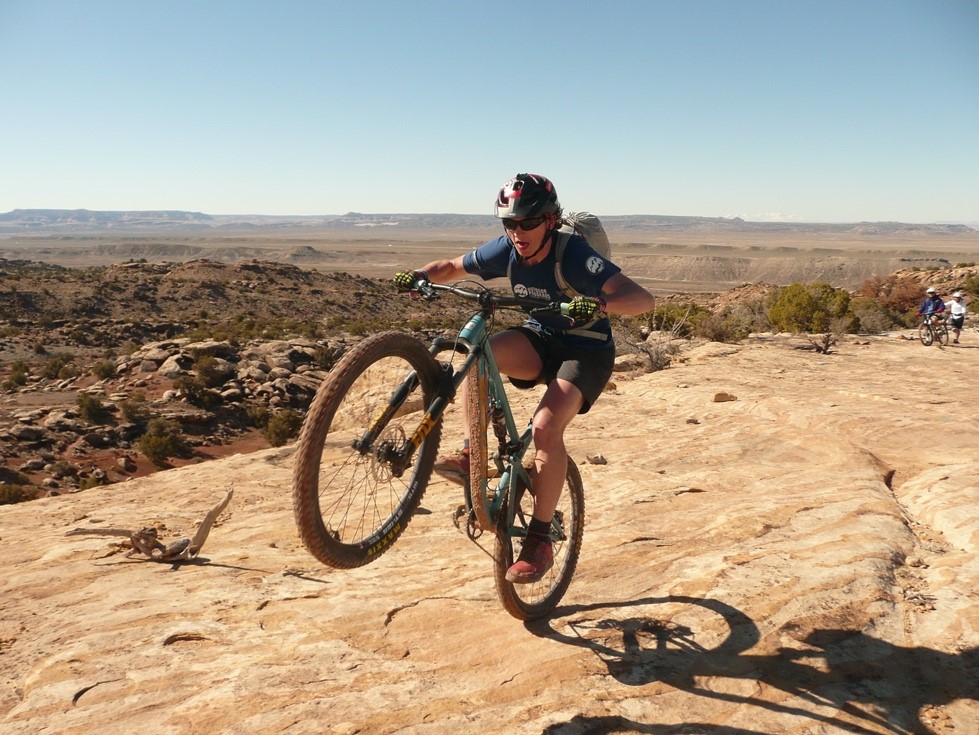
Benefits of Being Wild: Bike Ride in Moab Courtesy and Copyright Matthew Wickenhiser, Photographer
Bike Ride in Moab
Courtesy and Copyright Matthew Wickenhiser, Photographer
Simply being in place of wilderness can reduce stress and anxiety, and improve overall esteem (Arnold, 1994; Bahaeloo-Horeh & Assari, 2008). With this knowledge, Utah becomes an arsenal armed against the harmful habits that deteriorate our daily lives. It enables us to actively increase our attitudes and improve our internal state of mind.

So, this, this is what makes Utah so incredible. This state’s unique ability to make its residents and visitors happier. All you have to do is get outside. We end with this quote from Edward Abbey, “Wilderness is not a luxury but necessity of the human spirit.” So please, feed your spirit, enrich your soul, and enlighten your mind. You exist in arguably one of the most perfect places in the world to do this. Now go be Wild About Utah.

This is Matthew Wickenhiser and I’m Wild About Utah.

Credits:
Photos: Courtesy & Copyright © Matthew Wickenhiser
Additional audio provided by Friend Weller and Kevin Colver
Text: Matthew Wickenhiser, Utah State University

Additional Reading

Utah Travel Industry Website https://www.utah.com/

Utah, History.com, A&E Television Networks, Nov 9, 2009, https://www.history.com/topics/us-states/utah

Utah: A Geologic History – Utah Geological Survey, Department of Natural Resources, State of Utahhttps://www.history.com/topics/us-states/utah

Utah Forest Overview, USDA Forest Service, https://www.fs.fed.us/rm/ogden/overviews/Utah/OV_Utah.htm

These 20 Utah Landscapes Will Blow You Away With Their Beauty, https://www.onlyinyourstate.com/utah/20-ut-landscapes/

The Ecology in and around the Logan River

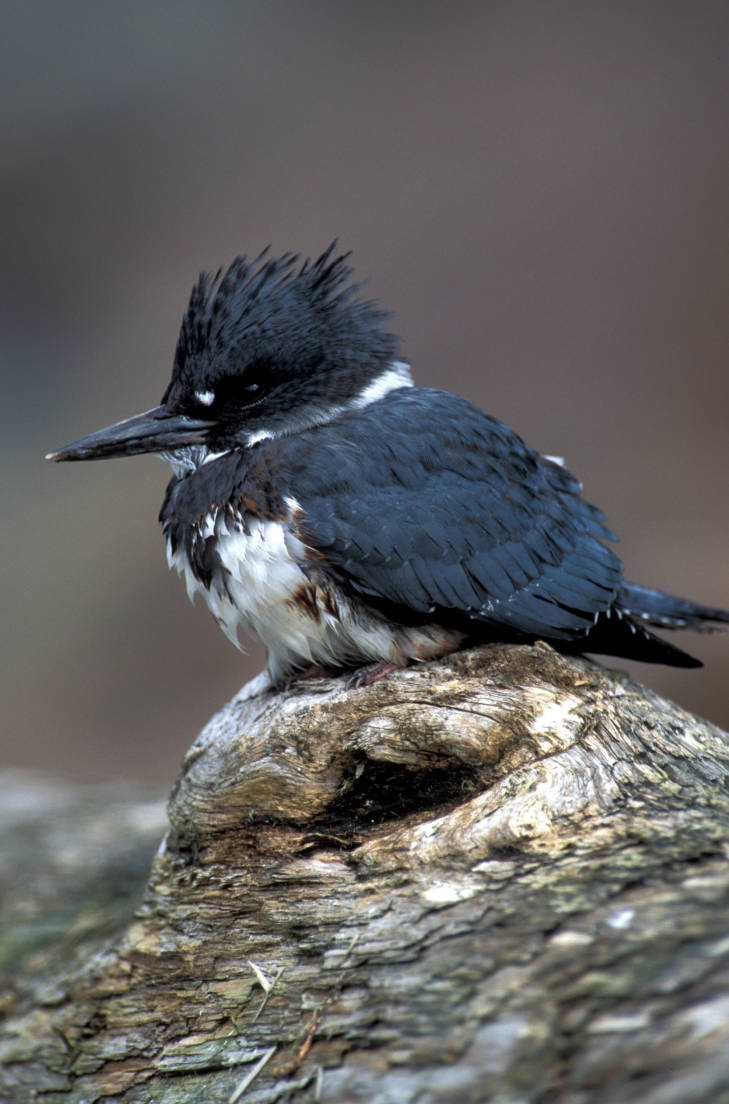
Belted Kingfisher Ceryl alcyon Courtesy US FWS, C Schlawe, Photographer
Belted Kingfisher
Ceryl alcyon
Courtesy US FWS,
C Schlawe, Photographer
Logan River ecology is about connections between highlands and lowlands, water and land, life in and around the river and resources that support that life.

The river begins in southeastern Idaho and runs 53.5 miles to its confluence with the Cutler Reservoir in Utah’s Cache Valley. The river transitions from mountain riparian, characterized by low growing willows and coniferous trees, to the valley’s lowland riparian where it’s dominated by a variety of shrubs, cottonwoods, and willow trees. Both wildlife and plants change along this elevational gradient giving the Logan River greater ecological diversity than might be found over hundreds of miles of a flatland river.

Rivers move water. They also transport sediments and nutrients that drop out of the water wherever the current slows, for example on floodplains during spring floods. This is why floodplains, or riparian zones, have such productive soils.

The rich soils and water available on the floodplain support a wide diversity of plants. These plants in turn provide underlying layers for insects, nesting sites for birds, and water-cooling shade that harbors the heat sensitive cutthroat trout. Plants also drop their leaves into the river providing food and nutrients to aquatic insects.

One insect found in the Logan River is the mayfly, a graceful macroinvertebrate with unique upright wings and a delicate silhouette. The female adult drops her eggs on the river’s surface which then fall to the river’s bottom. The nymphs hatch within a few days or weeks. They spend the next year moving along the river’s bottom hiding among vegetation, rocks, and fallen leaves. After a year, nymphs swim to the surface and molt into duns which fly to nearby riparian vegetation. After a couple hours duns shed their skins and become brightly colored adult mayflies called spinners.

Male spinners form a swarm over the water to attract females who fly into the swarm. Pairs mate in flight; after mating the female flies down to the river to deposit her eggs, and dies shortly thereafter.

A large number of mayflies do not complete their life cycle as they are eaten by fish, spiders, bats and birds.

Bonneville cutthroat trout, Utah’s state fish, subsist largely on aquatic insects including mayflies. Feared to be extinct in the 1970s, biologists searched the state for Bonneville cutthroat trout and when a population was found in the Logan River, wildlife managers and USU scientists teamed together to ensure the cutthroat population became and remained robust.

American Dipper Courtesy US FWS Dave Menke, Photographer
American Dipper
Courtesy US FWS
Dave Menke, Photographer
Hundreds of bird species eat aquatic insects; one bird, however, specializes in eating aquatic insects under water. The American Dipper, walks on the bottom of Logan River using its wings like a submarine’s diving planes to keep it from bobbing to the surface. Walking along the river bed, the dipper turns over small rocks and sunken sticks to uncover and eat insect nymphs.

Other riparian birds, like the belted kingfisher, are fish-eaters. This handsome, crested, steel blue bird can be seen perched in the trees next to the Logan River eying fish beneath the surface. At times, kingfishers will hover directly above the water announcing their presence with a loud, rattling call. At the right time, the kingfisher dives headlong into the river using its long, sharp beak like a tweezers to catch small fish.

Rivers, like the Logan, and their riparian zones, support some of the richest biological diversity in the West. They are forceful and ever-changing, but provide all that life needs to survive and thrive in a compact area. These are dynamic ribbons of green and blue that connect land to water, plants to animals, and humans to nature.

This is Shauna Leavitt and I’m wild about Utah.

Credits:
Photos: Courtesy & Copyright ©
Audio: Courtesy & Copyright © Friend Weller, Utah Public Radio
Text: Shauna Leavitt, Utah Cooperative Fish and Wildlife Research Unit, Quinney College of Natural Resources, Utah State University
Co-Authored by: Frank Howe, Wildland Resources, Assoc. Prof. (State Cooperator), Quinney College of Natural Resources, Utah State University

Sources & Additional Reading

Geologic Map of the Logan 7.5′ Quadrangle, Cache County, Utah, Utah Geological Survey, 1996, https://ugspub.nr.utah.gov/publications/misc_pubs/mp-96-1.pdf

Williams, Stewart J. Lake Bonneville: Geology of Southern Cache Valley, Utah, Geological Survey Professional Paper 257-C, US Department of the Interior, 1962, https://pubs.usgs.gov/pp/0257c/report.pdf

Biek, Bob; Willis, Grant; Ehler, Buck; Utah’s Glacial Geology, Utah Geological Survey, September 2010, https://geology.utah.gov/map-pub/survey-notes/utahs-glacial-geology/

Hylland, Rebecca, What are Igneous, Sedimentary & Metamorphic Rocks?, Glad You Asked, Utah Geological Survey, https://geology.utah.gov/map-pub/survey-notes/glad-you-asked/igneous-sedimentary-metamorphic-rocks/