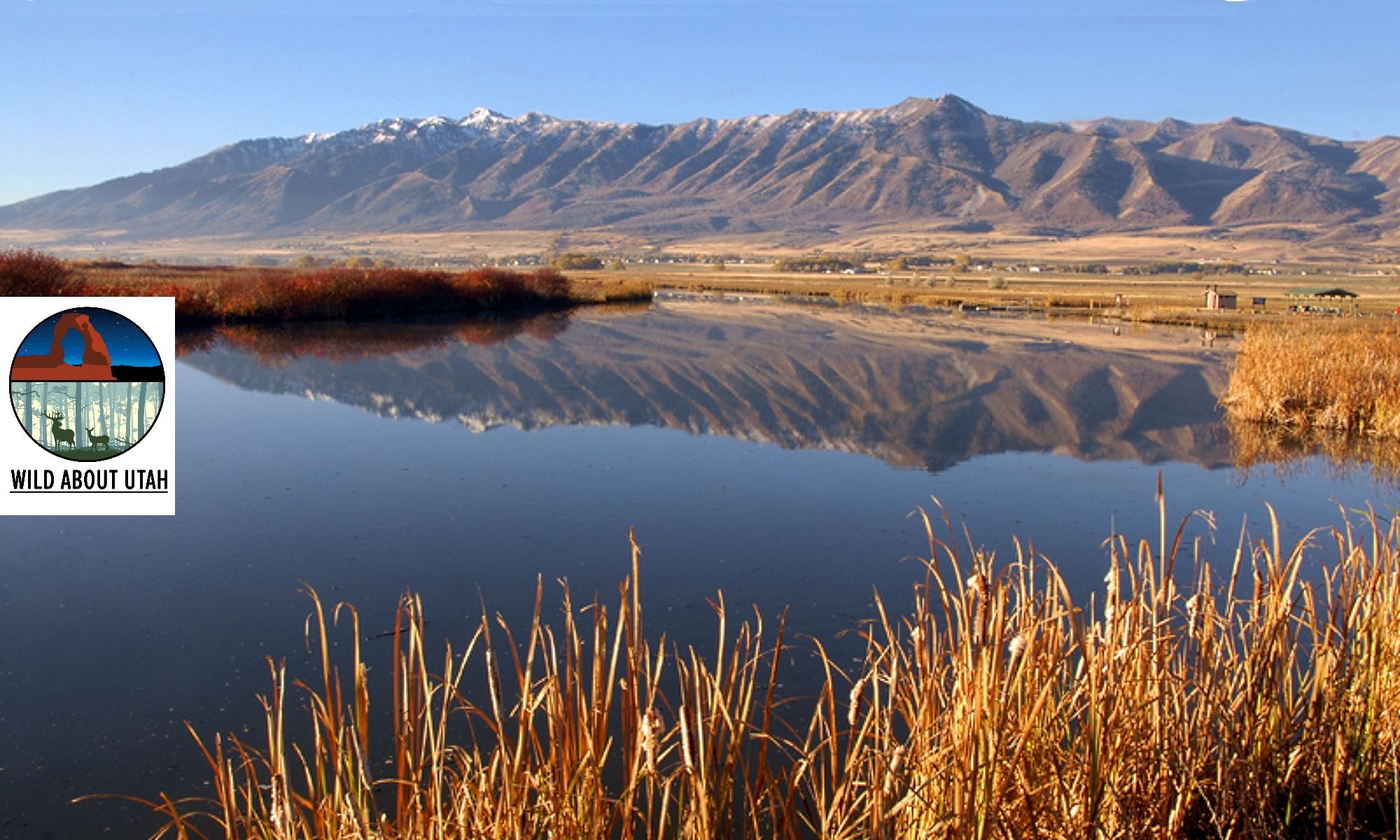
There is a Giant Among Us–The Great Salt Lake

A Giant Among Us, The Great Salt Lake: The Great Salt Lake Breach
The Great Salt Lake Breach
Courtesy U.S. Geological Survey
Department of the Interior/USGS
Mike Freeman, Photographer
10 Nov 2015
Water flowing through the Great Salt Lake breach in 2011, when lake levels were high due to above average snowfall in the Wasatch and Uinta Mountains. The Great Salt Lake breach is an area that allows water to travel between the southern and northern parts of the lake.
There is a giant among us with a profound influence on our past, present, and future. My first encounter with this giant was both buoyant and delightful as I floated in the brine on a lovely summer day. But I was oblivious to the Great Salt Lake’s immense value as an environmental, cultural, and economic resource.

A Giant Among Us–The Great Salt Lake

Much of what follows is taken from a very recently released collaborative study titled “Impacts of Water Development on Great Salt Lake and the Wasatch Front” which was a collaborative effort from four institutions(Utah State University, Utah Division of Water Resources, Salt Lake Community College, and the Utah Division of Wildlife Resources.)

A 2012 analysis by Bioeconomics estimated the economic value of the lake at $1.32 billion per year for mineral extraction, brine shrimp cyst production, and recreation. The abundant food and wetlands of the lake attract 3 million shorebirds, as many as 1.7 million eared grebes, and hundreds of thousands of waterfowl during spring and fall migrations. Because of this, it has been designated as a Western Hemisphere Shorebird Reserve Network Site. Due to its enormous surface area, it produces the “lake affect” which enhances our snow pack by an estimated 8%, a significant amount for both skiers and our available water. But our giant is shrinking.

Since the arrival of 19th Century pioneers water diversions for irrigation have decreased its elevation by 11 feet exposing much of the lake bed. Natural fluctuations in rainfall and river flow cause the lake level to rise and fall, but there has been no significant long‐term change in precipitation and water supply from the main tributaries since their coming in 1847.
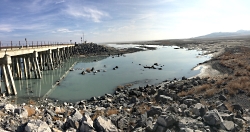
The Great Salt Lake Breach 2015
The Great Salt Lake Breach
Credit: U.S. Geological Survey
Department of the Interior/USGS
Mike Freeman, Photographer
10 Nov 2015

For the first time since it was opened in 1984, water has stopped flowing through the Great Salt Lake causeway breach, an area that allows water to travel between the southern and northern parts of the lake.
To significantly reduce water use, a balanced conservation ethic needs to consider all uses, including agriculture, which consumes 63 percent of the water in the Great Salt Lake Basin. There are no water rights to protect our Great Lake, so water development currently focuses solely on whether there is water upstream to divert. If future water projects reduce the supply of water to the lake, (such as the Bear River Development Project, its level will (most likely) continue to drop.

We must look beyond the next few decades and decide how we value the lake for future generations. Lower lake levels will increase dust pollution and related human health impacts, and reduce industrial and environmental function of Great Salt Lake. We must be willing to make decisions now that preserve Great Salt Lake’s benefits and mitigate its negative impacts into the coming centuries.

John Muir, one of my favorite early American naturalists would most certainly agree with me. From his baptismal plunge into the Great Salt Lake. “I found myself undressed as someone else had taken me in hand and got myself into right lusty relationship with the brave old lake. I was conscious only of a joyous exhilaration….”
And where else could John and I have such a wonderfully buoyant experience?

This is Jack Greene reading for Wild About Utah.

2015 Great Salt Lake Breach at Lakeside, Utah
Gauge near the Great Salt Lake Breach
Credit: U.S. Geological Survey
Department of the Interior/USGS
Mike Freeman, Photographer
10 Nov 2015
A gauge to measure lake water levels stands dry in the lake bed of the Great Salt Lake. For the first time since it was opened in 1984, water has stopped flowing through the Great Salt Lake causeway breach, an area that allows water to travel between the southern and northern parts of the lake.
Credits:
Image: Courtesy U.S. Department of the Interior, U.S. Geological Survey(USGS), gallery.usgs.gov
Text:     Jack Greene, Bridgerland Audubon Society & USU Office of Sustainability
Additional Reading:

Great Salt Lake, Utah, Stephens, Doyle W. and Gardner, Joe, USGS Science for a Changing World, https://pubs.usgs.gov/wri/wri994189/PDF/WRI99-4189.pdf

Salt Lake Brine Shrimp, https://saltlakebrineshrimp.com/harvest/
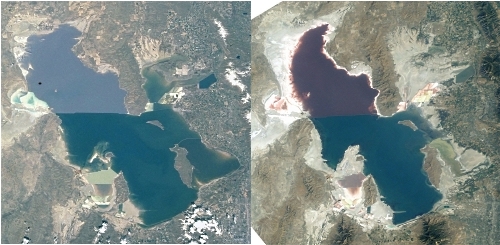
Great Salt Lake Footprint 2001 vs 2003 Comparison
Great Salt Lake Footprint Comparison
2001 vs 2003
Images Courtesy NASA
NASA’s Earth Observatory
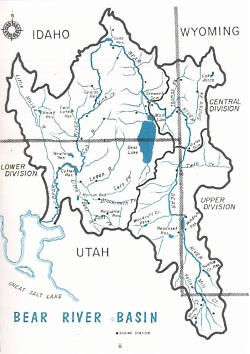
America’s Caveat River

America's Caveat River: Click for a larger view of the Bear River basin, Courtesy Utah State Division of Water Rights, https://waterrights.utah.gov/techinfo/bearrivc/history.html
Bear River basin
Courtesy Utah State Division of Water Rights
https://waterrights.utah.gov/techinfo/bearrivc/history.html 
I grew up in a town that had a story for nearly every run-down property in its borders. Most buildings had at least one ghost floating around its fence line, but the really haunted estate—the one where, supposedly, my great-great uncle plastered babies into the walls, where it’s said he threw his wife into the well, where the land itself swallows livestock and spits out bones, where you can still hear screams coiling up near the hackthorn bushes and willow trees—is just outside of town. Just far enough to escape the reach of the city lights, but not too far that you won’t make it back by morning. The location, more than its history, is probably the reason for the stories. If there is no journey, there is no room for stories to germinate.

My friend, Dr. Lynne S. McNeil, is a folklorist. She told me that it’s common for haunted things to happen in liminal spaces, in the places between places. So the haunted house on the edge of town makes sense. Just like it makes sense that most of the people who went to the haunted house were teenagers—not yet adults, but somehow not kids either. It’s human to seek out nooks to create the things we fear, and the things we feel compelled to lie about. She also told me about the theory of ostentation. People act out something of the legend to connect to the legend more. It’s not enough just to go to the haunted house, but you have to throw stones in the well to see if the motion of something falling will awaken the long murdered wife.

America's Caveat River: Click for a larger view of the Bear River, Courtesy USDA Forest Service
Bear River
Courtesy USDA Forest Service 
I now live near the geographic center of the Bear River drainage. I can walk to decent water from my house. But I hardly ever fish it. Mostly because the best fishing in Northern Utah is in Southern Idaho. Some of it is right on the border. There’s something in the trip. It’s more of an event even if the trip distance is increased by fifteen minutes. The Bear River travels nearly five-hundred miles, but its mouth and source are only separated by about 100 miles. It starts and ends in Utah, but crosses the borders of five states. It’s the largest river in North America that doesn’t flow to an ocean. It is known for its calm meanderings and its white-water kayak sections. It is America’s caveat river. Almost as an homage to the river that always needs an explanation, I choose to travel to it. I choose to fish those tributaries that feed the river instead of the convenient pull-outs where the Bear threads the road. I like to follow the fish to where they spawn. I’m always looking for the less obvious place to fish because everyone knows the story goes that you have to work for the big fish. Fishing trips need time to steep both before and after fishing. Where, if you fish with others, they’ll tell you how the fishing is going to be or was that day. Where, if you fish alone, you’ll think about how the fishing will actually be or was that day. You’ll compare it to other times at the same place and you’ll remember both real and imaginary fish. If there isn’t a space between fishing and not fishing to think and create, if you don’t drive past water that looks fine in search of great water, the fishing won’t be as good. I’ll never be a guy who spends more time on the road consistently than in the river—but, I’ll always give the fish and the river the respect of a drive.

Credits:
Photo: Courtesy USDA Forest Service, J Zapell, Photographer
Text: Russ Beck

Sources & Additional Reading

Wild About Utah Pieces by Russ Beck

Shrubby-Reed Mustard: The Best Little Plant You’ve Never Heard of (Aug 2016)

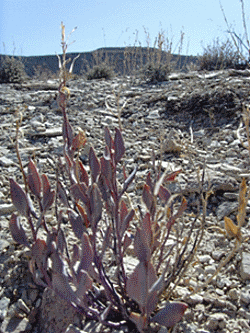
Shrubby-Reed Mustard Bush, Hesperidanthus suffrutescens
Shrubby-Reed Mustard Bush
Hesperidanthus suffrutescens
Courtesy & Copyright Matt Lewis

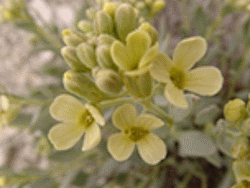
Shrubby-Reed Mustard Blossoms, Hesperidanthus suffrutescens Shrubby-Reed Mustard Blossoms
Hesperidanthus suffrutescens
Courtesy & Copyright Matt Lewis

Shrubby-Reed Mustard Blossoms Closeup, Hesperidanthus suffrutescens Shrubby-Reed Mustard Blossoms
Hesperidanthus suffrutescens
Courtesy & Copyright Matt Lewis

Tucked into isolated pockets of the Uintah Basin’s arid wildlands is the best little plant you’ve never heard of. Known to exist only in Duchesne and Uintah Counties, Shrubby-reed Mustard seems to occupy only the semi-barren “islands” of white shale in areas of the Green River Formation’s Evacuation Creek region. The endangered plant features thick, almost succulent, blue-green leaves and small yellow flowers.

“The habitat of Shrubby-reed Mustard is visually striking,” says USU alum Matt Lewis, a botanist with the Bureau of Land Management in Vernal, Utah. “It grows in very shallow, fine-textured soils and shale fragments that form narrow bands in the desert shrub community.”

Among the first plants to flower in spring, the perennial herb is visited by large number of insects, including many native bee species that forage for pollen. Scientists believe these bees may be critical in the plant’s reproduction and survival.

Lewis says the plant, also known as Toad-Flax Cress and Uintah Basin Waxfruit, offers an understated beauty to the stark landscape. With a shrub-like form and multiple stems, Shrubby-reed Mustard grows to about 20 centimeters in height. Its leaves, which feel almost like leather, change to a bright purple in the fall.

The plant is also enticingly fragrant, Lewis says. “Its scent reminds me of roses mixed with apples and pears.”

Despite its fragile status, Shrubby-reed Mustard is a long-lived plant. USU ecologist Geno Schupp says some individual plants may be one hundred years old.

The elusive species has outlived scientists’ attempts to classify it and has undergone several taxonomic changes. It currently boasts the scientific name Hesperidanthus suffrutescens, placing it solidly in the mustard family.

Lewis knows of no history of Shrubby-reed Mustard as a culinary or medicinal herb, though documented reports of such uses for mustard plants date back to ancient times. The plant appears to provide welcome forage for some four-legged creatures, he says, as he recently witnessed plants that had been grazed completely and ripped from the ground.

“Whether that was due to livestock or native ungulates, I’m not sure.”

Credits:
Images: Courtesy & Copyright Matt Lewis
Text:     Mary-Ann Muffoletto, Utah State University College of Natural Resources
Credits:
Matt Lewis, botanist, Bureau of Land Management, Vernal, Utah.
Eugene “Geno” Schupp, professor, USU Department of Wildland Resources.

Additional Reading:

https://www.fws.gov/mountain-prairie/factsheets/ShrubbyReed-mustardFactSheet.pdf

https://www.fws.gov/mountain-prairie/species/plants/shrubbyreedmustard/5YearReview2010.pdf

Sacred Mountains

Sacred Mountains: White Pine Lake hike., Courtesy & Copyright Hilary Shughart
White Pine Lake hike., Courtesy & Copyright Hilary Shughart

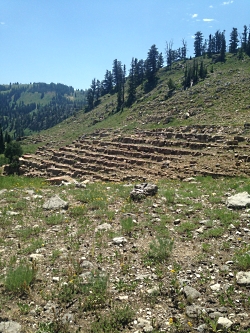
Sacred Mountains: Devil's Staircase, Tony Grove, Courtesy & Copyright Hilary Shughart Devil’s Staircase, Tony Grove, Courtesy & Copyright Hilary Shughart
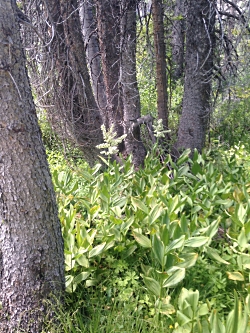
Sacred Mountains: False Hellebore/Corn lily (Veratrum californicum), Tony Grove, Courtesy & Copyright Hilary Shughart False Hellebore/Corn lily (Veratrum californicum), Tony Grove, Courtesy & Copyright Hilary Shughart
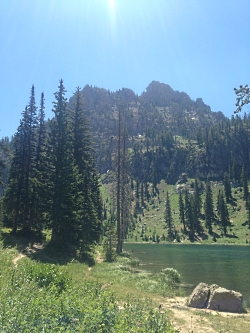
White Pine Lake and Mount Magog, Courtesy & Copyright Hilary Shughart White Pine Lake and Mount Magog, Courtesy & Copyright Hilary Shughart
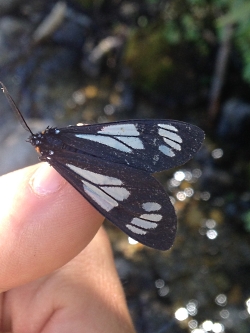
Police Car Moth on Rob Garrett's thumb, White Pine Lake hike. Courtesy & Copyright Hilary Shughart Police Car Moth on Rob Garrett’s thumb, White Pine Lake hike.
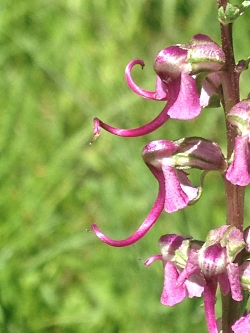
Courtesy & Copyright Hilary Shughart

Elephanthead Lousewort (Pedicularis groenlandica), White Pine Lake hike. Courtesy & Copyright Hilary Shughart Elephanthead Lousewort (Pedicularis groenlandica), White Pine Lake hike.
Courtesy & Copyright Hilary Shughart

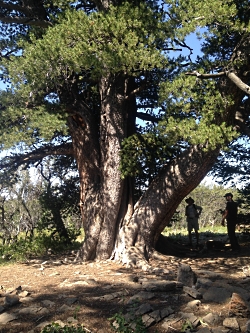
Rob & Jack & big tree, Limber Pine hike Courtesy & Copyright Hilary Shughart Rob & Jack & big tree, Limber Pine hike
Courtesy & Copyright Hilary Shughart

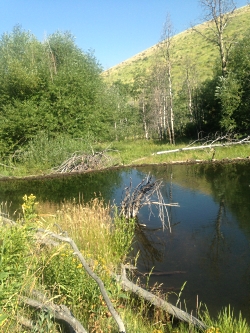
Beaver Dam at USU Forestry Camp (LCFS hike) Courtesy & Copyright Hilary Shughart Beaver Dam at USU Forestry Camp (LCFS hike)
Courtesy & Copyright Hilary Shughart

Jack in 560 year old Limber Pine tree 7/27/16 Courtesy & Copyright Hilary Shughart Jack in 560 year old Limber Pine tree 7/27/16
Courtesy & Copyright Hilary Shughart

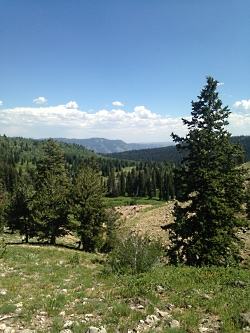
I just completed teaching a 5 day Utah Master Naturalist course through USU extension on Utah mountains. The course allowed me to revisit the immense influence these lofty lumps in the earth’s crust have had on my life, and the life of so many others.

It was mountains that drew me here from the flatlands of Michigan. They have become my main source of spiritual renewal, of aesthetic pleasure and recreation. I run, ski, and hike their trails, explore their hidden canyons and forests, revel in the rich tapestry of wildlife and wildflowers that adorns their slopes, and at present, need I say, seek relief from summer’s heat.

Having served 11 seasons as a seasonal Wilderness ranger for the USFS, I was able to explore much of the backcountry in the Bear River and Wellsville mountains of N. Utah. Beyond these, I’ve been atop Kings peak, the Lasals, Abajos, Cedar and Pine Valley Mountains, the Raft Rivers, and many of our high plateaus. But this is small potatoes considering Wikipedia lists 65 others yet to be explored in our state.

Mountains are what we are. Without them, Brigham Young and the Saints would have continued their exodus on to other parts of the west for the rich resources they bless us with.
Mountains = water. This liquid gift provides over 80% of Utah’s water as they do for most other western states. In the early years, they offered timber and rock for structures, including temples, tabernacles, and other historic buildings. Cool breezes followed canyons down to give relief from intense summer heat, and grew forage for cattle and sheep. The Oquirrh mountains on the west edge of Salt Lake valley are host to one of the world’s richest mines yielding approximately 25 percent of the country’s copper, 12 tons of gold, and 120 tons of silver each year.

Going beyond Utah and the west, it is water from mountain glaciers that support over 2 billion people in India, China and several middle east/Eurasian countries. With rapidly receding glaciers from a warming planet, this has become a grave concern.
On a lessor note, I recently accompanied a group of college students on a YNP pica inventory to follow their population trends as they are being impacted by a changing climate.
I’ll conclude with an 1877 quote from early American naturalist John Muir upon first entering the Salt Lake valley.

“The mountains rise grandly round about this curious city, the Zion of the new Saints, so grandly that the city itself is hardly visible. The Wasatch range, snow-laden and adorned with glacier-sculpted peaks, stretches continuously along the eastern horizon, forming the boundary of the Great Salt Lake basin; while across the valley of the Jordan southwestward from here, you behold the Oquirrh Range, about as snowy and lofty as the Wasatch.

The glacial developments of these superb ranges are sharply sculpted peaks and crests, with ample wombs between them where the ancient snows of the glacial period where collected and transformed into ice, and ranks of profound shadowy canyons, while moraines commensurate with the lofty fountains extend into the valleys, forming far the grandest series of glacial monuments I have yet seen this side of the Sierra.”

This is Jack Greene reading and writing for Wild About Utah.

Sacred Mountains-Credits:
Images: Courtesy and Copyright Hilary Shughart
Text: Jack Greene, Bridgerland Audubon Society
Sacred Mountains-Additional Reading:

Wasatch Mountains, History to Go, Utah.gov, https://historytogo.utah.gov/utah_chapters/the_land/wasatchmountains.html

Geology of Utah, History to Go, Utah.gov, https://historytogo.utah.gov/utah_chapters/the_land/geologyofutah.html

Logan Ranger District, USDA Forest Service, https://www.fs.usda.gov/recarea/uwcnf/recarea/?recid=8985

Hylland, Rebecca, What are Igneous, Sedimentary & Metamorphic Rocks?, Glad You Asked, Utah Geological Survey, https://geology.utah.gov/map-pub/survey-notes/glad-you-asked/igneous-sedimentary-metamorphic-rocks/

Sacred Mountains-Top