Lichens

Click for a larger view of Lichens, Courtesy and copyright 2013 Andrea Liberatore, Photographer
Boulder covered in a
variety of lichen species
Copyright 2013
Andrea Liberatore, Photographer

Click for a larger view of Rosette Lichen, Courtesy and copyright 2013 Andrea Liberatore, PhotographerRosette Lichen
Physcia dubia
Lives in both Antarctica
and the Mojave Desert
Copyright 2013
Andrea Liberatore, Photographer

Click for a larger view of Rim Lichen, Courtesy and copyright 2013 Andrea Liberatore, PhotographerRim Lichen
Lecanora muralis
Has anti-cancer and
anti-microbial properties
Copyright 2013
Andrea Liberatore, Photographer
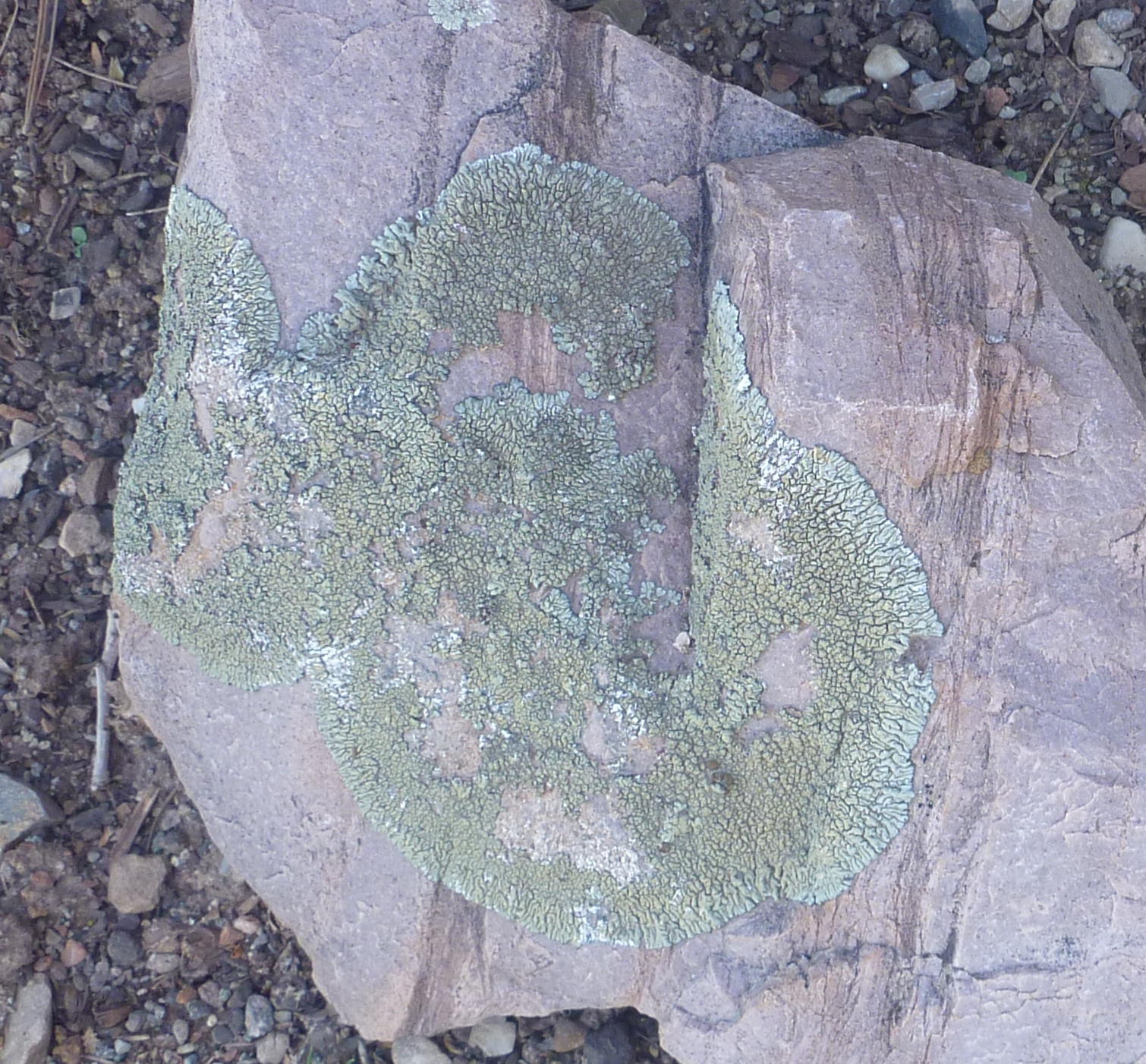
Click for a larger view of Lichens, Courtesy and copyright 2013 Andrea Liberatore, PhotographerGarovagis Rim Lichen
Leconara garovagii
Used in perfume & sunscreen
Copyright 2013
Andrea Liberatore, Photographer

This spring I visited Red Butte Gardens in Salt Lake City for the first time. My favorite part was a small and very non-descript garden, tucked alongside a walkway and devoted to an organism that isn’t a plant at all, but instead a very under-appreciated genera of life – the lichen.

Lichens are those colorful crusts found growing on rocks and trees, and while sometimes plant-like in appearance, they are not plants. Lichens have no leaves, stems, roots, or vascular systems. Even more strange, lichens are not a single organism, but instead a partnership between two organisms: a fungus and an algae or cyanobacteria. Because the fungus is generally the dominant partner, lichens are classified as members of the Fungus kingdom.

The partnership exhibited by these two organisms is an example of mutualism – a relationship where both parties benefit in some way through their interaction. In this case, the fungus provides a safe and secure home for the alga or cyanobacteria, which in return photosynthesizes and provides the fungus with nutrients. Cyanobacteria and algae are typically found in water and are prone to drying when exposed to sun and wind. The fungal partner provides shade and protection from desiccation by sheltering the algae within its body. As a result, lichens are incredibly drought-resistant and can be found in a wide variety of habitats including some of the most extreme environments Earth has to offer. In fact the Rosette Lichen or Physica dubia grows in both Antarctica and the Mojave Desert!

Lichens are not just interesting from a biological perspective, but also a chemical one. Lots of lichens create and exude a suite of chemicals, the roles of which aren’t entirely known. Some are thought make the lichen distasteful to predators, while others may help block harmful UV rays and increase membrane permeability to facilitate the movement of nutrients, water, and cellular byproducts between algae and fungi.

These chemicals have also attracted the attention of scientists, as some exhibit antimicrobial, antiviral, anti-tumor, and insecticidal properties. Many are being analyzed and tested for a variety of medicinal and household uses and may soon become a key ingredient in a physician’s arsenal. Already, these organisms are utilized by humans in a number of different ways, and have been for hundreds of years.

In some native cultures around the globe, lichens are a part of the traditional diet for both people and livestock. However, most lichens have little nutritional value, are bitter tasting, and some can be toxic. Lichen extracts are also used as natural dyes for wool and cloth with colors ranging from browns and purples, to yellows and oranges. Other uses include the manufacture of perfume, cosmetics and sunscreen, a substitute for hops in brewing beer, and as a key ingredient in litmus paper.

Lichens are also sensitive to air pollution, and for that reason don’t typically grow too close to human habitation. In fact, lichens absorb pollutants into their tissues and for that reason can play an important role as an indicator species for pollution problems. As air pollution becomes more widespread, lichen species could be in danger of being lost. And because we have only scratched the surface of what these amazing organisms can do, who knows what future medicine could be lost along with it.

I could go on, as I have only scratched the surface of what these organisms can do. And in the coming years, I think we’ll hear of even more lichen-based breakthroughs in science and medicine. The next time you pass a colorful, lichen-covered rock, take a closer look at these incredible organisms and pause for a moment to wonder about the mysteries, and possible answers, that lie within.

For the Stokes Nature Center and Wild About Utah, this is Andrea Liberatore.

Credits:

Photos: Courtesy & © Andrea Liberatore
Text:    Andrea Liberatore, Stokes Nature Center, logannature.org

Additional Reading:

Ivins, Robert Fogel (1998) Lichens are Fungi! Utah State University Herbarium. Available online at: https://herbarium.usu.edu/fungi/funfacts/lichens.htm

Center for Ecological Sciences, Indian Institute of Science. Lichen Chemistry. Sahyadri E-news. Issue 34. Formerly available online at: https://wgbis.ces.iisc.ernet.in/biodiversity/sahyadri_enews/newsletter/issue34/lichens_chemistry/lichen_chemistry.pdf See https://www.researchgate.net/publication/257213745_Sahyadri_Shilapushpa_Lichen_Chemistry [Link updated Dec 1, 2023]

US Forest Service (2013) Celebrating Wildflowers: Lichens. Available online at: https://www.fs.fed.us/wildflowers/interesting/lichens/
 

Cryptobiotic Soil Crusts

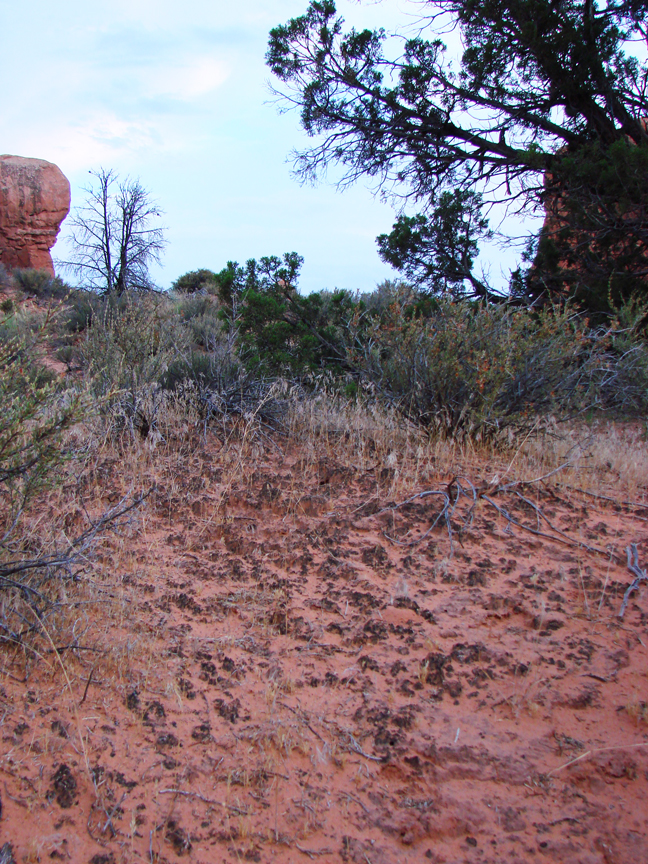
Click to view larger image of Cryptobiotic Soil Crust, Photo Courtesy and Copyright Mark Larese-Casanova
Cryptobiotic Soil Crust
Photo Courtesy & Copyright 2009
Mark Larese-Casanova

Hi, this is Mark Larese-Casanova from the Utah Master Naturalist Program at Utah State University Extension.

Looking out over a Utah desert, we might see relatively few plants- perhaps some sagebrush, maybe a few junipers or Joshua trees, or even some small wildflowers or cacti. What is less noticeable, though, is the living soil crust that holds this entire landscape together. It’s not just sand, but rather an important and vast partnership between bacteria, lichens, algae, and fungi. These soil crusts are often referred to as ‘cryptobiotic’, which means ‘living in suspended animation’. This is a fitting description, considering that water can be so rare in Utah’s deserts.

Cyanobacteria, which is often called blue-green algae, is the backbone of cryptobiotic soil crust. Vast networks of long, microscopic filaments of cyanobacteria and fungi grow in length when they are wet, and leave behind a casing that literally binds the soil together. So, what might otherwise be loose sand not only is less likely to be washed away by water or blown away by wind, but also is able to hold much more water for plants.

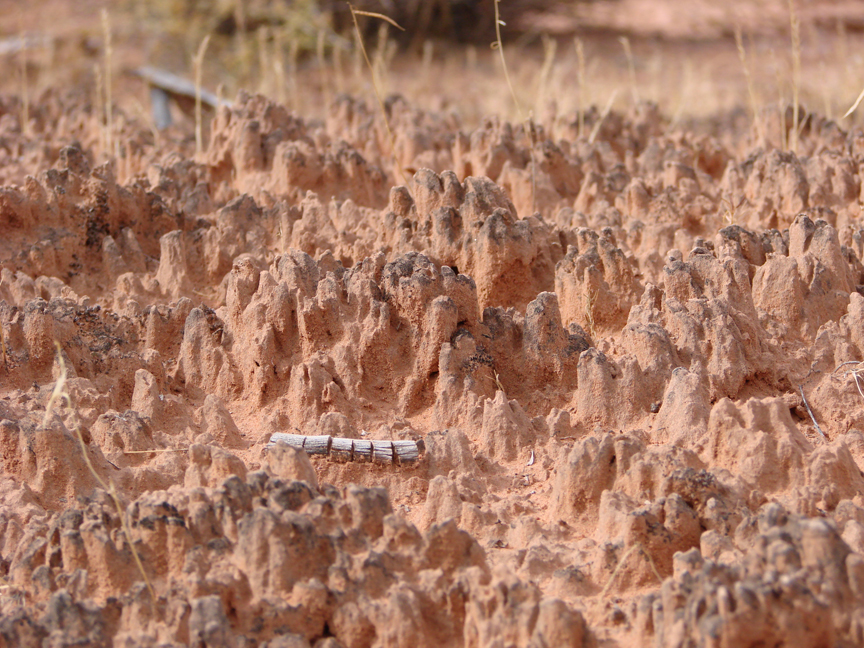
Click to view larger image of Cryptobiotic Soil Crust, Photo Courtesy and Copyright Mark Larese-Casanova
Cryptobiotic Soil Crust
Photo Courtesy & Copyright 2009
Mark Larese-Casanova

Cyanobacteria is also extremely useful to desert landscapes for its ability to take Nitrogen out of the air and make it available to plant roots in the soil. Desert soils typically have relatively low nutrients, so this is especially important to desert plants.

In many Utah deserts, cryptobiotic soil crusts can cover up to 70% of the ground surface. Old soil crust can often look like small mountain ranges with black or white peaks inhabited by lichens or mosses. The little valleys in between the tiny mountains of crust are perfect spots for the seeds of desert plants to grow. Over time, the above ground crust can grow up to ten centimeters, or four inches, thick!

However, cryptobiotic soil crust grows at an alarmingly slow rate of about one millimeter per year. So, any soil crust that is disturbed can take a very long time to recover. Depending on the amount of moisture a desert receives, it can take anywhere between 20 and 250 years for soil crust to grow back.

Next time you’re out in the desert, kneel down and have a close look at the telltale peaks and valleys of cryptobiotic soil crust. If you bring a magnifying glass, you just might be able to see some of the lichens and mosses. Be sure to stay on trail, though, and whatever you do, don’t bust that crust!

For Wild About Utah, I’m Mark Larese-Casanova.

Credits:

Images: Courtesy and copyright Mark Larese-Casanova
Text:     Mark Larese-Casanova, Utah Master Naturalist Program at Utah State University Extension.
Additional Reading:

US Department of Interior. 2001. Biological Soil Crusts: Ecology and Management. Bureau of Land Management Technical Reference 1730-2., https://www.blm.gov/nstc/library/pdf/CrustManual.pdf
Rosentreter, R., M. Bowker, and J. Belnap. 2007. A Field Guide to Biological Soil Crusts of Western U.S. Drylands. U.S. Government Printing Office, Denver, Colorado., https://www.soilcrust.org/

From Flood to Fire, Utah’s evolving role in mending rangelands

From Flood to Fire, Utah’s evolving role in mending rangelands: Click for a larger view of , Utah.  Courtesy and Copyright 2012 Jim Cane, Photographer
Blue flowers of wild flax
years after seeding
of Devil’s Playground.
Courtesy & Copyright 2012
Jim Cane, Photographer

From Flood to Fire, Utah’s evolving role in mending rangelands: Click for a larger view of Native grasses established two years after seeding Scooby Fire., Utah.  Courtesy and Copyright 2012 Jim Cane, PhotographerNative grasses established
two years after
seeding Scooby Fire.
Courtesy & Copyright 2012
Jim Cane, Photographer

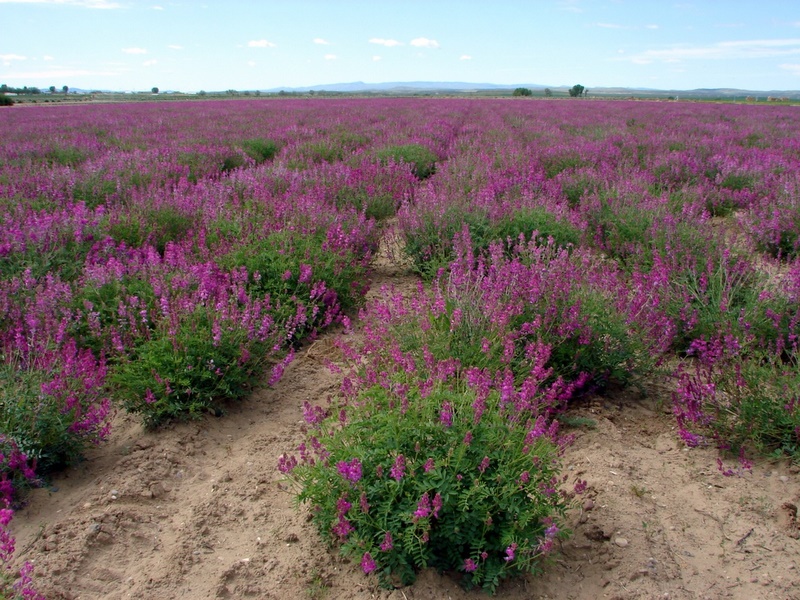
From Flood to Fire, Utah’s evolving role in mending rangelands: Click for a larger view of , Utah.  Courtesy and Copyright 2012 Jim Cane, PhotographerNative sweetvetch farmed
for seed production.
Courtesy & Copyright 2012
Jim Cane, Photographer

Restoring degraded plant communities has a long history on Utah’s public lands. The problem began with the transcontinental railroad, which enabled transport of livestock from Western rangelands to Eastern cities. By the late 1800s, vast flocks of ravenous sheep roved Utah’s unregulated wildlands. Montane summer pastures were stripped bare, so snow melt and summer rainfall washed across the ground unchecked, carving deep gullies. Downstream settlements, such as Logan and Manti, incurred ruinous floods and mud flows. Teddy Roosevelt responded to local pleas for federal control by designating our first national forests in Utah.

Soon thereafter, the fledgling Forest Service created the Great Basin Research Station east of Ephraim Utah. It was charged with discovering the cause of the floods. Within two years, large grazing exclosures were built in nearby mountain meadows by the Agency’s first range ecologist, Arthur Sampson. His research quickly linked overgrazing with denuded meadows, eroding soil and the floods. By 1914, Sampson advocated for rest rotational grazing. To then restore the impacted plant communities, there followed a landmark program at the Station to evaluate plants that could revegetate the degraded watersheds, and later, restore big-game winter range. Led by Perry Plummer, the Station evaluated the performance of 1000 species of shrubs, grasses and wildflowers, some tested in most of Utah’s plant communities. Methods to better collect, store, plant and germinate seeds underpinned the restoration of plant communities that, along with the 1934 Taylor Grazing Act, ended Utah’s frequent canyon floods.

That public research continues with the Great Basin Native Seed Selection and Increase Project. Today’s goal is to restore plant communities after rangeland fire, stalling and eventually reversing the invasion of flammable exotic grasses and weeds in the Intermountain West. Dedicated warehouses in Ephraim, Ely and Boise can store up to 3 million pounds of seed, a testimony to further progress in farming and collecting desirable seed. The seed is spread by aircraft over rocky places, while on gentler slopes, versatile rangeland seeders can place each kind of seed at the right depth, from tiny sagebrush to big grass seeds, all in a single pass over uneven ground. For every planting that takes hold, another weedy legacy of hundred-year-old overgrazing is finally repaired.

This is Linda Kervin for Bridgerland Audubon Society.

Credits:

Images: Courtesy & Copyright Jim Cane
Text: Jim Cane, Bridgerland Audubon Society

Additional Reading:

https://wildfiretoday.com/page/2/

https://www.fs.fed.us/rm/boise/research/shrub/greatbasin.shtml

https://www.fs.fed.us/rm/boise/research/shrub/projects/plant_guides.html

Reseeding the West After Fire

Reseeding the West After Fire
Soil bared by fire with
furrows left by new seeding.
Devil’s Playground Fire, Box Elder Co.
Courtesy & Copyright 2012
Nancy Shaw, Photographer

Reseeding the West After FireBlue flowers of wild flax
years after seeding
of Devil’s Playground.
Courtesy & Copyright 2012
Jim Cane, Photographer

Reseeding the West After FireSeed being planted after fire
using a rangeland drill.
Scooby Fire, Box Elder Co.
Courtesy & Copyright 2012
Nancy Shaw, Photographer

Reseeding the West After FireNative grasses established
two years after
seeding Scooby Fire.
Courtesy & Copyright 2012
Jim Cane, Photographer

Native sweetvetch farmed
for seed production.
Courtesy & Copyright 2012
Jim Cane, Photographer

Palmer penstemon farmed
for seed production.
Courtesy & Copyright 2012
Bob Hammon, Photographer

More than 7 million acres burned this summer across the western United States. It’s the biggest fire year since 2007. In Utah, wildfires blazed across 450,000 acres, as much land as the urbanized Wasatch front. Most of these fires scorched basin and foothill habitats dominated by sagebrush or juniper forests. After a year or two, the blackened land will turn green. But shrubs and trees in these basin habitats are frequently killed by fire. Where these native plant communities naturally recover, it’s because perennial wildflowers and grasses resprout, and, like the shrubs, germinate their seeds. However, overgrazing a century ago impoverished many western rangelands. Aggressive weeds from Europe and Asia could then invade, such as tumblemustard, Russian thistle, and red brome or cheatgrass. These weeds outcompete our natives, multiplying with each fire cycle to eventually carpet the landscape.

To stem this tide of weed invasion after fire, land managers assist plant community recovery by planting mixtures of shrub, grass and wildflower seed. The shrub seed is mostly native, harvested from the wild by private seed collectors. The tiny seeds of several kinds of sagebrush prevail, often mixed with fourwing saltbush, shadscale, or bitterbrush.

The grasses are largely farmed by specialty growers. In past decades, these were mostly tough, competitive grasses from the Asian steppe, notably crested and tall wheatgrasses, and Russian wildrye. These practical, affordable grasses stand up to cheatgrass, but they also impede the return of the native flora. Today, half the grass seed applied after Great Basin fires includes natives, such as Sandberg bluegrass, squirreltail, Indian ricegrass, and bluebunch wheatgrass.

Use of wildflower seed has lagged. It’s challenging to farm yet costly to wild harvest. Today, a handful of innovative farmers are growing native wildflowers for seed, such as yarrow, Lewis flax, sweetvetch, two prairie-clovers, a milkvetch, and several penstemons. How much seed is needed? After the big fire year of 2007, four thousand tons of shrub, grass and wildflower seed were planted in the American West!

This is Linda Kervin for Bridgerland Audubon Society.

Credits:

Images: Courtesy & Copyright Nancy Shaw
            Courtesy & Copyright Bob Hammon and
            Courtesy & Copyright Jim Cane
Text: Jim Cane, Bridgerland Audubon Society

Additional Reading:

https://wildfiretoday.com/page/2/

https://www.fs.fed.us/rm/boise/research
/shrub/greatbasin.shtml

https://www.fs.fed.us/rm/boise/research/shrub
/projects/plant_guides.html

Forero, Leslie, Plants Surviving Cheatgrass Invasion May Improve Restoration Chances, Study Shows, UPR Utah Public Radio, Feb 26, 2018 https://www.upr.org/post/plants-surviving-cheatgrass-invasion-may-improve-restoration-chances-study-shows