A Utah Public Radio production featuring contributors who share a love of nature, preservation and education
Podcast: Wild About Utah
Wild About Utah is a Utah Public Radio production featuring contributors who share a love of nature, preservation and education. Contributors include Bridgerland Audubon Society, Utah Public Radio, Stokes Nature Center, the Edith Bowen Laboratory School (EBLS) at USU and many other nature-related individuals and institutions. See WildAboutUtah.org for a list of authors, voices and contributors.
Jaw Bone Courtesy & Copyright Shannon Rhodes, Photographer
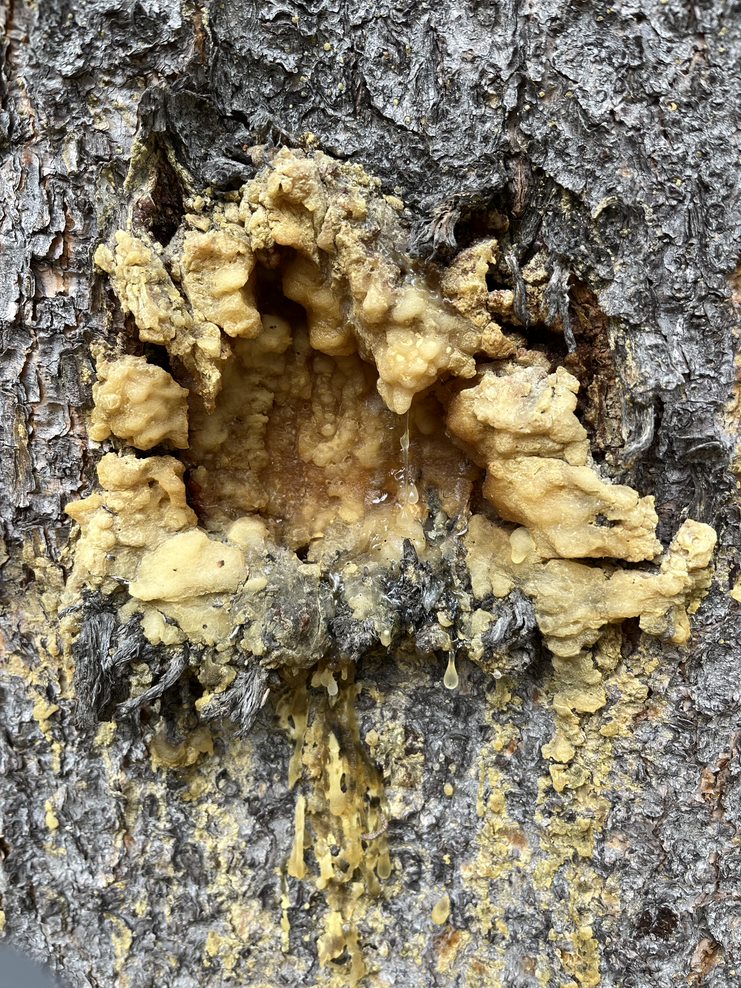
Tree Canker Courtesy & Copyright Shannon Rhodes, Photographer
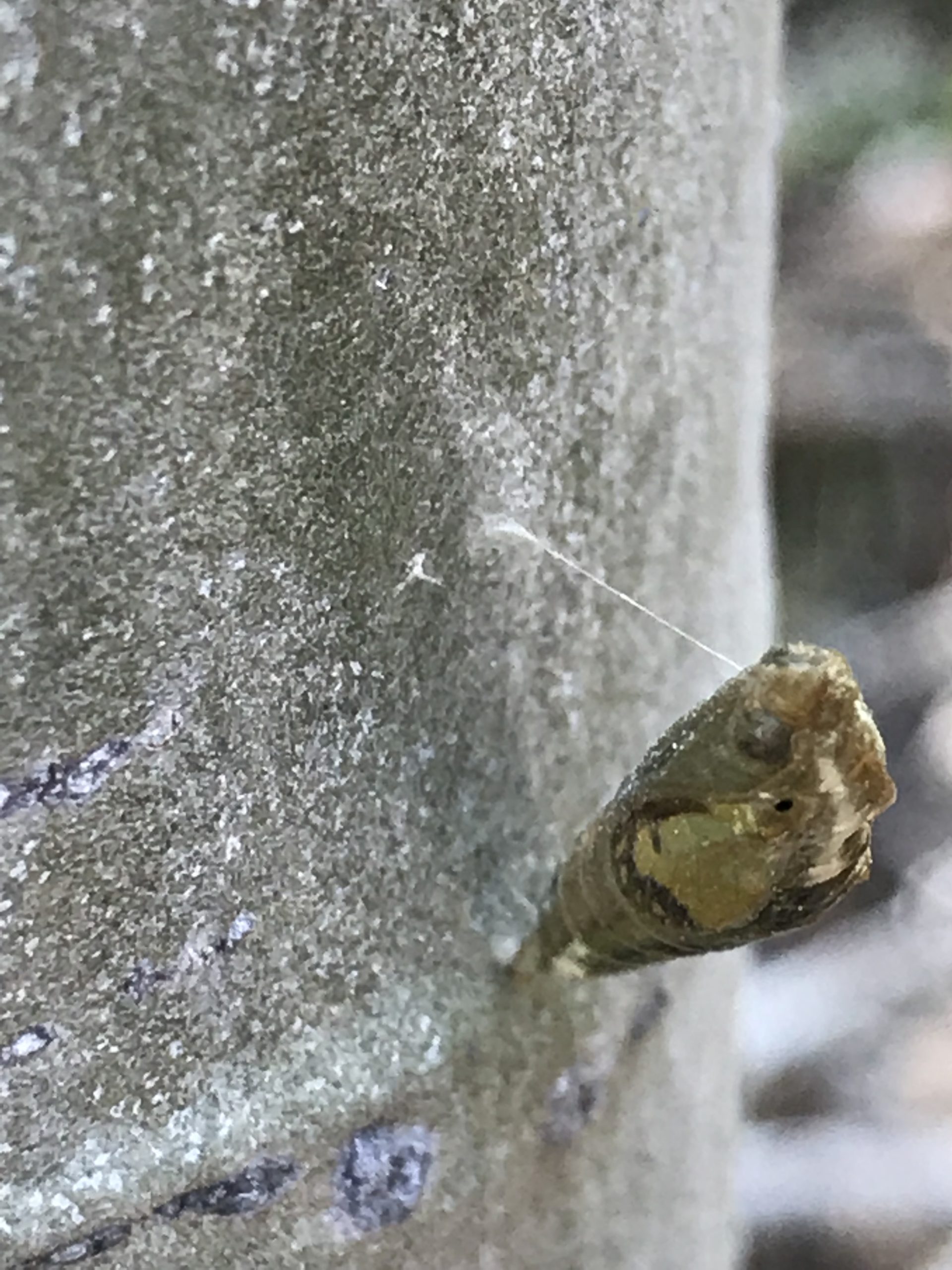
Costume Change Chrysalis Courtesy & Copyright Shannon Rhodes, PhotographerWhen life throws scary at you, what do you do? As we increasingly consider mental and emotional health issues and strategies, I find that my answer is that I go to the forest. Of course, I go there when things are going smoothly too, but I agree with Henry David Thoreau when he wrote, “When I would recreate myself, I seek the darkest wood.” He, in fact, recommended the “most dismal swamp,” but that is a little too slimy for me. I will stick with solid soil.
A few weeks ago I spied a bat dangling from the bricks on my front porch as I gazed at the moon just as I had asked my young students to do. It reminded me of how in Janell Cannon’s picture book Stellaluna, a young bat survives a predatory owl’s attacks, falling “down, down…faster and faster, into the forest below.” She clings to a branch until her strength gives out, then “down, down again she dropped” into an unlikely predicament. Bats and harvest moons are iconic figures of this season, and as I ventured out for a sanity walk in the Cache National Forest, everywhere I looked I saw more.
Fall forests are full of chilling scenes, and I was first struck by a gruesome sap bleed from a gaping evergreen canker. The yellow ooze seeping seemed beautiful somehow. I don’t remember ever being so captivated by a wounded plant, and because I lingered, I also spotted a chrysalis containing a caterpillar’s costume change on a neighboring tree. Next to that were the witchy remains of other withering forbs.
Beneath my hiking boots was a toothy jaw grinning amid fragile leaf skeletons scattered on the forest floor. Even as I swapped away the cobwebs I didn’t see ahead until it was too late, the eerie beauty of nature eased the tormenting worries in my life. There’s a Chinese Proverb that says, “You can only go halfway into the darkest forest; then you are coming out the other side.”
A good walk outside is great for the distressed heart and mind. I needed to find the unlikely power in autumn icons. As Mary Shelley wrote for Frankenstein, “Beware; for I am fearless, and therefore powerful.” Next time you are frightened by the unknowns or scarred by the realities, consider falling into a forest.
I’m Shannon Rhodes, and I’m wild about Utah.
Credits:
Images: Courtesy & Copyright Shannon Rhodes, Photographer
Text & Voice: Shannon Rhodes, Edith Bowen Laboratory School, Utah State University https://edithbowen.usu.edu/
Additional Reading Links: Shannon Rhodes
[Downy Woodpecker Male at] Bird Feeder Courtesy US FWS, Leah Schrodt, Photographer
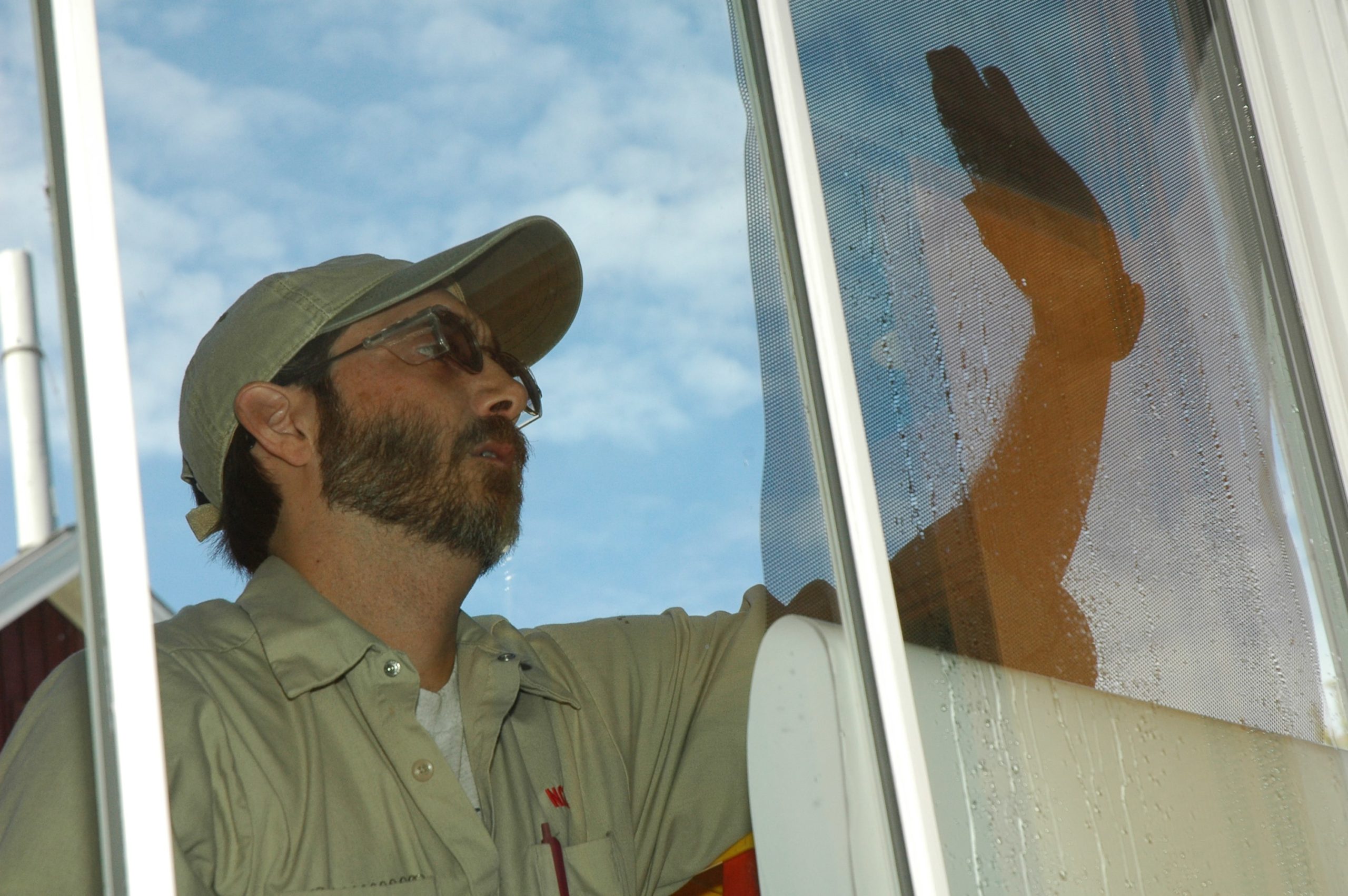
Applying Anti-Strike Film to Window Courtesy US FWS Brett Billings PhotographerBirdwatching is a fun hobby for all ages and it is a great way to connect with nature and increase self-efficacy, so let’s discuss the benefits and the importance of a safe environment for feeding our backyard birds. First, the benefits of supplemental feeding, and second, preventable deaths from cats and window collisions.
Supplemental food and water are important ways we can reduce stress for backyard birds, especially through the winter months. Sites with bird feeders attract more birds over time than those without feeders, and the birds are in overall greater health than birds at sites without feeders. A higher percentage of chicks hatch at sites with bird feeders, and the survival rates are significantly higher, but supplemental feeding must be done in a safe environment.
Free ranging domestic cats and window collisions are leading causes of bird deaths in North America. The American Bird Conservancy estimates that outdoor cats kill approximately 2.4 billion birds every year in the United States alone. Approximately one billion birds are dying from window collisions each year in North America – that represents about ten percent of our birds dying from crashing into windows (1), and combined, that’s over three billion fewer insect eaters, fewer pollinators, fewer seed spreaders, and fewer parents for the next generation.
Cats should be kept indoors, and windows should be treated, especially if they reflect trees and shrubs. If you have seen a ghostly bird imprint or heard the sickening thump of a bird hitting your windows, then those are windows in need of treatments such as screens, translucent UV tape, or even tempera paint designs, because even birds that manage to fly away have potentially life-threatening internal injuries. Feeders less than 3 feet away don’t allow birds to build up too much speed before they collide, so it’s good to put feeders and birdbaths 3 feet or closer to a window or greater than 30 feet away.
Feeders placed on or near windows have the added benefit of being easy to access and monitor. In addition to a window suet feeder, one of my favorite window feeders is actually a clear plastic suction-cup toothbrush cup holder from the dollar store – it’s easy to clean and there’s no need for binoculars!
In addition to enhancing a backyard bird watching hobby and improving bird health and survival, the ripple effects of feeding birds, keeping cats indoors, and preventing window collisions include pest control in our gardens where birds feast on slugs, snails, aphids and grasshoppers. I for one particularly appreciate Black-billed Magpies when they remove wasp nests from my house! The Bridgerland Audubon website has tools, coloring pages, checklists, and science-based information on window collision prevention. Solutions can be as simple as the careful placement of bird feeders and keeping cats indoors. Find us at bridgerlandaudubon.org, that’s Bridgerland Audubon – A-U-D-U-B-O-N dot org.
Creating Landscapes for Wildlife… A Guide for Backyards in Utah, Written by Sue Nordstrom and Illustrated by Kathlyn Collins Department of Landscape Architecture and Environmental Planning, Utah State University with Margy Halpin, Utah Division of Wildlife Resources; Second Printing 2001,
Updated for the Utah Division of Wildlife Resources, by Frank Howe, DWR Avian coordinator; Ben Franklin, DWR–Utah Natural Heritage Program botanist; Randy Brudnicki, DWR publications editor; and landscape planning illustrations by Stephanie Duer.,
Published by:
State of Utah Natural Resources, Division of Wildlife Resources,
Utah State University Cooperative Extension Service and
Utah State University Department of Landscape Architecture and Environmental Planning;
1991 updated 2001 https://wildlife.utah.gov/pdf/landscapingforwildlife.pdf
Morse, Susan, To Feed or Not to Feed Wild Birds–Bird Feeders Can Be Sources of Joy — and Disease,, US Fish & Wildlife Service, U.S. Department of the Interior, https://www.fws.gov/story/feed-or-not-feed-wild-birds
Dragon, Sydney, (Student Conservation Association intern), Conservation in Urban Areas: Backyard Bird Feeding, US Fish & Wildlife Service Bird Walks (Texas), U.S. Department of the Interior, Apr 27, 2021, https://youtu.be/2bkliew6aj8
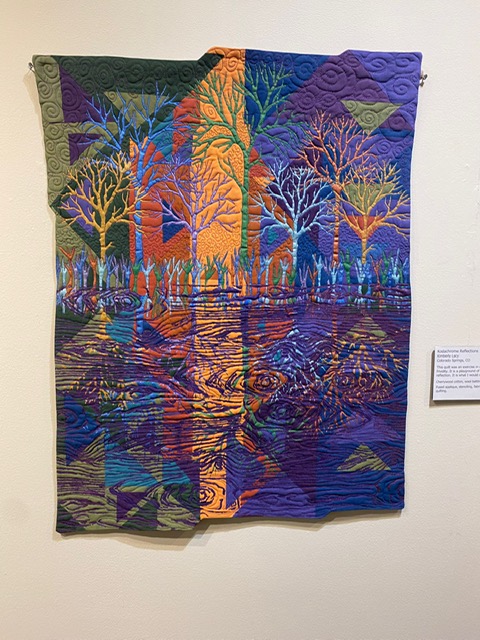
Kodachrome Reflections Quilt Art Copyright Kimberly Lacy Used By Permission All Rights Reserved This Image Courtesy Mary Heers
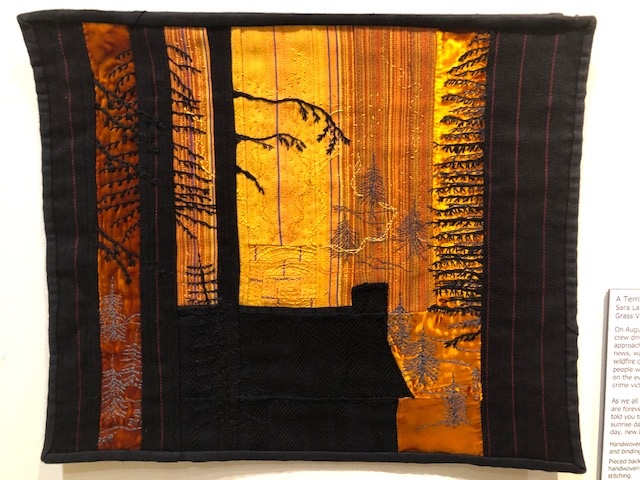
A Terrible Beauty Quilt Art & Image Copyright Sara Lamb, Photographer & Quilt Artist Used By Permission All Rights Reserved This Image Courtesy Mary Heers
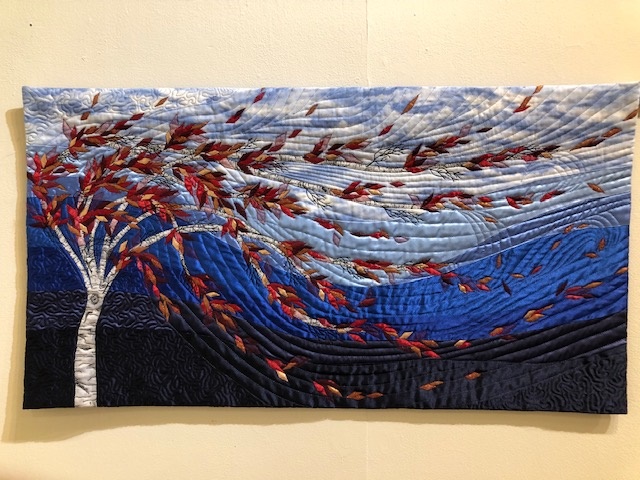
The Untamed Wind Quilt Art Copyright Jeannette Schoennagel, Used By Permission All Rights Reserved This Image Courtesy Mary HeersOne of the most important lessons I learned during last summer’s long hot afternoons was that the best place to appreciate Utah’s natural beauty can sometimes be inside an art museum.
As I stepped off the blistering hot sidewalk and through the doors of the Brigham City art and history museum, I breathed a sigh of relief. Not too hot, not too cold. Just right. A magical place where I could go inside to commune with nature. I had arrived at “Wild,” a juried quilt exhibit featuring some of the best work of fiber artists in the Intermountain West.
A quick glance around the room and I was immediately drawn to a silhouette of a mountain cabin Sunrise I thought, with the brilliant yellow and orange sky. Each quilt came with a typed note from the artist about the piece. I started to read. This was her cabin in the woods. Then came the shock. She had watched the breaking news on tv as wildfire licked the edges of her cabin and then engulfed it in flames. Suddenly the velvet strip running along the edge of the piece looked red hot. The bits of black yarn hand stitched off the nearby tree practically crackled with heat.
Somewhat cautiously I approached the next quilt. What looked like a kaleidoscope of soft sunset colors on a quiet pond turned out to be just that. I breathed a sigh of relief. The freehand swirling of the stitching made the water ripple. The setting sun bathed the air and water in deepening shades of pink. I actually had to resist the urge to run home, grab my fishing pole, and cast my line into the quilted watery pool.
Making the final turn around the room, I saw the piece I liked the best. Here was a tree with a painted white bark with bits of confetti leaves flying off. The rolling waves of stitching created a windy look that practically breezed through my hair. This piece was festive – the leaves dancing their way from one season into the next.
Fire, water and wind. I had felt the presence of these three cornerstones of the natural world inside this cozy museum.
But before I could get too comfortable, I heard a warning cry from one last artist. Her quilt was a strange patch of peacock blue in the middle of a rubbly hillside. Puzzled, I read her story. She loved to romp with her dog up and down this hillside close to her home. Then the patch of blue appeared. She approached it and discovered it was not an exotic bird. It was a stake driven into the heart of the hill. Within weeks the bulldozers and front end loaders arrived and ripped the earth apart.
As I stepped back into the hot outside world, I shouted out three small cheers for all the art museums that help us savor the natural beauty of our open spaces – and remind us to keep working to preserve them.
2022 Quilt Exhibition: WILD! Brigham City Museum of Art & History, June 25-September 17, 2022https://www.brighamcitymuseum.org/2022quiltshow
Tel:435-226-1439, museum@bcutah.org
Address: 24 North 300 West, Brigham City, UT 84302
Utah-Serviceberry Rosaceae Amelanchier utahensis Courtesy National Park Service, Lee Ferguson, Photographer
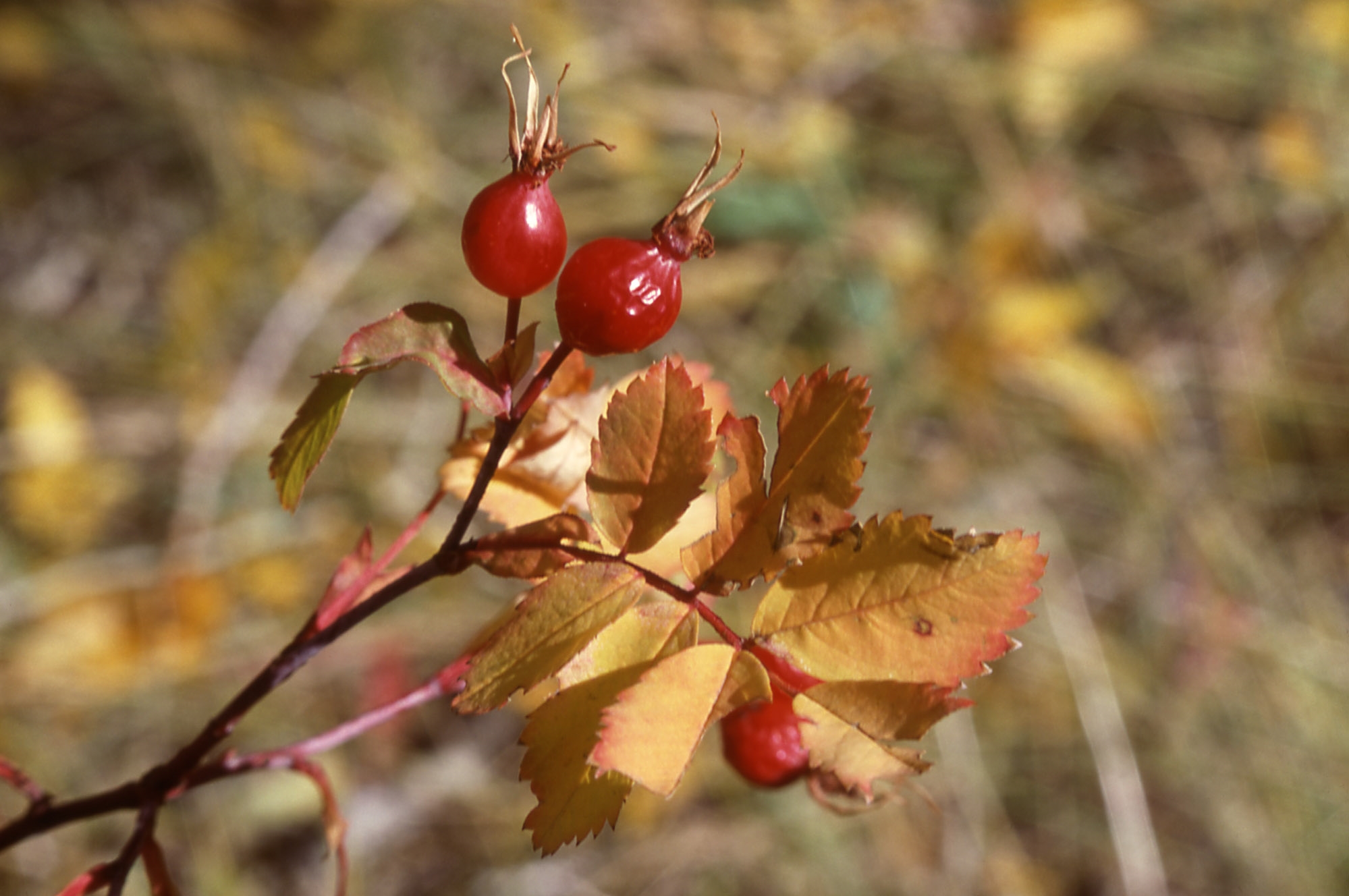
Rose Hips Wood’s rose Rosa woodsii Courtesy NPS, Yellowstone’s Photo Collection, J Schmidt, Photographer, 1977The berry season is upon us- huckleberries, raspberries, gooseberries, chokecherries (not a berry but close enough), elderberries, bearberries, while early berries have faded- golden current, serviceberries, thimble berries are now fruit leather.
Berry picking during my youth in the North woods of Wisconsin was a wonderful tradition that I, and our black bear neighbors, looked forward to with great anticipation. We often shared the same patch evident by fresh bear scat and tracks. Those rare occasions where brother and sister bear were with us are frozen in time. “Just keep picking and talking- they won’t bother us.” My grandmother’s refrain. I was enthralled, watching every move and sound they made, with an occasional “woof” from mother bear alerting the youngsters.
Now, so many years later, I take my students to the Tetons hoping for a glimpse of bruins harvesting berries, rose hips, and thorn apples along streams and roadsides. Black bears are efficient berry-eaters, consuming up to 30,000 berries a day in a good year. They gather berries quickly, using their sensitive, mobile lips swallowing them whole. The berries enter a two-part stomach, which grinds the pulp off the seeds which pass through unbroken and are able to germinate, making black bears important seed dispersers.
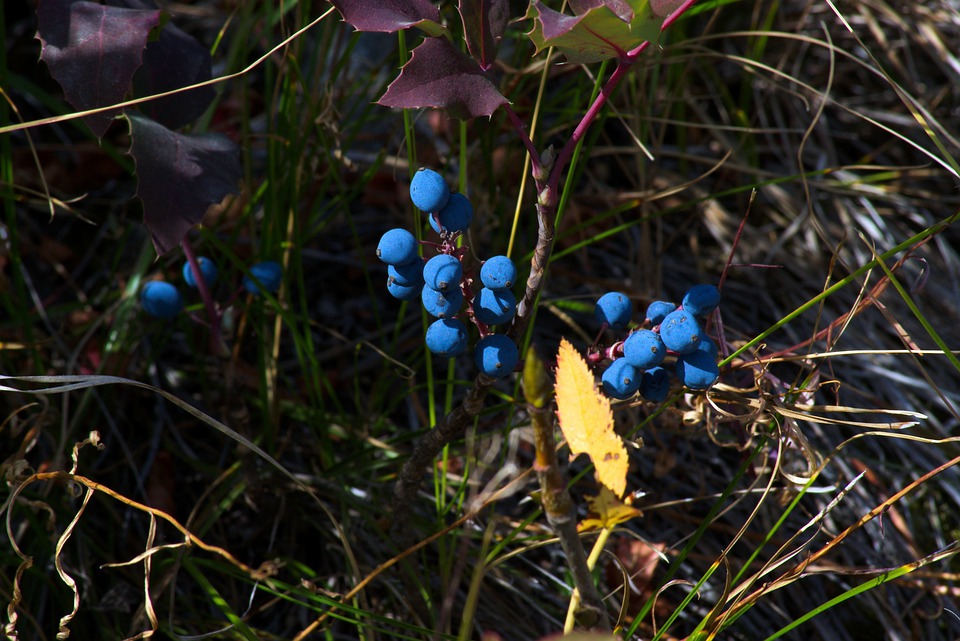
Our Bear River Range here in Northern Utah was once a stronghold for the bruin. Overharvesting by hunters and the government has left it wanting, but the berries remain. One berry favored by bears is the white snowberry. Don’t copy the bears on this one as it’s toxic, but a great medicinal. Another that I avoid is the buffalo berry, called soapberry in the northwest. It contains saponin, the active ingredient in most soaps. It’s much like biting into a bar of soap, applied in my younger years for mouth cleansing. And please avoid the voluptuous red and white fruit of the bane berry, and cute little mini tomatoes of deadly night shade. You will be all the better for it.
“Harvesting berries can be a powerful meditation, centering us in the power of “now,” and is one of the oldest human experiences. This simple action can be an opportunity to revel in the abundance of nature. Tangibly interacting with food that is so wired into its life source is otherworldly, and it reminds us of a time when humans were more directly connected to the origins of our food. It is a grounding experience that demands every cell in your body resonate with the source of our food, catalyzing our connections to the universe.” Valerie Segrest quote
I strongly recommend “Blueberries for Sal” for younger generations. A delightful 1948 children’s book by renowned author Robert McCloskey. I recently visited the Blueberry Hill in Main’s Acadian N.P., the location for this story, and picked a few myself. Unfortunately, the bears had been replaced swarms of tourists!
Jack Greene for Bridgerland Audubon Society, and yes, I’m wild about Utah’s bears and wild berries!

 Leaf Skeleton
 Jaw Bone
 Tree Canker
 Costume Change Chrysalis