Naturally Carbonated Water

Naturally Carbonated Water: Soda Springs Geyser, Soda Springs, Idaho, Courtesy & &copy Mary Heers, Photographer
Soda Springs Geyser, Soda Springs, Idaho

If you like drinking carbonated water as much as I do, you’ll be happy to hear you can drink as much as you’d like, -absolutely for free- just north of the Utah border in Soda Springs, Idaho.

Idan-Ha Mineral Water, Courtesy & &copy Mary Heers, Photographer
Idan-Ha Mineral Water
Courtesy & &copy Mary Heers, Photographer

Small Bubbling Soda Water Pool, Courtesy & &copy Mary Heers, Photographer Small Bubbling Soda Water Pool
Courtesy & &copy Mary Heers, Photographer

When settlers heading to California passed through this area on the Oregon Trail, they saw the many bubbling natural springs.

In 1838 Sarah White Smith, wrote in her diary, This is indeed a curiosity. The water is bubbling and foaming like boiling water.” But the water wasn’t hot.

She also wrote how delighted she was when she made bread with the water. “The bread was as light as any prepared with yeast.”

All this stirred up some fond memories I have of my high school science teacher who always made interesting things happen in the classroom. She put a pinch of sodium bicarbonate (commonly called baking soda) in a dish and added a couple tablespoons of water and vinegar. Voila! The dish began “bubbling and foaming like boiling water.”

For centuries something like this has been going on under the ground in Soda Springs. The carbonate rocks are mixing with slightly acidic water, sending CO2 bubbles to the surface .

By 1887, Soda Springs had grown to a bustling town. Some enterprising residents came up with a plan to capture the CO2 gas. They built giant drums over one of the springs and then built a five-mile pipeline to their bottling plant. There they mixed the gas with clear water from another spring and bottled it. The soda water was called “Idan-ha” and was shipped out on the railroad far and wide.

It won first place at the Chicago World’s Fair in 1893 and again in the World’s Fair in Paris in 1905.

A decade later, another group of businessmen went to work on a plan to build a mineral water swimming pool resort.

On Dec 2, 1937, drillers dug down to 315 ft. No luck. They went to dinner. Then they heard a gush of water shoot up outside the window. They said it was “roaring like a dragon.” The whole area was enveloped in water vapor and Main Street was flooded. It took them two weeks to cap it.

The water wasn’t warm, so the businessmen abandoned their plans for a swimming pool resort.

The town knew their geyser was accidental; it was man-made- but still a plume of water shooting 100 ft into the air was impressive to look at.

Engineers put a timer on the cap. Now the carbonated water shoots up for 8 minutes every hour on the hour.

You can watch it for free.

As for drinking the naturally carbonated water, the city has set aside three springs.

My guide drove me to his favorite site just outside of town We scrambled down a grassy hillside to a small bubbling pool about the size of a basketball. He whipped out a cup and dipped it in. I drank. It was cold and fizzy.

“Good as Perrier,” I said.

He smiled, “Now I like you.”

I liked him too. Even more, I loved drinking this tasty treasure bubbling up from the ground.

This is Mary Heers and I’m Wild About Utah

Credits:

Photos:
Images Courtesy & Copyright Mary Heers, Photographer
Featured Audio: Courtesy & Copyright © Friend Weller, Utah Public Radio upr.org
Text: Mary Heers, https://cca.usu.edu/files/awards/art-and-mary-heers-citation.pdf
Additional Reading: Lyle Bingham, https://bridgerlandaudubon.org/

Additional Reading

Wild About Utah, Mary Heers’ Postings

Price, Mike, Soda Springs, We Are East Idaho, EastIdahoNews.com LLC, September 9, 2019, https://www.eastidahonews.com/2019/09/we-are-east-idaho-soda-springs/

Hooper Springs Park, California National Historic Trail, Oregon National Historic Trail, National Park Service, US Department of the Interior, https://www.nps.gov/places/000/hooper-springs-park.htm

A man-made CO2 Geyser in Utah:
Weaver, Lance, Crystal Geyser, Grand County, Utah, Geosights, Utah Geological Survey (UGS), Utah Department of Natural Resources, January 2018, https://geology.utah.gov/map-pub/survey-notes/geosights/crystal-geyser/

Map on page 43 shows water from Soda Springs flows into the Bear River and the Great Salt Lake:
Dissolved-Mineral Inflow to Great Salt Lake and Chemical Characteristics of the Salt Lake Brine, United States Geological Survey (USGS) and The College of Mines and Mineral Industries, The University of Utah, 1963, https://ugspub.nr.utah.gov/publications/open_file_reports/ofr-485/Lake%20Brine%20Interpretive%20Reports/WRB%2003%20-%20Part%201%20-%20Hahl%20&%20Mitchell%20-%201963/Water%20Resources%20Bulletin%203%20Pt%201%201963.pdf

Pika

Pika, Courtesy Pixabay, Makieni77 Contributor
American Pika
Courtesy Pixabay, Makieni77 Contributor
As I hike the high country, there is a non-bird call that always brightens my way. A mini rabbit, or rock rabbit in Jack vernacular, the pika, has been declared North America’s cutest mammal. I won’t argue with this declaration, unless it’s compared to my grandkids.

On a scramble up two gnarly peaks above Alta Ski Resort a few weeks ago, my spirits went sky high with an abundance of pika busily gathering hay for their winter larder. Their Ehhhhh! Notes surrounded us, tiny furry forms darting in and out of boulder fields while we made our way to the summits.

This was especially heartening given the warming trends, which push these little spirits beyond their limits of heat tolerance in too many locations. Pikas have disappeared from more than one-third of their previously known habitat in Oregon and Nevada. Despite this, the American pika has not been listed under the Endangered Species Act. The pika can overheat and die within 6 hours when exposed to temperatures as mild as 78 degrees Fahrenheit.

American Pikas are famously vocal. They chirp, sing, and scream in an effort to protect their territory. They use their signature call to alert others in the colony of an approaching predator, to establish boundaries, and in some cases, to attract mates.

Pikas spend a great deal of time gathering vegetation for winter which they cure on rocks to prevent molding, then store their piles under rocks for safekeeping, occasionally moving them so they don't get rained on. Haystacks, as they're called, weigh a whopping 61 pounds on average. The timing of haying seems to correlate to the amount of precipitation from the previous winter. They appear to assess the nutritional value of available food and harvest accordingly. Pikas select plants that have the higher caloric, protein, lipid, and water content. They also enjoy their fecal pellets, which have more energy value than stored plant food, by consuming them directly or store for a later sweet treat.
Cedar Breaks National monument in southern Utah has adopted the pika as its token mammal. You can get your own stuffy who has a remarkable resemblance to the real deal. Your donation will help the Monument with its field research on the pika and other park critters.

Considering pika are mostly found in alpine and subalpine environments with cool temperatures and deep snow, I was shocked to find them occurring at Craters of the Moon National Monument in Idaho averaging 6000’ elevation. Summer temperatures at the Monument can soar to 170 degrees on the black rock surface, which would fry a pica in short order. Yet, here they are, finding relief in lava tubes and deep crevasses. Unlike their diurnal alpine cousins, they are primarily crepuscular- active early morning- late evening.

The American pika can be found throughout the mountains of western North America, from Canada to New Mexico. Of the 30 global species, only two inhabit North America, which includes the collared pika found in Alaska and Canada.

Jack Greene for Bridgerland Audubon Society, and I’m wild about Utah and its rock rabbits!

Credits:
Image: Courtesy Pixabay, https://pixabay.com/photos/pika-animal-wildlife-nature-cute-5326942/
Audio: Courtesy & ©
Text: Jack Greene, Bridgerland Audubon, https://bridgerlandaudubon.org/
Additional Reading: Lyle W Bingham, Webmaster, Bridgerland Audubon, https://bridgerlandaudubon.org/

Additional Reading:

Jack Greene’s Postings on Wild About Utah, https://wildaboututah.org/author/jack/

Cane, Jim, Voice: Dick Hurren, Pikas, Our First Haymakers Wild About Utah, October 28, 2008, https://wildaboututah.org/pikas-our-first-haymakers/

Patent, Dorothy Hinshaw, Pika Country: Climate Change at the Top of the World, September 18, 2020, https://www.amazon.com/Pika-Country-Climate-Change-World/dp/1970039027

Plumb, Sally, A Pika’s Tail, May 1, 2012, https://www.amazon.com/Pikas-Tail-Sally-Plumb/dp/0931895251

American Pika, Utah Species, Field Guide, Utah Division of Wildlife Resources, Department of Natural Resources, State of Utah, https://fieldguide.wildlife.utah.gov/?species=ochotona%20princeps

Booth, Michael, Chirp one out for the pika: Climate change is destabilizing previously perfect Rocky Mountain habitat, December 4, 2025, https://coloradosun.com/2025/12/04/colorado-pika-population-global-warming/

Cattail and Teasel

Cattail and Teasel: Josie's Nature Log Page. Used by Permission. Photo Copyright Shannon Rhodes, Photographer
Josie’s Nature Log Page
Used by Permission
Photo Copyright Shannon Rhodes, Photographer

Teasel in Bloom with Bumble Bee Photo Courtesy & Copyright Shannon Rhodes, Photographer Teasel in Bloom with Bumble Bee
Photo Courtesy & Copyright Shannon Rhodes, Photographer

Cattail and Teasel in Bloom Photo Courtesy & Copyright Shannon Rhodes, Photographer Cattail and Teasel in Bloom
Photo Courtesy & Copyright Shannon Rhodes, Photographer

Dried Teasel Photo Courtesy & Copyright Shannon Rhodes, Photographer Dried Teasel
Photo Courtesy & Copyright Shannon Rhodes, Photographer

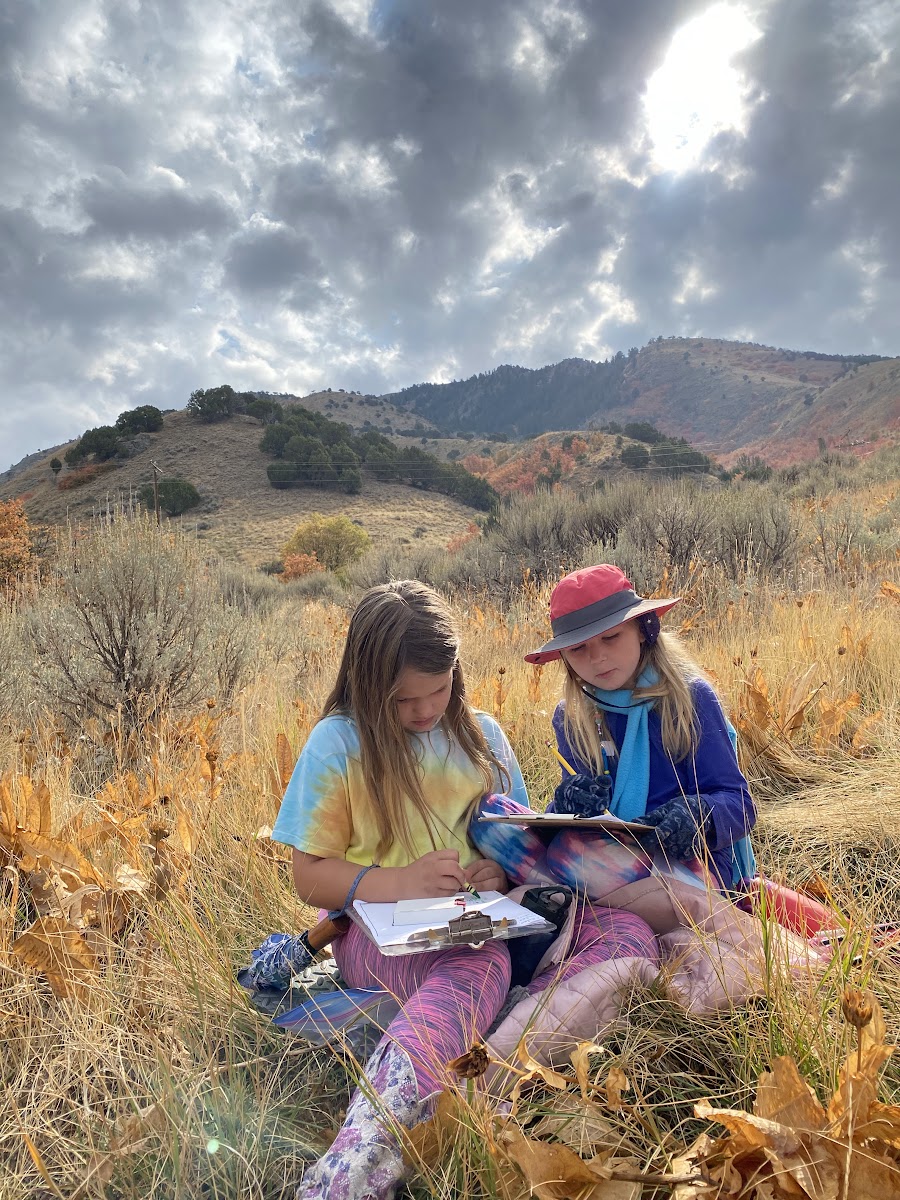
For many, this is the season transition between summer and back to school. This month, along with the generous gifts of caramel apples, whiteboard markers, and number 2 pencils, a child handed me a green notebook and a request. One of the greatest compliments a teacher could possibly receive, in my opinion, from a student having never been on any of my class lists, is an invitation to make a writing dialogue journal, a pen pal exchange with no grades or due dates attached. Today her entry concludes with, “Also I drew a picture of you and me in pencil.” I withdraw from the notebook’s back flap a flattering illustration of flowers, smiles, and sun rays, grab my colored pencils, and head outside to write.

Terry Tempest Williams honors a similar marshy invitation, begging us to enter the wonders of the wetlands, in her book “Between Cattails” with exquisite Peter Parnall illustrations. Amid snails and scuds, damselflies and waterlilies, red-winged blackbirds and mosquito tumblers, I am drawn to the familiar cattails. Having just spent some lazy summer days reading Robin Wall Kimmerer’s “Braiding Sweetgrass: Indigenous Wisdom, Scientific Knowledge, and the Teachings of Plants,” I now know that one can appreciate a cattail for its cucumber-tasting pith and protein-packed pollen, its gel that can soothe sunburns, and its fluff that can be used as tinder to light a fire or as soft yet absorbent layers in bedding. She taught me that “one of the words for cattail in the Potawatomi language …. means ‘we wrap the baby in it.’” When she takes students outside, she lets the plants teach them.

Many children I teach can identify cattails, but as I take my Josie journal out to the marsh to compose my writing response, I find another familiar plant that I cannot name. Quickly I realize that it has pale purple flowers; I don’t think I’ve ever seen it in any color other than brown. Once again I find how unaware I have been, and a simple plant guide check reveals the name Dipsacus fullonum, or common teasel. It is an invasive tall plant with a spiky thistle-like flower head and more spiky spears growing up around it. Small dense flowers, from 250 to over a thousand of them, each blossom for only one day. I had only ever noticed it after its biennial life cycle: flowering, dying, then persisting as a dried stem and flower head the next season. Dipsacus comes from a Greek word meaning “thirst,” referring to the leaf cups at the stalk that collect rainwater and catch insects. Sometimes listed as noxious species, this non-native plant was brought from Europe and valued for teasing wool. Today I see bees are drawn to them, and next year finches and other seed-loving birds will visit.

Turning her drawing into my nature journal for this day’s outing, I add my plant perspective. I add some silver to the brown in my teasel-y hair and purple flowers to her shirt. She wrote that “writing makes me feel in my element” and when I take writing outside and really take time to notice the details, I couldn’t agree more.

I’m Shannon Rhodes, and I am wild about Utah.

Credits:

Images: Courtesy & Copyright Shannon Rhodes, Photographer
Nature journal entry used with permission from Josie Dorsch and her parent Breanna Studenka, All Rights Reserved
Audio: Crickets Courtesy & © Friend Weller, https://upr.org/
    Birds: Courtesy & © Kevin Colver https://wildstore.wildsanctuary.com/collections/special-collections
Text: Shannon Rhodes, Edith Bowen Laboratory School, Utah State University https://edithbowen.usu.edu/
Additional Reading Links: Shannon Rhodes

Additional Reading:

Wild About Utah Pieces by Shannon Rhodes, https://wildaboututah.org/author/shannon-rhodes/

iNaturalist. Wild Teasel. https://www.inaturalist.org/taxa/56002-Dipsacus-fullonum

Kimmerer, Robin Wall. Braiding Sweetgrass: Indigenous Wisdom, Scientific Knowledge, and the Teachings of Plants. 2013. https://www.robinwallkimmerer.com/

National Park Service. Exotic Species: Common Teasel. https://www.nps.gov/articles/common-teasel.htm

Tilley, Derek. Commonly Occurring Wetland Plant Species for Idaho and Utah NRCS Wetlands Delineators. March 2019. https://www.nrcs.usda.gov/plantmaterials/idpmctn13441.pdf

U.S. Department of Agriculture. Common Teasel. https://www.invasivespeciesinfo.gov/terrestrial/plants/common-teasel

Williams, Terry Tempest. Between Cattails. New York: Charles Scribner’s Sons. 1985. https://www.terrytempestwilliams.com/

Wild About Utah Wildlife
and the Places They Need

Male Ring Necked Pheasant, Courtesy US FWS, Dave Menke, Photographer
The Wild About Utah archives were one of the first local resources I learned of as a newcomer curious about the large birds striding across my backyard, so it should come as no surprise to learn that it drew me to Utah Public Radio and the Bridgerland Audubon Society, where I am learning all the time, and so pleased to be contributing to the celebration of 15 years of Wild About Utah on Utah Public Radio!

UPR and the Bridgerland Audubon Society are a good fit because of our shared interests in uplifting, informing, and connecting our audience to the world – to “inspire the mind, engage the imagination and perpetuate the habit of lifelong learning.”*

Many listeners know that “Audubon protects birds and the places they need today and tomorrow.”, and some know that Audubon holds a vision for “A future where birds thrive across the Americas because Audubon is a powerful, diverse, and ever-growing force for conservation.”, but everyone needs to know that the driving purpose is that “When we create conditions for birds to thrive, we create conditions for people and the planet to thrive, too.” The Bridgerland Audubon Society’s Amalga Barrens Sanctuary/ Cutler Marsh Important Bird Area (IBA) is a prime example of conservation in action:

The Bridgerland Audubon Society’s 146 acre Amalga Barrens Sanctuary Migratory Bird Protection Area (MBPA) includes one mile of Clay Slough [cow]- or “slew”! – open water for waterfowl and wading birds, and is part of the Cutler Reservoir and Marsh, a globally significant Important Bird Area (IBA) within the Great Salt Lake watershed. Water in an arid sagebrush steppe provides essential respite for migratory waterfowl, a few species of which are hunted on most other marshland in the region. Pickleweed, bulrush, cattail, and saltgrass provide cover, nesting, and food for birds and small mammals. Additional food sources include water insects such as water boatmen (corixids), and water mites.
Since 1927 Cutler reservoir and marsh have provided nearly 10,000 acres of varied habitat including open water, lowland riparian, wetland, wet meadow, playa, mudflats, grassland and agricultural fields for nesting, wintering, and stopover site for over 165 species of birds. White-faced Ibis, American Pelican, Long-billed Curlew, Black-necked Stilt, Avocet, Sandhill Crane, Wilson’s Phalarope, and Great Blue Heron are noteworthy.

Cutler IBA stakeholders include PacifiCorp, Utah Division of Wildlife Resources, with the 150 acre Bud Phelps Wildlife Management Area, Bridgerland Audubon Society, and the Utah State Division of Forestry, Fire and State Lands (Bear River sovereign land).

I have not forgotten those large birds which stride through my backyard: they’re the Ring-necked Pheasant, a game species introduced to the U.S. from Asia in the 1800s,** and it turns out the reason you’re likely to see one well-dressed gentleman with a bright red face and a crisp white collar, accompanied by several well-camouflaged females is that “Pheasants practice “harem-defense polygyny” where one male keeps other males away from a small group of females during the breeding season.”**; another interesting fact is that “Ring-necked Pheasants sometimes cope with extreme cold by simply remaining dormant for days at a time.”** – now isn’t that a clever adaptation!

I’m Hilary Shughart with the Bridgerland Audubon Society, and I am Wild About Utah!

*The mission of Utah Public Radio is to enrich the lives of listeners throughout the State of Utah with quality programming designed to inspire the mind, engage the imagination and perpetuate the habit of lifelong learning. https://www.upr.org/mission

**Ring-necked Pheasant https://www.allaboutbirds.org/guide/Ring-necked_Pheasant/overview

Credits:
Images: Courtesy US FWS, Dave Menke, Photographer
Featured Audio: Courtesy & Copyright © Kevin Colver, https://wildstore.wildsanctuary.com/collections/special-collections/kevin-colver
Text: Hilary Shughart, President, https://bridgerlandaudubon.org/
Additional Reading: Hilary Shughart and Lyle Bingham, https://bridgerlandaudubon.org/

Utah’s Featured Birds and Viewing Sites: A Conservation Platform for IBAs and BHCAs, by Keith Evans and Wayne Martinson (2008)
Image of IBA sign can be seen here: https://rockies.audubon.org/chapters

IBA Factsheet https://nasworks.s3.amazonaws.com/resource_files/IBAs_PolicyUse.pdf

Cutler Reservoir & Marsh IBA of Global Importance UT08 https://www.audubon.org/important-bird-areas/cutler-reservoir-and-marsh-ut08

Amalga Barrens eBird Checklist, 165 species https://ebird.org/printableList?regionCode=L693440&yr=all&m=

Bud Phelps WMA, Utah DWR
“At the Bud Phelps WMA, we’re partnering with Pheasants Forever to plan work that includes food plots, other habitat enhancements and fencing. More woody vegetation is greatly needed on this WMA, which has been historically dominated by Garrison creeping meadow foxtail, a highly adaptable grass species. Measures to diversify the vegetation have been underway for a few years, and this project is part of that shift.” https://wildlife.utah.gov/news/wildlife-blog/766-better-habitat-morebirds.html

Strand, Holly, Important Bird Areas, Wild About Utah, October 21, 2006, https://wildaboututah.org/important-bird-areas/

Strand, Holly, Cutler Marsh-Amalga Barrens Important Bird Areas, Wild About Utah, December 2, 2010, https://wildaboututah.org/cutler-marsh-amalga-barrens-important-bird-areas/