Our Invasive Phragmites

Our Invasive Phragmites: Great Salt Lake Phragmites Courtesy & Copyright Karin Kettenring
Great Salt Lake Phragmites
Courtesy & Copyright Karin Kettenring
Those unfamiliar with the history of the Utah’s wetlands may see Phragmites and say, “What a beautiful, elegant plant! It looks so graceful blowing along the shore.” Our Invasive Phragmites
However, the plant’s attractiveness and ability to absorb pollutants may not compensate for its negative impacts.

Phragmites is an invasive perennial grass that now thrives in much of the wetlands around the Great Salt Lake and other marshes in northern Utah. It grows in dense clusters and normally reaches 5 to 10 feet in height. If the conditions are right it can reach 15 feet.

The patches of grass are so dense that wetland managers are called out each year to rescue duck hunters – who are lost in the Phragmites.

Karin Kettenring, associate professor of wetland ecology in the Department of Watershed Sciences at USU and her research team have been studying Utah Phragmites for the past decade.

Kettenring explains why Phragmites is a concern, “We fear it is fundamentally changing the habitat of Great Salt Lake wetlands which are renowned for being a home for migratory birds including waterfowl and shore birds.”

The exotic grass most likely started in the Great Salt Lake wetlands after the flooding of 1983. The flood washed out the marshes. When the water levels receded, the salty water had destroyed all the native vegetation in the wetlands. Phragmites then moved in. By 2011, the exotic grass had spread over 24,000 acres.

Mowing Phragmites Courtesy & Copyright Karin Kettenring
Mowing Phragmites
Courtesy & Copyright Karin Kettenring
Scientists believe humans inadvertently brought Phragmites to Utah, since birds don’t migrate East and West, and the birds usually don’t eat the seeds. Someone’s boat may have transported the seeds into Utah. They sat dormant in the soil until the conditions were perfect, then the spread of Phragmites began.

Today an average small patch of Phragmites, about 20 feet square, can spread a couple yards a year just from the stems it sends out above and below the ground. However, research has shown it’s not the stems that cause the most reproduction – but the seeds.

Karin_Kettenring-in-the-Great-Salt-Lake-Wetlands Courtesy & Copyright Karin Kettenring
Karin_Kettenring-in-the-Great-Salt-Lake-Wetlands
Courtesy & Copyright Karin Kettenring
Karen Mock, associate professor in the Department of Wildland Resources and a long-term collaborator on this project helped Kettenring with the genetic work.

They tested the genetics of a lot of Phragmites pulled from the same patches and found many different genotypes – proving the plants came from different seeds, not the stems of neighboring plants.

With these results, Kettenring’s lab discovered the best way to control the invasive grass is to first control the seed production by mowing the grass mid-summer to keep it from spreading. Then in the fall spraying the area with herbicide three years in a row. An herbicide approved for use in wetlands can be used – such as Rodeo.

If the Phragmites has been there only a few years then the seeds of the native vegetation will still be in the soil, and they’ll come back on their own.

However, if the Phragmites has been there for a long time then re-seeding of native plants will be necessary.

To determine the best way to re-seed wetlands, Kettenring partnered with Utah Division of Wildlife Resources, Utah Division of Forestry, Fire & State Lands and David England – one of Kettenring’s past graduate students. England has spent extensive time in the lab determining how to help seeds germinate.

Emily Martin, Kettenring’s current graduate student will also help with the UDWR reseeding as she searches for techniques to make seeding more effective.

Ultimately their goal is to restore native plant communities to keep Phragmites from coming back and restore habitat for important migratory birds.

This is Shauna Leavitt and I’m Wild About Utah.

Our Invasive Phragmites-Credits:
Photos: Courtesy & Copyright Karin Kettenring
Audio: Courtesy and Copyright Kevin Colver
Text: Shauna Leavitt, Utah Cooperative Fish and Wildlife Research Unit, Quinney College of Natural Resources, Utah State University

Our Invasive Phragmites-Additional Reading

How to control Phragmites
Kettenring, Karin, Rupp, Larry, Whitesides, Ralph, Hazelton, Eric, Phragmites Control at the Urban/Rural Interface, 2014, https://works.bepress.com/karin_kettenring/92/

Extensive readings about Phragmites:
https://works.bepress.com/karin_kettenring/

Video: USU researchers mowing Phragmites in the Great Salt Lake wetlands. The passenger is Chad Cranney a past graduate student of Karin Kettenring’s:
https://bft.usu.edu/rqcq9

*****

Larese-Casanova, Mark, Phragmites-Utah’s Grassy Invader, Wild About Utah, August 23, 2012, https://wildaboututah.org/phragmites-utahs-grassy-invader/

Common Reed, Phragmites australis. National Invasive Species Information Center, USDA National Agricultural Library, https://www.invasivespeciesinfo.gov/aquatics/commonreed.shtml

Phragmites Factsheet, US Fish & Wildlife Service, https://www.fws.gov/GOMCP/pdfs/phragmitesQA_factsheet.pdf

Phragmites Phragmites australis, Aquatic Invasive Species, Utah Division of Wildlife Resources, Sept 17, 2013, https://wildlife.utah.gov/habitat/ans/phragmites.php

Phragmites Phragmites australis, Plants Database, USDA Natural Resources Conservation Service(NRCS), https://plants.sc.egov.usda.gov/plant-profile/phau7

Habitat Heroes Explore Utah Biomes

Utah is a wildly diverse place. Ecological and biological diversity are usually tied to an abundance of water; but here in Utah, despite our relative lack of the wet stuff, we boast of at least nine unique biomes spanning from the low-elevation Mojave Desert around St. George to the high Alpine Tundra of our many snowcapped mountain ranges. You can think of a biome as a large community of similar organisms and climates or a collection of similar habitats. Just recently, my third grade students wrapped up a semester-long investigation into seven of those biomes found in Utah including the high Alpine Tundra, Riparian/Montane Zone, Sagebrush Steppe, Wetlands, and the Great Basin, Colorado Plateau, and Mojave Deserts. We explored those biomes by way of researching a specific animal endemic in Utah to each of those biomes. We called our project “Habitat Heroes.” I’ll let a few of my students explain their findings.

(Student readings)
Asher's Gila Monster Courtesy & Copyright EBLS (Full Student Name Redacted)
Asher’s Gila Monster
Courtesy & Copyright EBLS
(Full Student Name Redacted)
Asher’s Gila Monster:
My name is Asher, and my animal is the Gila Monster. The Gila Monster lives in the Mojave desert biome in southwest Utah. Gila Monsters look like a lizard, just black and orange or pink and yellow with a black face and a short thick tail. Gila Monsters eat the eggs from ground birds, lizards, and snakes. Gila Monsters live in the Mojave desert in sandy areas and on rocky shelves and in burrows.
Jane's Pygmy Rabbit Courtesy & Copyright EBLS (Full Student Name Redacted)
Jane’s Pygmy Rabbit
Courtesy & Copyright EBLS (Full Student Name Redacted)
Jane’s Pygmy Rabbit:
I am Jane, and I am going to tell you about the pygmy rabbit. The pygmy rabbit lives in the sagebrush steppe biome in Utah. Did you know that a pygmy rabbit can protect itself by hiding in the sagebrush? They eat sagebrush and they drink lake water and river water. They have to chew on food to keep their teeth short.
Haven's Red Fox Courtesy & Copyright EBLS (Full Student Name Redacted)
Haven’s Red Fox
Courtesy & Copyright EBLS (Full Student Name Redacted)
Haven’s Red Fox:
My name is Haven, and my animal is the red fox. The red fox lives in the alpine tundra biome in Utah. Red foxes eat small mammals, berries, insects, and other food, too. They have huge ears so they can hear when other animals are coming. The red fox is a really tricky and aggressive animal because it can do a lot of really tricky and aggressive things!

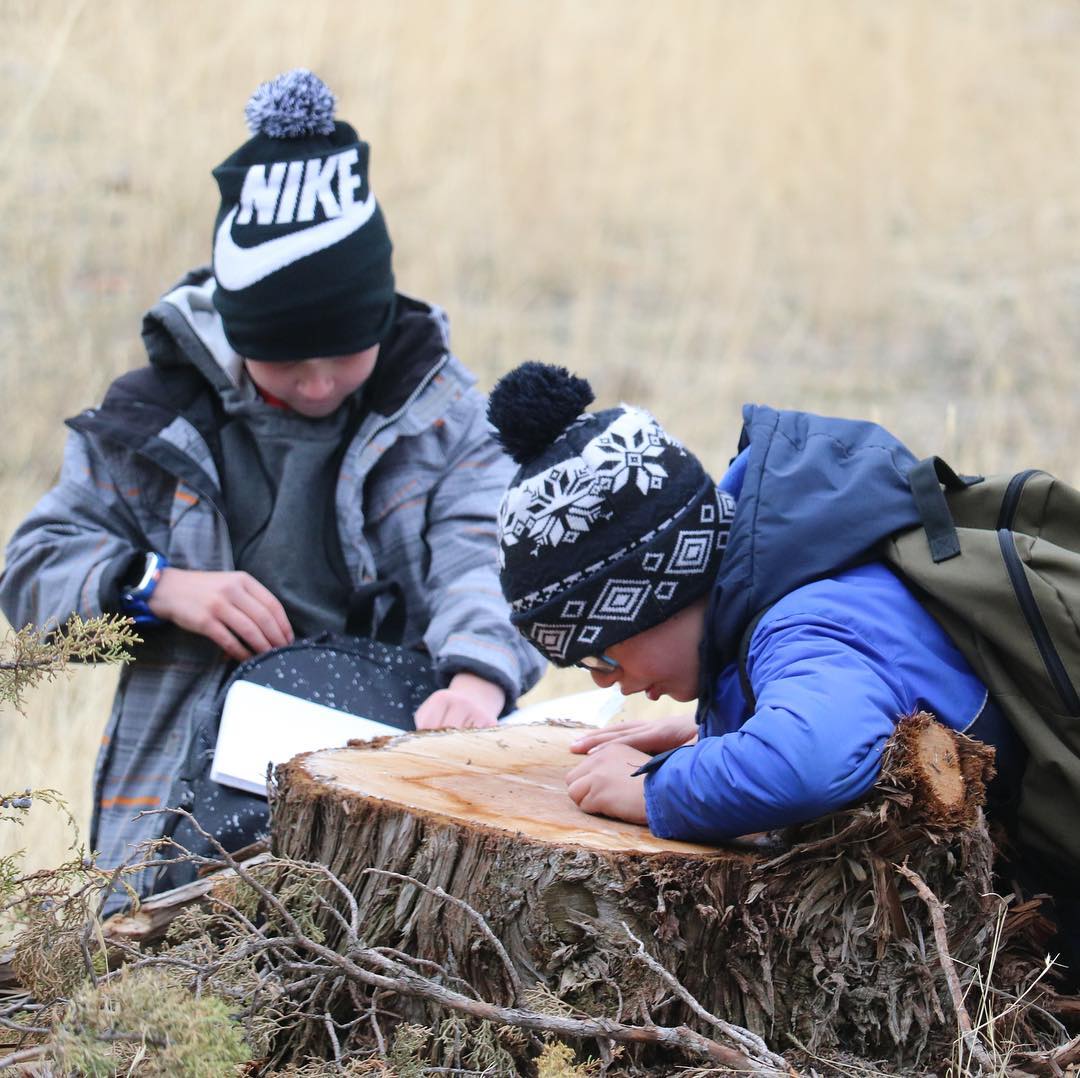
In addition to researching the different biomes and learning about the adaptations animals must possess in order to survive there, these third graders have been visiting the several biomes local to Cache Valley and investigating their research animals’ habitats. These experiences have been powerful in helping students realize what it’s really like to exist in the wilds of Utah.

I’m Josh Boling, and I’m Wild About Utah!

Investigating Beaver Habitats Along Temple Fork Courtesy & Copyright Eric Newell, EBLS
Investigating Beaver Habitats Along Temple Fork
Courtesy & Copyright Eric Newell, EBLS
Exploring an alpine-type biome along beaver creek Courtesy & Copyright Eric Newell, EBLS
Exploring an alpine-type biome along beaver creek
Courtesy & Copyright Eric Newell, EBLS
Flying like the birds; Bear River Migratory Bird Refuge Courtesy & Copyright Eric Newell, EBLS
Flying like the birds; Bear River Migratory Bird Refuge
Courtesy & Copyright Eric Newell, EBLS
Looking at tree migration in Green Canyon Courtesy & Copyright Eric Newell, EBLS
Looking at tree migration in Green Canyon
Courtesy & Copyright Eric Newell, EBLS
Investigating Beaver Curtis Creek wanderings; Hardware Ranch; Blacksmith Fork Canyon Courtesy & Copyright Eric Newell, EBLS
Investigating Beaver Curtis Creek wanderings; Hardware Ranch; Blacksmith Fork Canyon
Courtesy & Copyright Eric Newell, EBLS

Credits:
Images:
    Artwork Courtesy & Copyright Josh Boling’s 3rd Grade students
    Special thanks to Lisa Saunderson, Edith Bowen Lab School Art Teacher, for her help in instructing the students toward the creation of their artwork
    Photos Courtesy & Copyright Eric Newell, Edith Bowen Laboratory School Field Experience Director
Sound:
Text: Josh Boling, 2017, Bridgerland Audubon Society

Sources & Additional Reading

Boling, Josh and students, Habitat Heroes Explore More Utah Biomes, Wild About Utah, Apr 8, 2019, https://wildaboututah.org/explore-utah-biomes/

Edith Bowen Laboratory School, https://edithbowen.usu.edu/

Biomes, Kimball’s Biology Pages, https://www.biology-pages.info/B/Biomes.html

Mission Biomes, NASA Earth Observatory, https://earthobservatory.nasa.gov/experiments/biome

The World’s Biomes, University of California Museum of Paleontology, UC Berkeley, https://ucmp.berkeley.edu/glossary/gloss5/biome/
Beaver Creek Greenback Cutthroat Trout

Beaver Creek Greenback Cutthroat Trout Courtesy US FWS Bruce Roselund, Photographer
Greenback Cutthroat Trout
Courtesy US FWS
Bruce Roselund, Photographer
In 2009, officials from the US Division of Wildlife Resources who were out searching for isolated populations of Colorado River Cutthroat Trout found something better—and far more perplexing. Within a 1.2-mile stretch of Beaver Creek, which runs down the eastern flank of the La Sal Mountains near Moab, Utah, surveyors discovered a small, but genetically pure population of a subspecies of Cutthroat Trout known as the Greenback. The fish is not only rare among its fellow Cutthroats; it was heretofore unknown to Utah waters.

The natural history of the Greenback Cutthroat is fascinating! As a member of the genus Oncorhynchus, Greenback Cutthroat Trout trace their lineage back about 2 million years to Salmonid ancestors that chose to forego their return to the Pacific Ocean and instead pursued habitat further and further up the Columbia and Snake River drainages into the Green and Yellowstone River Basins. From here, cutthroat predecessors diversified into subspecies we know today: the Alvord, Bonneville, Humboldt, Lahontan, Yellowfin, Yellowstone, Colorado River, and, among others, the Greenback Cutthroat.

Greenbacks took a particularly arduous path to what is now their native home range. About 20,000 years ago, during the Pleistocene Epoch’s glacial maximum, Greenbacks hitched a ride via advancing ice sheets and their runoff, crossing eastward over the Continental Divide. And, historically, that’s where they’ve been found—east of the continental divide. However, in a 2014 summary report of a meeting among experts on the Greenback Cutthroat Trout’s whereabouts in Colorado, the US Fish and Wildlife Service says this about the fish’s home range: “Until recently, delineations of subspecies of cutthroat trout in Colorado were believed to follow geographic boundaries within the state, with greenback cutthroat trout on the eastern side of the Continental Divide and Colorado River cutthroat trout on the western side.” That seems to have changed.

Beaver Creek Greenback Cutthroat Trout were found in Beaver Creek in the La Sal Mountains
Greenback Cutthroat Trout
were found in Beaver Creek
in the La Sal Mountains
Experts are at a loss as to how Greenbacks came to occupy the waters of Utah. Speculations abound from rogue fishermen stocking their favorite backwaters with favorite species from the Colorado Front Range to a remnant population of an ancient strand that may have ridden the glaciers all the way to La Sal runoffs. What’s even more perplexing is the population’s pure genetic makeup. Cutthroat Trout hybridize easily with other fish; but the Beaver Creek population hasn’t. One reason may be the creek’s inaccessibility. Disease and non-native trout haven’t threatened the resident Greenbacks; and so they have lived on undisturbed, unadulterated, and, until about a decade ago, unknown to their human counterparts. This gives the wildlife conservation community some hope for the fish’s viability moving forward.

Greenbacks currently only occupy roughly 1% of their historic native range and were once thought to be extinct altogether. This hardy and adventurous fish refuses to call it quits, though. Who knows, maybe the valiant reclamation of its old territory has already begun along so many other inaccessible and unadulterated creek beds.

I’m Josh Boling, and I’m Wild About Utah!

Credits:

Images:
Greenback Cutthroat Trout, Courtesy Fish and Wildlife Service, US Department of the Interior, Bruce Roselund, Photographer
Beaver Creek, LaSal Mountains, Courtesy Utah Division of Wildlife Resources,
Audio: Includes audio provided by Friend Weller, UPR
Text: Josh Boling, 2018

Sources & Additional Reading

Georg, Ron, Rare trout found in La Sal Mountains, The Times Independent, Moab, UT, May 14, 2009, https://moabtimes.com/bookmark/2560140-Rare-trout-found-in-La-Sal-Mountains

Prettyman, Brett, Greenback or not wildlife officials work to expand cutthroat population, The Salt Lake Tribune, Nov. 19, 2010, https://archive.sltrib.com/article.php?id=50632061&itype=cmsid#gallery-carousel-446996

Thompson, Paul, A lifelong passion for native cutthroat trout, Wildlife Blog, Utah Division of Wildlife Resources, April 10, 2017, https://wildlife.utah.gov/blog/2017/a-lifelong-passion-for-native-cutthroat-trout/

Greenback Cutthroat Trout, Western Native Trout Initiative, https://westernnativetrout.org/greenback-cutthroat-trout/

Greenback cutthroat found in Utah for first time, KSL/The Salt Lake Tribune/The Associated Press, May 1, 2009, https://www.ksl.com/?nid=148&sid=6338134

Spring Testosterone

Spring Testosterone: Male House Finch Courtesy US FWS Gary Kramer, Photographer
Male House Finch
Courtesy US FWS
Gary Kramer, Photographer
Love is in the air! While shoveling snow, it seems a bit ludicrous to say “spring has arrived”, but here it is! I first noticed it 3 weeks ago when a burst of house finch tumbling notes filled the vapors. That was followed by a robin dusting of some rusty phrases which will soon be heard across the mid-latitudes of N. America.

What is one to think of such outrageous behavior as the snow continues to fall and the thermometer dips well below freezing? In one word-testosterone! This magical chemical is surging once again entirely dependent on the ratio of daylight to dark which has changed to such a degree that life helplessly submits to the urge for love.

Boxelder at Court of the Patriarchs,  Zions National Park Courtesy NPS Amy Gaiennie, Photographer
Boxelder at Court of the Patriarchs,
Zions National Park
Courtesy NPS
Amy Gaiennie, Photographer

Even plants are getting in the mood due to hormonal change in response to increasing length of daylight. If I were still teaching science at Logan High we would be tapping a spile into a box elder tree to catch the dripping sap and boil down on the Bunsen burner to delicious maple syrup. When we began this activity 32 years ago March was the month. It gradually changed to mid-February as the winter season shortened.

Death Camas Bryce National Park Courtesy US NPS
Death Camas
Bryce National Park
Courtesy US NPS
I’m guessing the tiny pink flower of stork’s bill geranium and yellow of biscuit root is already blooming beneath the snow on south facing slopes. Death camas leaves are beginning to poke through moist soil.
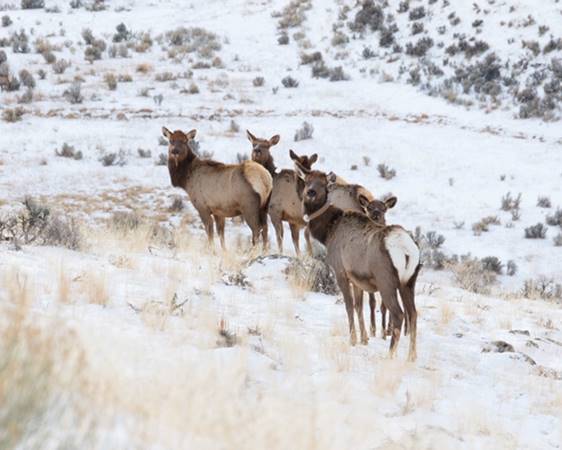
Snow geese and tundra swans are beginning to populate our open waters with sandhill cranes and many other species of waterfowl soon to follow.

Mountain Bluebird Pair Courtesy & Copyright Milt Moody, Photographer Utahbirds.org
Mountain Bluebird Pair
Courtesy & Copyright Milt Moody, Photographer
Utahbirds.org
In the heavens you may see golden eagles performing their talon locked tumbling courtship death plunge, and paired ravens cavorting in mid-air. Outrageously beautiful Mountain bluebirds begin decorating fence posts in the countryside. Clark’s nutcrackers are beginning their migration to ridgetops for nesting activities.

Great horned owls present a special case. Their hoots reached a fevered pitch during their January courtship period. Nesting begins in February but no nest building needed. They take the easy out by occupying other raptor nests, especially red tail hawks, crows, or a handy ledge. They are fierce defenders of their young and have caused injure to clueless humans who approach to near. The family unit will remain together into the fall season.
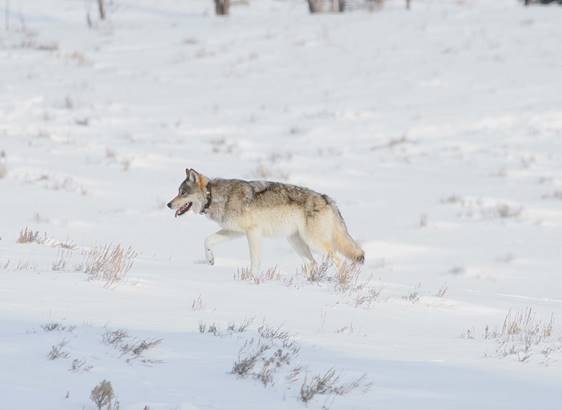
Coyotes and fox are in full courtship mode showing overt affection. Parents of both of these wily canids help with den preparation and rearing pups born a few months later. Both are common in native legends for the cunning and trickery.

“If the day should ever come when one may camp and hear not a note of the coyotes joyous stirring song, I hope that I shall long before have passed away, gone over the Great Divide.” Earnest T. Seton, American naturalist, author, activist and father of the Rocky Mountain N.P.

This is Jack Greene and I’m Wild about Wild Utah!

Credits:

Images:
    Male House Finch, Courtesy US FWS, Gary Kramer, Photographer
    Boxelder at Court of the Patriarchs, Zions National Park, Courtesy NPS, Amy Gaiennie, Photographer
    Death Camas, Bryce National Park, Courtesy US NPS
    Mountain Bluebird Pair, Courtesy & Copyright Milt Moody, UtahBirds.org
Audio: Contains Audio Courtesy and Copyright Kevin Colver
Text:     Jack Greene

Sources & Additional Reading:

Körner, Christian, Plant adaptation to cold climates, National Center for Biotechnology Information, U.S. National Library of Medicine, https://www.ncbi.nlm.nih.gov/pmc/articles/PMC5130066/

Have BoxElder Maple Trees? Make BoxElder Syrup! Quirky Science, https://www.quirkyscience.com/make-boxelder-syrup/