View looking east in early summer from Cedar Breaks National Monument Courtesy US NPS, Zach Schierl, PhotographerIf visitors find locations in Utah’s National Parks, where very little man-made sounds are heard, it can be a breathtaking experience. A park visitor may canoe along riparian habitat and hear a variety of bird calls, or hike a trail and come around a bend to see a few deer jump over the sage-brush.
These types of experiences may also occur after dark when visitors participate in stargazing or a full-moon hikes.
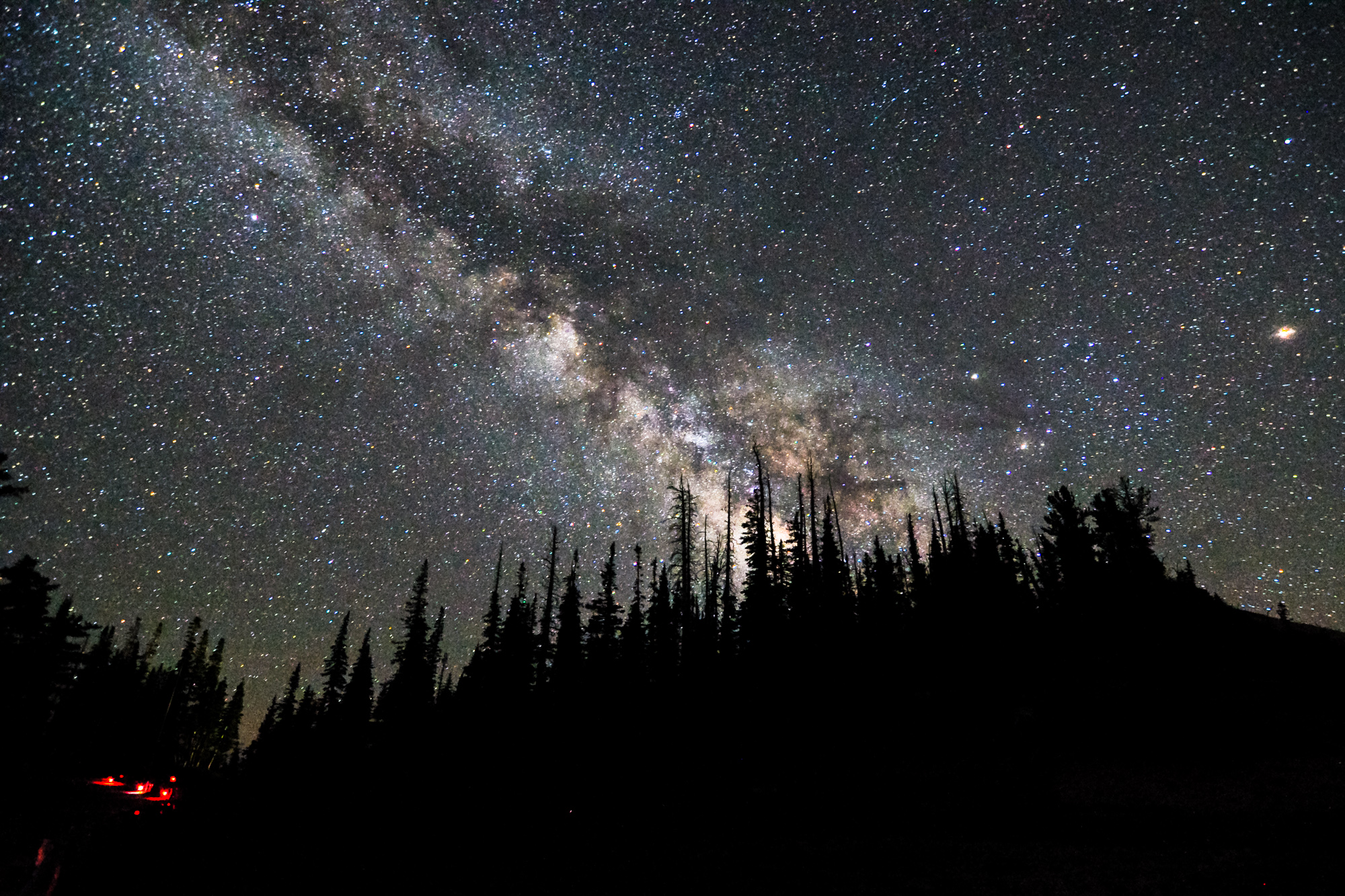
The southern Milky Way visible during a star party at Cedar Breaks National Monument. We use red lights on the telescopes during star parties to help preserve night vision. Courtesy US NPS, Zach Schierl, PhotographerMark and Sallie Shelton said, “Utah dark skies are our passion! The [dark] sky and quiet solitude are magical. Visitors, from around the world, are in awe when they get their first [heavenly] glimpse of [the Milky Way] and see the stars shining like diamonds on dark velvet.”
Protecting the quiet and darkness of our National Parks has become a priority for many managers and researchers.
Four planets and the Moon are visible in the twilight sky over ancient Bristlecone Pine trees at Cedar Breaks NM Courtesy US NPS, Zach Schierl, PhotographerChristopher Monz, professor in the Department of Environment and Society in the Quinney College of Natural Resource at USU joined with five other scientists who have all worked on issues of noise pollution and light pollution to compile the book, “Natural Quiet and Natural Darkness: The “New” Resources of the National Park.”
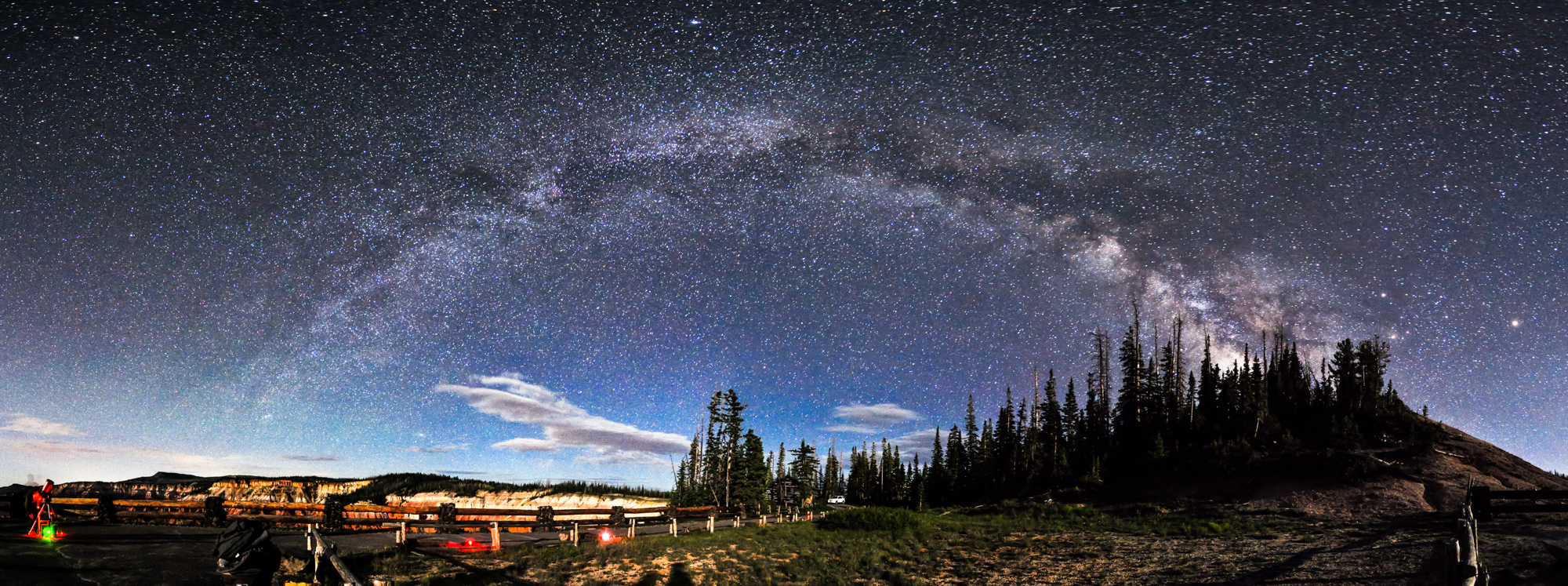
title=”Four planets and the Moon are visible in the twilight sky over ancient Bristlecone Pine trees at Cedar Breaks NM Courtesy US NPS, Zach Schierl, Photographer” The Summer Milky Way as seen from Point Supreme at Cedar Breaks NM. The landscape is illuminated by the light of a 1st Quarter moon. Courtesy US NPS, Zach Schierl, PhotographerMonz explains, “[We wanted] to compile, in one place, the best science on both the social and ecological dimensions regarding the importance of the resources of darkness and quiet, and the consequences of them slowly disappearing in our most precious protected areas – the national parks.”
The book gathered many interesting findings.
Visitors enjoying a quiet day at Hovenweep National Monument Courtesy & Copyright Shauna LeavittOne is the concept of “listening area” which is the distance an individual (human or animal) can hear normal sounds and calls that they’re evolved and adapted to. For a bird species it might be a mating call, for deer it might an alert response from a predator.
As noise increases the listening area may decrease dramatically.
Monz said, “In the United States noise from roads has increased three fold since 1970.”
A three decibel increase in noise results in a 50 percent decrease in listening area. If there is a 10 decibel increase, the result is a staggering 90 percent decrease in listening area.
Monz explains, “If you put noise into the environment there is the potential for significant ecological implications, particularly for wildlife. They can no longer be reliant on the sense of hearing to carry out normal activities…some species will move out of those noisy areas to quieter environments which creates a displacement effect.”
For humans, this means we have less opportunities to engage with the sights and sounds of nature.
One success story outlined in the book occurred in Muir Woods National Monument in California. Monz said, “Simply by putting up signs which raised the visitor’s awareness of the environment they were in, and the importance of quiet for other visitors, the noise decreased by 2 decibels. This gave folks an opportunity to experience better natural quiet environment and a little bit more biodiversity from the standpoint of hearing bird calls from the surrounding forest.”
The book also provides ideas for managing the resource of darkness in the National parks.
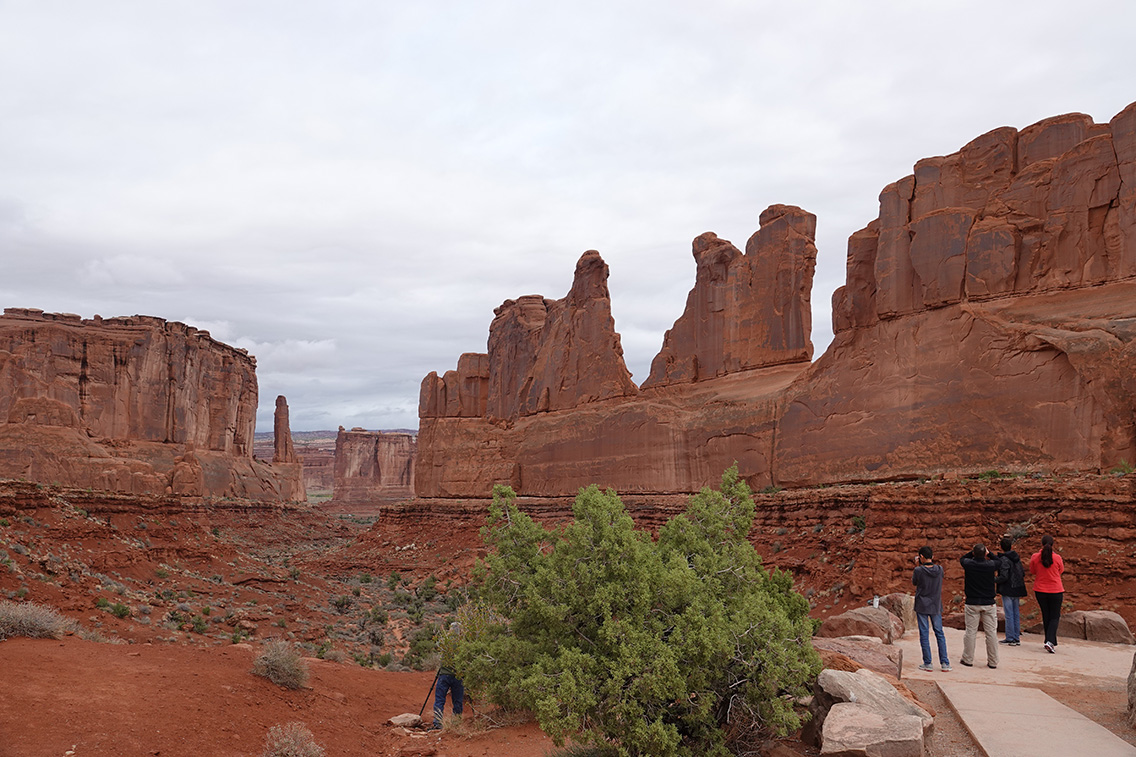
Guests enjoying Arches National Park Courtesy & Copyright Shauna LeavittMonz said, “Right now 80% of the world’s population lives in locations where there is some compromise of natural darkness…most will never see the Milky Way.”
Cedar Breaks National Monument, which has the highest star gazing site at 10,500 feet, received an award from The International-Dark Sky Association (IDA) for preserving its Dark skies.
The authors of “Natural Quiet and Natural Darkness” hope the book will get in the right hands to provide park managers with this easily accessible tool where they can find the best science and actionable ideas to increase quiet and darkness in our National Parks.
This is Shauna Leavitt and I’m Wild About Utah.
Natural Quiet and Darkness in our National Parks-Credits:
Photos:
Courtesy US NPS, Zach Schierl, Photographer, Education Specialist, Cedar Breaks National Monument
Courtesy & Copyright Shauna Leavitt,
Audio: Courtesy and Copyright
Text: Shauna Leavitt, Utah Cooperative Fish and Wildlife Research Unit, Quinney College of Natural Resources, Utah State University
Natural Quiet and Darkness in our National Parks-Additional Reading
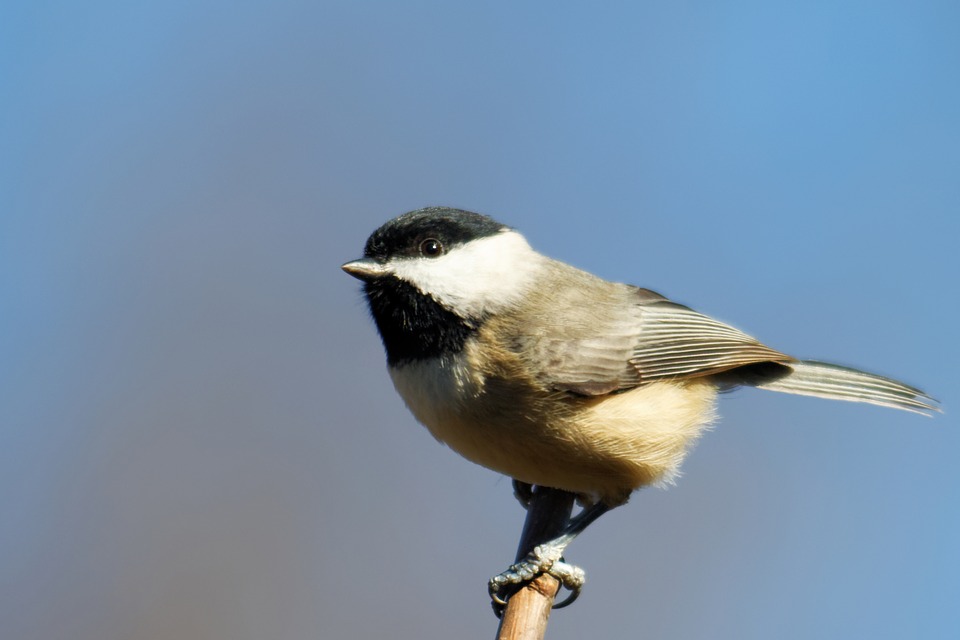
Chickadee Courtesy edbo23, photographer and PixabayAs a child I loved nature. Not liked: loved.
I consumed it. I learned the names and types of animals especially, from all over the world. My love was ceaseless, carefree, and itself consuming.
There were phases of course, too. First it was bats, then dinosaurs but back before they had feathers, then penguins, dogs, spider monkeys, and sharks. With each new kind of animal I learned about, I was drawn in closer by what makes them special and sets them apart. I could imagine myself as any one of a million kinds of critter. I could play as if I were one, hunt or forage like one, build a den or nest like one. I was what I imagined myself to be and I loved it. My world was infinite.
Those days though are decades behind. For a long while now, I’ve thought about what happened to that child; what happened to that infinite world? Years of schooling and structure had pushed my attention into books, screens, and facts. The world did not leave me, I neglected that infinite world, and so it too became schooled and structured and sterile.
This realization of what had happened first hit me when I began student teaching kindergarten a few years ago. One day at recess a child asked me to play with them. I realized then that I couldn’t remember how to play and imagine and see the world as infinite still. I awoke from the dream of education and discovered that I had not learned but books, screens, and facts.
Since then, it’s been hard to relearn how to play and imagine. This relearning casts a shadow of struggle over you, especially as a teacher. It can drive you to try and find what obscures and what shines.
My search for reprieve from a knowable world has taken me all over this country: from coast to coast, and from northern desert to southern swamp. Just the other day though I finally found a true breadcrumb back to the infinite world: a black-capped chickadee.
Sitting in my springtime backyard, one came to my only, lone bird feeder that I got at the grocery store. As it sized up the plastic tube full of food, I began to do something that I hadn’t done for a very long while: I just watched it. It was not like how I watch ducks or deer or loose neighborhood turkeys, as food if only it came in range or the city ordinances were a bit more forgiving, but instead I watched it just to see what it did and who it was.
The small songbird flew from its perch and simply rummaged through my discount bird feed until it found a black sunflower seed and flew back to a higher branch. It worked the shell off the seed with diligence, determination, and intelligence. No schooling required. After eating the morsel within, it flew back for another and ate that one in the same wild manner. It then called out, perhaps to pay the good fortune forward, and flew off without giving the feeder another glance. The momentary abandonment of gluttony is the privilege of spring.
It felt strange to just watch a bird for a few minutes. It felt foreign. My mind kept asking me why I was watching such an unassuming creature and for why. There were books that need reading, screens that need seeing, and facts that need knowing. In the end though, it felt good to stick it to what organized my wild instincts and to just watch the chickadee like a true human being again.
I could in that moment imagine that I was that chickadee: wild, rebellious, and free. Never before had I thought of myself as a chickadee though, truth be told. If any bird, I would have before liked to be a Canada jay, or a raven, or a Swainson’s thrush. But after seeing that chickadee, and thinking on it, the chickadee seems the best of me now and the best of who I want to be. It can be humble, measured, and cooperative, or proud, excitable, and driven, depending on the needs of the season. It’s easily seen, easily unnoticed, and easily pleased.
Importantly, though it reminds me of that child with the infinite world. It reminds me why I loved nature. It gives me hope that I can again.
I’m Patrick Kelly and I’m Wild About Utah.
Credits:
Images: Courtesy and Copyright Stephen Peterson, Photographer
Audio: Contains audio Courtesy & Copyright Kevin Colver
Text: Patrick Kelly, Director of Education, Stokes Nature Center, https://logannature.org
Included Links: Lyle Bingham, Webmaster, WildAboutUtah.org
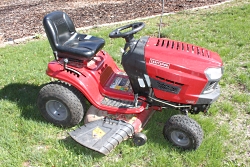
Riding Lawnmower Courtesy & Copyright Ron Hellstern, PhotographerTraditional American landscaping focuses on maintaining a manicured green lawn. However, the National Wildlife Federation has some better environmental choices for people and wildlife by including native trees, shrubs, ground cover, prairie or meadow patches, flower beds and attractively mulched areas.
Did you know
Approximately 20 million U.S. acres are now planted as residential lawn.
30-60% of urban freshwater is used for watering lawns.
67 million pounds of synthetic pesticides are used on U.S. lawns annually.
Areas of lawn that include only one type of plant, such as grass, offer very little habitat value for wildlife.
Yard waste, mostly grass clippings, makes up 20% of municipal solid waste collected, and most of it ends up in landfills.
Reasons to reduce your lawn
Save time and money that you would normally spend on mowing and fertilizing grass.
Provide habitat and food for wildlife.
Conserve water.
Reduce lawn mower pollution and decrease run-off from fertilizers and pesticides.
Here are some ways to reduce your lawn and help wildlife
Use native plant species as ground cover instead of grass.
Install native trees and shrubs
Create a rock garden
Use mulched pathways
Provide meadow or prairie patches
Install a hedgerow
Plant an organic vegetable garden
Create a butterfly or hummingbird garden
Taking Action
Make a plan of how you want your yard to look. Check with your local municipality, neighborhood, or homeowners’ association for regulations. Once you have decided on an area of your yard to convert, follow these simple suggestions:
Cover your turf grass with 6-10 layers of black & white newspaper or brown cardboard. There is no need to remove the grass first.
Make sure the sections overlap one another so that grass and weeds will not come up between the cracks.
Wet down the newspaper or cardboard.
Cover the newspaper or cardboard with a 4”- 6” layer of mulch or soil.
Allow turf grass and weeds to die back for 4-6 weeks.
Plant directly through the mulch and newspaper/cardboard. If you know you’re going to be planting trees or shrubs, dig the holes before putting down layers of paper.
Some other things to consider
Determine what native plants are already thriving in your site. Encourage the native plants already present and replace exotic invasive species with native ones. The Lady Bird Johnson Wildflower Center has lists of recommended native plants by region and state at www.wildflower.org/collections. There are 158 listed for Utah.
Organic mulch can reduce weeds, prevent erosion, improve soil nutrients and increase water holding capacity.
Borders of rock or weed can bring a sense of order to a “wild garden” in an urban or suburban neighborhood. This may make your natural landscape more acceptable to neighbors.
And don’t forget to make a place for people as well. A bench or path will accommodate this nicely and add to your enjoyment.
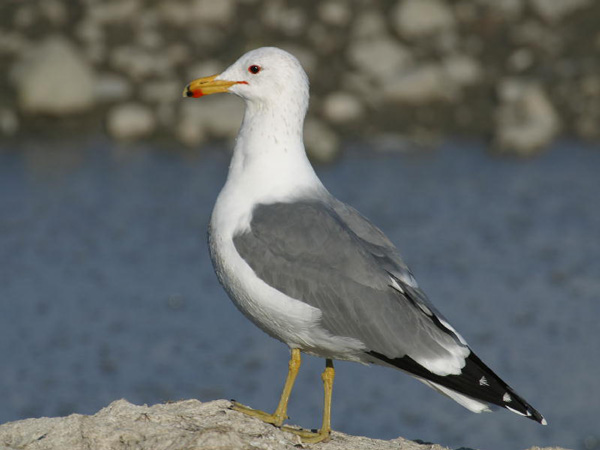
California Gull Larus californicus
Farmington Bay Davis County, Utah
9 Feb 2003
Courtesy & Copyright 2003 Jack Binch, Photographer
See UtahBirds.org“When it seemed that nothing could stay the devastation, great flocks of gulls appeared, filling the air with their white wings and plaintive cries, and settled down upon the half-ruined fields. All day long they gorged themselves, and when full, disgorged and feasted again, the white gulls upon the black crickets, hosts of heaven and hell contending, until the pests were vanquished and the people were saved.” Orson F. Whitney, June 6th 1848. Over a century later, the California gull, was selected as the state bird of Utah and a gull monument placed on Temple Square in SLC.
My first serious encounter with this bird occurred in the mudflats of the Ogden Bay Bird Refuge. On a date with my 3 young children and a lovely lady whom I later betrothed, we walked several hundred yards to a small island consisting of an outcrop of mica schist. As we approached, a white cloud of screaming gulls arose. We soon discovered the island to be covered with nests of young and eggs. Mesmerized by this remarkable display of turmoil and alarm, the gulls went on the attack by releasing offal from both anterior and posterior ports. The gulls won the day with our rapid retreat.
I’ve had many gull experiences since: being attacked by mew gulls in Alaska, who also attacked bald eagles that strayed into their territories; witnessing Franklin gulls returning to Utah landfills with a pink glow from gorging on brine shrimp; watching with amazement as western gulls opening clams and mussels by shattering them on rocks while backpacking on the Washington coast.
I’ve come to respect North America’s 28 species of gulls as graceful, intelligent, and skillful seabirds. The following gull trivia may win a few more admirers.
Gulls are monogamous creatures that mate for life and rarely divorce. As parents, they are attentive and caring, both involved in incubating the eggs as well as feeding and protecting the chicks until fledged. They also teach their young creative methods of hunting, showing the intelligent ability to pass skills to others.
They are one of the few species of seabirds that can survive drinking salt water, enabling them to venture far out to sea in search of food when necessary. This is made possible by a special pair of glands just above the eyes that flush the salt from their system out through their nostrils.
They are expert fliers, having mastered control of wind and thermals, sharp directional changes, climbs and dives.
They have developed many clever ways of stealing the catch of other seabirds using their flying skills to pluck fish from birds in flight, or fascinating maneuvers to pester them until they drop the food which the gull will catch before it hits the water.
So how is our state bird predicted to weather a shifting climate? Unfortunately not well, losing 98% of its summer range and 72% of winter range by 2080. Until then, I will continue to marvel at the great flocks following the plow turning up fresh earth and the hidden banquet they relish.
This is Jack Greene and I’m utterly wild about Utah!
Credits:
Pictures: Courtesy & Copyright Jack Binch, Photographer
Audio: Courtesy and Copyright Kevin Colver
Text: Jack Greene, Bridgerland Audubon Society
Handbook of the Birds of the World 3: 609. Lynx Edicions. Larus thayeri (TSN 176828). Integrated Taxonomic Information System. Retrieved on 10 March 2006.