Receiving Instructions in Snowshoeing Courtesy & Copyright Josh Boling, Photographer“No, no, no!”
“Don’t try to help me up yet,” I instructed, choking back laughter through a face full of snow.
Third graders teetered in their snowshoes on the edge of the tree well with mixed emotions written on their faces—equal parts concern and confusion. I was sunk to my armpits in snow, insisting that they not help me out of it. The learning had begun.
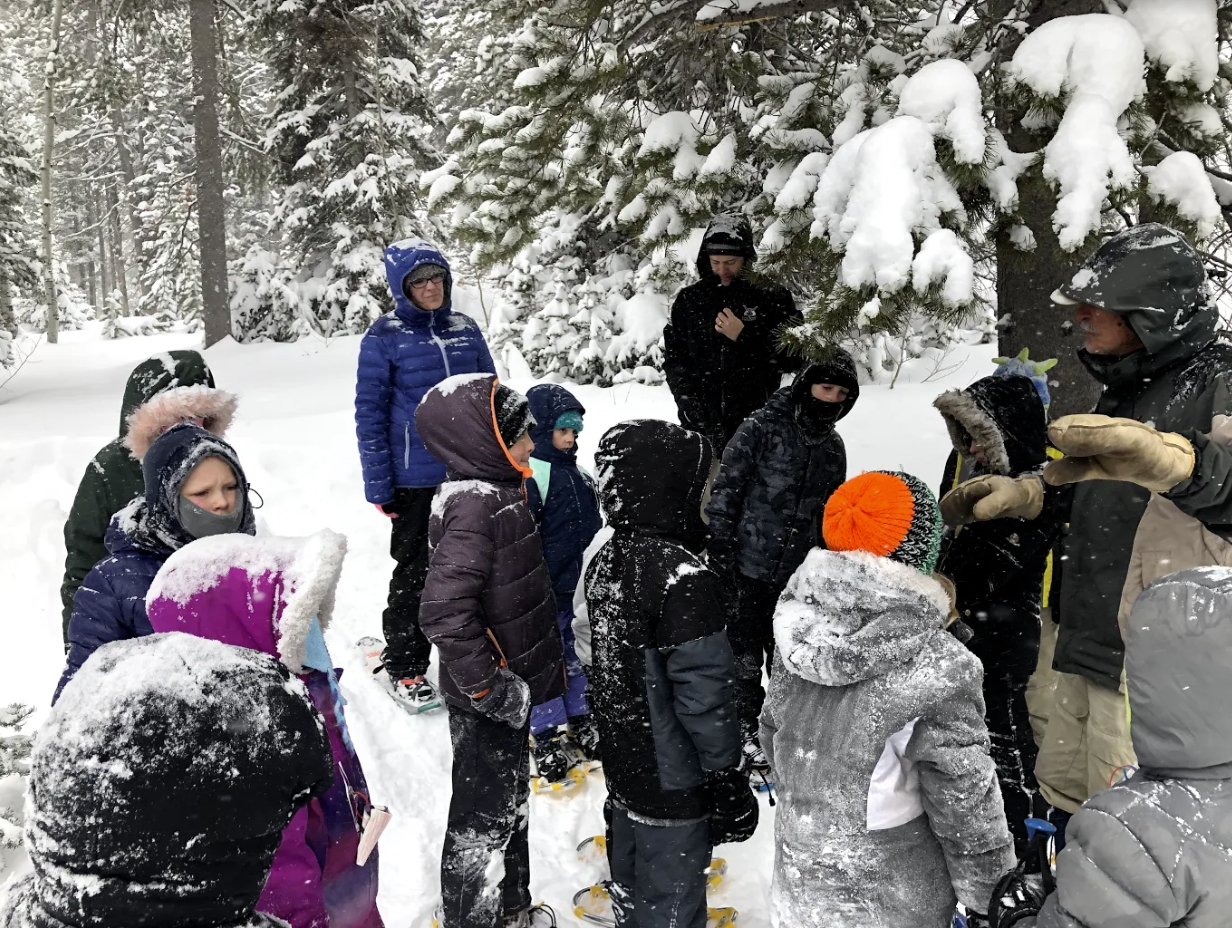
Stomping a flat, hard-pack clearing into the deep snow Courtesy & Copyright Josh Boling, PhotographerWe were in the trees, high in the canyon, there to discuss the winter adaptations of local wildlife while an inch an hour of fresh powder fell from above. I had stepped onto a shallow layer of snow that covered a spruce sapling just as I was explaining the similarities between the snowshoes on our boots and the feet of the snowshoe hare. The timing was impeccable.
“I guess we’re not as good as the snowshoe hare,” one student quipped as a flurry of helpful hands and a borrowed ski pole finally freed me from the hole.
Stomping a flat, hard-pack clearing into the deep snow Courtesy & Copyright Josh Boling, Photographer“No, I guess not,” was my reply. “So how do we survive here, then?”
Snow continued to fall while students offered up their hypotheses: “We have tools, like coats and snowshoes and ski poles”; “we help each other, like a community!” “We don’t have special body parts, so we have to try new things to survive.”
Someone mentioned “structural adaptations.” A familiar murmur of agreement as someone used another science term, “behavioral adaptations,” language maybe once thought too complex for 9-year-olds. But it was language students had developed over the course of a few months closely studying the wildlife of Utah—language they were putting to work now, constructing new understandings of the world in real time.
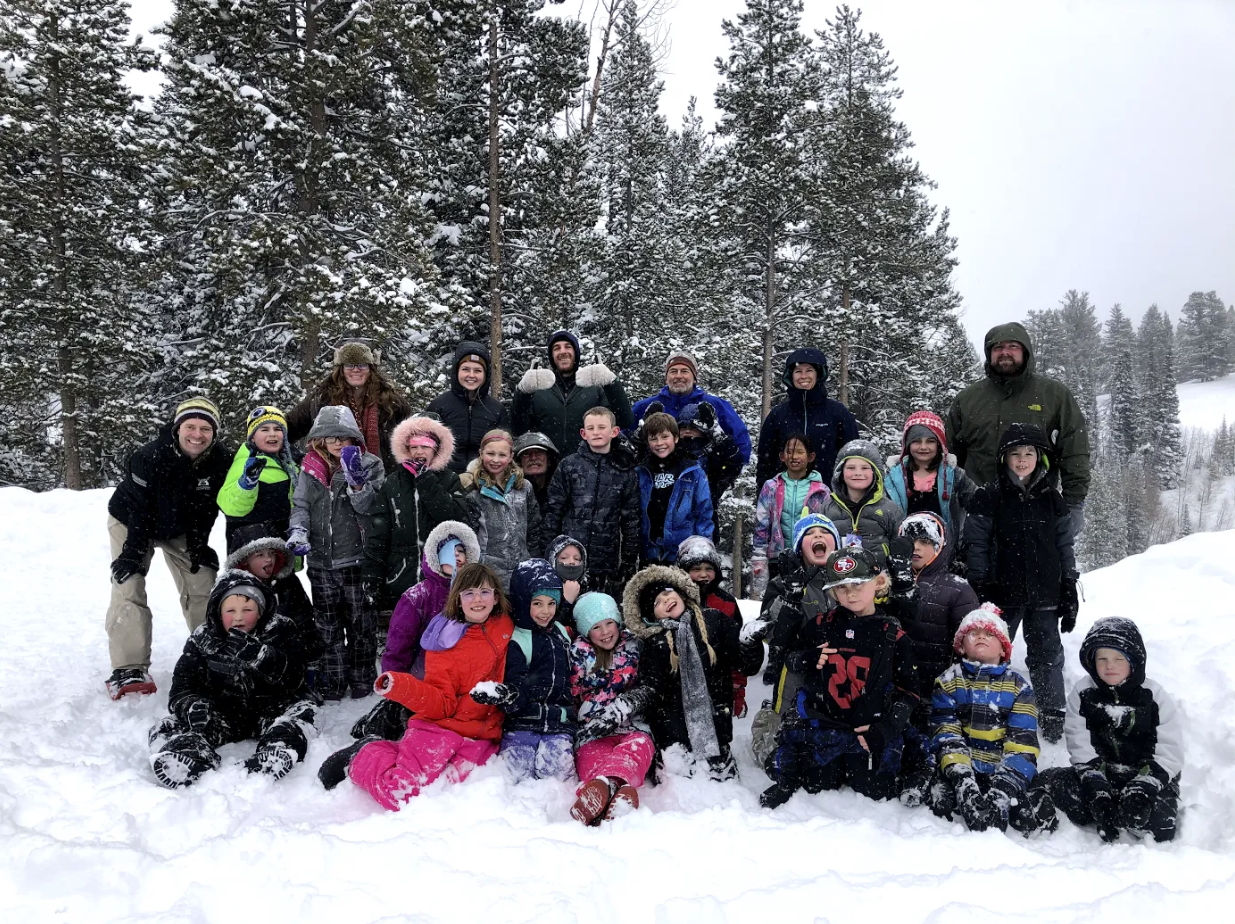
Enjoying the Snow, Courtesy & Copyright Josh Boling, PhotographerWe needed to keep moving, so my colleague and co-wilderness-guide for the day introduced the kids to another behavioral adaptation used by herds of deer. Minutes later, 13 energetic bodies were performing the mule deer “snow dance,” stomping a flat, hard-pack clearing into the deep snow. “No more post-holing,” he told the kids. He let the new vocabulary word sink in while we rested and ate a snack, much like a mule deer might.
As a matter of state law, the Utah State Board of Education expects third graders to, quote, “Engage in argument from evidence that in a particular habitat…some organisms can survive well, some survive less well, and some cannot survive at all” (UT SEEd Standards, 3.2.5, 2019).
Our Class The Joy of Teaching Outdoors Courtesy & Copyright Josh Boling, PhotographerLearning outdoors helps students connect academic content to lived experiences in real time. These students certainly had an argument to make as to how well-prepared an animal needs to be in order to survive a mountain winter. They lived the experiences themselves.
I’m Josh Boling, and I’m Wild About Utah.
Snowshoes and Adaptations-Credits: Snowshoes and Adaptations
Photos: Courtesy and Copyright Josh Boling, Photographer
Audio: Includes audio from Josh Boling
Text: Josh Boling, 2020,
Ron Hellstern Contributor to Wild About UtahA mighty tree has fallen- but its seed has been cast far and wide through his great works. I speak of a frequent Wild About Utah contributor, educator, and conservationist. On January 3rd, 2020, Ron Hellstern left us for the great beyond. He was the personification of Wild About Utah.
Ron’s legacy can be found in the thousands of youth who accompanied him in the classroom and field where they participated in many citizen science projects for birds, butterflies, countless tree plantings, restoring streamside environments, and competing in the Utah Envirothon, which Ron helped establish in Utah
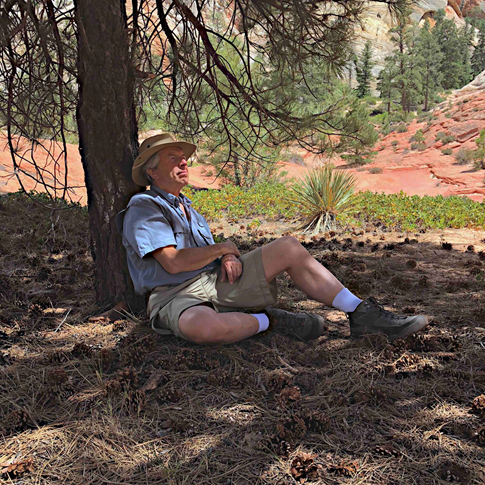
He preferred the title “Redrock Ron” which Ron earned from his unflagging love for Utah’s red rock country, culminating with Zion N.P. His contributions there were many- writing curriculum for the park, Christmas bird counts, assisting with the state Envirothon competition which he convinced Zion to host, and much more. His greatest thrill were the many family hikes and campouts he reveled in, to have those near and dear with him to partake of its splendors.
Closer to home, Ron was synonymous with monarch butterflies, fireflies, and reforestation. He spent many years with students and others hatching, tagging, and releasing monarchs to help map their western migration patterns, adding new information to assist with their preservation. Ron was a relentless advocate for planting milkweed, the host plant for rearing the monarch’s chrysalis and caterpillars.
Once he discovered fireflies in a city marsh, Ron realized this rarity needed protection. As both a city council member and citizen, he convinced the city of their unique importance. The Nibley firefly park was the result. A few thousand folks showed up for its inauguration.
And “Trees are the answer” from Ron’s perspective. His plantings were notorious throughout our valley- from school grounds to open lots, his town recognized as a Tree City USA. Ron deeply appreciated all that trees provide for people, wildlife, protecting soil and our mountains watersheds. It seemed that whenever I visited Ron, he was planting yet another tree.
Ron was instrumental in establishing the first “Childrens Forest” with the USFS in Logan Canyon. He was the primary force behind his town of Nibley receiving Utah’s first, and yet only, designation as a Wildlife Friendly City through the National Wildlife Foundation.
As a member and major contributor to the Utah Society for Envioronmental Education and North American Association for EE, Ron’s influence as an extraordinary educator was recognized. He served on both boards where his influence was felt forming policy and programs on a state and international level. Ron was a relentless champion of classroom teachers in both of these acclaimed organizations.
Ron was a kindred spirit, the brother I never had. His presence will never leave me- every tree, monarch butterfly, firefly, trip to redrock country, Ron will be with me.
This is Jack Greene in behalf of our dear friend- Ron Hellstern
Ron Hellstern-Credits:
Images: Courtesy Morgan Pratt for Ron Hellstern
Audio: Contains Audio Courtesy and Copyright Kevin Colver
Text: Jack Greene, USU and Bridgerland Audubon Society
Naomi Wilderness Courtesy and Copyright Matthew Wickenhiser, PhotographerImagine a place devoid of randomly constant dings and dongs, a place with no artificial lighting or insistent clicking of keys or ticking of screens. Maybe even a place where one no longer has to think about the persistently pressing matters of politics for even just a brief moment.
Solitude, awe, beauty…breeze, trees, birds…life.
Benefits of Being Wild: Climbing Logan Canyon Courtesy and Copyright Matthew Wickenhiser, PhotographerCertainly, the place that comes to mind might exist here in Utah. Anyone who has driven more than five hours in any direction can tell you the state doesn’t always look the same. Utah has landscapes ranging from mountains reaching more than 13,000 feet to desert plains dropping down to nearly 2,000 feet above sea level, and everything in between (McNamee, Arrington 2019). The colors of the landscape begin in the north with the deep greens of the forest and end in the south with the rich hues of red and orange. It is this unique and endlessly variable landscape that some argue makes it the perfect place to find happiness.
Hold on. Happiness is not a simple thing to achieve or understand. Sources are both internal and external. But for this story we are focusing on the happiness which comes from being in a mentally beneficial environment. Utah’s incredibly diverse landscape lends itself to be adaptably beneficial to a population of various preferences. It quite literally can suit just about anyone’s partialities. Whether someone likes mild winters in the desert or harsh, bitter, white winters, (which most people on this plant have only heard about in stories) Utah has it all. If someone prefers quiet towns or large and bustling urban centers, thinner air to thicker air; Utah can accommodate. But what do these accommodations have to do with happiness?
There is an ever-growing expanse of research regarding the mental health benefits of nature. Much of this research came about after the establishment of wilderness therapy programs which began to take root in Utah during the latter part of the 1980s. Griffin Woods, a student at Utah State University, experienced one of these wilderness programs. One of the important things he said about experiencing nature was, “People should definitely be pushed more to go outside, get off the phone and be in nature as opposed to being glued to a phone.” (Griffin. Personal communication. October 2019)
This happiness can spread to family members. Many children who participate in an outdoor education program will afterwards ask their parents to take them out into nature so they could “show and tell” them what they have seen and heard.
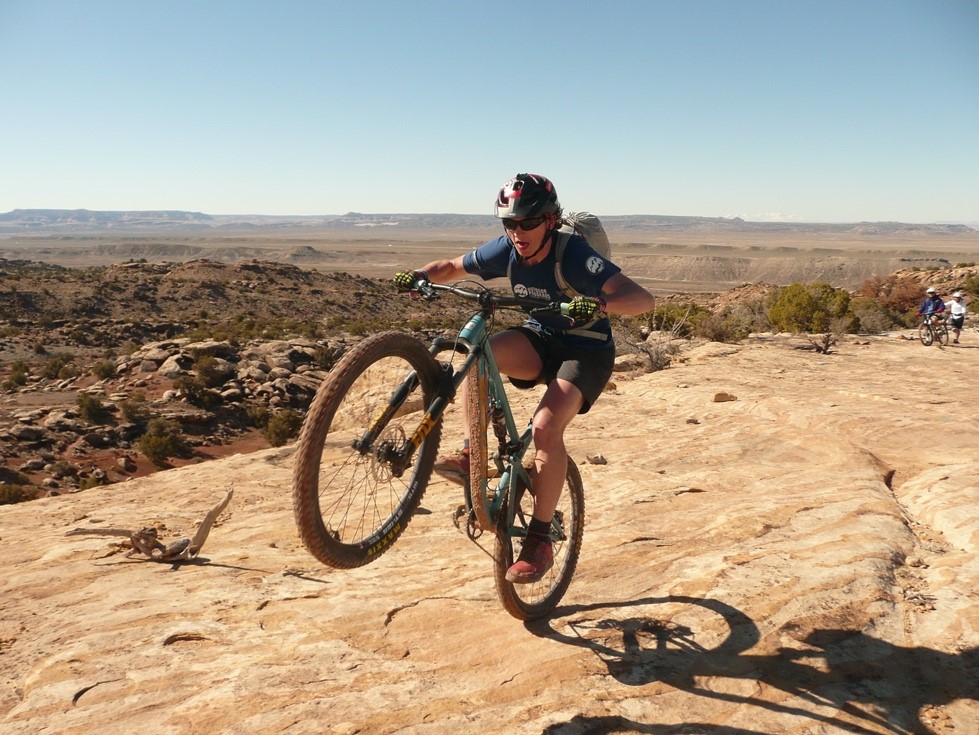
Bike Ride in Moab Courtesy and Copyright Matthew Wickenhiser, PhotographerSimply being in place of wilderness can reduce stress and anxiety, and improve overall esteem (Arnold, 1994; Bahaeloo-Horeh & Assari, 2008). With this knowledge, Utah becomes an arsenal armed against the harmful habits that deteriorate our daily lives. It enables us to actively increase our attitudes and improve our internal state of mind.
So, this, this is what makes Utah so incredible. This state’s unique ability to make its residents and visitors happier. All you have to do is get outside. We end with this quote from Edward Abbey, “Wilderness is not a luxury but necessity of the human spirit.” So please, feed your spirit, enrich your soul, and enlighten your mind. You exist in arguably one of the most perfect places in the world to do this. Now go be Wild About Utah.
This is Matthew Wickenhiser and I’m Wild About Utah.
Sunrise over Stunning Landscape Image by skeeze from PixabayMy mother’s father died of cancer three months before I was born. From his memory, I carry his first name as my middle: Orville.
For most of my life, this was all I had of his. Others had stories of him, photos, old reels of film. Through these means, I began over the years to better understand, perhaps not my grandfather as he was, but certainly as he was remembered. I began to see the meaning of my name but only within the memory of others.
Orv was an avid outdoorsman and hunter in the north woods of Wisconsin. He loved nothing more than setting out with his firearm and kit, and coming home with game from that still wild mist. My grandmother refused to clean his wild harvests, and his children, my mother and her sisters, refused as well. Orv’s tradition was not their own.
So my grandfather always cleaned his harvests himself. Each feather he’d pluck and each hide he’d skin defined how others remembered him and how I would know him. He always completed the hunt. This was the only way. When he passed, his ways did as well.
Now, growing up after Orv’s death, my family’s meat came from the grocery store already butchered; no longer an animal: just a morsel for consumption. There was no understanding of life attached to the chicken breasts and the ground beef. Orv’s progeny had no interest in striking out into the woods or marsh before light, or in the taking of a life, even though that take always gave to good cause. They had no interest in cold hands, cold feet, blood, bile, and organs. Why then did Orv? What called him to this tradition, to keep it, to provide by its ways? I felt an indescribable pull towards my lost grandfather, and such the lost grandfathers before him who shared in this tradition of provision.
So one winter, I found Orv’s firearms in my aunt’s basement closet by chance, neglected of care, much less use, for 30 years. Seeing them there I knew that they needed to be used and no longer lay wrapped in an old sheet hidden behind older luggage. I did not want my grandfather to be an artifact of the past. I wanted him to be still of use: to be a grandfather. I wanted to be connected to the man I never knew.
And so I inherited his firearms that he used to provide for his family, my family, for so many years. After good repair, Orv, held in those heirlooms for so long, became alive again and a future opened back up for him. By reliving his ways, I could resurrect him from the stories, photos, and film reels. Together, we could see the world, hunt, and better understand what is beyond life and death.
So with my grandfather’s firearms revived, I began to learn how to hunt from experienced ethical friends. I learned how to aim to kill so that no animal may suffer. I learned my bag limits, my off limits, and the eternal unwritten rules on how to consider the life of another living thing with the greatest respect. We hunt for the necessity of food, tradition, and remembering where we come from and must one day go.
It has been years since Orv’s guns came to me, and I to them. Since then, I have learned from more friends how to lay in wait in Cutler Marsh for ducks, or where to walk in the Cache for grouse. I have discovered that Utah is more than its cultures, its economy, its governments. I have discovered that this land called Utah allows me chances like no other to walk with my grandfather: to feel my cold hands and cold feet as his must have been, to have the shared blood on my hands symbolising that highest tradition of provision, respect, and admiration for life.
This land called Utah is magical. Utah allows ghosts to escape the purgatory of memory for life renewed. Utah allows invisible and forgotten families to be whole again. Utah lets us better live a life of respect and gratitude for every living creature, harvested, missed, or let on by.
From my grandfather, I now can hope with great joy that one day I will be able to live beyond my remembrance as well, guiding from the grave those who come next on what it means to live with the land as my grandfather did, and giving eyes to see the real Utah, the land, as beautifully as we do.
I’m Patrick Orville Kelly, my grandfather is Orville Carl Knutson, and we are Wild About Utah.
Legacy Beyond Memory-Credits:
Images: Sunrise image Courtesy Pixabay, Public Domain
Audio: Contains audio Courtesy & Copyright Friend Weller, Utah Public Radio includes audio courtesy and copyright Kevin Colver
Text: Patrick Kelly, Director of Education, Stokes Nature Center, https://logannature.org
Included Links: Lyle Bingham, Webmaster, WildAboutUtah.org
Legacy Beyond Memory-Additional Reading
Patrick Kelly, Director of Education, Our Team, Stokes Nature Center, https://logannature.org/staff [referenced 8 Jan 2020]