At Home in the Dark

At Home in the Dark: Western Screech Owl Fledgling Courtesy and Copyright Katarzyna Bilicka, Photographer
Western Screech Owl Fledgling
Courtesy & © Katarzyna Bilicka, Photographer
All year I wait for the summer evenings. All year I long for the oddity of ‘warm and dark,’ of trilling owls flickering from treetop to treetop, and for the scent of hot baked earth cooling as on a sill. Summer evenings evoke in me joy in being out of doors, living within the intact Eden which lies just below our own preconceptions, and deepening my appetite for life. Summer evenings, those dark arid cradles of Utah’s providence, have other benefits, too.

It’s in the dark that you can live in the footsteps of local literatos. We can heed the words of Utah’s Ed Abbey, that: “There’s another disadvantage to the use of the flashlight: like many other mechanical gadgets it tends to separate a man from the world around him. If I switch it on my eyes adapt to it and I can see only the small pool of light it makes in front of me; I am isolated. Leaving the flashlight in my pocket where it belongs, I remain a part of the environment I walk through and my vision, though limited, has no sharp or definite boundary.”

It is also in the dark that we can allow our eyes a rest from glowing rectangles, and for the rest of our navigational senses to pick up slack. Our ears listen for how sound meanders in the landscape, detecting the clitter clatter of dogs on the deck, or chickens working their scratch. Our nose picks up the scent of a neighbor’s firepit to the east, and when the wind shifts the humidity from another neighbor’s evening watering to the west.

It is in the dark that we can also learn to see that we share spaces with corpuscularities and nocturalites. Those trilling owls, Western Screech Owls to be exact, who emerge from their deadstand cavities and prowl for rodenta. When one spots a human watching it, it watches back, then dances a shimmy-rumba-polka. I imagine that it’s waiting for us to communicate, too.

The dark also brings the insects galore which fill the nights making good on their pollination out of the heat of the day, playing odds with the primroses and their opening hours, and some finding the blood meal they need from undeeted legs, arms, head, feet, and neck. Friends will tell you when there’s a mosquito on your face. Good friends will smack your face for you.

Lastly, the dark gives us our stars. I often need to remind myself that it isn’t that they are out at night, but that they are just no longer obscured by the light of day. The stars are always there, but in day they are dimmed into the blue sky void, and in our city nights given mute by our love of lights which would make Lycurgus roll over in his simple, unmarked grave. That said, they are still there for us to see as we have for as long as life has existed on this earth, but only if we choose to see them. Long ago, looking up and wondering was our choice, and luckily it still is today.

So as your summer progresses and perhaps you find yourself in need of a sigh of relief from woe, I’d invite you to leave your flashlights, glowing rectangles, and worries inside. Step out of doors at dusk and stay into the evening. Hear the music and laughter of a party down the block. Smell the tapestry of worlds that is held in the wind. Feel the mosquitos live because you live. Choose to look up and see infinity in the stars. Know that the dark is not a scary place to be if you learn to see it for what it is and can be.

I’m Patrick Kelly, and I’m Wild About Utah.
 
Credits:

Images: Image Courtesy & Copyright Katarzyna Bilicka, Photographer, all rights reserved
Audio: Contains audio Courtesy & Copyright Friend Weller, Utah Public Radio
Text:    Patrick Kelly, Director of Education, Stokes Nature Center, https://logannature.org
Included Links: Lyle Bingham, Webmaster, WildAboutUtah.org

Additional Reading

Wild About Utah, Posts by Patrick Kelly

Stokes Nature Center in Logan Canyon, https://www.logannature.org/

Abbey, Edward. Desert Solitaire. Touchstone (January 15, 1990) https://www.amazon.com/Desert-Solitaire-Edward-Abbey/dp/0671695886

Western Screech Owl, Overview, All About Birds, The Cornell Lab of Ornithology, https://www.allaboutbirds.org/guide/Western_Screech-Owl/overview

Western Screech Owl, Utah Birds, https://www.utahbirds.org/birdsofutah/ProfilesS-Z/WesternScreechOwl.htm
Featured Article by Eric Huish: https://www.utahbirds.org/featarts/2004/OwlBox/OwlBox1.htm
Gallery Pictures: https://www.utahbirds.org/birdsofutah/BirdsS-Z/WesternScreechOwl.htm


Bobolinks

Bobolink Dolichonyx oryzivorus Courtesy: U.S. Fish & Wildlife Service Steve Maslowski, Photographer
Bobolink
Dolichonyx oryzivorus
Courtesy: U.S. Fish & Wildlife Service
Steve Maslowski, Photographer
Many years have passed and yet I still have vivid memories of the skylark- a joyous bird of the English countryside whose aerial song lifts one’s spirit to mingle with this buoyant beauty. Thankfully, we have our own version of the skylark whose name reflects its unforgettable song.

Washington Irving called the bobolink “the happiest bird of our spring and added that his life seems all song and sunshine”. Emily Dickinson called the bobolink “the rowdy of the meadow for its bubbly, jangling song”. It was immortalized by nineteenth-century American poet William Cullen Bryant, in a poem titled Robert of Lincoln.
Singing on the wing, the bobolinks song can be over ten seconds long with more than one hundred phrases, a remarkable feet! Their lungs are much more efficient than ours. It can store oxygen in air sacs, and as air is exhaled to produce song, the air sacs deliver fresh oxygen to the lungs.

Bobolinks migration is no less remarkable. They return from the tropics each spring, having completed one of the longest migrations of any songbird in the Americas: roughly six thousand miles. Bobolinks fly from northern Argentina to the northern US and Canada. They cross all sorts of hazardous terrain and hundreds of miles of open water. Like many birds, they rely on cues from the stars and sun and from landmarks on the earth to guide them. Additionally, they can sense the earth’s mineral magnetite, thanks to iron oxide in bristles of its nasal cavity and in tissues around the olfactory bulb and nerve.

Alarmingly, like its European cousin, bobolinks have declined in numbers on its North American breeding grounds by over 60% since 1970. It is a Species of Greatest Conservation Concern in most U.S. states and Canadian provinces in which it occurs, and is listed as Threatened under the Species at Risk Act in Canada. Populations are predicted to decline by 30% over the next two decades from habitat loss aggravated by a changing climate.

People have shot Bobolinks as agricultural pests, trapped and sold them as pets in Argentina, and collected them as food in Jamaica. But the main reason for the Bobolink’s decline is land-use change, especially the loss of meadows and hay fields. To improve the Bobolink’s prospects, people can maintain its breeding habitat by mowing fields once nestlings have fledged, by preserving and better managing natural prairies through prescribed burns.

The skylark is facing a stark future in Europe as well. Only 10% remains compared to 1960 numbers. Farmers are being paid to create habit for this iconic bird, perhaps something we should consider for the bobolink.

One of the few breeding populations in Cache Valley exists in an area being threatened with a proposed housing development. We are hopeful the planners will allow this struggling bird species to continue on as their planning proceeds.

Jack Greene for Bridgerland Audubon Society, and I’m wild about Utah’s bobolinks!

Credits:

Nest Picture: Courtesy US FWS, Steve Maslowski, Photographer
Audio: Courtesy and Copyright Kevin Colver, https://wildstore.wildsanctuary.com/collections/special-collections/kevin-colver
Text: Jack Greene, Bridgerland Audubon, https://bridgerlandaudubon.org/
Additional Reading: Lyle W Bingham, Webmaster, and Jack Greene, Author, Bridgerland Audubon, https://bridgerlandaudubon.org/

Additional Reading:

Jack Greene’s Postings on Wild About Utah, https://wildaboututah.org/author/jack/

Bobolink Overview, All About Birds, Cornell Lab of Ornithology, Cornell University, https://www.allaboutbirds.org/guide/Bobolink/overview

Bobolink, Bird of the Week: September 18, 2020, American Bird Conservancy, https://abcbirds.org/bird/bobolink/?gclid=CjwKCAjwrPCGBhALEiwAUl9X058HMZvoFUELlV1kLrB2bv5wMytW2sDIUqOJgD7OYkHDilr3BfqVRRoCgkoQAvD_BwE

Bobolink, Species, eBird, https://ebird.org/species/boboli/L941919

Strand, Holly, Spring Migration, Wild About Utah, https://wildaboututah.org/spring-migration/

Renfrew, R.B., K.A. Peters, J.R. Herkert, K.R. VanBeek, and T. Will. 2019. A full life cycle
conservation plan for Bobolink (Dolichonyx oryzivorus). U.S. Fish & Wildlife Service., https://partnersinflight.org/wp-content/uploads/2019/07/A-Full-Life-Cycle-Conservation-Plan-for-Bobolink.pdf

The Bobolink Project, A research study developed by researchers at the University of Rhode Island, the University of Connecticut, and the University of Vermont. Administered by Mass Audubon, Audubon Vermont, and New Hampshire Audubon, https://www.bobolinkproject.com/

Bobolink Habitat, Advocacy, Our Projects, Bridgerland Audubon, https://bridgerlandaudubon.org/our-projects/advocacy/bobolink-habitat/

Malacomosa Dance

Malacomosa Dance: Caterpillar Distraction Courtesy & Copyright Shannon Rhodes, Photographer
Caterpillar Distraction
Courtesy & Copyright Shannon Rhodes, Photographer
My father’s first caterpillar encounter has always been a bedtime favorite. The story goes that a plump fuzzy one was crawling on his picnic blanket one afternoon. I would imagine him watching its five pairs of prolegs innocently undulating along. Then, Dad ate it, hairy bristles and all. My first encounter was almost as tasty but longer-lasting because it came from the pages of Eric Carle’s picture book classic, The Very Hungry Caterpillar. A recent New York Times article reporting the author’s passing reveals that Carle’s interest in crickets, fireflies, and other insects was sparked as a child by peeking under bark or stones walking in the wild with his father.

Western Tent Caterpillars Malacosoma californicum, Courtesy & Copyright Shannon Rhodes, Photographer
Western Tent Caterpillars
Malacosoma californicum
Courtesy & Copyright Shannon Rhodes, Photographer
There’s nothing like a caterpillar, green or woolly, slinking along in the dirt or hanging by a thread from overhead branches, to distract a group of young outdoor learners. I resist the urge to caution them that there are poisonous caterpillars in the world, and we play. Yet, how many times have I encountered a silky mass in the limbs of a chokecherry, stopped and watched the caterpillars wiggle and twitch, and wished that I knew more about them? The magic for me of being out in the forest meadows this time of year is coming home with more questions than answers. So, becoming a novice lepidopterist, I focused this week on learning about caterpillars, butterflies, and moths. The frenzied dance of this caterpillar, what I think is known by the lyrical name Malacomosa, is not to draw me in for a closer look; the tent caterpillar senses a predator is near and gets the whole gang going. Soon these gorging wigglers will be settling into silky cocoons and emerging as moths. According to Eric Carle’s website, he intentionally had his butterfly come from a cocoon rather than a scientifically-accurate chyrsalis because it sounds more poetic, and my budding readers appreciate being able to more easily stretch and blend cocoon sounds anyway. We do use the word caterpillar, though, for both moth and butterfly larvae, but that is where many of the similarities end.

Drab Moth, Courtesy & Copyright Shannon Rhodes, Photographer
(Not so) Drab Moth
Courtesy & Copyright Shannon Rhodes, Photographer
Butterflies get noticed because they flutter during the day, while moths are typically more active by night. In fact, when I am outside I turn to my Kaufman Field Guide to Butterflies because I never thought to purchase a book on identifying moths. The first thing it says to do is look at the antenna. A butterfly antenna has a club tip, and often a moth has thick and feathery antennae to help it pick up scents flying around at night. Butterflies have names like swallowtail, fritillary, metalmark, and checkerspot, and moths just rhyme with sloths. Compared to butterflies, moths are generally smaller and drab in color. Drab? I met a moth resting on a twig once that was anything but drab. Its chunky abdomen was striped black and the most vibrant tangerine orange imaginable, and I was mesmerized. Moths should get more love, especially when you know that there are so many more kinds of moths than butterflies to enjoy. Consider getting out to notice the wonder of moths with other citizen scientists for National Moth Week 2021 this July 17-25.

Writing from the Central Utah Writing Project, I am Shannon Rhodes and I’m wild about Utah.

Credits:
Images: Courtesy & Copyright Shannon Rhodes, Photographer
Additional Audio: Courtesy & ©
Text:     Shannon Rhodes, Edith Bowen Laboratory School, Utah State University https://edithbowen.usu.edu/
Additional Reading Links: Shannon Rhodes

Additional Reading:

Brock, Jim. Kaufman Field Guide to Butterflies of North America. https://www.kaufmanfieldguides.com/butterflies.html

Carmel, Julia. Eric Carle, Author of ‘The Very Hungry Caterpillar,’ Dies at 91., The New York Times, May 26, 2021. https://www.nytimes.com/2021/05/26/books/eric-carle-dead.html

Eric Carle Official Website. https://eric-carle.com/

Florida Museum of Natural History. Butterflies and Moths. https://www.floridamuseum.ufl.edu/wp-content/uploads/sites/16/2017/02/Butterfly-Educators-Guide.pdf

Forest Health Protection. Western Tent Caterpillars. 2011. https://www.fs.usda.gov/Internet/FSE_DOCUMENTS/stelprdb5303047.pdf

National Moth Week. https://nationalmothweek.org/

Wild About Utah Posts by Shannon Rhodes https://wildaboututah.org/author/shannon-rhodes/

Monarch Waystations

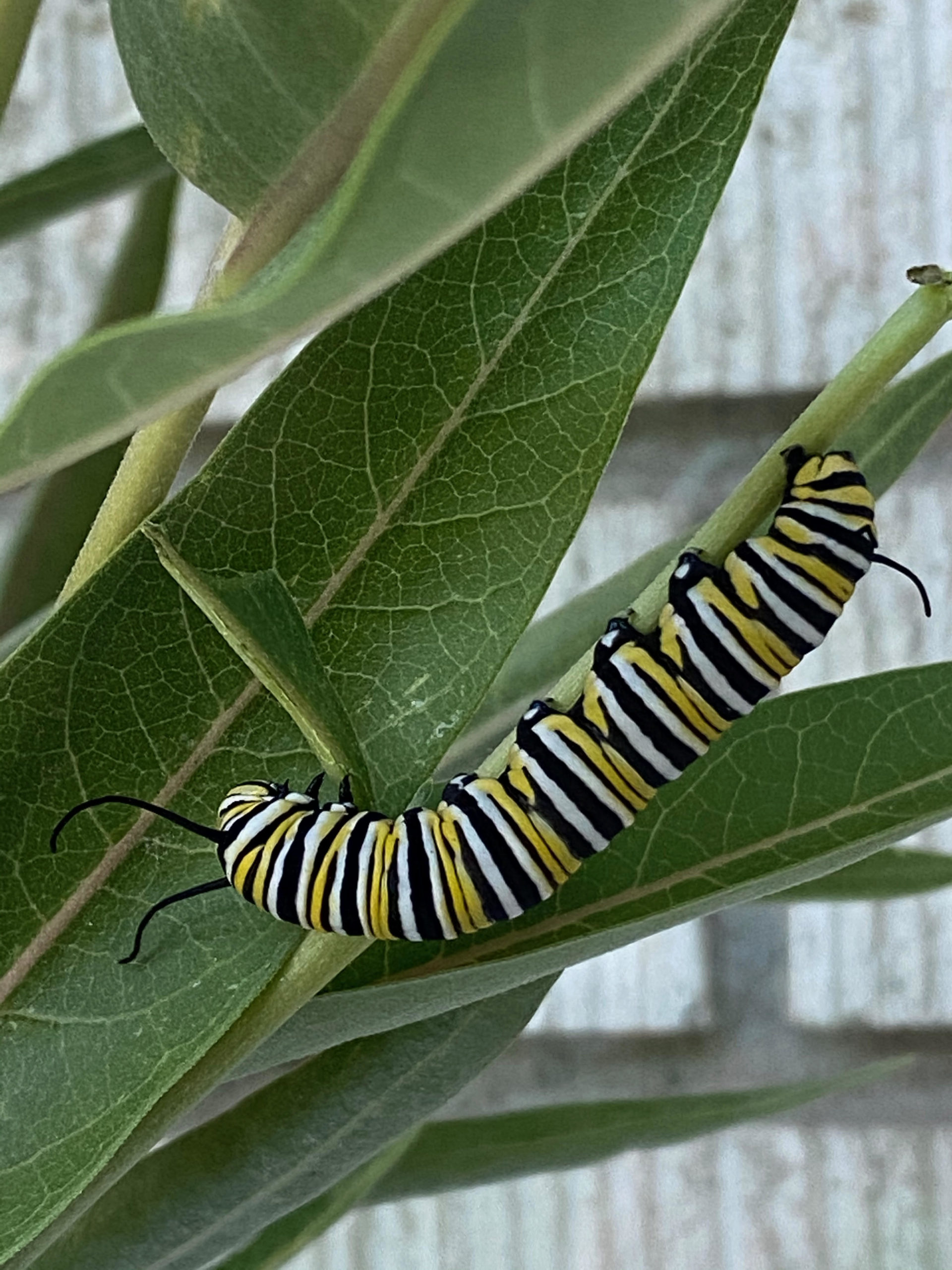
Monarch Waystations: Monarch Caterpillar, Under Watch By Young Eyes Courtesy & Copyright 2020, Jennifer Burghardt Dowd, Photographer https://raeenvironmentalinc.org
Monarch Caterpillar, Under Watch By Young Eyes
Courtesy & Copyright 2020, Jennifer Burghardt Dowd, Photographer
https://raeenvironmentalinc.org
In the northeast region of Utah nestled between the Wellsville Mountains and the Bear River Range, Cache Valley and the surrounding landscapes begin to show the first signs of spring. Wildflowers emerge on the hillsides, birds return to the valley floor and various native plants produce and deliver the timely first round of regional food sources to host our diverse pollinator populations. I am eager this year to see if we will get to experience the return of the beloved monarch butterfly, an iconic long-distance migrator that has made a noticeable presence in our valley for generations. Unfortunately, with numbers critically low for the third consecutive year, their return to Utah’s summer breeding grounds remains uncertain.

Monarch on Sunflower Courtesy & Copyright 2020, Jennifer Burghardt Dowd, Photographer https://raeenvironmentalinc.org
Monarch on Sunflower
Courtesy & Copyright 2020, Jennifer Burghardt Dowd, Photographer
https://raeenvironmentalinc.org
Scientists have been tracking the population of western monarchs by conducting overwinter counts of individuals clustered in the California coastal regions. During the annual 2020 Thanksgiving Count, experts reported a dismal low of only 1,914 individuals. Counts from the two previous years hovered around 30,000 individuals, the threshold that was predicted to result in a crash of the western migration. With less than 1% of the historical population remaining (which use to report in the hundreds of thousands to over a million), this has become a troubling trend. The primary reasons for the decline in the population have been attributed to loss of historical habitat, increase in pesticide use and both direct/indirect impacts of climate change.

Monarch with Habitat In Progress Sign Courtesy & Copyright 2020, Jennifer Burghardt Dowd, Photographer https://raeenvironmentalinc.org
Monarch with Habitat In Progress Sign
Courtesy & Copyright 2020, Jennifer Burghardt Dowd, Photographer
https://raeenvironmentalinc.org
Now more than ever sanctuary habitats containing milkweed and native nectar sources play a vital role in the ultimate success of the monarch migration. Many people have chosen to contribute to this conservation movement through the establishment of Waystations. Monarch Waystations offer the promise of protected habitats with the establishment of adequate seasonal resources dispersed between overwintering sites and summer breeding grounds. The idea is the more Waystations created, the better connectivity between habitats, the more robust the migratory pathway. The added benefit of additional resource sanctuaries for critical pollinator populations which ultimately determine the success of our agricultural industry is noteworthy.

Monarch Waystation Sign Courtesy & Copyright 2020, Jennifer Burghardt Dowd, Photographer https://raeenvironmentalinc.org
Monarch Waystation Sign
Courtesy & Copyright 2020, Jennifer Burghardt Dowd, Photographer
https://raeenvironmentalinc.org
Waystations can be integrated into a variety of existing landscapes, including home gardens, business establishments, government buildings, local parks and schools. In the state of Utah, there are 59 registered Monarch Waystations. I host Waystation 26876 through Monarch Watch, #44 in the state. 5 specific criteria are needed to certify a Waystation (through monarchwatch.org): 1) A designated space, minimum of 100 square feet; 2) Native milkweeds (to serve as host plants); 3) A variety of seasonal nectar sources (natives preferred); 4) A water source and: 5) Shelter. The commitment to avoid the use of pesticides is also critical for success.

Milkweed Seed Courtesy & Copyright 2020, Jennifer Burghardt Dowd, Photographer https://raeenvironmentalinc.org
Milkweed Seed
Courtesy & Copyright 2020, Jennifer Burghardt Dowd, Photographer
https://raeenvironmentalinc.org
Local movements and backyard organizations have become monumental in the collection and distribution of regional milkweeds and native nectar plants. If you are looking to start a Waystation of your own, that would be a good place to start. With the monarch’s recent designation as a candidate species under the Endangered Species Act, and their listing put on hold (as “warranted but precluded” due to lack of funding), we are in a race against time to save the migration. My backyard will continue to provide a reliable source of habitat plants for as much of Utah and it can support. As I package up another round of Showy milkweed seeds (Asclepias speciosa) destined for a Utah classroom, I remain hopeful. Our next generation of environmental stewards, under the careful guidance of passionate enthusiasts, is paving the way as they witness the plight of the monarch unfold before their very eyes.

This is Jenny Dowd with Western Monarch Pollinator Pathways, and I’m wild about Utah

The Wild About Utah archives are managed by the Bridgerland Audubon Society: https://wildaboututah.org

Milkweed in Bloom Courtesy & Copyright 2020, Jennifer Burghardt Dowd, Photographer https://raeenvironmentalinc.org
Milkweed in Bloom
Courtesy & Copyright 2020, Jennifer Burghardt Dowd, Photographer
https://raeenvironmentalinc.org
Credits:
Images: Courtesy & Copyright 2020, Jennifer Burghardt Dowd, Photographer
Courtesy RAE Environmental Inc., raeenvironmentalinc.org,
Beginning Audio: Audio: Courtesy & © Kevin Colver https://wildstore.wildsanctuary.com/
Text: Jennifer Burghardt Dowd https://raeenvironmentalinc.org
Waystation #26876 in River Heights, UT.

For Information On Registering a Monarch Waystation:
To meet the criteria required for certifying a garden as an official Monarch Waystation, please visit Monarch Watch: https://monarchwatch.org/waystations.

Monarch Caterpillar Feeding on Milkweed Courtesy & Copyright 2020, Jennifer Burghardt Dowd, Photographer https://raeenvironmentalinc.org
Monarch Caterpillar Feeding on Milkweed
Courtesy & Copyright 2020, Jennifer Burghardt Dowd, Photographer
https://raeenvironmentalinc.org
Schools can contact RAE Environmental Inc. to find out how to participate in their Utah School Monarch Waystation Program (https://raeenvironmentalinc.org)

October Milkweed Giveaway:
Locally sourced native milkweed varieties can be obtained through the month of October by visiting https://raeenvironmentalinc.org/need-seeds

Additional Resources:
Western Monarch Advocates, Utah News: https://www.westernmonarchadvocates.com/utah

Monarch Joint Venture, Monarch Migration: https://monarchjointventure.org/monarch-biology/monarch-migration

Western Monarchs Call to Action: https://xerces.org/western-monarch-call-to-action

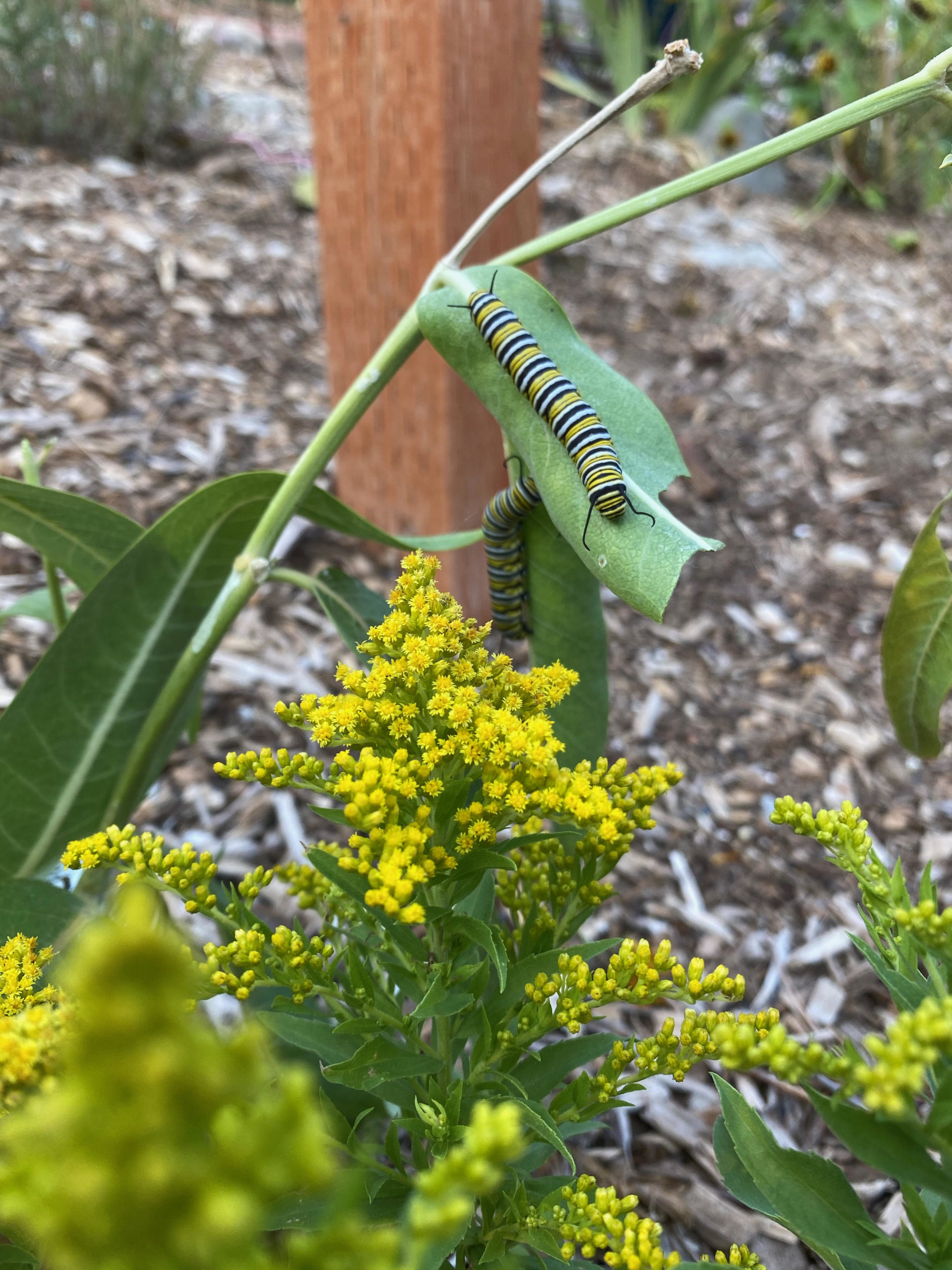
Monarch Caterpillars Feeding on Milkweed Courtesy & Copyright 2020, Jennifer Burghardt Dowd, Photographer https://raeenvironmentalinc.org
Monarch Caterpillars Feeding on Milkweed
Courtesy & Copyright 2020, Jennifer Burghardt Dowd, Photographer
https://raeenvironmentalinc.org
Western Monarch Conservation Plan: https://www.wafwa.org/Documents%20and%20Settings/37/Site%20Documents/Committees/Monarch/Western%20Monarch%20Butterfly%20Conservation%20Plan%202019-2069.pdf

Liberatore, Andrea, Wild About Utah, Monarch Butterflies, Wild About Utah, September 13, 2012 https://wildaboututah.org/monarch-butterflies/

Barth, Amanda, Wild About Utah, Monarchs, Wild About Utah, December 14, 2020 https://wildaboututah.org/monarchs/

Hellstern, Ron, The End of Royalty?, Wild About Utah, April 24, 2017, https://wildaboututah.org/the-end-of-royalty/

Hellstern, Ron, Journey North, Wild About Utah, March 19, 2018, https://wildaboututah.org/journey-north/