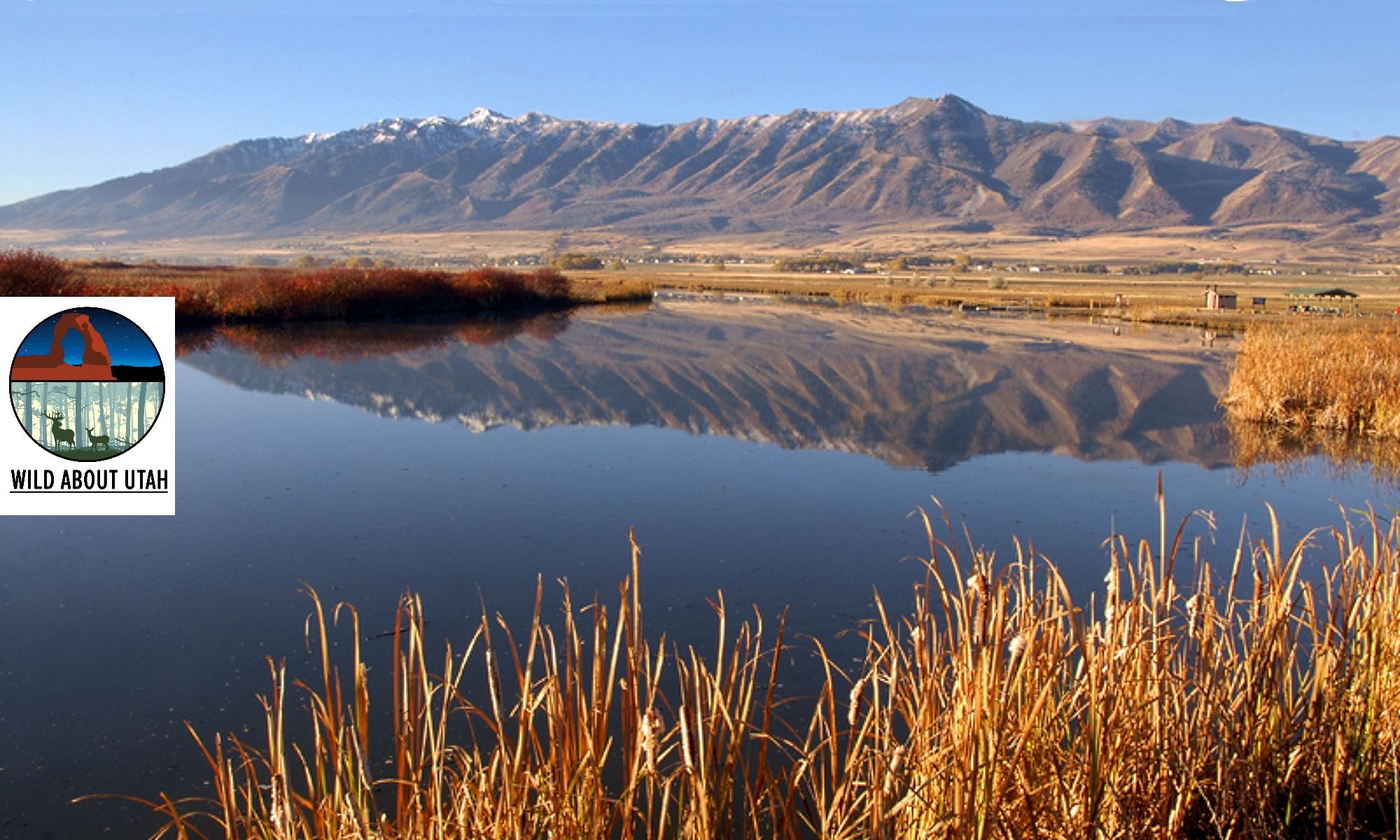
My fiance grew up a short jaunt south from the shores of the Baltic Sea. The Baltic Sea dominates her stories of childhood. The frigid salt was always in the air, carrying the song of the farthest edge of the world, being inhaled and lived by and because.
When she was 15 she left home to go to a more challenging school and moved to a port city right at the sea’s gate. She went from smells and dreams, to sights and lullabies. Her deepest homeland became centered on its edge.
Near this town, there are the greatest of sand dunes. They were an often visited location by her family growing up, a National Park to take pride in loving. To be closer to them meant to be closer to those memories of belonging. The wild dunes against the wild sea. Momentum affixed with momentum. Pure knowns of land, and beyond. This is the special place.
It’s there that I will have proposed because I love her, and she is only who she is because of this place, so therefore I love it, too. I have to.
I tell this story because here in Utah, we are only who we are because of its place and the elements which make it special, too, for so many. We are full of our own special places with special stories, both past and present. The challenge we are facing, though, is whether we love the very land of Utah enough for it to be included in our future. Do we love Utah enough to refill the Great Salt Lake so that it helps push our snows higher into the mountains with its warm uplifting air, and lets more water flow back for everyone come spring? Do we love Utah enough to plant native flowers instead of lawns, and pick serviceberries over hedges so that our springs still carry the songs of birds? Do we love Utah enough to know that there are no sacred or unsacred places, only the sacred and the desecrated? Do we love Utah enough to keep it a homeland, not just its heart, but its every edge, too?
I say we take the plunge. I say we make it official.
There is a place where we are who we are, and for many of us it is Utah. It may be a memory of Utah long ago. Or maybe you have to really think about if you’ve found it yet. Or maybe you are there right now. Regardless, we all have a place where we can feel free on the edge and heart of our homeland. There is a place which is where we love.
About this time I heard that although trucks from the state hatcheries stocked the community ponds, the hatchery in Kamas delivered fish to high mountain lakes in the Unitas via airplane. A few phone calls later, and I was lucky enough to get invited to watch the loading of the fish.
It was 5 in the morning when I followed the Kamas hatchery truck out onto to tarmac at the Heber airport. A specially designed Cessna 158 was waiting for us. There – just behind the pilot’s seat- was a water tank neatly divided into 7 compartments. 7 levers stuck out from the dashboard that would open and close a portal on the belly of the plane.
“Flush,” said the man in charge. And another man with a red bucket of water sent the fish through the funnel into the plane. Soon the pilot took off. When he got to his target lake, he would drop down and skim over the tops of the trees on the water’s edge. He would then open the portal in the belly of the plane and the tiny trout would flutter down like leaves into the water below.
If our feisty fingerling can avoid predators (mostly birds and bigger fish) it will grow to about 5 inches by September. When the water temperature drops to 30 degrees the fish become lethargic and stop growing. Next June, if the lake warms up to 50 degrees, the trout will grow 2/3 inch an month. At 60 degrees, the fish will grow an inch a month. But if the water temperature reaches 70, the amount of oxygen in the water will drop. Any higher and the fish will be severely stressed.
Growing up and backpacking with my family, I was always delighted to come across an alpine lake because it meant that I could take off my pack and stop hiking. But once I got hooked on fishing, I found myself agreeing with the poet Edgar Guest:
“A feller gets a chance to dream
Out fishing.
He learns the beauty of the stream
Out fishing….+
Now, as far as getting up to the high mountain lakes in the Unitas, one thing is for certain. The fish are already there.
Ferguson Fire, Sierra National forest, California, 2018 Courtesy USDA Forest Service: Kari Greer, PhotographerHoly smokes! Once again, our summer has become a smoke filled world we’re warned against breathing. I often wonder how our feathered friends are weathering the pall.
About a year ago, a mass die-off of song birds was witnessed over parts of the southwest tentatively attributed to the historic wildfires across California, Oregon and Washington, which
may have forced birds to rush their migration. But scientists do not know for sure – in part because nobody knows precisely how wildfire smoke affects birds. With increasing changes to
climate and rising temperatures, we do not have enough time to collect the data – things are changing faster than we can keep up with.
Enter eBird, a popular app for logging bird sightings. This platform, and the citizen birdwatchers who populate them, have become a critical tool for scientists trying to unravel the mysteries at the intersection of birds, wildfires and climate change. Researchers are increasingly relying on data collected by citizen scientists and birdwatchers to better understand the effects of climate change, including intensifying wildfire. The eBird app was created by the Cornell Lab of Ornithology alongside the National Audubon society, to crowdsource data on the locations and numbers of bird populations globally.
A leading theory behind the south-west die-off is that widespread smoke pollution may have forced birds to start migration sooner than expected. Most of the birds seen dying were migratory. Migration had just started and they were trying to flee the smoke-filled areas and may have starved to death without an opportunity to add extra nutrients for their epic flights. Beyond the effects of smoke on migration patterns, the rise of megafires is also drawing unprecedented attention to the effects smoke may have on a bird’s delicate breathing. Birds and their lungs are certainly affected by smoke. Most of us have heard the phrase “canary in a coalmine”, which comes from the fact that birds are particularly sensitive to toxins in the air. The sensitivity could have something to do with birds’ unique respiratory system. While humans and other mammals use their diaphragm to inhale oxygen and exhale carbon dioxide, birds possess a far more
efficient system, essentially inhaling and exhaling at the same time. This allows them to get enough oxygen to fuel near-constant activity and to breathe at much higher altitudes than
mammals.
To do this, birds have tube-like structures called parabronchi, similar to human alveoli in the lungs, which are covered with sacs and capillaries for gas exchange. And as in humans, smoke damage can burst those bubbles, creating less surface area for gas exchange making it more difficult to breathe.
We can all help by joining eBird and reducing our heat trapping emissions. Go to our Bridgerland Audubon website for more information.
Jack Greene for Bridgerland Audubon Society and I’m wild about Utah, but not its smoke!
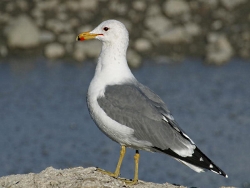
Callifornia Gull Larus californicus Courtesy and Copyright 2003 Jack Binch All Rights ReservedHi, I am Dick Hurren from Bridgerland Audubon Society.
Utah’s state bird is is commemorated as the seagull, more accurately the the California Gull. Known in Utah for having saved the pioneers from the Mormon cricket invasion of 1848 and subsequent years, gulls hold a hallowed place in local history.
Seagull is a generic term referring to gulls of all types. Gulls we are familiar with range from the small 11-inch Bonaparte’s gull with a 32-inch wingspan to the 20-inch Herring gull with a 55-inch wingspan. They are white, grey and some have black heads. Young go through phases giving them different appearances as they mature over two to four years depending upon the species.
Many Gulls migrate to parts of Utah and some pass through in their migration to more northern regions. Ring-billed gulls are here during the fall, winter, and spring. The occasional Herring or Thayer’s gull may visit us in winter. A few black-headed Bonaparte’s gulls pass through reliably in spring and fall during migration. Upon rare occasions, we are even visited by Herrman’s, Western, Glaucous, Glaucous-winged, Mew, yellow-footed , Sabine’s, Iceland, and lesser black-backed gulls.
In spring, the California gulls and the much smaller and black-headed Franklin’s gulls return to nest. They migrate from southern states or the pacific coast and raise their young locally on islands in fresh and salt water.
Gulls clean up. They frequent garbage dumps, and irrigated, plowed or manure-covered fields. These carnivores eat insects, worms, crustaceans, fish and the occasional french fry in a parking lot. Opportunistic, they watch and raid unprotected nests of other birds, eating eggs and young. Sometimes flying singly, they are more often found in flocks. In flocks they defend against predators by harassment and intimidation.
Thayer’s and Herring gulls have been known to use tools. They have been seen dropping shellfish on asphalt or concrete roads to crack them open and eat the contents.
At the store, take a moment to think about our state bird. In the dump, and in waterways, gulls can become entrapped in six-pack rings. Do your part to prevent this by cutting up these plastic rings before disposing of them. Or better yet, buy cans loose or in boxes instead of rings.
For Wild About Utah, this has been Dick Hurren
This Wild About Utah episode originally broadcast in August 19, 2008, In Memory of Dick Hurren.
Thatcher, Linda, Utah State Bird – Sea Gull(The California gull, Larus californicus), Utah’s State Symbols, Utah History Encyclopedia, Utah’s Online Library, Utah State Library Division, Utah Department of Heritage & Arts, https://www.uen.org/utah_history_encyclopedia/u/UTAH_STATE_SYMBOLS.shtml
Bonaparte’s Gull, Larus philadelphia
Bonaparte’s gull Larus philadelphia, Patuxent Wildlife Research Center, USGS, https://www.mbr-pwrc.usgs.gov/id/framlst/i0600id.html
Handbook of the Birds of the World 3: 609. Lynx Edicions. Larus thayeri (TSN 176828). Integrated Taxonomic Information System. Retrieved on 10 March 2006.