It starts off hot and dry, breaks you in quick, but soon the sun’s not so bad.
Walking along the way, helps my mind stray, and soak up right where I am.
The office, the traffic, the honey-dos and the chores all slip freely from my mind,
As I watch my dog sprint, over gentian and mint, and love being as free as the wild.
Being out there and free, helps me think and see, that I’m a part of instead of apart from,
This beautiful world, full of imperfect others, that with time are revealed as imperfect Thous.
This world, this here, this beautiful now, I choose and choose nowhen else,
Because today I see beavers, and grasshoppers, and eagles, and get to wonder when the ducks will again fly south.
My dog and I continue, to hike along the trail, until we come to the Cottonwood Graveyard,
There we stop, maybe stay, for a while and a bit, and she swims after sticks thrown in ponds.
After she’s had a cooldown, we keep hiking uptrail, into the thick of evergreen scents,
My calves start mooing, and my dog she keeps zooming, a bobsledder hot in the chute.
When the trees do break, and the land opens again, we cross the river one last time,
It brings us into a place, folks once knew back in the day, as the sawmill with the best oxen in town.
Me and my dog, we’ll linger there for a minute, and I’ll think how happy we are,
That this place was here, but isn’t any longer, or else the boon would not be worth the trial.
On our way back to the car, it’s hard work to keep your mind far, from the valley to-dos in the not far ahead,
But I remember why, I take the time to get out under the sky, in the wild to clear my over-civilized head:
You can bring a horse to water, but you can’t make him drink, but he also can’t drink unless he’s at that trough.
So even if today’s got you feeling astray, remember there’s good liquid if you’d like it not too far off.
So go out today, or tomorrow or Thursday, make it a formal appointment if it’ll keep you true,
Doesn’t matter the place, as long as there’s space, to keep an eye out for the moments which pull the awe to you.
And when you find them, because if you look hard you will, take a minute and breathe in the crackling air’s hum.
And remember that smell, and keep it deep in your heart, because that’s the wild wind that makes all it and us one.
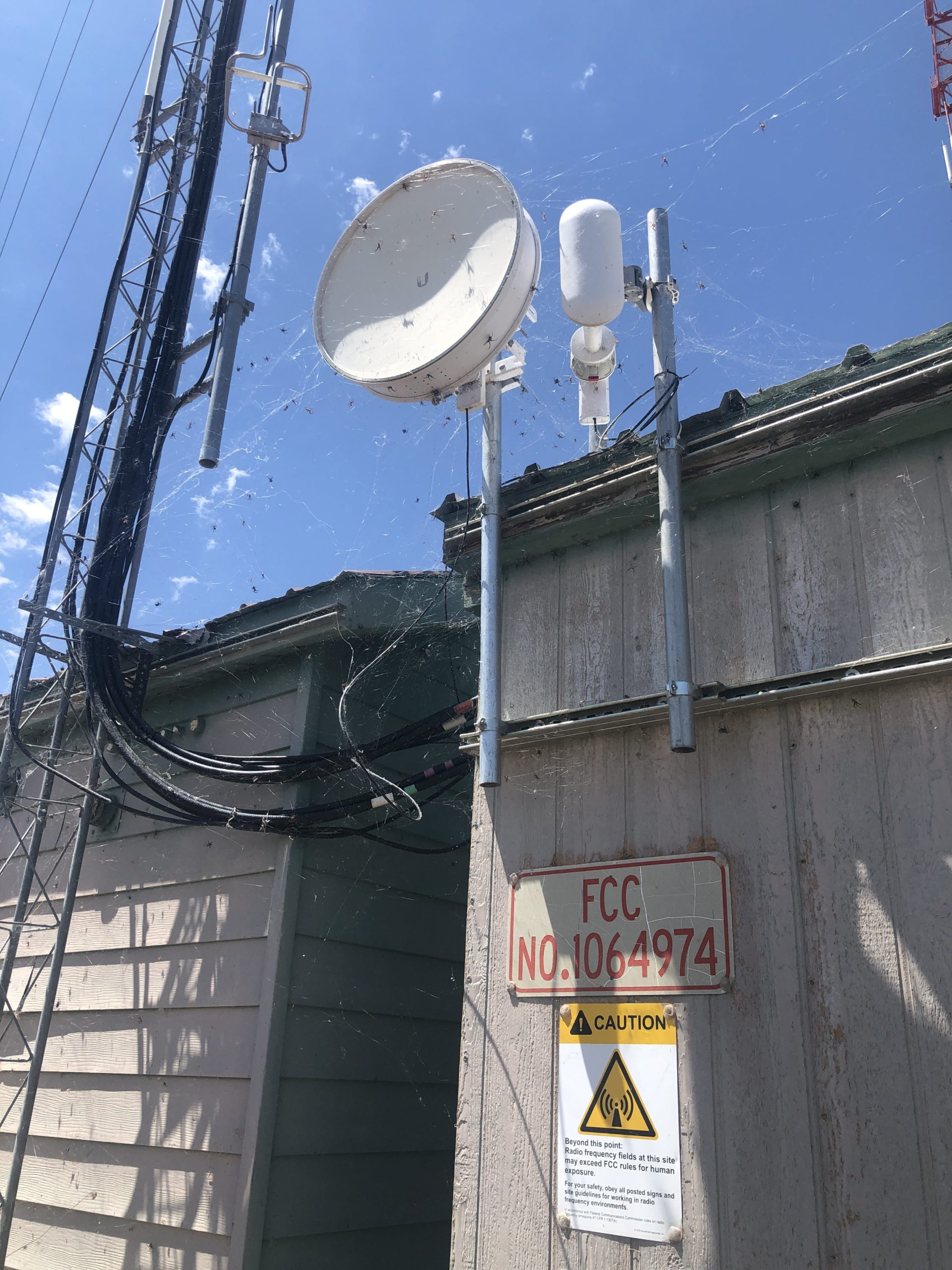
We drove up a gravel road to the top of the dry, desert mountain known locally as West Mountain. This cheatgrass-covered mountain rises nineteen hundred feet from the waters on the south end of Utah Lake. At the base, there are fruit orchards, but climbing higher, we saw few plants rising above the cheatgrass. Near the top, more than 12 structures support antennas that transmit and relay signals across portions of Utah and Juab counties.
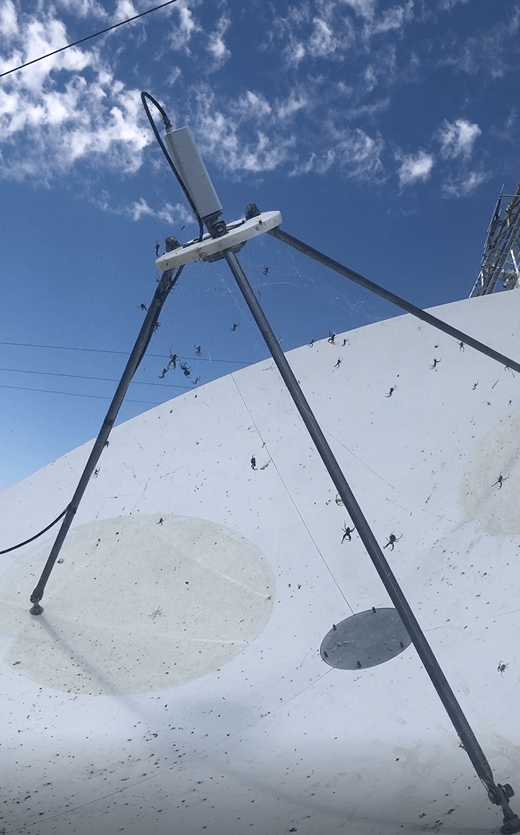
As we slowly climbed the gravel road in the UPR pickup, large bodies began to appear, moving on silk threads attached, like guy wires, to anything with height. Mobile spiders guarded each thread. When we passed, they took what appeared to be offensive positions. These spiders’ delicate legs easily span two inches. A unique black and white pattern of diamonds and dots on their back identifies them as western spotted orb weavers. The larger-bodied, grey spiders are females with legs attached to a three-quarter-inch body. The narrower-bodied males measure half an inch. When they move, flashes of red show on the undersides of their legs. These same spiders live along the shores of Utah Lake and the Great Salt Lake.
The exterior of the equipment building was covered with spiders, as were the transmitting antennas above and the large receiving satellite dish nearby. We could see the problem. Spiders were blocking the signal to the satellite dish feed horn. Using a broom, we gently relocated them. Many took quick exits, dropping on threads of silk from the horn to the dish below, then running to the edge and rappelling to the ground. Others took more defensive or combative positions, only to be invited off with the broom or a gloved hand. After the eviction, we sprayed around the horn and the dish supports.
On previous trips, we had often wondered what these spiders eat. This time we found small flying insects, akin to those found along the shores of Utah Lake. They are likely carried up the mountain on wind currents. Up-hill winds develop every day as the sun warms the surface of the mountain. This time of year, the spiders don’t lack nourishment.
And how did the spiders get up there? Their progenitors were also likely carried uphill on silk parachutes. Once there, the spiders found the tallest location, strung their lines, and thrived on other unfortunates delivered by the same winds. You see, spiders, like predatory birds, are helpful pest control. For a spider, hanging high above the ground on a mountain top is a great place to be. There, the spiders can catch anything that blows or flies by. No wonder they grow so large and multiply so profusely on top of Spider Mountain.
Visit Wildaboututah.org for images of the spiders hanging from the trees, guy wires, antenna masts and satellite dish. We also have links to common spiders found in Utah.
This is Lyle Bingham, and I’m Wild About Utah, Utah Public Radio and Utah’s spiders.
Davis, Nicky, Spider at Inlet Park, Jordan River Trail, Saratoga, Utah County – Neoscona oaxacensis, Bugguide, Iowa State University, September 17, 2017, https://bugguide.net/node/view/1446087
These spiders were blocking the UPR satellite signal received by the Utah County transponder broadcasting at 88.7 MHz. The spiders were identified as Western Orb Weavers, Neoscona oaxacensis, that are also found along the shores of Utah Lake and the Great Salt Lake.
Courtesy and Copyright Lyle Bingham, Photographer
More than one type of spider lives on Spider Mountain. The last time we visited Spider Mountain, we hadn’t traveled far before Friend Weller stopped the truck. A Utah tarantula was walking across the road. Yes, did I tell you the spiders on Spider Mountain are big? This guy easily covered a small dinner plate without extending its legs.
We found out that tarantulas are nocturnal and rarely seen except in August and September, when the males are searching for mates. In Utah, we found most tarantulas are identified as Aphonopelma iodius, because they have a triangular dark patch near their eye turrets. We understand our tarantulas are not to be confused with a similar brown-bodied, black-legged species, Aphonopelma chalcodes, the western desert tarantula that are found in Mexico, Arizona, and southern Utah.
Courtesy and Copyright Lyle Bingham, Photographer
Visit ‘Spider Mountain’ on https://wildaboututah.org/
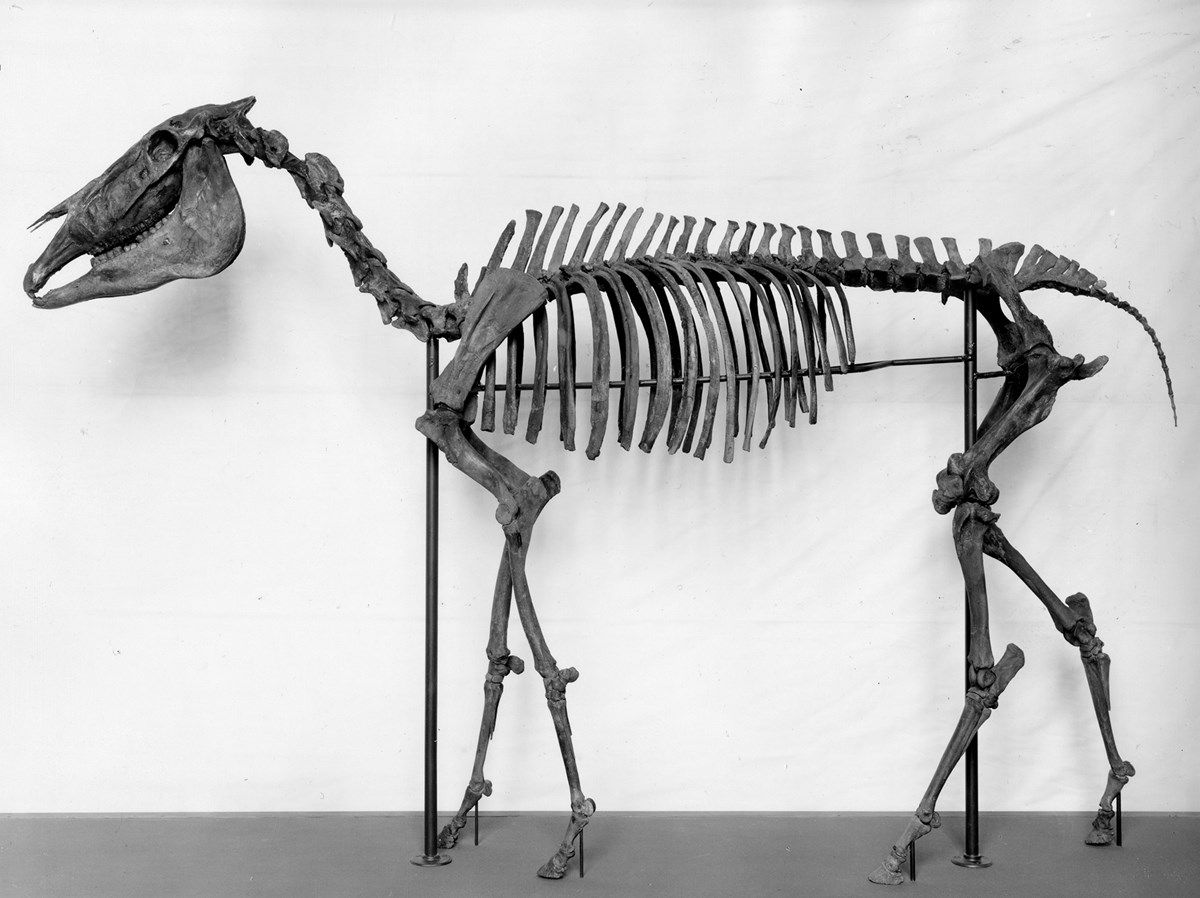
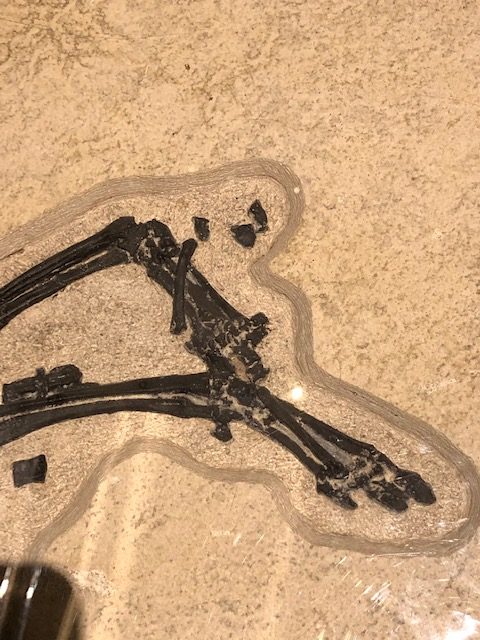
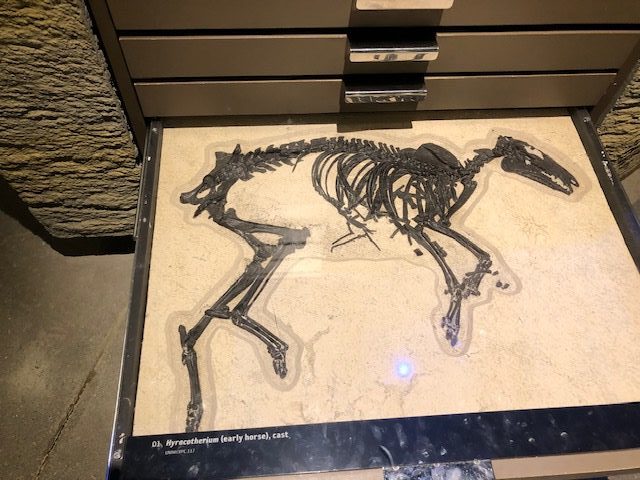
My own fascination with horse fossils actually began a few years ago when I was giving tours at the Utah Museum of Natural History in Salt Lake City. A fossil hunter near Kemmerer, Wyoming, had been quite surprised to find a small mammal while digging through layers of fossilized fish in an ancient seabed. This skeleton is now also in the Smithsonian Museum in D.C., but the Utah museum owns a copy.
When giving tours, I always paused my group as we entered the dinosaur floor. “I’m going to pull a whole horse out of here,” I’d say as I pulled a sliding drawer out of a chest with a flourish.
It was a fully grown horse about the size of a small dog – 24 inches long and 20 inches high.
It was over 50 million years old. In that time, the Intermountain West was a lush, swampy place. Fierce predators like the Utah Raptor roamed the land, and the mammals that survived were small and stayed hidden in the dense forested undergrowth.
Over the next 50 million years, the dinosaurs went extinct and the terrain dried out The Hagerman Horse (dating back 3 ½ million years ) stood about 4 ½ feet high. Most notably, it now stood on four hooves. The 3 toes on the Kemmerer Horse had evolved into a single dominant toe, perfectly adapted to running away from predators over dry terrain.
Unfortunately, this remarkable adaptation was not enough to save the horse. The horse went extinct in the Americas (along with other large mammals like the mammoth and giant sloth) about 10,000 years ago. It was the Spanish Conquistadors that reintroduced the horse to North America. When Hernan Cortez and his 200 soldiers landed in Mexico in 1519, they brought 16 horses with them. Over time, some of these horses got away to form wild bands, and others fell into the hands of the Native Americans.
This summer I made a small archeological pilgrimage into Idaho, to see the Hagerman Fossil Beds, now a National Monument. In the newly opened visitor center I found a life size replica of the Hagerman Horse. As I stood next to it, admiring its shapely hoof, I remembered one more remarkable fact about the horse. The bows now used to play violins are made from horse hair It takes 5 horse tails to make a violin bow. To this day, absolutely nothing has been found that makes the strings of a violin sing as sweetly.
This white-spotted sawyer said he is often misunderstood because of his appearance. He can’t help looking a bit creepy. He also sometimes gets blamed for damaging forests and wanted to set the record straight. He said that as a grub, he fed on the sapwood of evergreen trees that are already dead or nearing it. In fact, sawyer beetles invade trees following forest fires and in the months following mountain pine beetle attacks. They do not, however, kill healthy thriving trees. Sawyer beetles are, though, responsible for the familiar teeth-grinding sounds one hears in a wooded area as the fleshy larvae scrape with their mandibles.
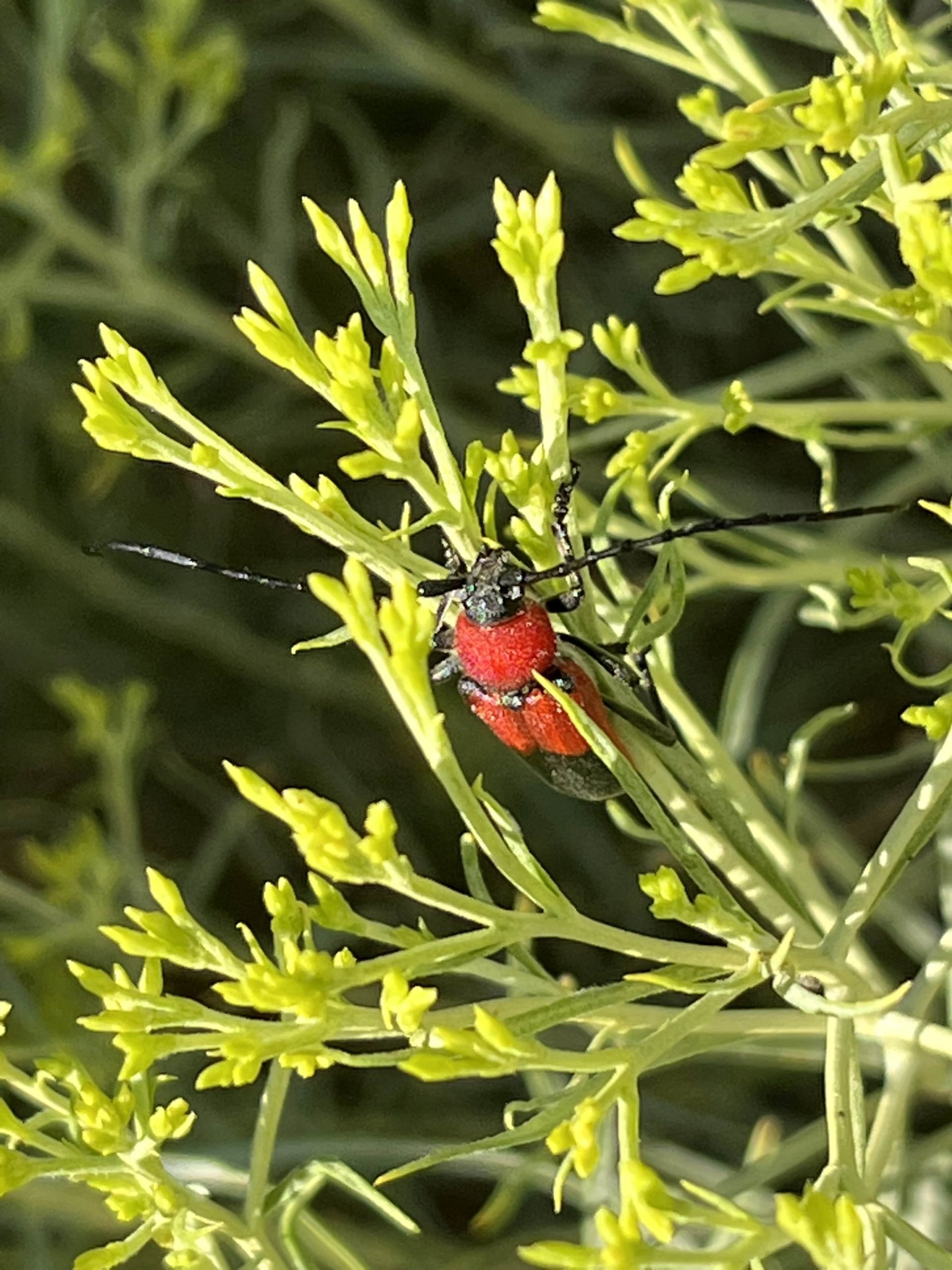
At the other end of Utah perched in Monticello’s rabbitbrush a few days ago, I met a colony of striking Crossidius coralinus. Instead of mostly black bodies, these longhorn beetles boast vibrant reds and many more stories to tell. Thanks to beetle entomologist Ted MacRae, I am able to understand those stories better. I must admit that I will probably still jump when a longhorned beetle initiates a conversation from my forearm, but I now appreciate its point of view. After all, Charles Darwin suggested that “a taste for collecting beetles is some indication of future success in life,” and I will take all the help I can get.