Winter is Vinegar Honeydew

Vinegar Honeydew: Cucumber Pickles Courtesy Pixabay, CongerDesign, Photographer
Cucumber Pickles
Courtesy Pixabay, CongerDesign, Photographer
Winter is the season of withholdings come free and taboos undone. Those things we tell ourselves which are not for the warm months come to roost, and our allowances to ourselves grow as the season’s light shrinks.

Winter is when we get to have a sit by the fire and exhale from our work like young exhausted parents, listening to the world’s sleep because of our good labor done. It’s when we can crack open our stores and taste the results of our year on this earth from the gardens and fields; the flavors of hope without fear of waste. Vinegar truly is the honeydew of the long nights.

It’s also when we can have freedom in the snow. The snow is that sweeping medium which allows us to climb mountains and then descend at speeds which in any other season would be a cause for concern, even if moderate.

Each mode of winter travel has its partakers and dissuaders, though none is surely the best for all. Cross country, sitski, telemark, downhill, snowbike, snowskate, snowboard, sled, tube, and contractor bag all each have their place for us to slide at speeds too great to pass up. Some have edges for control, some have fewer for fun, yet all allow for wind to blow through your hair and to dance with gravity, more apparent than ever in the cold.

Winter also gives us stories not available elsewhen. Many skilled naturalists have given many good lessons to me on how to read the snows over the years, yet not one lecture can compare to what happens when you go out by yourself and see what the world itself has to say. I’ve spent good hours finding a good track and following it, whether it’s a hare to its burrow, deer to the nearest alfalfa field, or my eyes wandering skywards to see whose wings caught the vole which once did scurry all a tither. The words though melt in the sun, and so the snow is the rarest of books. Perhaps it is also the most precious. Stories carved in stone seem mortibund to those on paper, and so those tattooed upon tree pulp seem to the cuneiform in the nivian ether.

So this winter, do not forget to enjoy the allowances you’ve worked all year: warming your bones by the fire; reading the precious snows; sliding down hills; and vinegar honeydew from your stores.

I’m Patrick Kelly, and I’m Wild About Utah.
 
Credits:
Images: Courtesy Pixabay, CongerDesign, Photographer https://pixabay.com/photos/cucumbers-pickle-jar-preserves-886036/
Audio: Courtesy & © J. Chase and K.W. Baldwin. https://upr.org
Text:    Patrick Kelly, Director of Education, Stokes Nature Center, https://www.logannature.org
Included Links: Patrick Kelly & Lyle Bingham, Webmaster, WildAboutUtah.org

Additional Reading

Wild About Utah, Posts by Patrick Kelly

Stokes Nature Center in Logan Canyon, https://www.logannature.org/

Strand, Holly, Snowshoe Hare, Wild About Utah, February 18, 2010, https://wildaboututah.org/snowshoe-hare/

Larese-Casanova, Mark, The Shape of Wildlife in Winter Wild About Utah, January 26, 2012, https://wildaboututah.org/the-shape-of-wildlife-in-winter/

Larese-Casanova, Mark, Utah’s Rich Skiing History Wild About Utah, January 23, 2014, https://wildaboututah.org/utahs-rich-skiing-history/

Strand, Holly, A Utah Skier’s Snow Lexicon Wild About Utah, January 29, 2009, https://wildaboututah.org/a-utah-skiers-snow-lexicon/

Nummer, Brian, Getting Crisp Home Pickled Vegetables, Extension, Utah State University, https://extension.usu.edu/preserve-the-harvest/research/getting-crisp-home-pickled-vegetables

Food Safety & Preservation, Extension, Utah State University, https://extension.usu.edu/saltlake/home-family-food/food-safety-preservation

Reindeer

Yuki the Reindeer from the Mountain West Animal Hospital. Courtesy & Copyright Mary Heers, Photographer
Yuki the Reindeer from the Mountain West Animal Hospital
Courtesy & Copyright Mary Heers, Photographer

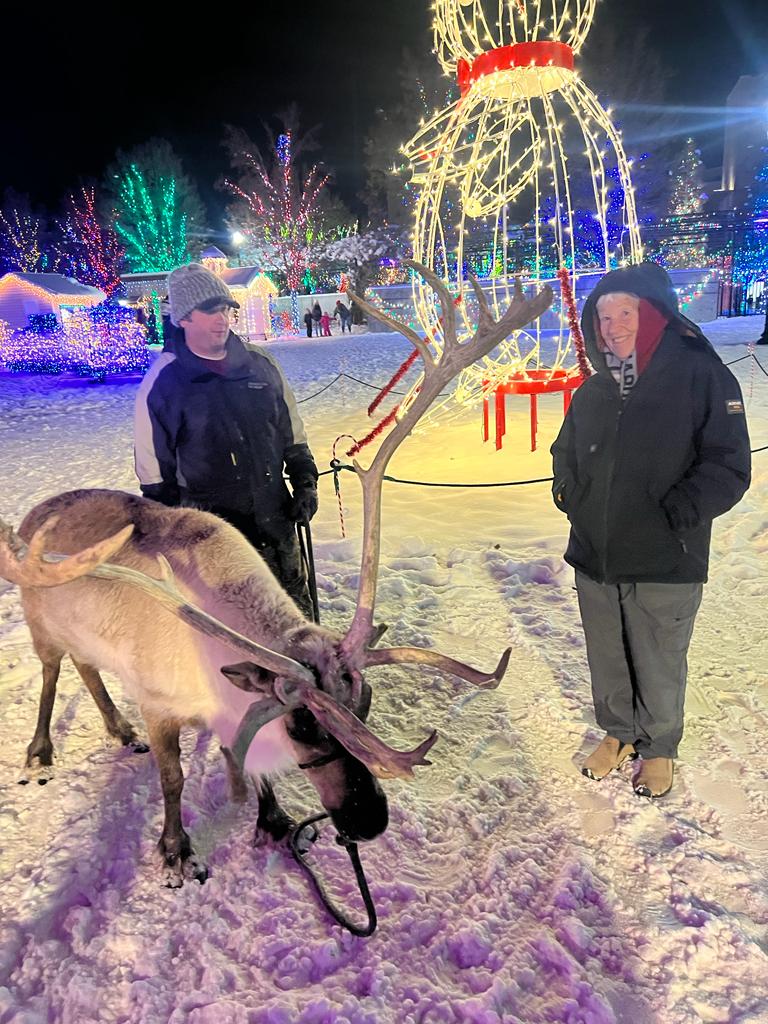
Mary with Bluebell the Reindeer from the Rockin Reindeer Ranch at the Ogden City Christmas Square. Copyright Mary Heers Mary with Bluebell the Reindeer
from the
Rockin Reindeer Ranch
Ogden City Christmas Square
Copyright Mary Heers

I first time I came face to face with a living, breathing reindeer was a few weeks ago at the Reindeer Express hosted by Utah State University vet students. Two vets from the Mt. West Animal Hospital near Provo had brought two of their reindeer with them to Cache Valley and were standing by to answer our questions.

The first thing I learned was that both male and female reindeer grow a new set of antlers every year. The antlers are solid bone and can weigh up to 15 pounds. The males usually drop their antlers in Nov after the mating season, while the females keep theirs a few months longer – until after they drop their calves in the Spring. A vet student chimed in. He said reindeer losing their antlers looks a lot like us losing a baby tooth. The antlers get a little wobbly and simply fall off. The reindeer just keeps grazing.

Now I was hot on the trail of reindeer in Utah. I went to the Ogden City Christmas Square to meet Bluebell from the Rockin Reindeer farm near Ogden. As admirers were taking pictures, Bluebell’s owner told me that watching the antlers regrow could be pretty exciting. Every morning you could get up and easily see how the antlers had grown another inch overnight.

I also learned if you listened closely, you could hear a clicking when the reindeer walked. The first time they heard it, they thought something was terribly wrong. But all reindeer click when the tendon in their leg slides over a bone. Clicking seems to be a way for the herd to find each other in white-out winter weather.

Another adaptation to intense cold is the hair that covers every reindeer’s nose This helps keep it warm in the reindeers natural habitat in the far north.

I can trace my own fascination with reindeer to my childhood days when my father arranged for a friend of his to dress up as Santa and personally deliver a big white sack full of presents to our house. The fact that Santa rang our doorbell didn’t strike me as odd since we didn’t have a chimney. One Christmas Eve I was talking all day about how I would soon get to meet Santa’s reindeer. When the doorbell rang, I rushed to open the door. There was Santa with his big white sack. No reindeer.

“Where are the reindeer?” I asked.

“I left them down the street,” Santa said. “Let’s go see them after we open the presents. “

That did the trick. I forgot all about the reindeer.

But now that I’m older and wiser, I know that most male reindeer drop their antlers in Nov, while the females keep theirs a few more months. So the odds are very, very good that the Santa that rang my doorbell was driving an all-female dream team.

This is Mary Heers and I’m Wild About Utah

Credits:
Photos: Courtesy Mary Heers,
Featured Audio: Courtesy & Copyright © Friend Weller, Utah Public Radio upr.org
Text: Mary Heers, https://cca.usu.edu/files/awards/art-and-mary-heers-citation.pdf
Additional Reading: Lyle Bingham, https://bridgerlandaudubon.org/

Additional Reading

Wild About Utah, Mary Heers’ Wild About Utah Postings

Heaps, Spenser, (The Daily Herald), Springville veterinarian and his reindeer find success, Salt Lake Tribune, June 6, 2015 https://archive.sltrib.com/article.php?id=2596124&itype=CMSID

Bott, Isaac, DocBott – Musings of a mixed animal veterinarian, https://docbott.org/

Rockin Reindeer Ranch, https://www.rockinreindeerranch.com/

I’m a Beaver Believer

I'm a Beaver Believer: North American Beaver (Castor canadensis) Courtesy US FWS, Larry Palmer, Photographer
North American Beaver (Castor canadensis)
Courtesy US FWS, Larry Palmer, Photographer

Beaver-Chewed Tree Courtesy US FWS, Brett Billings, Photographer Beaver-Chewed Tree
Courtesy US FWS, Brett Billings, Photographer

Beaver-Chewed Tree Courtesy US FWS, Brett Billings, Photographer Beaver-Chewed Tree
Courtesy US FWS, Brett Billings, Photographer

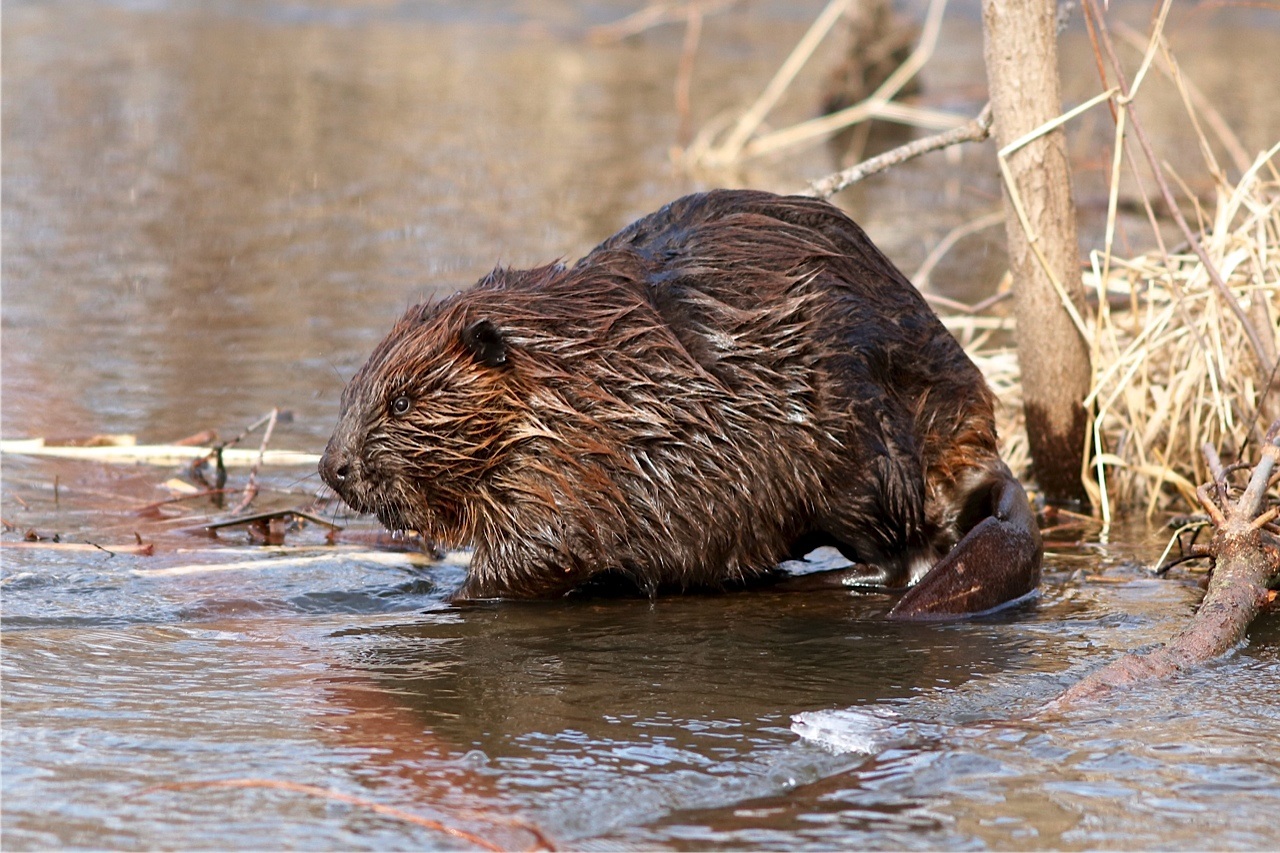
I’m a beaver believer. These remarkable rodents are a critical part of the ecosystem, a keystone species. The beaver’s role in creating wildlife and fisheries habitat, filtering and cooling water, and adding new water storage capacity, is essential for our prolonged drought in a warming climate.
When I had a neighbor call a few weeks ago to report he thought a beaver might be cutting down his aspen trees. I was in disbelief. Right here in our little city of Smithfield no less! John invited me over to confirm his suspicions.

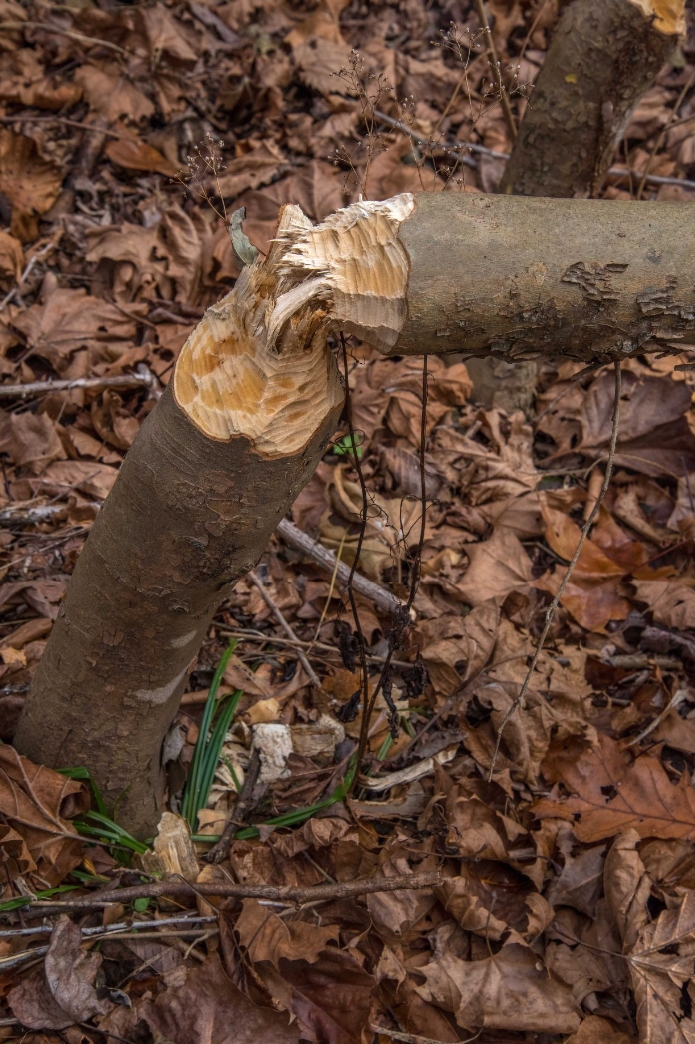
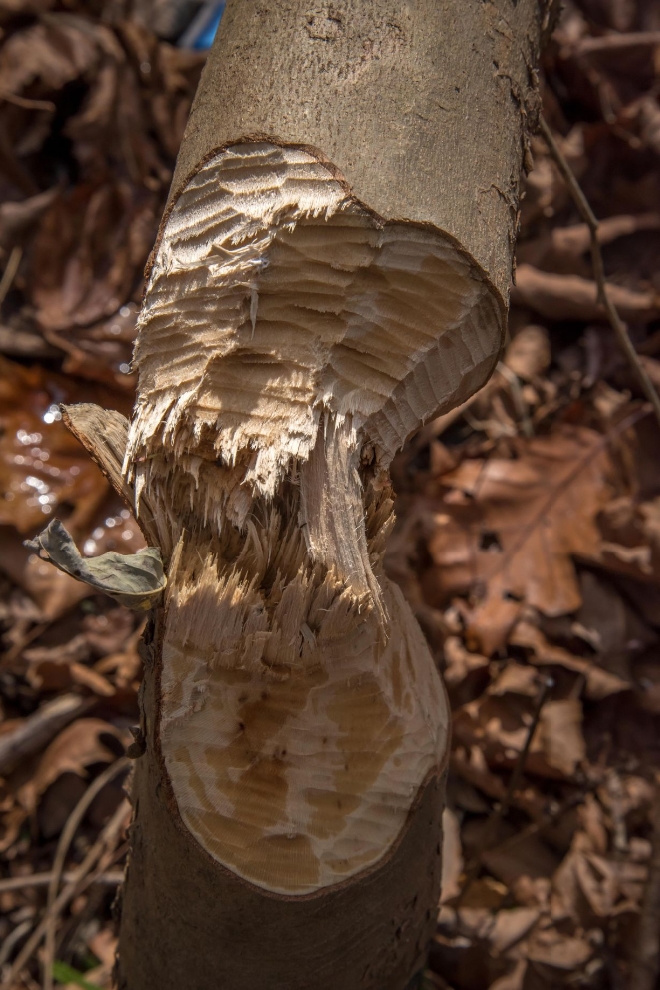
After inspecting the tree stumps, teeth marks were undoubtedly those of beaver. We discussed on how to address the situation. John had lost several thousand dollars-worth of trees, and was quite desperate to remediate the situation. I suggested reporting the rogue beaver to animal control or UDWR. Perhaps they could live trap and transport the animal to a more favorable location, while dreading the possibility of having to destroy my iconic, heroic mammal friend. In the interim, I suggested he use chicken wire to save what remained. Another personal conflict arose from my position as Smithfield Tree Committee chair. I was fully aware of the many values urban forests offer to our local environment and quality of life. It was my mission to protect our trees.

I inquired as to where the beaver was setting up shop. There must be a tangle of aspen leavings nearby. John hadn’t noticed any. I began searching the stream to find the missing trees, never expecting to see a beaver. Not more than 20 yards upstream from his property boundary, there it was. I quickly took a picture before it slid into the water disappearing beneath the ice.

I returned to my neighbor who was busy installing chicken wire around his remaining aspen. He too was not wishing to exterminate the animal, but there were homes with aspen, willow, and cottonwood both up and downstream from our location, a veritable feast for this wanderer. I mentioned that I had some acquaintances at USU who worked with beaver reintroduction, and may offer some solutions as well.

Given its small size and unexpected location, this was most likely a two-year-old juvenile who had been forced from its family, similar to how we gently nudge our young adults out the door. I was well acquainted with our mountain landscape and quite certain this beaver had traveled a distance of many miles to end up in Smithfield.

After consulting my USU friends, it did not bode well for poor beaver. To catch and release this animal during the winter offered little hope for its survival. Further, it would not fare well in several months of captivity, being alone in a high stress environment.

I’m now waiting to hear from my neighbor for the rest of the story. May it be favorable for this remarkable aquatic mammal, so essential for creating healthy watersheds, which equals abundant, high quality water!

Jack Greene for Bridgerland Audubon, and I’m wild about Utah’s wild beaver!

Credits:
Picture: Courtesy US FWS, Larry Palmer & Brett Billings, Photographers https://images.fws.gov/
Audio: Courtesy & © Friend Weller, https://npr.org/
Text: Jack Greene, Bridgerland Audubon, https://bridgerlandaudubon.org/
Additional Reading: Lyle W Bingham, Webmaster, and Jack Greene, Author, Bridgerland Audubon, https://bridgerlandaudubon.org/

Additional Reading:

Jack Greene’s Postings on Wild About Utah, https://wildaboututah.org/author/jack/

Bingham, Lyle, Welcoming Rodent Engineers, Wild About Utah, February 7, 2022, https://wildaboututah.org/welcoming-rodent-engineers/

Heers, Mary, Beaver Tail Slap, Wild About Utah, October 12, 2020, https://wildaboututah.org/beaver-tail-slap/

Heers, Mary, Birch Creek Beaver Restoration, Wild About Utah, June 20, 2022, https://wildaboututah.org/birch-creek-beaver-restoration/

Hellstern, Ron, Leave it to Beaver, Wild About Utah, July 30, 2018, https://wildaboututah.org/leave-it-to-beaver/

Leavitt, Shauna, Beaver–Helping Keep Water on Drying Lands, Wild About Utah, April 17, 2017, https://wildaboututah.org/the-beaver-helping-keep-water-on-drying-lands/

Leavitt, Shauna, Beaver in Utah’s Desert Rivers, Wild About Utah, July 6, 2020, https://wildaboututah.org/beaver-in-utahs-desert-rivers/

Leavitt, Shauna, Proposed Beaver Holding Facility in Millville, Utah, Wild About Utah, September 3, 2018, https://wildaboututah.org/proposed-beaver-holding-facility-in-millville-utah/

Leavitt, Shauna, Sixty In-stream Habitat Structures in Four Days: Demonstrating Creek Restoration Techniques, Wild About Utah, December 18, 2017, https://wildaboututah.org/sixty-instream-habitat-structures-in-four-days-demonstrating-creek-restoration-techniques/

Strand, Holly, Beavers: The Original Army Corps of Engineers, Wild About Utah, April 29, 2010, https://wildaboututah.org/beavers-the-original-army-corps-of-engineers/

Goldfarb, Ben, Eager: The Surprising, Secret Life of Beavers and Why They Matter, Chelsea Green Publishing, March 8, 2019, https://www.amazon.com/Eager-Surprising-Secret-Beavers-Matter/dp/1603589082/ref=asc_df_1603589082/

Lee, David, Practiced in the art of deception, Wildlife Blog, Utah Division of Wildlife Resources, November 10, 2016, https://wildlife.utah.gov/news/wildlife-blog/683-practiced-in-the-art-of-deception.html

An Ice Fishing Learning Journey

An Ice Fishing Learning Journey: Ice Fishing Basics Courtesy & Copyright Edith Bowen Laboratory School (EBLS)
Experiential Learning Eric Newell Director & Photographer
Ice Fishing Basics
Courtesy & Copyright Edith Bowen Laboratory School (EBLS)
Experiential Learning
Eric Newell Director & Photographer

Teaching Yellow Perch Survival Structures Courtesy & Copyright Edith Bowen Laboratory School (EBLS)
Experiential Learning Eric Newell Director & Photographer Teaching Yellow Perch Survival Structures
Courtesy & Copyright Edith Bowen Laboratory School (EBLS)
Experiential Learning
Eric Newell Director & Photographer

Fish Mathematics Courtesy & Copyright Edith Bowen Laboratory School (EBLS)
Experiential Learning Eric Newell Director & Photographer Fish Mathematics
Courtesy & Copyright Edith Bowen Laboratory School (EBLS)
Experiential Learning
Eric Newell Director & Photographer

In 2019 my friend Josh Boling shared his perspectives on place-based education beyond the walls of a classroom in a Wild About Utah piece titled “Why I Teach Outside.” I sit here today with another colleague teaching second grade at Edith Bowen Lab School in Logan, Dr. Joseph Kozlowski, who has unpacked the potential of teaching children outside.

Dr. Koz, tell us your story.
Well, first, thanks so much for having me on. I am excited to be here. I grew up in an outdoor family. My dad was a wildlife biologist with the Forest Service, so I appreciated being outdoors growing up. Then later, my uncles introduced me to hunting and fishing, and that became a big part of my life where I found problem-solving and a sense of connection to nature. When I got my first job in northern Wyoming, I became involved in a group called Adventure Club. On Fridays and weekends we would take students from the school on experiential learning trips to historically-relevant sites in the area such as Devils Tower, Jewel Cave, the Battle of the Little Bighorn area, and really help these students connect to the place that they live and the culture and the history. So, those kinds of experiences are really what help kids connect learning and connect who they are to where they are. A lot of my philosophy is behind John Dewey who talks about rich experiences being the foundation of thinking and for learning.

Can you give us an example of an experience that embodies this philosophy?
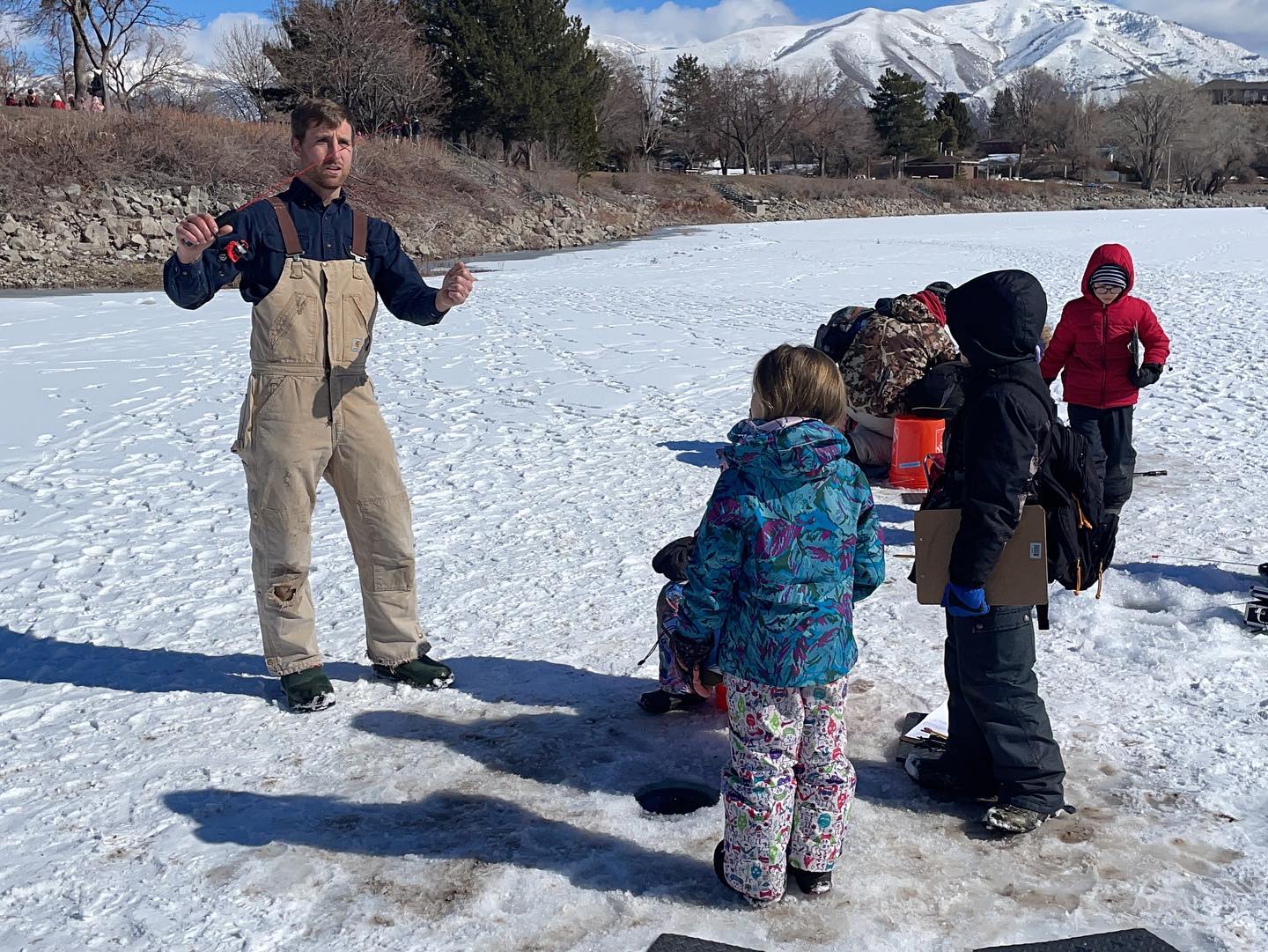
Definitely. Last year, our second grade class at EBLS set up a trip to Hyrum Dam to take the students out ice fishing. We partnered with DWR (Utah Division of Wildlife Resources) employees, expert parents, and Dr. Eric Newell, our director of experiential learning. We wanted to go out there to help students connect with that place but also learn about characteristics of animals, what they need to survive and traits of the habitat. The students were out there on their buckets, ice cold fingers, ice developing on the top of those little rods, so focused on watching one little bounce of the line, hoping to catch a fish. We ended up being able to have a rainbow trout and a yellow perch, getting to look at the different colorations on the body and these black vertical stripes on the perch and talking about how that blends into the dark reeds on the bottom of the reservoir. And the mouth structure, how one has these sharp, aggressive teeth and one has wider teeth and a wider mouth. Then, finally we looked inside their bellies where different food were in different types of fish, little minnows in the trout belly versus macroinvertebrates and little snail-like things in the perch belly, looking at how those matched the different parts of the water that those fish would live in. That type of a thing is an example of how students connect to this place in this very authentic and meaningful way.

How do you justify this type of teaching and learning in the current educational landscape?
Basically, from an ‘academic accountability’ perspective, there is not a shortage of research, specifically in early childhood where I work, which links rich at-home vocabulary, at-home math experiences, and in general rich experiences with later academic success.

Providing hands-on learning that fosters rich connection to place makes so much sense and is engaging as well. We are Shannon Rhodes and Dr. Kozlowski, and we are wild about Utah.

Credits:

Images: Courtesy & Copyright Edith Bowen Laboratory School (EBLS) Experiential Learning Eric Newell Director & Photographer https://edithbowen.usu.edu/
Audio: Courtesy & © J. Chase and K.W. Baldwin
Text: Shannon Rhodes and Dr. Joseph Kozlowski, Edith Bowen Laboratory School, Utah State University https://edithbowen.usu.edu/
Additional Reading Links: Shannon Rhodes

Additional Reading

Boling, Josh. Why I Teach Outside. 2019. https://wildaboututah.org/why-i-teach-outside/

Boling, Josh. You, Too, Can Teach Outside. 2020. https://wildaboututah.org/you-too-can-teach-outside/

Gibbon, Peter. John Dewey: Portrait of a Progressive Thinker. 2019. National Endowment for the Humanities. https://www.neh.gov/article/john-dewey-portrait-progressive-thinker

Utah Division of Wildlife Resources. Four Great Waters to Ice Fish in Northern Utah This Winter. 2022. https://wildlife.utah.gov/wildlife-news/42-utah-wildlife-news/834-find-a-baby-bird-heres-what-to-do.html