Dashboard Shows
Peak Need for Dark Skies
and the Mantra to
Dim the Lights for Birds at Night

Milky Way above Chesler Park Canyonlands National Park Courtesy US National Park Service, Emily Ogden, Photographer

Milky Way above Chesler Park
Canyonlands National Park
Courtesy US National Park Service,
Emily Ogden, Photographer
Canyonlands is one of many parks in southern Utah with the International Dark Sky Park designation

 
BirdCast Migration Dashboard https://dashboard.birdcast.info/ Courtesy BirdCast, The Cornell Lab of Ornithology Cornell University

BirdCast Migration Dashboard
https://dashboard.birdcast.info/
Courtesy BirdCast, The Cornell Lab of Ornithology
Cornell University

Songbirds migrate at night to avoid predators, air turbulence, and daytime heat. Down here on the ground we are unaware of the miraculous and essential voyagers flying up to 10,000 feet above us, but thanks to dedicated scientists collaborating for years on end we have free access to the data and graphs of these massive population shifts. The BirdCast Dashboard uses weather radar to track bird migrations, providing real time data showing peak migrations at the website dashboard.birdcast.info.

Did you know that World Migratory Bird Day is celebrated in May and October? Those are the peak months for spring and fall migrations, and the magnitudes of those flocks are considerable. Two thirds of songbirds migrate at night.

It’s important to know when migrations are occurring because skyglow from artificial lighting causes bird disorientation and millions of bird fatalities each and every year. The declining bird population is problematic for many reasons, not least of which because some of the most intrepid travelers like the three-inch-long Rufous Hummingbird, which travels 3,900 miles each way from Alaska to Mexico, are keystone species with ecosystem services such as pollination and consumption of pests such as aphids and mosquitoes.

The Bobolink travels 12,500 miles to and from southern South America every year – those imperiled birds breeding at the west end of Logan may travel the equivalent of 4 or 5 times around the circumference of the earth throughout their lifetime. They come to Cache Valley for the habitat, stay to raise their young, and then head back to their distant winter feeding grounds.

A few top-notch steps toward bird-friendly living include the prevention of light trespass and skyglow, especially from 11 p.m. to 6 a.m., March – May, and August – October. Close curtains to prevent the indoor light from escaping, and avoid blue light outdoors – choose warm white or amber lights, and shield light bulbs to direct light downward. Motion-activated light bulbs are a great way to safely light the way while cutting down on unnecessary outdoor lighting, especially since there’s no clear scientific evidence that outdoor lighting reduces crime. Excess light, on the other hand, is a crime, and light trespass is an enforceable infraction. Light pollution is harmful to humans and deadly for birds.

Logan Mayor Holly Daines signed a Proclamation to Dim the Lights for Birds at Night because reducing skyglow and light trespass saves energy and birds by reducing the often fatal disorientation caused by artificial light.

Dark Skies are filled with bright stars, so by jingles, what say we all “Dim the lights for birds at night!

I’m Hilary Shughart with the Bridgerland Audubon Society, and I am Wild About Utah!

Credits:
Images: Milky Way above Chesler Park, Canyonlands National Park, Courtesy US National Park Service, Emily Ogden, Photographer, https://www.nps.gov/media/photo/gallery-item.htm?id=286169fc-2bab-40e0-bf8b-a13b5170aeb3&gid=2ADECB87-1DD8-B71B-0B09BD0B18C96667
Screenshot: BirdCast Migration Dashboard, Courtesy BirdCast, The Cornell Lab of Ornithology, Cornell University, https://dashboard.birdcast.info/
Featured Audio: Courtesy & Copyright © Kevin Colver, https://wildstore.wildsanctuary.com/collections/special-collections/kevin-colver
Text: Hilary Shughart, President, https://bridgerlandaudubon.org/
Additional Reading: Hilary Shughart and Lyle Bingham, https://bridgerlandaudubon.org/

Additional Reading

WildAboutUtah pieces by Hilary Shughart, https://wildaboututah.org/author/hilary-shughart/

Miller, Zach, Dark Sky Parks, Wild About Utah, Nov 2, 2020, https://wildaboututah.org/dark-sky-parks/

Leavitt, Shauna, Natural Quiet and Darkness in our National Parks, Wild About Utah, May 6, 2019 & August 3, 2020, https://wildaboututah.org/natural-quiet-and-darkness-in-our-national-parks/

Rask, Kajler, Dark Skies, Wild About Utah, Jan 1, 2018, https://wildaboututah.org/dark-skies/

Dark Skies, Bird-Friendly Living, Advocacy, Bridgerland Audubon Society, May 2022, https://bridgerlandaudubon.org/our-projects/advocacy/bird-friendly-living/dark-skies/

Dim the Lights for Birds at Night, Bridgerland Audubon Society, May 3, 2022, https://bridgerlandaudubon.org/our-projects/advocacy/bird-friendly-living/dark-skies/

International Dark Skies Association, Utah Chapter, https://utah.darksky.ngo/

Welzbacker, Hannah, Tracking a Night-Time River of Birds, Cool Green Science, The Nature Conservancy, April 13, 2021, https://blog.nature.org/science/2021/04/13/tracking-a-night-time-river-of-birds/?fbclid=IwAR18LKCQUmSlb-hHM1u4FXfVe-GqyWTwiPx91obUQbq2uB9kcPU2djlCnlk

BirdCast Dashboard, The Cornell Lab of Ornithology, Cornell University, https://dashboard.birdcast.info/

Global Bird Collision Mapper, Fatal Light Awareness Program (FLAP) Canada, https://flap.org/
See also https://birdmapper.org/

Lowe, Joe, Do Hummingbirds Migrate?, American Bird Conservancy, September 12, 2019, https://abcbirds.org/blog/do-hummingbirds-migrate/

Bobolink (Dolichonyx oryzivorus), Species, Utah Division of Wildlife Resources, https://fieldguide.wildlife.utah.gov/?species=dolichonyx%20oryzivorus

Bobolink (Dolichonyx oryzivorus), All About Birds, Cornell Lab of Ornithology, Cornell University, https://www.allaboutbirds.org/guide/Bobolink

Lighting, Crime and Safety, International Dark-Sky Association, https://www.darksky.org/light-pollution/lighting-crime-and-safety/#:~:text=There%20is%20no%20clear%20scientific,cost%20a%20lot%20of%20money

2022 Proclamation “Dim the Lights for Birds at Night”, https://bridgerlandaudubon.org/dim-the-lights-for-birds-at-night/

The use of the “by jingles” exclamation is in homage to Warren Dahlin’s moving Moth Radio Hour story “Open My Eyes”, in which he “makes a friend who stays with him in life and in death.” Heard on Utah Public Radio (5/28/22), The Moth, https://themoth.org/stories/open-my-eyes

Owens, Avalon & Cochard, Précillia & Durrant, Joanna & Farnworth, Bridgette & Perkin, Elizabeth & Seymoure, Brett. (2019). Light pollution is a driver of insect declines. Biological Conservation. 241. 108259. 10.1016/j.biocon.2019.108259. https://doi.org/10.1016/j.biocon.2019.108259

Great-tailed Grackles

Great-Tailed Grackle Male
Courtesy US FWS, John & Karen Hollingsworth, Photographers
Great-Tailed Grackle Male
Courtesy US FWS, John & Karen Hollingsworth, Photographers
My formal introduction to great-tailed grackles was on a birding trip to Box Elder County. We stopped at the Walmart parking lot in Brigham City where Dick Hurren took a cup of cat food and tossed it out in front of our parked car. Then we watched the grackles fly in. We joked, at the time, that grackles seemed to spontaneously show up at new stores. It’s almost as if they hitchhike on semis.

The Brigham City grackles had long, V-shaped tails. Dick explained that three grackle species are native in the US. Florida’s boat-tailed grackles are found along the east and gulf coasts and common grackles are found mostly east of the Rockies. Mexican or great-tailed grackles have become the most common in developed areas of the West; although, according to eBird and UtahBirds.org, both common and great-tailed varieties frequent Utah.

Grackle species are also distinguished by their size and color: between a robin and a crow in size, they are about the same length as American crows, but not as heavy. Common grackles have more varied colors and long tails. Boat-tailed grackles have dark eyes; whereas great-tailed males are iridescent black with piercing yellow eyes. Female great-tails are dark brown above and paler below, with a buff-colored throat and a stripe above the eye. Juveniles have coloring similar to females with a dark eye.

Omnivorous, grackles forage in fields, feedlots, golf courses, cemeteries, parks, neighborhoods, and parking lots. Trees and reeds near water provide roosting and breeding sites where larger males claim their flock’s territory with song.

Great-tails have an unusually large repertoire of vocalizations that are used year-round. Flamboyant males perform a wider variety, while females engage mostly in chattering sounds. “Chut” from females and “Clack” from males warn of humans or other predators. Even though most female calls are low-key, there are reports of females singing their own territorial song.
Because they are loud, and large numbers of birds can leave great deposits of droppings, grackles are often considered pests. This designation is especially true in Texas and other southern states where flocks of 100,000 or more roam parking lots.

And they are smart! Icterids, the New World blackbirds, including bobolinks, meadowlarks, ravens, crows, and grackles are set apart from many birds by their intelligence. Grackles adapt their behavior with experience and habitat. The Audubon website notes: “They are clever foragers: Great-tailed Grackles can solve Aesop’s Fable tests, dropping stones into a container of water in order to sufficiently raise the level to pluck out a prize ….”

Sometimes I enjoy stepping back and observing parking lot ecology. I look for grackles. Then I marvel at how our world would look and smell without birds to clean up after us. Above all, I enjoy hearing male and female great-tailed grackles singing in the trees or watching them forage between cars. Take five and give it a try!

I’m Lyle Bingham and I’m Wild About Utah

Credits:
Photos: Courtesy US FWS, John & Karen Hollingsworth, Photographers
Featured Audio: Courtesy & Copyright © Friend Weller, Utah Public Radio upr.org
Text: Lyle Bingham, https://bridgerlandaudubon.org/
Additional Reading: Lyle Bingham, https://bridgerlandaudubon.org/

Additional Reading

Lyle Bingham’s Wild About Utah Postings

Great Tailed Grackle, AllAboutBirds, Cornell Lab of Ornithology, Cornell University, https://www.allaboutbirds.org/guide/Great-tailed_Grackle

Great-tailed Grackle – Quiscalus mexicanus, Utah Birds, Utah County Birders, http://www.utahbirds.org/birdsofutah/ProfilesD-K/GreatTailedGrackle.htm
Other Photos: http://www.utahbirds.org/birdsofutah/BirdsD-K/GreatTailGrackle.htm

Great-tailed Grackle, Field Guide, National Audubon, https://www.audubon.org/field-guide/bird/great-tailed-grackle

Everything is bigger in Texas: Grackle Flock at a Grocery Store in Houston-Courtesy YouTube and KHOU Houston Channel 11

Naturally Flowing Carbonated Water

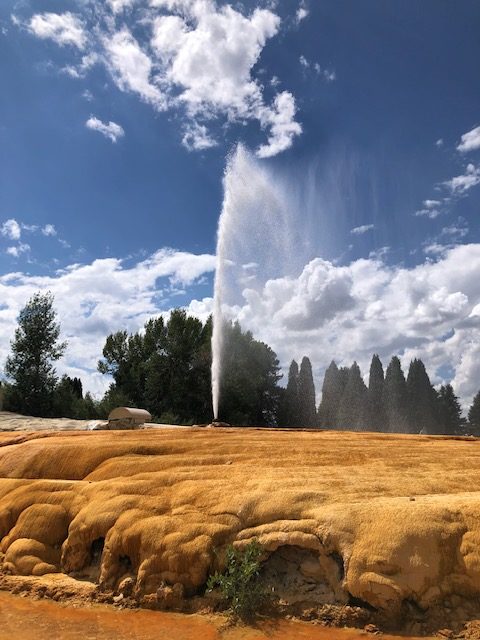
Naturally Carbonated Water: Soda Springs Geyser, Soda Springs, Idaho, Courtesy & &copy Mary Heers, Photographer
Soda Springs Geyser, Soda Springs, Idaho

If you like drinking carbonated water as much as I do, you’ll be happy to hear you can drink as much as you’d like, -absolutely for free- just north of the Utah border in Soda Springs, Idaho.

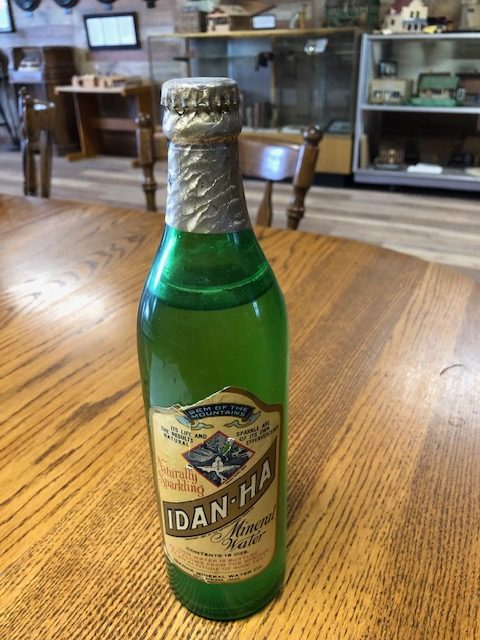
Idan-Ha Mineral Water, Courtesy & &copy Mary Heers, Photographer
Idan-Ha Mineral Water
Courtesy & &copy Mary Heers, Photographer

Small Bubbling Soda Water Pool, Courtesy & &copy Mary Heers, Photographer Small Bubbling Soda Water Pool
Courtesy & &copy Mary Heers, Photographer

When settlers heading to California passed through this area on the Oregon Trail, they saw the many bubbling natural springs.

In 1838 Sarah White Smith, wrote in her diary, This is indeed a curiosity. The water is bubbling and foaming like boiling water.” But the water wasn’t hot.

She also wrote how delighted she was when she made bread with the water. “The bread was as light as any prepared with yeast.”

All this stirred up some fond memories I have of my high school science teacher who always made interesting things happen in the classroom. She put a pinch of sodium bicarbonate (commonly called baking soda) in a dish and added a couple tablespoons of water and vinegar. Voila! The dish began “bubbling and foaming like boiling water.”

For centuries something like this has been going on under the ground in Soda Springs. The carbonate rocks are mixing with slightly acidic water, sending CO2 bubbles to the surface .

By 1887, Soda Springs had grown to a bustling town. Some enterprising residents came up with a plan to capture the CO2 gas. They built giant drums over one of the springs and then built a five-mile pipeline to their bottling plant. There they mixed the gas with clear water from another spring and bottled it. The soda water was called “Idan-ha” and was shipped out on the railroad far and wide.

It won first place at the Chicago World’s Fair in 1893 and again in the World’s Fair in Paris in 1905.

A decade later, another group of businessmen went to work on a plan to build a mineral water swimming pool resort.

On Dec 2, 1937, drillers dug down to 315 ft. No luck. They went to dinner. Then they heard a gush of water shoot up outside the window. They said it was “roaring like a dragon.” The whole area was enveloped in water vapor and Main Street was flooded. It took them two weeks to cap it.

The water wasn’t warm, so the businessmen abandoned their plans for a swimming pool resort.

The town knew their geyser was accidental; it was man-made- but still a plume of water shooting 100 ft into the air was impressive to look at.

Engineers put a timer on the cap. Now the carbonated water shoots up for 8 minutes every hour on the hour.

You can watch it for free.

As for drinking the naturally carbonated water, the city has set aside three springs.

My guide drove me to his favorite site just outside of town We scrambled down a grassy hillside to a small bubbling pool about the size of a basketball. He whipped out a cup and dipped it in. I drank. It was cold and fizzy.

“Good as Perrier,” I said.

He smiled, “Now I like you.”

I liked him too. Even more, I loved drinking this tasty treasure bubbling up from the ground.

This is Mary Heers and I’m Wild About Utah

Credits:

Images Courtesy & Copyright Mary Heers, Photographer
Featured Audio: Courtesy & Copyright © Friend Weller, Utah Public Radio upr.org
Text: Mary Heers, https://cca.usu.edu/files/awards/art-and-mary-heers-citation.pdf
Additional Reading: Lyle Bingham, https://bridgerlandaudubon.org/

Additional Reading

Wild About Utah, Mary Heers’ Postings

Price, Mike, Soda Springs, We Are East Idaho, EastIdahoNews.com LLC, September 9, 2019, https://www.eastidahonews.com/2019/09/we-are-east-idaho-soda-springs/

Hooper Springs Park, California National Historic Trail, Oregon National Historic Trail, National Park Service, US Department of the Interior, https://www.nps.gov/places/000/hooper-springs-park.htm

A man-made CO2 Geyser in Utah:
Weaver, Lance, Crystal Geyser, Grand County, Utah, Geosights, Utah Geological Survey (UGS), Utah Department of Natural Resources, January 2018, https://geology.utah.gov/map-pub/survey-notes/geosights/crystal-geyser/

Map on page 43 shows water from Soda Springs flows into the Bear River and the Great Salt Lake:
Dissolved-Mineral Inflow to Great Salt Lake and Chemical Characteristics of the Salt Lake Brine, United States Geological Survey (USGS) and The College of Mines and Mineral Industries, The University of Utah, 1963, https://ugspub.nr.utah.gov/publications/open_file_reports/ofr-485/Lake%20Brine%20Interpretive%20Reports/WRB%2003%20-%20Part%201%20-%20Hahl%20&%20Mitchell%20-%201963/Water%20Resources%20Bulletin%203%20Pt%201%201963.pdf

This piece originally aired August 25, 2023 as Naturally Carbonated Water https://wildaboututah.org/naturally-carbonated-water/

Solar Eclipse Behaviors

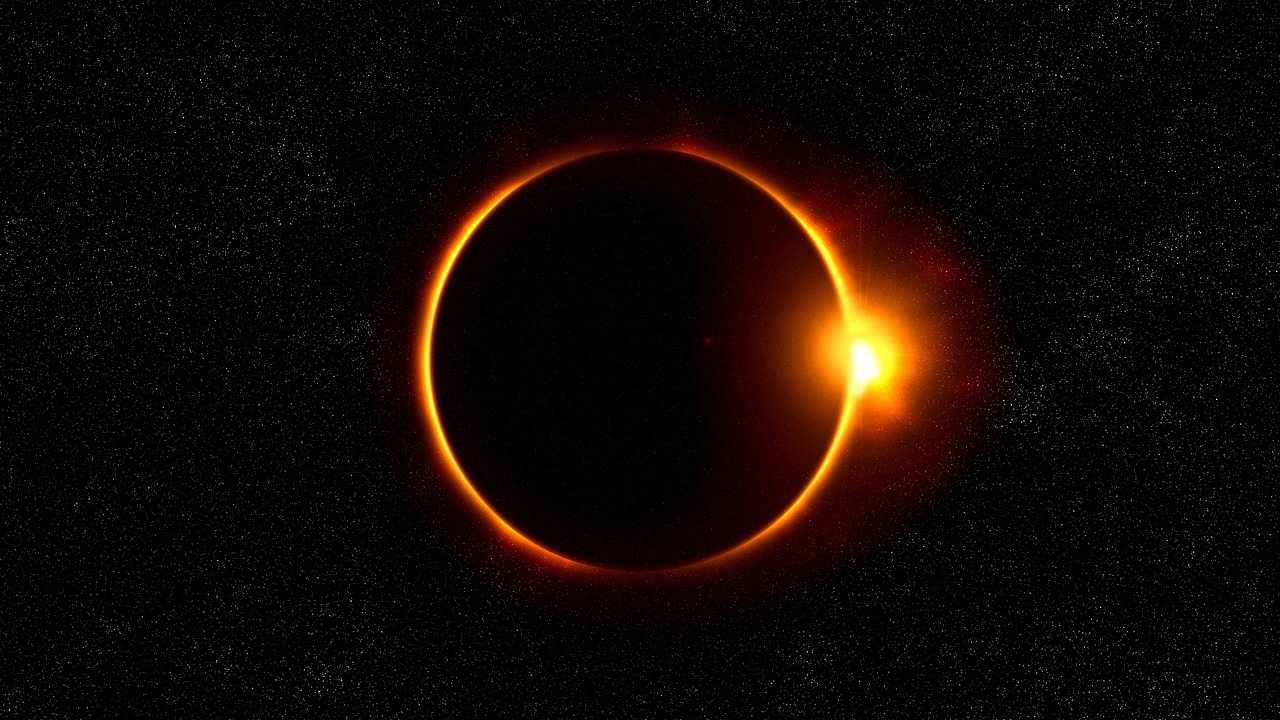
Solar Eclipse-The Diamond Ring, Courtesy Pixabay, Buddy Nath, Contributor

Solar Eclipse-The Diamond Ring
Courtesy Pixabay
Buddy Nath, Contributor

I believe we’re all aware that the amount of light has major influence on wildlife activity, as it does our own, triggering everything from breeding and feeding activity and various behaviors in general. Thus the very short period of light variation during a solar eclipse has piqued my interest.

When a total eclipse crossed over New England in 1932, researchers put out a call for people to share their wildlife observations probably the first study to intentionally track animals during an eclipse—people reported owls hooting, pigeons returning to roost, and a general pattern of bird behavior that suggested “fear, bewilderment, Purple Martins pausing their foraging and nighthawks flying in the afternoon. Whooping cranes dance shortly after the eclipse, and flamingos congregate. For many birds, it’s probably a once-in-a-lifetime experience.

A citizen scientist watched a yellow okra flower close during totality, just as it would at night—a favorite observation of Alison Young, co-director of the Center for Biodiversity and Community Science at the California Academy of Sciences and lead author of a paper describing the findings. The flower’s response was unexpected, she says in an email, since totality wasn’t very long.

During the 2017 eclipse, more than 600 observers submitted their findings to iNaturalist” a community science effort where observations described an absence of wildlife during the eclipse’s peak: busy bird feeders clearing out, insects going quiet, flowers closing up. Other community scientists noted bees quieting their buzzing in flower patches, zoo animals going through their nighttime routines, and Chimney Swifts swooping and twittering like it was dusk

The Eclipse Soundscapes project is also looking for observers to record and share “field notes” of the changes they see, hear, and feel during the eclipse, whether they’re in the total path or not. By going beyond the visuals, the Soundscapes team hopes to make the big day more accessible for blind or low-vision people who are often left out of astronomy, and to help everyone have a deeper experience of the rare event. “What we’re trying to do is have people be very mindful during the eclipse, and actually use all of their senses to determine what changes. Their resulting study found that as the moon started to cover up the sun, there was a drop in biological activity in the air—suggesting that day-flying birds and insects were coming down to rest.

Countrywide, people noticed swallows and swifts flocking as darkness fell. Frogs and crickets, common elements of an evening soundscape, started to call, while diurnal cicadas stopped making noise. Ants appeared to slow down or stop moving, and even domestic chickens responded—hens gathered together and got quiet, while roosters crowed.

Even in the partial zone, you can still pay attention to how nature responds—and contribute to science. Sending in your observations through a platform like iNaturalist or eBird can help provide valuable data for future research,

Jack Greene for Bridgerland Audubon, and I’m wild about Utah!

Credits:

Images: Eclipse Pixabay, AlpineDon, Contributor, https://pixabay.com/photos/snow-canyon-state-park-utah-1066145/
Featured Audio: Courtesy & © Anderson, Howe and Wakeman,
Courtesy & Copyright © Kevin Colver, https://wildstore.wildsanctuary.com/collections/special-collections/kevin-colver
Also includes audio Courtesy & © J. Chase & K.W. Baldwin
Text: Jack Greene, Bridgerland Audubon, https://bridgerlandaudubon.org/
Additional Reading: Lyle Bingham and Jack Greene, Author, Bridgerland Audubon, https://bridgerlandaudubon.org/

Additional Reading:

Jack Greene’s Postings on Wild About Utah, https://wildaboututah.org/author/jack/

iNaturalist
Ohio Wildlife Observations: Solar Eclipse 2024 https://www.inaturalist.org/projects/ohio-wildlife-observations-solar-eclipse-2024

eBird

The Eclipse Soundscapes project

2024 Total Solar Eclipse: Through the Eyes of NASA

EarthSky: How Will Animals React During the Eclipse?

Watch Videos from EarthSky Countdown to Eclipse 2024: https://www.youtube.com/playlist?list=PLcwd1eS7Gpr6QrjJU7aH5K7qBCIb39ECP
Day

Whitt, Kelly Kizer, When is the next total solar eclipse? April 9, 2024, https://earthsky.org/astronomy-essentials/when-is-the-next-total-solar-eclipse-dates-location/