Enhance Backyard Birdwatching When You Feed & Protect Birds

Ripple Effects: Enhance Backyard Birdwatching When You Feed & Protect Birds: Downy Woodpecker Male at Bird Feeder Courtesy US FWS, Leah Schrodt, Photographer
[Downy Woodpecker Male at] Bird Feeder
Courtesy US FWS, Leah Schrodt, Photographer

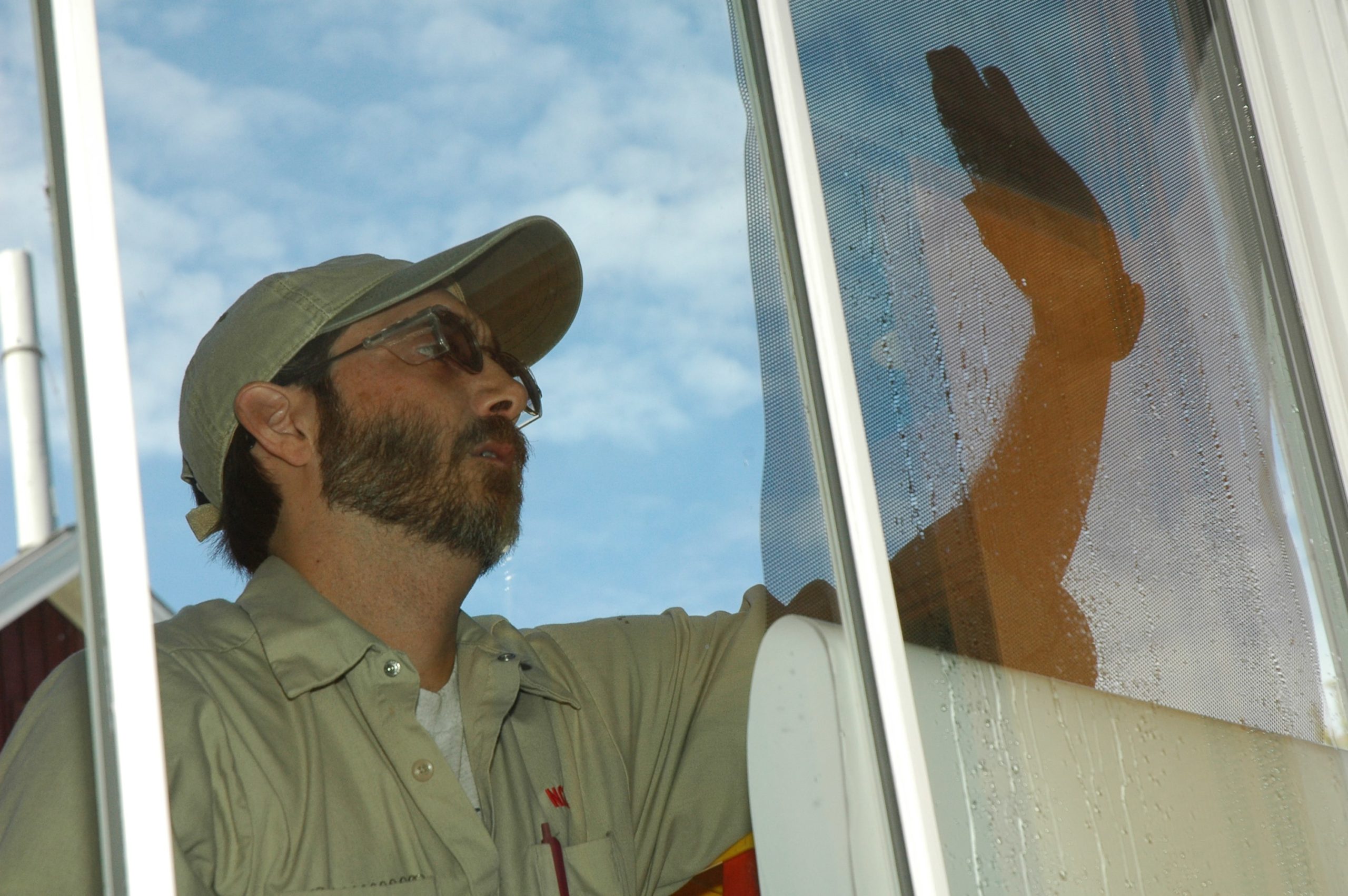
Applying Anti-Strike Film to Window Courtesy US FWS Brett Billings Photographer Applying Anti-Strike Film to Window
Courtesy US FWS
Brett Billings Photographer

Birdwatching is a fun hobby for all ages and it is a great way to connect with nature and increase self-efficacy, so let’s discuss the benefits and the importance of a safe environment for feeding our backyard birds. First, the benefits of supplemental feeding, and second, preventable deaths from cats and window collisions.

Supplemental food and water are important ways we can reduce stress for backyard birds, especially through the winter months. Sites with bird feeders attract more birds over time than those without feeders, and the birds are in overall greater health than birds at sites without feeders. A higher percentage of chicks hatch at sites with bird feeders, and the survival rates are significantly higher, but supplemental feeding must be done in a safe environment.

Free ranging domestic cats and window collisions are leading causes of bird deaths in North America. The American Bird Conservancy estimates that outdoor cats kill approximately 2.4 billion birds every year in the United States alone. Approximately one billion birds are dying from window collisions each year in North America – that represents about ten percent of our birds dying from crashing into windows (1), and combined, that’s over three billion fewer insect eaters, fewer pollinators, fewer seed spreaders, and fewer parents for the next generation.

Cats should be kept indoors, and windows should be treated, especially if they reflect trees and shrubs. If you have seen a ghostly bird imprint or heard the sickening thump of a bird hitting your windows, then those are windows in need of treatments such as screens, translucent UV tape, or even tempera paint designs, because even birds that manage to fly away have potentially life-threatening internal injuries. Feeders less than 3 feet away don’t allow birds to build up too much speed before they collide, so it’s good to put feeders and birdbaths 3 feet or closer to a window or greater than 30 feet away.

Feeders placed on or near windows have the added benefit of being easy to access and monitor. In addition to a window suet feeder, one of my favorite window feeders is actually a clear plastic suction-cup toothbrush cup holder from the dollar store – it’s easy to clean and there’s no need for binoculars!

In addition to enhancing a backyard bird watching hobby and improving bird health and survival, the ripple effects of feeding birds, keeping cats indoors, and preventing window collisions include pest control in our gardens where birds feast on slugs, snails, aphids and grasshoppers. I for one particularly appreciate Black-billed Magpies when they remove wasp nests from my house! The Bridgerland Audubon website has tools, coloring pages, checklists, and science-based information on window collision prevention. Solutions can be as simple as the careful placement of bird feeders and keeping cats indoors. Find us at bridgerlandaudubon.org, that’s Bridgerland Audubon – A-U-D-U-B-O-N dot org.

I’m Hilary Shughart, and I’m wild about Bridgerland Audubon, wild about Utah Public Radio, and Wild About Utah!Supplemental food and water are important ways we can reduce stress for backyard birds
Credits:
Images: Courtesy US Fish & Wildlife Service, Leah Schrodt and Brett Billings, Photographers
Featured Audio: Courtesy & Copyright © Kevin Colver, https://wildstore.wildsanctuary.com/collections/special-collections/kevin-colver
Text: Hilary Shughart, President, https://bridgerlandaudubon.org/
Additional Reading: Hilary Shughart and Lyle Bingham, https://bridgerlandaudubon.org/

Additional ReadingSupplemental food and water are important ways we can reduce stress for backyard birds
WildAboutUtah pieces by Hilary Shughart, https://wildaboututah.org/author/hilary-shughart/

Procure Bird Seed from local Audubon Chapters:
Great Salt Lake Audubon
Last year: https://greatsaltlakeaudubon.org/events/full-calendar/sunflower-seed-pickup-at-wild-birds-unlimited
Bridgerland Audubon
Other Statewide Birding Groups

Hellstern, Ron, Build a Certified Wildlife Habitat at Home, Wild About Utah, July 17, 2017, https://wildaboututah.org/build-community-wildlife-habitats/

Hellstern, Ron, Attracting Birds and Butterflies to Your Yard, Wild About Utah, May 28, 2018, https://wildaboututah.org/attracting-birds-and-butterflies-to-your-yard/

Beorchia, Mykel, How To Create a Bird Friendly Yard, Wild About Utah, November 9, 2020, https://wildaboututah.org/how-to-create-a-bird-friendly-yard/

Shughart, Hilary, To Grow Your Own Bird Food, Native Plants Are Key!, Wild About Utah, April 12, 2021, https://wildaboututah.org/native-plants-are-key/

Kervin, Linda, Bird Feeding, https://wildaboututah.org/bird-feeding/

Kervin, Linda, Cane, Jim, Feed the Birds, Wild About Utah, December 1, 2011, https://wildaboututah.org/feed-the-birds/

Creating Landscapes for Wildlife… A Guide for Backyards in Utah, Written by Sue Nordstrom and Illustrated by Kathlyn Collins Department of Landscape Architecture and Environmental Planning, Utah State University with Margy Halpin, Utah Division of Wildlife Resources; Second Printing 2001,
Updated for the Utah Division of Wildlife Resources, by Frank Howe, DWR Avian coordinator; Ben Franklin, DWR–Utah Natural Heritage Program botanist; Randy Brudnicki, DWR publications editor; and landscape planning illustrations by Stephanie Duer.,
Published by:
State of Utah Natural Resources, Division of Wildlife Resources,
Utah State University Cooperative Extension Service and
Utah State University Department of Landscape Architecture and Environmental Planning;
1991 updated 2001 https://wildlife.utah.gov/pdf/landscapingforwildlife.pdf

Sizemore, Grant, Cats Indoors–Cats and Birds, American Bird Conservancy, https://abcbirds.org/program/cats-indoors/cats-and-birds/

Bird-Strike Prevention: How to Stop Birds From Hitting Windows, American Bird Conservancy, https://abcbirds.org/glass-collisions/stop-birds-hitting-windows/

Messmer, Terry, Cowell, Samuel, Dietrich, Dietrich, and Sullivan, Kimberly, Ask an Expert: Seven Tips to Keep Birds from Hitting Your Windows, Utah State University Extension, March 28, 2017, https://extension.usu.edu/news_sections/agriculture_and_natural_resources/bird-windows

Cowell, Samuel, Dietrich, Dietrich, Sullivan, Kimberly and Messmer, Terry, Reducing the Risk of Birds Colliding into Windows:
A Practical Guide for Homes and Businesses [NR/Wildlife/2017-01pr], Utah State University Extension, March 2017, https://digitalcommons.usu.edu/cgi/viewcontent.cgi?article=2682&context=extension_curall

Klem, Jr., Daniel, Solid Air: Invisible Killer: Saving Billions of Birds from Windows, Hancock House Publishers, October 5, 2021, https://www.amazon.com/Solid-Air-Invisible-Killer-Billions/dp/0888396465

For the Birds (Download Brochure PDF), US Fish & Wildlife Service, U.S. Department of the Interior, rev March 2001, https://digitalmedia.fws.gov/digital/api/collection/document/id/1107/download

Morse, Susan, To Feed or Not to Feed Wild Birds–Bird Feeders Can Be Sources of Joy — and Disease,, US Fish & Wildlife Service, U.S. Department of the Interior, https://www.fws.gov/story/feed-or-not-feed-wild-birds

Make Your Home a Safe, Healthy Home for Birds,, US Fish & Wildlife Service, U.S. Department of the Interior, Sep 13, 2021, https://www.fws.gov/story/2021-09/backyard-birds

Celley, Courtney, Helping wildlife while avoiding common pitfalls,, US Fish & Wildlife Service, U.S. Department of the Interior, https://www.fws.gov/story/helping-wildlife-while-avoiding-common-pitfalls

West Nile virus bird identification, , Utah Division of Wildlife Resources, October 20, 2017, https://wildlife.utah.gov/bird-identification.html

Dragon, Sydney, (Student Conservation Association intern), Conservation in Urban Areas: Backyard Bird Feeding, US Fish & Wildlife Service Bird Walks (Texas), U.S. Department of the Interior, Apr 27, 2021, https://youtu.be/2bkliew6aj8

Outdoor Public Art Retells Utah’s Golden Spike Story

Golden Spike Visiting Logan, Douwe Blumberg, Artist Courtesy & Copyright Mary Heers, Photographer
Golden Spike Visiting Logan,
Douwe Blumberg, Artist
Courtesy & Copyright Mary Heers, Photographer

Locomotive Advancing within Buffalo Eye Douwe Blumberg, Artist Courtesy & Copyright Mary Heers, Photographer Locomotive Advancing In Buffalo Eye
Douwe Blumberg, Artist
Courtesy & Copyright Mary Heers, Photographer

 “Distant Thunder,”
Michael Coleman, Artist
at Golden Spike National Monument
Courtesy & Copyright Mary Heers, Photographer

Monument to their Memory, Ilan Averbuch, Artist, Golden Spike State Park at Reeder Ranch, Brigham City, UT, Photo Courtesy & Copyright Mary Heers, Photographer Monument to their Memory
Ilan Averbuch, Artist
Golden Spike State Park at Reeder Ranch, Brigham City, UT
Photo Courtesy & Copyright Mary Heers, Photographer

Early this spring, a semi-truck with a long flat bed pulled into the USU parking lot next to the cemetery and parked. Lashed down firmly on the flat bed was a giant railroad spike, covered in gold leaf and very impressive to see from a distance. But walking up to it, I could see it was covered in sculptured forms. There was an Indian astride a horse; the shaggy head of a buffalo. But what really caught my attention was the close up of the buffalo eye staring right at me. Reflected in the pupil was a steam engine, coming down the tracks, right at me. I felt the chill of the inevitable crash.

The train brought hunters with guns, hide hunters who killed and took only the hides, shipping them by the bale to industries back east. When there were no more buffalo to be shot, they collected the bones and shipped them to St Louis to be crushed into fertilizer. You could see the crash coming, and knew it would be devastating – to the buffalo and the Indians whose livelihood depended on them.

Walking around to the other side of the spike, I found a very different story. Here were the laborers who had laid down the Transcontinental tracks – the Chinese, the Irish, the Civil War veterans, the Mormon graders- Each standing proudly on the other’s shoulders, all the way to the top. I breathed in the nobility of these men for a difficult job well done.

This giant golden spike’s final home will be standing upright in a 23 acre public park in Brigham City, close enough to the Forest Street exit to be visible from I-15. Until then, we are going to have to wait to see the final two sides of the spike.

But in the meantime, there is another new art piece to go see outside the Golden Spike National Park at Promontory Point.

As I pulled into this parking lot, I was astonished to see a massive chunk of railroad track, rising up from the ground and curving slightly to a vanishing point in the sky.

I was reminded of a conversation I’d has few years ago, when I was collecting train stories, with a man who had once had a summer job hammering spikes on a railroad crew. He was fifteen- half the age and half the size of the other men. But he caught the rhythm.

Tap the spike into place. Swing in the spike maul. One, two, three. Pick up the next spike.

This story helped me understand the restless energy I felt looking at the track sculpture – one more tie, one more rail, one more spike. Repeat. These tracks were going where no tracks had gone before.

Outdoor public art can be storytelling at its very best.

And now a footnote for the engineers listening in: The giant golden spike is actually 43.2319 feet tall. That’s because 43.2319 is the square root of 1869.

This is Mary Heers and I’m Wild About Utah

Credits:

Images Courtesy & Copyright Mary Heers, Photographer
Featured Audio: Courtesy & Copyright © Friend Weller, Utah Public Radio upr.org & Cook Laboratories https://folklife.si.edu/archives-and-resources/cook-labs-records
Text: Mary Heers, https://cca.usu.edu/files/awards/art-and-mary-heers-citation.pdf
Additional Reading: Lyle Bingham, https://bridgerlandaudubon.org/

Additional Reading

Wild About Utah, Mary Heers’ Postings

Swanson, Kirsten, Heers, Mary, Ride the rails: A storytelling exploration of Utah’s early railroad, Utah Public Radio, May 18, 2022 at 9:12 AM MDT, https://www.upr.org/arts-and-culture/2019-05-10/ride-the-rails-a-storytelling-exploration-of-utahs-early-railroad

Golden Spike Monument by Douwe Blumberg, Golden Spike State Monument, The Golden Spike Foundation (GSF), https://spike150.org/park/

Driving of the Spike Tour, News, Douwe Studios, October 24, 2023, https://www.douwestudios.com/news

Hislop, Craig, Golden Spike monument coming to USU Tuesday, Cache Valley Daily, Apr 26, 2024, https://www.cachevalleydaily.com/news/golden-spike-monument-coming-to-usu-tuesday/article_ee1eb334-0376-11ef-b19c-c725f46266d9.html

Williams, Carter, Utah gets $1.5M donation as it unveils more plans for new golden spike monument, KSL.com, April 11, 2024 at 7:47 p.m. https://www.cachevalleydaily.com/news/golden-spike-monument-coming-to-usu-tuesday/article_ee1eb334-0376-11ef-b19c-c725f46266d9.html

Don’t Confuse these two places. The Golden Spike National State Park is 30 miles West of the “Gateway” Golden Spike State Monument at Reeder Ranch in Brigham City
Golden Spike National Historic Park, US National Park Service, US Department of the Interior, https://www.nps.gov/gosp/index.htm

S.C.R. 6 Concurrent Resolution Creating the Golden Spike State Monument, Utah State Legislature, Signed March 13, 2024, https://le.utah.gov/~2024/bills/static/SCR006.html

“Distant Thunder” Sculpture at Golden Spike National Historical Park Honors Bison’s Past, https://www.nps.gov/articles/000/golden-spike-national-historical-park-distant-thunder.htm

Southwestern Utah Herps

Southwestern Utah Herps: Gila Monster, Courtesy Pixabay
Gila Monster
Courtesy Pixabay

Gila Monster Courtesy & © Jack Greene, photographer Gila Monster
Courtesy & © Jack Greene, photographer

Gila Monster Courtesy & © Jack Greene, photographer Gila Monster
Courtesy & © Jack Greene, photographer

Gila Monster Courtesy & © Jack Greene, photographer Gila Monster
Courtesy & © Jack Greene, photographer

Desert Tortoise - Right of Hat Courtesy & © Jack Greene, photographer Desert Tortoise – Right of Hat
Courtesy & © Jack Greene, photographer

I’m going to go beyond birds a few hundred million years to their precursors, who thrived long before our feathered mini-dinosaurs evolved. These ancient beings continue to thrive to this day, which lured 14 USU students and I to join them in the Mojave wilds of southwestern Utah.

We camped at the Gunlock State Park, where a Utah DWR herpetologist joined us for several hours, who appeared to know every scaly and slimy critter within a 10-mile radius.
A few highlights came when a Smith’s Black headed snake was discovered beneath a cow paddy, about the size of a large worm. No one thought it possible to find such a tiny, shy being, unless you’re flipping cow poo! Other popular reptiles were the small, delicate banded gecko and the diminutive, invasive Pacific tree frog.

Saturday was spent in Snow Canyon State Park where we were entertained by Cheyenne, a young SUU student naturalist, who kept us riveted with stories on some of the more iconic herp residents. She was emphatic on how to keep the reptiles safe from park visitors and ravens. “If a tortoise is crossing the road, please help it to the other side in the same direction it’s headed. Otherwise, never pick them up for they may release stored water, which could mean their death from dehydration. She also cautioned us on leaving the trail, for the desert tortoise spends much of it’s life in its labyrinth of burros. “Your footstep could cause a collapse, entombing the animal.”

Next, Cheyenne pulled a fully mounted Gila monster from her magical tub. Oohs and ahhs were audible, the penultimate reptile. She enthralled them with its life history, spending up to 95% of its life underground, often in tortoise burrows, emerging during the spring months for mating and feeding. It may eat 1/3 of its weight in one meal, consisting of bird, tortoise, and snake eggs and young, young mammals, carrion, and whoever else smells delicious and small enough to fit in its ravenous maw. Many of the calories are stored in its tail, which nourishes the animal for much of the year. Amazingly, Gila monster venom is used for diabetes and obesity treatment. Asked if she had seen a Gila monster. “No, but it’s at the top of my list!” she said.

Following a Cheyenne led hike, we continued the herp search beyond the park boundary. A tortoise discovery brought considerable excitement and photos, a rare siting! But that was overshadowed a half hour later when a Gila monster decided to present itself to myself. I began shouting “monster” hoping to rein in the dispersed crew. They came scrambling through the creosote bushes in disbelief. We immediately sent a text to Cheyenne with the coordinates, hoping she would see her first Monster in the wild! Never have I witnessed more excitement in my students, a surreal moment. I must check with Cheyenne on her success in finding the monster!

The Gila monster is considered near threatened by the IUCN from habitat loss and pet trade. In Utah it is illegal to handle Gila monsters without a permit.

This is Jack Greene for Bridgerland Audubon Society and I am Wild About Utah and its herps

Credits:

Images: Courtesy Pixabay, https://pixabay.com/photos/gila-lizard-dragon-reptile-monster-5536750/
Additional images Courtesy & © Jack Greene, photographer
Featured Audio: Courtesy & © Anderson, Howe and Wakeman,
Also includes audio Courtesy & © J. Chase & K.W. Baldwin
Text: Jack Greene, Bridgerland Audubon, https://bridgerlandaudubon.org/
Additional Reading: Lyle Bingham and Jack Greene, Author, Bridgerland Audubon, https://bridgerlandaudubon.org/

Additional Reading:

Wild About Utah pieces authored by Jack Greene

Smith’s Black-headed Snake Tantilla hobartsmithi, Field Guide, Division of Wildlife Resources, Utah Division of Natural Resources, Formerly at https://fieldguide.wildlife.utah.gov/?species=tantilla%20hobartsmithi [Updated February 9, 2026]

Smith’s Black-headed Snake Tantilla hobartsmithi, The Reptiles and Amphibians of Utah [Rye Jones], https://reptilesofutah.com/blackhead-snake/

Gila Monster, Heloderma suspectum, Field Guide, Division of Wildlife Resources, Utah Division of Natural Resources, Formerly at https://fieldguide.wildlife.utah.gov/?species=heloderma%20suspectum [Updated February 9, 2026]

Banded Gila Monster Heloderma suspectum suspectum, The Reptiles and Amphibians of Utah [Rye Jones], https://reptilesofutah.com/gila-monster/

Mojave Desert Tortoise Gopherus agassizii, Field Guide, Division of Wildlife Resources, Utah Division of Natural Resources, Formerly at: https://fieldguide.wildlife.utah.gov/?species=gopherus%20agassizii [Updated February 9, 2026]

Mojave Desert Tortoise Gopherus agassizii, The Reptiles and Amphibians of Utah [Rye Jones], https://reptilesofutah.com/desert-tortoise/

Western Banded Gecko – Coleonyx variegatus, Formerly at https://fieldguide.wildlife.utah.gov/?species=coleonyx%20variegatus [Updated February 9, 2026]

Utah Banded Gecko Coleonyx variegatus utahensis, The Reptiles and Amphibians of Utah [Rye Jones], https://reptilesofutah.com/banded-gecko/

Don’t keep illegal reptiles – including desert tortoises – or release pet reptiles, fish into wild, St George News, Sept 5, 2021, https://archives.stgeorgeutah.com/news/archive/2021/12/05/prc-dont-keep-illegal-reptiles-or-release-pet-reptiles-fish-including-desert-tortoises-into-wild

A Ranger Moment: SUU student Cheyenne Mitchell speaks at OES, March 20, 2023 – by Jacob Horne, SUU News, Student Media, Southern Utah University https://suunews.net/2023/03/20/a-ranger-moment-suu-student-cheyenne-mitchell-speaks-at-oes/

Ask a herpetologist, Megen Kepas, Wildlife Blog, Utah Division of Wildlife Resources, https://wildlife.utah.gov/news/wildlife-blog/1692-ask-a-herpetologist.html

Smith’s Black-headed Snake Tantilla hobartsmithi, https://www.inaturalist.org/taxa/28499-Tantilla-hobartsmithi
Information about the Smith above: https://en.wikipedia.org/wiki/Hobart_Muir_Smith

Gila Monster, Heloderma suspectum, IUCN Red List of Threatened Species, International Union for Conservation of Nature and Natural Resources, https://www.iucnredlist.org/species/9865/13022716

A Sense of Where You Are

A Sense of Where You Are Courtesy Eric Newell with photo Copyright Michael L (Mick) Nicholls

A Sense of Where You Are Courtesy Eric Newell with photo Copyright Michael L (Mick) Nicholls

Eric Newell, author, Wild About Utah, Director of Experiential Learning and Technology, Edith Bowen Laboratory School, USU

Eric Newell, PhD
author, Wild About Utah
Director of Experiential Learning and Technology, Edith Bowen Laboratory School, USU

I arrived in Logan, Utah for winter quarter in 1994—after history professor Ross Peterson recruited my three sisters and I to Utah State University, despite the fact that our dad was a University of Utah professor and Dean. I was the final piece of Ross’ coup and he flashed a satiating grin when I first visited him on campus.

Before entering Ross’s office, I stopped to stare at a promotional poster for the Mountain West Center for Regional Studies, featuring—I later learned—Mike DeBloois, wearing a brim hat, silhouetted against the Grand Teton in Wyoming. The photograph was taken by USU history professor, Mick Nicholls. The caption read, “A sense of where you are.”

This is how I first became acquainted with the concept of “sense of place” and the idea that the wild places I valued, the wild places that were part of who I was, and who I am today, had value on a larger scale.

As a College of Natural Resources (CNR) student, I enrolled in Watershed Science with Jack Schmidt and Wilderness in American with Mark Brunson. Later I took Snow Dynamics with Mike Jenkins and Environmental Education with Barbara Middleton. I was delighted that I could take college courses on rivers, on Wilderness, on the science of avalanches, and on outdoor education. Though I later changed majors, those CNR courses provided connections to places and to knowledge I’ve drawn upon throughout my teaching career.

The next year, I enrolled in English professor Tom Lyon’s course, American Nature Writers.

Tom was a lean man with a long easy stride you could pick out from across the quad on campus. I still have the books we read for his class: American Women Afield, A Sand County Almanac, Refuge, My First Summer in the Sierra, and others. Tom took us to Logan Canyon to witness the endemic McGuire primrose in bloom. We talked in class about the books we read, then we ventured out to the west desert to backpack and write.

“Walden was written with a pen,” Tom emphasized before reading a passage aloud to us:

“O the evening robin, at the end of a New England summer day! If I could ever find the twig he sits upon! I mean he; I mean the twig.”

Tom’s emphasis on “the twig” inspired fellow classmate, Tim Wagner, to make T-shirts inscribed with the phrase.

Tom was a key figure in establishing the Department of English’s literary journal The Petroglyph which showcased nature writing from 1989 until 2001. In the 1990’s Tom’s efforts were crucial in preventing much of Highway 89 in Logan Canyon from becoming four-lanes. Tom’s sense of place was contagious. Several colleagues in that course pursued writing careers.

I transferred to elementary education my second year at USU because I believed the most important life work I could undertake was to connect the next generation of humans to wild places. I didn’t want to grow old in a world with people who had no understanding of, or connection to, the land that sustains us. I didn’t want to grow old in a world without advocates for conservation.

Here is what I know—getting outside to interact with the natural world matters. Spending time outdoors boosts our physical, mental, and spiritual health. We form connections with those we share our wild journeys with and we develop “a sense of where we are.”

I am Eric Newell and I am Wild About Utah.

Credits:
Images: A Sense of Where You Are Courtesy Eric Newell with photo Copyright Michael L (Mick) Nicholls
Featured Audio: Courtesy & Copyright © Kevin Colver, https://wildstore.wildsanctuary.com/collections/special-collections/kevin-colver Also includes audio Courtesy & © Anderson, Howe, & Wakeman
Text: Eric Newell, Edith Bowen Laboratory School, Utah State University
Additional Reading: Lyle Bingham, Bridgerland Audubon

Additional Reading

WildAboutUtah pieces by Eric Newell, https://wildaboututah.org/author/eric-newell/

Mountain West Center for Regional Studies, College of Humanities and Social Sciences, Utah State University, https://www.usu.edu/mountainwest/

Edith Bowen Laboratory School, Utah State University, https://cehs.usu.edu/edithbowen/