The Bear River Migratory Bird Refuge Auto Tour Safari

A view of the Bear River Migratory Bird Refuge from West Forest Street
Courtesy & © Colleen Meidt, Photographer
A view of the Bear River Migratory Bird Refuge from West Forest Street
Courtesy & © Colleen Meidt, Photographer
I recently drove through the Bear River Migratory Bird Refuge Auto Route Tour alongside Sheri Quinn and Colleen Meidt. Come along with us as we weave around the wetlands of Great Salt Lake with prime viewing of thousands of migratory birds.

UPR's Colleen Meidt holding up the microphone to Emily Calhoun and the car to get sounds, Courtesy & © Colleen Meidt, Photographer
UPR’s Colleen Meidt holding up the microphone to Emily Calhoun and the car to get sounds
Courtesy & © Colleen Meidt, Photographer

Emily Calhoun holding out the microphone 'Albert' to get sounds of birds as we drive through the Auto Route Tour
Courtesy & © Colleen Meidt, Photographer Emily Calhoun holding out the microphone 'Albert' to get sounds of birds as we drive through the Auto Tour Route
Courtesy & © Colleen Meidt, Photographer

UPR News Director Sheri Quinn holds up 'Albert' in front of car to get it ready for recording the sound of the refuge.
Courtesy & © Colleen Meidt, Photographer UPR News Director Sheri Quinn holds up 'Albert' in front of car to get it ready for recording the sound of the refuge.
Courtesy & © Colleen Meidt, Photographer

Cliff swallow young poking their heads out of their nests.
Courtesy & © Colleen Meidt, Photographer Cliff swallow young poking their heads out of their nests.
Courtesy & © Colleen Meidt, Photographer

Emily Calhoun watching the swallows and resting in the shade in the pavilion.
Courtesy & © Colleen Meidt, Photographer Emily Calhoun watching the swallows and resting in the shade in the pavilion.
Courtesy & © Colleen Meidt, Photographer

Kwame fishing in the channels of the Bear River, Courtesy & © Colleen Meidt, Photographer Kwame fishing in the channels of the Bear River
Courtesy & © Colleen Meidt, Photographer

Great Blue Heron by the side of the road. Courtesy & © Colleen Meidt, Photographer Great Blue Heron by the side of the road.
Courtesy & © Colleen Meidt, Photographer

Lady [Mallard] duck in the middle of the road. Courtesy & © Colleen Meidt, Photographer Lady [Mallard] duck in the middle of the road.
Courtesy & © Colleen Meidt, Photographer

American White Pelicans swimming and flying through the Bear River canals. Courtesy & © Colleen Meidt, Photographer American White Pelicans swimming and flying through the Bear River canals
Courtesy & © Colleen Meidt, Photographer

Long-billed Curlew walking through the grasses around the wetlands.
Courtesy & © Colleen Meidt, Photographer Long-billed Curlew walking through the grasses around the wetlands.
Courtesy & © Colleen Meidt, Photographer

‘Birding’ often gets a reputation as a hobby for elderly people or something that you need skills and tools to start. Sure, binoculars, a bird book, or a bird-nerd friend are helpful, but you can certainly learn these skills yourself and with few tools.

For this experience, all you really need is a car, and even that is up for debate. We saw quite a few people biking along this path.

The refuge is roughly 80,000 acres of habitat for migrating birds. There is an interactive visitors center open Tuesday through Saturday, but arguably the best part is the 12-mile auto route loop.

I chatted with the refuge’s Visitor Services Manager Karleen Vollherbst, who explained there is lots to do around the refuge aside from the auto tour, since it takes a few hours to do the whole thing — it is a 12-mile loop and another 12 miles to get there from the visitors center, so total it is about 36 miles around.

“It’s a pretty good commitment to head out on the auto tour. So for families, a lot of times I’ll recommend they stop at the visitor center before or after going on the auto tour,” Vollherbst said. “If you have young kids that are antsy in the car, the visitor center is the place to be, whereas the auto tour is for people that have a little bit more patience.”

Aside from the visitors center and birding, you can enjoy photography, hiking, cycling, running, hunting, fishing, painting, and more throughout the refuge.

Our tour lasted about 3 hours, including a stop for a picnic lunch. We were using a hybrid car with a slightly annoying song and hum that you might hear in the background, but this road is well-maintained and, weather permitting, any car could make it.

We started our journey at about noon on a Sunday. Since the visitors center was closed, we cruised by on the paved forest road, breaking every so often if a bird caught our eyes. After the first 12 miles, we stopped at the pavilion for a bathroom break and to watch cliff swallows darting in and out of their nests.

We also stopped to chat with a fisherman, Kwame. He was hoping to catch some channel catfish or ‘cats.’

“We’re just fishing for catfish. Yeah, there’s some actual monsters in here. We’ve seen some big cats being pulled out of here and we’ve got a couple of ourselves,” Kwame said, “It’s a nice drive out here too. So yeah just trying to find some catfish, carp, whatever bites pretty much.”

After taking a quick climb up the wooden view tower overlooking the vast wetlands, we started on the auto route tour’s 12-mile loop for some more serious birding.

With this 360 view, you can look out any window of the car and see a blanket of sky, mountain ranges as far as the eye can see, and on this day, lots of water.

This ecosystem is full of life. Along this tour we saw at least 15 species of birds: American avocet, coot, great blue heron, cinnamon teal, white-faced ibis, curlew, American white pelican, yellow-headed blackbird, and red-winged blackbird.

Vollherbst said there are over 110 bird species that use the refuge throughout the year and 70 species that breed on the refuge.

The other big source of biodiversity here is the insects. While you might think they are all mosquitoes, many of these are actually non-biting midges. Some times of year have more bugs than others, so if you end up there during a buggy season just keep your windows rolled up and they won’t bother you.

All year there is something to see at the Bear River Refuge. The spring and fall are busiest as birds come and go from their migration.

“Every time I go out, it’s like a new adventure because you never know what you’re going to see. So I think it’s because we’re a migratory bird refuge, but we also do have breeding birds,” Vollherbst said. “It’s neat to see the auto tour throughout the seasons. It’s always changing. It’s always different. And you’re always going to get kind of a different palette of birds that you’re going to see as you drive along.”

Check out the Bear River Migratory Bird Refuge page for special events and environmental education opportunities.

This is Emily Calhoun and I am Wild About Utah.

Credits:

Images Courtesy & Copyright Colleen Meidt, Photographer
Featured Audio: Courtesy & © Colleen Meidt and Shari Quinn, https://upr.org/
Text: Colleen Meidt, https://www.upr.org/people/emily-calhoun
Additional Reading: Emily Calhoun, https://www.upr.org/people/emily-calhoun & Lyle Bingham, https://bridgerlandaudubon.org/

Additional Reading

Wild About Utah pieces authored by Emily Calhoun

Bear River Migratory Bird Refuge, US Fish & Wildlife Service, US Department of the Interior, https://www.fws.gov/refuge/bear-river-migratory-bird

Public Law 304
Bear River Migratory Bird Refuge was established in 1928 by the 70th session of Congress (Public Law 304) and Presidential Proclamation (2011) in 1932, as “a suitable refuge and feeding and breeding grounds for migratory wild fowl”. https://www.fws.gov/refuge/bear-river-migratory-bird/about-us

eBird Checklist, Bear River Migratory Bird Refuge, https://ebird.org/printableList?regionCode=L770875

Canada Geese

Some Canada geese arrived in Cache Valley in late February Courtesy Mary Heers, Photographer
Some Canada geese arrived in Cache Valley in late February
Courtesy Mary Heers, Photographer

Canada Geese at First Dam Courtesy Mary Heers, Photographer Canada Geese at First Dam
Courtesy Mary Heers, Photographer

At the end of last February, I was delighted to see hundreds of Canada geese settling into the swampy fields by the Logan airport. There was still snow on the ground, but the message was clear: Spring was just around the corner. Soon the mated pairs would be building their nests and raising their families.

Interestingly, just as the goslings are starting to grow their first feathers, their parents are losing theirs. The adults will discard their frayed and somewhat battered flight feathers before growing a whole new set. This molting process takes 4-5 weeks, during which time the geese simply can’t fly.

This is when the folks at the Department of Natural Resources get out their airboats at Ogden Bay. It’s time to round up the flightless geese and slip a small aluminum band on their leg.

So, early morning on June 14, I joined a small group of volunteers at Ogden Bay. I was told to hop on Airboat #4. My job was to lie down on the front lip of the airboat ( just inches above the water line) and grab any geese we got close to.

The driver then punched the accelerator and we shot out across the bay. Soon we were gaining on a goose who heard us coming and picked up his paddling pace. Just as I tried to grab him, he dove down and out of sight in the muddy water. I reached down and came up with a handful of pond weed.

The driver suggested I hook my feet on the side rail and lean out further over the front of the boat.

“Don’t worry, he said. “If you fall out, just stand up. It’s pretty shallow.”

The airboat doesn’t have any brakes, but he promised to circle back and pick me up.

I got braver and caught the next goose. I think the goose was as surprised as I was. I was expecting a fight, but no. The goose settled quietly into a crate, and we were off and going after the next goose. It turns out the shallow water was key to our success. Under ordinary circumstances a goose can dive out of reach, 30 to 40 feet underwater

By the end of the round up the DNR will have caught, banded, and released about 2000 geese.

What we learned from this banding project is that the Canada geese now in Utah will not be going to Canada. Most of the geese banded in Cache Valley will spend the winter in Idaho along the Snake River between Idaho Falls and Twin Falls.

These geese are very adaptable. Where they see open space with a good supply of grass and water, they will move in. Some geese opt out of migration entirely, like the ones who spent last winter at Logan’s First Dam.

As for the ones who leave, we can expect to see the females back here next Spring with a lifetime mate in tow. As for the males – they will go where the females take them.

This is Mary Heers and I’m Wild About Utah

Credits:

Images Courtesy & Copyright Mary Heers, Photographer
Featured Audio: Courtesy & © Friend Weller, https://upr.org/
Bird Sounds Courtesy & Copyright Kevin Colver, https://wildstore.wildsanctuary.com/collections/special-collections
Text: Mary Heers, https://cca.usu.edu/files/awards/art-and-mary-heers-citation.pdf
Additional Reading: Lyle Bingham, https://bridgerlandaudubon.org/

Additional Reading

Wild About Utah, Mary Heers’ Postings

Canada Goose, All About Birds, Cornell Lab of Ornithology, https://www.allaboutbirds.org/guide/Canada_Goose/overview

Canada Goose, Audubon Field Guide, National Audubon Society, https://www.audubon.org/field-guide/bird/canada-goose

Canada Goose, Utah Bird Profile, Utah Birds/Utah Valley Birders, https://www.audubon.org/field-guide/bird/canada-goose
Other Photos: http://utahbirds.org/birdsofutah/BirdsA-C/CanadaGoose.htm

Davis, Troy, Grabbing geese from airboats, Wildlife Blog, Utah Division of Wildlife Resources, June 22, 2016, https://wildlife.utah.gov/news/wildlife-blog/688-grabbing-geese-from-airboats.html

Pleasant Surprises!

Gopher Snake, Courtesy US FWS
Gopher Snake
Courtesy US FWS

Cow Moose and Calf, Photo Courtesy US FWS, Tim Bowman, Photographer Cow Moose and Calf
Photo Courtesy US FWS
Tim Bowman, Photographer

Golden Eagle, Snake River gorge, Courtesy US FWS, Aldis Garsvo, Photographer Golden Eagle
Snake River gorge
Courtesy US FWS,
Aldis Garsvo, Photographer

Peregrine Falcon, Courtesy US FWS Peregrine Falcon
Courtesy US FWS

Clark's Nutcracker Courtesy US Fish & Wildlife Service Dave Menke, Photographer Clark’s Nutcracker Courtesy US Fish & Wildlife Service Dave Menke, Photographer

Mother Grizzly Bear and Cubs in Yellowstone National Park Courtesy USGS Frank T. van Manen, Photographer Mother Grizzly Bear and Cubs in Yellowstone National Park Courtesy USGS Frank T. van Manen, Photographer

Beaver, Courtesy US FWS, Robes Parrish, Photographer Beaver
Courtesy US FWS
Robes Parrish, Photographer

Great Horned Owl and Chick Courtesy US FWS George Gentry, Photographer Great Horned Owl and Chick Courtesy US FWS George Gentry, Photographer

Douglas Fir, Courtesy USDA Forest Service Douglas Fir
Courtesy USDA Forest Service

Mexican Spotted Owl, Courtesy US FWS, Shaula Hedwall, Photographer Mexican Spotted Owl
Courtesy US FWS
Shaula Hedwall, Photographer

Ringtail (Bassariscus astutus), Photo Courtesy US BLM Ringtail (Bassariscus astutus), Photo Courtesy US BLM

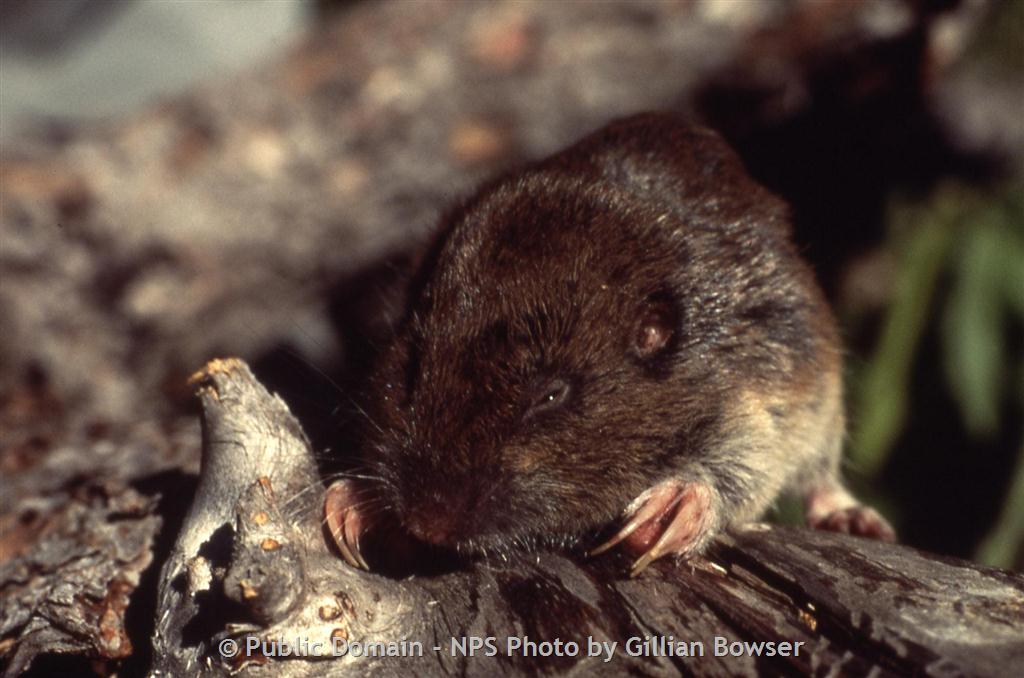
Northern Pocket Gopher, Thomomys talpoides. Courtesy NPS, Gillian Bowser, Photographer Northern Pocket Gopher
Thomomys talpoides
Courtesy NPS
Gillian Bowser, Photographer

Muscrat, Courtesy US FWS, Jessica Bolser, Photographer Muscrat
Courtesy US FWS
Jessica Bolser, Photographer

American Marten
Courtesy US NPS American Marten
Courtesy US NPS

We all love pleasant surprises! I especially enjoy nature’s offerings, both pleasant and less so. I wish to share a few from a very long list!

Snakes may be at the top. I believe we have an innate fear of this special reptile, which has imparted indelible memories. Great Basin gopher snakes have repeatedly shown an uncanny
ability to find birds nests in implausible locations, climbing seemingly impossible vertical walls to consume both bird eggs and young. Rarely, rattlesnakes have crossed my path, their buzz always putting me on full alert- a spine tingling surprise.

Moose may be second to snakes. I’ve been charged a few times and revisit nearly every step taken toward me by these grand beasts, my own steps in fast retreat. But it was a sandhill crane – young bull moose memory, where the crane won the day which lingers fresh. As the young bull curiously extending his tender muzzle toward the nesting bird, it elicited a sharp beak response from the nester that sent the youngster scurrying away.

Golden eagles are a favorite bird for their beauty, intelligence, and undisputed apex predator status. I was stunned to find they may not be top bird after all. On two occasions, I have witnessed a peregrine falcon unleashing its powers of blazing speed and agility to usher a golden eagle well away from the falcon’s eyrie.

I associate the Clark’s nutcracker as a keystone species for nut gathering and caching, while inadvertently feeding grizzlies, squirrels, and planting innumerable five needled pines. It rocked my socks when a flock of songbirds were attacking a Clarks who had stolen a baby bird from a nest for a midday snack. This activity forever changed its strictly nut-eating narrative. I’ve had at least a hundred bear encounters in Yellowstone, Tetons, and Denali national parks, all with favorable outcomes. But only once have I crossed paths with a mountain lion in my thousands of miles hiking wild, remote country. I can recount nearly every second of that rare moment. Lurking in the shadows on a beautiful fall day, I mistake the lion for a coyote. As I approached it from about 30 yards distance, it slowly moved revealing a very long tail. Mixed emotions surged while I talked gently, walking slowly in its direction as it gradually moved away. A spellbinding, euphoric moment.

Beaver encircling boat
I experienced two unforgettable occurrences while exploring Zion’s Hidden Canyon. Being midday, I wasn’t expecting anything beyond a rock squirrel. Then came an unusual hoot, definitely not that of a great horned owl. Answering its call, it flew toward me alighting in a large Douglas fir- a Mexican spotted owl- my first and only sighting. Soon after, two furry critters scrambled up a 10 foot boulder, ringtail cats! Mostly nocturnal, a very rare moment indeed!

I’ll conclude with several surprise animal attacks I’ve suffered- a pocket gopher nipped the soul of my boot, a muskrat attacked my hip-waders, and a pine martin chewed on my well protected toe. Finally, I’ve been strafed by various bird species protecting their nests and young. All leaving surprised chuckles from the victim.

Jack Greene for Bridgerland Audubon Society, Wild for more of Utah’s nature surprises!

Credits:

Images: Courtesy US FWS, USDA Forest Service and US NPS. All photographers acknowledged with images
Featured Audio: Courtesy & © Friend Weller, https://upr.org/
Bird Sounds Courtesy & Copyright Kevin Colver, https://wildstore.wildsanctuary.com/collections/special-collections
Text:     Jack Greene, Bridgerland Audubon, https://bridgerlandaudubon.org/
Additional Reading Links: Lyle Bingham

Additional Reading:

Wild About Utah Pieces by Jack Greene, https://wildaboututah.org/author/jack/

Outdoor Experiences in High-Def

First Look Used with permission Courtesy & Copyright Joseph Kozlowski
First Look
Used with permission
Courtesy & Copyright Joseph Kozlowski

The Whole Class with Binoculars Used with permission Courtesy & Copyright Joseph Kozlowski The Whole Class with Binoculars
Used with permission
Courtesy & Copyright Joseph Kozlowski

Finding a Dead Nuthatch Used with permission Courtesy & Copyright Joseph Kozlowski Finding a Dead Nuthatch
Used with permission
Courtesy & Copyright Joseph Kozlowski

A Pine Siskin Courtesy & Copyright Joseph Kozlowski A Pine Siskin
Courtesy & Copyright Joseph Kozlowski

A Crow Courtesy & Copyright Joseph Kozlowski A Crow
Courtesy & Copyright Joseph Kozlowski

Two Nests Courtesy & Copyright Joseph Kozlowski Two Nests
Courtesy & Copyright Joseph Kozlowski

A hot, sunny, May day was Christmas for my avid 2nd-grade birders, when 35 pairs of high-quality Vortex binoculars and chest harnesses were delivered to our Edith Bowen Laboratory School classroom. We had secured a grant from the Utah Division of Outdoor Recreation to purchase supplies to enrich our school’s outdoor education program, specifically my classroom’s integrated focus on birding. Kids cheered when the binos arrived, knowing that we’d be able to put these powerful tools to work in the field. They scrambled to set up the harnesses and prepare the equipment for use.

Although the adjacent Logan City Cemetery is one of our frequent birding locations, it was going to be our first outing where all students had their own set of binoculars to view the world in high definition. We left the school equipped with our new binoculars, and students were thrilled about the awaiting possibilities. Long before we arrived at the cemetery the binoculars were put to good use, “Everyone look!” a little girl yelled, “an American Crow!” The sighting stirred commotion as 25, 7-year-olds scrambled to get into position where they could see the large black bird with their binoculars, as it bounced around the USU sidewalks looking for morsels of college students’ neglected snacks. Then ensued a student debate over whether or not the bird of interest was an American Crow or a Common Raven; the victorious crow-supporters claimed victory only when the bird flew away, revealing a fan-shaped tail.

Once we arrived at the cemetery, it was clear students were experiencing this environment in an enriched way thanks to the binoculars. Students spent much more time in each location throughout the cemetery, and there was more advanced and technical dialogue between students about what they were seeing. Students would call each other over to their specific viewing area to show them a bird they had viewed, and they would describe to the person how to find it in their binoculars. This description facilitated incredible spatial language regarding the location and reference of the bird, such as “It is halfway up the largest pine tree on the right” or “Look on the ground next to smaller bush!” One exciting shared discovery was sparked by a high-pitched, upsweeping zreeeeeeeeeeet sound that the students kept hearing. Throughout the walk, students kept using their binoculars to look for the culprit of the sound, to no avail. Then near the end of the outing a student erupted in excitement, calling everyone over to see the bird making the noise. Eventually directing everyone’s focus on the bird, the students discovered a small, white and brown bird atop a sycamore tree, which they identified as a Pine Siskin due to the distinguishing yellow color on the wings.

Other special encounters on this outing included the finding of a dead, Red-Breasted Nuthatch aside the pathway, and the scientific reasoning about who could have been the engineers of two different bird nests found in the grass under trees –a large one with a mud base and a small one full of human hair!

Reluctantly, hot, sweaty, and ecstatic kids returned to school after their first ever birding outing with binoculars and experiences they’ll draw upon forever. No doubt, the binoculars that brought these students these magical discoveries will do so for many kids to come in the future.

This is Dr. Joseph Kozlowski, and I am Wild about Outdoor Education in Utah!

Credits:

Images: Courtesy & Copyright Joseph Kozlowski, Photographer, Used by Permission
Featured Audio: Courtesy & Copyright © Kevin Colver, https://wildstore.wildsanctuary.com/collections/special-collections/kevin-colver
Text:     Joseph Kozlowski, Edith Bowen Laboratory School, Utah State University https://edithbowen.usu.edu/
Additional Reading Links: Joseph Kozlowski

Additional Reading:

Joseph (Joey) Kozlowski’s pieces on Wild About Utah: https://wildaboututah.org/author/joseph-kowlowski/

Grants & Planning, Utah Outdoor Recreation, Utah Department of Natural Resources, https://recreation.utah.gov/utah-outdoor-recreation-grant/

Binoculars, Vortex Optics, https://vortexoptics.com/optics/binoculars.html

Grant assistance provided by Bridgerland Audubon Society: https://bridgerlandaudubon.org/about-us/grant-funded-projects/

YOU can inspire the next generation of birders, email seeking support for American Birding Association’s Young Birder mentoring program, June 12, 2024, https://api.neonemails.com/emails/content/N_INi5O3fy9qblwkA6KQ0BSTBplt7i-KGshPfQ0eZWg=