Ute Ladies’ Tresses – Utah Orchids

Ute Ladies' Tresses at the Mendon Meadow Preserve, Bear River Land Conservancy, Courtesy & © Mark Brunson, Photographer
Ute Ladies’ Tresses, Spiranthes diluvialis, at the Mendon Meadow Preserve
Bear River Land Conservancy
Courtesy & © Mark Brunson, Photographer

The Mendon Meadow Preserve, Bear River Land Conservancy Courtesy & © Mark Brunson, Photographer The Mendon Meadow Preserve
Bear River Land Conservancy
Courtesy & © Mark Brunson, Photographer

Bumblebee on Ute Ladies' Tresses at the Mendon Meadow Preserve, Bear River Land Conservancy Courtesy & © Mark Brunson, Photographer Bumblebee on Ute Ladies’ Tresses at the Mendon Meadow Preserve
Bear River Land Conservancy
Courtesy & © Mark Brunson, Photographer

It’s a warm summer evening on the west side of Cache Valley, where a small group of volunteers has gathered beside a green pasture. We hear the rattling bugle calls of sandhill cranes in the distance. A Swainson’s hawk scolds us as it circles overhead. As we walk into the field, our steps disturb dragonflies and leopard frogs. But we’re not here for the wildlife. We’re after something rarer: orchids!

Wait, what? Orchids? You mean those delicate tropical plants with colorful blossoms that city folks grow in humid greenhouses? Well, yes actually. It turns out that orchids grow on almost every type of land surface across the globe, including some in Utah.

The orchid we’re seeking has drawn the attention of the federal government. You see, while the orchid family has nearly 28,000 species worldwide, many of those are rare. The one we’re looking for, called Ute Ladies’-tresses, is on the federal Threatened Species list, which gives it legal protection from human impacts until it’s no longer at risk of disappearing.

In Cache County, Ute Ladies’-tresses are guarded by the Bear River Land Conservancy, a nonprofit whose mission is to protect open space and working farms and ranches in northern Utah. After orchids were found in a pasture near the small town of Mendon, the Conservancy received funding to purchase and manage the land in ways that could help the orchids to thrive, and to provide data to the U.S. Fish and Wildlife Service about how the population is doing.

That’s why we volunteers are gathered in a pasture on a Friday evening. Our job is to carefully walk the property, looking for blossoms. When one of us sees an orchid in bloom, we mark the spot with a bamboo plant stake. Then someone trails along behind them – usually that’s me – and records the location using a global positioning system. By taking these GPS measurements, we not only count how many plants have flowered that year, but we also map their locations to learn where we might be losing or gaining orchids over time.

Ute Ladies’-tresses has narrow leaves, hard to distinguish from the surrounding grasses and sedges and rushes. But then it sends up 1-5 flower stalks, up to a foot high. Each stalk has numerous small white flowers arranged in a graceful spiral. The plant likes to grow on solid ground that floods at some point in the year – a streambed that’s dry except during spring runoff, or a flood-irrigated pasture like the one in Mendon. At our site, the first flowers emerge around Pioneer Day, and new ones continue to appear till about Labor Day.

Monitoring this population since 2013, we’ve learned a lot about Ute Ladies’-tresses. One key finding is that flower numbers fluctuate widely from year to year. Our highest count was nearly 2,000 flowering specimens in 2017. But in the very dry summer of 2021, we counted fewer than 30. That year was scary if you’re trying to protect a rare plant, But these orchids live for several years, flowering only when conditions are right, and last year we found more than 1,400.

You see, even if a plant is rare, that doesn’t have to mean it’s fragile. Some rare plants are, to be sure, but Ute Ladies’-tresses is resilient. In fact, last fall the Fish and Wildlife Service proposed removing the species from the Threatened list. One reason they feel they can do so is the continued protection it gets from groups like Bear River Land Conservancy. And so I look forward to many more August evenings in a Mendon meadow, sharing time with this lovely orchid.

I’m Mark Brunson, and I’m wild about Utah’s rare plants.

Credits:

Images Courtesy & Copyright Mark Brunson, Photographer
Featured Audio: Courtesy & © Kevin Colver, https://wildstore.wildsanctuary.com/collections/special-collections and J. Chase and K.W. Baldwin. https://upr.org/
Text: Mark Brunson,
Additional Reading: Lyle Bingham, https://bridgerlandaudubon.org/

Additional Reading

Wild About Utah pieces authored by Mark Brunson

Ute Ladies’ Tresses in Wet Pasture, Bear River Land Conservancy, https://www.bearriverlandconservancy.org/mendon-meadows

Ute Ladies’ Tresses, Utah Species, Fieldguide, Utah Division of Wildlife Resources, State of Utah, https://fieldguide.wildlife.utah.gov/?species=spiranthes%20diluvialis

Species Profile for Ute ladies’-tresses (Spiranthes diluvialis), US Fish & Wildlife Service, https://ecos.fws.gov/ecp/species/2159

Delmatier, Charmaine, Ute Lady’s Tresses (Spiranthes diluvialis), Plant of the Week, USDA Forest Service, 2016, US Department of Agriculture(USDA), https://www.fs.usda.gov/wildflowers/plant-of-the-week/spiranthes_diluvialis.shtml

St. John, Loren, Ogle, Dan, USDA NRCS, Ute Lady’s Tresses Spiranthes diluvialis Sheviak, Natural Resources Conservation Service, US Department of Agriculture(USDA), https://plants.usda.gov/DocumentLibrary/plantguide/pdf/pg_spdi6.pdf
Galloping Thru Time

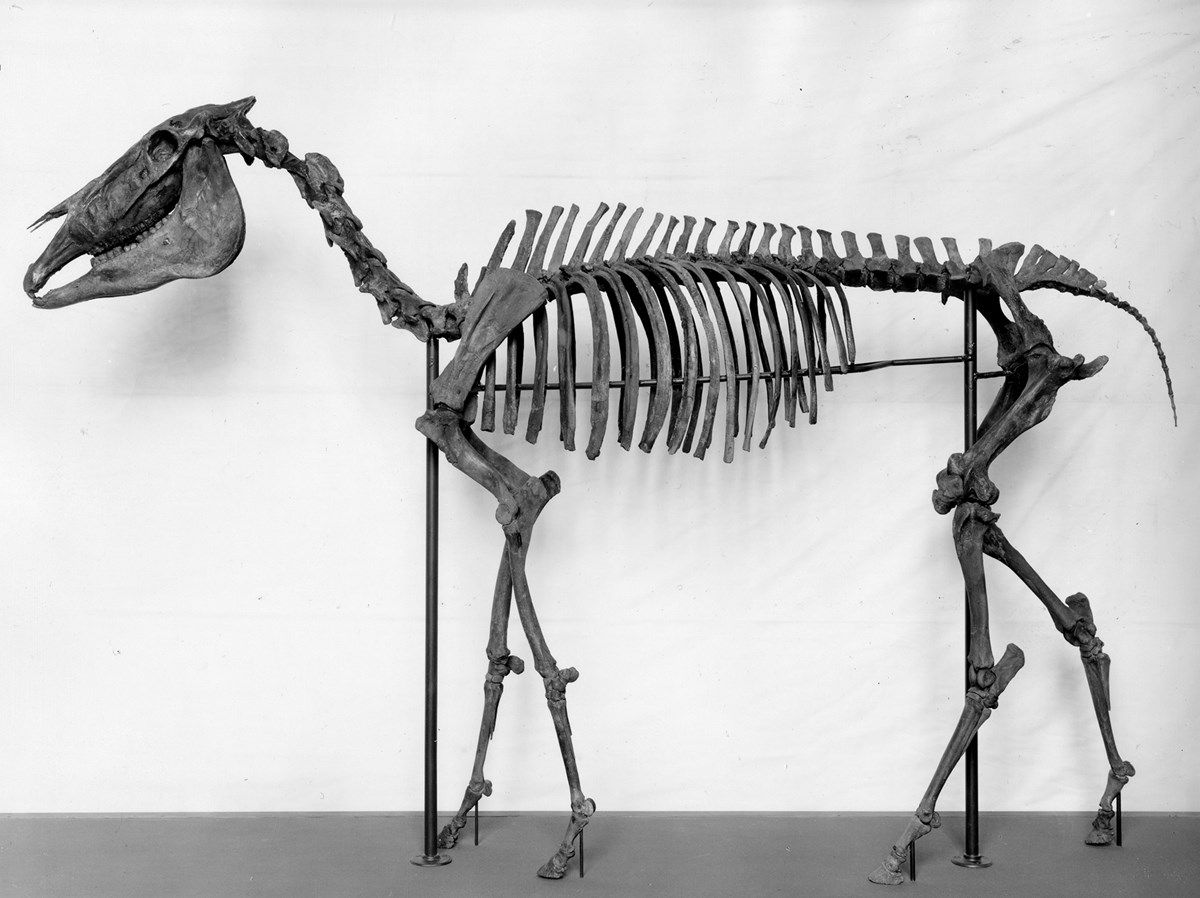
Gallop Thru Time: The Hagerman Horse (Equus simplicidens), Hagerman Fossil Beds National Monument, Courtesy US NPS
The Hagerman Horse (Equus simplicidens), Hagerman Fossil Beds National Monument, Courtesy US NPS

Elmer Cook Recognition Plaque Hagerman Fossil Bed National Monument Courtesy & © Mary Heers, Photographer Elmer Cook Recognition Plaque
Hagerman Fossil Bed National Monument
Courtesy & © Mary Heers, Photographer

Mary Heers' Selfie with the Hagerman Horse Hagerman Fossil Bed National Monument Courtesy & © Mary Heers, Photographer Mary Heers’ Selfie with the Hagerman Horse
Hagerman Fossil Bed National Monument
Courtesy & © Mary Heers, Photographer

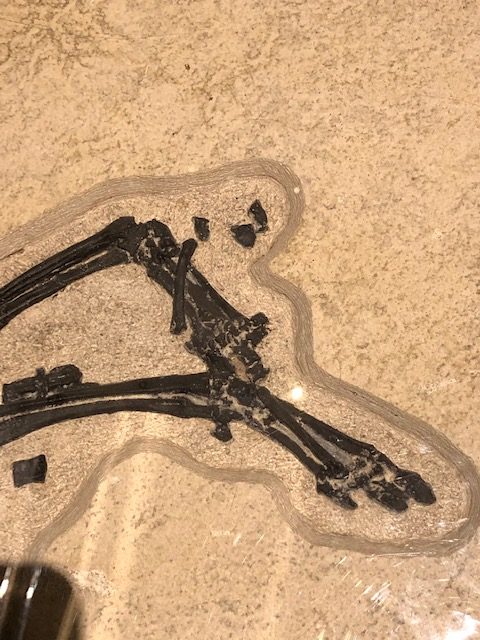
Three Toes on the Kemmerer Horse Utah Museum of Natural History Courtesy & © Mary Heers, Photographer Three Toes on the Kemmerer Horse
Utah Museum of Natural History
Courtesy & © Mary Heers, Photographer

Metacarpal Toe, Hoof Hagerman Horse Equus simplicidens Hagerman Fossil Bed National Monument Courtesy & © Mary Heers, Photographer Metacarpal Toe, Hoof Hagerman Horse
Equus simplicidens
Hagerman Fossil Bed National Monument
Courtesy & © Mary Heers, Photographer

Metacarpal Toe, Hoof Domestic Horse Equus ferus caballus Hagerman Fossil Bed National Monument Courtesy & © Mary Heers, Photographer Metacarpal Toe, Hoof Domestic Horse
Equus ferus caballus
Hagerman Fossil Bed National Monument
Courtesy & © Mary Heers, Photographer

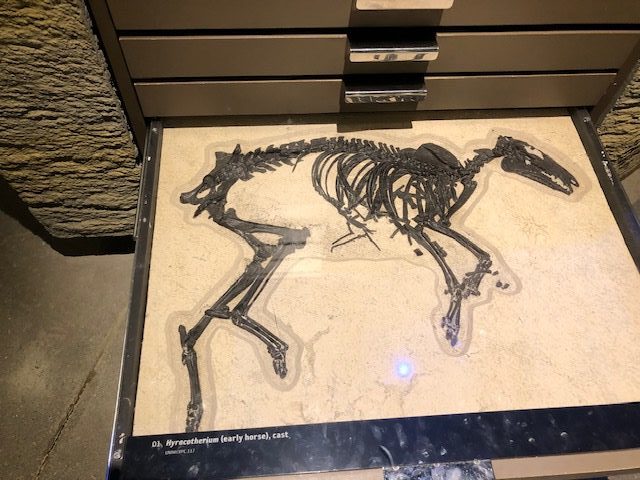
Cast of Kemmerer Early Horse Utah Museum of Natural History Courtesy & © Mary Heers, Photographer Cast of Kemmerer Early Horse
Utah Museum of Natural History
Courtesy & © Mary Heers, Photographer

In 1928 Elmer Cook, a rancher in Hagerman, Idaho, noticed an interesting bone sticking our of the hillside on his land overlooking the Snake River. Intrigued, he started to dig around and discovered it was a fossilized bone and there were plenty more like it. Elmer alerted the National Smithsonian Museum, who sent out a team. This team determined the bones were ancestors of the modern horse. They were 3½ million years old. In the end, after digging into the hillside for 2 years, they took over 200 fossils, including 12 complete horse skeletons, back to Washington D.C.

My own fascination with horse fossils actually began a few years ago when I was giving tours at the Utah Museum of Natural History in Salt Lake City. A fossil hunter near Kemmerer, Wyoming, had been quite surprised to find a small mammal while digging through layers of fossilized fish in an ancient seabed. This skeleton is now also in the Smithsonian Museum in D.C., but the Utah museum owns a copy.

When giving tours, I always paused my group as we entered the dinosaur floor. “I’m going to pull a whole horse out of here,” I’d say as I pulled a sliding drawer out of a chest with a flourish.

It was a fully grown horse about the size of a small dog – 24 inches long and 20 inches high.

It was over 50 million years old. In that time, the Intermountain West was a lush, swampy place. Fierce predators like the Utah Raptor roamed the land, and the mammals that survived were small and stayed hidden in the dense forested undergrowth.

Over the next 50 million years, the dinosaurs went extinct and the terrain dried out The Hagerman Horse (dating back 3 ½ million years ) stood about 4 ½ feet high. Most notably, it now stood on four hooves. The 3 toes on the Kemmerer Horse had evolved into a single dominant toe, perfectly adapted to running away from predators over dry terrain.

Unfortunately, this remarkable adaptation was not enough to save the horse. The horse went extinct in the Americas (along with other large mammals like the mammoth and giant sloth) about 10,000 years ago. It was the Spanish Conquistadors that reintroduced the horse to North America. When Hernan Cortez and his 200 soldiers landed in Mexico in 1519, they brought 16 horses with them. Over time, some of these horses got away to form wild bands, and others fell into the hands of the Native Americans.

This summer I made a small archeological pilgrimage into Idaho, to see the Hagerman Fossil Beds, now a National Monument. In the newly opened visitor center I found a life size replica of the Hagerman Horse. As I stood next to it, admiring its shapely hoof, I remembered one more remarkable fact about the horse. The bows now used to play violins are made from horse hair It takes 5 horse tails to make a violin bow. To this day, absolutely nothing has been found that makes the strings of a violin sing as sweetly.

This is Mary Heers and I am Wild About Utah.

Credits:
Photos: Courtesy & Copyright © Mary Heers
Photos: Courtesy
Featured Audio: Courtesy & Copyright © Kevin Colver, https://wildstore.wildsanctuary.com/collections/special-collections/kevin-colver
Text: Mary Heers, https://cca.usu.edu/files/awards/art-and-mary-heers-citation.pdf
Additional Reading: Lyle Bingham, https://bridgerlandaudubon.org/

Additional Reading

Wild About Utah, Mary Heers’ Wild About Utah Postings

Hagerman Fossil Beds National Monument, History, National Parks Service, US Department of the Interior, https://npshistory.com/publications/hafo/index.htm

The Hagerman Horse (Equus simplicidens), Hagerman Fossil Beds National Monument, National Parks Service, US Department of the Interior, https://www.nps.gov/articles/000/equus_simplicidens.htm

Hagerman Fossil Beds, National Parks Service, US Department of the Interior, https://www.nps.gov/hafo/index.htm

The Horse (Exhibit), Natural History Museum of Utah, July 21, 2014 – January 4, 2015, https://nhmu.utah.edu/horse#:~:text=The%20Natural%20History%20Museum%20of,and%20spiritual%20connections%20with%20them.
Natural History Museum of Utah,https://nhmu.utah.edu/

Fossil Horse Quarry Near Hagerman, Idaho, Worked by National Museum, Smithsonian Libraries and Archives, The Smithsonian Institution, https://www.si.edu/object/fossil-horse-quarry-near-hagerman-idaho-worked-national-museum:siris_arc_367758

Plesippus shoshonensis Gidley, 1930, National Museum of Natural History, The Smithsonian Institution, https://www.si.edu/object/plesippus-shoshonensis-gidley-1930:nmnhpaleobiology_3590445


Utah’s Bats

Townsend's big-eared bat
Courtesy US National Park Service
Townsend’s big-eared bat
Courtesy US National Park Service
The secret service takes to the sky as we paddle our canoe into a full moonlit Bear River. Our magic sonagram device collects hidden sounds of myriad bats, as they devour tens of thousands of insects. We’re floating through Wuda Ogwa, the Bear River Massacre site now owned by the NW band of the Shoshone Nation, the original owners, who lost it to Euromerican western expansion. A grant funded project being conducted by USU faculty and students, we recorded a remarkable number of species, perhaps influenced by the hot springs cave, that served as wintering grounds for the Shoshone people. There were marked differences in bat species associated with types of riverside vegetation, part of which was the invasive Russian olive.

Utah is home to eighteen species of bats found throughout the state which roost in a variety of habitats including caves, mines, hollow trees, leafy plants, rock cliffs, and buildings. The big free-tailed is the largest in Utah with a wingspan of 17 inches weighing less than an oz. The smallest bat, the western pipistrelle, is the size of a hummingbird and weighs 1/10 oz.

Most Utah bat species are year-round residents hibernating during the winter. Some species migrate south and remain active all year while migrating species breed in the spring. Hibernating bats usually breed in the fall. In the late spring, female bats gather in large nursery colonies where their young, called pups, are born in May or June.

Bats have “slow” life history and are constrained by tight energy budgets. Energetics has emerged as a driver of extinction risk among North American bats. Some of the most wide-ranging species are now on an accelerated trajectory toward extinction as a result of disease and wind energy production. Climate change is also likely to impact many bat species with broad ranges. Urbanization and other kinds of habitat-fragmenting land use changes are also thought to be altering species distribution patterns.

Bats offer many ecosystem benefits. Some subtropic species pollinate plants, many serve as prey to other animals, and cave communities benefit from bat guano which provides nutrients.

Bats benefit humans by eating up to 100 percent of their body weight in insects each night (1000 insects/hour), providing over $3.7 billion worth of pest control each year in the U.S. and reducing the need for pesticides. Their membrane wings and echolocation have inspired technological advances in engineering. The wingsuits used by basejumpers take more than a few cues from bats’ aerodynamic bodies. Utah law protects all bat species. Additional federal protection is extended to species on the Endangered Species List.

Given many gifts bats provide for humans numerous ecosystem services, we can reciprocate by reducing outdoor lighting which disrupts their natural behaviors, avoid disturbing them, especially if they are hibernating, building a bat house, and participating in Bat Week which occurs the last week of October. It’s a time to celebrate and learn about our Utah bats!

Jack Greene for Bridgerland Audubon Society and I’m Wild About Utah bats!

Credits:

Images: Courtesy US FWS, USDA Forest Service and US NPS. All photographers acknowledged with images
Featured Audio: Courtesy & © Friend Weller, https://upr.org/
Text:     Jack Greene, Bridgerland Audubon, https://bridgerlandaudubon.org/
Additional Reading Links: Jack Greene & Lyle Bingham, https://bridgerlandaudubon.org/

Additional Reading:

Wild About Utah Pieces by Jack Greene, https://wildaboututah.org/author/jack/

Strand, Holly, Bats and Echolocation, Wild About Utah, May 13, 2010, https://wildaboututah.org/bats-and-echolocation/

Bunkley, Jessie, Bat Netting at Antelope Island State Park, Wild About Utah, July 11, 2016, https://wildaboututah.org/bat-netting-at-antelope-island-state-park/

Bats, Wild Aware Utah, https://www.wildawareutah.org/wildlife/bats/

Thomas J. Rodhouse, Thomas E. Philippi, William B. Monahan, Kevin T. Castle, A macroecological perspective on strategic bat conservation in the U.S. National Park Service, Ecosphere, ESA, https://esajournals.onlinelibrary.wiley.com/doi/full/10.1002/ecs2.1576

Animal Fact Sheet: Western pipistrelle bat, Arizona-Sonora Desert Museum, https://www.desertmuseum.org/kids/bats/western_pipistrelle.php

Discover the Secret Lives of Bats, National Park Service, https://www.nps.gov/subjects/bats/index.htm

Bat Species in Parks, National Park Service, https://www.nps.gov/subjects/bats/bat-species-in-parks.htm

16 Incredible Pictures Show the Beauty of Bats, National Geographic, https://www.nationalgeographic.com/animals/article/incredible-photos-bat-appreciation-day

Utah’s 18 Bats, Utah Species, Fieldguide.Wildlife.Utah.gov, Utah Division of Wildlife Resources, https://fieldguide.wildlife.utah.gov/?order=chiroptera

  1. Big Free-tailed Bat – Nyctinomops macrotis, https://fieldguide.wildlife.utah.gov/?species=nyctinomops%20macrotis
  2. Brazilian Free-tailed Bat – Tadarida brasiliensis, https://fieldguide.wildlife.utah.gov/?species=tadarida%20brasiliensis
  3. Allen’s Big-eared Bat – Idionycteris phyllotis, https://fieldguide.wildlife.utah.gov/?species=idionycteris%20phyllotis
  4. Big Brown Bat – Eptesicus fuscus, https://fieldguide.wildlife.utah.gov/?species=eptesicus%20fuscus
  5. California Myotis – Myotis californicus, https://fieldguide.wildlife.utah.gov/?species=myotis%20californicus
  6. Canyon Bat – Parastrellus hesperus, https://fieldguide.wildlife.utah.gov/?species=parastrellus%20hesperus
  7. Fringed Myotis – Myotis thysanodes, https://fieldguide.wildlife.utah.gov/?species=myotis%20thysanodes
  8. Hoary Bat – Lasiurus cinereus, https://fieldguide.wildlife.utah.gov/?species=lasiurus%20cinereus
  9. Little Brown Myotis a.k.a. Little Brown Bat – Myotis lucifugus, https://fieldguide.wildlife.utah.gov/?species=myotis%20lucifugus
  10. Long-eared Myotis – Myotis evotis, https://fieldguide.wildlife.utah.gov/?species=myotis%20evotis
  11. Long-legged Myotis – Myotis volans, https://fieldguide.wildlife.utah.gov/?species=myotis%20volans
  12. Pallid Bat – Antrozous pallidus, https://fieldguide.wildlife.utah.gov/?species=antrozous%20pallidus
  13. Silver-haired Bat – Lasionycteris noctivagans, https://fieldguide.wildlife.utah.gov/?species=lasionycteris%20noctivagans
  14. Spotted Bat – Euderma maculatum, https://fieldguide.wildlife.utah.gov/?species=euderma%20maculatum
  15. Townsend’s Big-eared Bat – Corynorhinus townsendii, https://fieldguide.wildlife.utah.gov/?species=corynorhinus%20townsendii
  16. Western Red Bat – Lasiurus blossevillii, https://fieldguide.wildlife.utah.gov/?species=lasiurus%20blossevillii
  17. Western Small-footed Myotis – Myotis ciliolabrum, https://fieldguide.wildlife.utah.gov/?species=myotis%20ciliolabrum
  18. Yuma Myotis – Myotis yumanensis, https://fieldguide.wildlife.utah.gov/?species=myotis%20yumanensis

White-nose syndrome: a disease of bats, Wildlife Blog, Utah Division of Wildlife Resources, https://wildlife.utah.gov/news/wildlife-blog/724-white-nose-syndrome-a-disease-of-bats.html

Building nurseries for big-eared bats, Wildlife Blog, Utah Division of Wildlife Resources, https://wildlife.utah.gov/news/wildlife-blog/707-building-nurseries-for-big-eared-bats.html

Rush, Claire, It’s almost Halloween. That means it’s time for a bat beauty contest, The Associated Press, October 26, 2024, https://apnews.com/article/bat-beauty-contest-bureau-of-land-management-6fb06024c8063903c73da3eaae2449a1

Mountain Goats in Northern Utah?

Mountain goats in northern Utah?  Mountain Goats, Mount Timpanogos Wilderness Area, Courtesy & Copyright Eric Newell, Photographer
Mountain Goats
Mount Timpanogos Wilderness Area
Courtesy & Copyright Eric Newell, Photographer
Mid-September, 2016, while rambling in a seldom-traveled area of the Mount Naomi Wilderness, my son Nate asked, “Dad, what’s the coolest animal you’ve ever seen in the Bear River Mountains?”

“Oh, all the regular creatures you’d expect,” I said. “Deer, elk, moose, coyotes, porcupines, lots of cat tracks, and a couple of badgers.”

We took a few more steps and I glanced at the cliff bands above. Atop a limestone crag was the unmistakable massive shoulders and white wool of a Rocky Mountain goat.

“Uhhhh,” I stammered and pointed, “THAT is actually the coolest animal I’ve ever seen in the Bear River Range.”

We laughed at the timing as the goat nonchalantly climbed out of sight.

The previous spring I spotted a mountain goat on a rock outcrop on the south side of Highway 89, not far from Brigham City. It was absolutely a mountain goat—Oreamnos Americanus. If there was a mountain goat in Box Elder Canyon, then they certainly must be in the Wellsvilles. It is logical that Willard Peak goats would move north.

But this goat in the heart of the Bear River Range was perplexing. Where had it come from? Had it wandered south from Star Valley or worked its’ way northeast from Willard Peak? Either way is a lot of ground to cover where a mountain goat would be vulnerable to predators.

Mountain goats thrive in the highest and harshest alpine environments. They have a two-layer coat—hollow, longer strands of polar-bear-like hair that grow up to 8 inches long and dense wool beneath. They can subsist on moss and lichen. Specialized hooves enable them to climb places predators can’t follow. Their best defense is their climbing skills. Cliffs provide safety, but that comes with a caveat—the leading causes of death of mountain goats are avalanches, rock fall, and, well, falling.

When I returned home that day, I called the Utah Division of Wildlife Resources (UDWR) and asked a slew of questions. The previous year there had been several sightings of a solitary mountain goat near Cinnamon Creek, then in Logan Canyon, and then our sighting further north. There were also sightings in the Wellsvilles. In the years since, several reports trickled in of mountain goats on Cherry Peak. Last spring, a goat carcass was found up Blacksmith Fork Canyon in an avalanche run-out zone.

Mountain Goat Looking Over the Cliff Edge
Courtesy & Copyright, Eric Newell, Photographer
Mountain Goat Looking Over the Cliff Edge
Courtesy & Copyright, Eric Newell, Photographer

In 1967 six Rocky Mountain goats were transplanted from Olympic National Park to the Lone Peak Wilderness. Since then another 270 were released in various other locations. Utah goat populations peaked in 2011 around 2,100 animals. Interestingly, the Willard Peak herd has declined from around 200 to about 30 goats.

The 2018 Utah DWR Management Plan states:

“A number of records exist that document the historical presence of mountain goats in Utah prior to reintroduction…. However, there are not as many documented records as with some other wildlife native to Utah, which has led to some controversy about their native status…. They are certainly native to the Northern Rocky Mountains and neighboring states to Utah. UDWR’s position is that mountain goat habitat exists in Utah and that mountain goats are a valuable part of our wildlife resource diversity and are a legitimate part of our modern Utah faunal landscape.”

The Bridgerland Audubon Society’s stance is that mountain goats are a non-native species that may damage endemic plants. Fellow Wild About Utah contributor Jack Green, wrote a 2020 opinion piece opposing the introduction of Oreamnos Americanus in the Bear River Mountains and suggested focusing on restoring bighorn sheep populations instead.

One complication is that bighorns are more susceptible to disease from established domesticated sheep herds than mountain goats are. And for perspective, domestic sheep grazing has far greater impacts on habitat than a small herd of mountain goats ever will.

The Utah DWR has no plans to “introduce” goats into the vicinity because they are already here. Biologists are conducting surveys to understand the impacts goats have on endemic plant species to inform management decisions.

No matter how it all shakes out for the few solitary mountain goats that have worked their way into northern Utah, it is a thrill to watch these impressive climbers roam the wildest and craggiest portions of the mountains—with blasé confidence.

I am Eric Newell, and I am Wild About Utah.

Credits:
Images: Courtesy & Copyright Eric Newell
Featured Audio: Courtesy & Copyright Friend Weller, Retired Engineer, Utah Public Radio, https://www.upr.org/people/friend-weller
Text: Eric Newell, Edith Bowen Laboratory School, Utah State University
Additional Reading: Eric Newell & Lyle Bingham, Bridgerland Audubon

Additional Reading

WildAboutUtah pieces by Eric Newell, https://wildaboututah.org/author/eric-newell/

Bridgerland Audubon Society, Rocky Mountain Goats in the Bear River Range, https://bridgerlandaudubon.org/our-projects/advocacy/mountain-goats-in-the-bear-river-range/

Chadwick, Douglas, A Beast the Color of Winter, Sierra Club Books, 1983, https://www.amazon.com/Beast-Color-Winter-Mountain-Observed/dp/0803264216/

Chadwick, Douglas, Darling Guardians of the Heights, National Geographic, Vol. 154, NO. 2, August, 1978 Available with subscription through https://archive.nationalgeographic.com/

Green, Jack, Locals Can Still Halt Harmful Mount Goat Introduction, Herald Journal, July 24, 2020 https://www.hjnews.com/opinion/columns/soapbox-locals-can-still-halt-harmful-mountain-goat-introduction/article_e85f7536-5201-55d7-b766-f089eb57d7ed.html

Utah Division of Wildlife Resources, Utah Mountain Goat State Management Plan, https://wildlife.utah.gov/pdf/bg/mtn_goat_plan.pdf

Utah Division of Wildlife Resources, Where to See Mountain Goats in Utah this Spring, https://wildlife.utah.gov/news/utah-wildlife-news/1384-where-to-see-mountain-goats-this-spring.html