I’m a Beaver Believer

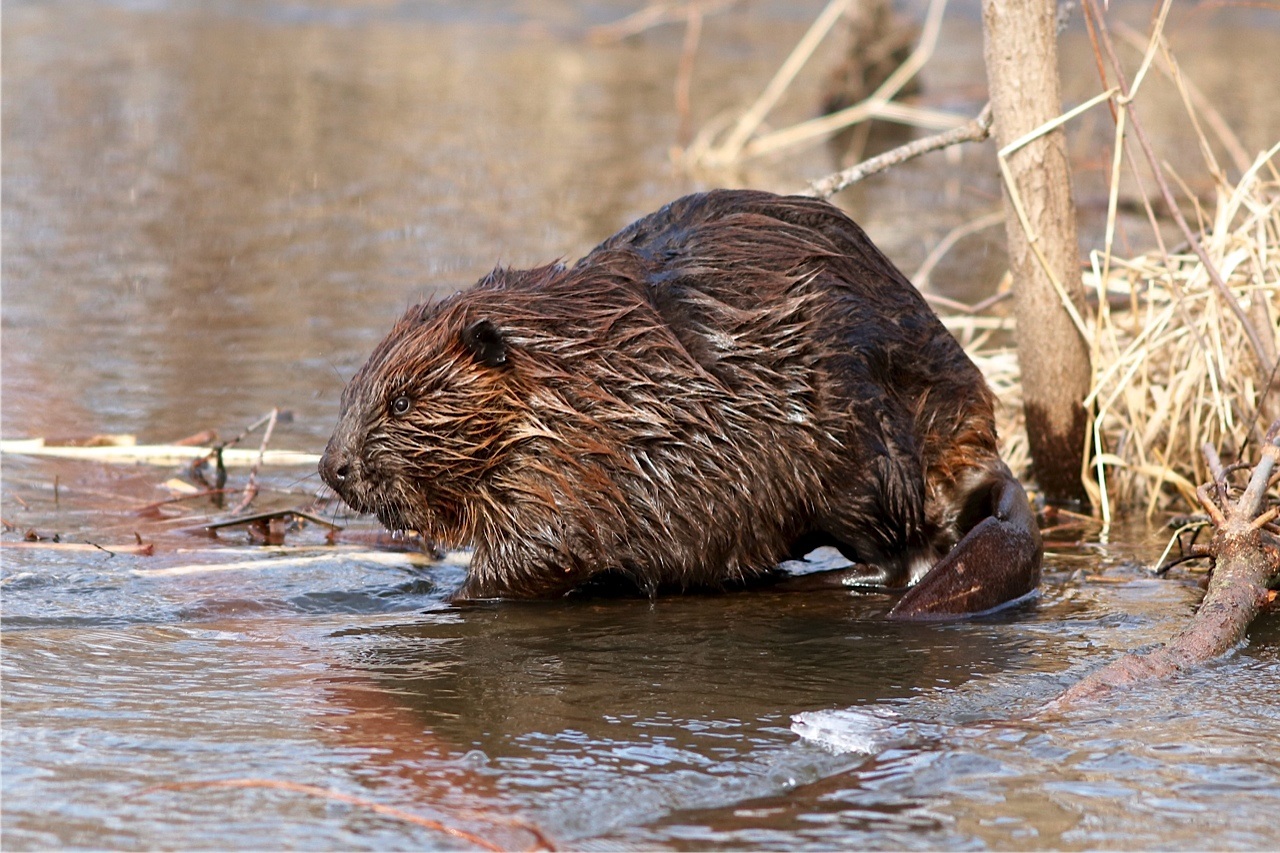
I'm a Beaver Believer: North American Beaver (Castor canadensis) Courtesy US FWS, Larry Palmer, Photographer
North American Beaver (Castor canadensis)
Courtesy US FWS, Larry Palmer, Photographer

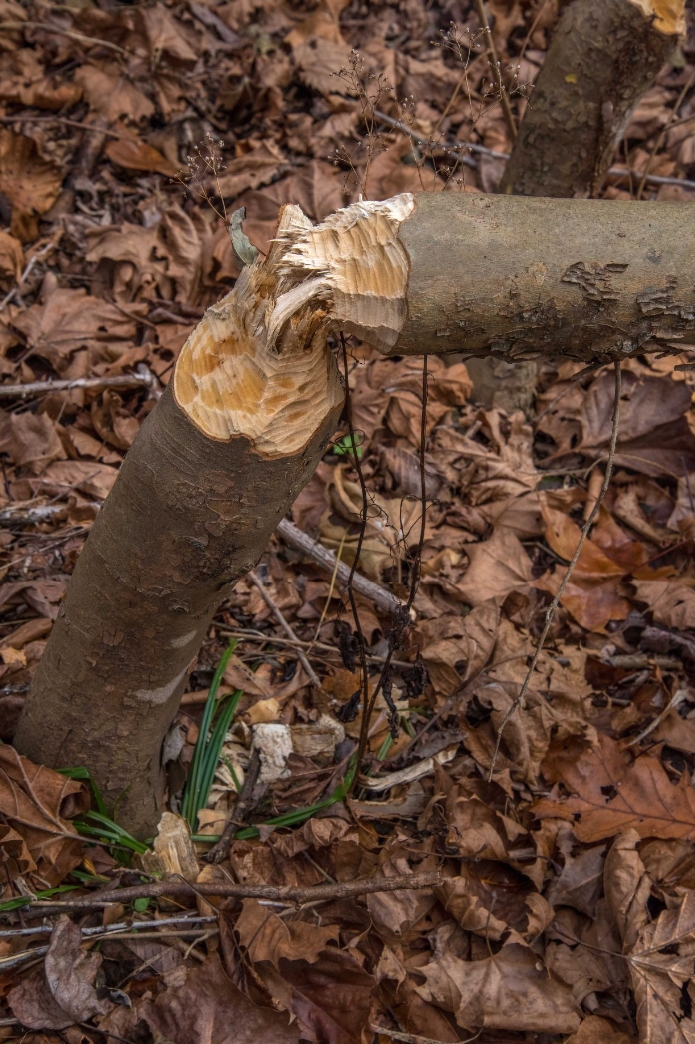
Beaver-Chewed Tree Courtesy US FWS, Brett Billings, Photographer Beaver-Chewed Tree
Courtesy US FWS, Brett Billings, Photographer

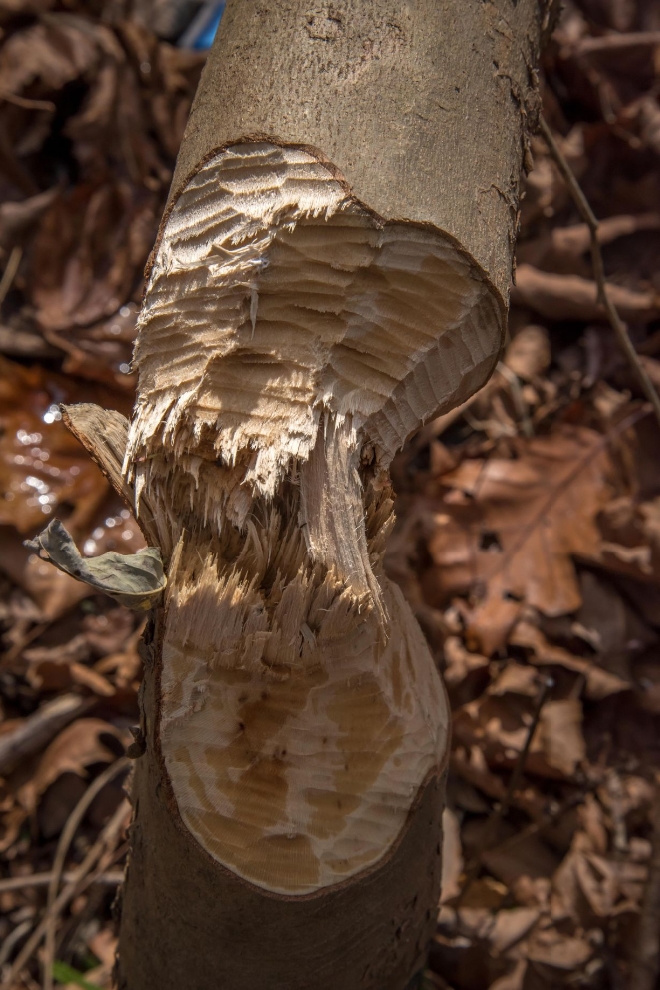
Beaver-Chewed Tree Courtesy US FWS, Brett Billings, Photographer Beaver-Chewed Tree
Courtesy US FWS, Brett Billings, Photographer

I’m a beaver believer. These remarkable rodents are a critical part of the ecosystem, a keystone species. The beaver’s role in creating wildlife and fisheries habitat, filtering and cooling water, and adding new water storage capacity, is essential for our prolonged drought in a warming climate.
When I had a neighbor call a few weeks ago to report he thought a beaver might be cutting down his aspen trees. I was in disbelief. Right here in our little city of Smithfield no less! John invited me over to confirm his suspicions.

After inspecting the tree stumps, teeth marks were undoubtedly those of beaver. We discussed on how to address the situation. John had lost several thousand dollars-worth of trees, and was quite desperate to remediate the situation. I suggested reporting the rogue beaver to animal control or UDWR. Perhaps they could live trap and transport the animal to a more favorable location, while dreading the possibility of having to destroy my iconic, heroic mammal friend. In the interim, I suggested he use chicken wire to save what remained. Another personal conflict arose from my position as Smithfield Tree Committee chair. I was fully aware of the many values urban forests offer to our local environment and quality of life. It was my mission to protect our trees.

I inquired as to where the beaver was setting up shop. There must be a tangle of aspen leavings nearby. John hadn’t noticed any. I began searching the stream to find the missing trees, never expecting to see a beaver. Not more than 20 yards upstream from his property boundary, there it was. I quickly took a picture before it slid into the water disappearing beneath the ice.

I returned to my neighbor who was busy installing chicken wire around his remaining aspen. He too was not wishing to exterminate the animal, but there were homes with aspen, willow, and cottonwood both up and downstream from our location, a veritable feast for this wanderer. I mentioned that I had some acquaintances at USU who worked with beaver reintroduction, and may offer some solutions as well.

Given its small size and unexpected location, this was most likely a two-year-old juvenile who had been forced from its family, similar to how we gently nudge our young adults out the door. I was well acquainted with our mountain landscape and quite certain this beaver had traveled a distance of many miles to end up in Smithfield.

After consulting my USU friends, it did not bode well for poor beaver. To catch and release this animal during the winter offered little hope for its survival. Further, it would not fare well in several months of captivity, being alone in a high stress environment.

I’m now waiting to hear from my neighbor for the rest of the story. May it be favorable for this remarkable aquatic mammal, so essential for creating healthy watersheds, which equals abundant, high quality water!

Jack Greene for Bridgerland Audubon, and I’m wild about Utah’s wild beaver!

Credits:
Picture: Courtesy US FWS, Larry Palmer & Brett Billings, Photographers https://images.fws.gov/
Audio: Courtesy & © Friend Weller, https://npr.org/
Text: Jack Greene, Bridgerland Audubon, https://bridgerlandaudubon.org/
Additional Reading: Lyle W Bingham, Webmaster, and Jack Greene, Author, Bridgerland Audubon, https://bridgerlandaudubon.org/

Additional Reading:

Jack Greene’s Postings on Wild About Utah, https://wildaboututah.org/author/jack/

Bingham, Lyle, Welcoming Rodent Engineers, Wild About Utah, February 7, 2022, https://wildaboututah.org/welcoming-rodent-engineers/

Heers, Mary, Beaver Tail Slap, Wild About Utah, October 12, 2020, https://wildaboututah.org/beaver-tail-slap/

Heers, Mary, Birch Creek Beaver Restoration, Wild About Utah, June 20, 2022, https://wildaboututah.org/birch-creek-beaver-restoration/

Hellstern, Ron, Leave it to Beaver, Wild About Utah, July 30, 2018, https://wildaboututah.org/leave-it-to-beaver/

Leavitt, Shauna, Beaver–Helping Keep Water on Drying Lands, Wild About Utah, April 17, 2017, https://wildaboututah.org/the-beaver-helping-keep-water-on-drying-lands/

Leavitt, Shauna, Beaver in Utah’s Desert Rivers, Wild About Utah, July 6, 2020, https://wildaboututah.org/beaver-in-utahs-desert-rivers/

Leavitt, Shauna, Proposed Beaver Holding Facility in Millville, Utah, Wild About Utah, September 3, 2018, https://wildaboututah.org/proposed-beaver-holding-facility-in-millville-utah/

Leavitt, Shauna, Sixty In-stream Habitat Structures in Four Days: Demonstrating Creek Restoration Techniques, Wild About Utah, December 18, 2017, https://wildaboututah.org/sixty-instream-habitat-structures-in-four-days-demonstrating-creek-restoration-techniques/

Strand, Holly, Beavers: The Original Army Corps of Engineers, Wild About Utah, April 29, 2010, https://wildaboututah.org/beavers-the-original-army-corps-of-engineers/

Goldfarb, Ben, Eager: The Surprising, Secret Life of Beavers and Why They Matter, Chelsea Green Publishing, March 8, 2019, https://www.amazon.com/Eager-Surprising-Secret-Beavers-Matter/dp/1603589082/ref=asc_df_1603589082/

Lee, David, Practiced in the art of deception, Wildlife Blog, Utah Division of Wildlife Resources, November 10, 2016, https://wildlife.utah.gov/news/wildlife-blog/683-practiced-in-the-art-of-deception.html

Intelligent Tree Squirrels

Intelligent Squirrels: Squirrel Courtesy Pixabay
Squirrel
Courtesy Pixabay
Primates of the northlands. I consider tree squirrels to be on par with many primates for intelligence and agility. Those who have bird feeders may agree with me as they vainly attempt to thwart squirrel’s from invading their feeders. We have red squirrels visiting our bird feeder regularly. I’ve outsmarted them for the moment, but they continue to work on the problem I’ve presented them and feel a failure coming my way!

I’ve watched red squirrels manipulate fir cones with their front paws with amazing dexterity. Like myself eating a cob of corn, it spun the cone rapidly while shredding the cone scales to access the seed. Their tiny toes grip the cone identically to my fingers gripping the cob of corn. I’m amazed how they can unerringly navigate their way from tree to tree through our forest. There are many examples of squirrel intelligence witnessed by animal behaviorists.

Arboreal squirrels often build dreys that look like bird nests. Dreys are made up of twigs , moss, feathers and grass. All the items surrounding the dreys provide support and insulation. Chimpanzees exhibit very similar behavior.

Squirrels make use of several vocalizations to communicate with each other, they also create scents to attract opposite sex or communicate. They can create signals with their tails as well, by twitching it to alert other squirrels on the presence of a potential danger.

Tree squirrels display fantastically acrobatic movements, phenomenal adaptability to urban environments, and possess very cute little faces to boot. The 7th International Colloquium on Arboreal Squirrels was held 2018 in Helsinki, Finland. Studies routinely come discover new, amazing behaviors, especially involving the squirrel’s signature behavior, that it buries caches of its food to access later. One experiment found that they’ll try multiple tactics to open a locked box. Another found that squirrels remember the location of their caches without using their keen noses to locate them. Another found that they’re able to quickly learn from their peers.

A 2010 study found that squirrels actually engage in deceptive, or paranoid, behavior. When squirrels are being watched, they’ll construct fake caches, pretending to bury a nut by digging a hole, patting it down with their front teeth, and scraping dirt or grass over the top of it while concealing the nut in a pocket near their armpit, and will make the real cache somewhere else. Even while watching, it can be difficult to tell when a squirrel is making a fake or a real cache. How smart is that?

A study was conducted at UC Berkley in which students were placed in a competitive game to act like squirrels. They hid caches of plastic eggs, and then 15 minutes later returned to find them. This is a very squirrel-like test: memory, deception, location, observation, paranoia. Most students couldn’t remember their own hiding places. Squirrels bury about 10,000 nuts per year, making many different caches, and may not uncover them for months. They may dig up a cache and bury it somewhere else, and do that up to five times. Squirrels, unlike UC Berkeley students, are engaged in this intellectually draining activity while also avoiding predators and braving the elements.

This is Jack Greene for Bridgerland Audubon. I’m Wild About Utah and its amazing squirrels!

Credits:

Picture: Courtesy Pixabay, Alexas Fotos, Photographer, https://pixabay.com/photos/squirrel-rodent-animal-cute-nature-5158715/
Audio: Courtesy UPR
Text: Jack Greene, Bridgerland Audubon, https://bridgerlandaudubon.org/
Additional Reading: Lyle W Bingham, Webmaster, and Jack Greene, Author, Bridgerland Audubon, https://bridgerlandaudubon.org/

Additional Reading:

Jack Greene’s Postings on Wild About Utah, https://wildaboututah.org/author/jack/

Utah Fox Squirrels, NHMU is studying Fox Squirrels, and we need your help!, Natural History Museum of Utah, https://nhmu.utah.edu/citizen-science/utah-fox-squirrels

Types of Squirrels in Utah! (3 species w/ pictures), Bird Watching HQ, https://birdwatchinghq.com/squirrels-in-utah/


Berries

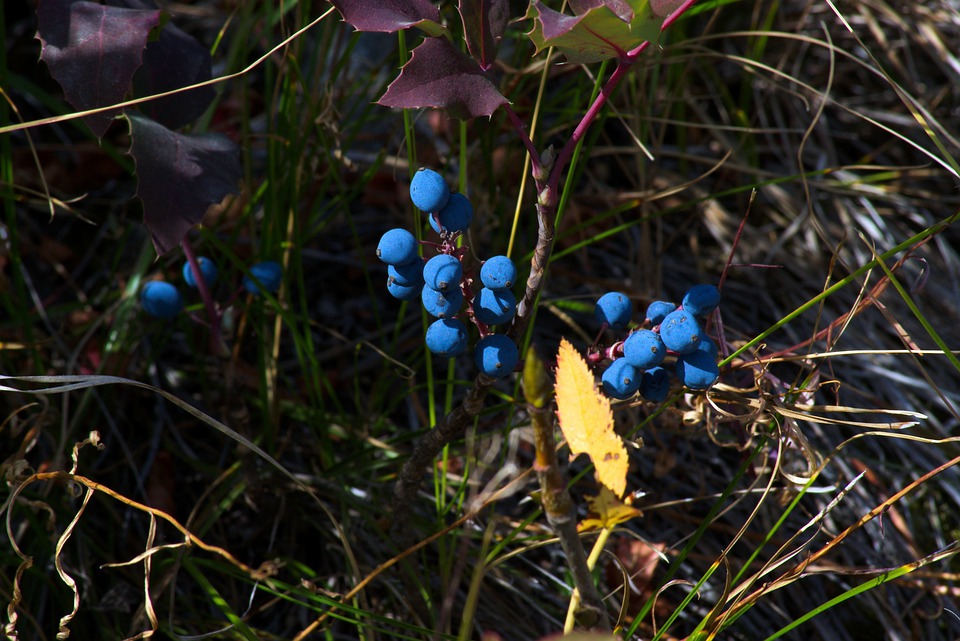
Berries: Oregon Grape  <i>Mahonia repens</i> Producing Blue Berries in the Grand Tetons Park Courtesy Pixabay, Mike Goad, Photographer
Oregon Grape
Mahonia repens
Producing Blue Berries in the Grand Tetons
Courtesy Pixabay, Mike Goad, Photographer,

Red Raspberry Rubus idaeus var. strigosus Courtesy NPS, Yellowstone's Photo Collection, JW Stockert Photographer, 1972 Red Raspberry
Rubus idaeus var. strigosus
Courtesy NPS, Yellowstone’s Photo Collection, JW Stockert Photographer, 1972

Thimbleberry Rubus parviflorus Courtesy NPS, Yellowstone's Photo Collection, JW Stockert, Photographer Thimbleberry
Rubus parviflorus
Courtesy NPS, Yellowstone’s Photo Collection, JW Stockert, Photographer

Utah-Serviceberry Rosaceae Amelanchier utahensis Courtesy National Park Service, Lee Ferguson, Photographer Utah-Serviceberry
Rosaceae Amelanchier utahensis
Courtesy National Park Service, Lee Ferguson, Photographer

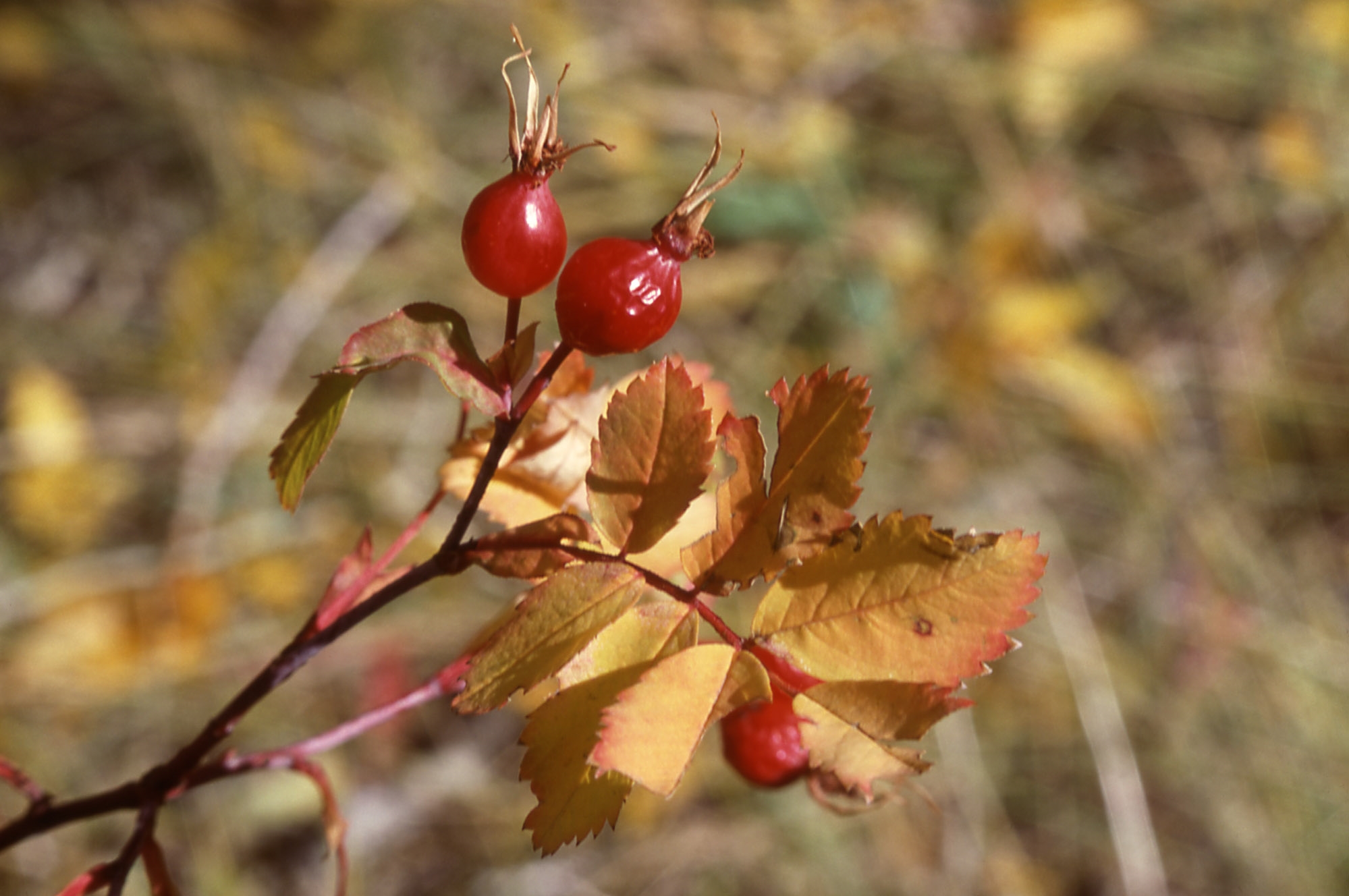
Rose Hips Wood's rose Rosa woodsii Courtesy NPS, Yellowstone's Photo Collection, J Schmidt, Photographer, 1977 Rose Hips
Wood’s rose Rosa woodsii
Courtesy NPS, Yellowstone’s Photo Collection, J Schmidt, Photographer, 1977

The berry season is upon us- huckleberries, raspberries, gooseberries, chokecherries (not a berry but close enough), elderberries, bearberries, while early berries have faded- golden current, serviceberries, thimble berries are now fruit leather.

Berry picking during my youth in the North woods of Wisconsin was a wonderful tradition that I, and our black bear neighbors, looked forward to with great anticipation. We often shared the same patch evident by fresh bear scat and tracks. Those rare occasions where brother and sister bear were with us are frozen in time. “Just keep picking and talking- they won’t bother us.” My grandmother’s refrain. I was enthralled, watching every move and sound they made, with an occasional “woof” from mother bear alerting the youngsters.

Now, so many years later, I take my students to the Tetons hoping for a glimpse of bruins harvesting berries, rose hips, and thorn apples along streams and roadsides. Black bears are efficient berry-eaters, consuming up to 30,000 berries a day in a good year. They gather berries quickly, using their sensitive, mobile lips swallowing them whole. The berries enter a two-part stomach, which grinds the pulp off the seeds which pass through unbroken and are able to germinate, making black bears important seed dispersers.

Our Bear River Range here in Northern Utah was once a stronghold for the bruin. Overharvesting by hunters and the government has left it wanting, but the berries remain. One berry favored by bears is the white snowberry. Don’t copy the bears on this one as it’s toxic, but a great medicinal. Another that I avoid is the buffalo berry, called soapberry in the northwest. It contains saponin, the active ingredient in most soaps. It’s much like biting into a bar of soap, applied in my younger years for mouth cleansing. And please avoid the voluptuous red and white fruit of the bane berry, and cute little mini tomatoes of deadly night shade. You will be all the better for it.

“Harvesting berries can be a powerful meditation, centering us in the power of “now,” and is one of the oldest human experiences. This simple action can be an opportunity to revel in the abundance of nature. Tangibly interacting with food that is so wired into its life source is otherworldly, and it reminds us of a time when humans were more directly connected to the origins of our food. It is a grounding experience that demands every cell in your body resonate with the source of our food, catalyzing our connections to the universe.” Valerie Segrest quote

I strongly recommend “Blueberries for Sal” for younger generations. A delightful 1948 children’s book by renowned author Robert McCloskey. I recently visited the Blueberry Hill in Main’s Acadian N.P., the location for this story, and picked a few myself. Unfortunately, the bears had been replaced swarms of tourists!

Jack Greene for Bridgerland Audubon Society, and yes, I’m wild about Utah’s bears and wild berries!

Credits:

Pictures:
Oregon Grape Producing Blue Berries in the Grand Tetons, Courtesy Pixabay, Mike Goad, Photographer, https://pixabay.com/photos/blue-wild-berries-in-the-tetons-blue-3842367/
Red raspberry (Rubus idaeus var. strigosus); JW Stockert; 1972, Courtesy NPS, Yellowstone’s Photo Collection, https://www.nps.gov/features/yell/slidefile/plants/rosefamily/Images/08720.jpg
Wood’s rose (Rosa woodsii) hips; J Schmidt; 1977, Courtesy NPS, Yellowstone’s Photo Collection, https://www.nps.gov/features/yell/slidefile/plants/rosefamily/Images/06964.jpg
Thimbleberry (Rubus parviflorus); JW Stockert; 1973, Courtesy NPS, Yellowstone’s Photo Collection, https://www.nps.gov/features/yell/slidefile/plants/rosefamily/Images/08718.jpg
Utah Serviceberry, Rosaceae_Amelanchier_utahensis, Courtesy US NPS, Lee Ferguson, Photographer, https://www.nps.gov/arch/learn/nature/images/Rosaceae_Amelanchier_utahensis.jpg
Audio: Courtesy & © Friend Weller, https://upr.org
Text: Jack Greene, Bridgerland Audubon, https://bridgerlandaudubon.org/
Additional Reading: Lyle W Bingham, Webmaster, and Jack Greene, Author, Bridgerland Audubon, https://bridgerlandaudubon.org/

Additional Reading:

Jack Greene’s Postings on Wild About Utah, https://wildaboututah.org/author/jack/

Valerie Segrest, Foods Still Matter: The Muckleshoot Food Sovereignty Project, National Museum of the American Indian, The Smithsonian Institution, 2018, https://americanindian.si.edu/nk360/pnw-history-culture/muckleshoot

Valerie Segrest, Food sovereignty, TEDxRainier, TEDxSeattle, https://tedxseattle.com/talks/food-sovereignty/

McCloskey, Robert(Author), Blueberries for Sal, Puffin Books, September 30, 1976 https://www.amazon.com/Blueberries-Sal-Robert-McCloskey/dp/014050169X

A Bear’s Menu, Student Activities, Educator Resources, Yellowstone National Park, https://www.nps.gov/teachers/classrooms/a-bears-menu.htm

Gallop Thru Time

Gallop Thru Time: The Hagerman Horse (Equus simplicidens), Hagerman Fossil Beds National Monument, Courtesy US NPS
The Hagerman Horse (Equus simplicidens), Hagerman Fossil Beds National Monument, Courtesy US NPS

Elmer Cook Recognition Plaque Hagerman Fossil Bed National Monument Courtesy & © Mary Heers, Photographer Elmer Cook Recognition Plaque
Hagerman Fossil Bed National Monument
Courtesy & © Mary Heers, Photographer

Mary Heers' Selfie with the Hagerman Horse Hagerman Fossil Bed National Monument Courtesy & © Mary Heers, Photographer Mary Heers’ Selfie with the Hagerman Horse
Hagerman Fossil Bed National Monument
Courtesy & © Mary Heers, Photographer

Three Toes on the Kemmerer Horse Utah Museum of Natural History Courtesy & © Mary Heers, Photographer Three Toes on the Kemmerer Horse
Utah Museum of Natural History
Courtesy & © Mary Heers, Photographer

Metacarpal Toe, Hoof Hagerman Horse Equus simplicidens Hagerman Fossil Bed National Monument Courtesy & © Mary Heers, Photographer Metacarpal Toe, Hoof Hagerman Horse
Equus simplicidens
Hagerman Fossil Bed National Monument
Courtesy & © Mary Heers, Photographer

Metacarpal Toe, Hoof Domestic Horse Equus ferus caballus Hagerman Fossil Bed National Monument Courtesy & © Mary Heers, Photographer Metacarpal Toe, Hoof Domestic Horse
Equus ferus caballus
Hagerman Fossil Bed National Monument
Courtesy & © Mary Heers, Photographer

Cast of Kemmerer Early Horse Utah Museum of Natural History Courtesy & © Mary Heers, Photographer Cast of Kemmerer Early Horse
Utah Museum of Natural History
Courtesy & © Mary Heers, Photographer

In 1928 Elmer Cook, a rancher in Hagerman, Idaho, noticed an interesting bone sticking our of the hillside on his land overlooking the Snake River. Intrigued, he started to dig around and discovered it was a fossilized bone and there were plenty more like it. Elmer alerted the National Smithsonian Museum, who sent out a team. This team determined the bones were ancestors of the modern horse. They were 3½ million years old. In the end, after digging into the hillside for 2 years, they took over 200 fossils, including 12 complete horse skeletons, back to Washington D.C.

My own fascination with horse fossils actually began a few years ago when I was giving tours at the Utah Museum of Natural History in Salt Lake City. A fossil hunter near Kemmerer, Wyoming, had been quite surprised to find a small mammal while digging through layers of fossilized fish in an ancient seabed. This skeleton is now also in the Smithsonian Museum in D.C., but the Utah museum owns a copy.

When giving tours, I always paused my group as we entered the dinosaur floor. “I’m going to pull a whole horse out of here,” I’d say as I pulled a sliding drawer out of a chest with a flourish.

It was a fully grown horse about the size of a small dog – 24 inches long and 20 inches high.

It was over 50 million years old. In that time, the Intermountain West was a lush, swampy place. Fierce predators like the Utah Raptor roamed the land, and the mammals that survived were small and stayed hidden in the dense forested undergrowth.

Over the next 50 million years, the dinosaurs went extinct and the terrain dried out The Hagerman Horse (dating back 3 ½ million years ) stood about 4 ½ feet high. Most notably, it now stood on four hooves. The 3 toes on the Kemmerer Horse had evolved into a single dominant toe, perfectly adapted to running away from predators over dry terrain.

Unfortunately, this remarkable adaptation was not enough to save the horse. The horse went extinct in the Americas (along with other large mammals like the mammoth and giant sloth) about 10,000 years ago. It was the Spanish Conquistadors that reintroduced the horse to North America. When Hernan Cortez and his 200 soldiers landed in Mexico in 1519, they brought 16 horses with them. Over time, some of these horses got away to form wild bands, and others fell into the hands of the Native Americans.

This summer I made a small archeological pilgrimage into Idaho, to see the Hagerman Fossil Beds, now a National Monument. In the newly opened visitor center I found a life size replica of the Hagerman Horse. As I stood next to it, admiring its shapely hoof, I remembered one more remarkable fact about the horse. The bows now used to play violins are made from horse hair It takes 5 horse tails to make a violin bow. To this day, absolutely nothing has been found that makes the strings of a violin sing as sweetly.

This is Mary Heers and I am Wild About Utah.

Credits:
Photos: Courtesy & Copyright © Mary Heers
Photos: Courtesy
Featured Audio: Courtesy & Copyright © Kevin Colver, https://wildstore.wildsanctuary.com/collections/special-collections/kevin-colver
Text: Mary Heers, https://cca.usu.edu/files/awards/art-and-mary-heers-citation.pdf
Additional Reading: Lyle Bingham, https://bridgerlandaudubon.org/

Additional Reading

Wild About Utah, Mary Heers’ Wild About Utah Postings

Hagerman Fossil Beds National Monument, History, National Parks Service, US Department of the Interior, https://npshistory.com/publications/hafo/index.htm

The Hagerman Horse (Equus simplicidens), Hagerman Fossil Beds National Monument, National Parks Service, US Department of the Interior, https://www.nps.gov/articles/000/equus_simplicidens.htm

Hagerman Fossil Beds, National Parks Service, US Department of the Interior, https://www.nps.gov/hafo/index.htm

The Horse (Exhibit), Natural History Museum of Utah, July 21, 2014 – January 4, 2015, https://nhmu.utah.edu/horse#:~:text=The%20Natural%20History%20Museum%20of,and%20spiritual%20connections%20with%20them.
Natural History Museum of Utah,https://nhmu.utah.edu/

Fossil Horse Quarry Near Hagerman, Idaho, Worked by National Museum, Smithsonian Libraries and Archives, The Smithsonian Institution, https://www.si.edu/object/fossil-horse-quarry-near-hagerman-idaho-worked-national-museum:siris_arc_367758

Plesippus shoshonensis Gidley, 1930, National Museum of Natural History, The Smithsonian Institution, https://www.si.edu/object/plesippus-shoshonensis-gidley-1930:nmnhpaleobiology_3590445