The Tenacity of Beavers

Beaver at Dam, Courtesy Pixabay
Beaver at Dam
Courtesy Pixabay
The most important lessons I can give my daughter are not through me, but instead those found best in the wild. Though she can’t talk, I know she still listens. Though her childhood amnesia is inevitable, I know that neural circuits are still being formed. Those circuits will do her good one day.

Our favorite lesson is in the tenacity of beavers.

This winter, we took one of our favorite hikes through knee-deep postholing snow to one of our favorite beaver dams. The dogs trot ahead, sniff snuffing at the path, darting to the stream that runs alongside our trail and back, and lead us as they have many times before up the trail. When we come to the great beaver dam, one that assuredly took not just years but generations of beavers to build, we stop for a snack and water, and let our daughter sit quizzically in the springtime slush. I explain to her the parts of the beaver’s home: the dam, the lodge, how they store their food. She listens while she smushes snow in her mittens, neural circuits are formed, and we pack up to start the slushy walk back to the car. A good day’s hike and lesson. A Greek proverb is dusted off in my mind, that a society grows great when old men plant trees under whose shade they know they shall never sit. Those beavers are good Greeks, but likely poor hoplites.

Later that spring, we return to the dam, our trail shortened by melted snow. Snow is gone from the trail, but still holding fast in the mountains above. The travel is easier, muddier, but the beaver Platonic Republic justly endures. I explain the parts of the Castorian city-state yet again, and explain what the beavers are doing now as we see fresh aspen fells. They’re collecting good sugars and preparing for their kits. Kallipolis endures, as it has, another year out of dozens of millennia, and even without a cud of pulp in sight. I wonder if beavers have oral traditions?

Time then passes as we all pass through space, and summer buds, blooms, and begins to fade. The cattle have come, grazed, trammeled, and been driven off yet again. We return to Xanadu in the early morning before the sun beats hard. We can get even closer to the dam now that the Forest gates are open, and we prepare for our adventure. My daughter looks around excitedly and drinks water from her cup. The dogs look around excitedly at all the leftover cow pies to investigate. Luckily they’ve dried.

We exit the car and make our short way to the beavers only to discover that tragedy has struck between spring and now. The dam has burst. Like the River Isen, a great work of nature has blown a hole in the waterkeep, and drained the promised pond. The shoreline has receded like a tonsure, the lodge’s secret doors exposed as if by moonlit ithildin, and the water flowing with Newtonian determination towards Great Salt Lake.

It’s shocking at first, seeing this anchor of time heaved asunder, the work of generations of beavers up and smote by spring runoff. All that labor. All those lives well-lived. Perhaps not wasted, but at least now remembered with a sigh. I sigh out as well, and explain this all to my daughter. She listens, pulls on cow-mown grasses, synapses fire, and circuits connect. We complete our hike and eventually go home.

Finally, early this fall we set off for the utopia-that-was once more. Colors have begun to change to golds and crimson. The air is more crisp; the heat more bearable. We saddle up in the toddler backpack, and see what there is to see of the beavers. We arrive to the wonders of hope and joy, and the tenacity of beavers.

The dam it appears is not abandoned. The labor of generations is honored with the restoration of the work. Not in its entirety mind you, for that will again take years and perhaps generations, but the work is underway regardless. Greek thinking again prevails. Whether by purpose or itch it matters not, but slowly the pond is regrowing. The shoreline has risen to swallow back and douse bare earth, and the water is a bit more wine-dark. I excitedly show my daughter, who excitedly is playing with my hat, the work that has happened, and the work yet to do. The beavers will not quit when allowed to do so. They are tenacious little buggers whose teeth grow forever. We take it all in and continue our hike, and eventually go back home. A new proverb pops into my head. A society grows great when we get to work and, figuratively, give a dam.

I’m Patrick Kelly and I’m Wild About Utah.
 
Credits:

Images: Beaver & Dam Image Courtesy Pixabay, Public Domain
Featured Audio: Courtesy & Copyright Friend Weller, Utah Public Radio with and Anderson, Howe, & Wakeman.
Text:    Patrick Kelly, Stokes Nature Center, https://logannature.org
Included Links: Lyle Bingham, Webmaster, WildAboutUtah.org

Additional Reading

Greene, Jack, I’m a Beaver Believer, Wild About Utah, December 19, 2022, https://wildaboututah.org/im-a-beaver-believer/

Bingham, Lyle, Welcoming Rodent Engineers, Wild About Utah, February 7, 2022, https://wildaboututah.org/welcoming-rodent-engineers/

Hellstern, Ron, Leave it to Beaver, Wild About Utah, July 30, 2018, https://wildaboututah.org/leave-it-to-beaver/

Leavitt, Shauna, Beaver–Helping Keep Water on Drying Lands, Wild About Utah, April 17, 2017, https://wildaboututah.org/the-beaver-helping-keep-water-on-drying-lands/

Strand, Holly, Beavers: The Original Army Corps of Engineers, Wild About Utah, April 29, 2010, https://wildaboututah.org/beavers-the-original-army-corps-of-engineers/

Goldfarb, Ben, Eager: The Surprising, Secret Life of Beavers and Why They Matter, Chelsea Green Publishing, March 8, 2019, https://www.amazon.com/Eager-Surprising-Secret-Beavers-Matter/dp/1603589082/ref=asc_df_1603589082/

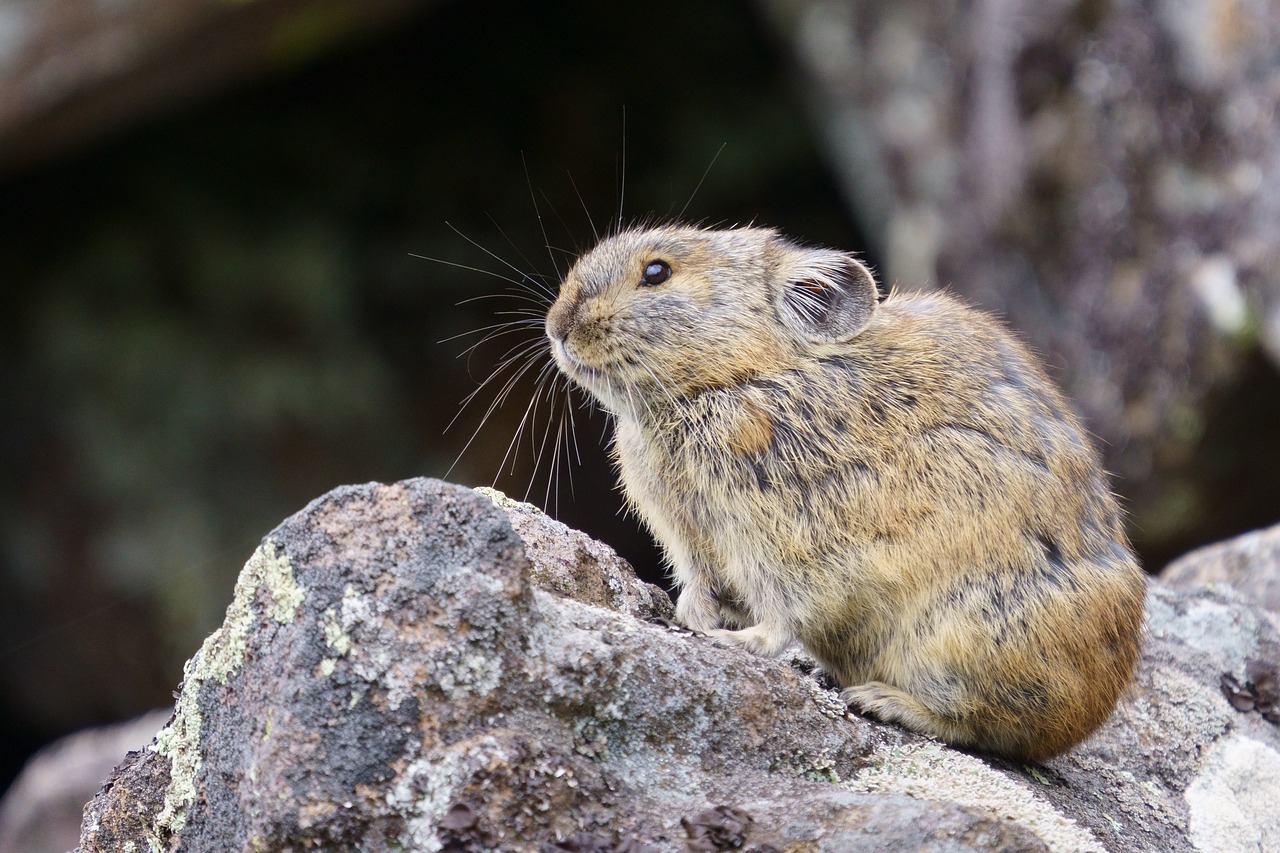
American Pika

Pika, Courtesy Pixabay, Makieni77 Contributor
American Pika
Courtesy Pixabay, Makieni77 Contributor
As I hike the high country, there is a non-bird call that always brightens my way. A mini rabbit, or rock rabbit in Jack vernacular, the pika, has been declared North America’s cutest mammal. I won’t argue with this declaration, unless it’s compared to my grandkids.

On a scramble up two gnarly peaks above Alta Ski Resort a few weeks ago, my spirits went sky high with an abundance of pika busily gathering hay for their winter larder. Their Ehhhhh! Notes surrounded us, tiny furry forms darting in and out of boulder fields while we made our way to the summits.

This was especially heartening given the warming trends, which push these little spirits beyond their limits of heat tolerance in too many locations. Pikas have disappeared from more than one-third of their previously known habitat in Oregon and Nevada. Despite this, the American Pika has not been listed under the Endangered Species Act. The pika can overheat and die within 6 hours when exposed to temperatures as mild as 78 degrees Fahrenheit.

American Pikas are famously vocal. They chirp, sing, and scream in an effort to protect their territory. They use their signature call to alert others in the colony of an approaching predator, to establish boundaries, and in some cases, to attract mates.

Pikas spend a great deal of time gathering vegetation for winter which they cure on rocks to prevent molding, then store their piles under rocks for safekeeping, occasionally moving them so they don't get rained on. Haystacks, as they're called, weigh a whopping 61 pounds on average. The timing of haying seems to correlate to the amount of precipitation from the previous winter. They appear to assess the nutritional value of available food and harvest accordingly. Pikas select plants that have the higher caloric, protein, lipid, and water content. They also enjoy their fecal pellets, which have more energy value than stored plant food, by consuming them directly or store for a later sweet treat.
Cedar Breaks National monument in southern Utah has adopted the pika as its token mammal. You can get your own stuffy who has a remarkable resemblance to the real deal. Your donation will help the Monument with its field research on the pika and other park critters.

Considering pika are mostly found in alpine and subalpine environments with cool temperatures and deep snow, I was shocked to find them occurring at Craters of the Moon National Monument in Idaho averaging 6000’ elevation. Summer temperatures at the Monument can soar to 170 degrees on the black rock surface, which would fry a pica in short order. Yet, here they are, finding relief in lava tubes and deep crevasses. Unlike their diurnal alpine cousins, they are primarily crepuscular- active early morning- late evening.

The American pika can be found throughout the mountains of western North America, from Canada to New Mexico. Of the 30 global species, only two inhabit North America, which includes the collared pika found in Alaska and Canada.

Jack Greene for Bridgerland Audubon Society, and I’m wild about Utah and its rock rabbits!

Credits:
Image: Courtesy Pixabay, https://pixabay.com/photos/pika-animal-wildlife-nature-cute-5326942/
Audio: Courtesy & ©
Text: Jack Greene, Bridgerland Audubon, https://bridgerlandaudubon.org/
Additional Reading: Lyle W Bingham, Webmaster, Bridgerland Audubon, https://bridgerlandaudubon.org/

Additional Reading:

Jack Greene’s Postings on Wild About Utah, https://wildaboututah.org/author/jack/

Cane, Jim, Voice: Dick Hurren, Pikas, Our First Haymakers Wild About Utah, October 28, 2008, https://wildaboututah.org/pikas-our-first-haymakers/

Patent, Dorothy Hinshaw, Pika Country: Climate Change at the Top of the World, September 18, 2020, https://www.amazon.com/Pika-Country-Climate-Change-World/dp/1970039027

Plumb, Sally, A Pika’s Tail, May 1, 2012, https://www.amazon.com/Pikas-Tail-Sally-Plumb/dp/0931895251

American Pika, Utah Species, Field Guide, Utah Division of Wildlife Resources, Department of Natural Resources, State of Utah, https://fieldguide.wildlife.utah.gov/?species=ochotona%20princeps

American Pika, Animal Diversity Web, https://animaldiversity.org/accounts/Ochotona_princeps/

Booth, Michael, Chirp one out for the pika: Climate change is destabilizing previously perfect Rocky Mountain habitat, December 4, 2025, https://coloradosun.com/2025/12/04/colorado-pika-population-global-warming/

Galloping Thru Time

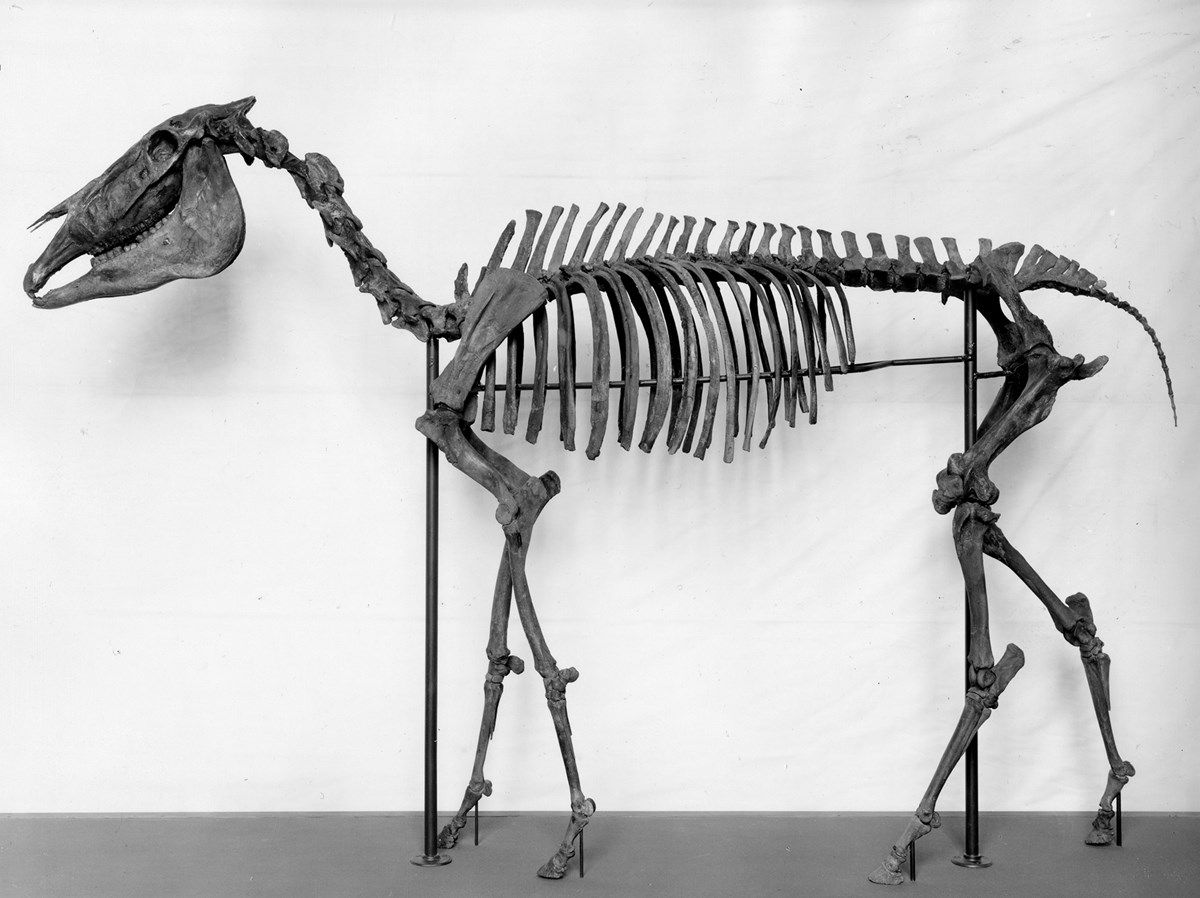
Gallop Thru Time: The Hagerman Horse (Equus simplicidens), Hagerman Fossil Beds National Monument, Courtesy US NPS
The Hagerman Horse (Equus simplicidens), Hagerman Fossil Beds National Monument, Courtesy US NPS

Elmer Cook Recognition Plaque Hagerman Fossil Bed National Monument Courtesy & © Mary Heers, Photographer Elmer Cook Recognition Plaque
Hagerman Fossil Bed National Monument
Courtesy & © Mary Heers, Photographer

Mary Heers' Selfie with the Hagerman Horse Hagerman Fossil Bed National Monument Courtesy & © Mary Heers, Photographer Mary Heers’ Selfie with the Hagerman Horse
Hagerman Fossil Bed National Monument
Courtesy & © Mary Heers, Photographer

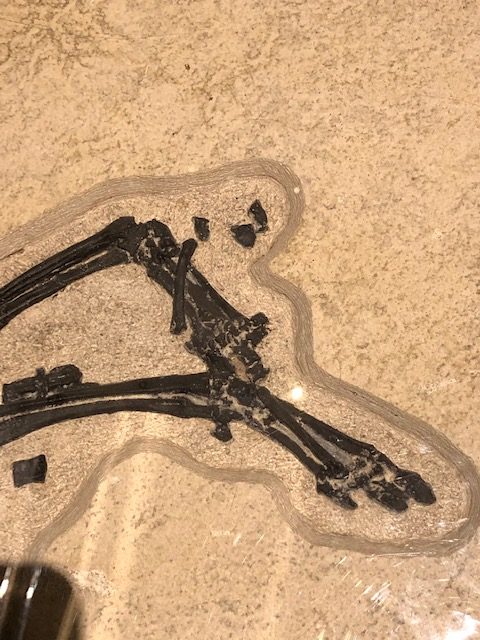
Three Toes on the Kemmerer Horse Utah Museum of Natural History Courtesy & © Mary Heers, Photographer Three Toes on the Kemmerer Horse
Utah Museum of Natural History
Courtesy & © Mary Heers, Photographer

Metacarpal Toe, Hoof Hagerman Horse Equus simplicidens Hagerman Fossil Bed National Monument Courtesy & © Mary Heers, Photographer Metacarpal Toe, Hoof Hagerman Horse
Equus simplicidens
Hagerman Fossil Bed National Monument
Courtesy & © Mary Heers, Photographer

Metacarpal Toe, Hoof Domestic Horse Equus ferus caballus Hagerman Fossil Bed National Monument Courtesy & © Mary Heers, Photographer Metacarpal Toe, Hoof Domestic Horse
Equus ferus caballus
Hagerman Fossil Bed National Monument
Courtesy & © Mary Heers, Photographer

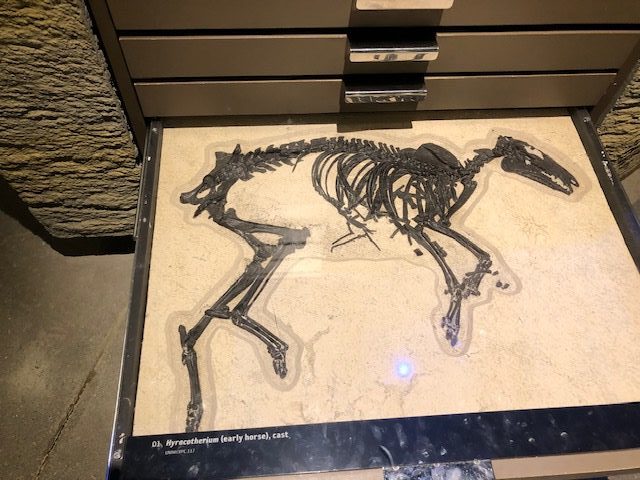
Cast of Kemmerer Early Horse Utah Museum of Natural History Courtesy & © Mary Heers, Photographer Cast of Kemmerer Early Horse
Utah Museum of Natural History
Courtesy & © Mary Heers, Photographer

In 1928 Elmer Cook, a rancher in Hagerman, Idaho, noticed an interesting bone sticking our of the hillside on his land overlooking the Snake River. Intrigued, he started to dig around and discovered it was a fossilized bone and there were plenty more like it. Elmer alerted the National Smithsonian Museum, who sent out a team. This team determined the bones were ancestors of the modern horse. They were 3½ million years old. In the end, after digging into the hillside for 2 years, they took over 200 fossils, including 12 complete horse skeletons, back to Washington D.C.

My own fascination with horse fossils actually began a few years ago when I was giving tours at the Utah Museum of Natural History in Salt Lake City. A fossil hunter near Kemmerer, Wyoming, had been quite surprised to find a small mammal while digging through layers of fossilized fish in an ancient seabed. This skeleton is now also in the Smithsonian Museum in D.C., but the Utah museum owns a copy.

When giving tours, I always paused my group as we entered the dinosaur floor. “I’m going to pull a whole horse out of here,” I’d say as I pulled a sliding drawer out of a chest with a flourish.

It was a fully grown horse about the size of a small dog – 24 inches long and 20 inches high.

It was over 50 million years old. In that time, the Intermountain West was a lush, swampy place. Fierce predators like the Utah Raptor roamed the land, and the mammals that survived were small and stayed hidden in the dense forested undergrowth.

Over the next 50 million years, the dinosaurs went extinct and the terrain dried out The Hagerman Horse (dating back 3 ½ million years ) stood about 4 ½ feet high. Most notably, it now stood on four hooves. The 3 toes on the Kemmerer Horse had evolved into a single dominant toe, perfectly adapted to running away from predators over dry terrain.

Unfortunately, this remarkable adaptation was not enough to save the horse. The horse went extinct in the Americas (along with other large mammals like the mammoth and giant sloth) about 10,000 years ago. It was the Spanish Conquistadors that reintroduced the horse to North America. When Hernan Cortez and his 200 soldiers landed in Mexico in 1519, they brought 16 horses with them. Over time, some of these horses got away to form wild bands, and others fell into the hands of the Native Americans.

This summer I made a small archeological pilgrimage into Idaho, to see the Hagerman Fossil Beds, now a National Monument. In the newly opened visitor center I found a life size replica of the Hagerman Horse. As I stood next to it, admiring its shapely hoof, I remembered one more remarkable fact about the horse. The bows now used to play violins are made from horse hair It takes 5 horse tails to make a violin bow. To this day, absolutely nothing has been found that makes the strings of a violin sing as sweetly.

This is Mary Heers and I am Wild About Utah.

Credits:
Photos: Courtesy & Copyright © Mary Heers
Photos: Courtesy
Featured Audio: Courtesy & Copyright © Kevin Colver, https://wildstore.wildsanctuary.com/collections/special-collections/kevin-colver
Text: Mary Heers, https://cca.usu.edu/files/awards/art-and-mary-heers-citation.pdf
Additional Reading: Lyle Bingham, https://bridgerlandaudubon.org/

Additional Reading

Wild About Utah, Mary Heers’ Wild About Utah Postings

Hagerman Fossil Beds National Monument, History, National Parks Service, US Department of the Interior, https://npshistory.com/publications/hafo/index.htm

The Hagerman Horse (Equus simplicidens), Hagerman Fossil Beds National Monument, National Parks Service, US Department of the Interior, https://www.nps.gov/articles/000/equus_simplicidens.htm

Hagerman Fossil Beds, National Parks Service, US Department of the Interior, https://www.nps.gov/hafo/index.htm

The Horse (Exhibit), Natural History Museum of Utah, July 21, 2014 – January 4, 2015, https://nhmu.utah.edu/horse#:~:text=The%20Natural%20History%20Museum%20of,and%20spiritual%20connections%20with%20them.
Natural History Museum of Utah,https://nhmu.utah.edu/

Fossil Horse Quarry Near Hagerman, Idaho, Worked by National Museum, Smithsonian Libraries and Archives, The Smithsonian Institution, https://www.si.edu/object/fossil-horse-quarry-near-hagerman-idaho-worked-national-museum:siris_arc_367758

Plesippus shoshonensis Gidley, 1930, National Museum of Natural History, The Smithsonian Institution, https://www.si.edu/object/plesippus-shoshonensis-gidley-1930:nmnhpaleobiology_3590445


Utah’s Bats

Townsend's big-eared bat
Courtesy US National Park Service
Townsend’s big-eared bat
Courtesy US National Park Service
The secret service takes to the sky as we paddle our canoe into a full moonlit Bear River. Our magic sonagram device collects hidden sounds of myriad bats, as they devour tens of thousands of insects. We’re floating through Wuda Ogwa, the Bear River Massacre site now owned by the NW band of the Shoshone Nation, the original owners, who lost it to Euromerican western expansion. A grant funded project being conducted by USU faculty and students, we recorded a remarkable number of species, perhaps influenced by the hot springs cave, that served as wintering grounds for the Shoshone people. There were marked differences in bat species associated with types of riverside vegetation, part of which was the invasive Russian olive.

Utah is home to eighteen species of bats found throughout the state which roost in a variety of habitats including caves, mines, hollow trees, leafy plants, rock cliffs, and buildings. The big free-tailed is the largest in Utah with a wingspan of 17 inches weighing less than an oz. The smallest bat, the western pipistrelle, is the size of a hummingbird and weighs 1/10 oz.

Most Utah bat species are year-round residents hibernating during the winter. Some species migrate south and remain active all year while migrating species breed in the spring. Hibernating bats usually breed in the fall. In the late spring, female bats gather in large nursery colonies where their young, called pups, are born in May or June.

Bats have “slow” life history and are constrained by tight energy budgets. Energetics has emerged as a driver of extinction risk among North American bats. Some of the most wide-ranging species are now on an accelerated trajectory toward extinction as a result of disease and wind energy production. Climate change is also likely to impact many bat species with broad ranges. Urbanization and other kinds of habitat-fragmenting land use changes are also thought to be altering species distribution patterns.

Bats offer many ecosystem benefits. Some subtropic species pollinate plants, many serve as prey to other animals, and cave communities benefit from bat guano which provides nutrients.

Bats benefit humans by eating up to 100 percent of their body weight in insects each night (1000 insects/hour), providing over $3.7 billion worth of pest control each year in the U.S. and reducing the need for pesticides. Their membrane wings and echolocation have inspired technological advances in engineering. The wingsuits used by basejumpers take more than a few cues from bats’ aerodynamic bodies. Utah law protects all bat species. Additional federal protection is extended to species on the Endangered Species List.

Given many gifts bats provide for humans numerous ecosystem services, we can reciprocate by reducing outdoor lighting which disrupts their natural behaviors, avoid disturbing them, especially if they are hibernating, building a bat house, and participating in Bat Week which occurs the last week of October. It’s a time to celebrate and learn about our Utah bats!

Jack Greene for Bridgerland Audubon Society and I’m Wild About Utah bats!

Credits:

Images: Courtesy US FWS, USDA Forest Service and US NPS. All photographers acknowledged with images
Featured Audio: Courtesy & © Friend Weller, https://upr.org/
Text:     Jack Greene, Bridgerland Audubon, https://bridgerlandaudubon.org/
Additional Reading Links: Jack Greene & Lyle Bingham, https://bridgerlandaudubon.org/

Additional Reading:

Wild About Utah Pieces by Jack Greene, https://wildaboututah.org/author/jack/

Strand, Holly, Bats and Echolocation, Wild About Utah, May 13, 2010, https://wildaboututah.org/bats-and-echolocation/

Bunkley, Jessie, Bat Netting at Antelope Island State Park, Wild About Utah, July 11, 2016, https://wildaboututah.org/bat-netting-at-antelope-island-state-park/

Bats, Wild Aware Utah, https://www.wildawareutah.org/wildlife/bats/

Thomas J. Rodhouse, Thomas E. Philippi, William B. Monahan, Kevin T. Castle, A macroecological perspective on strategic bat conservation in the U.S. National Park Service, Ecosphere, ESA, https://esajournals.onlinelibrary.wiley.com/doi/full/10.1002/ecs2.1576

Animal Fact Sheet: Western pipistrelle bat, Arizona-Sonora Desert Museum, https://www.desertmuseum.org/kids/bats/western_pipistrelle.php

Discover the Secret Lives of Bats, National Park Service, https://www.nps.gov/subjects/bats/index.htm

Bat Species in Parks, National Park Service, https://www.nps.gov/subjects/bats/bat-species-in-parks.htm

16 Incredible Pictures Show the Beauty of Bats, National Geographic, https://www.nationalgeographic.com/animals/article/incredible-photos-bat-appreciation-day

Utah’s 18 Bats, Utah Species, Fieldguide.Wildlife.Utah.gov, Utah Division of Wildlife Resources, https://fieldguide.wildlife.utah.gov/?order=chiroptera

  1. Big Free-tailed Bat – Nyctinomops macrotis, https://fieldguide.wildlife.utah.gov/?species=nyctinomops%20macrotis
  2. Brazilian Free-tailed Bat – Tadarida brasiliensis, https://fieldguide.wildlife.utah.gov/?species=tadarida%20brasiliensis
  3. Allen’s Big-eared Bat – Idionycteris phyllotis, https://fieldguide.wildlife.utah.gov/?species=idionycteris%20phyllotis
  4. Big Brown Bat – Eptesicus fuscus, https://fieldguide.wildlife.utah.gov/?species=eptesicus%20fuscus
  5. California Myotis – Myotis californicus, https://fieldguide.wildlife.utah.gov/?species=myotis%20californicus
  6. Canyon Bat – Parastrellus hesperus, https://fieldguide.wildlife.utah.gov/?species=parastrellus%20hesperus
  7. Fringed Myotis – Myotis thysanodes, https://fieldguide.wildlife.utah.gov/?species=myotis%20thysanodes
  8. Hoary Bat – Lasiurus cinereus, https://fieldguide.wildlife.utah.gov/?species=lasiurus%20cinereus
  9. Little Brown Myotis a.k.a. Little Brown Bat – Myotis lucifugus, https://fieldguide.wildlife.utah.gov/?species=myotis%20lucifugus
  10. Long-eared Myotis – Myotis evotis, https://fieldguide.wildlife.utah.gov/?species=myotis%20evotis
  11. Long-legged Myotis – Myotis volans, https://fieldguide.wildlife.utah.gov/?species=myotis%20volans
  12. Pallid Bat – Antrozous pallidus, https://fieldguide.wildlife.utah.gov/?species=antrozous%20pallidus
  13. Silver-haired Bat – Lasionycteris noctivagans, https://fieldguide.wildlife.utah.gov/?species=lasionycteris%20noctivagans
  14. Spotted Bat – Euderma maculatum, https://fieldguide.wildlife.utah.gov/?species=euderma%20maculatum
  15. Townsend’s Big-eared Bat – Corynorhinus townsendii, https://fieldguide.wildlife.utah.gov/?species=corynorhinus%20townsendii
  16. Western Red Bat – Lasiurus blossevillii, https://fieldguide.wildlife.utah.gov/?species=lasiurus%20blossevillii
  17. Western Small-footed Myotis – Myotis ciliolabrum, https://fieldguide.wildlife.utah.gov/?species=myotis%20ciliolabrum
  18. Yuma Myotis – Myotis yumanensis, https://fieldguide.wildlife.utah.gov/?species=myotis%20yumanensis

White-nose syndrome: a disease of bats, Wildlife Blog, Utah Division of Wildlife Resources, https://wildlife.utah.gov/news/wildlife-blog/724-white-nose-syndrome-a-disease-of-bats.html

Building nurseries for big-eared bats, Wildlife Blog, Utah Division of Wildlife Resources, https://wildlife.utah.gov/news/wildlife-blog/707-building-nurseries-for-big-eared-bats.html

Rush, Claire, It’s almost Halloween. That means it’s time for a bat beauty contest, The Associated Press, October 26, 2024, https://apnews.com/article/bat-beauty-contest-bureau-of-land-management-6fb06024c8063903c73da3eaae2449a1