Utah’s Bats

Townsend's big-eared bat
Courtesy US National Park Service
Townsend’s big-eared bat
Courtesy US National Park Service
The secret service takes to the sky as we paddle our canoe into a full moonlit Bear River. Our magic sonagram device collects hidden sounds of myriad bats, as they devour tens of thousands of insects. We’re floating through Wuda Ogwa, the Bear River Massacre site now owned by the NW band of the Shoshone Nation, the original owners, who lost it to Euromerican western expansion. A grant funded project being conducted by USU faculty and students, we recorded a remarkable number of species, perhaps influenced by the hot springs cave, that served as wintering grounds for the Shoshone people. There were marked differences in bat species associated with types of riverside vegetation, part of which was the invasive Russian olive.

Utah is home to eighteen species of bats found throughout the state which roost in a variety of habitats including caves, mines, hollow trees, leafy plants, rock cliffs, and buildings. The big free-tailed is the largest in Utah with a wingspan of 17 inches weighing less than an oz. The smallest bat, the western pipistrelle, is the size of a hummingbird and weighs 1/10 oz.

Most Utah bat species are year-round residents hibernating during the winter. Some species migrate south and remain active all year while migrating species breed in the spring. Hibernating bats usually breed in the fall. In the late spring, female bats gather in large nursery colonies where their young, called pups, are born in May or June.

Bats have “slow” life history and are constrained by tight energy budgets. Energetics has emerged as a driver of extinction risk among North American bats. Some of the most wide-ranging species are now on an accelerated trajectory toward extinction as a result of disease and wind energy production. Climate change is also likely to impact many bat species with broad ranges. Urbanization and other kinds of habitat-fragmenting land use changes are also thought to be altering species distribution patterns.

Bats offer many ecosystem benefits. Some subtropic species pollinate plants, many serve as prey to other animals, and cave communities benefit from bat guano which provides nutrients.

Bats benefit humans by eating up to 100 percent of their body weight in insects each night (1000 insects/hour), providing over $3.7 billion worth of pest control each year in the U.S. and reducing the need for pesticides. Their membrane wings and echolocation have inspired technological advances in engineering. The wingsuits used by basejumpers take more than a few cues from bats’ aerodynamic bodies. Utah law protects all bat species. Additional federal protection is extended to species on the Endangered Species List.

Given many gifts bats provide for humans numerous ecosystem services, we can reciprocate by reducing outdoor lighting which disrupts their natural behaviors, avoid disturbing them, especially if they are hibernating, building a bat house, and participating in Bat Week which occurs the last week of October. It’s a time to celebrate and learn about our Utah bats!

Jack Greene for Bridgerland Audubon Society and I’m Wild About Utah bats!

Credits:

Images: Courtesy US FWS, USDA Forest Service and US NPS. All photographers acknowledged with images
Featured Audio: Courtesy & © Friend Weller, https://upr.org/
Text:     Jack Greene, Bridgerland Audubon, https://bridgerlandaudubon.org/
Additional Reading Links: Jack Greene & Lyle Bingham, https://bridgerlandaudubon.org/

Additional Reading:

Wild About Utah Pieces by Jack Greene, https://wildaboututah.org/author/jack/

Strand, Holly, Bats and Echolocation, Wild About Utah, May 13, 2010, https://wildaboututah.org/bats-and-echolocation/

Bunkley, Jessie, Bat Netting at Antelope Island State Park, Wild About Utah, July 11, 2016, https://wildaboututah.org/bat-netting-at-antelope-island-state-park/

Bats, Wild Aware Utah, https://www.wildawareutah.org/wildlife/bats/

Thomas J. Rodhouse, Thomas E. Philippi, William B. Monahan, Kevin T. Castle, A macroecological perspective on strategic bat conservation in the U.S. National Park Service, Ecosphere, ESA, https://esajournals.onlinelibrary.wiley.com/doi/full/10.1002/ecs2.1576

Animal Fact Sheet: Western pipistrelle bat, Arizona-Sonora Desert Museum, https://www.desertmuseum.org/kids/bats/western_pipistrelle.php

Discover the Secret Lives of Bats, National Park Service, https://www.nps.gov/subjects/bats/index.htm

Bat Species in Parks, National Park Service, https://www.nps.gov/subjects/bats/bat-species-in-parks.htm

16 Incredible Pictures Show the Beauty of Bats, National Geographic, https://www.nationalgeographic.com/animals/article/incredible-photos-bat-appreciation-day

Utah’s 18 Bats, Utah Species, Fieldguide.Wildlife.Utah.gov, Utah Division of Wildlife Resources, https://fieldguide.wildlife.utah.gov/?order=chiroptera

  1. Big Free-tailed Bat – Nyctinomops macrotis, https://fieldguide.wildlife.utah.gov/?species=nyctinomops%20macrotis
  2. Brazilian Free-tailed Bat – Tadarida brasiliensis, https://fieldguide.wildlife.utah.gov/?species=tadarida%20brasiliensis
  3. Allen’s Big-eared Bat – Idionycteris phyllotis, https://fieldguide.wildlife.utah.gov/?species=idionycteris%20phyllotis
  4. Big Brown Bat – Eptesicus fuscus, https://fieldguide.wildlife.utah.gov/?species=eptesicus%20fuscus
  5. California Myotis – Myotis californicus, https://fieldguide.wildlife.utah.gov/?species=myotis%20californicus
  6. Canyon Bat – Parastrellus hesperus, https://fieldguide.wildlife.utah.gov/?species=parastrellus%20hesperus
  7. Fringed Myotis – Myotis thysanodes, https://fieldguide.wildlife.utah.gov/?species=myotis%20thysanodes
  8. Hoary Bat – Lasiurus cinereus, https://fieldguide.wildlife.utah.gov/?species=lasiurus%20cinereus
  9. Little Brown Myotis a.k.a. Little Brown Bat – Myotis lucifugus, https://fieldguide.wildlife.utah.gov/?species=myotis%20lucifugus
  10. Long-eared Myotis – Myotis evotis, https://fieldguide.wildlife.utah.gov/?species=myotis%20evotis
  11. Long-legged Myotis – Myotis volans, https://fieldguide.wildlife.utah.gov/?species=myotis%20volans
  12. Pallid Bat – Antrozous pallidus, https://fieldguide.wildlife.utah.gov/?species=antrozous%20pallidus
  13. Silver-haired Bat – Lasionycteris noctivagans, https://fieldguide.wildlife.utah.gov/?species=lasionycteris%20noctivagans
  14. Spotted Bat – Euderma maculatum, https://fieldguide.wildlife.utah.gov/?species=euderma%20maculatum
  15. Townsend’s Big-eared Bat – Corynorhinus townsendii, https://fieldguide.wildlife.utah.gov/?species=corynorhinus%20townsendii
  16. Western Red Bat – Lasiurus blossevillii, https://fieldguide.wildlife.utah.gov/?species=lasiurus%20blossevillii
  17. Western Small-footed Myotis – Myotis ciliolabrum, https://fieldguide.wildlife.utah.gov/?species=myotis%20ciliolabrum
  18. Yuma Myotis – Myotis yumanensis, https://fieldguide.wildlife.utah.gov/?species=myotis%20yumanensis

White-nose syndrome: a disease of bats, Wildlife Blog, Utah Division of Wildlife Resources, https://wildlife.utah.gov/news/wildlife-blog/724-white-nose-syndrome-a-disease-of-bats.html

Building nurseries for big-eared bats, Wildlife Blog, Utah Division of Wildlife Resources, https://wildlife.utah.gov/news/wildlife-blog/707-building-nurseries-for-big-eared-bats.html

Rush, Claire, It’s almost Halloween. That means it’s time for a bat beauty contest, The Associated Press, October 26, 2024, https://apnews.com/article/bat-beauty-contest-bureau-of-land-management-6fb06024c8063903c73da3eaae2449a1

Pleasant Surprises!

Gopher Snake, Courtesy US FWS
Gopher Snake
Courtesy US FWS

Cow Moose and Calf, Photo Courtesy US FWS, Tim Bowman, Photographer Cow Moose and Calf
Photo Courtesy US FWS
Tim Bowman, Photographer

Golden Eagle, Snake River gorge, Courtesy US FWS, Aldis Garsvo, Photographer Golden Eagle
Snake River gorge
Courtesy US FWS,
Aldis Garsvo, Photographer

Peregrine Falcon, Courtesy US FWS Peregrine Falcon
Courtesy US FWS

Clark's Nutcracker Courtesy US Fish & Wildlife Service Dave Menke, Photographer Clark’s Nutcracker Courtesy US Fish & Wildlife Service Dave Menke, Photographer

Mother Grizzly Bear and Cubs in Yellowstone National Park Courtesy USGS Frank T. van Manen, Photographer Mother Grizzly Bear and Cubs in Yellowstone National Park Courtesy USGS Frank T. van Manen, Photographer

Beaver, Courtesy US FWS, Robes Parrish, Photographer Beaver
Courtesy US FWS
Robes Parrish, Photographer

Great Horned Owl and Chick Courtesy US FWS George Gentry, Photographer Great Horned Owl and Chick Courtesy US FWS George Gentry, Photographer

Douglas Fir, Courtesy USDA Forest Service Douglas Fir
Courtesy USDA Forest Service

Mexican Spotted Owl, Courtesy US FWS, Shaula Hedwall, Photographer Mexican Spotted Owl
Courtesy US FWS
Shaula Hedwall, Photographer

Ringtail (Bassariscus astutus), Photo Courtesy US BLM Ringtail (Bassariscus astutus), Photo Courtesy US BLM

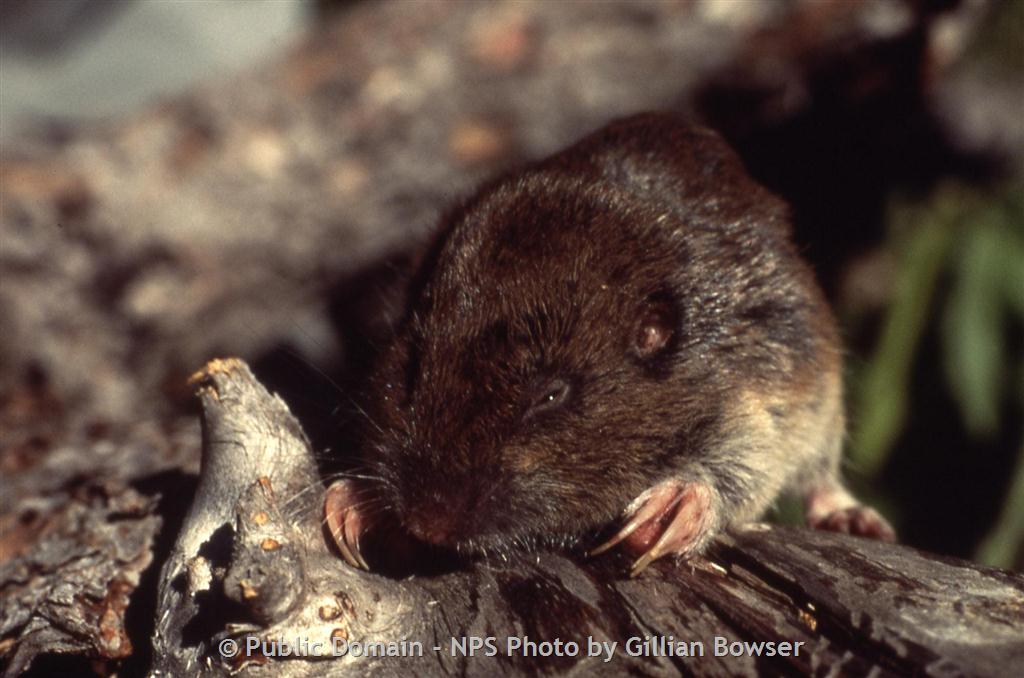
Northern Pocket Gopher, Thomomys talpoides. Courtesy NPS, Gillian Bowser, Photographer Northern Pocket Gopher
Thomomys talpoides
Courtesy NPS
Gillian Bowser, Photographer

Muscrat, Courtesy US FWS, Jessica Bolser, Photographer Muscrat
Courtesy US FWS
Jessica Bolser, Photographer

American Marten
Courtesy US NPS American Marten
Courtesy US NPS

We all love pleasant surprises! I especially enjoy nature’s offerings, both pleasant and less so. I wish to share a few from a very long list!

Snakes may be at the top. I believe we have an innate fear of this special reptile, which has imparted indelible memories. Great Basin gopher snakes have repeatedly shown an uncanny
ability to find birds nests in implausible locations, climbing seemingly impossible vertical walls to consume both bird eggs and young. Rarely, rattlesnakes have crossed my path, their buzz always putting me on full alert- a spine tingling surprise.

Moose may be second to snakes. I’ve been charged a few times and revisit nearly every step taken toward me by these grand beasts, my own steps in fast retreat. But it was a sandhill crane – young bull moose memory, where the crane won the day which lingers fresh. As the young bull curiously extending his tender muzzle toward the nesting bird, it elicited a sharp beak response from the nester that sent the youngster scurrying away.

Golden eagles are a favorite bird for their beauty, intelligence, and undisputed apex predator status. I was stunned to find they may not be top bird after all. On two occasions, I have witnessed a peregrine falcon unleashing its powers of blazing speed and agility to usher a golden eagle well away from the falcon’s eyrie.

I associate the Clark’s nutcracker as a keystone species for nut gathering and caching, while inadvertently feeding grizzlies, squirrels, and planting innumerable five needled pines. It rocked my socks when a flock of songbirds were attacking a Clarks who had stolen a baby bird from a nest for a midday snack. This activity forever changed its strictly nut-eating narrative. I’ve had at least a hundred bear encounters in Yellowstone, Tetons, and Denali national parks, all with favorable outcomes. But only once have I crossed paths with a mountain lion in my thousands of miles hiking wild, remote country. I can recount nearly every second of that rare moment. Lurking in the shadows on a beautiful fall day, I mistake the lion for a coyote. As I approached it from about 30 yards distance, it slowly moved revealing a very long tail. Mixed emotions surged while I talked gently, walking slowly in its direction as it gradually moved away. A spellbinding, euphoric moment.

Beaver encircling boat
I experienced two unforgettable occurrences while exploring Zion’s Hidden Canyon. Being midday, I wasn’t expecting anything beyond a rock squirrel. Then came an unusual hoot, definitely not that of a great horned owl. Answering its call, it flew toward me alighting in a large Douglas fir- a Mexican spotted owl- my first and only sighting. Soon after, two furry critters scrambled up a 10 foot boulder, ringtail cats! Mostly nocturnal, a very rare moment indeed!

I’ll conclude with several surprise animal attacks I’ve suffered- a pocket gopher nipped the soul of my boot, a muskrat attacked my hip-waders, and a pine martin chewed on my well protected toe. Finally, I’ve been strafed by various bird species protecting their nests and young. All leaving surprised chuckles from the victim.

Jack Greene for Bridgerland Audubon Society, Wild for more of Utah’s nature surprises!

Credits:

Images: Courtesy US FWS, USDA Forest Service and US NPS. All photographers acknowledged with images
Featured Audio: Courtesy & © Friend Weller, https://upr.org/
Bird Sounds Courtesy & Copyright Kevin Colver, https://wildstore.wildsanctuary.com/collections/special-collections
Text:     Jack Greene, Bridgerland Audubon, https://bridgerlandaudubon.org/
Additional Reading Links: Lyle Bingham

Additional Reading:

Wild About Utah Pieces by Jack Greene, https://wildaboututah.org/author/jack/

Local Sled Dogs-Sheer Joy

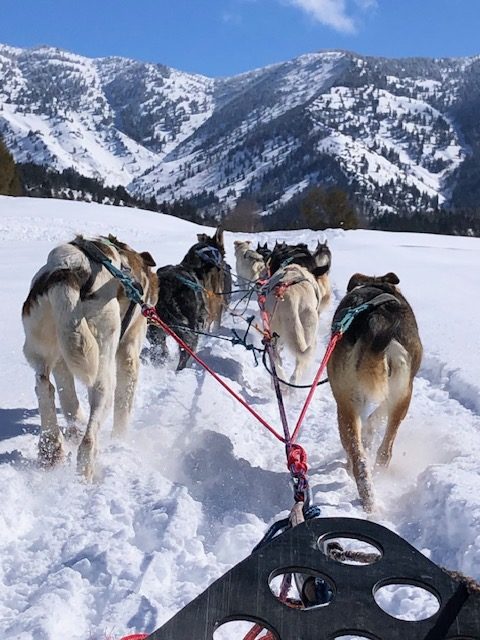
Sled Dogs-Sheer Joy: Sun, Snow, Sheer Joy, Courtesy & © Mary Heers, Photographer
Sun, Snow, Sheer Joy
Courtesy & © Mary Heers, Photographer
As the snow continued to pile up this winter, I started to ask around about sled dogs.

I soon bumped into a friend who had a friend in Preston who trained and occasionally raced his team of 14 Alaskan Huskies.

This musher graciously offered to give me a ride on one of his training runs. I showed up all smiles as he was harnessing his team. The dogs were excited to go and actually howling with happiness. The musher asked if I wanted to get in – or ride up the trail a bit on a snowmobile with his teenage son to a more level spot. In a rare moment of sanity, I opted for the snowmobile.

The machine had just pulled out of the yard when I heard his son say, “Oh, No!”

I looked back in time to see the sled tip over, sending the musher sliding across the driveway and under my car parked at the end of it. I jumped off the snowmobile as the dogs shot past us with the empty sled. The dogs were gaining on a truck up ahead, then shot past it with the snowmobile in hot pursuit.

I was left standing in a snowbank wondering if I’d wandered into a James Bond movie.

My first encounter with sled dogs had gone a lot smoother. I was visiting Denali National Park in Alaska and the rangers were introducing us to one of the dog teams that they still use to patrol the park.

But the most famous sled dogs are the freight teams that carried anti-toxin from Anchorage to Nome during an outbreak of Diphtheria in 1925. The dog teams ran a thousand miles and are credited with saving hundreds of lives.

For the last 50 years, modern mushers have retraced this journey in the ultimate sled dog race, the Ididarod. The best account I’ve read about the world of training sled dogs and running the Ididarod is Gary Paulsen’s book Winterdance. Just before going on a training ride, he discovered, “the gangline was trembling, quivering like a string on a guitar. It fairly hummed and I felt there was great power there. The trees in the yard went by in a mad blur and we left the yard at warp speed.”

Paulsen also lets us in on the deep relationship mushers form with their dogs: “As they understand you will give them meat when they run, and love when they run, and your soul when they run – as they learn to feel that, understand that, know that – they are no longer sled dogs – they become distance dogs, dogs that cannot, will not be stopped.” Paulson ran the Iditarod in 1983. It was a wild ride that took 17 days. But he finished.

Meanwhile, back in Preston, our teenage hero had caught up with the runaway team, made a flying leap from the snowmobile onto the empty sled, and somehow managed to stop the team. Pretty soon the musher and I caught up.

“Do you still want to get in?” he asked.

“Sure,” I said.

And we were off. The dogs settled into a steady trot. From then on it was all Sun and Snow and the sheer Joy of sliding quietly through the magnificent winter scenery.

This is Mary Heers and I’m Wild About Utah

Credits:
Photos: Courtesy & Copyright Mary Heers, Photographer
Featured Audio: Courtesy & Copyright Mary Heers
Text: Mary Heers, https://cca.usu.edu/files/awards/art-and-mary-heers-citation.pdf
Additional Reading: Lyle Bingham, https://bridgerlandaudubon.org/

Additional Reading

Wild About Utah, Mary Heers’ Postings

Paulsen, Gary, Winterdance: The Fine Madness of Running the Iditarod, Harvest Books, HarperCollins February 17, 1995, https://www.amazon.com/Winterdance-Fine-Madness-Running-Iditarod/dp/0156001454/

Idaho Sled Dog Challenge, https://idahosleddogchallenge.com/

Racoons: Masked Bandit Dumpster Divers

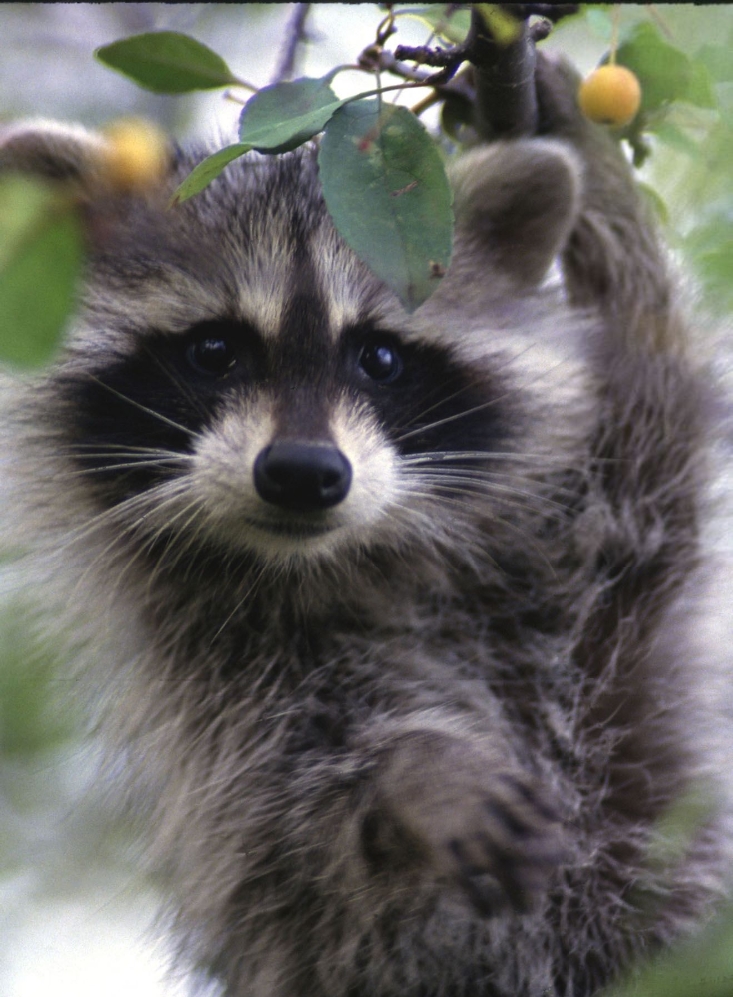
Racoon in Apple Tree, Courtesy US FWS, Bill Buchanan, Photographer
Racoon in Apple Tree
Courtesy US FWS, Bill Buchanan, Photographer
Those masked bandits raiding our gardens by night and bird feeders by day, who often wash their food (actually enhancing tactile experience), have human-like highly sensitive hands, love to eat chickens, as do I, and have a very clever brain- an animal full of contradictions much like us human animals.

I have deep affections for racoons that began with an young childhood in Michigan. A farmer friend discovered a litter of racoon kits in their haymow. Their mother was found dead on a nearby gravel road, a common demise for racoons, skunks, possums and host of many other critters.

The kits barely had their eyes open and needed intensive care. I took two from the litter and began gathering information on how to keep them alive. I don’t recall the details other than my mother mothering me and the baby racoons. We filled a doll bottle with whole, unpasteurized milk, which they quickly drank with gusto! As they drank, their tiny hands would massage my own, which brought me pure joy.

As they grew, I became their world as they explored me from top to bottom, their sensuous hands gathering texture, and other nuances of touch. We became inseparable companions. Neighbor kids soon joined the fun and were delighted by their playful, inquisitive antics.

I was forewarned they could become threats as they matured, even vicious at times, and possibly contracting rabies and other communicable diseases for cats, dogs, and humans. Our neighbors had gardens, keeping careful watch over my pets. Fortunately, my racoons were never a problem. Perhaps it resulted from being so habituated, they became one with us, and being well fed and entertained, never strayed into mischief.

Once the racoons gained maturity, and I became involved with school activities that fall, it was decided to return them to the farm where they were gladly accepted by the younger family members. A month or so later, one was found dead on the highway. A few days later, it’s sibling met the same end near it’s sister. Naturally, it shattered my heart.

So many years and a lifetime later, we are living on a small, wooded stream in N. Utah. Wild racoons are a constant, once birthing a litter in our chimney, occasionally finding their way to my bird feeder, on our deck, and exploring our garage. The grandkids are always enthralled, when these nocturnal beings tap on our deck windows both amazed as they lock eyes.

Raccoons, although not native to Utah, are abundant throughout much of the state. Resource agency professionals estimate that raccoons cause 60–70% of all urban wildlife problems. Racoons display problem-solving skills on par with monkeys. Further, they far outclass domestic pets such as cats and dogs, suggesting an astonishing level of intelligence. And that is often their undoing, as it is our own!

Jack Greene for BAS and I’m wild about our masked bandit dumpster divers!

Credits:

Images: Racoon in Apple Tree, Courtesy US FWS, Bill Buchanan, Photographer, https://digitalmedia.fws.gov/digital/collection/natdiglib/id/11639/rec/2
Audio: Courtesy & © Kevin Colver, https://wildstore.wildsanctuary.com/collections/special-collections
Text: Jack Greene, Bridgerland Audubon, https://bridgerlandaudubon.org/
Additional Reading: Lyle Bingham and Jack Greene, Author, Bridgerland Audubon, https://bridgerlandaudubon.org/

Additional Reading:

Jack Greene’s Postings on Wild About Utah, https://wildaboututah.org/author/jack/

Hinkamp, Dennis, Racoons are Costly Pests, Extension, Utah State University, Dec. 9, 2003, https://extension.usu.edu/archive/raccoons-are-costly-pests

Reese, Julene, Racoons Raiding Your Garden and Garbage, Extension, Utah State University, May 31, 2013 https://extension.usu.edu/archive/raccoons-raiding-your-garden-and-garbage