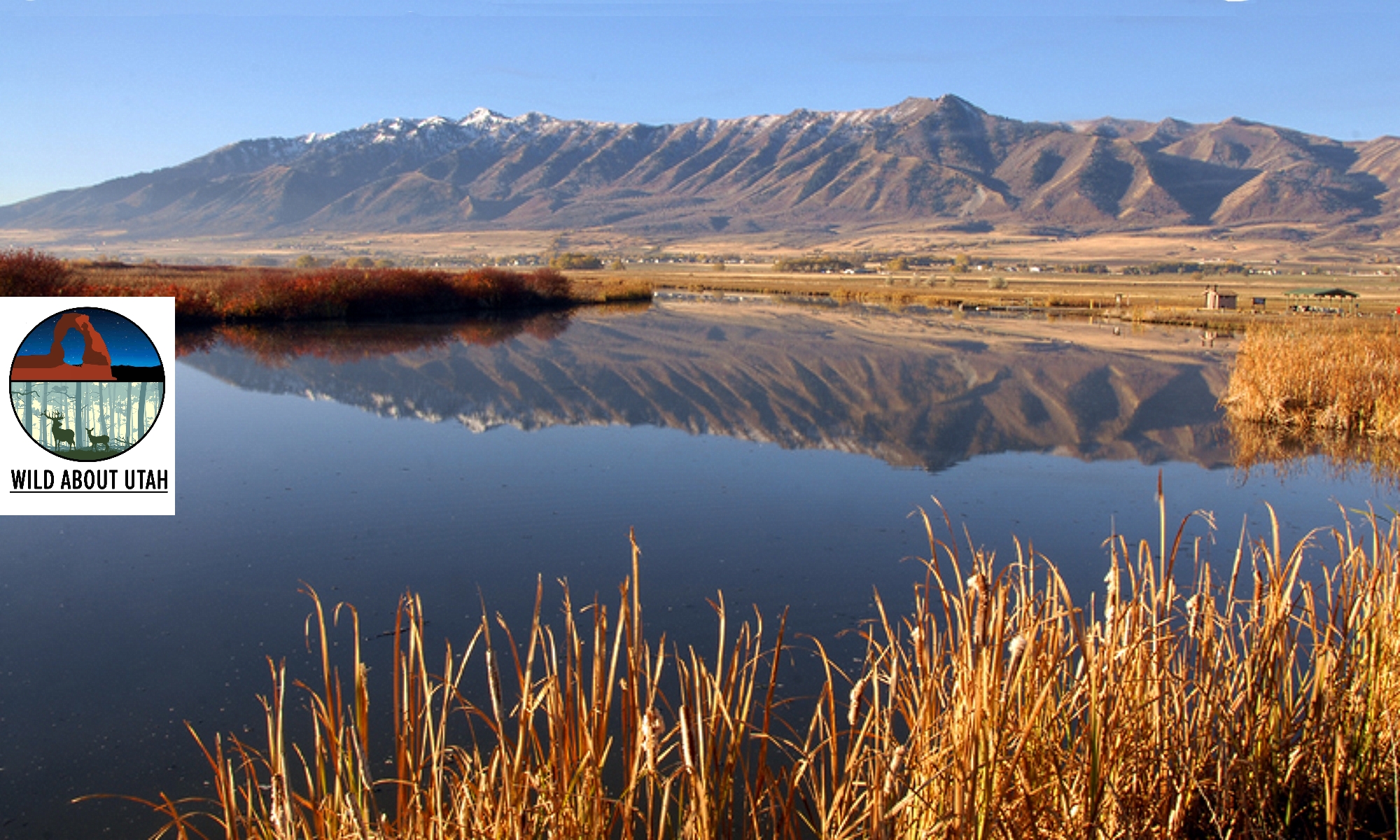
Valuing Rodent Engineers

Welcoming Rodent Engineers: Spawn Creek Beaver Dam and Pond Courtesy and Copyright Bethany Neilson, Photographer
Spawn Creek Beaver Dam and Pond
Courtesy and Copyright Bethany Neilson, Photographer
Finding a beaver dam gives me a sense of discovery and connects me to the past. I fondly remember my parents pointing out dams when we drove up Logan canyon. Instinctively, we’d scan, hoping to see the animals that built and maintained those structures. When we talked about beaver dams, the conversation often turned to trappers who would rendezvous and re-supply in the Bear Lake and Cache valleys. We lived where history had happened, and I was eager to know more.

Years later, inspired by a history class, I read Dale Morgan’s Jedediah Smith and the Opening of the West. Morgan followed the travels of Smith and his fellow trappers who answered William Ashley’s 1822 ad in the Missouri Gazette requesting “ONE HUNDRED MEN, to ascend the river Missouri to its source, there to be employed for one, two, or three years….”
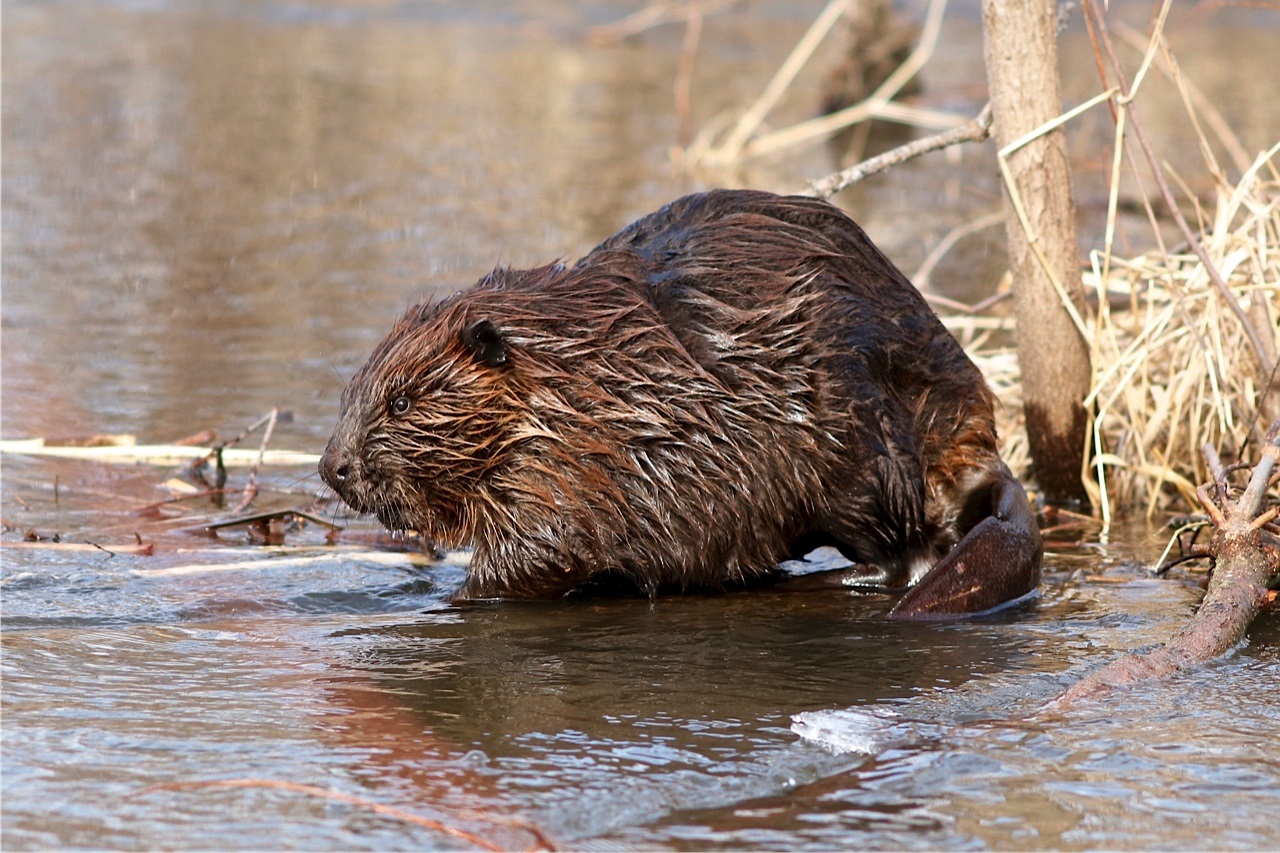
North American beaver (Castor canadensis) Courtesy US FWS, Larry Palmer, Photographer
North American beaver
(Castor canadensis)
Courtesy US FWS, Larry Palmer, Photographer
Ashley’s troop competed with the Hudson’s Bay Company, the American Fur Company and several native indigenous tribes, all trapping beaver. The story sounds familiar: beaver pelts, and later bird feathers, were used to create hats, and the movement to harvest them led to a significant decline in numbers. For the birds, this decline led to building refuges and other conservation efforts. But the plight of the beaver continued downhill as exploration and discovery encouraged an influx of settlers. For the next century, the remaining beaver were regarded by those settlers as invasive land-grabbers, in competition with efforts to direct water, mine and irrigate.

However, today beavers are gaining more respect as we better understand the benefits of their skills in supporting wildlife and wetland conservation. Researchers at Utah State University, including Joe Wheaton and Nick Bouwes of the Department of Watershed Sciences, are studying habitat improvement after beaver introduction as a cost-effective way to combat drought and fire.

Spawn Creek Beaver Dams Courtesy & Copyright Joe Wheaton
Spawn Creek Beaver Dams
Courtesy & Copyright Joe Wheaton, Photographer
They have repeatedly demonstrated, over the past few years, that beaver families can be introduced and thrive behind fabricated beaver dam analogues(BDAs). After release into the resulting ponds, the beavers take over maintenance and produce their own dams. Over time, these dams and their rodent engineers improve stream flows, raise water tables, and cool water temperatures.

In essence, active beaver dams create Mesic habitats where the land maintains a well-balanced supply of moisture throughout the growing season. These dams slow spring run-off as they retain water in ponds and the surrounding soil, thereby, securing water for fish, trees, birds and wildlife. The best part is that the beavers do the maintenance.

Installing Beaver Dam Analogues, Rio Cabolla, Santa Fe National Forest, Courtesy USDA Forest Service
Installing Beaver Dam Analogues
Post Fire Rehabilitation
Rio Cabolla, Santa Fe National Forest,
Courtesy USDA Forest Service

Completed Beaver Dam  Analogues, Rio Cabolla, Santa Fe National Forest, Courtesy USDA Forest Service Completed Beaver Dam Analogues, Rio Cabolla, Santa Fe National Forest,
Courtesy USDA Forest Service

When wildfires occur, beaver oases preserve wildlife and habitat. However, if beaver and their habitats don’t exist in an area before a fire, they can still play a role. By retaining water with beaver dam analogs, we can create wetlands conducive to beaver habitat. In Joe Wheaton’s words, “We can’t dump beaver into a watershed that has burnt to the ground and expect them to do the restoration of degraded streams on their own…. What we can do post-fire is accelerate recovery with low-tech structures that make it easier to more quickly get beaver into an area and accelerate recovery. We’d like to help them do that.” (Utah State Magazine, Winter 2019, p.12)

To learn more about how birds, beaver and water are key to the understanding and improvement of our environment, and to find ways to get involved, check out this story on this wildaboututah.org.

I’m Lyle Bingham for Bridgerland Audubon, and I’m Wild About Utah

Credits:
Photos: Beaver Dam, Courtesy & Copyright © Bethany Neilson, Photographer https://uwrl.usu.edu/people/faculty/neilson-bethany
Spawn Creek Beaver Dams Courtesy & Copyright Joe Wheaton
Installing & Completed Beaver Dam Analogues, Rio Cabolla, Santa Fe National Forest, Courtesy USDA Forest Service
Featured Audio: Courtesy & Copyright © Friend Weller, Utah Public Radio upr.org
Text: Lyle Bingham, https://bridgerlandaudubon.org/
Additional Reading: Lyle Bingham, https://bridgerlandaudubon.org/

Additional Reading

Wild About Utah, Lyle Bingham’ Wild About Utah Postings

Strand, Holly, Beavers: The Original Army Corps of Engineers, April 29, 2010, https://wildaboututah.org/beavers-the-original-army-corps-of-engineers/

Leavitt, Shauna, Beaver–Helping Keep Water on Drying Lands, April 17, 2017, https://wildaboututah.org/the-beaver-helping-keep-water-on-drying-lands/

Leavitt, Shauna, Sixty In-stream Habitat Structures in Four Days: Demonstrating Creek Restoration Techniques, December 18, 2017, https://wildaboututah.org/sixty-instream-habitat-structures-in-four-days-demonstrating-creek-restoration-techniques/

Hellstern, Ron, Leave it to Beaver, July 30, 2018, https://wildaboututah.org/leave-it-to-beaver/

Leavitt, Shauna, Proposed Beaver Holding Facility in Millville, Utah, September 3, 2018, https://wildaboututah.org/proposed-beaver-holding-facility-in-millville-utah/

Leavitt, Shauna, Beaver in Utah’s Desert Rivers, July 6, 2020, https://wildaboututah.org/beaver-in-utahs-desert-rivers/

Heers, Mary, Beaver Tail Slap, October 12, 2020, https://wildaboututah.org/beaver-tail-slap/
(re-aired in late December 2021)

Other Favorites:

Randall, Brianna, Nature’s Engineers: How Beavers Boost Streamflows and Restore Habitat, https://www.sagegrouseinitiative.com/natures-engineers-how-beavers-boost-streamflows-and-restore-habitat/
Randall, Brianna, How Beavers Boost Stream Flows, National Wildlife Federation, January 8, 2020, https://blog.nwf.org/2020/01/how-beavers-boost-stream-flows/

Low-Tech Process Based Restoration of Riverscapes Design Manual, https://lowtechpbr.restoration.usu.edu/manual/

New Manual for Low-Tech Riparian Restoration, https://www.sagegrouseinitiative.com/new-manual-for-low-tech-riparian-restoration/

Randall, Brianna, Beavers, Water, and Fire—A New Formula for Success, Low-tech stream restoration works wonders for people and wildlife, National Wildlife Federation, October 30, 2018, https://blog.nwf.org/2018/10/beavers-water-and-fire-a-new-formula-for-success/

Nicholas Weber ,Nicolaas Bouwes,Michael M. Pollock,Carol Volk,Joseph M. Wheaton,Gus Wathen,Jacob Wirtz,Chris E. Jordan, Alteration of stream temperature by natural and artificial beaver dams, May 17, 2017, https://doi.org/10.1371/journal.pone.0176313 OR https://journals.plos.org/plosone/article?id=10.1371/journal.pone.0176313

Prettyman, Brett, Dolling (SLTRIB), Justin(UT DWR), Beavers in Utah, Creators of Habitat, The Salt Lake Tribune & Utah DWR, Oct 15, 2009
https://youtu.be/cMhaYRNLTno
Utah’s population of beaver has recovered since the days when they were trapped by mountain men, but some people wonder if moving beaver to traditional habitats may help deal with drought.

Utah Beaver Management Plan, Utah Division of Wildlife Resources, https://wildlife.utah.gov/pdf/furbearer/beaver_plan_2010-2020.pdf

Birds, Beaver and Water in a Changing Climate, Bridgerland Audubon, https://bridgerlandaudubon.org/birds-beaver-and-water-in-a-changing-climate/

Goldfarb, Ben, Eager: The Surprising, Secret Life of Beavers and Why They Matter, Chelsea Green Publishing, March 8, 2019, https://www.amazon.com/Eager-Surprising-Secret-Beavers-Matter/dp/1603589082/


Waldo the Wildcat

Waldo the Wildcat with the WSC Cheerleaders and Marching Band
Courtesy: Special Collections and University Archives, Weber State University.
Waldo the Wildcat with the WSC Cheerleaders and Marching Band
March 22, 1968
Courtesy: Special Collections and University Archives, Weber State University.
A week ago I received the Weber State University Alumni Magazine that released a flood of memories and emotions. “Waldo celebrates 60” with Waldo’s cartoonish face on the cover. Waldo was not a cartoon, but a genuine lady bobcat and Weber State College mascot, a gorgeous animal that stole my heart!

Wildcat WSU Alumni Magazine Winter 2025 Cover, Courtesy WSU Marketing & Communications, Copyright Weber State University
Wildcat WSU Alumni Magazine
Winter 2025 Cover
Courtesy WSU Marketing & Communications
Copyright Weber State University
She was in my life as her temporary caretaker for a year from 1966-67. She was a beautiful, lively, highly intelligent being, who loved playing fetch, chasing dogs, and pouncing on my back.

When I first picked her up, I was forewarned she didn’t like riding in a vehicle and should be sedated and placed in her cage, which was loaded in the back of my old pickup truck. I didn’t wish Waldo to be tranquilized and wanted her in the cab with me to avoid injury. Her caretaker was quite concerned for my safety.

She calmly sat beside me as her handler waved us away. From that moment, things spiraled down quickly. When I started the engine, she crouched with ears back emitting a low growl. Reaching for the floor shift, Waldo attacked my arm. Luckily, her canine teeth and front claws were removed when a kitten, so damage was minimal.

We rocketed away with the cat screaming and jumping between me and the passenger side window. While waiting for the light to change at a Washington Blvd. intersection, Waldo was wound up tight, emitting wildcat screams once we began moving again. Being a hot summer day, I had cracked the windows. Her caterwauls and thrashing about attracted considerable notice by drivers and those on nearby sidewalks. We finally made what seemed an interminably long drive to her new quarters. Once the truck engine was off, Waldo settled.

On numerous occasions in the year that followed, Waldo showed me her uncanny intelligence, strength, and agility. The challenge of getting her into the dog run cage was never easy. While playing fetch, it dawned on me that she would follow the ball into her cage! This worked once. The next time I threw the ball into her cage, she ran to the door, sat down, looked at me with an expression “You think I’m stupid?” One trick that always worked was tossing a hunk of raw meat into the cage- she couldn’t resist!

Another favorite game was dropping from the eight-foot-high open rafters in the garage onto my shoulders as I walked below. Waldo could effortlessly spring from the garage floor into the rafters, disappear into the shadows, and drop on my shoulders with mouth lightly pressed against my juggler “Gottcha!”, spring off and repeat this horrific act of terror against her victim.

We had our moments with the law. When neighbors saw a wildcat chasing their dog, soon after the Ogden police would appear, giving me the ultimatum to control the cat, or have it released into the wilds, which would spell doom for habituated Waldo without canines and front claws. She would soon starve, be hit by a car, shot, or lost to a predator. When her caretaker returned, it was a difficult parting, when I left Utah to continue my studies in Michigan.

This is Jack Greene for Bridgerland Audubon Society and I’m Wild about Utah Wildcats!

Credits:
Image: Wildcat WSU Alumni Magazine Winter 2025 Cover, Courtesy WSU Marketing & Communications, Copyright Weber State University. (Digital copy made available by Utah Digital Newspapers), https://newspapers.lib.utah.edu/details?id=21945988
Image: Waldo Celebrates 60, Cover, Wildcat, WSU Alumni Magazine, Winter 2025, Courtesy Alumni Magazine Staff, Copyright Weber State University
Featured Audio: Courtesy & © Anderson, Howe and Wakeman
Text: Jack Greene, Bridgerland Audubon, https://bridgerlandaudubon.org/
Additional Reading: Jack Greene & Lyle W Bingham, Webmaster, Bridgerland Audubon, https://bridgerlandaudubon.org/

Additional Reading:

Jack Greene’s Postings on Wild About Utah, https://wildaboututah.org/author/jack/

Johnson, Marian, He’s a She!, Signpost, Weber State University Student Newspaper, https://newspapers.lib.utah.edu/details?id=21945988

Bobcat – Lynx rufus, Fieldguide, Utah Division of Wildlife Resources, https://fieldguide.wildlife.utah.gov/?species=lynx%20rufus

Harris, Kandice & Winston, Jaime, Waldo Celebrates 60, Wildcat, the WSU Alumni Magazine, Weber State University, https://www.weber.edu/wsumagazine/waldo-60-anniversary.html

Hardware Ranch

Hardware Ranch: Elk Herd at Hardware Ranch Courtesy & Copyright Eric Newell, Photographer
Elk Herd at Hardware Ranch
Courtesy & Copyright Eric Newell, Photographer
Click to view a larger image in a separate tab or window
Hardware Wildlife Management Area (WMA) provides refuge for hundreds of elk who congregate each December and hunker down for the duration of the winter.

Hardware Ranch: Riding Out to Feed the Elk Hardware Ranch Courtesy & Copyright Eric Newell, Photographer
Riding Out to Feed the Elk
Hardware Ranch
Courtesy & Copyright Eric Newell, Photographer

Elk Merge on Dropped Hay Hardware Ranch Courtesy & Copyright Eric Newell, Photographer Elk Merge on Dropped Hay
Hardware Ranch
Courtesy & Copyright Eric Newell, Photographer

Preparing to Push the Bale Hardware Ranch Courtesy & Copyright Eric Newell, Photographer Preparing to Push the Bale
Hardware Ranch
Courtesy & Copyright Eric Newell, Photographer

Elk Fed, Riding Back Hardware Ranch Courtesy & Copyright Eric Newell, Photographer Elk Fed, Riding Back
Hardware Ranch
Courtesy & Copyright Eric Newell, Photographer

Thoughts to Paper Hardware Ranch Courtesy & Copyright Eric Newell, Photographer Thoughts to Paper
Hardware Ranch
Courtesy & Copyright Eric Newell, Photographer

Documenting the Experience Hardware Ranch Courtesy & Copyright Eric Newell, Photographer Documenting the Experience
Hardware Ranch
Courtesy & Copyright Eric Newell, Photographer

In 2008, Hardware Education Director Marni Lee and I established a service-learning partnership. Since then, I have ventured up northern Utah’s Blacksmith Fork Canyon with about a thousand 5th and 6th graders—a half-dozen students at a time—to spend the day with DWR biologists and managers. Each morning, we feed roughly 5,000 pounds of hay to wintering elk (about ten pounds of hay per head) and we learn first-hand the details of how biologists monitor and manage wildlife and wildlife habitat.

We typically see bulls sparring or cows boxing over who gets first dibs on the freshly tossed hay. We often observe bald eagles and sometimes golden eagles. We’ve discovered flattened dried-out snakes in the hay bales who were scooped up into the baler the previous summer. We’ve helped relocate wild turkeys. We’ve examined an elk fetus after a cow elk was hit by a vehicle and miscarried on the road. We’ve seen coyote and cougar tracks. We’ve encountered moose, porcupines, beaver, ermine weasels, and snowshoe hares. Many impromptu anatomy lessons have occurred upon discovering deer carcasses—something that always fascinates students. We’ve watched biologists tranquilize wildlife, helped them humanely trap elk so they can test them for disease, measure back fat, and attach GPS tracking collars—all of which enable them to gather data that informs wildlife management decisions.

Throughout the day (and back in the classroom), math, science, and language arts curriculum standards are woven into the experience. This is my kind of school. “Mister Nool’s Schewell,” as one student wrote with a giggle.

Depending on conditions, after lunch we hike, snowshoe, or cross-country ski to various overlooks where students sit down, pull out their field journals, and write. I never check their notebooks for writing conventions—there is plenty of time to polish spelling and grammar in the classroom. The goal here is to capture the magic of mountains.

Here are few recent samples of Edith Bowen Laboratory School 5th graders’ writings recorded in the wild, with the wind in background:

Harper:
“Have you ever wondered what it would be like to be sitting on the top of a mountain with the sun smiling warmly up above on your face and the birds ‘chirpling’ happily with the polka-dotty mountains?”

Macey:
“Hardware Ranch Hike: As I write, I bathe in the sun. I hear the pages turning and I see the lime-green rock and the evergreen trees battling the white snow. As the birds chirp, the breeze makes my hair flow. The light sprinkle of snow gets rushed by the wind. I get a little chilly but the view makes up for it. The gentle curves of the mountain covered in the snow, the dark green mountains surrounding me, and the moss-coved rocks that feel like a pillow.”

Boston:
“Today we went to Hardware Ranch. We went on a great hike to the top of a mountain. I am writing these words on the top of that mountain. The wind up here is whooshing through my ears. On this hike I have collected two things. A hawk feather and an elk tooth.
This fieldtrip to Hardware Ranch was a really great fieldtrip. I hope you get to come here too.”

Mike:
“I have experienced breathtaking views before and I have seen phenomenal creatures, but I’ve never seen so many different kinds on the same day. I could live here. It’s so peaceful. The wind is paralyzing. If you haven’t come here yet, you have to do it now. This place is for wildlife lovers, nature lovers, and if you’re like me, love both. Either way this place is spectacular. I wish that I could stay.”

I do too.

I am Eric Newell,
I am Harper Famer,
I am Macey Hill,
I am Boston Winn,
I am Mike Brandley,
and we are wild about writing in the wild country.

Credits:
Images: Courtesy & Copyright Eric Newell, Photographer. Used with permission of the photographer, students and parents
Featured Audio: Courtesy & © Kevin Colver https://wildstore.wildsanctuary.com/, Courtesy & © Friend Weller, https://www.upr.org/people/friend-weller, Courtesy & Copyright © Anderson, Howe, Wakeman
Thank you Eric Newell for recording the student audio clips
Text: Eric Newell, Edith Bowen Laboratory School, Utah State University
Additional Reading: Eric Newell

Additional Reading

Wild About Utah Pieces by Eric Newell

Link to Hardware WMA website and information about sleigh rides:

Haviland’s Old West Adventures will offer horse-drawn sleigh and wagon rides* through the elk herd on Fridays, Saturdays and Sundays from Dec. 6 through Feb. 9. Rides start at 10 a.m. and end at 4:30 p.m. each day. Each ride lasts about 40 minutes. Follow the link for more information, including rates:
https://wildlife.utah.gov/hardware-visit.html

Anderson, Michael, DWR, USU partner to get fifth-graders excited about science, writing, KSL-TV, January 15, 2016, https://www.ksl.com/article/38150310/dwr-usu-partner-to-get-fifth-graders-excited-about-science-writing

Hardware Ranch field experience video (2008), https://www.youtube.com/watch?v=x46T5jt-CDI

Edith Bowen Laboratory School, edithbowen.usu.edu
Follow us on Instagram and Facebook:
@edithbowenlaboratoryschool
Facebook, Edith Bowen Laboratory School

Mount Logan Middle School Discovery Program (2008-2016), MountLoganDiscovery.org

What is Brucellosis? https://wildlife.utah.gov/brucellosis.html

Gurrister, Tom, Utah elk test clean of brucellosis, unlike Idaho and Wyoming, Gephardt Daily, March 15, 2024, https://gephardtdaily.com/local/utah-elk-test-clean-of-brucellosis-unlike-idaho-and-wyoming-2/

Goats in the Mountains

Walking to Exercise the Pack Goats Courtesy & Copyright Mary Heers, Photographer
Walking to Exercise the Pack Goats
Courtesy & Copyright Mary Heers, Photographer
When a family friend recently returned from a big hunting trip, he mentioned he’d taken along his new pack goats.

“Pack goats?” I perked up at the thought of seeing goats on a hiking trail in the mountains.

“They’re very friendly,” he added.

Deviance from Walking to Exercise the Pack Goats Courtesy & Copyright Mary Heers, Photographer
Deviance from Walking to Exercise the Pack Goats
Courtesy & Copyright Mary Heers, Photographer
A domestic goat is very different from a wild mountain goat. It’s very unlikely a hiker will ever see a wild goat because there are less than 2,000 scattered about in a few small herds in Utah. These herds can be traced back to the forty wild goats brought here from Olympic National Park in Washington beginning in 1967. These mountain goats have 2 distinctive layers of thick white hair and 2 black backward-slanting horns.

Mountain goats keep to the high mountains. If a hiker sees them at all, it’s most likely on a rocky ledge. A mountain goat is a great climber that has been clocked going up 75 vertical feet in 60 seconds. A rocky ledge is a good place to escape predators like bears and wolves. Unfortunately, it’s no defense against eagles, that has been known to swoop down and carry off a small kid.

About 10,000 years ago, villagers in Asia first domesticated the goat. To this day, in some parts of the world, owning a goat can make a big difference for a family. Bernice’s Goat is a beautiful children’s book that tells the true story of a nine-year-old girl in Uganda whose mother receives a gift of a goat from the Heifer International nonprofit. The goat soon gives birth to twins and the milk just flows. There is enough for the baby goats and Bernice’s five younger brothers and sisters…and still enough to sell a little to the neighbors. Her mother can now pay school fees, and Bernice gets her deepest wish. She is able to go to school.

Back in Cache Valley, I wasted no time inviting myself over to meet my friend’s new goats. The goats rushed up to the fence and seemed as curious about me as I was about them.

“Can we go for a walk?” I asked.

Soon we were headed up a nearby trailhead. Pack goats need a lot of exercise to keep in shape. This was just an easy workout. On a hunting trip, the goats wear a pack saddle, and each one will carry about 40 lbs.

By now I was really intrigued and bought a copy of John Mionczynski’s book, The Pack Goat. According to the author, a goat that has been bonded with humans when young will grow into a strong, sure-footed, trustworthy companion in the wilderness. John now runs a pack goat business that accompanies groups on overnight camping trips. His favorite goat is Julio.

Julio will watch everyone bedding down for the night. Then he will saunter over to someone and politely stand next to their sleeping bag. Slowly and gently, he’ll kneel down. Then he’ll lean over until he is comfortably snuggled against the sleeper.

“If you’ve never slept with a goat on a cold night [on a camping trip],” John writes. “You don’t know what you’ve been missing.”

I closed the book and sighed. I had one more thing to add to my bucket list.

This is Mary Heers, and I’m Wild About Utah.

Credits:
Photos: Courtesy Mary Heers,
Featured Audio: Courtesy & Copyright © Friend Weller, Utah Public Radio upr.org, and audio Courtesy & © Anderson, Howe and Wakeman
Text: Mary Heers, https://cca.usu.edu/files/awards/art-and-mary-heers-citation.pdf
Additional Reading: Lyle Bingham, https://bridgerlandaudubon.org/

Additional Reading

Wild About Utah, Mary Heers’ Wild About Utah Postings

Mionczynski, John, The Pack Goat, Reavis, January 1, 2004, https://www.amazon.com/Pack-Goat-John-Mionczynski/dp/0976255405

[We oppose introduction of non-native] Mountain Goats in the Bear River Range, Bridgerland Audubon, https://bridgerlandaudubon.org/our-projects/advocacy/mountain-goats-in-the-bear-river-range/

McBrier, Page(Author), Lohstoeter, Lori(Illustrator), Beatrice’s Goat, Aladdin, Reprint July 1, 2004, https://www.amazon.com/Beatrices-Goat-Page-McBrier/dp/0689869908