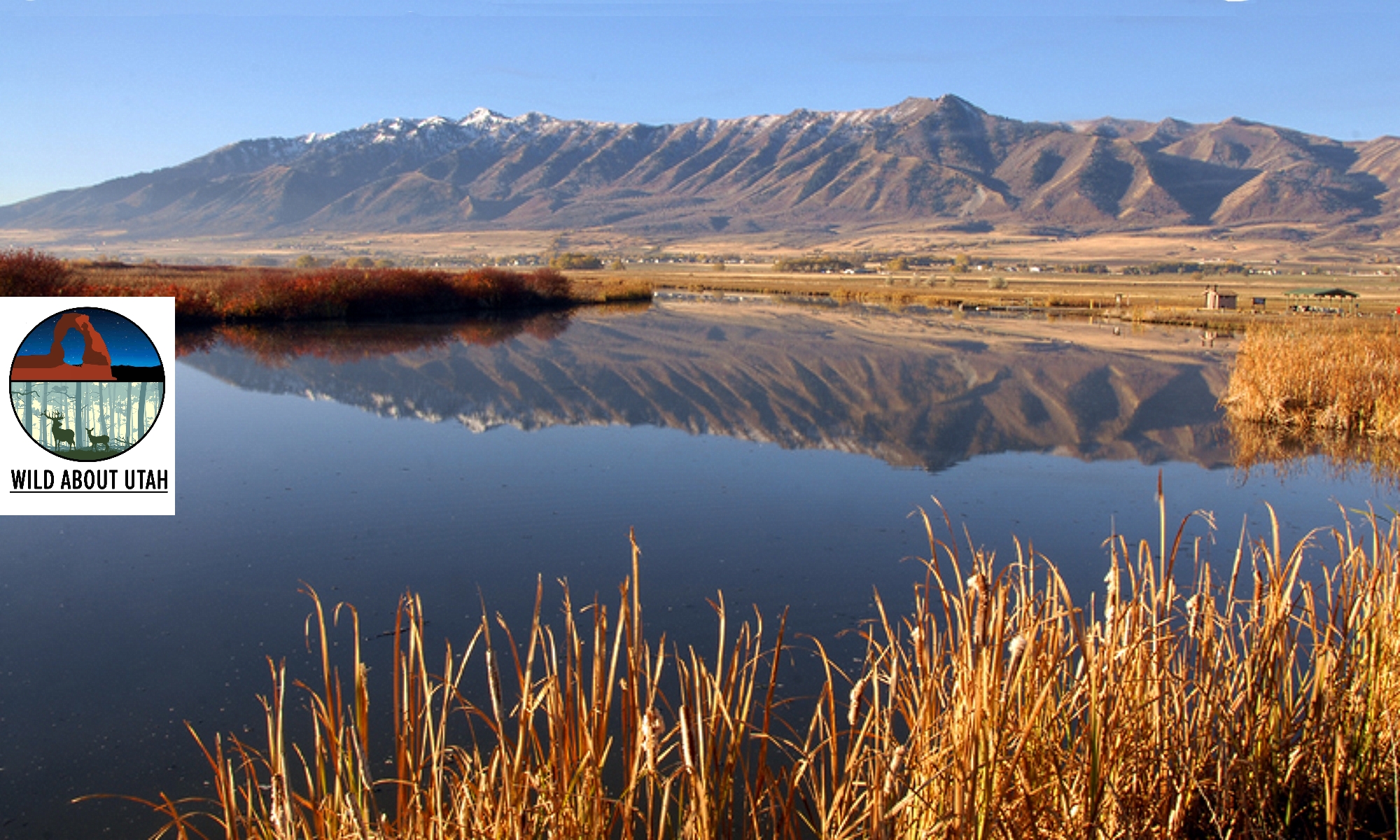
Welcoming Rodent Engineers

Welcoming Rodent Engineers: Spawn Creek Beaver Dam and Pond Courtesy and Copyright Bethany Neilson, Photographer
Spawn Creek Beaver Dam and Pond
Courtesy and Copyright Bethany Neilson, Photographer
Finding a beaver dam gives me a sense of discovery and connects me to the past. I fondly remember my parents pointing out dams when we drove up Logan canyon. Instinctively, we’d scan, hoping to see the animals that built and maintained those structures. When we talked about beaver dams, the conversation often turned to trappers who would rendezvous and re-supply in the Bear Lake and Cache valleys. We lived where history had happened, and I was eager to know more.

Years later, inspired by a history class, I read Dale Morgan’s Jedediah Smith and the Opening of the West. Morgan followed the travels of Smith and his fellow trappers who answered William Ashley’s 1822 ad in the Missouri Gazette requesting “ONE HUNDRED MEN, to ascend the river Missouri to its source, there to be employed for one, two, or three years….”
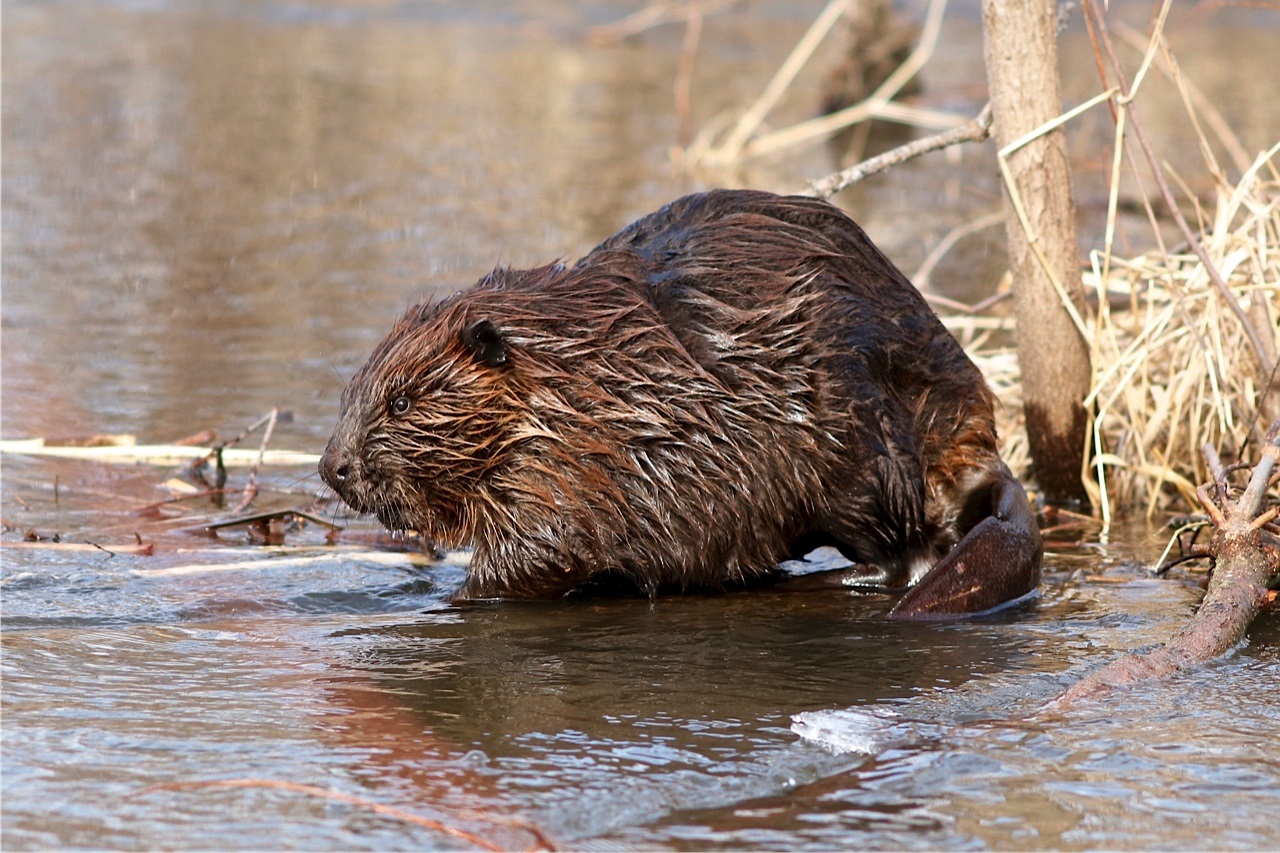
North American beaver (Castor canadensis) Courtesy US FWS, Larry Palmer, Photographer
North American beaver
(Castor canadensis)
Courtesy US FWS, Larry Palmer, Photographer
Ashley’s troop competed with the Hudson’s Bay Company, the American Fur Company and several native indigenous tribes, all trapping beaver. The story sounds familiar: beaver pelts, and later bird feathers, were used to create hats, and the movement to harvest them led to a significant decline in numbers. For the birds, this decline led to building refuges and other conservation efforts. But the plight of the beaver continued downhill as exploration and discovery encouraged an influx of settlers. For the next century, the remaining beaver were regarded by those settlers as invasive land-grabbers, in competition with efforts to direct water, mine and irrigate.

However, today beavers are gaining more respect as we better understand the benefits of their skills in supporting wildlife and wetland conservation. Researchers at Utah State University, including Joe Wheaton and Nick Bouwes of the Department of Watershed Sciences, are studying habitat improvement after beaver introduction as a cost-effective way to combat drought and fire.

Spawn Creek Beaver Dams Courtesy & Copyright Joe Wheaton
Spawn Creek Beaver Dams
Courtesy & Copyright Joe Wheaton, Photographer
They have repeatedly demonstrated, over the past few years, that beaver families can be introduced and thrive behind fabricated beaver dam analogues(BDAs). After release into the resulting ponds, the beavers take over maintenance and produce their own dams. Over time, these dams and their rodent engineers improve stream flows, raise water tables, and cool water temperatures.

In essence, active beaver dams create Mesic habitats where the land maintains a well-balanced supply of moisture throughout the growing season. These dams slow spring run-off as they retain water in ponds and the surrounding soil, thereby, securing water for fish, trees, birds and wildlife. The best part is that the beavers do the maintenance.

Installing Beaver Dam Analogues, Rio Cabolla, Santa Fe National Forest, Courtesy USDA Forest Service
Installing Beaver Dam Analogues
Post Fire Rehabilitation
Rio Cabolla, Santa Fe National Forest,
Courtesy USDA Forest Service

Completed Beaver Dam  Analogues, Rio Cabolla, Santa Fe National Forest, Courtesy USDA Forest Service Completed Beaver Dam Analogues, Rio Cabolla, Santa Fe National Forest,
Courtesy USDA Forest Service

When wildfires occur, beaver oases preserve wildlife and habitat. However, if beaver and their habitats don’t exist in an area before a fire, they can still play a role. By retaining water with beaver dam analogs, we can create wetlands conducive to beaver habitat. In Joe Wheaton’s words, “We can’t dump beaver into a watershed that has burnt to the ground and expect them to do the restoration of degraded streams on their own…. What we can do post-fire is accelerate recovery with low-tech structures that make it easier to more quickly get beaver into an area and accelerate recovery. We’d like to help them do that.” (Utah State Magazine, Winter 2019, p.12)

To learn more about how birds, beaver and water are key to the understanding and improvement of our environment, and to find ways to get involved, check out this story on this wildaboututah.org.

I’m Lyle Bingham for Bridgerland Audubon, and I’m Wild About Utah

Credits:
Photos: Beaver Dam, Courtesy & Copyright © Bethany Neilson, Photographer https://uwrl.usu.edu/people/faculty/neilson-bethany
Spawn Creek Beaver Dams Courtesy & Copyright Joe Wheaton
Installing & Completed Beaver Dam Analogues, Rio Cabolla, Santa Fe National Forest, Courtesy USDA Forest Service
Featured Audio: Courtesy & Copyright © Friend Weller, Utah Public Radio upr.org
Text: Lyle Bingham, https://bridgerlandaudubon.org/
Additional Reading: Lyle Bingham, https://bridgerlandaudubon.org/

Additional Reading

Wild About Utah, Lyle Bingham’ Wild About Utah Postings

Strand, Holly, Beavers: The Original Army Corps of Engineers, April 29, 2010, https://wildaboututah.org/beavers-the-original-army-corps-of-engineers/

Leavitt, Shauna, Beaver–Helping Keep Water on Drying Lands, April 17, 2017, https://wildaboututah.org/the-beaver-helping-keep-water-on-drying-lands/

Leavitt, Shauna, Sixty In-stream Habitat Structures in Four Days: Demonstrating Creek Restoration Techniques, December 18, 2017, https://wildaboututah.org/sixty-instream-habitat-structures-in-four-days-demonstrating-creek-restoration-techniques/

Hellstern, Ron, Leave it to Beaver, July 30, 2018, https://wildaboututah.org/leave-it-to-beaver/

Leavitt, Shauna, Proposed Beaver Holding Facility in Millville, Utah, September 3, 2018, https://wildaboututah.org/proposed-beaver-holding-facility-in-millville-utah/

Leavitt, Shauna, Beaver in Utah’s Desert Rivers, July 6, 2020, https://wildaboututah.org/beaver-in-utahs-desert-rivers/

Heers, Mary, Beaver Tail Slap, October 12, 2020, https://wildaboututah.org/beaver-tail-slap/
(re-aired in late December 2021)

Other Favorites:

Randall, Brianna, Nature’s Engineers: How Beavers Boost Streamflows and Restore Habitat, https://www.sagegrouseinitiative.com/natures-engineers-how-beavers-boost-streamflows-and-restore-habitat/
Randall, Brianna, How Beavers Boost Stream Flows, National Wildlife Federation, January 8, 2020, https://blog.nwf.org/2020/01/how-beavers-boost-stream-flows/

Low-Tech Process Based Restoration of Riverscapes Design Manual, https://lowtechpbr.restoration.usu.edu/manual/

New Manual for Low-Tech Riparian Restoration, https://www.sagegrouseinitiative.com/new-manual-for-low-tech-riparian-restoration/

Randall, Brianna, Beavers, Water, and Fire—A New Formula for Success, Low-tech stream restoration works wonders for people and wildlife, National Wildlife Federation, October 30, 2018, https://blog.nwf.org/2018/10/beavers-water-and-fire-a-new-formula-for-success/

Nicholas Weber ,Nicolaas Bouwes,Michael M. Pollock,Carol Volk,Joseph M. Wheaton,Gus Wathen,Jacob Wirtz,Chris E. Jordan, Alteration of stream temperature by natural and artificial beaver dams, May 17, 2017, https://doi.org/10.1371/journal.pone.0176313 OR https://journals.plos.org/plosone/article?id=10.1371/journal.pone.0176313

Prettyman, Brett, Dolling (SLTRIB), Justin(UT DWR), Beavers in Utah, Creators of Habitat, The Salt Lake Tribune & Utah DWR, Oct 15, 2009 •

Utah’s population of beaver has recovered since the days when they were trapped by mountain men, but some people wonder if moving beaver to traditional habitats may help deal with drought.

Utah Beaver Management Plan, Utah Division of Wildlife Resources, https://wildlife.utah.gov/pdf/furbearer/beaver_plan_2010-2020.pdf

Birds, Beaver and Water in a Changing Climate, Bridgerland Audubon, https://bridgerlandaudubon.org/birds-beaver-and-water-in-a-changing-climate/

Goldfarb, Ben, Eager: The Surprising, Secret Life of Beavers and Why They Matter, Chelsea Green Publishing, March 8, 2019, https://www.amazon.com/Eager-Surprising-Secret-Beavers-Matter/dp/1603589082/ref=asc_df_1603589082/
Flying Mule Deer

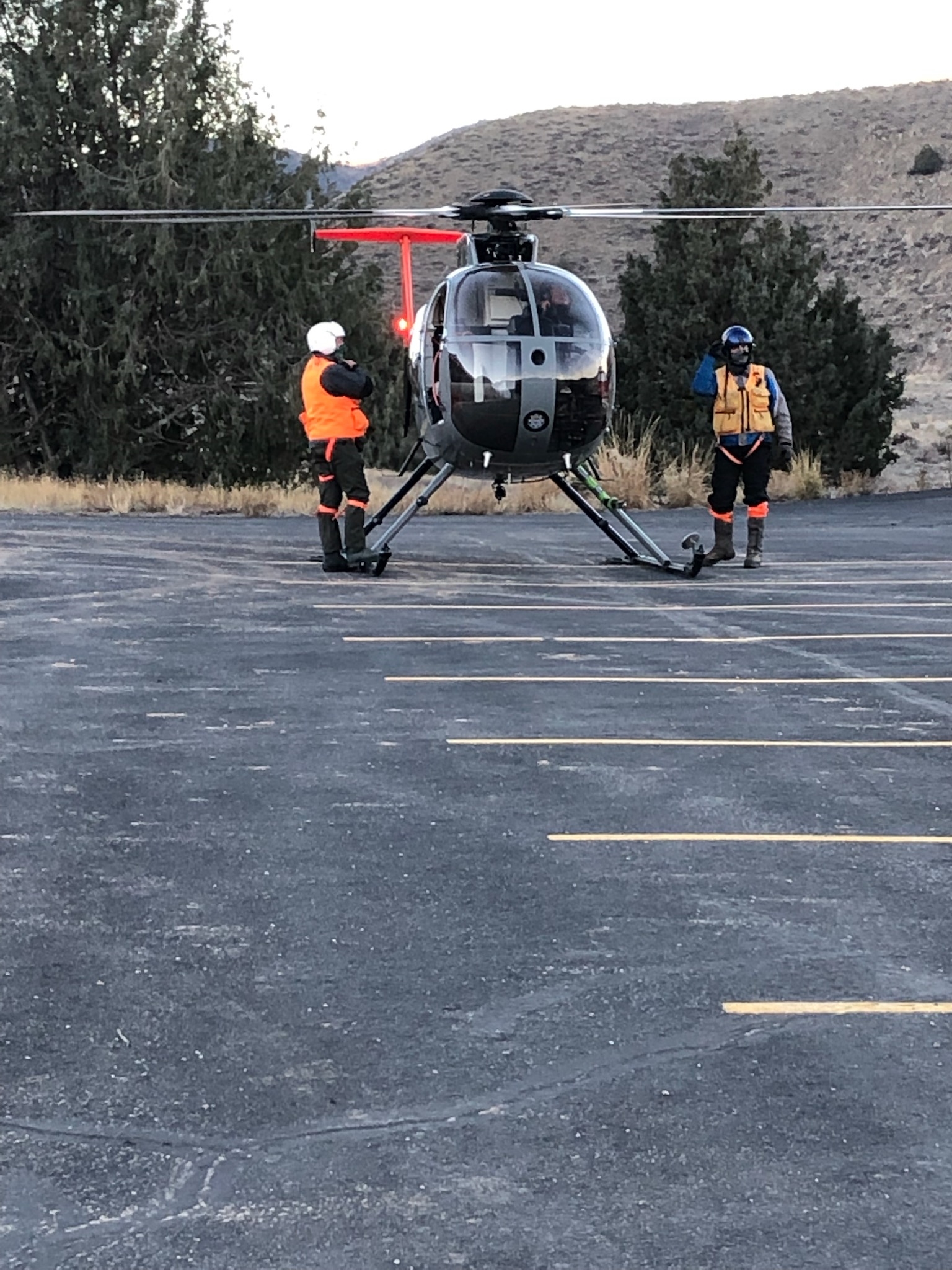
Flying Mule Deer: Helicopter Crew Courtesy & © Mary Heers, Photographer
Helicopter Crew
Courtesy & © Mary Heers, Photographer

Mule Deer Incoming Courtesy & © Mary Heers, Photographer Mule Deer Incoming
Courtesy & © Mary Heers, Photographer

Mule Deer Incoming Courtesy & © Mary Heers, Photographer Mule Deer Incoming
Courtesy & © Mary Heers, Photographer

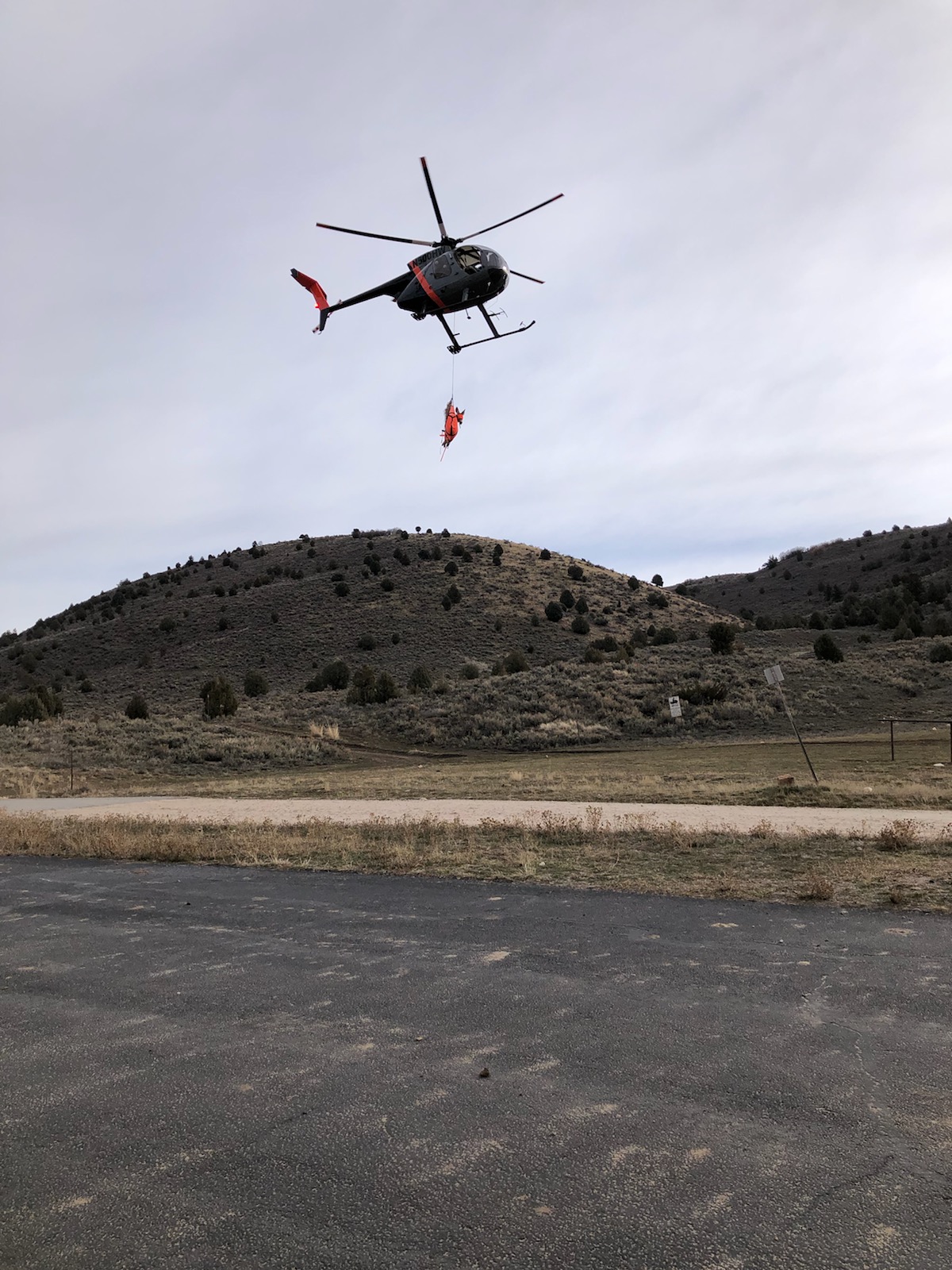
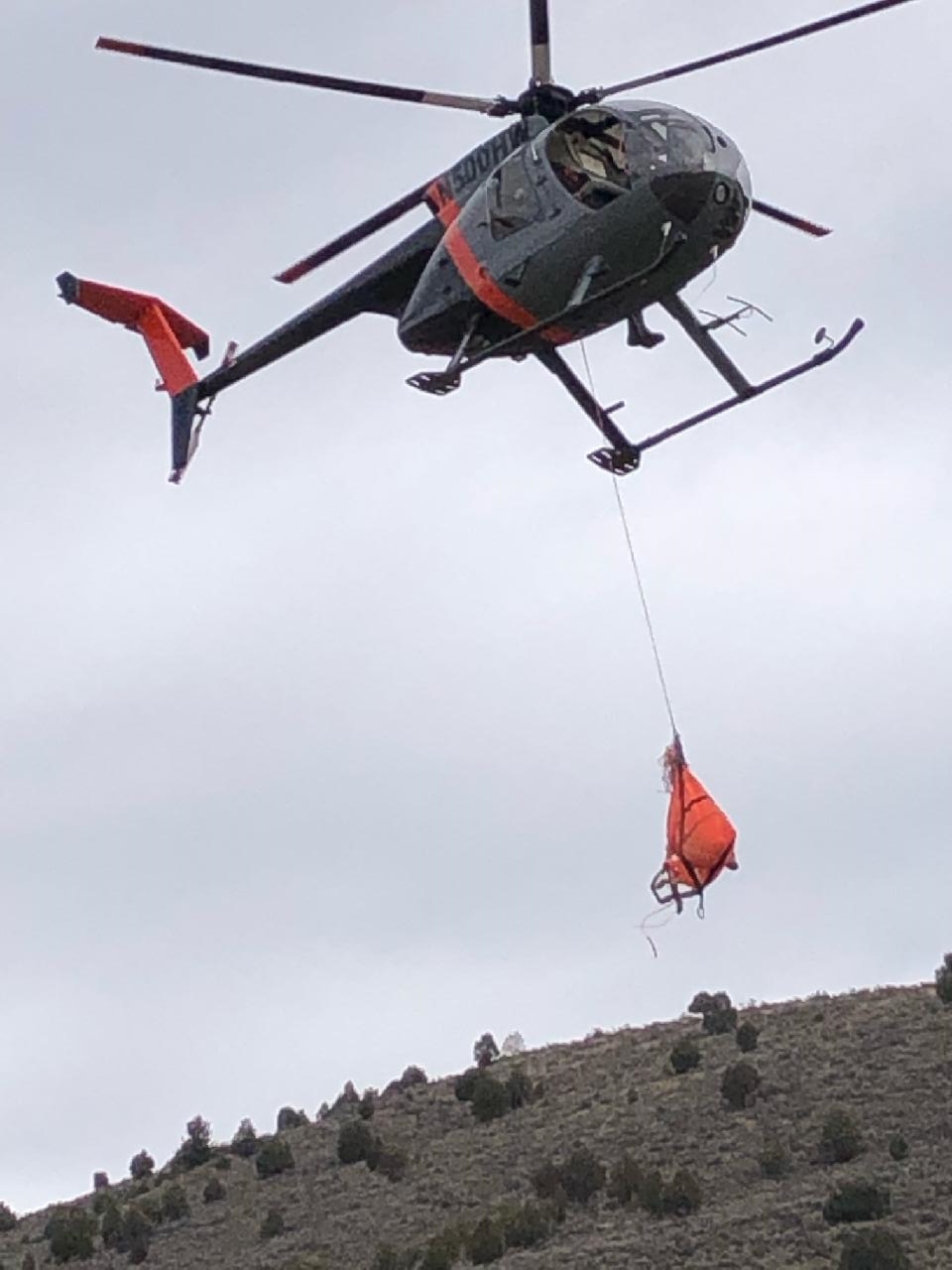
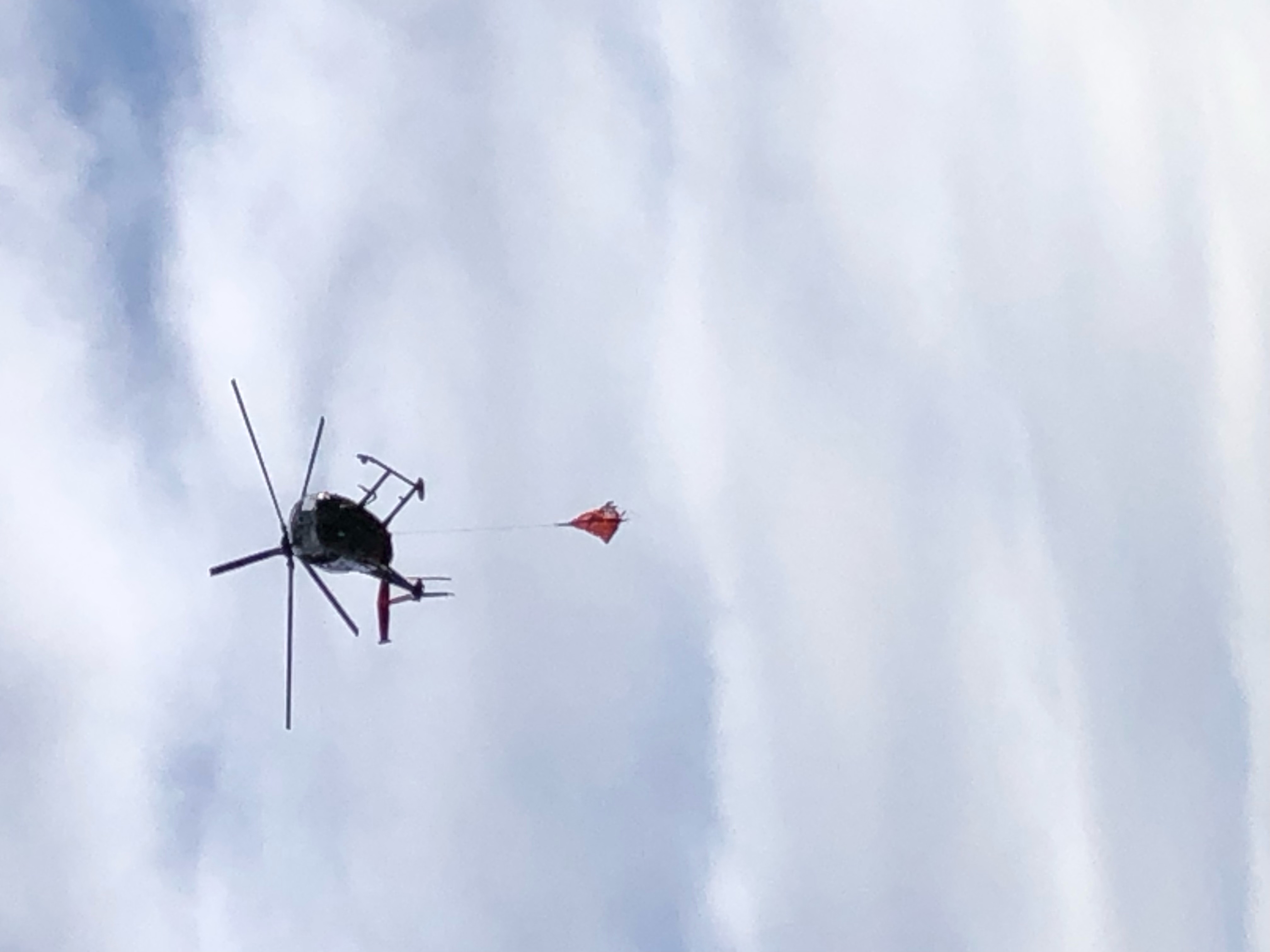
Helicopter Carrying Mule Deer Courtesy & © Mary Heers, Photographer Helicopter Carrying Mule Deer
Courtesy & © Mary Heers, Photographer

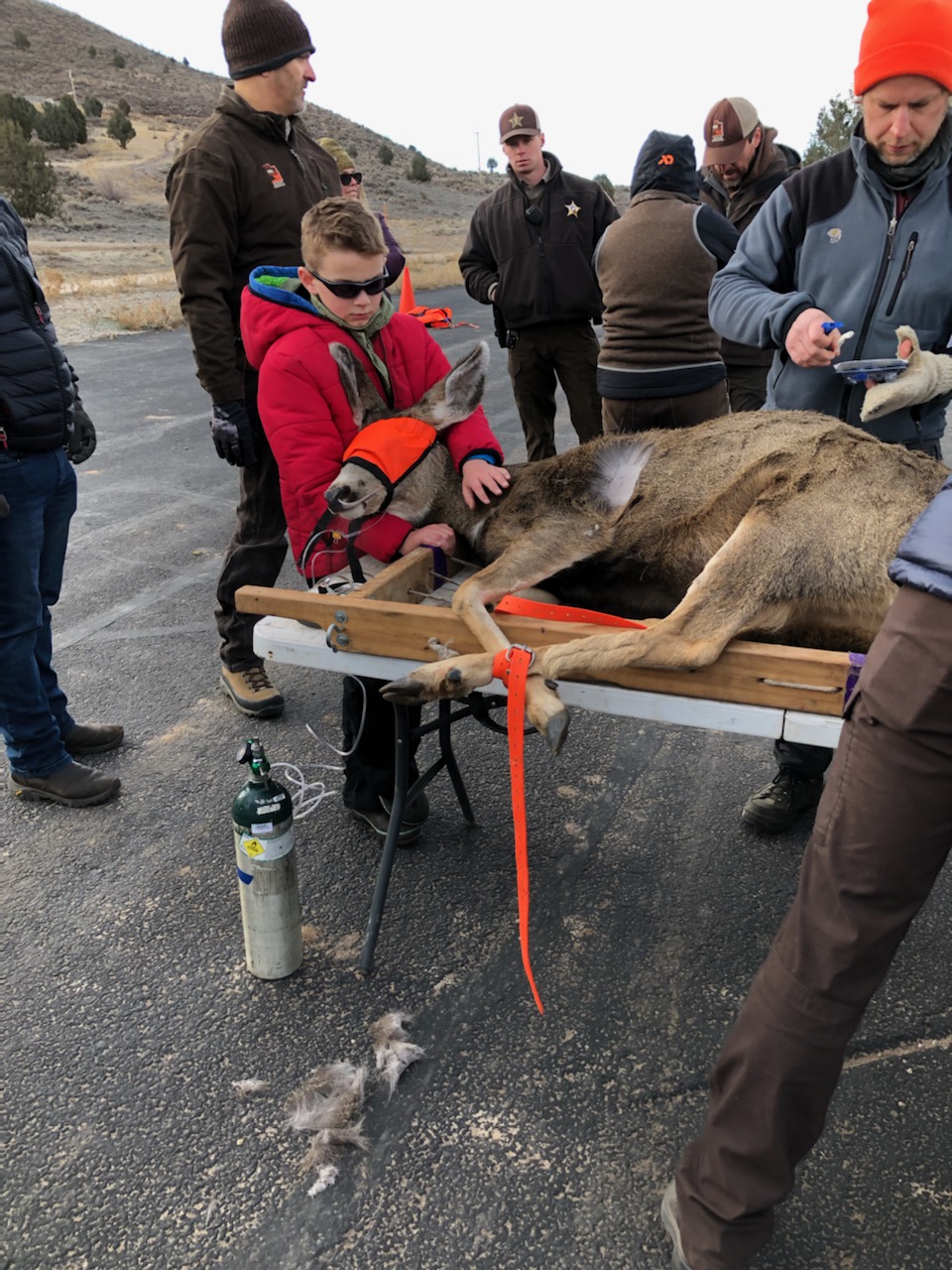
Mule Deer Health Check Courtesy & © Mary Heers, Photographer Mule Deer Health Check
Courtesy & © Mary Heers, Photographer

For the mule deer at Hardware Ranch, last Nov 30 was anything but ho-hum.

In the early morning light, the Division of Wildlife Resources was gathering in the parking lot at the Ranch. The plan for the day was to capture eight mule deer for a quick medical checkup on the overall health of the herd.

For this, they needed the help of come helicopter cowboys.

Right on cue, we heard the thunk, thunk, thunk of an incoming helicopter. A team of three men hopped out. After a quick parley, they were off

A bit like calf ropers at a rodeo, the helicopter cowboys would stop a running deer in its tracks by shooting a tangle net over it. Hopping off the helicopter, one cowboy (also known as “the mugger”) would wrestle the deer onto its side and tie its feet together. The mugger then slid the deer onto a sling, and to keep it calm, kindly secured a cover over its eyes.

The helicopter then lifted the sling, flew the deer through the air, and set it down gently in front of the waiting crew at the ranch.

The crew sprang into action. Four men raced over to the deer, slid it onto a rope stretcher, and carried it to a hanging scale.

“76 pounds’” the researcher called out. A graduate student with a clipboard wrote it down.

Next stop: a white folding table. The crew surrounded the deer, brandishing some familiar tools. They took the deer’s temperature, a blood sample, a hair sample. One man whipped out a yellow measuring tape that looked exactly like the one in my grandmother’s sewing basket.

Then they looked into the deer’s mouth.

“Three years,” the researcher said with absolute certainty.

“How did you know that?” I couldn’t help asking.

“Easy,” he said. But he admitted that after five years, you can only be sure of a deer’s age if you look at the tooth under a microscope and count the rings, just like counting rings on a tree.

Then I spotted something I’d never seen before- a black box that measured the depth of fat on the deer’s rump A very well fed deer will head into winter with 1 inch (25 mm) of fat reserves. A deer with less that 9mm will probably not make it through a hard winter. This herd was coming off a very dry summer, a genuine cause for worry. But today it was all good news. The fall rains had greened up the hillsides in time for the deer to plump up.

And then it was done. The deer was carried to the perimeter of the parking lot and released. As it bounced up the hillside to rejoin the herd, I was reminded of the time when I was coming down the slopes off the Wellsville ridgeline, and had sat down to rest. Suddenly three does poked their heads through the dense undergrowth. We took a long curious look at each other.

I remember thinking how beautiful they were, with their long, elegant ears. But they also looked vulnerable. Coyotes, cougars and cars will continue to take a heavy toll on mule deer. New challenges will crop up. But this day last November, it was all good news for the health of the herd at Hardware Ranch. And all cheers for the Division of Wildlife Resources for a job well done.

This is Mary Heers and I’m Wild About Utah.

Credits:
Photos: Courtesy & Copyright © Mary Heers
Featured Audio: Courtesy & Copyright © Friend Weller, Utah Public Radio upr.org
Text: Mary Heers, https://cca.usu.edu/files/awards/art-and-mary-heers-citation.pdf
Additional Reading: Lyle Bingham, https://bridgerlandaudubon.org/

Additional Reading

Wild About Utah, Mary Heers’ Wild About Utah Postings

Why the DWR captures deer, other big game animals with helicopters each winter, Utah Division of Wildlife Resources, State of Utah, February 21, 2020, https://wildlife.utah.gov/news/utah-wildlife-news/864-why-dwr-captures-deer-big-game-animals-helicopters.html

Episode 8: Flying deer, Wild Podcast, Utah Division of Wildlife Resources, State of Utah, May 19, 2020, https://wildlife.utah.gov/wild-podcast/927-flying-deer.html

Mule Deer, Utah Species, Utah Division of Wildlife Resources, Department of Natural Resources, State of Utah, https://fieldguide.wildlife.utah.gov/?species=odocoileus%20hemionus

Boal, Jed, DWR Uses Helicopter To Catch Deer For Tracking Program, KSL TV, November 18, 2019, https://www.ksl.com/article/46676706/dwr-uses-helicopter-to-catch-deer-for-tracking-program

DWR transports mule deer by helicopter [To Antelope Island], KSTU Fox 13 Utah, Nov 22, 2019, https://youtu.be/D8rhMCuexz8


Beaver Tail Strike

Beaver Tail Strike: Beaver swimming Courtesy NPS,  J Schmidt, Photographer
Beaver swimming
Courtesy NPS,
J Schmidt, Photographer
When I first saw a beaver in Cache Valley I thought I’d seen an alligator. I was sitting in the front of a canoe when a large head shot past the bow followed by a black tail that flew into the air and came down on the water with a resounding slap

“What was that?” I asked
“I don’t know,” my friend answered
“I think it was an alligator,” I said
By then then creature had disappeared and we paddled on.

I found out later that tail slapping is a common beaver behavior. Its a warning shot before the beaver dives for cover.

Intrigued, I set out to learn more. It came as a surprise to me to find out that when a beaver builds a dam, it is actually building a home. Inside a sturdy wall of sticks, rocks and mud, the beavers build a living space above the water line. It’s dry – and its safe because it can only be entered by swimming through underwater tunnels. Not a problem for a beaver who can swim underwater for as long as 15 minutes.

When the surface of the pond freezes over, the females will give birth. Its an extended family life – an adult pair, the yearlings, and the new kits. When winter is long, and with so many mouths to feed, the beavers have perfected their food storage. Hauling their favorite food, aspen , back to the lodge, they jam it into the muddy bottom of the pond. There is stays, fresh and crisp like any refrigerated food, until its needed.

When fur trappers arrived in Northern Utah in the 1800’s, European hat makers had discovered that felted beaver wool made the very best hats. Bear Lake became a hot spot. The historical marker just north of Garden City tells us,

“Donald MacKenzie, Jim Bridger, and a host of famous beaver hunters operated here. Two major summer frolics and trade fairs brought plenty of excitement to Bear Lake in 1827 and 1828.”

Trappers were harvesting up to 500 lbs a year. But by 1840, the beavers had become almost extinct. European fashion in hats moved on to silk – a good thing for the hat makers as well because the mercury used in the felting of beaver wool caused all kinds of neurological disorders. Its no joke the Hatter in Alice in Wonderland is mad.

Back in northern Utah, the beaver population slowly rebuilt, but the human population also grew and conflicts arose. Recently a farmer in Benson became irate when beavers began to redirect the flow of water through his irrigation canals

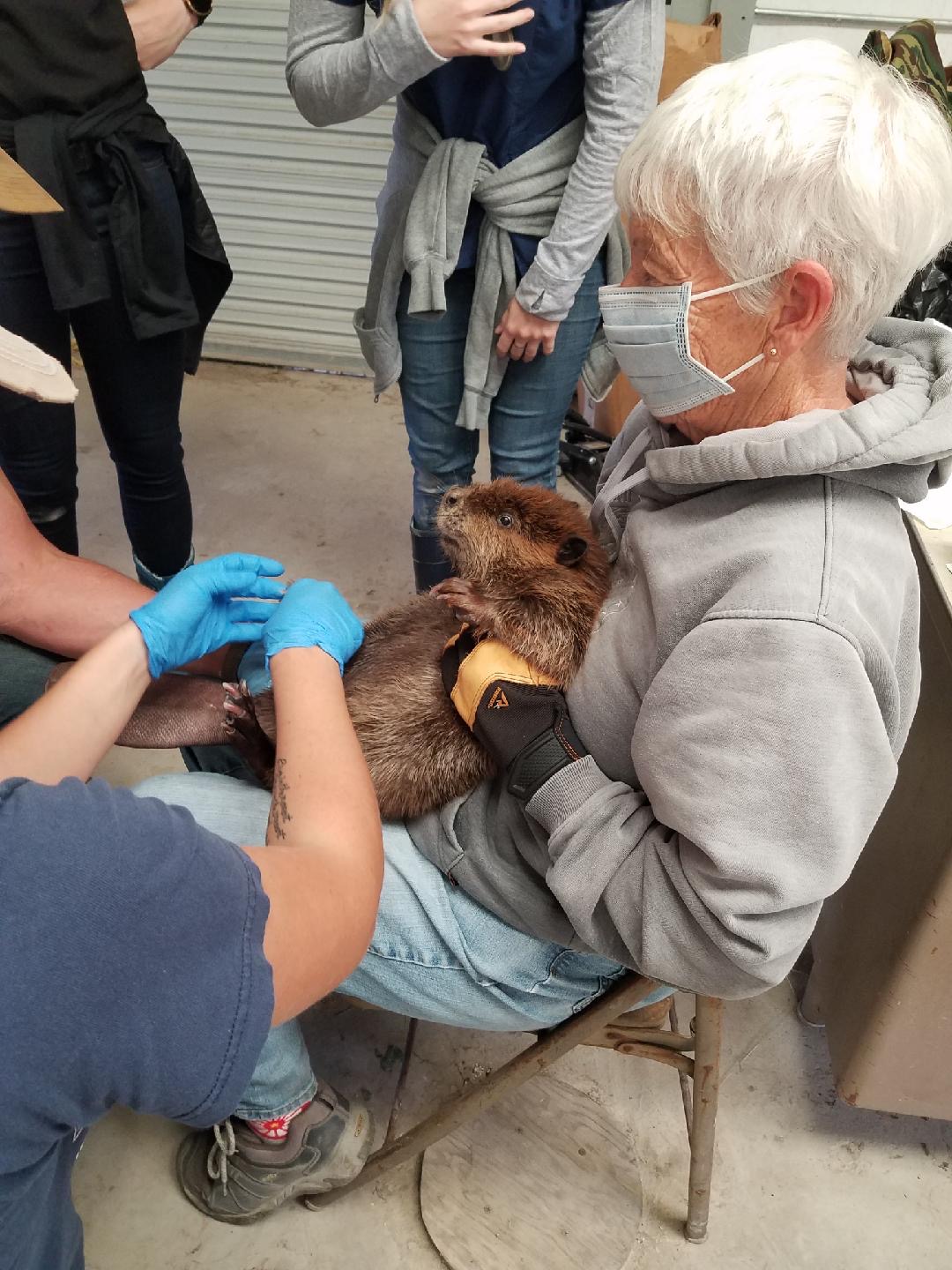
Beaver Health Exam Courtesy & © Mary Heers, Becky Yeager, Photographer
Beaver Health Exam
Courtesy & © Mary Heers, Becky Yeager, Photographer
It’s the job of the Utah Division of Wildlife Resources to live trap and relocate these beavers. I was lucky to be allowed into the loop at this point.

When I picked up one of the smaller beavers, I could feel its heart going a mile a minute under my fingers. But it settled down as I sat in a chair holding it against my chest while it got a quick physical checkup.

Holding the beaver close, I had a good look at the nibble fingers on its front feet, the webbing on its back feet that can paddle along at 6mph, and the marvelous flat tail, a good rudder for swimming, a prop for standing on land, and perfect for slapping the water’s surface.

Take my word for it, once you’ve seen this slap up close, you won’t forget it.

I’m Mary Heers and I’m Wild About Utah.

Credits:
Photos: Courtesy US NPS, Yellowstone Collection, J. Schmidt, Photographer
Photos: Courtesy & Copyright © Mary Heers
Featured Audio: Courtesy Friend Weller, Utah Public Radio
Text & Voice: Mary Heers
Additional Reading: Lyle Bingham, Webmaster

Additional Reading

Leavitt, Shauna, Beaver in Utah’s Desert Rivers, Wild About Utah, July 6, 2020, https://wildaboututah.org/beaver-in-utahs-desert-rivers/

Leavitt, Shauna, Proposed Beaver Holding Facility in Millville, Utah, Wild About Utah, September 3, 2018, https://wildaboututah.org/proposed-beaver-holding-facility-in-millville-utah/

Goodwin, Jim, Riparian Zones and a Critter Quiz, Wild About Utah, January 22, 2015, June 15, 2015, https://wildaboututah.org/riparian-zones-and-a-critter-quiz/

Strand, Holly, Beavers: The Original Army Corps of Engineers, Wild About Utah, April 29, 20-10, August 16, 2012, https://wildaboututah.org/beavers-the-original-army-corps-of-engineers/

Kervin, Linda, Huddling for Warmth, Wild About Utah, February 3, 2011, https://wildaboututah.org/huddling-for-warmth/

Beaver Monitoring App, Utah Water Watch, Extension, Utah State University, https://extension.usu.edu/utahwaterwatch/citizenscience/beavermonitoringapp/

Pollock, M.M., G.M. Lewallen, K. Woodruff, C.E. Jordan and J.M. Castro (Editors) 2018. The Beaver Restoration Guidebook: Working with Beaver to Restore Streams, Wetlands, and Floodplains. Version 2.01. United States Fish and Wildlife Service, Portland, Oregon. 189 pp. Online at: https://www.fws.gov/oregonfwo/ToolsForLandowners/RiverScience/Beaver.asp
also https://restoration.usu.edu/pdf/2018BRGv.2.01.pdf

Macfarlane W.W., Wheaton J.M., and M.L. Jensen. 2014. The Utah Beaver Restoration Assessment Tool: A Decision Support and Planning Tool. Ecogeomorphology and Topographic Analysis Lab, Utah State University, Prepared for Utah Division of Wildlife Resources, Logan, Utah, 135 pp. Available at: https://etalweb.joewheaton.org.s3-us-west-2.amazonaws.com/Downloads/BRAT/UTAH_BRAT_FinalReport.pdf

Wheaton JM. 2013. Scoping Study and Recommendations for an Adaptive Beaver Management Plan. Prepared for Park City
Municipal Corporation. Logan, Utah, 30 pp. https://etalweb.joewheaton.org.s3-us-west-2.amazonaws.com/Reports/Beaver_Management_Plan_Recc_Park_City_%20Report_FINAL.pdf

Beaver Reintroduction Looks Positive for Stream Restoration
in Northern Utah, Utah Forest News, USU Forestry Extension, Utah State University, Volume 18, Number 3, 2014, https://forestry.usu.edu/files/utah-forest-newsletter/utah-forest-newsletter-2014-3.pdf

Muffoletto, Mary-Ann, Dam Good! Beavers May Restore Imperiled Streams, Fish Populations, Today, Utah State University, July 07, 2016, https://www.usu.edu/today/story/dam-good-beavers-may-restore-imperiled-streams-fish-populations

Restoring Degraded Waters, One Pest at a Time, Utah State Magazine, Utah State University, December 7, 2021, https://utahstatemagazine.usu.edu/environment/restoring-degraded-waters-one-nuisance-at-a-time/

Goldfarb, Ben, Eager: The Surprising, Secret Life of Beavers and Why They Matter, Chelsea Green Publishing, March 8, 2019, https://www.amazon.com/Eager-Surprising-Secret-Beavers-Matter/dp/1603589082/ref=asc_df_1603589082/

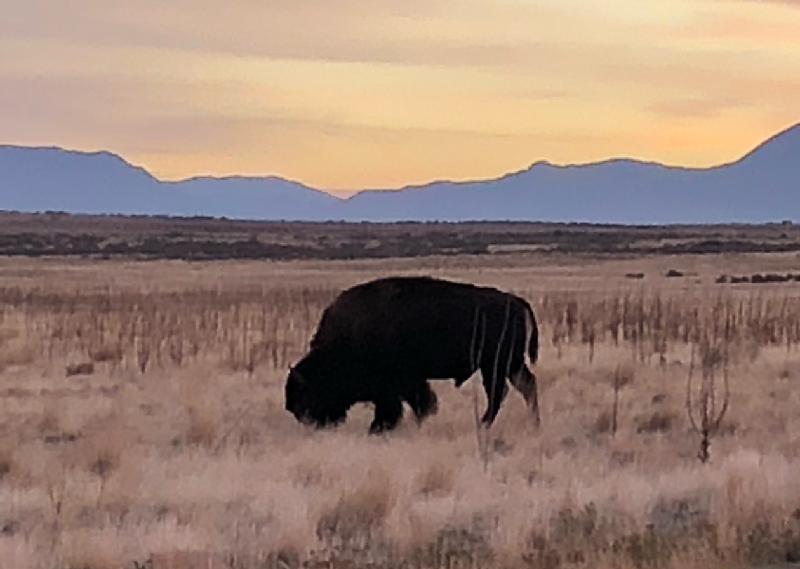
Antelope Island Bison

Bison Bull on Antelope Island Courtesy & © Mary Heers, Photographer
Bison Bull on Antelope Island
Courtesy & © Mary Heers, Photographer

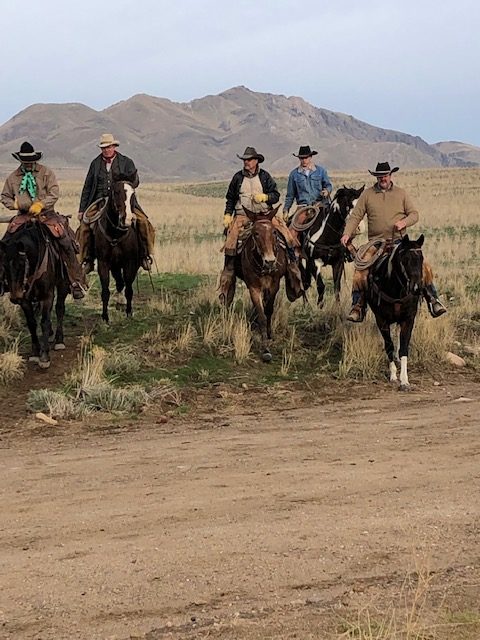
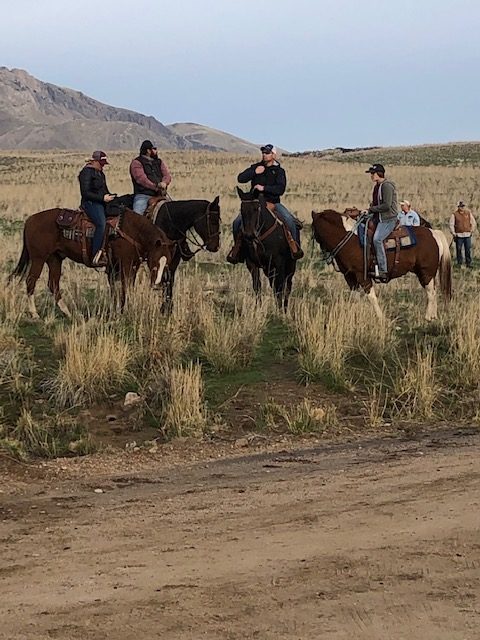
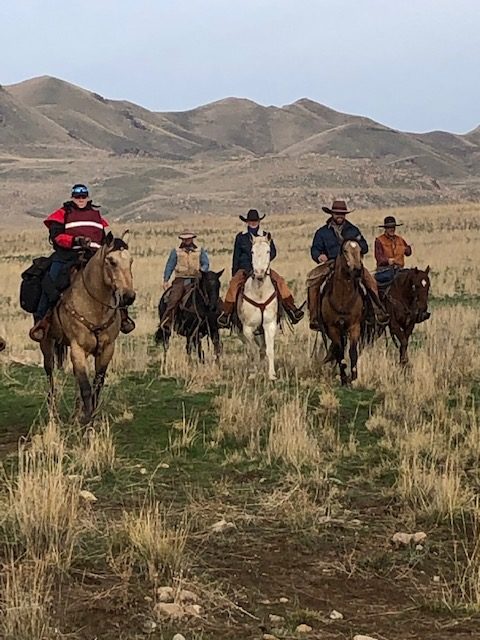
Cowboys Staging for the Antelope Island Bison Roundup Oct 30, 2021 Courtesy & © Mary Heers, PhotographerCowboys Staging for the Antelope Island Bison Roundup Oct 30, 2021 Courtesy & © Mary Heers, PhotographerCowboys Staging for the Antelope Island Bison Roundup Oct 30, 2021 Courtesy & © Mary Heers, Photographer Cowboys Staging for the Antelope Island Bison Roundup Oct 30, 2021
Courtesy & © Mary Heers, Photographer

Bison Pair Courtesy & © Mary Heers, Photographer Bison Pair
Courtesy & © Mary Heers, Photographer

The sun was just coming up when I drove onto Antelope Island State Park on Oct 30 Bison were grazing on both sides of the road, and I had to stop a few times and wait as they lumbered across the road. But by the time I reached the Garr Ranch on the southern end of the island, I felt I had driven onto the set of a Hollywood western. 250 volunteer cowboys were saddled up on their horses and were getting their final instructions. At 8 am they spread out in a long line and began their slow walk north. Ahead of them the bison began to move. This was the day of the annual bison round-up. By the end of the day, the more than 500 bison on the island were milling about in the sturdy corrals in the northern part of the island.

After giving the bison a day to catch their breath, the park managers started to move the bison through the corrals until, one by one, they stepped on the scales. The young calves born that spring weighed in at about 400 lbs and the old bulls topped the scales at over 2000. The next step was into the restraining chute. It was time to get vaccinated and have a quick medical checkup.

Over the clanging and banging of the solid metal pens, I could occasionally hear the vet cry, “Pregnant!” This seemed to be the magic password, as the front gates of the chute would fly open and the heifer would dash off into a pen that would return her back into the island. The others needed to wait.

This whole story began in 1873 when 12 privately owned bison were sold to the owners of Antelope Island. These twelve thrived in this harsh environment. They grew shaggy warm winter coats and plowed the deepest snow drifts, swinging their massive heads back and forth, down to the grass below. A bison will eat 40 pounds of grass a day. Antelope Island is only 15 miles long and 5 miles wide There is just enough grass to support a herd of 500. Since there are no wolves or natural predators on the island, the park managers will need to sell the excess numbers at an online auction.

In the 1500’s, an estimated 50 million bison roamed the Great Plains. The Native Americans revered them and harvested them mindfully. They found a use for every bison part – including the stomach, which proved a reliable water jug. But the western expansion of white settlers led to the deliberate slaughter of the bison. By the end of the 19th c, only 300 bison were left in the wild.

The chief taxidermist at the Smithsonian National Museum, William Hornaday, spend two summer in remote corners of Montana harvesting and old bull, a calf, and 4 young bison. He brought the hides back to Washington and built a display that he believed would be the only chance for future generations to see this vanishing species.

In Yellowstone National Park, 2 army men patrolling the park on cross country skis witnessed a poacher shoot a bison. The poacher had put down his rifle and was busy severing the trophy head. The two soldiers quietly skied up close enough to apprehend him with their revolver. Still the park’s bison herd dwindled to 23 -until 1902 when he army purchased 21 more from private owners.

The Yellowstone herd now numbers over 5,000.

Today, between parks, private herds, and tribal lands the bison now number half a million.

Bison have come roaring back from the very edge of extinction.

This is Mary Heers and I’m wild about Utah.

Credits:
Photos: Courtesy & Copyright © Mary Heers
Featured Audio: Courtesy & Copyright © Friend Weller, Utah Public Radio upr.org
Text: Mary Heers, https://cca.usu.edu/files/awards/art-and-mary-heers-citation.pdf
Additional Reading: Lyle Bingham, https://bridgerlandaudubon.org/

Additional Reading

Wild About Utah, Mary Heers’ Wild About Utah Postings

US FWS Bison Images: https://digitalmedia.fws.gov/digital/collection/natdiglib/search/searchterm/bison

Clifton, Jameson, Get Involved With Plans To Manage Yellowstone National Park’s Bison, Wild About Utah, June 1, 2015, https://wildaboututah.org/get-involved-with-plans-to-manage-yellowstone-national-parks-bison/

Boling, Josh, The Henry Mountains’ Bison Herd, Wild About Utah, January 14, 2019, https://wildaboututah.org/the-henry-mountains-bison-herd/

2021 Bison Roundup, Antelope Island State Park, Utah Department of Natural Resources, Oct 30, 2021, https://stateparks.utah.gov/parks/antelope-island/bison-roundup/

Cabrero, Alex, Annual bison roundup held at Antelope Island State Park, KSL TV, October 30, 2021, https://ksltv.com/475592/annual-bison-roundup-held-at-antelope-island-state-park/

Cox, Erin, Hundreds of volunteers gather to participate in annual bison roundup at Antelope island, Fox 13, Scripps Local Media, https://www.fox13now.com/news/local-news/hundreds-of-volunteers-gather-to-participate-in-annual-bison-roundup-at-antelope-island