Mundane to Magical Experiences

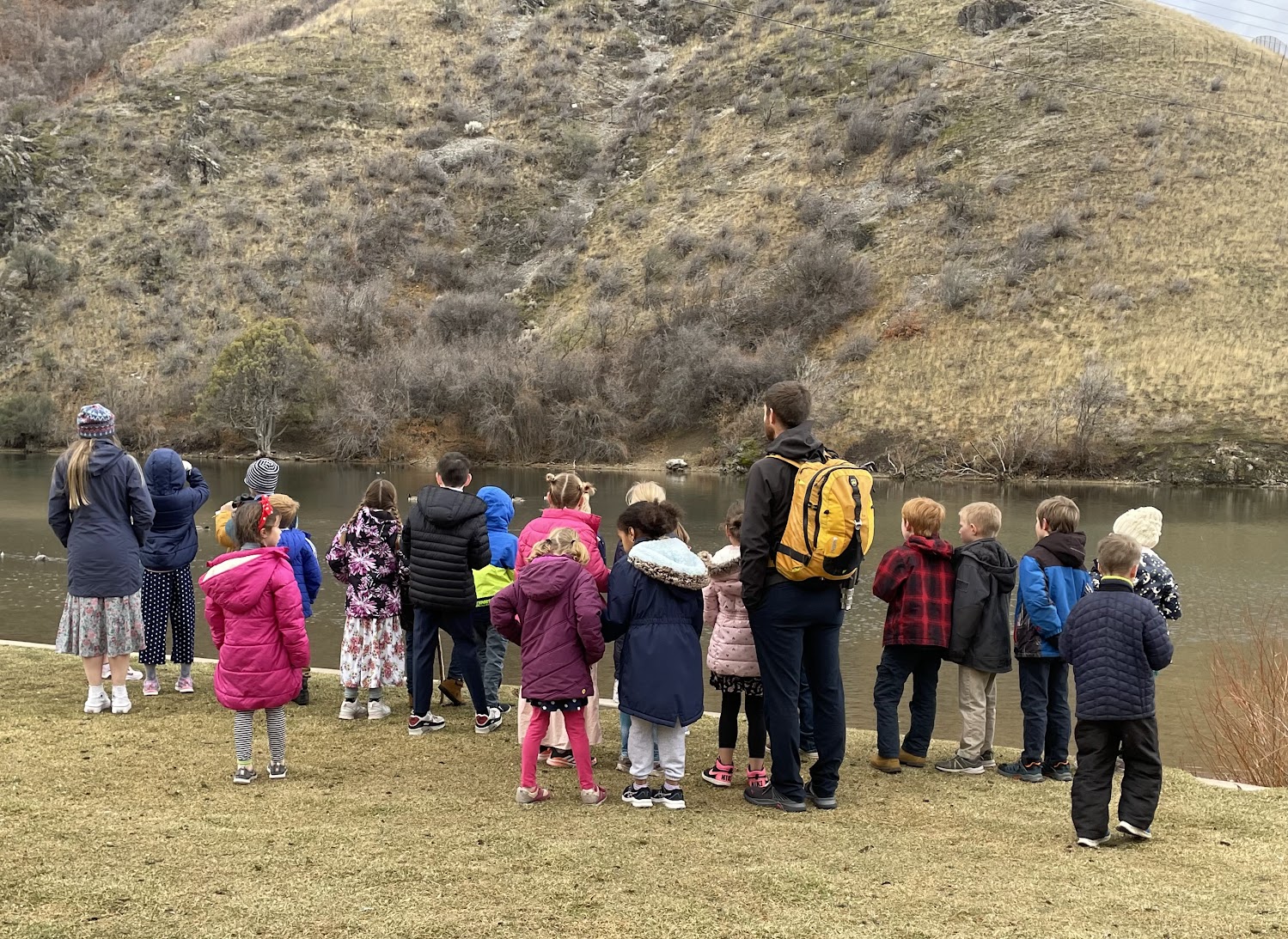
Mundane to Magical Experiences: Whole Class at First Dam, Courtesy & Copyright Joseph Kozlowski, Photographer
Whole Class at First Dam
Courtesy & Copyright Joseph Kozlowski, Photographer

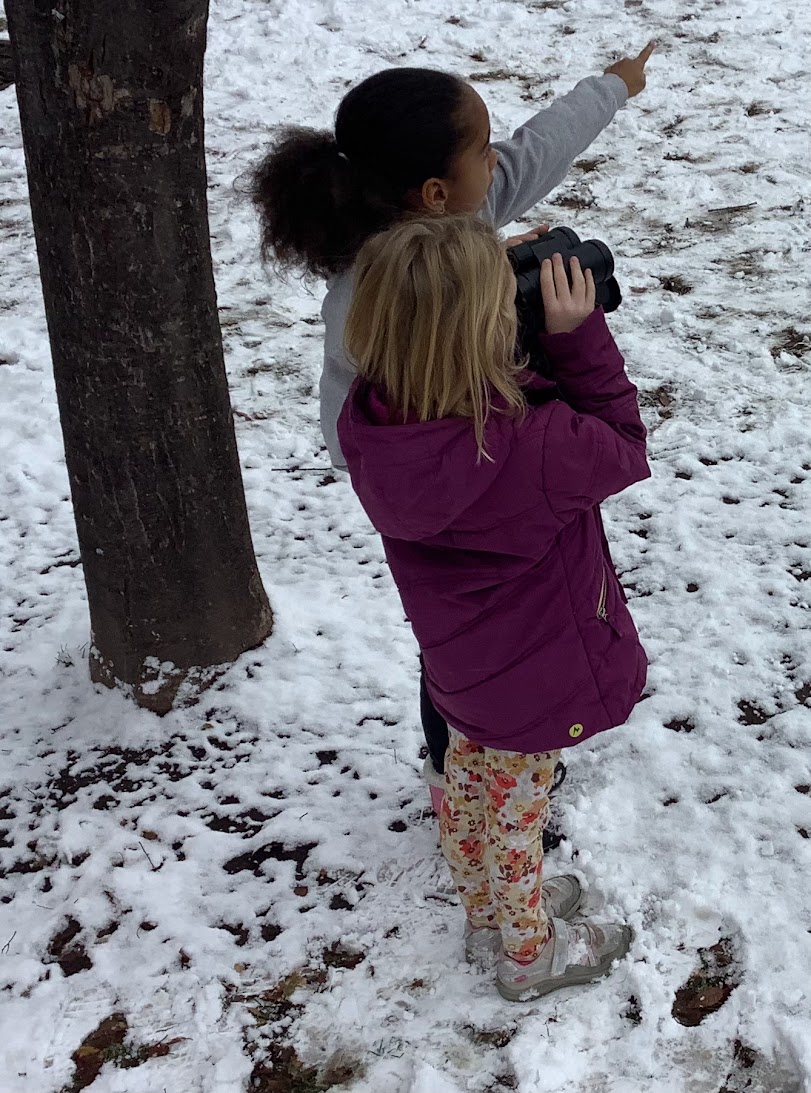
Mundane to Magical Experiences: Using Binoculars to Look for Ducks, Courtesy & Copyright  Joseph Kozlowski, Photographer Using Binoculars to Look for Ducks
Courtesy & Copyright Joseph Kozlowski, Photographer

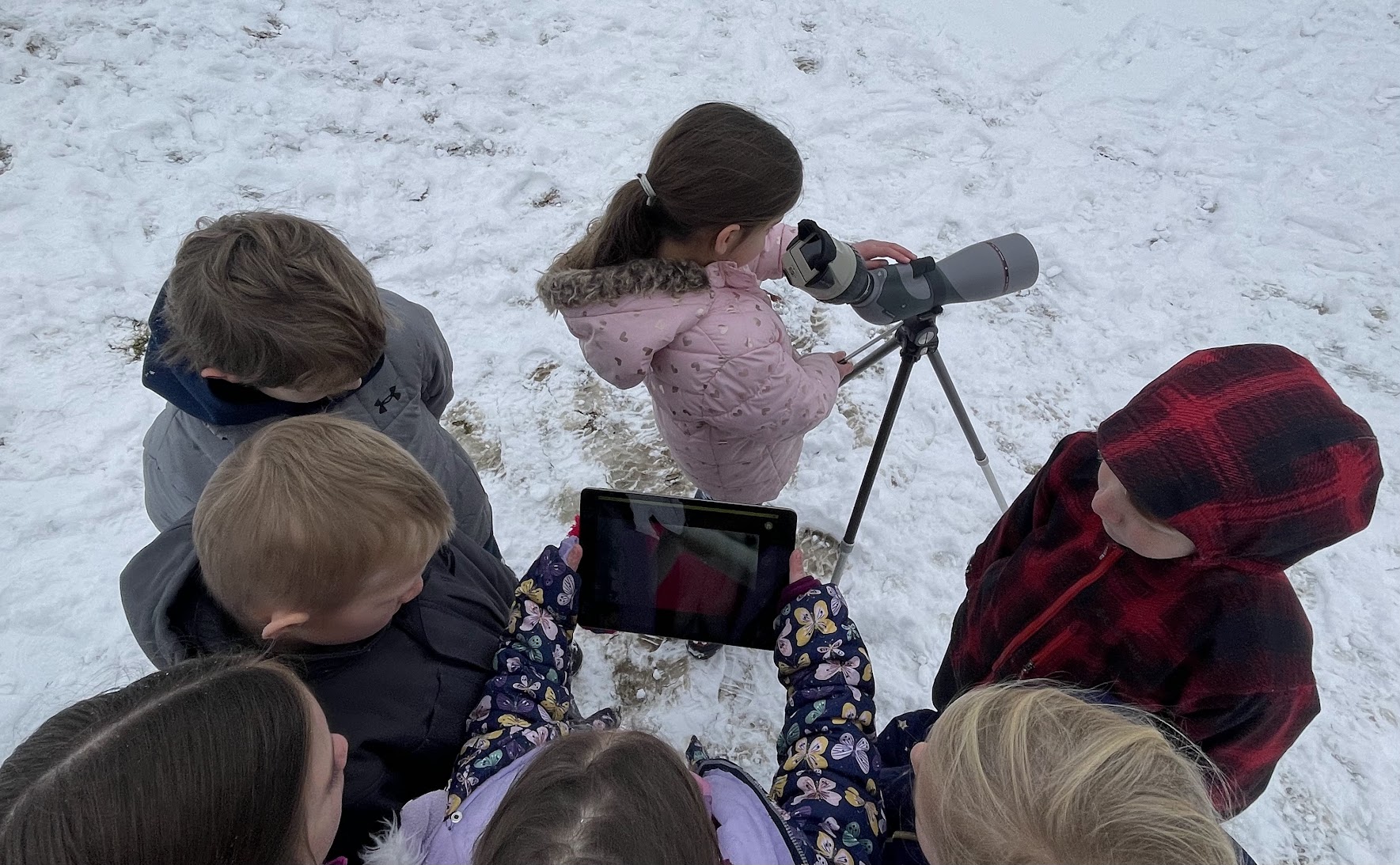
Spotting Scope with Image Transmitter, Courtesy & Copyright  Joseph Kozlowski, Photographer Spotting Scope with Image Transmitter
Courtesy & Copyright Joseph Kozlowski, Photographer

One aspect of experiential learning I love most is how it turns mundane encounters into magical experiences. How many times have your children walked by a pond full of ducks and geese without batting an eye, or shuffled their feet through fallen, Autumn leaves on their way to this or to that? I continue to be astonished by how much there is to appreciate and to learn from our surroundings, but we lend it a bit of our attention and wonder. It’s amazing to see how just a little preparatory investigation can turn fleeting everyday moments into lifelong learning memories.

My 2nd-grade class focuses on learning about birds. I don’t just mean we read a few books and discuss the basics of birds. I mean my students can replicate the sounds of at least 15 local birds, provide detailed descriptions of their body characteristics, and even provide information about their diet, habits, and behaviors. We’ve studied birds all year long, partnered with local bird organizations – Bridgerland Audubon Society, Bear River Migratory Bird Refuge –, been on numerous birding outings, and let’s just say are ALL IN on birding.

With the recent weather systems and cold fronts in Northern Utah, we’ve seen waterfowl migrations come alive; a perfect time to study that classification of birds with my students! Little did I, or my students, realize there was so much to learn about common waterfowl! Did you know some waterfowl dive for food and others dabble? Did you know about preening to keep waterproof, or special down feathers to keep warm? How about your knowledge on a Redhead Duck’s nest parasitism techniques? Well, my students learned about these things, and many more over the span of a few weeks. As a culminating event, we planned a field experience to Logan’s 1st Dam, a local and vibrantly busy park, which surrounds a small reservoir, and is about a 45-minute walk from our school’s front door. Many of my students have been to this park numerous times throughout their lives with their families. Needless to say, there is nothing novel about this location.

Armed with binoculars leant by the Bear River Migratory Bird Refuge, and a spotting scope with an image transmitter granted us by Bridgerland Audubon Society, students began to observe, count, and be astonished by what they saw. It was as if the students had never seen a Canada Goose or Mallard duck in their lives. Their background knowledge on these birds brought to life the mundane place they were experiencing, as kids shouted “Look, it’s dabbling!” or “I saw 15 drakes and 19 hens, that’s 34 total!” or “I bet that Redhead is trying to find someone else’s nest to lay her eggs!” The point here is that, with proper prior investigation and attention to details of place, a mundane park can become a treasured location for observing, questioning, and astonishment. What are some mundane experiences around you that could become inspiring and magical learning opportunities?

This is Dr. Joseph Kozlowski, and I am Wild about Outdoor Education in Utah!
Credits:

Images: Courtesy & Copyright Joseph Kozlowski, Photographer, Used by Permission
Featured Audio: Courtesy & Copyright © Kevin Colver, https://wildstore.wildsanctuary.com/collections/special-collections/kevin-colver
Text:     Joseph Kozlowski, Edith Bowen Laboratory School, Utah State University https://edithbowen.usu.edu/
Additional Reading Links: Joseph Kozlowski & Lyle Bingham

Additional Reading:

Joseph (Joey) Kozlowski’s pieces on Wild About Utah:

Rosenberg, Ken, Choosing a Spotting Scope, All About Birds, Cornell Lab of Ornithology, 2008, https://www.allaboutbirds.org/news/scope-quest-2008-our-review-of-spotting-scopes/?pid=1039

How To Choose Binoculars: Our Testing Tips, All About Birds, Cornell Lab of Ornithology, Updated December 4, 2022, https://www.allaboutbirds.org/news/six-steps-to-choosing-a-pair-of-binoculars-youll-love/

Free K-12 Lessons Open Doors for Kids to Explore Nature and Science, Cornell Lab Annual Report 2023, Cornell Lab of Ornithology, Updated December 4, 2022, https://www.birds.cornell.edu/home/free-k-12-lessons-open-doors-for-kids-to-explore-nature-and-science/

The Christmas Bird Count is a Most Wonderful Time of the Year!

Downy Woodpecker Male at Feeder, Courtesy & © Hilary Shughart, Photographer
Downy Woodpecker Male at Feeder
Courtesy & © Hilary Shughart, Photographer

Downy Woodpecker Using Tools? Courtesy & © Hilary Shughart, Photographer Downy Woodpecker Using Tools?
Courtesy & © Hilary Shughart, Photographer

When the winter chill sets in, that’s my cue to start filling the suet feeders, plug in the heated bird bath, and keep the Black Oil Sunflower Seed in stock for the grand variety of birds which visit my home through the Winter. I feed the birds because I know that my visitors will have better success in raising their families next Spring, but also because they are such fun to watch! Just yesterday I was mesmerized by a Downy Woodpecker taking black oil sunflower seeds one by one from the hanging squirrel-proof bird feeder, flying onto the deck railing, and hopping along about six feet to place the seed in a knothole serving as a mortar to the beak pestle, thus gaining access to the tasty seed inside the hard shell. I immediately wondered if this behavior might qualify as tool use, but suspected it would not meet a strict definition. Sure enough, this clever problem-solving activity is not considered to be tool use, but it is no less fascinating!

This is a great time to discover the joy of bird watching and contributing to community science. The annual National Audubon Society Christmas Bird Count is hosted by many organizations in many locations, with a single day selected between December 14th through January 5th. The Christmas Bird Count database was established by Frank Chapman in 1900, when holiday shooting parties were replaced with counting parties as a proactive response to the noticeable decline bird numbers.
Cache Valley (Logan) Utah Circle 125th Annual Christmas Bird Count Visit BridgerlandAudubon.org
The Bridgerland Audubon Society Christmas Bird Count is always hosted on the first Saturday on or following December 14th, and we have been contributing Cache Valley, Utah data to the National Audubon database since 1956. You can watch from home if you live within the 15-mile diameter watch circle area centered at Main Street and Hyde Park Lane – that is if you live within 7.5 miles of the intersection of Hwy 91 & 3600 N, which includes all or part of Amalga, Smithfield, North Logan, Hyde Park, Logan, Logan Canyon, River Heights, Providence, Mendon, Benson, and unincorporated Cache County. Check the interactive map on our website to determine if your home is inside the watch circle. There’s limited space available with the wandering watch groups, too.

Even if you only see the occasional American Robin or Magpie, please do consider participating in a Christmas Bird Count near you. We welcome newcomers and beginners, and hope that you will enjoy contributing to the longest running community science program which provides data for scientists worldwide.

For identification assistance you can post photos on our Facebook group. Please don’t forget that Zero is a number – we want your final report even if you didn’t see a single bird outside your home. Consider hosting a cozy watch party, sharing hot chocolate with friends and neighbors while sharpening observation and identification skills, keeping hearts and minds full and growing in wonderful ways.

For more information check our website to register at no cost at BridgerlandAudubon.org – that’s Bridgerland Audubon A-U-D-U-B-O-N dot org.

I’m Hilary Shughart with the Bridgerland Audubon Society, and I am Wild About Utah!

Credits:
Images: Courtesy US Fish & Wildlife Service, Leah Schrodt and Brett Billings, Photographers
Featured Audio: Courtesy & Copyright © Kevin Colver, https://wildstore.wildsanctuary.com/collections/special-collections/kevin-colver & Friend Weller, https://www.upr.org/people/friend-weller
Text: Hilary Shughart, President, https://bridgerlandaudubon.org/
Additional Reading: Hilary Shughart and Lyle Bingham, https://bridgerlandaudubon.org/

Additional ReadingSupplemental food and water are important ways we can reduce stress for backyard birds
WildAboutUtah pieces by Hilary Shughart, https://wildaboututah.org/author/hilary-shughart/

ChristmasBirdCount.org which forwards to the following National Audubon page: https://www.audubon.org/community-science/christmas-bird-count

Christmas Bird Count on the National Audubon website: https://www.audubon.org/community-science/christmas-bird-count/join-christmas-bird-count

Regional Christmas Bird Counts found on UtahBirds.org: http://www.utahbirds.org/cbc/cbc.html

Bridgerland Audubon Society Christmas Bird Count, https://bridgerlandaudubon.org/cbc/

Mindful Birding

Goldfinch Courtesy Pixabay, Beto MdP, Contributor
Goldfinch
Courtesy Pixabay, Beto MdP, Contributor
Mindful birding- hmmm? Mindfulness has become a common word and way to a better life they say. As I understand, “mindfulness” is a mild form of meditation, where one is “in the moment” focusing on a thought or object that is all consuming. My personal experiences of this type are when I’m painting a picture, weaving a basket, or sitting very motionless for long periods while hunting deer where every sound and sight is in the moment. Birding, not so much, unless an unexpected species presents itself through sight or sound. A goshawk sitting on its kill nearby- a rarity I can vividly recall, including its surroundings. The sound of a peregrine falcon flying above Temple Square in Salt Lake City. Thus, my interest was piqued when I first saw the phrase “mindful birding”. To gain some enlightenment, myself and another Bridgerland Audubon board member attended a “Mindful Birding” workshop in Colorado to gain some insight into this enigma.

These opening statements at the workshop encapsulated its essence- “Mindful birding combines observing birds with mindfulness techniques, creating a practice that incorporates heightened awareness. Labeling or identifying birds is not the primary focus; instead, we intend to slow down and notice, using birds as our guides. Mindful birding deepens our relationship with birds and our connection with the natural world.”

“Whether it's observing a goldfinch delicately pecking at a sunflower seed or witnessing a raptor stealthily hunting its prey, the profound sense of wonder experienced when we slow down and immerse ourselves in nature is truly remarkable. Research demonstrates the mental and physical health advantages derived from engaging with the natural world.”

As the day progressed, we put these statements into practice, as we watched a Swainson’s hawk sitting in a large cottonwood tree while clutching a rabbit in its talons. We surmised it was a young bird whose eyes were larger than its stomach, not knowing quite what to do with such large quarry. Swainson’s typically capture grasshoppers and small rodents. Oops! The highlight came when my traveling companion spotted a barn owl with young in a tree hollow. We all became “mindful” emitting oohs and ahhs to express our delight. For Meg, this was her moment as she focused her powerful camera lens and nailed the perfect photo to capture the moment- mindful photography!

The workshop was emphatic that mindful birding is for everyone, all inclusive, regardless of their seeming limitations or reservations. Bird language was stressed for the blind, which I rely on for songbirds who are often hidden in foliage. This week, I will be presenting birds to an assisted living facility in Logan. I plan to attached a window feeder so residents can enjoy them from their central meeting room: Another mindful bird activity.

“There are times when the primary intention of Mindful Birding may be self-care. And, there are other times when it may be more relational – a search for a deep connection with nature through our love and curiosity about birds.” Mindful birding network

Jack Greene for Bridgerland Audubon Society Let us get mindful about Utah’s Wild Birds!

Credits:
Image: Courtesy Pixabay, Beto MdP, Contributor https://pixabay.com/photos/goldfinch-bird-animal-wildlife-7228334/
Audio: Courtesy & © Kevin Colver https://wildstore.wildsanctuary.com/collections/special-collections/kevin-colver
Text: Jack Greene, Bridgerland Audubon, https://bridgerlandaudubon.org/
Additional Reading: Jack Greene & Lyle W Bingham, Webmaster, Bridgerland Audubon, https://bridgerlandaudubon.org/

Additional Reading:

Jack Greene’s Postings on Wild About Utah, https://wildaboututah.org/author/jack/

As a postscript Jack wrote:
Numerous resources and organizations are working towards greater
inclusivity in outdoor spaces, particularly in the birding community. Some
notable groups include:

The American Psychological Association's Inclusive Language Guide is an excellent starting point for guidance on inclusive language.

A Good IDEA for Birding, Birdability, [accessed November 18, 2024], https://www.birdability.org/a-good-idea-for-birding

Lundin M, Bombaci S. Making outdoor field experiences more inclusive for the LGBTQ+ community. Ecol Appl. 2023 Jul;33(5):e2771. doi: 10.1002/eap.2771. Epub 2022 Dec 29. PMID: 36271764. https://pubmed.ncbi.nlm.nih.gov/36271764/

Yuhas, Daisy, Five Ways to Connect With Nature and Boost Your Mood No Matter Your Schedule, Audubon Magazine, Fall 2024, https://www.audubon.org/magazine/five-ways-connect-nature-and-boost-your-mood-no-matter-your-schedule

McGlashen, Andy, Donna Posont Helps Blind People Become Birders—and Whatever Else They Want To Be, Audubon Magazine, Fall 2024, https://www.audubon.org/magazine/donna-posont-helps-blind-people-become-birders-and-whatever-else-they-want-be

Spontaneous Moments

Spontaneous Moments: Binoculars on the Trail Courtesy & Copyright Joseph Kozlowski, Photographer
Binoculars on the Trail
Courtesy & Copyright Joseph Kozlowski, Photographer
Twelve sweaty, 2nd-grade birders and one worn out teacher stumbled into the shade of the Green Canyon trailhead bathroom facility. It was nearly 90 degrees under the bluebird Utah sky. No one had been quite prepared for the sun, heat, and amount of water they’d need for the journey; they were only halfway done with the hike. Students had discovered several birds along the hike with their binoculars (e.g., Golden Eagle, Yellow-Rumped Warbler, Black-Billed Magpie, and Townsend’s Solitaire), but by the time they reached the trailhead bathroom, their water bottles were empty, their bodies baked, and fatique was setting in.

Cooling Off Courtesy & Copyright Joseph Kozlowski, Photographer
Cooling Off
Courtesy & Copyright Joseph Kozlowski, Photographer

Class and DNR Team in Green Canyon Courtesy & Copyright Joseph Kozlowski, Photographer Class and DNR Team in Green Canyon
Courtesy & Copyright Joseph Kozlowski, Photographer

As the weary birders rested in the shade of the outhouse, they noticed a trail crew from the Department of Natural Resources (DNR) relaxing in some maples nearby, taking a break from their digging and construction project. “You guys look hot, want some water?” called a young DNR crewman. Of course, a chorus of positive replies echoed from the 7-and-8-year-olds. The crewman got out an orange Home Depot cooler and slung it on the back of a work trailer, “Here you go!” and another went to a fancy pull-behind trailer on their work truck, which was equipped with a hose and a nozzle, “This is drinking water too!” The kids dispersed, some leaning their head under the cooler spout and others tentatively holding their mouth wide open, like a baby robin waiting for regurgitated worms, for the crewman to jet water into mouths, still only partially filled with grown-up teeth. Kids laughed and the whole DNR crew chuckled. As kids were drinking a commotion started near the pull-behind trailer with the water hose. What had been a hose and nozzle for administering drinks had become a cooling fountain station. Water was being launched into the air and kids were dancing around underneath with screams of joy. After a minute or two, the teacher gathered the students, thanked the crew, grabbed a picture with them, and started their trip back seeming more refreshed than ever.

Spontaneous moments, unrepeatable circumstances. These are the memory makers. These kids may likely forget every bird they saw on their hike, but they’ll never forget the relief from the heat by playing in the crewman’s water fountain, or leaning under a cooler to grab a quick drink. As a wise outdoor educator, Eric Newell, once told me “Never be too busy outdoors to stop and experience something that excites the kids.”

This is Dr. Joseph Kozlowski and I am Wild About Outdoor Education in Utah!

Credits:

Images: Courtesy & Copyright Joseph Kozlowski, Photographer, Used by Permission
Featured Audio: Courtesy & Copyright © Kevin Colver, https://wildstore.wildsanctuary.com/collections/special-collections/kevin-colver
Text:     Joseph Kozlowski, Edith Bowen Laboratory School, Utah State University https://edithbowen.usu.edu/
Additional Reading Links: Joseph Kozlowski & Lyle Bingham

Additional Reading:

Joseph (Joey) Kozlowski’s pieces on Wild About Utah: https://wildaboututah.org/author/joseph-kowlowski/

Kozlowski, Joseph, Learning Through Birding, Wild About Utah, October 9, 2023, https://wildaboututah.org/learning-through-birding/