Gulls

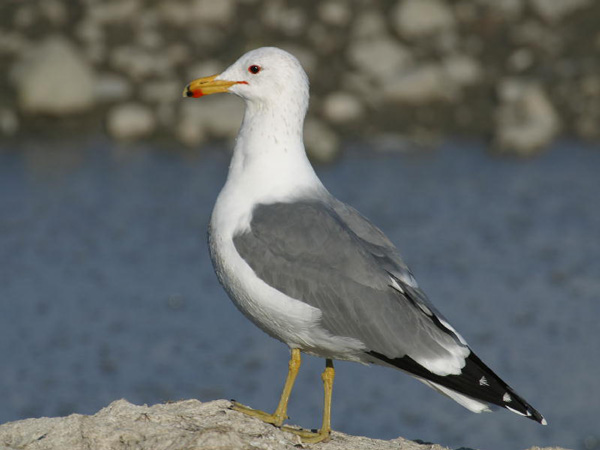
California Gull <i>Larus californicus</i> Farmington Bay Davis County, Utah 9 Feb 2003 Courtesy & Copyright 2003 Jack Binch, Photographer See UtahBirds.org
California Gull
Larus californicus
Farmington Bay Davis County, Utah
9 Feb 2003
Courtesy & Copyright 2003 Jack Binch, Photographer
See UtahBirds.org
“When it seemed that nothing could stay the devastation, great flocks of gulls appeared, filling the air with their white wings and plaintive cries, and settled down upon the half-ruined fields. All day long they gorged themselves, and when full, disgorged and feasted again, the white gulls upon the black crickets, hosts of heaven and hell contending, until the pests were vanquished and the people were saved.” Orson F. Whitney, June 6th 1848. Over a century later, the California gull, was selected as the state bird of Utah and a gull monument placed on Temple Square in SLC.

My first serious encounter with this bird occurred in the mudflats of the Ogden Bay Bird Refuge. On a date with my 3 young children and a lovely lady whom I later betrothed, we walked several hundred yards to a small island consisting of an outcrop of mica schist. As we approached, a white cloud of screaming gulls arose. We soon discovered the island to be covered with nests of young and eggs. Mesmerized by this remarkable display of turmoil and alarm, the gulls went on the attack by releasing offal from both anterior and posterior ports. The gulls won the day with our rapid retreat.

I’ve had many gull experiences since: being attacked by mew gulls in Alaska, who also attacked bald eagles that strayed into their territories; witnessing Franklin gulls returning to Utah landfills with a pink glow from gorging on brine shrimp; watching with amazement as western gulls opening clams and mussels by shattering them on rocks while backpacking on the Washington coast.

I’ve come to respect North America’s 28 species of gulls as graceful, intelligent, and skillful seabirds. The following gull trivia may win a few more admirers.

  • Gulls are monogamous creatures that mate for life and rarely divorce. As parents, they are attentive and caring, both involved in incubating the eggs as well as feeding and protecting the chicks until fledged. They also teach their young creative methods of hunting, showing the intelligent ability to pass skills to others.
  • They are one of the few species of seabirds that can survive drinking salt water, enabling them to venture far out to sea in search of food when necessary. This is made possible by a special pair of glands just above the eyes that flush the salt from their system out through their nostrils.
  • They are expert fliers, having mastered control of wind and thermals, sharp directional changes, climbs and dives.
  • They have developed many clever ways of stealing the catch of other seabirds using their flying skills to pluck fish from birds in flight, or fascinating maneuvers to pester them until they drop the food which the gull will catch before it hits the water.
  • So how is our state bird predicted to weather a shifting climate? Unfortunately not well, losing 98% of its summer range and 72% of winter range by 2080. Until then, I will continue to marvel at the great flocks following the plow turning up fresh earth and the hidden banquet they relish.

    This is Jack Greene and I’m utterly wild about Utah!

    Credits:

    Pictures: Courtesy & Copyright Jack Binch, Photographer
    Audio: Courtesy and Copyright Kevin Colver
    Text: Jack Greene, Bridgerland Audubon Society

    Additional Reading:

    Bingham, Lyle and Huren, Richard(Dick), Wild About Utah, August 19, 2009, https://wildaboututah.org/a-moment-to-think-about-our-state-bird/

    Andersen, Rebecca, Miracle of the Crickets, Utah Stories from the Beehive Archive, 2011, accessed June 9, 2024, https://www.utahhumanities.org/stories/items/show/223

    Bonaparte’s Gull, Larus philadelphia

    Bonaparte’s gull Larus philadelphia, Patuxent Wildlife Research Center, USGS, https://www.mbr-pwrc.usgs.gov/id/framlst/i0600id.html

    Bonaparte’s Gull, All About Birds, Cornell Lab of Ornithology, Cornell University, https://www.allaboutbirds.org/guide/Bonapartes_Gull

    Herring Gull, Larus argentatus

    Herring gull Larus argentatus, Patuxent Wildlife Research Center, USGS, https://www.mbr-pwrc.usgs.gov/id/framlst/i0510id.html

    Herring Gull, All About Birds, Cornell Lab of Ornithology, Cornell University, https://www.allaboutbirds.org/guide/Herring_Gull

    Herring Gull(Flying Collection), UtahBirds.org, Utah County Birders, https://www.utahbirds.org/birdsofutah/BirdsD-K/HerringGull3.htm

    California gull, Larus californicus

    California gull Larus californicus, Patuxent Wildlife Research Center, USGS, https://web.archive.org/web/20240814142847/https://www.mbr-pwrc.usgs.gov/id/framlst/i0600id.html

    California Gull, All About Birds, Cornell Lab of Ornithology, Cornell University, https://www.allaboutbirds.org/guide/California_Gull

    California Gull(Adults Collection), UtahBirds.org, Utah County Birders, https://www.utahbirds.org/birdsofutah/BirdsA-C/CaliforniaGull.htm

    California Gull(Close-up Collection), UtahBirds.org, Utah County Birders, https://www.utahbirds.org/birdsofutah/BirdsA-C/CaliforniaGull2.htm

    Franklin’s gull, Larus pipixcan

    Franklin’s gull Larus pipixcan, Patuxent Wildlife Research Center, USGS, https://web.archive.org/web/20230208234239/https://www.mbr-pwrc.usgs.gov/Infocenter/i0590id.html

    Franklin’s Gull, All About Birds, Cornell Lab of Ornithology, Cornell University, https://www.allaboutbirds.org/guide/Franklins_Gull

    Thayer’s gull, Larus thayeri
    (Note: Reclassified in 2017 as Iceland Gull Larus glaucoides)

    Thayer’s gull Larus thayeri, Patuxent Wildlife Research Center, USGS, https://www.mbr-pwrc.usgs.gov/id/framlst/i0518id.html

    Iceland Gull (Thayer’s), eBird, Cornell Lab of Ornithology, Cornell University, https://ebird.org/species/thagul

    Iceland Gull, All About Birds, Cornell Lab of Ornithology, Cornell University, https://www.allaboutbirds.org/guide/Iceland_Gull

    California Gull(Juveniles Collection), UtahBirds.org, Utah County Birders, https://www.utahbirds.org/birdsofutah/BirdsS-Z/ThayersGull2.htm

    Handbook of the Birds of the World 3: 609. Lynx Edicions. Larus thayeri (TSN 176828). Integrated Taxonomic Information System. Retrieved on 10 March 2006.

    Ring-billed gull, Larus delawarensis

    Ring-billed gull Larus delawarensis, Patuxent Wildlife Research Center, USGS, https://web.archive.org/web/20230601022945/https://www.mbr-pwrc.usgs.gov/Infocenter/i0540id.html

    Ring-billed Gull, All About Birds, Cornell Lab of Ornithology, Cornell University, https://www.allaboutbirds.org/guide/Ring-billed_Gull

    Mew Gull, Larus canus

    Mew gull Larus canus, Patuxent Wildlife Research Center, USGS, https://web.archive.org/web/20220518222013/https://www.mbr-pwrc.usgs.gov/Infocenter/i0550id.html

    Mew Gull, All About Birds, Cornell Lab of Ornithology, Cornell University, https://www.allaboutbirds.org/guide/Mew_Gull

    Mew gull(Front Collection), UtahBirds.org, Utah County Birders, https://www.utahbirds.org/birdsofutah/BirdsL-R/MewGull.htm

    Glaucous-winged Gull, Larus glaucescen

    Glaucous-winged gull Larus glaucescen, Patuxent Wildlife Research Center, USGS, https://web.archive.org/web/20230209001051/https://www.mbr-pwrc.usgs.gov/infocenter/i0440id.html

    Glaucous-winged Gull, All About Birds, Cornell Lab of Ornithology, Cornell University, https://www.allaboutbirds.org/guide/Glaucous-winged_Gull

    Glaucous-winged Gull(Adults Collection), UtahBirds.org, Utah County Birders, https://www.utahbirds.org/birdsofutah/BirdsD-K/GlaucousWingedGull.htm

    Sabine’s Gull, Xema sabini

    Sabine’s gull Xema sabini, Patuxent Wildlife Research Center, USGS, https://web.archive.org/web/20210728175539/https://www.mbr-pwrc.usgs.gov/infocenter/i0620id.html

    Sabine’s Gull(Breeding Collection), UtahBirds.org, Utah County Birders, https://www.utahbirds.org/birdsofutah/BirdsS-Z/SabinesGull.htm
    Silent Spring Revisited

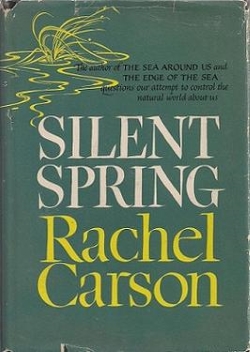
    Silent Spring  First Edition Cover Copyright Houghton Mifflin, Publisher.   Note, rights exist for the designer/illustrators Lois Darling & Louis Darling Courtesy Wikimedia and Abe books.
    Silent Spring
    First Edition Cover
    Copyright Houghton Mifflin, Publisher.
    Note, rights exist for the designer/illustrators Lois Darling & Louis Darling
    Courtesy Wikimedia and Abe books.
    We can be part of the problem, or part of the solution. It is a marvel at how some people have an “ I don’t care” attitude when it comes to the outdoors and the natural world. Whether a person believes that God created the world, it happened via evolution, or never really think about it at all, our lives are directly connected to the natural processes of this planet.

    For those who live in the somewhat hectic world of urban employment and the frantic rush of crowded traffic lanes, it may seem that there may never be a moment where they can relax and enjoy the quiet sounds of nature, whether it be the ripples of a stream, the calls of a songbird, or the breeze rustling through trees. We can become so disconnected from nature that its very existence may seem like a foreign land to us as we are absorbed by work, television, transportation, and household bills.

    Then again, you might be the type to schedule an occasional escape to a national park or forest. Or perhaps you will be content simply to bid farewell to Winter and welcome the warmth of Spring, the sounds of songbirds claiming territories and seeking mates, or watching gorgeous butterflies drifting among floral bouquets. But what if some of those natural sights and sounds we seek are no longer there?

    In 1962, Rachel Carson published her book, Silent Spring. Think about that title: Silent Spring. What would it be like to walk outside and never hear the songs of birds or the humming of pollinating honeybees?
    Carson was concerned about the harmful effects of pesticides on the environment, especially those being sprayed to control insects on large scales. She was concerned about the near constant presence of such chemicals in our foods and suggested that these products are cancer-causing. And, in certain cases, many insects were developing resistance to new pesticides. Her recommendations were that people use biological controls whenever possible by using natural predators, such as ladybird beetles to attack aphids, rather than spraying for them.

    Humans have developed powers to change our environment in wonderful, or drastic, ways. We need to remember that whether we think about it or not, we are connected to the “natural” systems that support human life.

    So let’s consider a few ways that we can help ourselves by helping those natural systems.

      First:
      Protect your soil. Be careful about chemical additives and fertilizers.
      Second:
      Be prudent about your use of water. It is essential to all life, and we don’t have an unlimited supply.
      Third:
      Reevaluate your affinity for lawns. Their value in the West is overrated. Consider planting more native flower gardens that will feed the pollinators which help provide our food sources.
      Fourth:
      Plant trees. They provide shade, purify the air, provide housing for birds, and raise our property values.
      Fifth:
      Help wildlife. Plant milkweed for declining Monarch Butterflies, place birdfeeders in your yards, and provide a water source for birds and butterflies.

      We can be part of the problems, or part of the solutions.

      This is Ron Hellstern, and I am Wild About Utah.
       
      Credits:

      Images: Courtesy & Copyright Houghton Mifflin, Lois Darling and Louis Darling, Illustrators
      Audio: Courtesy & Copyright Friend Weller, UPR.org
      Text: Ron Hellstern, Cache Valley Wildlife Association

      Additional Reading

      Silent Spring, RachelCarlson.org (a memorial site, see Linda Lear), https://www.rachelcarson.org/SilentSpring.aspx

      Silent Spring First Edition Hardback on Amazon, Rachel Carson, Houghton Mifflin, 1962 https://www.amazon.com/Silent-Spring-Rachel-Carson/dp/0395075068

      Silent Spring Anniversary Edition, Rachel Carson (Author), Linda Lear (Introduction), Edward O. Wilson (Afterword), Houghton Mifflin, 2002, https://www.amazon.com/Silent-Spring-Rachel-Carson/dp/0618249060

      Silent Spring First Edition, Abe Books, https://www.abebooks.com/servlet/BookDetailsPL?bi=22902965763

      Wilson, Joseph F, Messinger Carril, Olivia J., The Bees in Your BackYard, Princeton University Press, 2015, https://www.amazon.com/dp/0691160775/ref=cm_sw_r_cp_ep_dp_oRgkCbAF08452
      Bees on a Sunflower, from The Bees in Your BackYard, https://www.youtube.com/watch?v=z0RGx70zNHA&feature=youtu.be

      Q & A with Joseph S. Wilson & Olivia J. Messinger Carril, Princeton University Press, https://press.princeton.edu/interviews/qa-10593 [Mar 25, 2019] No Archive Available

      Wilson, Joseph S.; Forister, Matthew L.; and Carril, Olivia Messinger, “Interest Exceeds Understanding in Public Support of Bee Conservation” (2017). Biology Faculty Publications. Paper 1570. https://digitalcommons.usu.edu/cgi/viewcontent.cgi?article=2520&context=biology_facpub

    A Nuthatch In Three Varieties

    White-breasted nuthatch	 Sitta carolinensis Courtesy US FWS David Brenzinski, Photographer
    White-breasted nuthatch
    Sitta carolinensis
    Courtesy US FWS
    David Brenzinski, Photographer
    Inverted woodpecker, a phrase I use to describe the feeding habits of the amazing nut hatch family. I first became aware of this lovely little songbird growing up in Michigan, where the white-breasted nut hatch was common fare in the north woods. Their little laughing notes were most welcome as I sat on my deer stand where I would watch them search bark crevices for yummy morsels of grubs, insect eggs or seeds they had wedged in for tomorrow’s snack.

    Red Breasted Nuthatch Courtesy US FWS Dave Menke, Photographer
    Red Breasted Nuthatch
    Courtesy US FWS
    Dave Menke, Photographer
    Now having lived many years in Utah, it is the red-breasted nut hatch that has replaced this eastern cousin for the most part. Their “yank, yank, yank” vocalizations light up my life whenever and wherever they occur. They prefer conifers but will gladly substitute a deciduous tree, especially those with more furrowed bark. Where there is food or water, infrequently a white-breasted will appear, especially in our higher elevations, although I’ve had them join the red-breasted at our feeder during winter months – a rare treat.

    Pygmy nuthatch, Sitta pygmaea, Courtesy US FWS Lee Karney, Photographer
    Pygmy nuthatch
    Sitta pygmaea
    Courtesy US FWS
    Lee Karney, Photographer
    If one spends much time in our Ponderosa pine forests in central and southern Utah, another family member can be found. Unlike the other two more solitary species, these tiny pygmies occur in small flocks and are very chatty. Highly social, the pygmy nut hatch appear to enjoy a food frolic as they fly from tree to tree for feeding and social interaction. Thus, Utah’s blessed with all three North American species of nut hatch.

    If you observe them as they search the main stem of a tree, my inverted woodpecker title will be justified. Rather than moving from top to bottom of the tree facing up as do the woodpeckers, the nut hatch prefers head down from top to bottom. They also like hanging upside down on a horizontal limb. Why? Evolution keeps us mysteries well-guarded. I conjecture partitioning might be part of the answer: a phenomenon where bird species will utilize different parts of the tree to avoid competing for resources with other species.

    As with all of life, I pay attention to how our shifting climate has been observed or predicted to affect their populations and distribution. As long as there are conifers breeding season, nut hatches are content. They can be found in dry Ponderosa pine foothills, in moist boreal bogs, around tree line in the mountains, and even in planted Christmas tree plantations. Audubon’s seven-year generated climate model shows an overall northward drift of the species’ range with more disruption and range loss in summer than in winter. The nut hatch is a habitat generalist in winter, so summertime climate is the chief concern going forward. However, whether the species adapts in the decades ahead will be determined in large part by the conifer forest health in a changing climate. The projection for species range change from 2000 to 2080 is 19% of summer 2000 range remaining stable and 58% of winter range projected to be stable. It’s my plan to follow them wherever they may go.

    Wild about Utah is brought to you in part by our listeners and the Moab area travel council, whose support of tourism events and recreation in Grand county promotes and protects the natural beauty for visitors from across the state of Utah. Information available online at discovermoab.com

    This is Jack Green, reading and getting wilder about Utah as days pass.

    Credits:

    Pictures: Courtesy US FWS, David Brenzinski, Photographer
    Contains Sound: Courtesy Kevin Colver
    Text: Jack Greene, Bridgerland Audubon Society //Utah State University Sustainability

    Additional Reading:

    White-breasted Nuthatch, All About Birds, Cornell Lab of Ornithology, https://www.allaboutbirds.org/guide/White-breasted_Nuthatch/id

    Red-breasted Nuthatch, All About Birds, Cornell Lab of Ornithology, https://www.allaboutbirds.org/guide/Red-breasted_Nuthatch/id

    Pygmy Nuthatch, All About Birds, Cornell Lab of Ornithology, https://www.allaboutbirds.org/guide/Pygmy_Nuthatch/id

    Red-breasted Nuthatch, Sitta canadensis, eBird, Cornell Lab of Ornithology, https://ebird.org/species/rebnut

    Thoughts on Bird Brains

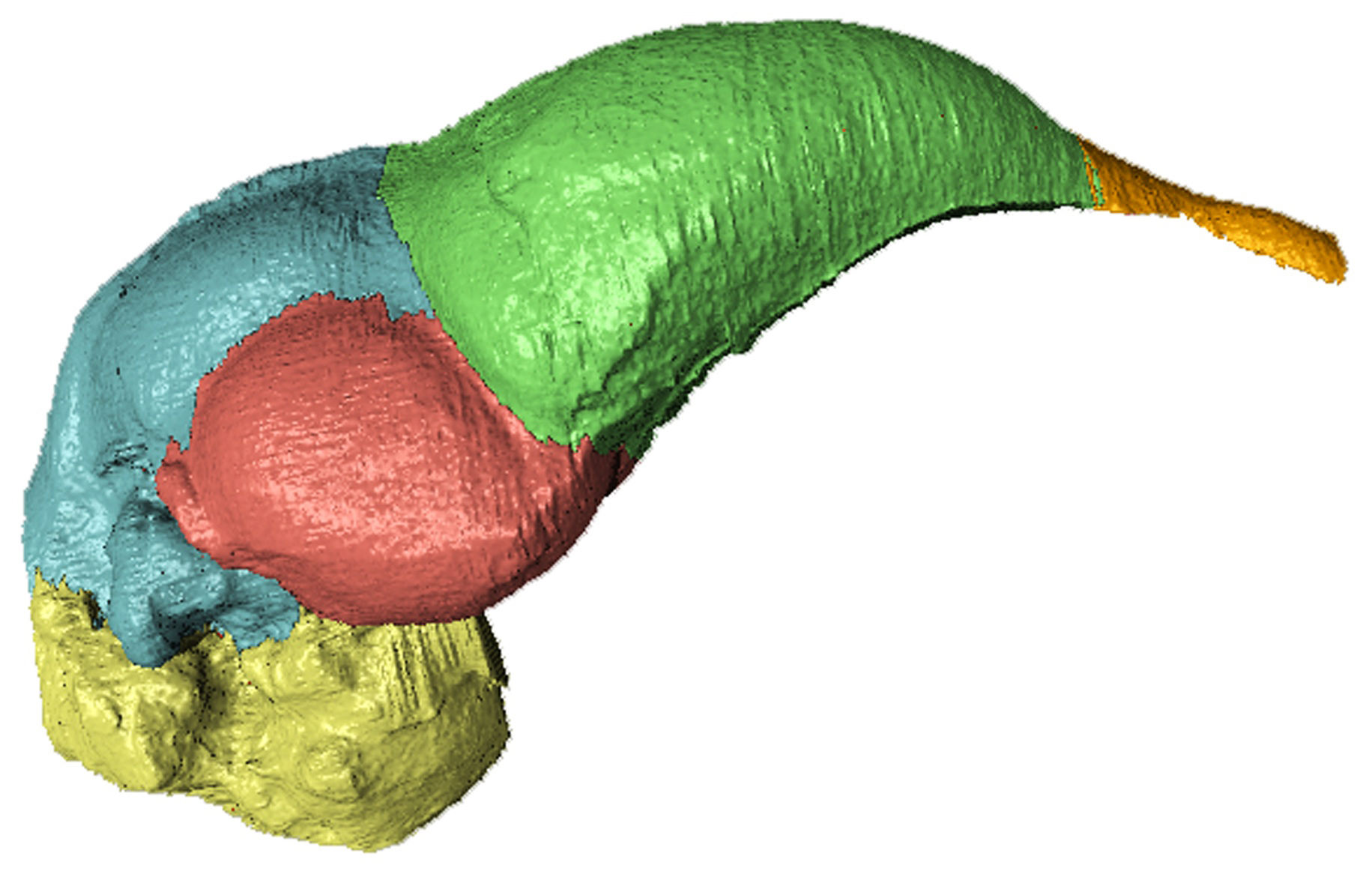
    CT image of a Bird Brain Golden Woodpecker, Melanerpes aurifrons https://www.nsf.gov/news/mmg/mmg_disp.jsp?med_id=79726
    CT image of a Bird Brain
    Golden Woodpecker
    Melanerpes aurifrons
    https://www.nsf.gov/news/mmg/mmg_disp.jsp?med_id=79726
    When I was a young lad being called “bird brain” was an indication that one was lacking in mental capacity.
    Over the years I’ve come to question this connotation, and might even consider it a compliment. I suggest that quantity of this gray matter might be outweighed by quality.

    Consider the hummingbird brain. Slightly larger than a bibi, it is very capable of feats beyond our imagining. Think unerring migration over hundreds of miles, efficient pollination while suspended in air, extraordinary flight capability, adjusting to extreme environmental challenges of cold, heat, predation, nourishment; exquisite nest design and construction, and so on.

    Clark's Nutcracker Courtesy US Fish & Wildlife Service Dave Menke, Photographer
    Clark’s Nutcracker
    Courtesy US Fish & Wildlife Service
    Dave Menke, Photographer

    Regarding memory, nothing has been found to match the recall ability of the Clark’s nutcracker, which can bury thousands of pine nuts in rugged mountain terrain, finding them with uncanny ability following months of absence. Of course they hoard far more than needed, allowing many to germinate into seedlings- an amazing keystone species responsible for planting millions of trees from Mexico to Canada – this “squirrel bird” of the Rockies.

    I’ve watched crows dropping nuts on roadways so they can be crushed open by passing vehicles, then flying down to eat the contents between oncoming traffic. And gulls dropping rocks on our pets to shoo them away from food dishes so they can have their turn at the table.

    An ice fisherman was puzzled by a thief who was stealing his fish by pulling the line out of the ice hole and removing the fish. The culprit was finally observed- a raven- who used its beak and feet to gradually pull up the line with fish attached- an easy catch!

    How about those mimics- parrots, corvids, starlings, gray catbirds, and the masterful mocking bird who can expand their repertoire of mimics to nearly 100 imitations without a pause.

    And let us consider the remarkable Peregrine falcon. How is it possible that this lovely bird can strike a fast moving, highly maneuverable target as it drops from the heavens at a speed approaching 200 mph? Eyes, muscles, and nerves woven in such a manner that allow it to perform this feat is beyond comprehension.

    I’ll conclude with perhaps my favorite bird attribute- their vocalizations. The more scientists learn, the richer their communications appear, possessing qualities once ascribed solely to the human language. Recent research has revealed that birds use syntax, which is altering the sequence of notes for variable meanings. Call order matters to them, much like word order does to us. The sound of birds calling isn’t just pretty. It’s full of meaning. I dare you to call me bird brain!

    This is Jack Greene and I’m Wild About Utah

    Credits:

    Pictures: Courtesy US National Science Foundation & Courtesy US Fish & Wildlife Service, Dave Menke, Photographer
    Audio: Courtesy and Copyright Kevin Colver
    Text: Jack Greene, Bridgerland Audubon Society

    Additional Reading:

    Bird IQ Tests: 8 Ways Researchers Test Bird Intelligence, National Audubon, Alexandra Ossola, 9 Dec 2015, https://www.audubon.org/news/bird-iq-tests-8-ways-researchers-test-bird-intelligence

    Bird Intelligence: Using Tools, Speech, Memory, Interactive Toys, and Emotional Displays
    Veterinary & Aquatic Services Department, Drs. Foster & Smith, PetEducation.com, Petco Wellness LLC, https://www.peteducation.com/article.cfm?c=15+1795&aid=3342

    Here’s Why ‘Birdbrain’ Should Be a Compliment, Simon Worrall, National Geographic, 15 May 2016, https://news.nationalgeographic.com/2016/05/160515-genius-birds-animal-intelligence-ackerman-ngbooktalk/