Logan River’s Evolving Geomorphology

Logan Rivers evolving geomorphology: Logan River’s Evolving Geomorphology: Children enjoying Logan River as they search for insects among the dropped sediments of the Logan River. Courtesy & Copyright Shauna Leavitt, Photographer
Children enjoying Logan River as they search for insects among the dropped sediments of the Logan River.
Courtesy & Copyright Shauna Leavitt, Photographer
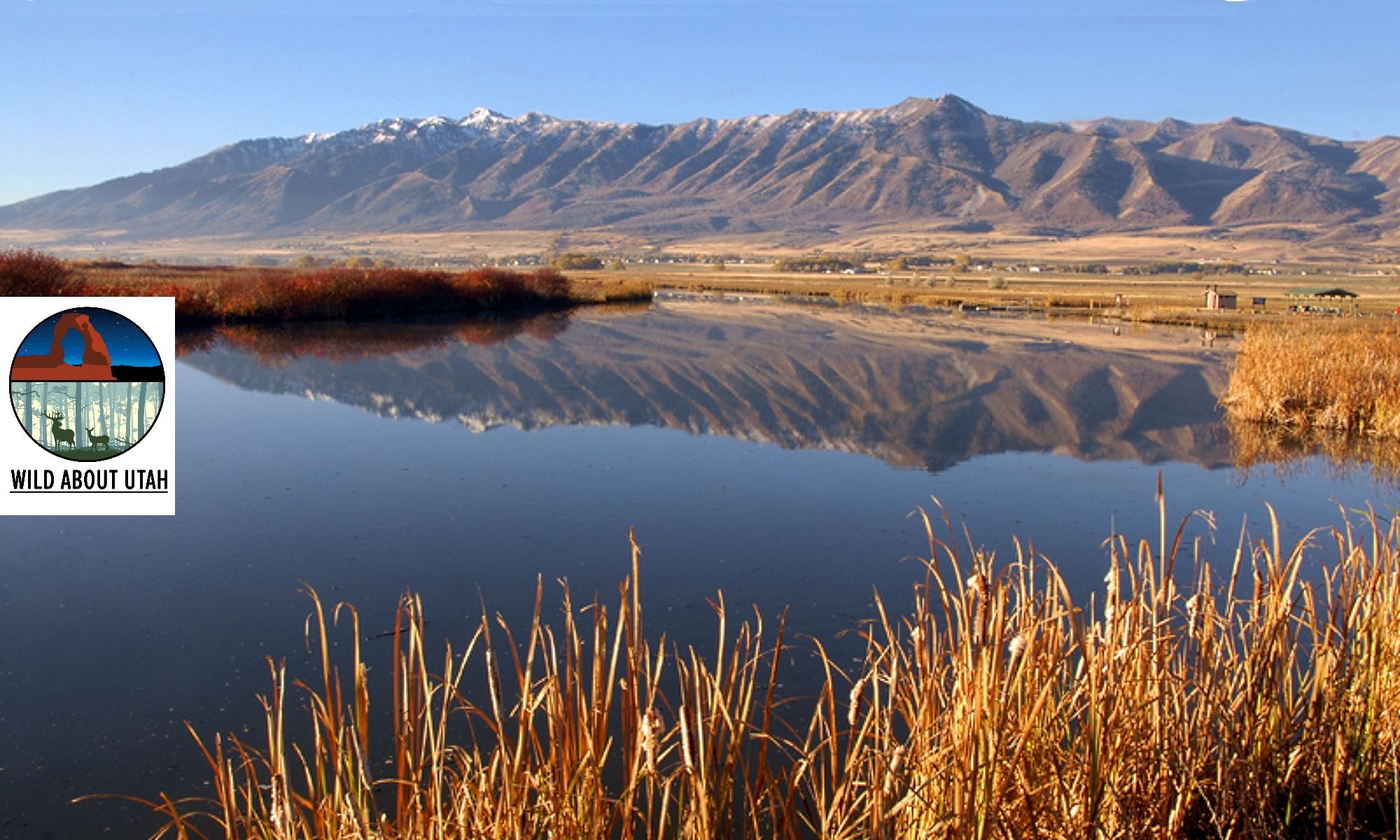
Logan River’s geomorphology, or landform, has changed very little over the past 150 years in the mountain canyons. But where the river leaves the mountains and drops down onto Cache Valley’s floor, its geomorphology has changed dramatically.

A river’s geomorphology is how it interacts with its environment, how it changes and moves over time, how it picks up sediment and debris when its flowing fast then releases the sediments downstream where the river slows and spreads over open-flat landscapes.
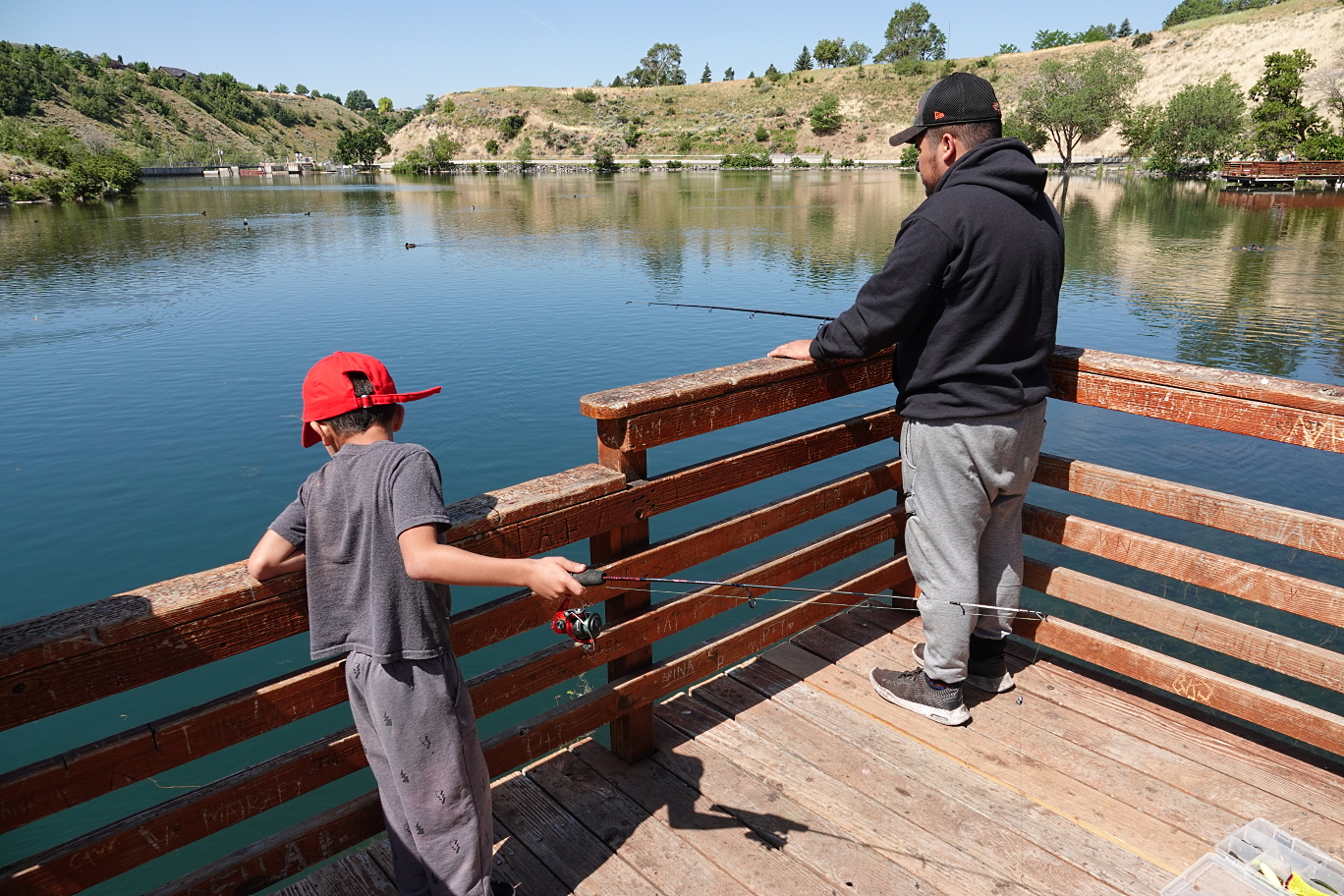
Logan Rivers evolving geomorphology: Logan River’s Evolving Geomorphology: Father and son enjoying a day of fishing on the reservoir behind First dam in the mouth of Logan Canyon Courtesy & Copyright Shauna Leavitt, Photographer
Father and son enjoying a day of fishing on the reservoir behind First dam in the mouth of Logan Canyon
Courtesy & Copyright Shauna Leavitt, Photographer
The route of Logan River is noteworthy. Peter Wilcock, department head of Watershed Sciences in the Quinney College of Natural Resources explains, Logan River cuts through a large amount of the Bear River mountain range [in northeastern Utah and southeastern Idaho] and is by far the biggest drainage from the range.

The river’s size has made a mark on the mountain. When all the tributaries and springs come together, the result is the fast-flowing river with great force for erosion. If you compare Logan Canyon with other canyons coming out of the Bear River Range such as Green Canyon or Providence Canyon you can see Logan Canyon is close to 600 feet lower than all the other canyons. The volume and force of Logan River cut through the beach material that ancient Lake Bonneville left behind, the other drainages have been too small to cut through the ancient short line.

In the early 1800s, the lower part of Logan River flowed freely, meandering and spreading across the Cache Valley floor. As it entered the valley, the river would form into an alluvial fan spreading like fingers over the valley floor and meeting the natural functions of a river to transport water, sediments and nutrients.

As each decade passed an increasing number of buildings, roads and complex infrastructures were built to keep up with the growing population. And to protect this infrastructure, people attempted to restrict the movements of the river. In many places, the river was straightened or channelized even as its water was re-routed for irrigation.

The dams placed along the river and at the mouth of Logan Canyon slowed the river before it reached the valley floor. As a result, a large percentage of the sediments which would have dropped on the valley floor, are now captured behind the river’s dams and fill the reservoirs.

Frank Howe, chairman of the Logan River Task Force, explains how this impacts the river’s geomorphology, “Water released from the dams is free of deposits; the river is now “hungry” – hungry for new sediments. It’s now capable of picking up large amounts of sediments which causes erosion problems miles below the dams.”

The Logan River Task Force, consisting of representatives from Utah State University, Logan City, Cache County, State and Federal Agencies, six non-profit organizations, corporations and interested citizens came together to find solutions to the erosion problem and other river issues. To address these issues, they prepared a “long-term plan for the Logan River to balance ecological and social values and capture what Cache Valley community wants the river to become. “

Rivers, by nature, are dynamic. They move back and forth especially where the slope is gentle. Over time, this meandering movement delivers fine sediments, across the river’s floodplains creating rich soils diverse in vegetation and wildlife. By changing the river’s geomorphology, we’ve altered the rivers dynamics, as well as how and where it delivers sediments.

Fortunately, parts of the Logan River’s geomorphology can be restored. River restoration will be the topic of our fourth and final segment for the Logan River series on Wild About Utah.

This is Shauna Leavitt and I’m wild about Utah.

Logan River’s Evolving Geomorphology-Credits:
Photos: Courtesy & Copyright ©
Audio: Courtesy & Copyright © Friend Weller, Utah Public Radio
Text: Shauna Leavitt, Utah Cooperative Fish and Wildlife Research Unit, Quinney College of Natural Resources, Utah State University
Co-Authored by: Frank Howe, chairman of the Logan River Task Force, adjunct associate professor, and university liaison for Utah Division of Wildlife Resources.

Logan River’s Evolving Geomorphology-Additional Reading

Leavitt, Shauna, A Short History of the Logan River, Wild About Utah, November 4, 2019, https://wildaboututah.org/short-history-of-logan-river/

Leavitt, Shauna, The Ecology in and around the Logan River, Wild About Utah, December 2, 2019, https://wildaboututah.org/the-ecology-in-and-around-the-logan-river/

Williams, Edmond J, Geomorphic Features and History of the Lower Part of Logan Canyon, Utah, Thesis, MS Science 2964, Donald R. Olsen Chair, Department of Geology, Utah State University, https://digitalcommons.usu.edu/etd/6644/

James P. Evans, James P. McCalpinl, David C. Holmes, Geologic Map of the Logan 7.5′ Quadrangle, Cache County, Utah, Department of Geology, Utah State University, Utah Geological Survey, Utah Department of Natural Resources, 1996, https://ugspub.nr.utah.gov/publications/misc_pubs/mp-96-1.pdf

Hylland, Rebecca, What are Igneous, Sedimentary & Metamorphic Rocks?, Glad You Asked, Utah Geological Survey, https://geology.utah.gov/map-pub/survey-notes/glad-you-asked/igneous-sedimentary-metamorphic-rocks/

Map of the Deltas formed in Lake Bonneville by the Logan River, U.S. Geological Survey, ca. 1890, Held in the Utah State University, Merrill-Cazier Library, Special Collections and Archives
https://digital.lib.usu.edu/digital/collection/Bear/id/109/

Bird TV

bird tv: Flicker, Courtesy Pixabay
Flicker, Courtesy Pixabay
There are some days that I just don’t have it in me to get outside. Maybe it’s the winter blues; maybe it’s exhaustion from a full day’s work. Either way, there are days where all I want to do is sit in the shelter of my home next to the heat ducts, or under the shade of a porch, and just exhale for hours. Sometimes, getting into the thick or exploring one of the many unmapped nooks of Utah’s majesty just isn’t happening.

I used to feel bad about this. I have but one life, one short blip of time upon this earth, I should be making use of every second. Whether it’s laboring on an overdue chore, or out testing my grit in harmony with Utah’s character, I need to be doing or I am dying; wasting the one life I am given.

bird tv: Two American Robins and a Northern Flicker Drinking from a Bird Bath Copyright © 2012 Linda Kervin
Two American Robins and a
Northern Flicker Drinking from a Bird Bath
Copyright © 2012 Linda Kervin
It took me some good time to not overcome this mentality, but see my struggle with new eyes: to wash them and see the world fresh. My ablution began by asking a simple question: how can I love the still wild land that has provided for my family, my nation, my species for millennia, even when I don’t have it in me to go out and commune with it as I know I should daily?

The answer for me was to find a way to appreciate and give in such a way that allows me great joy and relaxation, yet fulfills that higher narrative which only the world beyond human influence can provide. My answer was watching birds at my small backyard bird feeder.

While it may not sound as exciting as fording a river while carrying my dog, or submitting a mountain that still holds on to deep winter snows (again with my dog), it gives me a chance to still learn about the cut of my jib, to see what character I’m made of, and to see my place in the world, in creation, and in life.

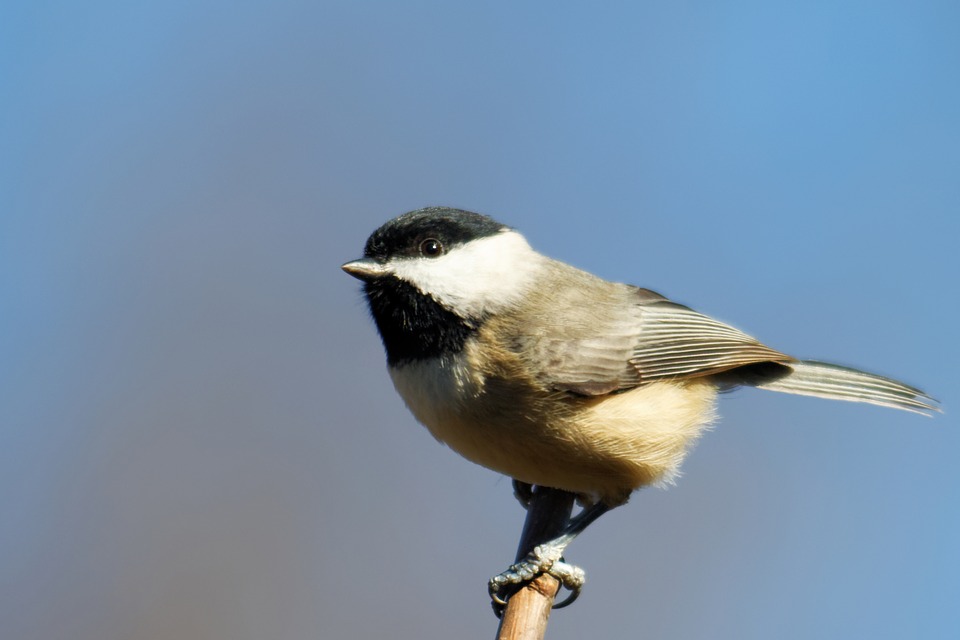
bird tv: Chickadee Courtesy edbo23, photographer and Pixabay
Chickadee
Courtesy edbo23, photographer and Pixabay
I test my grit upon the stillness of my mind when cheerful chickadees begin to see me as a part of the scenery and perch ever closer and closer to the branches above me, or my honest acceptance when rackets of starlings come to steal the suet left out in hope of a Stellar’s jay or lost mountain bluebird, or my reflection on where my body will one day go as scraps from my last hunt are eaten by the local neighborhood magpie clan.

This is an activity I have dubbed Bird TV for those who will often find my attention turn suddenly from conversation with them to quickly confirming the flicker drumming on the feeder’s home tree marking its stake. Through the lessons of my wild neighbors and in my observation of them, I can still hold true to myself in seeking to commune with the real world daily. By watching Bird TV, I can learn the calls of different species, notice when they change with the food supply or weather, and reflect upon my place within this world and within this life, no narration but the sounds of the real world, alive and vibrant in front of me.

So when you don’t have the energy or time to be upon the land from which has given life to your family, our nation, and all species, consider setting out sunflower seeds, nuts, raw meat, or even jams for the birds. Set them someplace you can catch yourself noticing who’s visiting out of the corner of your eye through a window at any moment, and if another human asks as to why you’re being distracted by a what’s outside and not by the usual glowing rectangle, just let them know that it’s Bird TV. Invite them to watch too, and catch them up on what’s been going on in the world. Hopefully then they’ll learn to tune in too.

I’m Patrick Kelly and I’m Wild About Utah.
 
Credits:

Images: Image Courtesy & Copyright Patrick Kelly, Photographer, all rights reserved
Audio: Contains audio Courtesy & Copyright Kevin Colver
Text:    Patrick Kelly, Director of Education, Stokes Nature Center, https://logannature.org
Included Links: Lyle Bingham, Webmaster, WildAboutUtah.org

Additional Reading

Project Feederwatch, Cornell Lab of Ornithology, Cornell University, https://feederwatch.org/

Axelson, Gustave, 30 Years of Project FeederWatch Yield New Insights About Backyard Birds, All About Birds, Cornell Lab of Ornithology, Cornell University, January 11, 2017, https://www.allaboutbirds.org/news/30-years-of-project-feederwatch-yield-new-insights-about-backyard-birds/

Wren Love

Wren Love: Pacific Wren Courtesy US  FWS Peter Pearshall, Photographer
Pacific Wren
Courtesy US FWS
Peter Pearshall, Photographer
With Valentine ’s Day imminent, I must profess my love for wrens.

A recent snowshoe slog with friends in a nearby canyon brought us face to face with a glorious panel of 30 foot ice colonnades running down quartzite cliffs. We stood in awe of their crystalline beauty. Near the ice wall, small birds were flitting in and out of vertical crevices. I began counting- a dozen or more. There is only one bird in mid-winter that could fit the bill, a canyon wren. Possibly my favorite on the long list of wren species for their stunning beauty, and unique, descending melody to match their vertical realm, to sooth my nerves as I climb in their domain.

Never before had I seen more than a pair, usually solos. This was entirely new and totally unexpected, to have such numbers of mature wrens occupying the same space. I’ve since searched the literature and found nothing describing such behavior.

Moving on to another near favorite, the winter, or Pacific wren, is always a treat on winter outings. These smallest of the wren family remind me of feathered mice. They spend much of their time in thick brush or tree roots near or in the ground. Like all wrens, they are grand vocalists who release a rapid, lengthy string of phrases. Like all wrens, Pacific’s are very high energy in constant motion. They emit a tiny “chit” note when alarmed, similar to that of a ruby crowned kinglet, but unlike kinglets, very secretive darting in and out of their hideaways. I may have been the first to report them nesting in Cache Valley some 20 years ago. Now they populate most of our watered canyons in the Bear River Range.

Moving out to the valley wetlands, there are usually a few marsh wrens who overwinter. These nervous chatterers will build a spectacular conical nest of cattails and bulrush lined with cattail down come spring. It’s the male who performs the duty, actually building several to confuse predators and attract a female. She will inspect his architectural abilities, and if pleased, receive his seed, then insult him by dismantling a nest and rebuilding it to her liking.

I must travel down state to the St. George Mojave desert to visit another rival wren for the top spot. The cactus wren has a long rolling unmistakable muffled chatter. They are our largest wren species and no less nervous than the others. They too have an unusual nesting behavior, which involves a very prickly plant- the cholla. Their nest reminds me of the marsh wrens, only made of very different materials as cattail and bulrush are hard to come by where they occupy. Similar to the marsh wren, the male builds multiple “dummy nests” which he will continue, even after the female is sitting on the nest- expending nervous energy I recon!
I must apologize for two others as I’m out of space- rock wrens and the “jenny” or house wren- definitely worthy of note.

Happy Valentines Day to all wren lovers and others!

Jack Greene for Bridgerland Audubon- and we are Wild About Utah!

Credits:

Images: Courtesy US FWS, Peter Pearshall, Photographer
Audio: Contains Audio Courtesy and Copyright Kevin Colver
Text:     Jack Greene, USU Sustainability & Bridgerland Audubon Society

Sources & Additional Reading:

Cane, James, Songs of the Western Meadowlark and Canyon Wren, Wild About Utah, Nov 5, 2009, https://wildaboututah.org/songs-of-the-western-meadowlark-and-canyon-wren/

Cane, James, Songs of the Western Meadowlark, Poorwill and Canyon Wren, Wild About Utah, May 3, 2012, https://wildaboututah.org/songs-of-the-western-meadowlark-poorwill-and-canyon-wren/

Wrens, Browse by Shape, All About Birds, The Cornell Lab of Ornithology, Cornell University, https://www.allaboutbirds.org/guide/browse/shape/Wrens

Morning Routine

Morning Routine: Patrick Kelly Courtesy Patrick Kelly, Photographer
Morning Routine Patrick Kelly Courtesy Patrick Kelly, Photographer
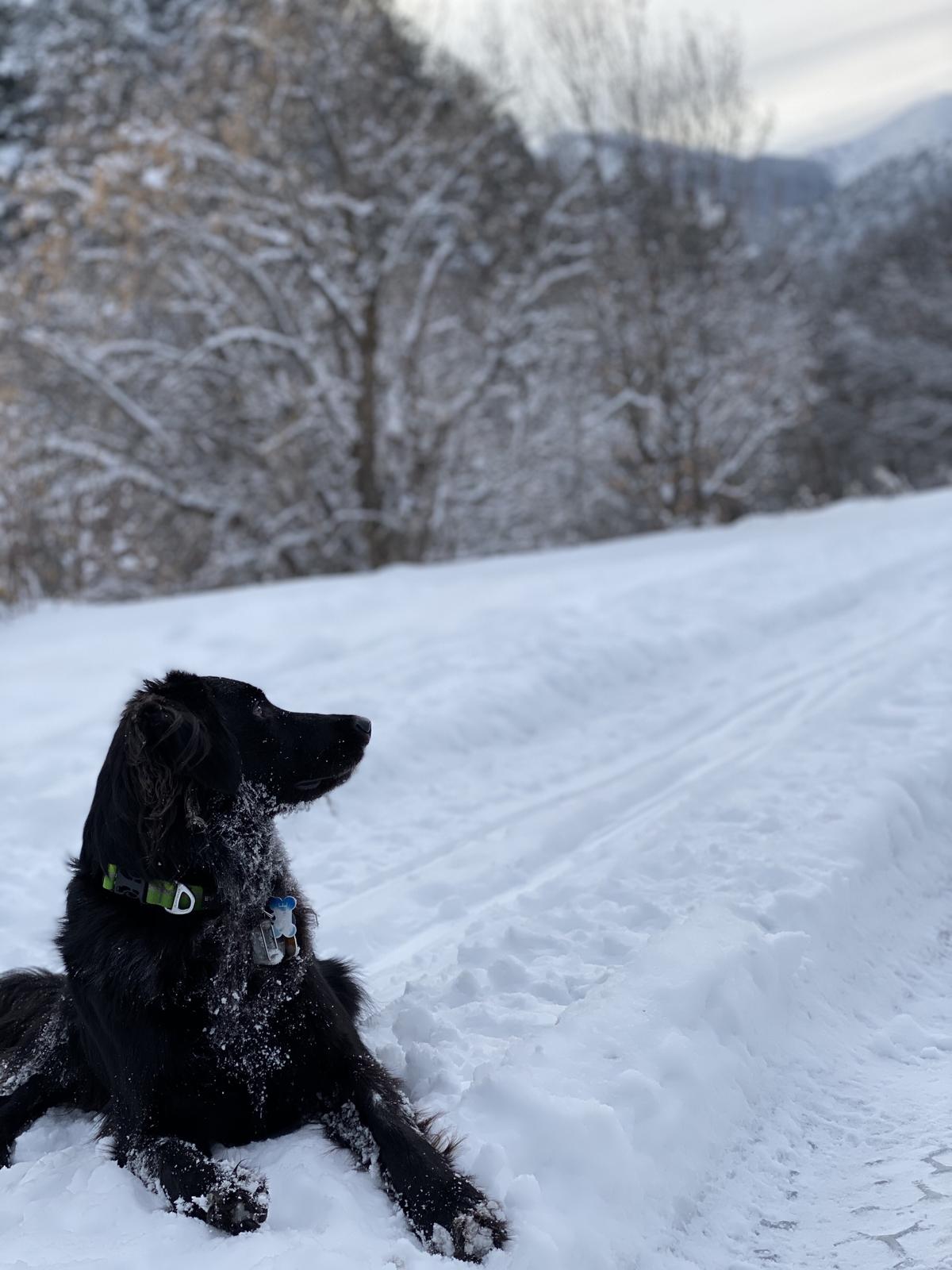
Every morning, me and my dog Sable go on a hike. It’s not a trek, but just an early morning walk up our favorite hidden canyon which lies in plain sight. We set off from our house right about 8 o’clock and drive up the hillsides to the canyon mouth. We weave out of our little town and into the next, winding up and up, past the houses that weren’t here 15 years ago, then 10 years ago, then 5. We rise higher than any business, home, or other building as we approach our morning trailhead. It’s good, that above all of the buildings we’ve constructed over the years, still lies the land eternal. I like that.

As we get out of the car, Sable springs and sprints immediately, starting up the berm just past the parking lot. She lives for the forest and the canyons. Up here, as nowhere in our small town’s limits, she can let loose off leash, be wild, go running after squirrels (which tree and evade her each time,) smell the logbook rocks of dogs before us, and be a very happy free dog. And if you believe that dogs smile as I know, then she beams radiant like the sun as she runs like the wind. I like that most of all.

At the top of the berm lies a retention dam, just in case anything should happen up our little canyon as to not damage the new homes below. But on top of this lies our first view of our valley floor home. Only from the edge of things can we first see them truly. The valley and the mountains on her other rim are a sweeping view in every season, in every weather, in every light or dark. I stand, breathe deep seeing the world below like an astronaut, and turn my back on this beauty, for that is the only way up the canyon.

We begin our journey up, up, up. We meander along the trail past picnic tables and illegal fire rings. We move past small open fields where Sable leans into full sprint, and into the maple and juniper thickets, dense with the quieting effect of treestands, allowing our canyon to cease being just at the edge of town, and to become the morning wilderness heartbeat we both seek. If we hear a branch snap, we’ll both stop dead in our tracks, hold our breath, and listen long. I love these moments. A man and a dog, two species in one moment sharing how we approach the world of the unknown. Then, in our united journey, we set off again through the morning wild.

On our morning walks, we do not go far, certainly less than a mile. It usually takes us just 15 minutes to get to our turnaround point, a Forest Service gate meant to keep cattle from running into the retention dam and the town below. Sometimes when I am feeling slow or want to soak up the canyon a bit more, there is a small cavelet just off from the gate. I’ll go and sit on the rocks within, observing how the mosses grow on the seeping water and listen to the invisible birds around me.

From our turnaround gate, I always stop and let Sable run a bit further up trail before she comes back. She’s good at checking in, even after some of her more worrisome decisions of scaling the canyon sides into its cliffed faces in search of ground squirrel chatter. After she comes back, we turn back towards town in knowing silence, descending to the world in which we live.

Going down always takes less time, too little time it seems sometimes. On the descent, Sable is like a bobsledder: an unstoppable force of energy hugging the luge of the trail. It’s truly beautiful to see such athleticism paired with boundless joy in running. It must be the greatest fun to be a dog in the forest.

When we both finally pop out of the trees back at the retention dam, the town below opens into view. I don’t stop this time. I keep on trodding to the car with Sable. It’s not that I don’t appreciate the view of town on the way down, it’s that I don’t need to dip my toe in in order to be brave enough to plunge by now. Back to life’s duties and hullabaloo.

Driving down, I drop Sable off at home to sleep in the sunny backyard or chew on an elk bone for the day, and I head off to my own work. All day though, I can keep thinking back to our shared morning walk, not even half an hour, but worth its more than its weight in sunrise gold. All day I feel good and alive, and I know Sable does too from just a short jaunt. I know that she loves living in a beautiful, wild place just as much as I do. We both know the goodness in such places and in living in such places. Two species, one shared love for this land and our favorite hidden canyon which lies in plain sight.

My name is Patrick Kelly and I am Wild About Utah.
 
Morning Routine-Credits:

Images: Image Courtesy & Copyright Patrick Kelly, Photographer, all rights reserved
Audio: Contains audio Courtesy & Copyright Kevin Colver
Text:    Patrick Kelly, Director of Education, Stokes Nature Center, https://logannature.org
Included Links: Lyle Bingham, Webmaster, WildAboutUtah.org

Morning Routine-Additional Reading

Cache County Trails, Cache County, https://trails.cachecounty.org/ [updated November 6, 2024] https://www.cachecounty.gov/gis/offline-recreation-mapping.html

Hiking Trail Guide, Cache Valley Visitors Bureau/Logan Ranger District, Wasatch-Cache National Forest, https://www.explorelogan.com/assets/files/brochures/hiking.pdf

Cache Trails, A hiking guide for the trails of the Cache Valley, Bridgerland Audubon Society, https://bridgerlandaudubon.org/our-projects/publications/