Bird Banding in Red Butte Canyon

Bird Banding Red Butte Canyon: Volunteers and members of the Şekercioğlu lab who run the bird banding station in Red Butte Canyon. From left to right: Kyle Mika, Jennifer Bridgeman, Kylynn Clare, Anna Vickrey, JJ Horns, Ahmed Bwika, and Patricia Gao.
Volunteers and members of the Şekercioğlu lab who run the bird banding station in Red Butte Canyon. From left to right:
Kyle Mika, Jennifer Bridgeman, Kylynn Clare, Anna Vickrey, JJ Horns, Ahmed Bwika, and Patricia Gao.
Courtesy & Copyright Jessie Bunkley, Photographer

[Sound of walking on gravel]

J.J. Horns – Our lab name is the Biodiversity and Conservation Ecology lab and our work focuses on how human land use affects different types of wildlife.

J.J. – I’m J.J. Horns.
Patricia Gao – I’m Patricia.
Ahmed Bwika – I’m Ahmed.
Anna Vickrey – I’m Anna Vickrey.
Kyle Mika – I’m Kyle Mika.
Jennifer Bridgeman – I’m Jennifer Bridgeman.
Kylynn Clare – I’m Kylynn Clare.

Bird Banding in Red Butte Canyon: J.J. Horns, a graduate student in the University of Utah Biodiversity and Conservation Ecology lab, observes a yellow warbler (Setophaga petechia) that was recently measured and banded.
J.J. Horns, a graduate student in the University of Utah Biodiversity and Conservation Ecology lab, observes a yellow warbler (Setophaga petechia) that was recently measured and banded.
Courtesy & Copyright Jessie Bunkley, Photographer

J.J. – Here in Red Butte Canyon we monitor migratory songbirds as they move through and try and get a picture of one, what is the bird community like in Utah. That’s why Red Butte Canyon is such a nice place to work because it’s a protected canyon so it gives an idea of what the natural state of birds along the Wasatch should be like. And we monitor their populations, look for any population level changes, and we look for changes in their migration, in the health of the birds, and try and understand how human effects like land development and climate change are affecting these bird communities.

Metal leg bands with unique numbers are attached to each bird, like this spotted towhee (Pipilo maculatus), allowing individuals to be identified in the future if they are recaptured.
Courtesy & Copyright Jessie Bunkley, Photographer

Ok, so we’re ready to go around and check our nets.

Anna – The mist net is this really superfine, hard to see material with shelves in it. So when the bird flies into the net it kind of falls into one of these net shelves and that material is so fine, especially if you put it in front of a tree, that the birds don’t see it and so they’ll just fly right into it, fall in, and we come around frequently enough that they’re not in there for a long time.

J.J. – So this is a bird called a spotted towhee and based on how brown that head is

Blowing the feathers away from the body allows researchers to examine a bird's fat levels and overall health. An inspection of this spotted towhee also reveals a brood patch, indicating it is incubating eggs.
Blowing the feathers away from the body allows researchers to examine a bird’s fat levels and overall health. An inspection of this spotted towhee also reveals a brood patch, indicating it is incubating eggs.
Courtesy & Copyright Jessie Bunkley, Photographer

Anna – And the eye color, right?

J.J. – and the eye color, we can tell that it’s a little baby, just born this year. Towhee squawking in the background. When the bird lands in the net like this they get all tangled up, they get the net around their wings and around their legs, and so what we do is we carefully take it off of any part of their body where it’s tangled up and then we put them in these little bird bags. And the bird bags are just little cloth sacks that keep the bird warm and because they’re kind of dark the bird stays really calm.

Blowing feathers away from the head reveals the skull beneath, enabling the bird's age to be determined. The pattern of skull ossification on this black-headed grosbeak (Pheucticus melanocephalus) indicates it is an adult.
Blowing feathers away from the head reveals the skull beneath, enabling the bird’s age to be determined. The pattern of skull ossification on this black-headed grosbeak (Pheucticus melanocephalus) indicates it is an adult.
Courtesy & Copyright Jessie Bunkley, Photographer

Jennifer – It’s a baby yellow warbler!

Kylynn – Spotted towhee.

J.J. – Black-headed grosbeak.

Mourning dove.

Kyle – Song sparrow.

J.J. – So this is a yellow warbler. So as part of the banding we take the age and the sex and then a bunch of morphological measurements. We can tell this one’s a male by those brown streaks on the breast and we can also tell it is an older bird. It’s been around for at least one year because of that nice yellow edging on those tiny feathers there.

[Sound of JJ blowing the bird’s feathers away from its body.]

A mourning dove is examined closely by a scientist at the Red Butte Canyon bird banding station. Courtesy & Copyright Jessie Bunkley, Photographer
A mourning dove is examined closely by a scientist at the Red Butte Canyon bird banding station.
Courtesy & Copyright Jessie Bunkley, Photographer

Let’s say a CP of one. A CP is a cloacal protrusion, it’s what males get when they’re breeding. Sound of blowing. No brood patch. Brood patches are where birds will loose feathers on their stomachs so they can incubate eggs. Sound of blowing. No fat. Birds deposit fat in a really predictable way. They have a little cavity where their collar bone is. Sound of blowing. No body molts. Not growing any feathers on his body. Wing is sixty-two and his weight is 8.4.

If anyone is interested in helping out bird conservation just in their day to day life, if you have cats either keep them inside or buy them a cat bib or a couple of bell collars. That’s probably the number one thing you can do to help bird conservation.

Everyone – For Wild About Utah this is the Şekercioğlu lab in Red Butte Canyon!

Join a BioBlitz this Year

BioBlitz Logo, Courtesy Audubon International
BioBlitz 2016 Logo
Courtesy Audubon International
auduboninternational.org/BioBlitz/ (updated 8/22/2024)
Note: Audubon International is a separate organization from National Audubon: Audubon.org and has a different mission.


National Parks BioBlitz Logo, Courtesy National Geographic SocietyNational Parks BioBlitz Logo
Courtesy National Geographic Society
https://education.nationalgeographic.org/resource/bioblitz/ (updated 8/22/2024)

See also:
https://www.nps.gov/subjects/biodiversity/national-parks-bioblitz.htm

“So what is a BioBlitz anyway”, by far the most common question we get from the public who visit our parks and other venues offering the event.
A BioBlitz is an event that focuses on finding and identifying as many species as possible in a specific area over a short period of time. Scientists, families, students, teachers, and other community members work together to get an overall count of the plants, animals, fungi, and other organisms that live in a place.

For the past decade the National Geographic Society and National Park Service have collaborated on a BioBlitz in a different park each year. This year in order to celebrate the NPS centennial, over 250 BioBlitzes are happening across the country and throughout the year. The resulting recordings can be impressive with hundreds of organisms showing up. It is great fun, a celebration of life in all of its myriad forms

My first experience occurred two years ago at the Golden Gate NRA where several thousand folks joined us. One of many highlights was standing on the Golden Gate bridge with a bunch of college students during a wind driven rain storm counting porpoises swimming through far below. Joining us was a lead mammologist who had been researching the return of these remarkable beings. The porpoises had been excluded from the bay by a massive cable net installed during WWII to prevent enemy submarines from entering the bay. Many new species of life were added to the Park list as is often the case.

Last year I joined the Hawaii Volcanoes NP for another grand experience including many native Polynesians adding a marvelous cultural component to the experience, then on to Yellowstone NP where my team investigated pika numbers near Mammoth Hot Springs. The park is especially concerned with the warming trend and reduction of snow pack on their long term survival.
I just returned from blitzing New Mexico’s Bandelier NM. As with Hawaii Volcano, they included a strong cultural presence by inviting in the Pueblo people to perform and exhibit their rich life ways. During the two-day event 17 inventory teams collected 877 observations and identified 363 species.

Back home we had our first event on the Logan River golf course a week ago sponsored by Audubon International and our local Bridgerland Audubon chapter. For our first run we did well. 57 bird species, 67 plants, 1 reptile, 1 amphibian, and a few fungi made the list. There are many more species that were overlooked given our short window of time and limited numbers of observers.
Perhaps you will find opportunity to join a Bioblitz, or create one of your own in your area. Gather up some folks, load the I Naturalist program on your smart phone or I pad and spend a few ours or few days reveling in what nature has to offer- many surprises to say the least!
This has been Jack Greene reading for WAU.
 
This is Jack Greene reading for Wild About Utah.

Credits:
Images: Courtesy Audubon International and National Geographic Society
Text:     Jack Greene, Bridgerland Audubon Society & USU Office of Sustainability

Additional Reading:

National Parks BioBlitz, National Park Service, https://www.nps.gov/subjects/biodiversity/national-parks-bioblitz.htm

Audubon International BioBlitz 2016, Audubon International, https://www.auduboninternational.org/BioBlitz2016

BioBlitz 2016, National Geographic Society, https://nationalgeographic.org/projects/bioblitz/

Permaculture

Click to view Rain Water Storage Tank, Photo Courtesy & © Roslynn Brain, Photographer
Rain Water Storage Tank
Private Residence in New Mexico
Installed by Jeff Adams of Terrasophia
Photo Courtesy & © Roslynn Brain, Photographer


Have you ever looked at a healthy forest and wondered “how do those trees, shrubs, and smaller plants thrive without fertilizer inputs, pest control, consistent watering, tilling, thinning, and being overtaken by unwanted species?” Many in Utah, in striving for alternative ways to grow food and landscapes in general, are turning away from conventional practices and experimenting in a relatively new design process called “permaculture.”

But what exactly does permaculture mean? Permaculture is a design philosophy for producing sustainable landscapes and buildings that work as a system and have the diversity, stability, and resilience of natural ecosystems.

Although concepts included in permaculture design have been in practice for millennia by indigenous cultures worldwide, the term “permaculture” was first coined in Tasmania in the mid 1970s by Bill Mollison and David Holmgren. They describe permaculture as “consciously designed landscapes which mimic the patterns and relationships found in nature, while yielding an abundance of food, fiber, and energy for provision of local needs.”

As Utahns lean toward water conservation and self-sufficiency, many are incorporating permaculture into their lifestyles. The first, and most important, principle in permaculture design is “observe and interact.” Watch your landscape during different weather events – in heavy rain, regular rain, high winds, and more. Where do storms come in from? Which way do the high winds normally blow? Which areas receive full sun? Where do you hear consistent noise and do you like or dislike what you hear? How does water flow on your property in a rain event? These observations will serve as the foundation guiding how you will eventually design your landscape.

Following “observe and interact” are 11 additional principles, which can be found in most introductory texts about permaculture design, and in USU Extension’s permaculture fact sheet. After making long and slow observations, you may decide you wish to block noise coming in from a certain part of your property, or capture rainwater from your south-facing roof. This is where various tools and techniques come into play, such as harvesting rainwater and stacking functions. Rainwater is a clean, free resource that falls on our roof and properties. Are you effectively using this free resource by building basins and swales to better capture and infiltrate water instead of mounds where water would easily runoff? Are you capturing and storing water from your roof for drier periods? Stacking functions is the practice of considering the entire spectrum of benefits various elements (such as plants or structures) on your landscape could provide, and then grouping elements in a way that works as system. A common example includes the Native American “Three Sisters Garden” of corn, beans, and squash. Nitrogen-fixing beans provide a stable, slow-release nitrogen source for the corn, whereas corn provides a pole for the beans to grow. Squash forms a natural ground cover to reduce weeds and retain soil moisture, while the prickly hairs help deter pests. The gardener can reap a higher yield through stacking functions like this.

To find out more, search for USU Extension’s permaculture fact sheet.

For Utah State University Extension Sustainability, this is Roslynn Brain.

Credits:

Photos: Courtesy and Copyright Roslynn Brain
Text: Roslynn Brain, Utah State University Extension Sustainability

Sources & Additional Reading:

YCC Team, Lush Utah garden makes the most of a small amount of rain, Yale Climate Connections, July 25, 2022, https://yaleclimateconnections.org/2022/07/lush-utah-garden-makes-the-most-of-a-small-amount-of-rain/

The Great Salt Lake

The Great Salt Lake Breach
Courtesy U.S. Geological Survey
Department of the Interior/USGS
Mike Freeman, Photographer
10 Nov 2015
Water flowing through the Great Salt Lake breach in 2011, when lake levels were high due to above average snowfall in the Wasatch and Uinta Mountains. The Great Salt Lake breach is an area that allows water to travel between the southern and northern parts of the lake.
There is a giant among us with a profound influence on our past, present, and future. My first encounter with this giant was both buoyant and delightful as I floated in the brine on a lovely summer day. But I was oblivious to the Great Salt Lake’s immense value as an environmental, cultural, and economic resource.

Much of what follows is taken from a very recently released collaborative study titled “Impacts of Water Development on Great Salt Lake and the Wasatch Front” which was a collaborative effort from four institutions(Utah State University, Utah Division of Water Resources, Salt Lake Community College, and the Utah Division of Wildlife Resources.)

A 2012 analysis by Bioeconomics estimated the economic value of the lake at $1.32 billion per year for mineral extraction, brine shrimp cyst production, and recreation. The abundant food and wetlands of the lake attract 3 million shorebirds, as many as 1.7 million eared grebes, and hundreds of thousands of waterfowl during spring and fall migrations. Because of this, it has been designated as a Western Hemisphere Shorebird Reserve Network Site. Due to its enormous surface area, it produces the “lake affect” which enhances our snow pack by an estimated 8%, a significant amount for both skiers and our available water. But our giant is shrinking.

Since the arrival of 19th Century pioneers water diversions for irrigation have decreased its elevation by 11 feet exposing much of the lake bed. Natural fluctuations in rainfall and river flow cause the lake level to rise and fall, but there has been no significant long‐term change in precipitation and water supply from the main tributaries since their coming in 1847.

The Great Salt Lake Breach 2015
The Great Salt Lake Breach
Credit: U.S. Geological Survey
Department of the Interior/USGS
Mike Freeman, Photographer
10 Nov 2015

For the first time since it was opened in 1984, water has stopped flowing through the Great Salt Lake causeway breach, an area that allows water to travel between the southern and northern parts of the lake.
To significantly reduce water use, a balanced conservation ethic needs to consider all uses, including agriculture, which consumes 63 percent of the water in the Great Salt Lake Basin. There are no water rights to protect our Great Lake, so water development currently focuses solely on whether there is water upstream to divert. If future water projects reduce the supply of water to the lake, (such as the Bear River Development Project, its level will (most likely) continue to drop.

We must look beyond the next few decades and decide how we value the lake for future generations. Lower lake levels will increase dust pollution and related human health impacts, and reduce industrial and environmental function of Great Salt Lake. We must be willing to make decisions now that preserve Great Salt Lake’s benefits and mitigate its negative impacts into the coming centuries.

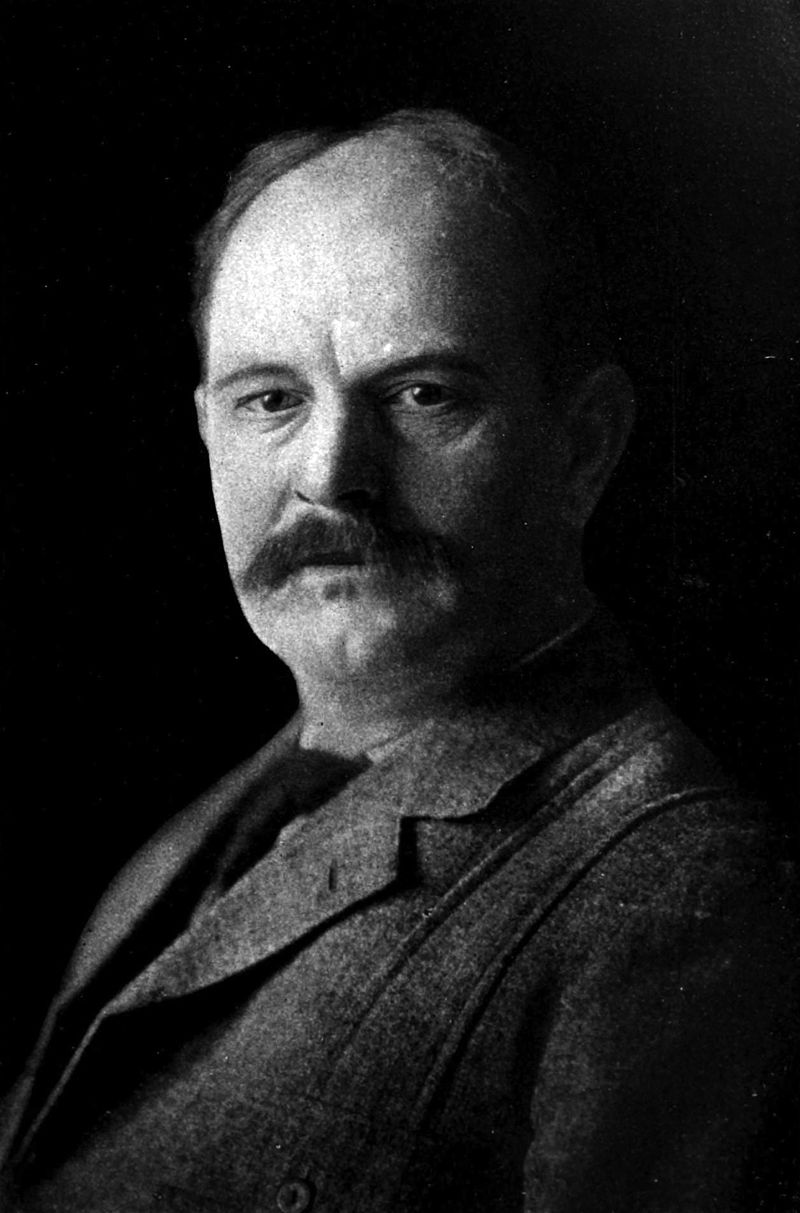
John Muir, one of my favorite early American naturalists would most certainly agree with me. From his baptismal plunge into the Great Salt Lake. “I found myself undressed as someone else had taken me in hand and got myself into right lusty relationship with the brave old lake. I was conscious only of a joyous exhilaration….”
And where else could John and I have such a wonderfully buoyant experience?

This is Jack Greene reading for Wild About Utah.

2015 Great Salt Lake Breach at Lakeside, Utah
Gauge near the Great Salt Lake Breach
Credit: U.S. Geological Survey
Department of the Interior/USGS
Mike Freeman, Photographer
10 Nov 2015
A gauge to measure lake water levels stands dry in the lake bed of the Great Salt Lake. For the first time since it was opened in 1984, water has stopped flowing through the Great Salt Lake causeway breach, an area that allows water to travel between the southern and northern parts of the lake.
Credits:
Image: Courtesy U.S. Department of the Interior, U.S. Geological Survey(USGS), gallery.usgs.gov
Text:     Jack Greene, Bridgerland Audubon Society & USU Office of Sustainability
Additional Reading:

Great Salt Lake, Utah, Stephens, Doyle W. and Gardner, Joe, USGS Science for a Changing World, https://pubs.usgs.gov/wri/wri994189/PDF/WRI99-4189.pdf

Salt Lake Brine Shrimp, https://saltlakebrineshrimp.com/harvest/

Great Salt Lake Footprint 2001 vs 2003 Comparison
Great Salt Lake Footprint Comparison
2001 vs 2003
Images Courtesy NASA
NASA’s Earth Observatory