Utah’s Stunning Landscapes and America’s Celebration

Utah's Stunning Landscapes and America's Celebration: National Park Service - Find Your Park
Find Your Park
Courtesy US NPS
Utah is arguably blessed with the most stunning landscapes on the planet. Many have been preserved for posterity in our National Parks & Monuments. This is the BIG YEAR- the 100 year anniversary of the National Park Service! I’ve sampled and worked in many of them- from Alaska to Florida, from S. California to New England. As many would suggest- our National Parks are one of America’s greatest achievements which has gone global, now found on all continents except Antarctica (or am I missing one!).

Much of my work in the Parks has been assisting with the launch of the “Climate Friendly Parks” program which began in 2006. The program provides parks with the tools and resources to address climate change and ensure the most sustainable operations across the agency.

National parks, because of their location and unique, protected resources, are places where the effects of climate change are particularly noticeable. With the establishment of the National Park Service in 1916, responsibility was given to the Service to preserve and protect the significant resources within parks for the enjoyment of current and future generations. Today, as knowledge about climate change and its effects increase and potential impacts are better understood, the need to practice good stewardship and develop forward thinking resource management plans is more relevant than ever.

I began in Zion N.P. then moved on to several others including Mt. Rainier, Olympic, Rocky Mountain, and Denali in Alaska. Zion N.P. will always be at or near the top for its amazing landforms, shear grandeur, hidden canyons, and rich diversity of life- the highest in Utah.
It was here that I first met the ringtail cat and Mexican Spotted Owl- two illusive, iconic critters. Both appeared in broad daylight in Hidden Canyon on the west face of the Great White Throne. There is no season less than spectacular here. Perhaps the most dramatic accompanies the seasonal monster thunder storms amplified by massive sandstone cliffs which begin spouting 2000 foot blood red waterfalls. It’s all too surreal, too ethereal for one’s senses to fully grasp.
And yet another proposed stunning Utah landscape containing thousands of ancient ruins is receiving wide citizen support including many native tribes, that being the Bears Ears NationalMonument.

Find Your Park
Find Your Park
Courtesy US NPS
This area of South Eastern Utah offers a unique opportunity to include the “real Americans”, the people that have over 10,000 years of Utah history, who continue to honor and worship this ancient landscape of their ancestors. These tribes have been invited to participate in its planning and management to assure their rituals and subsistence ways may continue, and that its pristine nature would be preserved in perpetuity.

Designation of the Bears Ears NM would be a marvelous celebratory note for this epic year to honor America’s grandest idea!

This is Jack Greene for Wild About Utah.

Credits:
Image: Courtesy National Park Service for Find Your Park
Courtesy BearsEarsCoalition.org for the map of the proposed Bears Ears National Monument.
Text:     Jack Greene, Bridgerland Audubon Society & USU Office of Sustainability
Additional Reading:

Jack Greene’s Postings on Wild About Utah, https://wildaboututah.org/author/jack/

Utah National Parks, Google Search, Utah’s National Parks

Bears Ears National Monument, Google Search, Bears Ears National Monument

Secretaries Jewell, Vilsack Applaud President’s Designation of New National Monuments in Utah and Nevada, Dec 28, 2016, https://www.doi.gov/pressreleases/secretaries-jewell-vilsack-applaud-presidents-designation-new-national-monuments-utah

Statement by the President on the Designation of Bears Ears National Monument and Gold Butte National Monument, The White House, Office of the Press Secretary, Dec 28, 2016, https://obamawhitehouse.archives.gov/the-press-office/2016/12/28/statement-president-designation-bears-ears-national-monument-and-gold

FACT SHEET: President Obama to Designate New National Monuments Protecting Significant Natural and Cultural Resources in Utah and Nevada, The White House, Office of the Press Secretary, Dec 28, 2016, https://obamawhitehouse.archives.gov/the-press-office/2016/12/28/fact-sheet-president-obama-designate-new-national-monuments-protecting

Gayle, Riana, Planning For The Future, A Bioregional Approach, UPR Utah Public Radio, Nov 19, 2018, https://www.upr.org/post/planning-future-bioregional-approach

Conservation: North and South

St George Winter Bird Festival, Courtesy St. George City
St. George Winter Bird Festival
Courtesy St. George City
I spent 2 gloriously warm days in Dixie where I attended the Winter Bird Festival, a grand event by any measure! I also had the good fortune of discovering “Citizens for Dixie’s Future” (henceforth CDF) which has taken on the onerous task of brokering piece between a surging population and the regions limited natural resources. Water topped the list, especially the Lake Powell Pipeline proposal. So I did a bit of reading from CDF’s well stocked library.

It soon became apparent that this multi-billion dollar project needs closer inspection on cost vs benefits. The costs must include not only dollars, but some unintended consequences such as continued urban sprawl in a super sensitive Mojave Desert ecosystem with an abundance of plant and animal life that I became more aware of through an excellent WBF presentation by naturalist educator Marshall Topham on the biodiversity of Washington County.

Citizens for Dixie’s Future
Courtesy Citizens for Dixie’s Future

Located at the confluence of 3 major biomes- Great Basin Desert, Mojave desert, and the Colorado Plateau intersected by numerous rivers and the towering Pine Valley Mountains, Washington County is a wildlife mecca with over 350 species of birds listed, an excellent indicator of its natural wealth.

So my naturalist instincts and a propensity towards frugality led me to look for pipeline alternatives.

I found conservation to be the most obvious and least expensive alternative. In 2009, Washington County was at or near the top in the West for per capita water use at 294 gallons per day. In dramatic contrast Tucson was 161 and golf course and fountain studded Vegas at 222. If the county was to set a goal for 1% reduction in water use per annum, it would negate the need for the pipeline according to CDF.

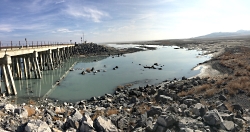
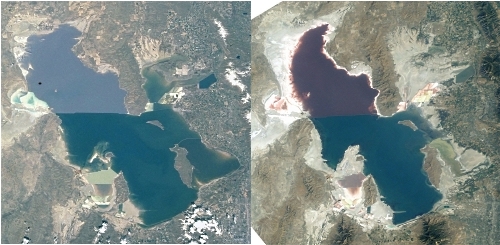
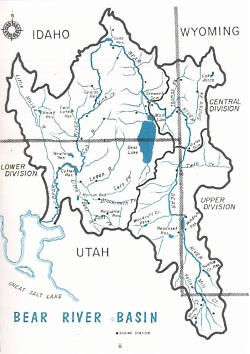
We notherners in Cache County are being threatened with a similar situation. Our Bear River which supplies 60% of the surface flow into the Great Salt Lake and is the primary source for the Bear River Migratory Bird Refuge is under scrutiny for multibillion dollar reservoir development to serve the Wasatch Front. In addition to the hefty price tag, this has very serious implications for loss of prime agriculture land and high value wildlife habitat.

The following conservation practices are taken from the CDF.

• Providing rebates for efficient indoor water fixtures and outdoor landscape conversion
• Adding native, drought tolerant landscaping in new developments (and converting old)
• Implementing an increasing rate structure to signal conservation to the customer
• Conservation programs must include numeric targets and performance measures
• Updating building codes with more aggressive plumbing and appliance standards
• Increasing education and awareness about reducing peak water use.
• Implementing smart growth principals and preventing sprawl

An additional conservation possibility being explored by some USU folks is restoring healthy populations of beaver to the Bear River Watershed. This has potential for water storage rivaling planned reservoirs not to mention the supurb wildlife habitat created as a bonus. A question for the Dixie folks- how are the beaver populations in the Beaver Dam and Pine Valley mountains fairing?

This is Jack Greene for Wild About Utah.

Credits:
Image: Courtesy St George Bird Festival, St. George City and Citizens for Dixie’s Future
Text:     Jack Greene, Bridgerland Audubon Society
Additional Reading:

Citizens for Dixie’s Future, https://citizensfordixie.org/

Big Bend Habitat Restoration Project: A Natural Work of Heart, Open Spaces-A Talk on the Wild Side, US FWS, https://www.fws.gov/news/blog/index.cfm/2016/3/25/Big-Bend-Habitat-Restoration-Project-A-Natural-Work-of-Heart [Accessed March 31, 2016]

Public Lands – good or bad?

Click to view Coyote Pups on the public lands of the Malheur National Wildlife Refuge, Courtesy US FWS

Coyote Pups
on the Malheur National Wildlife Refuge

Courtesy US FWS 

This morning I spent some time skiing up Smithfield Canyon in the Uintah Wasatch Cache National Forest. Growing up in Michigan where public land was hard to come by, I have come to enjoy our “commons” where I’m not trespassing on posted private land, or required to pay a fee before entering.

With the Oregon Bundy-Hammond event taking center stage, it has forced me to do some reflecting on what is right and what is wrong regarding our public lands.

To begin with, I’m biased in two ways- both for the land and for the ranching culture- I have deep affection for both. In my 11 seasons as a Wilderness Ranger for the Logan Ranger District of the USFS and 6 seasons with the National Park Service, I have become well aware of how our public lands are managed- the good, bad, and the ugly. On our national forest the primary issue I was confronted with was livestock grazing. The damage done by cattle and sheep was significant, plus predator control seriously interfered with how natural systems operate in balancing herbivores with their forage supply. Health of the land was always of paramount concern, but due to forest managers having very limited resources, best practices for maintaining healthy ecosystems and watersheds was compromised.

Regarding the livestock industry, it excites me to see real cowboys on horseback rounding up their animals- the romance of the west. I would love to join them. Conflicting with these feelings is my relief that the land will begin to heal from damage that often occurs when utilizing sensitive areas unsuitable for these animals, especially in large, concentrated numbers. And as a back country recreationist, I prefer elk, moose, and mountain sheep, to domestic stock and the artificiality they represent.

There are many examples of ranchers that manage their livestock well, and place them where little damage occurs. There are even ranchers who are willing to sacrifice some of their animals who realize the value of large predators in maintaining healthy ecosystems.

Do I support the Bundy takeover, or the Hammonds who violated the Bureau of Land Management laws in numerous instances? A resounding “NO!” in both cases. But I do wish them well in finding a way to maintain their ranching operations- perhaps by adding eco and/or cultural tourism or renewable energy options to provide additional income. Recreation and tourism has become our largest industry, contributing billions to the economy. More recently, renewable energy has manifested astronomical growth in the forms of geothermal, wind, and solar. Further, well managed rangelands can help remove, or sequester, carbon dioxide from the atmosphere- another potential market.

In the end, I wish both well- restoring health and access to our public lands; and preserving a flourishing ranching culture.

This is Jack Greene for Wild About Utah.

Credits:
Image: Courtesy US FWS
Text:     Jack Greene, Bridgerland Audubon Society


Additional Reading:

Kaste, Martin, NPR Around the Nation, Armed Protesters Occupy Malheur National Wildlife Refuge Center In Oregon, https://www.npr.org/2016/01/04/461944981/armed-protesters-occupy-malheur-national-wildlife-refuge-center-in-oregon

Siegler, Kirk, NPR America, Who Will Blink First? Armed Occupation In Oregon Drags On, https://www.npr.org/sections/thetwo-way/2016/01/12/462813360/who-will-blink-first-armed-occupation-in-oregon-drags-on

Utah’s Petroglyph Garden

Click to view Petroglyph Panel at the Fremont Indian State Park & Museum, Photo Courtesy Sevier County, Kreig Rasmussen, Photographer
Petroglyph Panel at Fremont Indian State Park & Museum
Photo Courtesy Sevier County
Kreig Rasmussen, Photographer

Hi, I’m Ru Mahoney with Stokes Nature Center in Logan Canyon.

Utah’s culture is rich with vestiges of our pioneer history, and the landscape is accented by visible signs of the European settlers who forged our modern communities. But the tapestry of Utah’s cultural heritage is interwoven with much older threads, as indelible and enduring as the landscape itself.

In the 1980’s, in the southwestern quadrant of central Utah, the construction of interstate 70 unearthed a secret over one thousand years old. The valleys and canyons of what is now Sevier County, already known as a seasonal thoroughfare for the Paiute, had an even older history as home to the largest community of Fremont Indians ever discovered. Influenced by their Anasazi cousins to the southwest, the Fremont culture encompassed a diverse group of tribes that inhabited the western Colorado Plateau and the Great Basin area from roughly 400 to 1350 A.D. Archaeologists tell us they were a people of ingenuity in their engineering, aggression in their social interactions, and lasting creativity in their artistic expression. Divergent theories on their fate suggest they drove the Anasazi out of the Four Corners region and eventually migrated to further landscapes, or that northern groups of Fremont peoples joined with bands of Shoshone and became the Ute Indians of the Uinta. Whatever the truth of their ultimate fate may be, nowhere is their history more tangible than at Fremont Indian State Park just south of Sevier, UT along I-70. This year-round state park offers visitors a treasure trove of artifacts and curated exhibits in an excellent visitor’s center. But the most authentic interaction with these past peoples comes from exploring the surrounding landscape.

Driving the winding road into Clear Creek Canyon, ghostly figures begin to emerge; pictographs painted in shades of ocher and umber, and pale petroglyphs carved into the canyon walls, reveal an archaic and epic account of Utah’s ancestral past. A unique creation story, in which a shrike leads the Fremont people from a dark and cold underworld through the stem of reed into the warm world above, plays out across the canyon walls. A craggy outcrop of rock in the shape of an eagle is said to be watching over the reed to the underworld below to insure nothing wicked escapes into our world. A concentric lunar calendar and an abundance of zoomorphics speak of a cultural identity conceived in relation to the broader astrological world, and a reverence for anthropomorphized neighbors such as bighorn sheep and elk. Spider Woman Rock juxtaposes a powerful figure of Native American mythology with the pedestrian humility of a nursing mother. And Cave of 100 Hands is a visceral exhibition of a humanity simultaneously reminiscent and divergent from our own.

While the Fremont culture is believed to have died out or been absorbed by other modern groups, Clear Creek Canyon and the rock art sites of Fremont Indian State Park are significant among the modern Kanosh and Koosharem Bands of the Paiute who began using the area and leaving their own indelible marks on the canyon walls after the disappearance of the Fremont peoples around 1400 A.D. On the vernal and autumnal equinox (occurring in the third or fourth week of March and September each year) the eagle rock casts its shadow over the reed rock at dawn, breathing life into ancient tales of our ancestral history.

Fremont Indian State Park is a notable destination for those interested in rock art sites, many of which are suited to families of all ages and mobility, including visitors with strollers and wheelchairs. Stop in the visitor’s center to borrow or purchase a guide to the petroglyphs and pictographs for deeper insight into the Fremont culture and an unforgettable glimpse into Utah’s past.

For Wild About Utah and Stokes Nature Center, I’m Ru Mahoney.

Credits:
Images: Courtesy Sevier County, Kreig Rasmussen, Photographer
Text:     Ru Mahoney, Stokes Nature Center in Logan Canyon.

Additional Reading:

https://stateparks.utah.gov/parks/fremont-indian/

https://stateparks.utah.gov/stateparks/wp-content/uploads/sites/26/2015/02/Fremont_IndianBrochure.pdf

https://www.nps.gov/grba/learn/historyculture/fremont-indians.htm

https://www.thefurtrapper.com/fremont_indians.htm

Take the Pledge to Protect the Past, Utah State Historical Preservation Office, Department of Cultural & Community Engagement, State of Utah, https://ushpo.utah.gov/shpo/upan/