Lewis and Clark’s Taxonomic Legacy

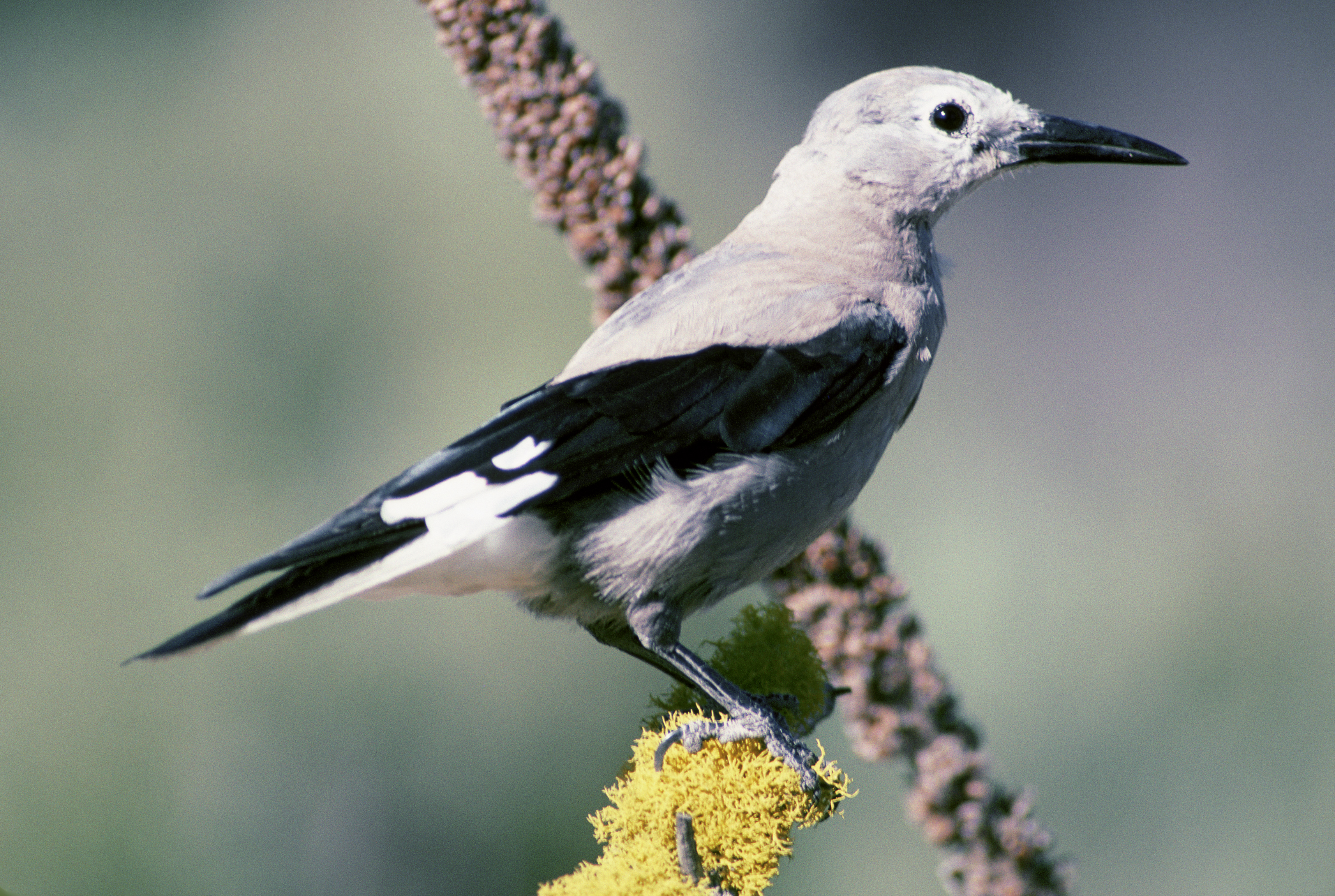
Clark’s Nutcracker
Courtesy US FWS
Dave Menke, Photographer
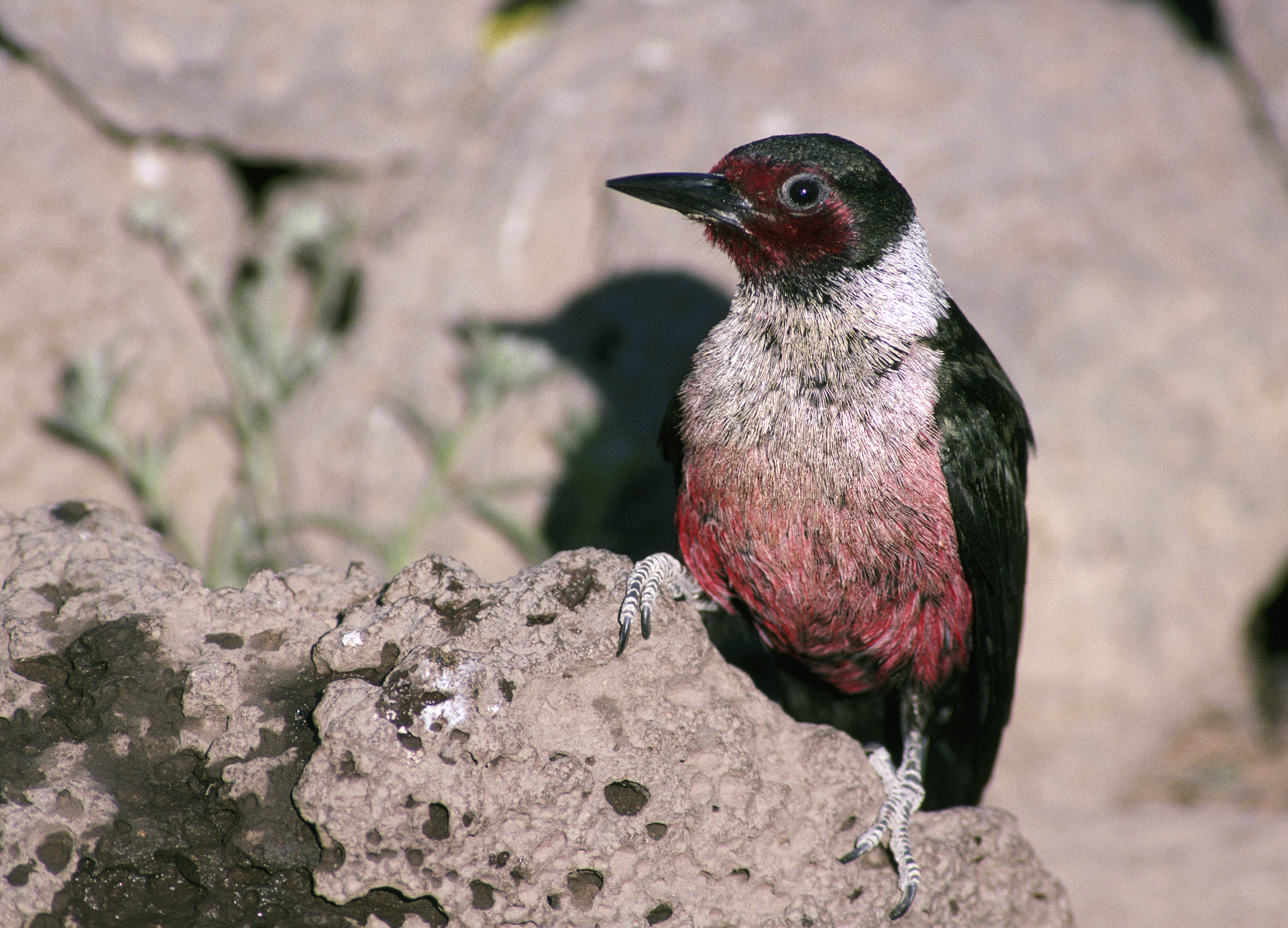
Lewis’s Woodpecker
Courtesy US FWS
Dave Menke, Photographer

Thomas Jefferson will forever be remembered as our third president and author of the Declaration of Independence. Jefferson oversaw the acquisition of the vast Louisiana Purchase and soon thereafter initiated planning for an expedition that would be named the “Corps of Discovery”. That bold adventure was led by Meriwether Lewis and William Clark. These two frontiersmen are immortalized by the plants and animals that taxonomists named in their honor.

The arduous 3-year expedition route passed far north of what would become Utah, ascending the tributaries of the Missouri River and later following down the Columbia River to the Pacific Ocean. Jefferson, being an avid naturalist, instructed the explorers to observe and make record of the geography, plants and animals that they encountered and to return with those specimens which they could carry. Hopes for discovery of a navigable inland passage to the Pacific were not realized, but in all other ways, the expedition was a singular success.

Lewis and Clark made collections of pressed plants along the way. These eventually went to Frederick Pursh, a German botanist in Philadelphia. One new genus of plant he named Lewisia. These are the bitteroots, one of which is the spectacular state flower of Montana. Another genus new to science he named Clarkia . Many species names of plants immortalize the men too, such as the blue-flowered flax, Linum lewisii, commonly used today for seeding following wildfire.

Bird names honoring the discoveries of Lewis and Clark include Clark’s nutcracker and Lewis’ woodpecker. Clark’s nutcracker is a big black and gray relative of crows. [https://wildstore.wildsanctuary.com/collections/special-collections, https://wildstore.wildsanctuary.com/collections/special-collections] This noisy resident of Utah’s mountains is notable for its habit of caching seeds of pine trees to be remembered and found months later.

The age of the pioneer naturalist in North America closed more than a century ago, but the names of men like Meriwether Lewis and William Clark live on with the plants and animals that bear their names.

This is Linda Kervin for Bridgerland Audubon Society.

Credits:

Images: Courtesy US FWS images.fws.gov
Audio: Courtesy & Copyright https://wildstore.wildsanctuary.com/collections/special-collections, https://wildstore.wildsanctuary.com/collections/special-collections
Text: Jim Cane, Bridgerland Audubon Society

Additional Reading:

The Lewis and Clark Herbarium, Images of the Plants Collected by Meriwether Lewis and William Clark, 1804-1806, Presented by the University of Maryland and The Academy of Natural Sciences in Philadelphia in cooperation with Cornell University, https://www.plantsystematics.org/reveal/pbio/LnC/LnCpublic.html

Evans, Howard Ensign. 1993. Pioneer naturalists: the discovery and naming of North American plants and animals. Henry Holt & Company, New York. Illustrated by Michael G. Kippenhan. ISBN: 0-8050-2337-2, https://www.amazon.com/Pioneer-Naturalists-Discovery-American-Animals/dp/0805023372

And for a thorough treatment of Clark’s nutcracker:

https://en.wikipedia.org/wiki/Clark%27s_Nutcracker

All About Birds, The Cornell Lab of Ornithology:

https://www.allaboutbirds.org/guide/lewiss_woodpecker/id

https://www.allaboutbirds.org/guide/Clarks_Nutcracker/id

Seed Dispersal

Maple Seeds
Courtesy & Copyright © 2011
Linda Kervin

Milkweed Seeds
Courtesy & Copyright © 2011
Jim Cane

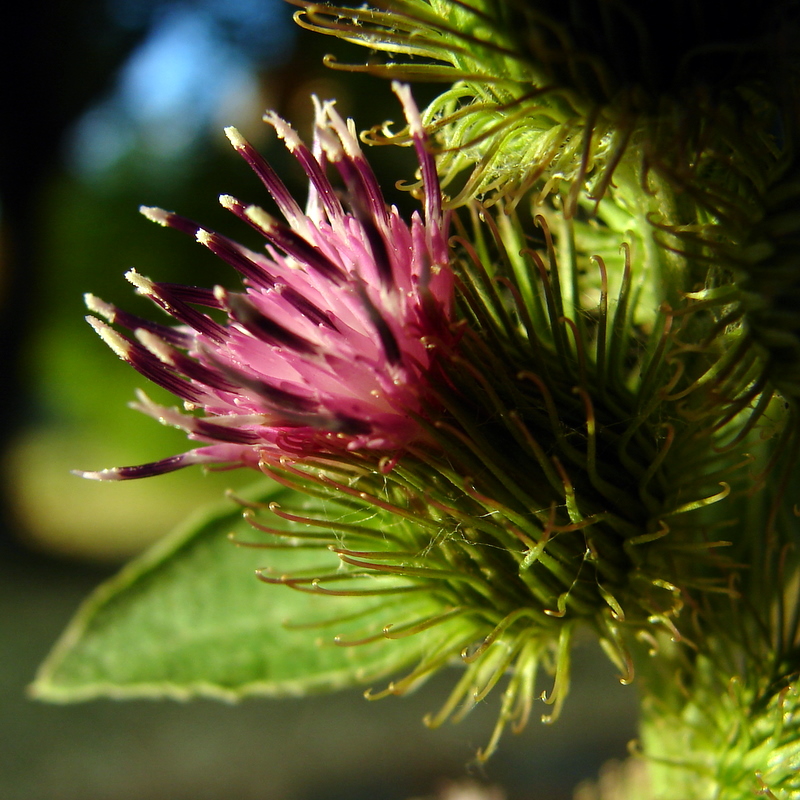
Burdock Flower
Courtesy & Copyright 2009 Jim Cane

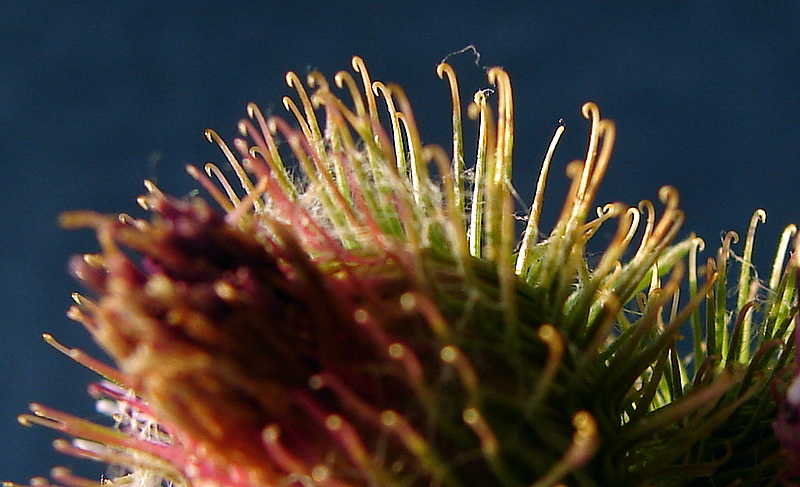
Burdock Hooks
Courtesy & Copyright 2009 Jim Cane

Autumn is a season of travelers. Birds migrate south. Deer, elk and antelope move to their wintering grounds. Many plants finish maturing seeds designed for transport to favorable new habitats. Seeds come in a kaleidoscope of shapes and sizes: their structure reveals their means of dispersal.

Many plants rely on the wind to loft their seed to fertile ground. Due to wind’s fickle nature, few of these seeds actually make it to a suitable site, so to compensate they are produced in abundance. Some seeds, like those of dandelion and milkweed, have a downy fluff which floats aloft with the slightest breeze. Others utilize wing-like appendages on the seed capsule, as in maple, ash and pines. The seed is heavier than the blade shaped wing, causing a spiraling motion which propels seeds farther than mere drifting.

Another strategy for seed dispersal is to entice animals to ingest the seed. Some plants like cherries, junipers and grapes do this by imbedding their seeds in a nutritious and tasty pulp. Others, like many grasses, achieve the same end by the placement of the seeds. As grazers consume the foliage, they inadvertently ingest seeds at the same time. Hopefully the seeds end up some distance from the parent plant, deposited in their own dollop of manure to aid seedling growth. Some seeds require a trip through the digestive tract, where the impervious seed coat is eroded away so that the seed can absorb water and germinate. Ants disperse seeds that have a patch of nutritious tissue, the aril, that they gnaw off before discarding the seed.

Another means of dispersal relies on a chance encounter to hitch a ride in an animal’s fur. The seed coat has clinging hooks, hairs or spines that latch onto fur or clothing. Many noxious weeds including burdock, hound’s tongue and cheatgrass use this type of dispersal, so be careful where you groom and dispose of their seed.

Grasses don’t run and pines don’t roam, but plant seeds have many tricks to gain mobility.

This is Linda Kervin for Bridgerland Audubon Society.

Credits:

Images: Courtesy & Copyright Jim Cane &
            Courtesy & Copyright Linda Kervin
Text: Linda Kervin, Bridgerland Audubon Society

Additional Reading:

Seed Dispersal
https://andromeda.cavehill.uwi.edu/Dispersal.htm (archived link)

Wind Dispersal
https://www2.palomar.edu/users/warmstrong/plfeb99.htm

Seed Dispersal by Animals
https://www.cnr.uidaho.edu/range556/…

Amazing Adaptations of Utah’s Desert Plants

Amazing Adaptations of Utah’s Desert Plants: Click to view larger image of Tap roots that grow deep into the soil to reach groundwater, Photo Courtesy and Copyright Mark Larese-Casanova, Photographer
Tap roots grow deep
to seek groundwater
Photo Courtesy & Copyright
Mark Larese-Casanova, Photographer

Winterfat trichomes
Hair-like trichomes provide shade
and absorb dew
Photo Courtesy & Copyright
Mark Larese-Casanova, Photographer

Prickly Pear Cactus
Fibrous roots quickly absorb water
and store it in wide succulent leaves
Photo Courtesy US FWS
Gary M. Stolz, Photographer

Waxy Creosote Bush
Leaf coating inhibits desication
Photo Courtesy & Copyright
Mark Larese-Casanova, Photographer

Hi, this is Mark Larese-Casanova from the Utah Master Naturalist Program at Utah State University Extension.

Anyone who lives in Utah knows that it’s a dry state. In fact, around three-quarters of our state is considered desert. A desert is often characterized as an area that receives less than ten inches of precipitation each year. But, high levels of evaporation, which are influenced by temperature, wind speed, and solar radiation, also contribute to creating a dry desert ecosystem.

So, how exactly are plants able to survive in Utah’s deserts, which are so dry? It turns out that the plants that grow and flourish in Utah’s deserts have an amazing array of adaptations for survival.

Many shrubs and trees, such as desert willow, and certain species of sagebrush and mesquite, have thick taproots that grow deep into the soil to reach groundwater. This helps the plants survive the hot, dry summer. Some mesquite taproots have been found to grow as deep as 200 feet to reach a constant water supply.

Cacti, such as the various types of prickly pear, have almost an opposite adaptation. They produce dense tufts of fibrous roots just below the surface of the soil. This allows cacti to quickly absorb water from brief rainstorms, and then store the water in their thick, succulent leaves.

As temperature increases, desert plants face the danger of excessive water loss from their leaves. A thick, waxy coating on the outside of leaves often helps to retain water. The shiny wax also reflects sunlight to keep the leaves relatively cooler. To further reduce leaf temperature and water loss, some plants, such as brittlebush, grow light-colored dense ‘hairs’ on their leaves and stems. These trichomes not only shade the plant, but also aid in absorbing water from morning dew.

If temperatures get too hot, and drought stress too great, some plants, such as creosote bush and ocotillo, may drop their leaves several times each year to ensure survival. Some of these plants have green chlorophyll in their stems so they can still produce food through photosynthesis when there are no leaves on the plant.

While this is just a sample of an amazing collection of adaptations, it’s clear that desert plants are champions of survival in a harsh ecosystem where water is so scarce.

For Wild About Utah, I’m Mark Larese-Casanova.

Credits:

Images: Courtesy & Copyright Mark Larese-Casanova

US FWS images.fws.gov
Text:     Mark Larese-Casanova, Utah Master Naturalist Program at Utah State University Extension.

Additional Reading:

Utah’s Desert Dwellers: Living in a Land of Climate Extremes. Wildlife Review. Utah Division of Wildlife Resources
wildlife.utah.gov/wr/0706desert/0706desert.pdf

Deserts. James MacMahon. The Audubon Society Nature guides. 1985. https://www.amazon.com/Deserts-National-Audubon-Society-Nature/dp/0394731395

Natural History of the Colorado Plateau and Great Basin, Harper, St. Clair, Thorne, and Hess (Eds.), 1994. https://www.amazon.com/Natural-History-Colorado-Plateau-Great/dp/0870815113

The Biology of Deserts, David Ward, Oxford University Press, 2009. https://www.amazon.com/Biology-Deserts-Habitats/dp/0199211477


Medusahead Rye

Medusahead Rye Infestation
Courtesy and
Copyright © Steve Dewey

Flower
Courtesy and
Copyright © Steve Dewey

Plant
Courtesy and
Copyright © Steve Dewey

Weedy plants of old world origin threaten natural areas throughout the United States. An invading plant colonizing a completely new area often lacks the insects, diseases and herbivores that kept it in check back in its native homeland. If the introduced plant grows and spreads vigorously, it can spell disaster for the native inhabitants of its new home. With no natural controls in place, it may outcompete native plants and greatly diminish biodiversity. Disturbed or degraded habitats are most susceptible to invasion by Eurasian weeds.

Utah hosts many invasive weeds causing problems throughout the state. One Eurasian grass threatening sagebrush habitat and rangeland is medusahead rye. Medusahead rye probably came to the United States as a seed contaminant in the 1880’s. The seed head is heavy, so on its own, cannot spread far. But the seeds do have a ticket for dispersal: tufted hairs which cling and readily attach to livestock and vehicles. Once on site, medusahead grows vigorously, crowding out other plants.

Medusahead tissue contains abundant silica which slows its decomposition. The accumulation of dead material forms a dense thatch that smothers other plants. This dry thatch layer can also fuel wildfires. In addition, the gritty silica makes medusahead unpalatable, so both domestic and wild grazing animals avoid eating it. Infested ranches can lose 3/4 of their grazing capacity.

Sage grouse are already in trouble due to habitat loss, and medusahead has invaded more than 10 million acres of the sage brush that sage grouse call home. Once invaded by medusahead, sagebrush habitat is very difficult to restore. The best hope is to prevent or at least hinder its spread through management using controlled burns, herbicides and careful grazing. Non-native, invasive plants are among the most serious threats to our natural world and the habitats and species we know and love.

This is Linda Kervin for Bridgerland Audubon Society.

Credits:

Images: Courtesy Steve Dewey & www.invasive.org
Center for Invasive Species and Ecosystem Health, University of Georgia
Text: Linda Kervin, Bridgerland Audubon Society

Additional Reading:

The United States National Arboretum. https://www.usna.usda.gov/ [Formerly https://www.usna.usda.gov/Gardens/invasives.html]

Species Profile: Medusahead, National Invasive Species Information Center. https://www.invasivespeciesinfo.gov/terrestrial/plants/medusahead [Updated January 31, 2026]

Forest Service Employees for Environmental Ethics. [Formerly found at https://www.fseee.org/component/content/article/1002329

Utah State University Cooperative Extension. https://extension.usu.edu/rangeplants/grasses-and-grasslikes/medusahead [Updated January 31, 2026]