Defining the Great Basin

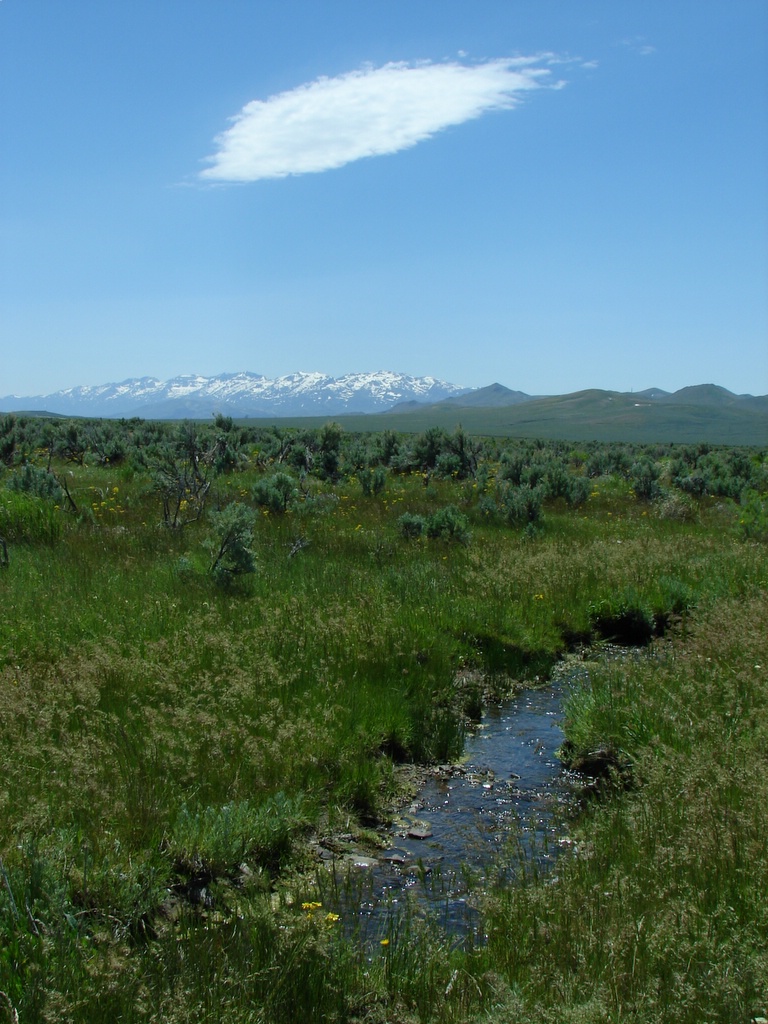
Willow Creek North of Wells, NV. Sagebrush at mid-distance. Route of the California Trail used by pioneers.
Willow Creek north of Wells, NV.
Sagebrush at mid-distance.
Route of the California Trail
used by pioneers.

Courtesy & Copyright
Jim Cane, Photographer

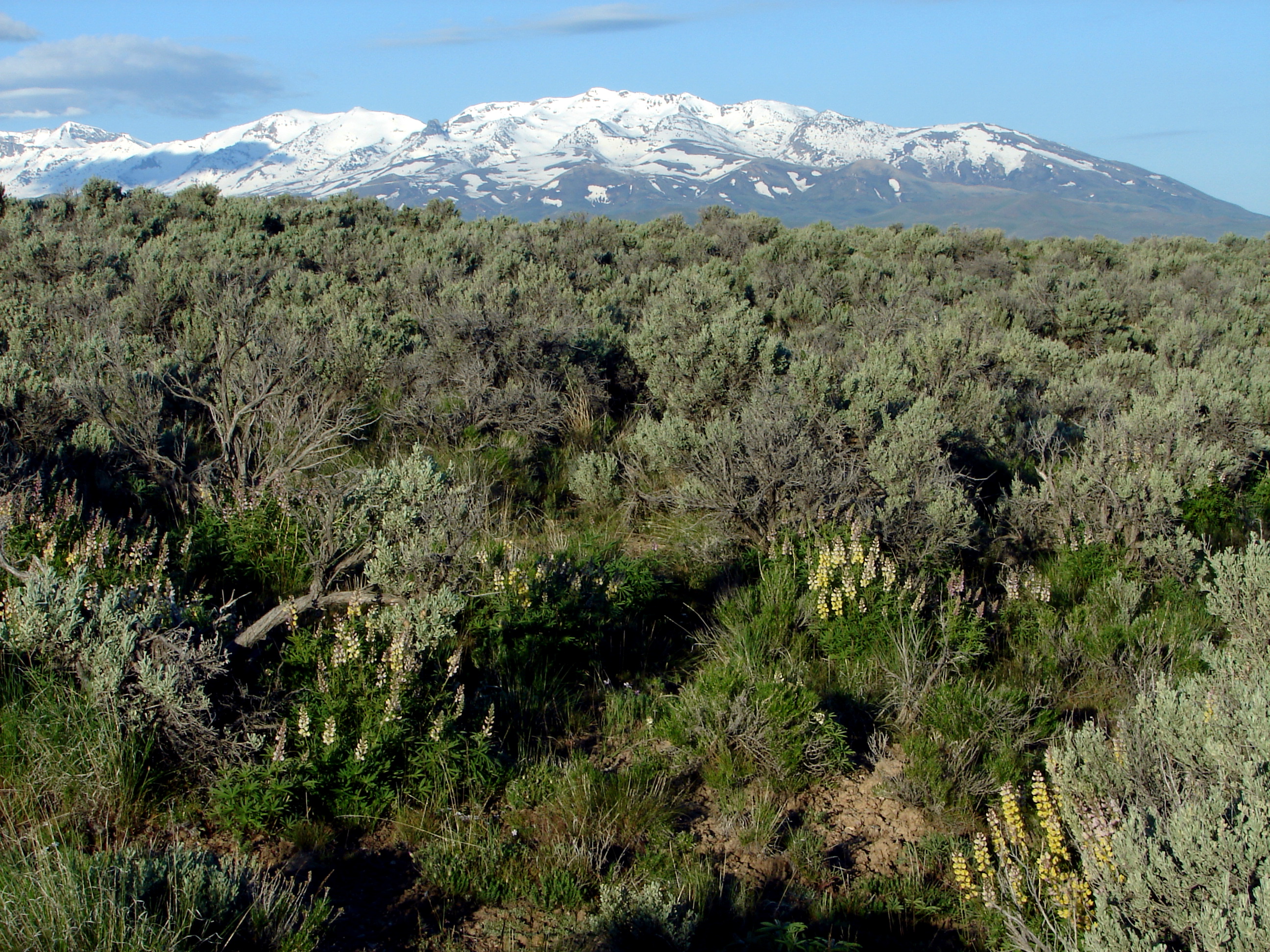
Lupines amid sagebrush north of Wells, NV. Ruby Mountains in backgroundLupines amid sagebrush
north of Wells, NV.
Ruby Mountains in background
Courtesy & Copyright
Jim Cane, Photographer

Map delineating the Great basinMap delineating the Great basin
Courtesy Wikimedia, KMusser, Artist
Ref: wikipedia.org/wiki/Great_Basin


The Great Basin is aptly named.  Twice the size of Kansas, it stretches from the watersheds of the Columbia and Snake rivers south to that of the Colorado, and from the crests of the Sierra Nevada and southern Cascades eastward to the Wasatch front.  The Western explorer John Fremont coined its name in 1845.  The rivers and streams of the region that Fremont had seen all ended in sinks, marshes or lakes. None flowed to the Pacific Ocean.  He confirmed this on meeting Joseph Walker at Mountain Meadows in Utah.  Walker had traveled more of the basin’s western margins, dispelling  rumors of a river traversing the Sierra Nevada.  Precipitation that falls in the Great Basin stays in the Great Basin; water leaves only as vapor.  This is the hydrographic Great Basin.

How else to view the vast region between the Rockies and the Sierra Nevada? Geologists speak of the “Basin and Range Province”, so named for its valleys and the towering ranks of north-south mountain ranges that march across the landscapes of Nevada and edges of adjacent states. Unlike the upthrust Rockies and Sierra Nevada, Earth’s crust in the Great Basin appears to be spreading, to be pulling apart. The tilted escarpments of the Wasatch front are the easternmost evidence of this crustal deformation that has built the Basin and Range Province.

Botanists delimit the Great Basin by the hardy flora that clothes this rugged landscape. Great Basin plants tolerate freezing winters and parched summers, and in the valleys, soils of varying salinity.  The so-called Sagebrush Ocean fills many of the basins, as do other shrubs, such as shadscale and greasewood.  Upslope, these give way to juniper woodlands, often mixed with piñon pine.  This floristic Great Basin reaches eastward to central Utah and the Wasatch front, beyond which trees and other plants of the Rockies make their appearance.

The boundaries of all three concepts for the Great Basin — hydrographic, geologic and floristic — largely coincide.  Each recognizes the distinctive attributes of the Great Basin that set it apart from neighboring regions.  The Great Basin is readily recognizable to the trained eye, whether looking at satellite images, river courses, or the native plant communities encountered on a simple walk.

Credits:
Images: Jim Cane
Map: Courtesy Wikimedia, KMusser, Artist, licensed under Creative Commons Attribution-Share Alike 3.0 Unported
Text: Jim Cane

Additional Reading

Frémont, John Charles. 1845. Report of the exploring expedition to the Rocky Mountains in the year 1842 and to Oregon and North California in the years 1843 – 44. Printed by order of the Senate of the United States , Gales & Seaton, 693 pages. –available as a Google eBook scanned from the original published book Grayson, Donald K. 1999. The desert’s past : a natural prehistory of the Great Basin. Smithsonian Institution Press, Washington D.C., 356 pages. –an exceptionally readable, thorough and authoritative overview of the Great Basin, with many maps, photographs and illustrations.https://books.google.com/books?id=W8ICAAAAMAAJ

Intermountain Regional Herbarium Network. searchable plant database representing multiple holdings of herbaria at universities in Utah and Nevada, with maps, images and more https://swbiodiversity.org/seinet/projects/index.php?proj=10

McPhee, John. 1981. Basin and Range. Farrar, Straus, Giroux, New York. 215 pages. –the first of the author’s many engaging books about geology. https://www.amazon.com/Basin-Range-John-McPhee/dp/0374516901

Elderberries

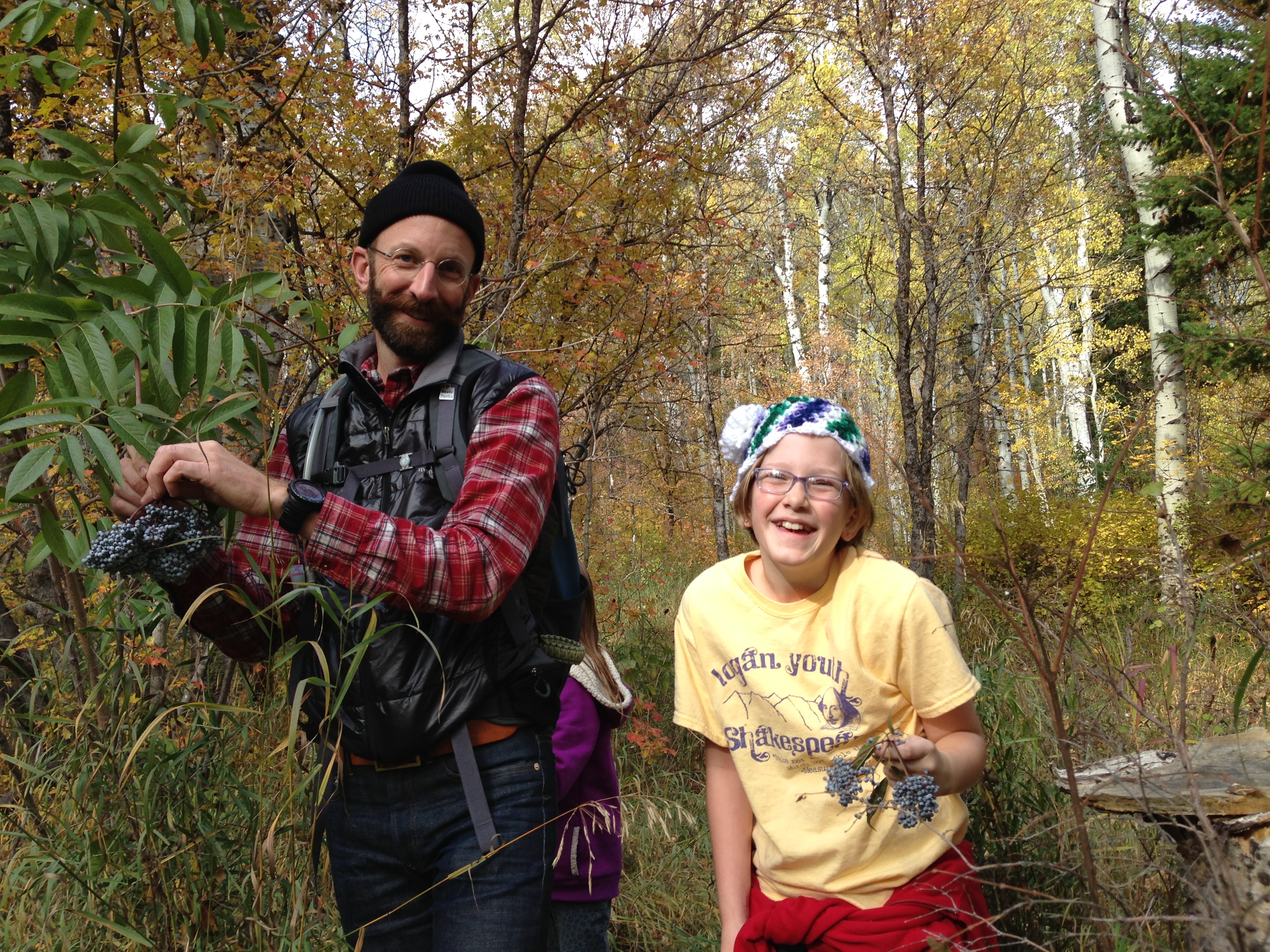
Elderberry Picking
Mark and his daughter picking Elderberries
Copyright 2013 Mark Larese-Casanova

Hi, this is Mark Larese-Casanova from the Utah Master Naturalist Program at Utah State University Extension.

Utah’s mountains are abundant with berry-producing shrubs that provide a veritable bounty of food for wildlife. As summer winds down and fall cedes to winter, many birds and mammals try to feed as much as possible to store energy for migration, hibernation, or even just surviving the cold.

One of the most abundant berry-producing shrubs in Utah’s moist mountain canyons is elderberry, Continue reading “Elderberries”

Botanical Velcro® aids seed dispersal

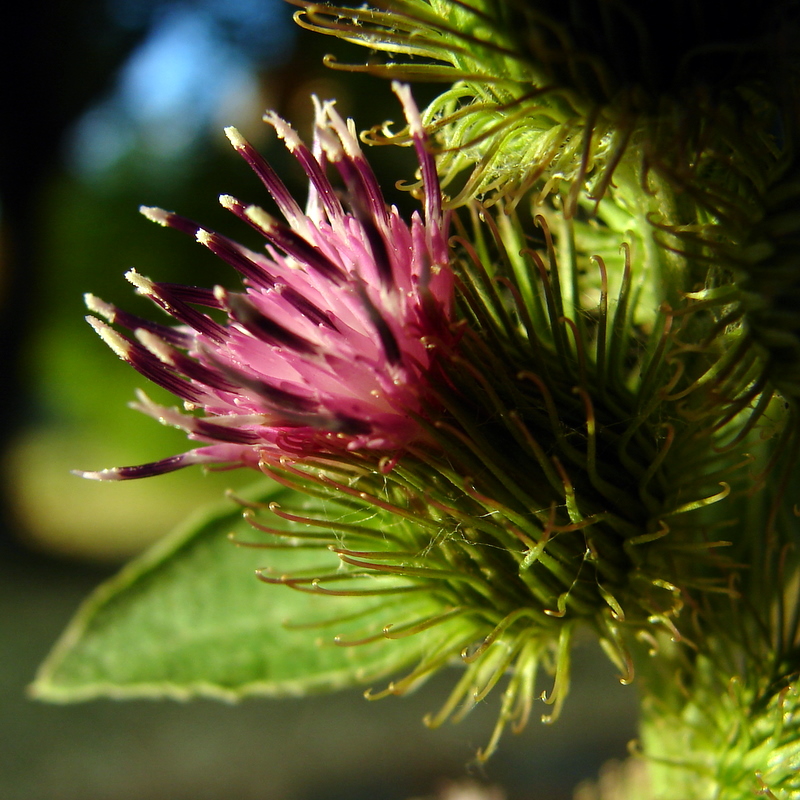
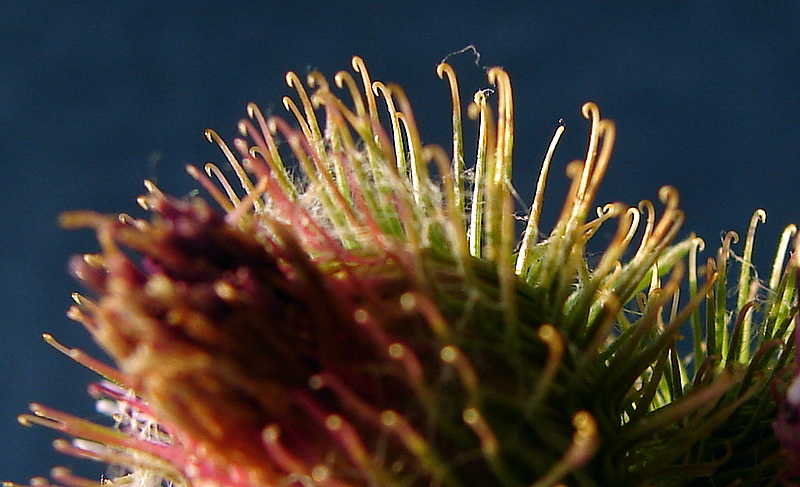
Click for a closer view of Burdock flowers, Courtesy and Copyright 2009 Jim Cane
Burdock Flower
Courtesy & Copyright 2009 Jim Cane

The splendid blooming meadows of summer are fulfilling their reproductive imperative now as they mature and disperse the fruits and seeds that resulted from pollination. Plants can’t walk or actively fly, so to disperse from the mother plant, seeds need to catch a ride. Wild gourds bob down flooding arroyos, thistledown floats on the wind, and red barberry fruits hope to catch the eye of a hungry song bird.

Certainly the most annoying means of dispersal is employed by seeds that stick in fur and socks. Some like cheatgrass are driven home by sharp barbed seeds that poke and hold like the porcupine’s quill. Others form evil pointy burrs, like those of puncturevine, that can flatten a bicycle tire. And then there is burdock. This European weed infests moister disturbed sites in Utah. Its burrs cling tightly to hair and clothing.

Click for a closer view of Burdock hooks, Courtesy and Copyright 2009 Jim Cane
Burdock Hooks
Courtesy & Copyright 2009 Jim Cane

Sixty years ago, the Swiss engineer, George de Mestral, became intrigued by the seed heads of cockleburrs and burdocks. They had entangled his dog’s fur and stuck to his pant legs during a montane hunt. How did those burrs cling so steadfastly? Aided by a hand lens, you can see what de Mestral saw: ranks of hook-tipped bristles that snag clothing and fur. Burdocks inspired de Mestral’s invention of Velcro, whose patented nylon bristles are hooked over just like burdock’s and latch on just the same. When next you are beset by burdock burrs, inspect one closely and admire the inventiveness of nature. Then please terminate its dispersal by placing it where the seeds of this weed can’t germinate and grow!

This is Linda Kervin for Bridgerland Audubon Society.
Credits:

Photos: Courtesy & Copyright Jim Cane

Text: Jim Cane, Bridgerland Audubon Society

Additional Reading:

Velcro ® brand is a registered trademark of Velcro Industries B.V. www.velcro.com

Velcro USA Inc. Celebrates 50th Anniversary, (Press Release)

Invention of Velcro ® brand Fasteners, Fastech of Jacksonville, Inc., https://www.hookandloop.com/extra/inventionnew.html

Greater Burdock, Arctium lappa L. NRCS Plants Database, https://plants.usda.gov/java/profile?symbol=ARLA3

Seed Dispersal, Missouri Botanical Garden, https://www.mbgnet.net/bioplants/seed.html

Lichens

Click for a larger view of Lichens, Courtesy and copyright 2013 Andrea Liberatore, Photographer
Boulder covered in a
variety of lichen species
Copyright 2013
Andrea Liberatore, Photographer

Click for a larger view of Rosette Lichen, Courtesy and copyright 2013 Andrea Liberatore, PhotographerRosette Lichen
Physcia dubia
Lives in both Antarctica
and the Mojave Desert
Copyright 2013
Andrea Liberatore, Photographer

Click for a larger view of Rim Lichen, Courtesy and copyright 2013 Andrea Liberatore, PhotographerRim Lichen
Lecanora muralis
Has anti-cancer and
anti-microbial properties
Copyright 2013
Andrea Liberatore, Photographer

Click for a larger view of Lichens, Courtesy and copyright 2013 Andrea Liberatore, PhotographerGarovagis Rim Lichen
Leconara garovagii
Used in perfume & sunscreen
Copyright 2013
Andrea Liberatore, Photographer

This spring I visited Red Butte Gardens in Salt Lake City for the first time. My favorite part was a small and very non-descript garden, tucked alongside a walkway and devoted to an organism that isn’t a plant at all, but instead a very under-appreciated genera of life – the lichen.

Lichens are those colorful crusts found growing on rocks and trees, and while sometimes plant-like in appearance, they are not plants. Lichens have no leaves, stems, roots, or vascular systems. Even more strange, lichens are not a single organism, but instead a partnership between two organisms: a fungus and an algae or cyanobacteria. Because the fungus is generally the dominant partner, lichens are classified as members of the Fungus kingdom.

The partnership exhibited by these two organisms is an example of mutualism – a relationship where both parties benefit in some way through their interaction. In this case, the fungus provides a safe and secure home for the alga or cyanobacteria, which in return photosynthesizes and provides the fungus with nutrients. Cyanobacteria and algae are typically found in water and are prone to drying when exposed to sun and wind. The fungal partner provides shade and protection from desiccation by sheltering the algae within its body. As a result, lichens are incredibly drought-resistant and can be found in a wide variety of habitats including some of the most extreme environments Earth has to offer. In fact the Rosette Lichen or Physica dubia grows in both Antarctica and the Mojave Desert!

Lichens are not just interesting from a biological perspective, but also a chemical one. Lots of lichens create and exude a suite of chemicals, the roles of which aren’t entirely known. Some are thought make the lichen distasteful to predators, while others may help block harmful UV rays and increase membrane permeability to facilitate the movement of nutrients, water, and cellular byproducts between algae and fungi.

These chemicals have also attracted the attention of scientists, as some exhibit antimicrobial, antiviral, anti-tumor, and insecticidal properties. Many are being analyzed and tested for a variety of medicinal and household uses and may soon become a key ingredient in a physician’s arsenal. Already, these organisms are utilized by humans in a number of different ways, and have been for hundreds of years.

In some native cultures around the globe, lichens are a part of the traditional diet for both people and livestock. However, most lichens have little nutritional value, are bitter tasting, and some can be toxic. Lichen extracts are also used as natural dyes for wool and cloth with colors ranging from browns and purples, to yellows and oranges. Other uses include the manufacture of perfume, cosmetics and sunscreen, a substitute for hops in brewing beer, and as a key ingredient in litmus paper.

Lichens are also sensitive to air pollution, and for that reason don’t typically grow too close to human habitation. In fact, lichens absorb pollutants into their tissues and for that reason can play an important role as an indicator species for pollution problems. As air pollution becomes more widespread, lichen species could be in danger of being lost. And because we have only scratched the surface of what these amazing organisms can do, who knows what future medicine could be lost along with it.

I could go on, as I have only scratched the surface of what these organisms can do. And in the coming years, I think we’ll hear of even more lichen-based breakthroughs in science and medicine. The next time you pass a colorful, lichen-covered rock, take a closer look at these incredible organisms and pause for a moment to wonder about the mysteries, and possible answers, that lie within.

For the Stokes Nature Center and Wild About Utah, this is Andrea Liberatore.

Credits:

Photos: Courtesy & © Andrea Liberatore
Text:    Andrea Liberatore, Stokes Nature Center, logannature.org

Additional Reading:

Ivins, Robert Fogel (1998) Lichens are Fungi! Utah State University Herbarium. Available online at: https://herbarium.usu.edu/fungi/funfacts/lichens.htm

Center for Ecological Sciences, Indian Institute of Science. Lichen Chemistry. Sahyadri E-news. Issue 34. Formerly available online at: https://wgbis.ces.iisc.ernet.in/biodiversity/sahyadri_enews/newsletter/issue34/lichens_chemistry/lichen_chemistry.pdf See https://www.researchgate.net/publication/257213745_Sahyadri_Shilapushpa_Lichen_Chemistry [Link updated Dec 1, 2023]

US Forest Service (2013) Celebrating Wildflowers: Lichens. Available online at: https://www.fs.fed.us/wildflowers/interesting/lichens/